Best free things to do in Chiang Mai
What are the best free things to do in Chiang Mai?
Old City temple-hopping (Wat Chiang Man, Wat Phra Singh's grounds, and most other wats charge no entry), walking the moat and Tha Phae Gate square, browsing Warorot Market and the Sunday and Saturday walking streets, and hiking the free Monk's Trail up to Wat Pha Lat below Doi Suthep. A handful of famous 'free' attractions, like Doi Suthep's inner temple or the botanic garden, actually charge a small entry fee, so it pays to know which is which before you go.
Chiang Mai has one of the best free-to-paid ratios of any major Southeast Asian travel destination, mostly because its biggest draws are working religious sites rather than ticketed monuments. That said, “free” gets thrown around loosely in travel content here, and a few attractions marketed as free actually have a paid inner layer that catches visitors off guard at the gate. This guide separates what genuinely costs nothing from what’s free-with-an-asterisk, so you can build a low-budget day without an unpleasant surprise at the ticket booth. None of this requires an ultra-tight budget mindset to be worth reading either: even travelers with plenty to spend tend to find that Chiang Mai’s free temples, markets, and neighborhoods rank among the most memorable parts of a visit, well above some of the pricier ticketed attractions around the province.
Quick answer: the best free things to do in Chiang Mai are temple-hopping in the Old City (most wats charge no entry), walking the moat path around Tha Phae Gate, browsing Warorot Market and the Sunday Walking Street, and hiking the Monk’s Trail to Wat Pha Lat below Doi Suthep. A few famous names, including Doi Suthep’s inner temple, do charge a small fee, so check before you plan a zero-baht day around them.
Free temples: the backbone of a no-cost day
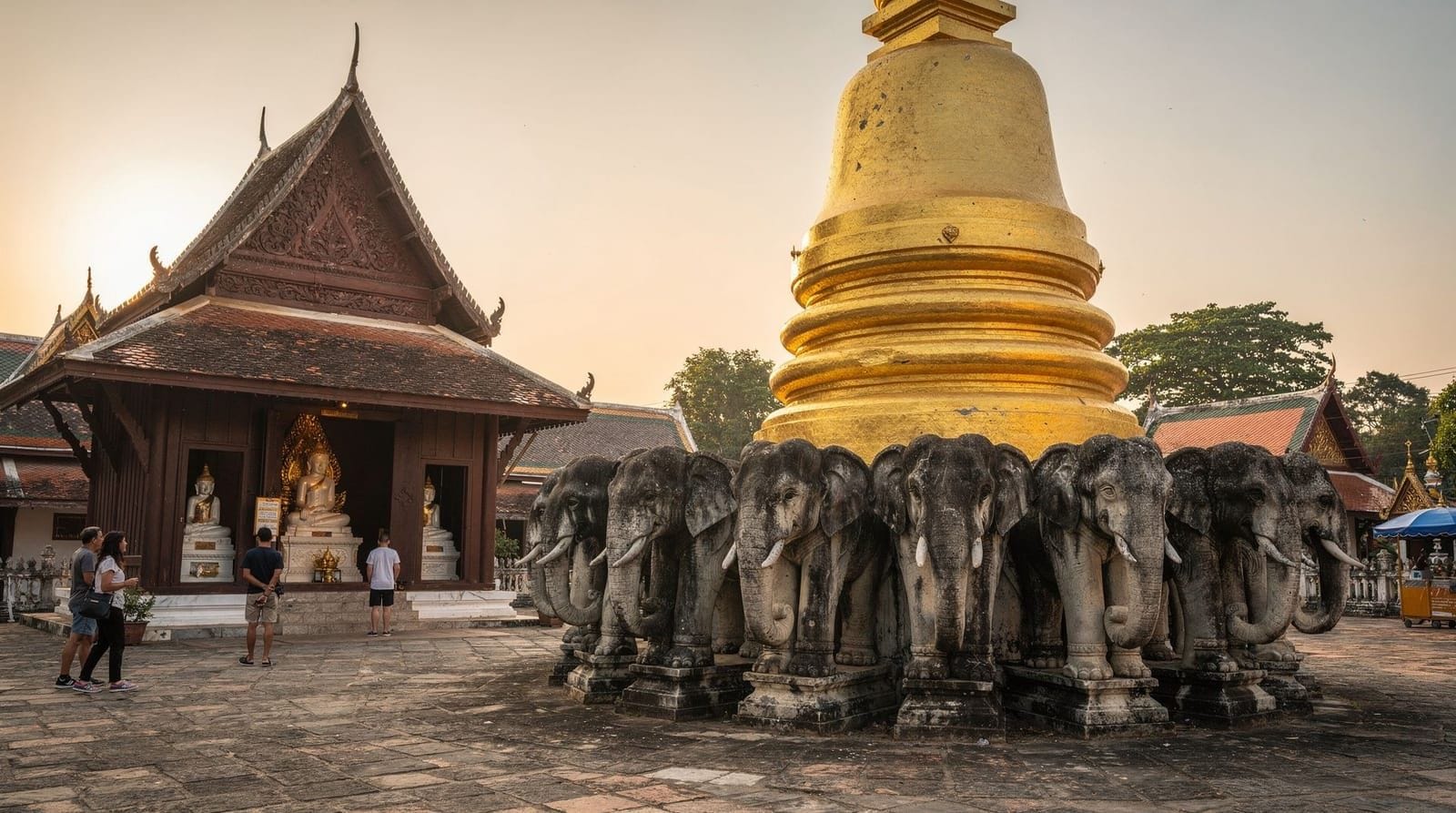
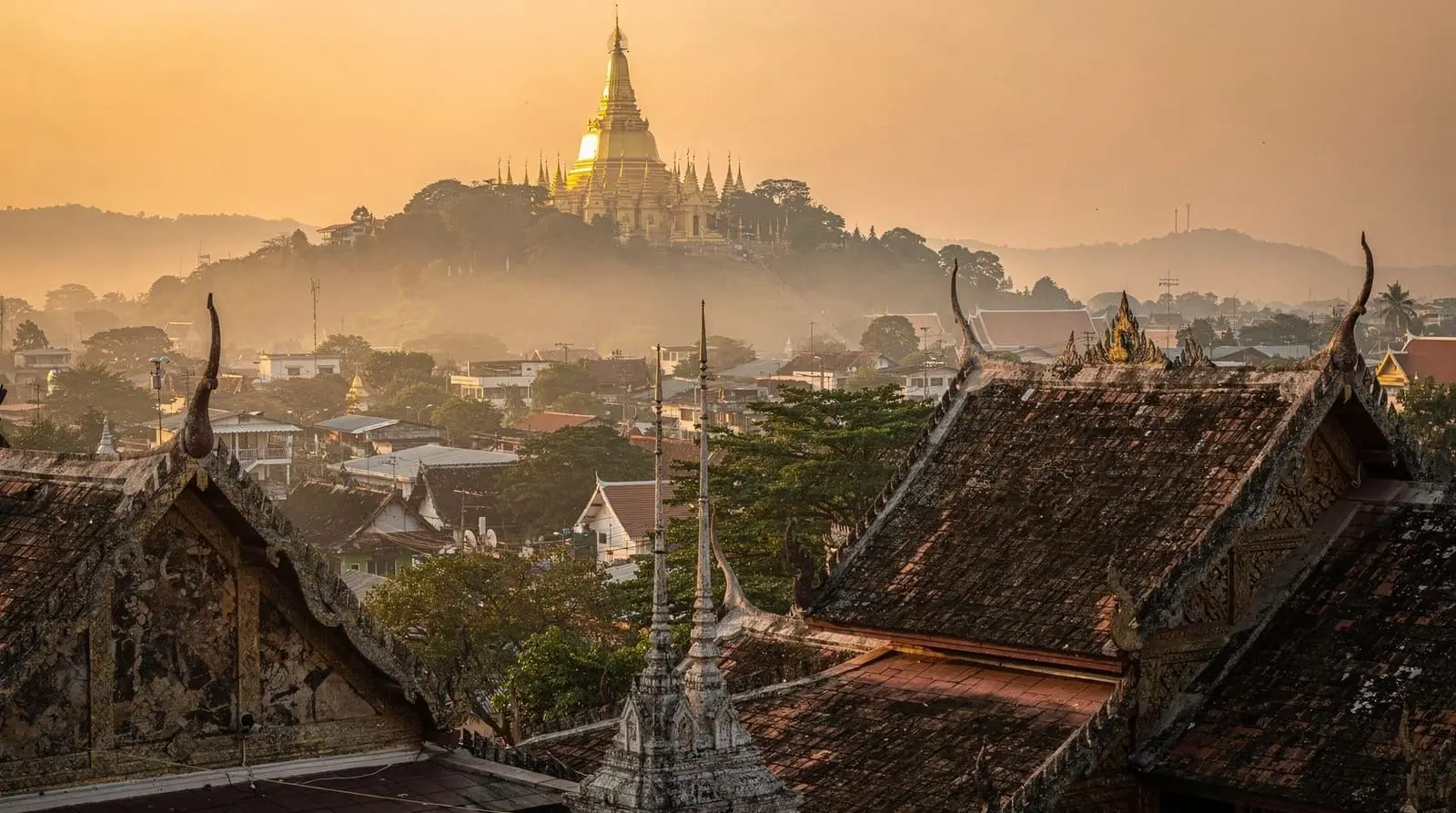
Chiang Mai’s temple density is what makes a genuinely free day here realistic. Inside the Old City alone there are more than 30 active wats, and the overwhelming majority charge nothing to walk in and look around. Wat Chiang Man, the oldest temple in the city, founded in 1296, costs nothing to enter and holds two of Chiang Mai’s most sacred Buddha images in an unassuming, rarely crowded compound. Wat Phra Singh’s outer grounds and main viharn are also free, though a smaller inner hall housing the revered Phra Singh Buddha image sometimes asks for a modest donation rather than a fixed fee.
The honest caveat: a small number of temples, mostly ones managing very high foreign tourist volume around one specific structure, do charge 20-50 THB ($0.55-1.40) for access to an inner terrace or museum room. This isn’t a scam, it’s how those particular sites fund upkeep under heavy footfall, but it means “all Chiang Mai temples are free” isn’t quite accurate. If a temple is charging an entry fee at all, it’s almost always clearly signed at a booth, not hidden. See our full Chiang Mai temple guide for which is which, and read up on temple etiquette before you go, since dress-code rules (shoulders and knees covered, shoes off indoors) are enforced everywhere regardless of price.
Monk chat programs, where young monks studying English sit with visitors for open conversation on weekday afternoons, run at several Old City temples including Wat Chedi Luang and cost nothing. It’s one of the more memorable low-key Chiang Mai experiences and genuinely unscripted, and no reservation or fee of any kind is involved.
Wat Pha Lat and the Monk’s Trail: the best free hike in the city
If you do only one free activity that requires effort, make it the Monk’s Trail. It starts near Wat Umong behind Chiang Mai University’s Huay Kaew campus and climbs a shaded, root-covered forest path roughly 3 km up the lower slopes of Doi Suthep to Wat Pha Lat, a small, atmospheric temple built directly into a hillside stream with waterfalls running through the grounds. Neither the trailhead nor the temple charges entry. It takes 60-90 minutes each way at an easy pace, and going early morning (before 9am) avoids both the worst of the heat and the trail’s growing weekend foot traffic. Wear real shoes, not sandals, since parts of the path are uneven roots and wet rock.
Wat Umong itself, the forest temple at the trailhead, is also free, and worth the visit on its own merits: it’s built around a series of 700-year-old brick tunnels you can walk through, with meditation paths and hanging Dharma-teaching placards through the surrounding woods.
Markets you can browse without spending a baht
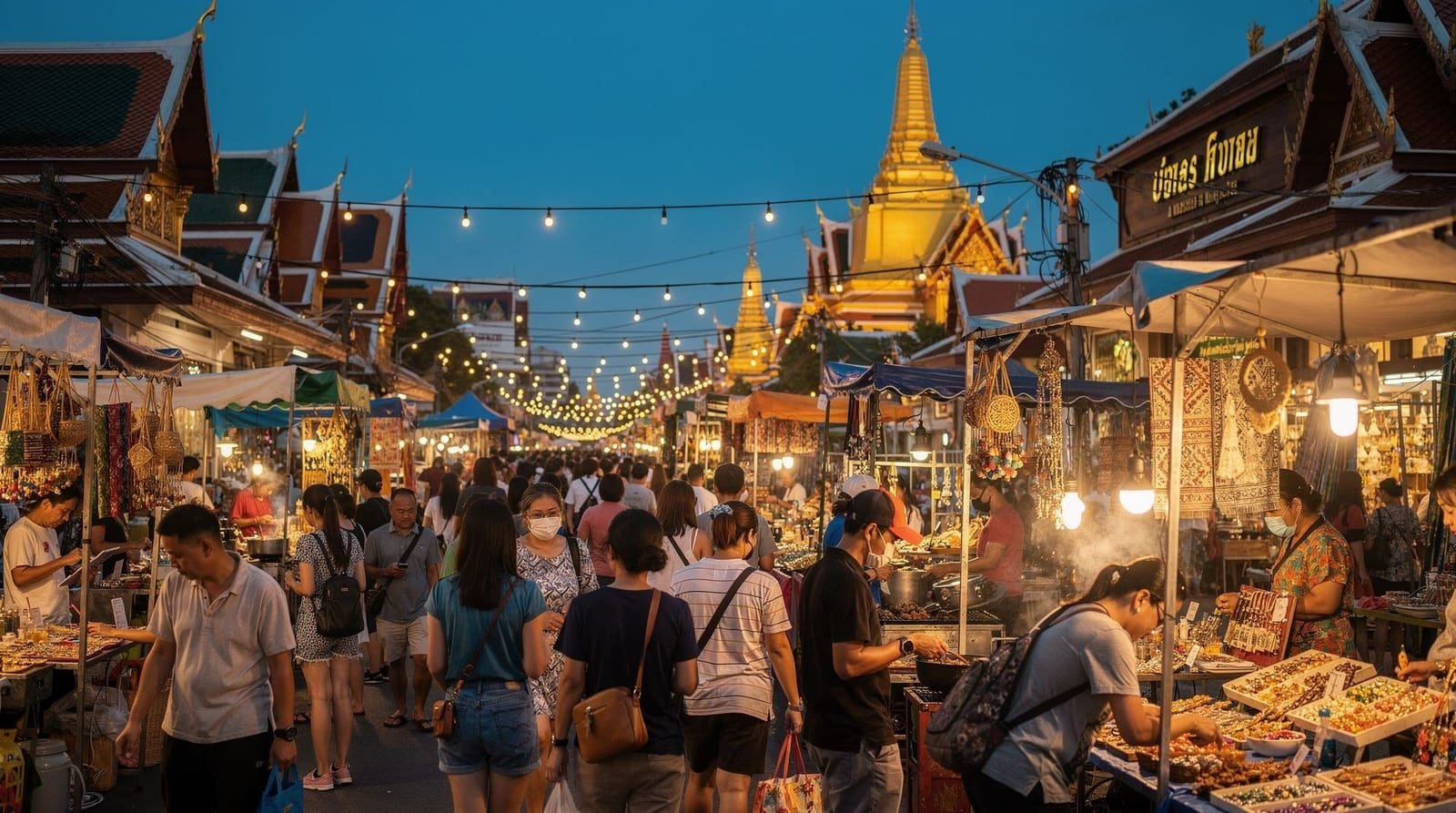
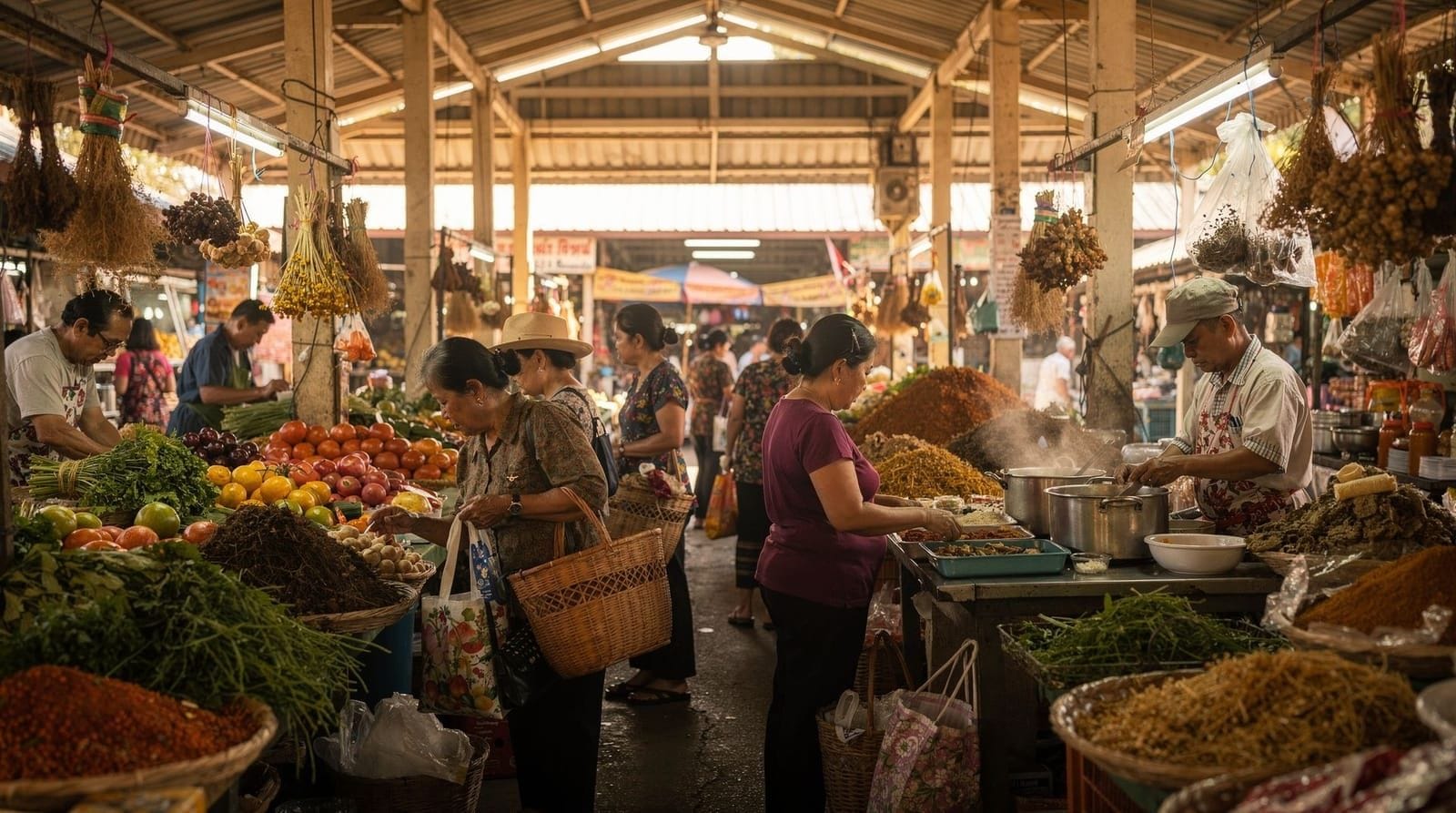
Warorot Market, the city’s main day market near the Ping River, is where locals actually shop, and walking its covered stalls costs nothing, whether or not you buy anything. It’s less curated than the tourist night markets and gives a more honest look at how the city eats and shops day-to-day. The Sunday Walking Street, which closes Ratchadamnoen Road inside the Old City every Sunday from mid-afternoon until around 10-11pm, and the smaller Saturday Walking Street on Wualai Road, are both free to enter and wander for hours; vendors pay for their pitch, not visitors at a gate. The only cost pressure is the food, and it’s genuinely cheap: a full dinner from the stalls runs 60-150 THB ($1.65-4.15) per person if you’re not restraining yourself.
Tha Phae Gate, the moat, and the Three Kings Monument
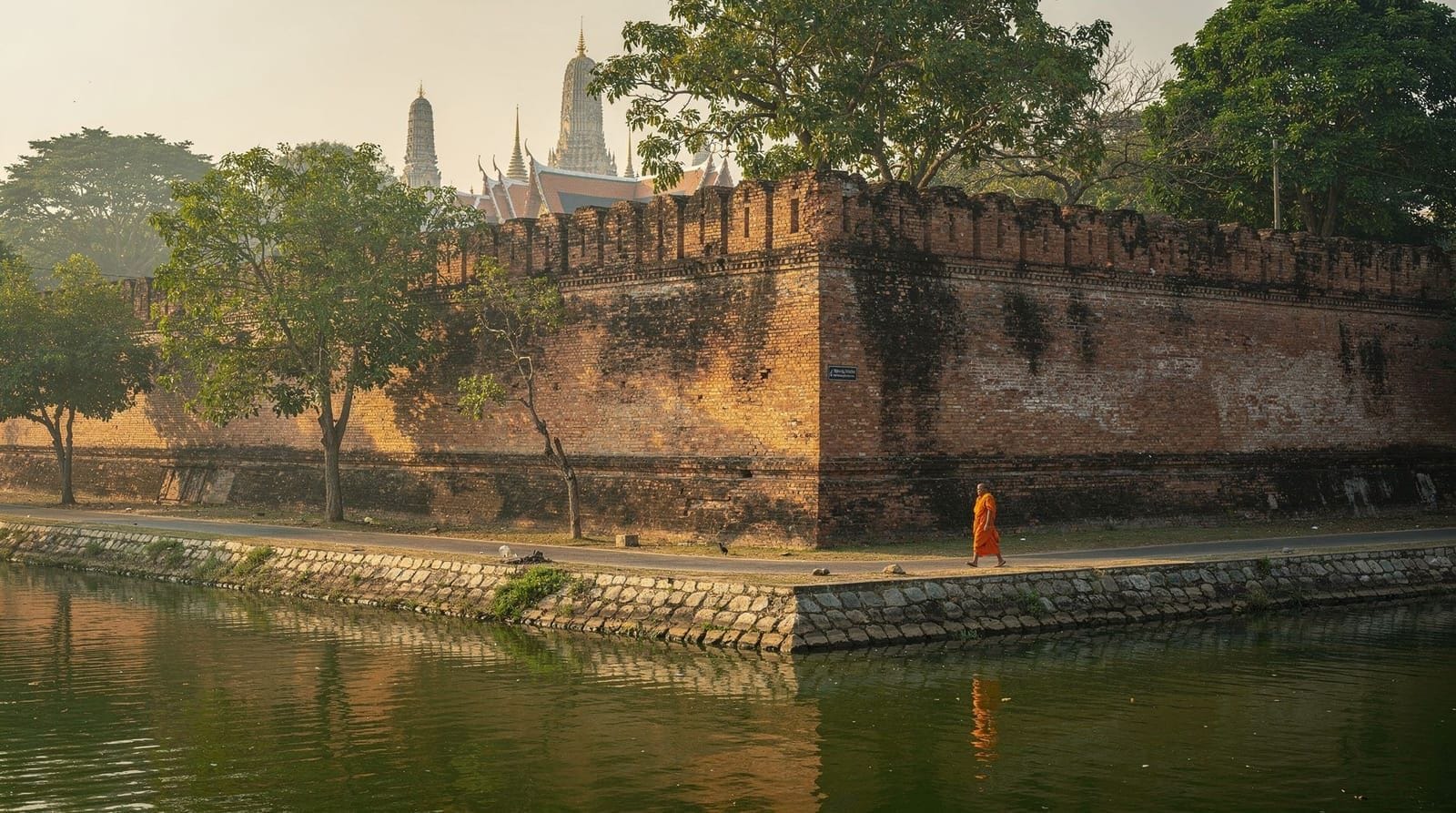
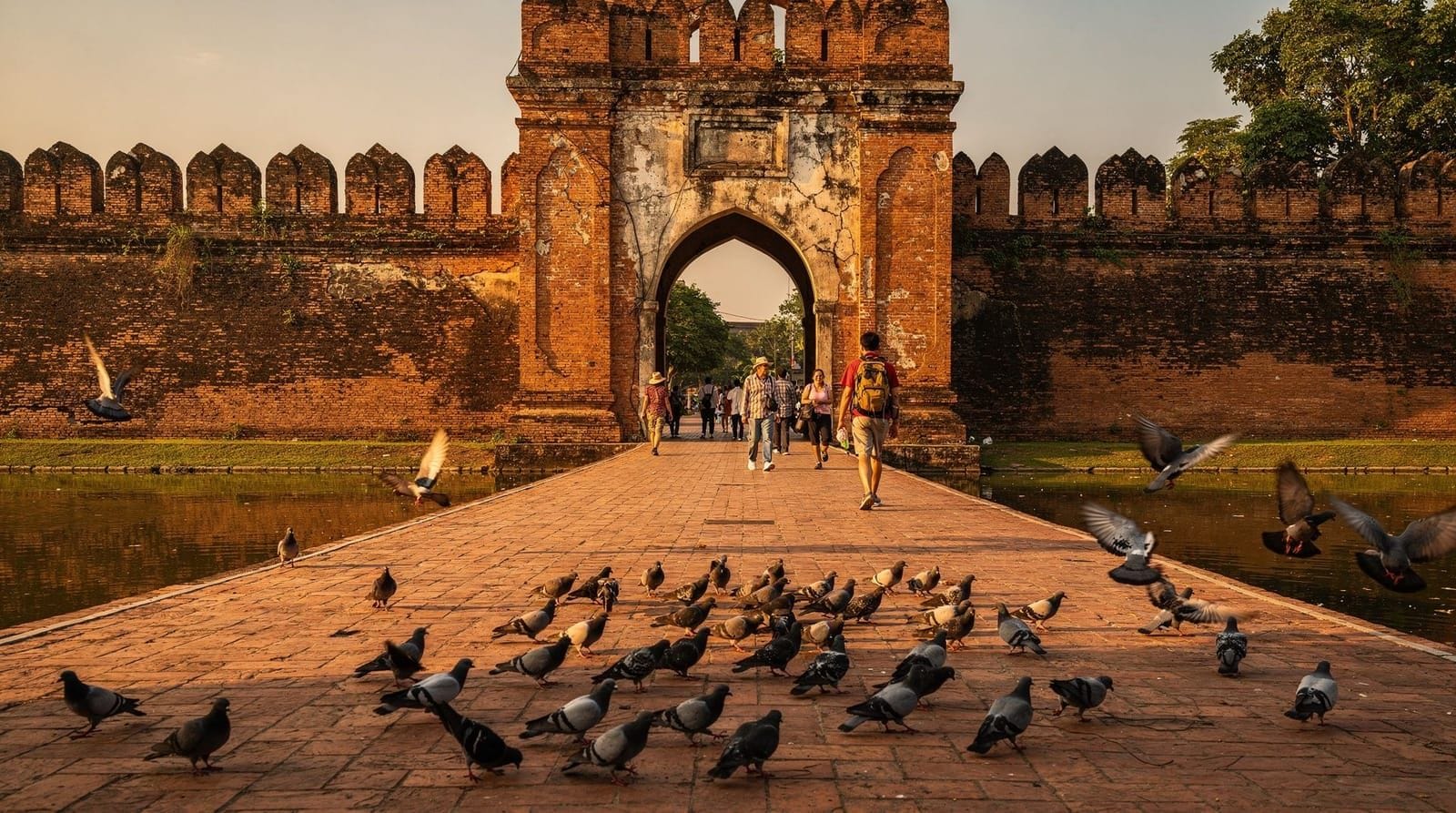
Tha Phae Gate, the busiest of the Old City’s five gates, is a free public square that functions as an informal gathering point most evenings, sometimes with buskers or a pop-up market. The moat that rings the entire Old City has a walking-and-jogging path along parts of its perimeter that locals use every evening once the heat breaks, and walking the full loop (under 4 km) costs nothing beyond your own shoes. At the geographic center of the square, the Three Kings Monument and the surrounding plaza are also free, and it’s a quieter spot for a midday break from the heat than the busier temple courtyards nearby.
Nimmanhaemin: free to wander, easy to overspend
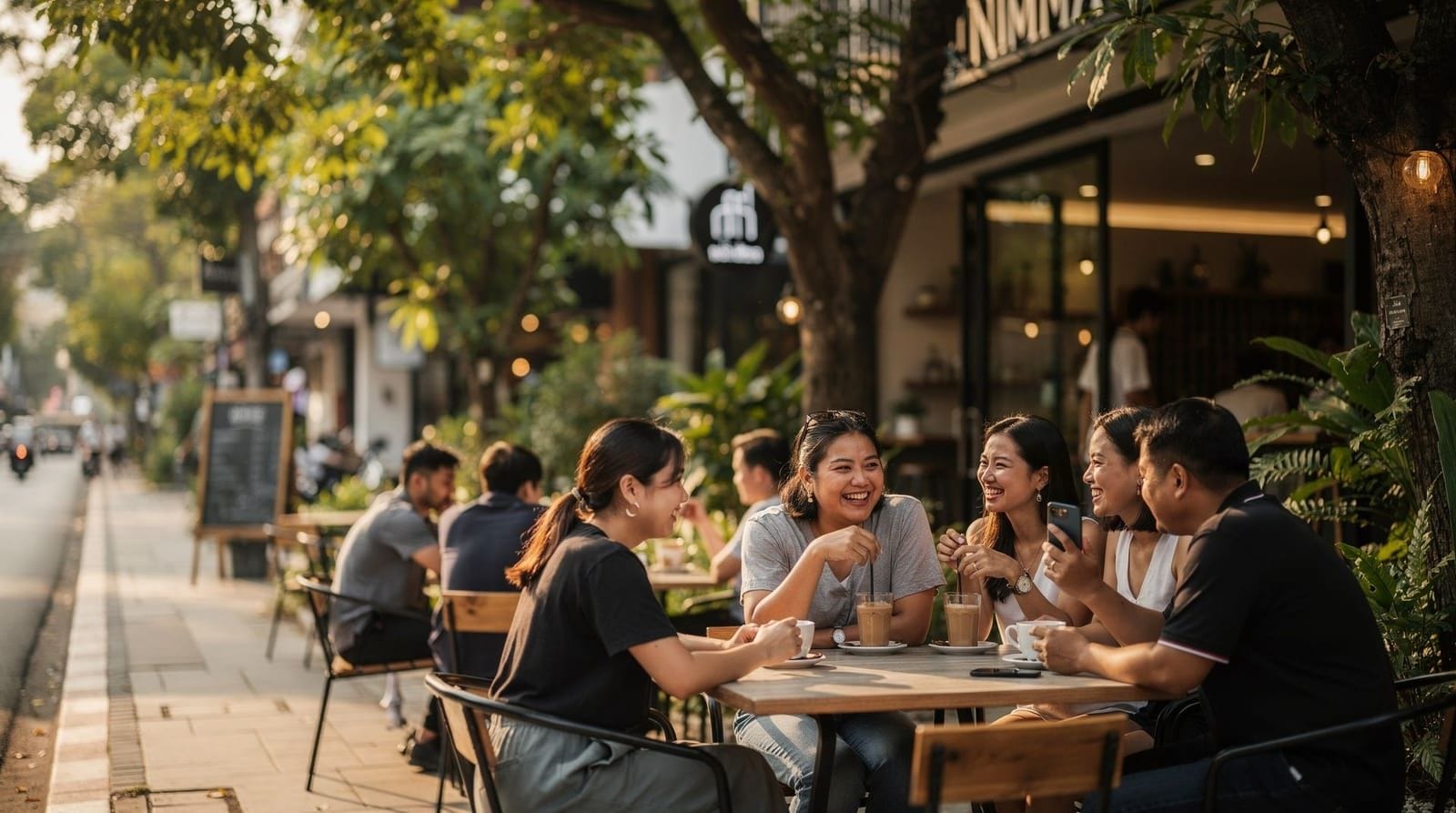
Nimmanhaemin is worth including on a free-things list with a caveat attached. Walking its side streets (locally numbered Soi 1 through Soi 17), browsing independent design shops, and sitting in the open public plaza at One Nimman, the district’s central shopping and dining courtyard, cost nothing, and the district’s murals, small galleries, and architecture make for a genuinely enjoyable free wander. The honest planner’s note: Nimman’s cafés are priced close to what you’d pay in a mid-size Western city, and it’s remarkably easy for a “just looking” walk to turn into a 150-200 THB specialty coffee. If you’re trying to hold a day to zero cost, treat Nimman as a window-shopping stop and bring your own water rather than ducking into a café every twenty minutes.
Huay Kaew Waterfall and other quiet nature stops
Huay Kaew Waterfall, a short songthaew ride from Nimman toward the base of Doi Suthep, has a free public park area with the lower waterfall pools open to anyone. It’s a modest waterfall by Chiang Mai standards, not a dramatic destination in itself, but it’s a legitimately free green space with shade and running water on a hot afternoon. Weekday mornings are close to empty; weekend afternoons draw local families with picnics, which is a pleasant, non-touristy crowd to share the space with rather than a downside. It also doubles as the start of a longer walk toward the university’s Ang Kaew reservoir, described below.
Chiang Mai University campus and Ang Kaew reservoir
Chiang Mai University’s main campus, just past Huay Kaew Waterfall, is open to the public and costs nothing to walk through, which surprises a lot of visitors who assume a university campus is off-limits to tourists. The main draw is Ang Kaew reservoir, a small artificial lake ringed by a shaded walking and cycling path that locals (mostly students) use for exercise in the late afternoon once the day cools. There’s no entry booth, no ticket, and the walk around the reservoir takes about 30-40 minutes at an easy pace. It’s a legitimately peaceful, un-touristed stop that almost never makes standard highlight lists, largely because it isn’t a temple or a market and doesn’t photograph as a single iconic shot the way Doi Suthep or Wat Chedi Luang do.
Wiang Kum Kam: free ancient ruins most visitors skip entirely
Wiang Kum Kam, the ruined former capital that predates the Old City by a few decades, sits a short drive south of central Chiang Mai and is one of the more overlooked free stops in the entire area. The brick temple ruins scattered across the site, half-reclaimed by tree roots in places, cost nothing to walk up to and explore on foot or by rented bicycle. The only thing that costs money here is the horse-cart or covered-tram tour some vendors offer at the entrance, which is entirely optional; walking or cycling the site yourself, stopping at whichever ruin catches your eye, works just as well and gives you more time at the structures that interest you rather than a fixed group pace.
Ping Riverside: a free evening walk
The stretch of the Ping River near Wat Ket on the riverside gives a quieter, less touristed version of an evening walk than the Old City moat path. There’s no fee to walk the riverbank, and it’s a good option on a night when the Old City feels overrun, particularly around Loy Krathong when the river itself becomes the center of the city’s krathong-floating tradition, which is free to watch even if you don’t buy a krathong to float yourself (typically 20-50 THB from a riverside vendor if you do).
Festivals: what’s actually free during Yi Peng and Songkran
Chiang Mai’s two biggest annual events both have a free layer and a paid layer, and travel content online frequently blurs the line between them. During Songkran in mid-April, the water fight itself, which takes over the moat road and much of the Old City for several days, is entirely free and open participation: anyone with a bucket or a water gun can join, and most locals treat strangers exactly the same as friends once the water starts flying. During Yi Peng and Loy Krathong, usually in November, the mass organized lantern-release events most visitors picture from photos (often held at Mae Jo University or similar dedicated grounds) are ticketed, sometimes for a substantial fee well in advance. But the everyday version of the festival, floating a krathong on the Ping River or the Old City moat and watching informal lantern releases along the riverside, costs nothing beyond the 20-50 THB krathong itself if you choose to buy and float one.
What’s worth skipping if you’re on a strict budget
Not every paid Chiang Mai attraction earns its ticket price, and knowing which ones to skip matters as much as knowing what’s free. Commercial elephant riding camps and some of the more theatrical cultural shows charge a premium for an experience that’s ethically questionable or simply overproduced; the money is better spent, if spent at all, on a genuine ethical sanctuary visit, which costs more but delivers something real. Overpriced viewpoint cafés on the road up Doi Suthep, charging a seating fee just to look at a view you can see for free from the temple grounds a few hundred meters further on, are another common tourist-budget leak. So are some of the souvenir shops clustered right at temple exits, which mark up prices well above what the same handicrafts cost at Warorot Market or the weekend walking streets a few hundred meters away. For a broader list of where Chiang Mai’s paid attractions do and don’t deliver on their asking price, see our Chiang Mai tourist traps guide.
The honest exceptions: things marketed as free that aren’t quite
A few Chiang Mai attractions get described as free in older travel blogs when they no longer are, or were never fully free to begin with. Doi Suthep is the biggest one: the mountain, the road, and the outer grounds cost nothing, but the inner terrace around the golden chedi charges 50 THB ($1.40) for foreign visitors, and the funicular past the final staircase is an additional 20-50 THB. The Queen Sirikit Botanic Garden, similarly, is a genuinely worthwhile green space but charges a garden-wide entry fee, so it doesn’t belong on a strict zero-cost list even though some older articles list it as a free park. If a “free” recommendation online doesn’t specify which part of a site is free, assume there’s a paid layer somewhere and check current pricing before you build a day around it.
Building a full free day
A realistic zero-cost day: start early at Wat Chiang Man and Wat Phra Singh before the heat and crowds build, walk the short distance to Tha Phae Gate and the Three Kings Monument, cut through to Warorot Market for a cheap lunch from the stalls, and spend the afternoon wandering Nimman’s side streets before finishing with an evening walk along the moat or the Ping riverside. If it’s a Sunday, swap the evening moat walk for the Walking Street instead. For a single-day framework that also weighs paid highlights against free ones, see Chiang Mai in one day, and for the less obvious spots that don’t make most highlight lists at all, see our underrated things to do in Chiang Mai guide. If it happens to be pouring, most of these outdoor stops still work in short bursts between downpours; for a fully indoor backup plan, see Chiang Mai rainy day activities.
Two realistic free-day plans
Weekday plan: start at 7am at Wat Chiang Man before tour groups arrive, walk 10 minutes to Wat Phra Singh’s free outer grounds, then cut across to Tha Phae Gate and the Three Kings Monument for a mid-morning breather. Walk or catch a songthaew to Warorot Market for a cheap lunch from the stalls (30-60 THB, $0.85-1.65 for noodles or khao soi from a market vendor), then spend the early afternoon at Wat Umong and, if you’re up for the walk, the Monk’s Trail up to Wat Pha Lat. Finish with an evening walk around the moat as the heat breaks. Total spend for the day, beyond food you’d eat anyway: close to zero.
Sunday plan: same morning temple circuit, but hold your evening for the Sunday Walking Street instead of the moat loop. Arrive by 4-5pm to browse before the crowd peaks, and treat dinner as your one planned expense; a full meal from the stalls runs 60-150 THB ($1.65-4.15). Both plans work equally well in reverse if you’re staying in Nimman rather than the Old City — just swap the order so you’re not doubling back across town in the midday heat.
Either version pairs naturally with a paid half-day elsewhere in the trip, since a single completely free day rarely feels like it’s shortchanging the visit when Chiang Mai’s temple and market culture is this dense.
A word on donations
Nearly every temple, regardless of whether it charges a formal entry fee, has a donation box near the entrance, and it’s customary and appreciated to leave a small amount even at temples with free entry. There’s no expected amount and no one will ask; 20-40 THB is a common informal norm among travelers, and it goes toward the upkeep of buildings that receive far more foot traffic than they were built for.
Frequently asked questions about free things to do in Chiang Mai
Is Doi Suthep free to visit?
Partly. The mountain, the road up, and the outer grounds of Wat Phra That Doi Suthep cost nothing to walk around, but the inner terrace with the golden chedi charges a 50 THB ($1.40) entry fee for foreign visitors, and the funicular up the final staircase costs another 20-50 THB if you skip the 300-plus steps. Getting there also isn’t free: a shared red songthaew from the Old City runs about 40-60 THB each way if you wait for it to fill, though most drivers now quote a flat 100-150 THB per person for a dedicated ride.
Are Chiang Mai’s temples really free to enter?
The great majority of the roughly 300 working temples in and around the city charge nothing, including nearly every temple inside the Old City. A short list of exceptions charge a modest fee for a specific inner building or museum, generally 20-50 THB ($0.55-1.40), because they’re managing high tourist footfall around a particularly sacred or fragile structure. A donation box near the entrance is standard everywhere and it’s respectful to drop a note even where entry itself is free.
Is the Sunday Walking Street market actually free?
Walking through it costs nothing, and browsing for hours without buying anything is completely normal and expected. The market’s revenue comes from the vendors renting their pitch, not from visitors at the gate. Your only real cost is whatever street food or crafts tempt you, and a full dinner from the stalls typically runs 60-150 THB ($1.65-4.15) per person.
Can you hike to Wat Pha Lat for free?
Yes. The Monk’s Trail starts behind Chiang Mai University near Wat Umong and climbs roughly 3 km through forest to Wat Pha Lat, a small temple built into a hillside stream, with zero entry fee at either end. It’s one of the few Chiang Mai experiences that costs nothing beyond your own transport to the trailhead and a bottle of water.
Is Nimmanhaemin worth visiting if I’m not spending money?
Yes, though it’s more tempting there than almost anywhere else in the city. Wandering Nimman’s side streets, browsing the design shops, and sitting in the free public seating at One Nimman’s central plaza cost nothing, and the district’s street art and architecture are worth the walk on their own. Just know that Nimman’s cafés are priced closer to what you’d pay in a Western city, so it’s easy for a “free” wander to turn into a 150-200 THB coffee stop.
Are there free viewpoints in Chiang Mai?
A few. The grounds outside Wat Phra That Doi Suthep’s paid inner terrace still give a genuine city view over the valley, and it costs nothing to stand there and look. Huay Kaew Waterfall, a short songthaew ride from Nimman, has free public access to its lower pools and a shaded park area. Neither matches the sweeping panoramas some paid viewpoint cafés advertise, but both are legitimate free stops.
What’s the cheapest way to get to these free attractions?
Walking covers most of the Old City sights since almost everything sits within the moat’s 1.5 km square. For anything outside it, a shared red songthaew (flag one down, confirm the destination and price before boarding) runs 30-50 THB ($0.85-1.40) per person for most in-town hops, which is far cheaper than a private Grab or tuk-tuk for a solo traveler, though splitting a Grab three or four ways often comes out similar.