Warorot market
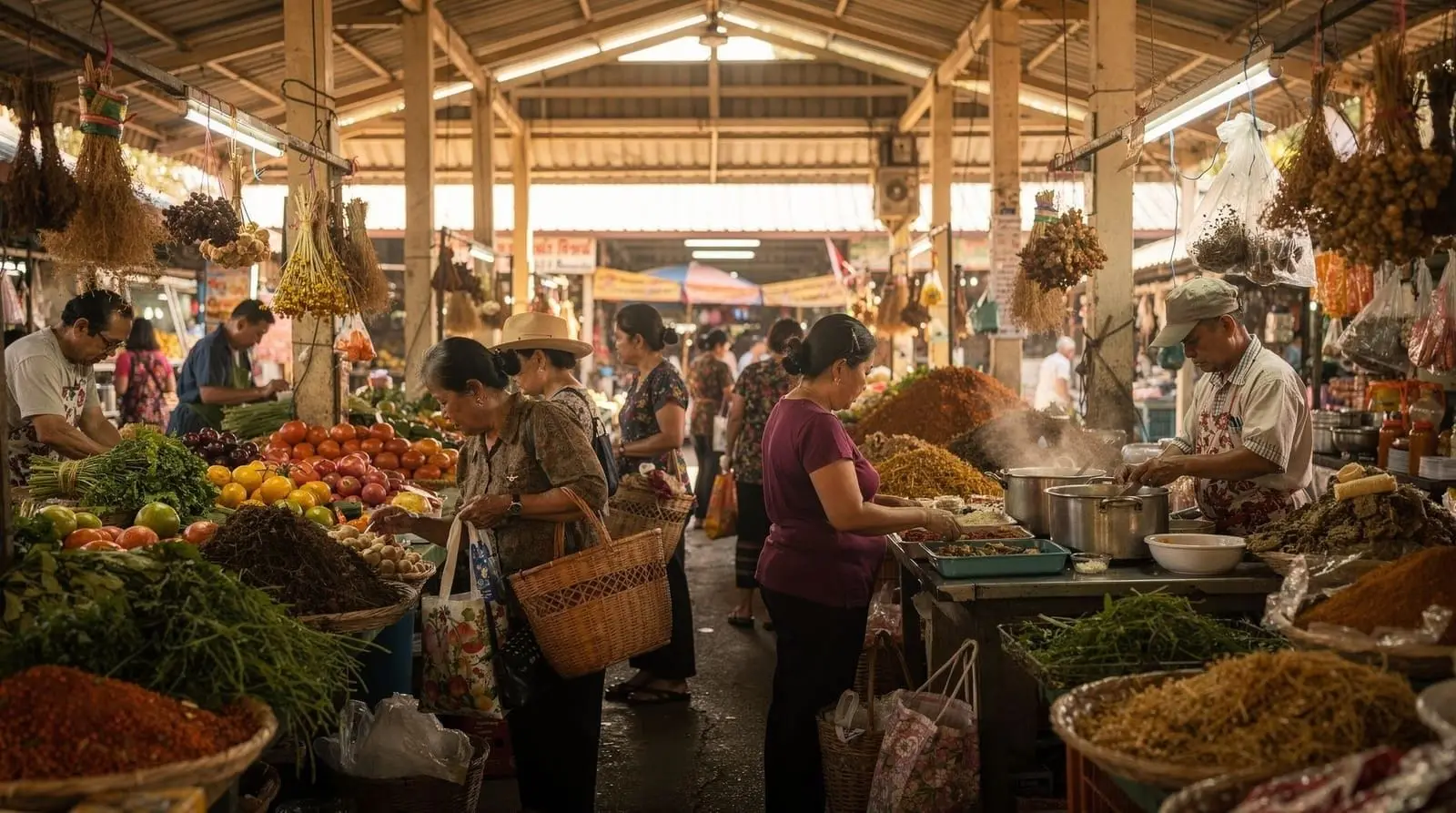
Kad Luang is where Chiang Mai actually shops — Thai-Chinese food stalls, dried goods, and flowers, with almost no tourist markup.
Taste of Chiang Mai: Michelin Guide & Street Food Tour
Quick facts
- Getting there
- Songthaew or Grab from Old City ~30-50 THB; 20-25 min walk from Tha Phae Gate
- Key sight
- Three-storey covered market hall plus the Ton Lamyai flower market next door
- Time needed
- 1-1.5 hours
- Best time
- 6am-noon, any day (quietest and freshest early morning)
- Cost / entry
- Free entry; snacks 10-40 THB, sausage and dried goods by weight
Ask a Chiang Mai local where they buy dried chilli, sai ua sausage, or flowers for a temple offering, and the answer is almost always the same place: Warorot Market, known to residents as Kad Luang — “the big market.”
Quick answer: Warorot Market is a three-storey covered day market near the Ping River, a short walk northeast of the Old City, selling Thai-Chinese food, dried snacks, fabric, and household goods to actual Chiang Mai residents rather than tourists. It runs roughly dawn to early evening but is at its best before noon, and prices here are close to what locals pay — a rare thing in a city this used to visitors.
Where it is and how to get there
Warorot sits on Wichayanon Road, on the west bank of the Ping River, about 1.5km northeast of Tha Phae Gate — a 20-25 minute walk, or a 30-50 THB (roughly $1) songthaew or Grab ride if the morning heat has already set in. It’s close enough to Ping Riverside and Wat Ket that the two make a natural morning-into-afternoon combination: market first while it’s cool, riverside café or gallery browsing after.
The market building itself is a solid three-storey concrete structure, with the ground floor given over mostly to food, the upper floors to fabric, clothing, and household goods. Immediately north of the main hall is Ton Lamyai, the flower market — worth a walk-through even if you’re not buying, for the sheer volume and colour of marigolds, orchids, and roses arriving by the truckload each morning for temple offerings and hotel arrangements.
What to eat
This is the market’s real strength. Warorot is one of the best places in Chiang Mai to try northern Thai specialties without a restaurant markup:
- Sai ua — the coiled, herb-packed northern Thai sausage, grilled and sold by the piece or by weight, usually 10-20 THB per piece.
- Nam prik — the region’s chilli relishes and dips, sold in small bags or containers, meant to go with sticky rice and raw or steamed vegetables.
- Khao soi ingredients and ready-made portions — some stalls sell the curry noodle dish itself, others sell the crispy noodle topping and curry paste separately for cooking at home.
- Dried fruit, banana chips, and preserved mango — cheap, packable, and genuinely good gifts to bring home, usually far better value than the packaged versions sold at the airport.
- Fresh fruit — seasonal, cut to order, and priced by weight rather than by the tourist-friendly bag.
None of this comes with an English menu, and that’s part of the appeal — pointing and a bit of patience gets you fed well and cheaply. A guided Michelin Guide and street food tour or local food and markets walking tour is a reasonable way to get oriented on your first visit if navigating a market with no English signage feels daunting — a guide can point out what a stall’s specialty actually is, which isn’t always obvious from the outside.
Beyond food: fabric, flowers, and household goods
The upper floors of the market hall are less visited by tourists but genuinely interesting — bolts of fabric, ready-made clothing aimed at a local rather than a visitor budget, kitchenware, and religious items for household shrines. Prices are marked or quickly quoted, and haggling here is lighter-touch than at the Night Bazaar since margins are already thin.
The Ton Lamyai flower market runs a slightly different schedule, with the heaviest activity before sunrise as flowers arrive fresh from Mae Rim and San Sai growers — if you’re an early riser or jet-lagged in your favour, a 6am walk-through here is one of the more striking, least “staged” sights in the city.
A market that rewards walking, not planning
Unlike Chiang Mai’s weekend walking streets, Warorot doesn’t require you to check a calendar — it operates daily, Monday through Sunday, though Sunday mornings can be quieter as some vendors take the day. There’s no formal route through the building; the best approach is simply to wander the ground floor food section first, follow whatever smells good, then take the stairs up if you want to browse fabric and goods.
Toilets exist within the complex (small fee), and there are ATMs on Wichayanon Road just outside if you need cash — bring smaller denominations, since food stalls rarely have change for large notes.
Combining Warorot with the riverside
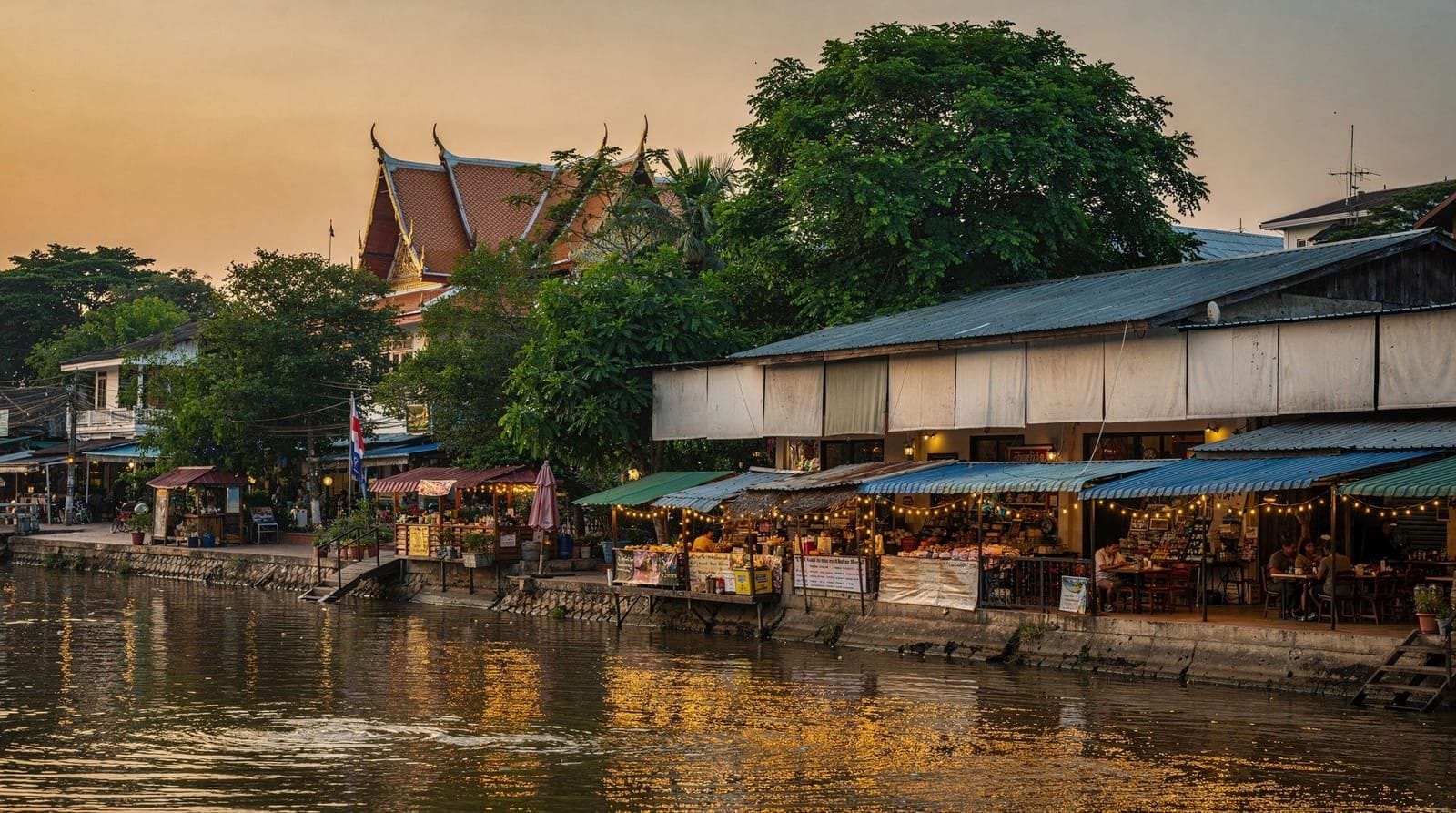
Because Warorot sits so close to the Ping River, it pairs naturally with a wander through Ping Riverside and Wat Ket — cross the river via the Nawarat or Iron Bridge and you’re in the gallery and café district within ten minutes. Many visitors do Warorot in the cool of the morning, then cross for a riverside lunch once the market’s covered halls start to feel warm and crowded.
If you’d rather explore the city’s food scene at a slower, guided pace that includes multiple markets rather than just this one, a walking food tour or the more structured songthaew food tour with 15+ tastings covers Warorot-style local eating alongside other stops, which suits travellers who want breadth over a single deep dive.
What to skip
Skip buying fresh meat or seafood to take back to your hotel unless you have refrigeration — the market’s cold chain is designed for same-day local cooking, not for tourists without a kitchen. Also skip the very outer stalls closest to the road selling generic plastic goods; they’re the least distinctive part of the market and better handled, if needed at all, at a convenience store.
A short history of Kad Luang
Warorot’s roots go back over a century, to when Chiang Mai’s Chinese and Thai merchant families established a trading post along the Ping River to handle goods moving between the northern hills, Burma, and the lowland cities to the south. “Kad Luang” translates roughly to “the royal market” or “the great market,” reflecting its status as the city’s primary commercial hub long before the Old City’s temples became the main draw for outside visitors. The current market hall dates to a mid-20th-century rebuild after a fire, but the site’s function — a working exchange point for food, textiles, and household goods serving the whole city rather than any single neighborhood — has remained continuous for generations. That continuity is part of why it still feels distinctly local today: the market was never repurposed for tourism, it simply kept doing what it has always done while the city grew up around it.
A realistic morning itinerary
Arriving by 7-7:30am gives you the market at its best: stalls fully stocked, temperatures still comfortable, and the Ton Lamyai flower market next door in full early-morning swing before the day’s deliveries are sorted and distributed. Spend the first 30-40 minutes working through the ground-floor food section, sampling sai ua and nam prik as you go, then head to Ton Lamyai for 15-20 minutes to see the flower trade at its most active. If you have time and curiosity left, the upper floors of fabric and household goods reward another 20-30 minutes of browsing, particularly if you’re interested in northern Thai textile patterns not commonly sold in the Night Bazaar’s more generic souvenir stalls. By 10-10:30am, as the day heats up and the covered halls start to feel close, is a natural point to head onward — either across the river to Ping Riverside and Wat Ket for a coffee, or back toward the Old City.
Seasonal specialties worth watching for
Warorot’s offerings shift with the northern Thai calendar. Cooler-season months (November through February) bring the best fresh produce and the widest range of preserved goods, as the harvest from surrounding valleys peaks. Mango season (roughly March through June) sees stalls piled with fresh and preserved mango in every form, from ripe fruit to the dried, sweetened strips popular as snacks. During Songkran (mid-April) and other major festivals, the market’s flower and offering-goods sections scale up noticeably, since Warorot is where much of the city sources materials for temple merit-making and household shrines during these periods — worth a visit even if you’re not buying, simply to see the market operating at festival intensity.
Where to stay nearby
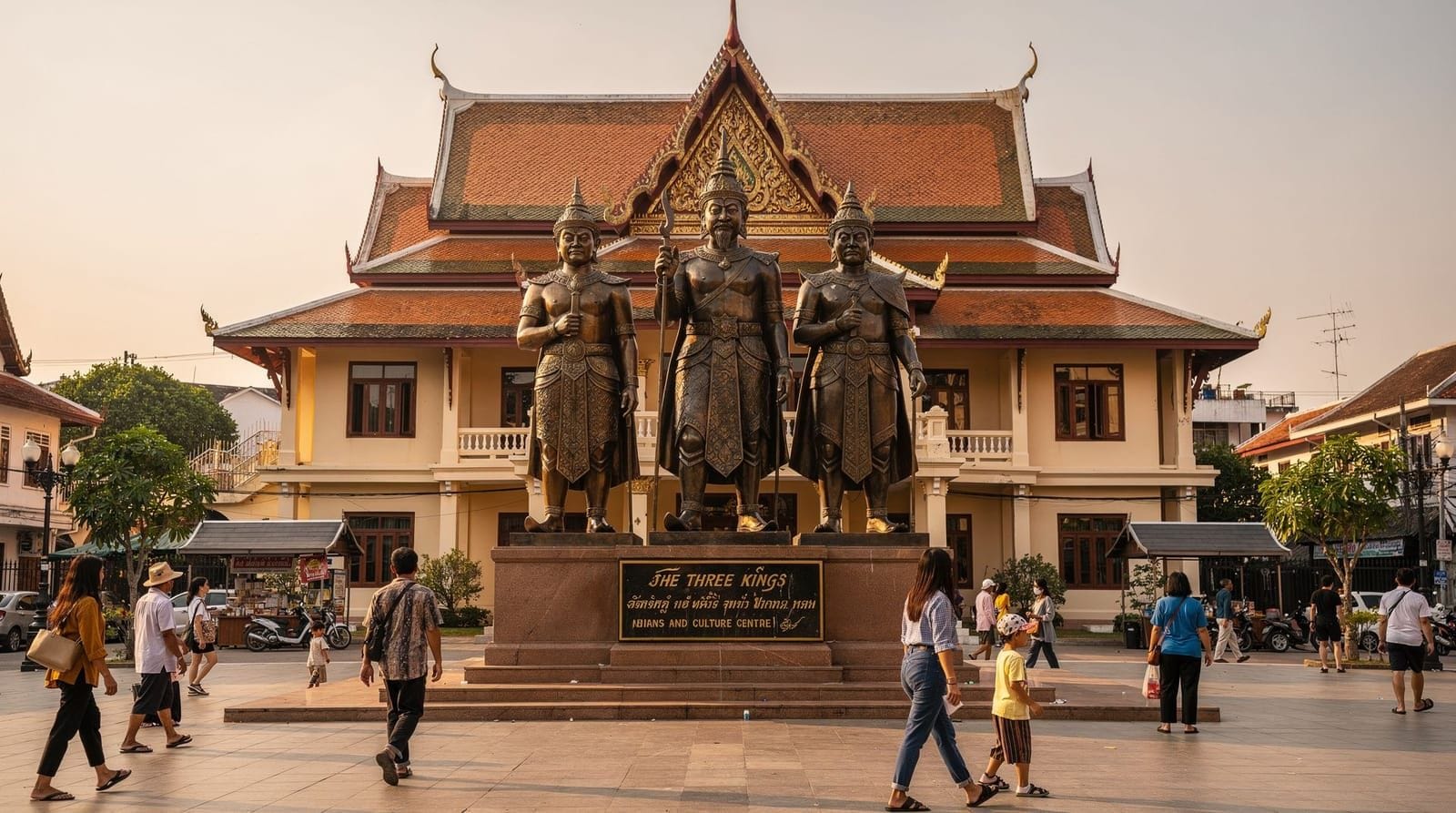
Warorot sits at the edge of the area sometimes loosely grouped with the riverside district, making guesthouses and hotels along the west bank of the Ping River, roughly between the market and the Old City’s eastern wall near Tha Phae Gate, a reasonable base if you want to combine an early Warorot visit with easy access to both the Old City and Ping Riverside and Wat Ket without much daily transport. It’s a quieter option than basing yourself directly on Chang Khlan Road near the Night Bazaar, while still being walkable to both areas, including the civic square around the Three Kings Monument a little further into the Old City.
An evening pairing option
While Warorot itself is a daytime market, its location means it also works as a starting point for an evening that ends elsewhere — a short crossing to Ping Riverside and Wat Ket for dinner, or a longer trip across to Anusarn Market and the Night Bazaar if you’d rather end the day with market energy rather than a quiet riverside meal. Framing Warorot as the “morning half” of a day that concludes with one of these evening options tends to make for a well-paced full day rather than treating the market as an isolated stop.
Comparing Warorot to markets elsewhere in Thailand
Visitors who’ve spent time in Bangkok’s larger wholesale markets, or similar day markets in other Thai cities, will find Warorot familiar in structure but notably smaller and more manageable in scale — it’s realistic to see most of the building’s food section in an hour, which isn’t true of Bangkok’s larger equivalents. That manageable size is part of what makes it a good fit for a single morning rather than requiring a dedicated half-day, and it’s a reasonable stop even for visitors who feel “marketed out” after a few days in the country, since the pace here is calmer and less aggressively commercial than markets built primarily around foreign visitor traffic.
Nearby cafés and a slower alternative to the market rush
If the market’s density feels overwhelming after 30-40 minutes, several cafés on the surrounding streets — particularly toward the river on Wichayanon Road — offer a calmer pace with Thai and Western breakfast options and, in most cases, air conditioning, a welcome break if you’ve arrived during the hotter months. Using one of these as a base to return to between rounds of market browsing, rather than trying to power through the entire building in one continuous pass, tends to make for a more comfortable and ultimately more thorough visit, since fatigue is the main reason visitors cut a Warorot trip short before seeing the upper floors or the flower market.
What locals actually buy here versus what visitors notice
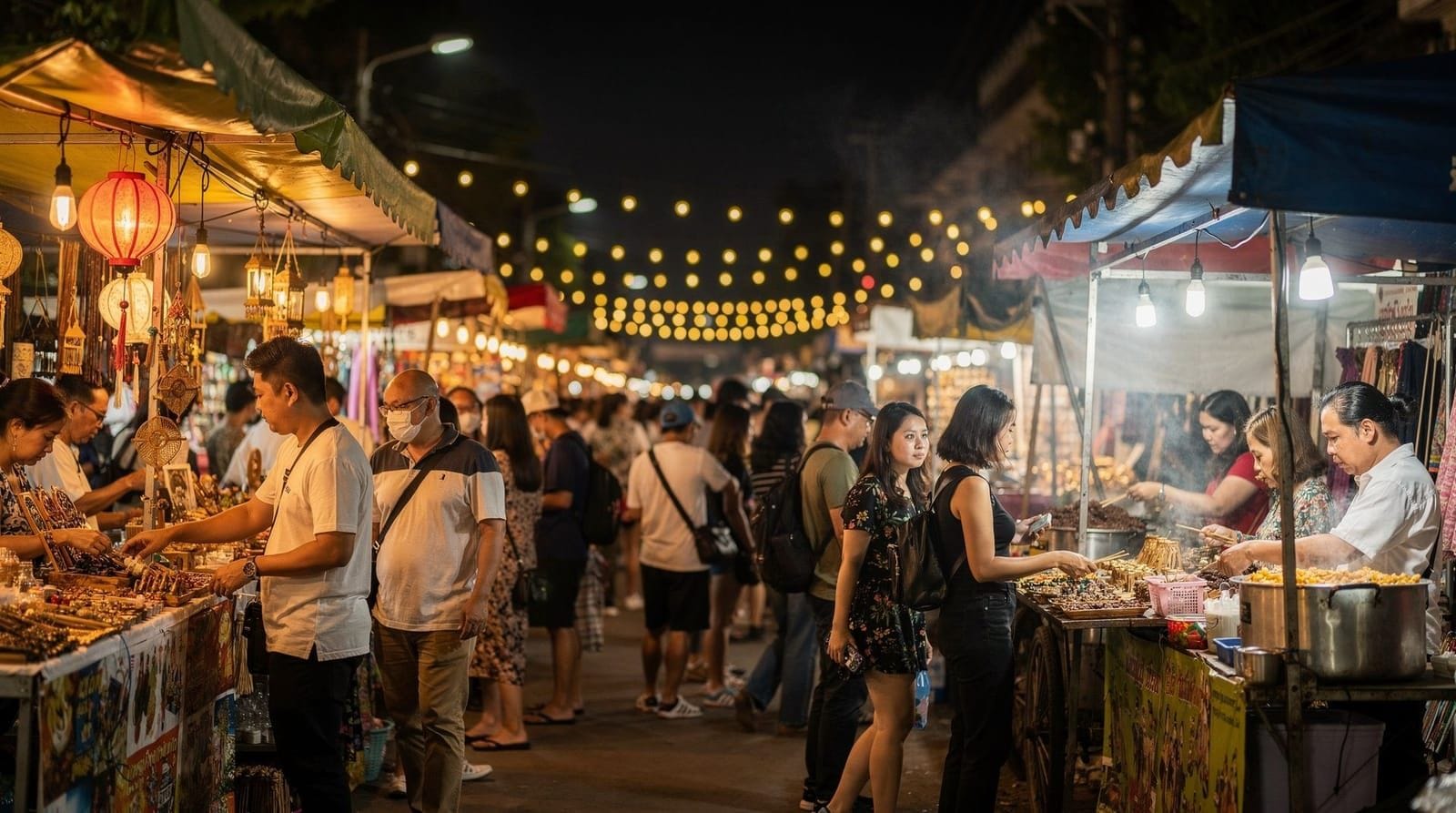
Spend even twenty minutes watching the flow of shoppers and the difference between local and visitor purchasing becomes obvious. Chiang Mai residents move through with purpose — buying specific quantities of sai ua for a family meal, particular cuts of fabric for a tailoring job already planned, or flowers for a specific offering — while visitors tend to linger longest at stalls selling snack-sized, packaged goods that travel well. Both are legitimate ways to use the market, but understanding the difference helps calibrate expectations: this isn’t a market designed around the browsing, souvenir-hunting pace that works well at the Night Bazaar. Moving with a rough plan, even a loose one like “try three snacks and see the flower market,” tends to produce a more satisfying visit than open-ended wandering, since the market’s scale and lack of English signage can feel disorienting without some structure.
Combining Warorot with a wider morning in the old city
Because Warorot is at its best before 10am, it pairs naturally with an early temple visit rather than only with the riverside. Starting at Wat Chedi Luang or Wat Phra Singh around 7am, before the heat and tour groups build up, then continuing to Warorot by 8:30-9am for breakfast and market browsing, makes efficient use of the coolest hours of the day — both temples and market reward an early start for similar reasons (fewer crowds, more comfortable temperatures), and the geography lines up well since Warorot sits just northeast of the Old City’s eastern gate.
Accessibility notes
The ground floor of the main market hall is level and reasonably navigable, though aisles between food stalls narrow considerably during the busiest morning hours (7-9am), which can be tight for wheelchairs or larger strollers. The upper floors are reached by stairs in most sections, with limited elevator access, so visitors with mobility limitations should expect to focus their visit on the ground-floor food section and the adjacent, mostly level, Ton Lamyai flower market rather than the full building. Outdoor sections around the market’s edges are less crowded and easier to navigate than the interior at peak times.
Frequently asked questions about Warorot Market
Is Warorot Market touristy?
No, comparatively little. It’s used daily by Chiang Mai residents for food, fabric, and household shopping, and English signage is minimal. That’s part of its appeal for visitors who want to see the city’s actual market culture rather than a version built for tourists.
What time does Warorot Market open and close?
The market runs from early morning (some stalls open before 6am) through early evening, but it’s busiest and freshest before noon. By mid-afternoon many food vendors have sold out or packed up.
Is Warorot Market open every day?
Yes, it operates daily. Sunday mornings can be slightly quieter as some vendors take the day off, but the market as a whole doesn’t close.
What should I buy at Warorot to bring home?
Dried fruit, banana chips, preserved mango, and packaged nam prik chilli dips travel well and are genuinely good value compared to airport souvenir shops.
Is it easy to get to Warorot from the Old City?
Yes — it’s about a 20-25 minute walk, or a short 30-50 THB songthaew or Grab ride northeast toward the Ping River.
Do I need to haggle at Warorot?
Less than at the Night Bazaar. Food prices are largely fixed, and fabric or goods prices have less markup built in since the market serves locals, not tourist margins.
Can I do a guided tour of Warorot instead of going alone?
Yes — several food-focused tours, including a local food and markets walking tour, cover Chiang Mai’s market food scene with a guide who can translate and recommend specific stalls.
How old is Warorot Market?
The site has functioned as Chiang Mai’s main trading market for over a century, with the current market hall dating to a mid-20th-century rebuild. It has continuously served the whole city rather than being repurposed for visitors.
Is Warorot Market a good place to see the Ton Lamyai flower market too?
Yes, Ton Lamyai sits directly beside the main Warorot hall and is worth a walk-through, especially early morning (before 7am) when flowers arrive fresh for the day’s temple offerings and arrangements.
Top experiences
Bookable activities with verified prices and instant confirmation on GetYourGuide.