Chiang Rai
Northern Thailand's temple city — White and Blue temples, the Black House, Golden Triangle access, and whether to visit as a day trip or overnight.
Chiang Rai White, Blue and Red Temple Tour
Duration: Full day
Quick facts
- Getting there
- ~3-3.5hr drive NE of Chiang Mai (~180km) by minivan, bus, or private car; short flights also available
- Key sight
- Wat Phra Kaew — where the Emerald Buddha was originally discovered before moving to Bangkok
- Time needed
- A full day as a Chiang Mai tour, or 1-2 nights to cover the city and surroundings at an easier pace
- Best time
- November-February for the clearest air; February-April brings burning-season haze, often heavier here than Chiang Mai
- Cost
- Most sights are inexpensive (free-100 THB entries); a day tour from Chiang Mai runs roughly 1,000-2,000 THB (~$28-56)
Chiang Rai is Thailand’s northernmost major city, sitting about three hours from Chiang Mai on the road toward the Golden Triangle, and it functions less as a single attraction than as the base and gateway for a cluster of the region’s most photographed sights.
Quick answer: Chiang Rai is a city of roughly 200,000 people about 180km (3-3.5 hours) northeast of Chiang Mai. Most visitors come for a single day, using it as the base to see the White Temple, Blue Temple, and Black House — three strikingly different modern religious and artistic sites within a short drive of the city center — plus, for those with more time, the Golden Triangle where Thailand, Laos, and Myanmar meet on the Mekong River. The city itself has its own worthwhile sights, including Wat Phra Kaew (where the Emerald Buddha now in Bangkok was originally found), a lively night bazaar, and easy access to Singha Park and nearby hill tribe villages.
Wat Phra Kaew: the city’s own claim to fame
Before it’s anything else, Chiang Rai is the place where Thailand’s most sacred Buddha image, the Emerald Buddha, was discovered — according to the standard account, inside a stucco-covered chedi struck by lightning in 1434, revealing the jade image beneath. That image now resides at Wat Phra Kaew in Bangkok’s Grand Palace, but Chiang Rai’s own Wat Phra Kaew temple, where the discovery took place, still stands in the city center and houses a jade replica commissioned in the 1990s as a gesture of restoration to the city that lost the original. It’s a modest, easily walkable stop relative to the White Temple’s scale, but a genuinely important one for understanding the city’s identity beyond its role as a tour-bus jumping-off point.
The big three: White Temple, Blue Temple, Black House
The reason most visitors come to Chiang Rai at all is a cluster of three strikingly different sites, each built or renovated by a single visionary artist within the last several decades, all within a short drive of the city center.
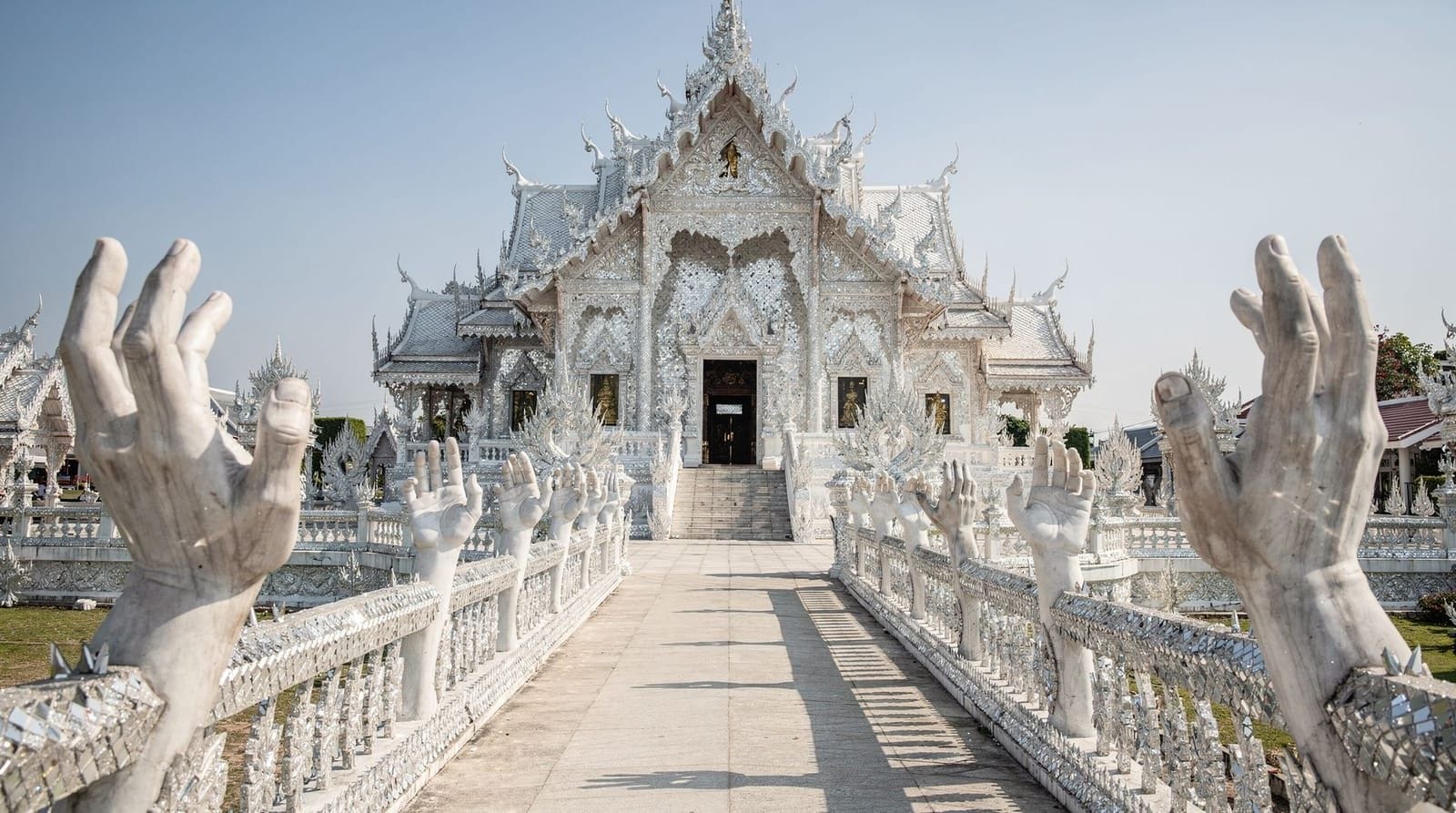
The White Temple (Wat Rong Khun), artist Chalermchai Kositpipat’s ongoing masterwork, is an all-white, mirror-mosaic complex depicting Buddhist cosmology in strikingly modern, sometimes unsettling imagery — a bridge over a sea of reaching hands representing desire, and a gold-painted building housing the restrooms rather than anything sacred. It’s the most photographed single site in northern Thailand and, as a result, the most crowded by mid-morning.
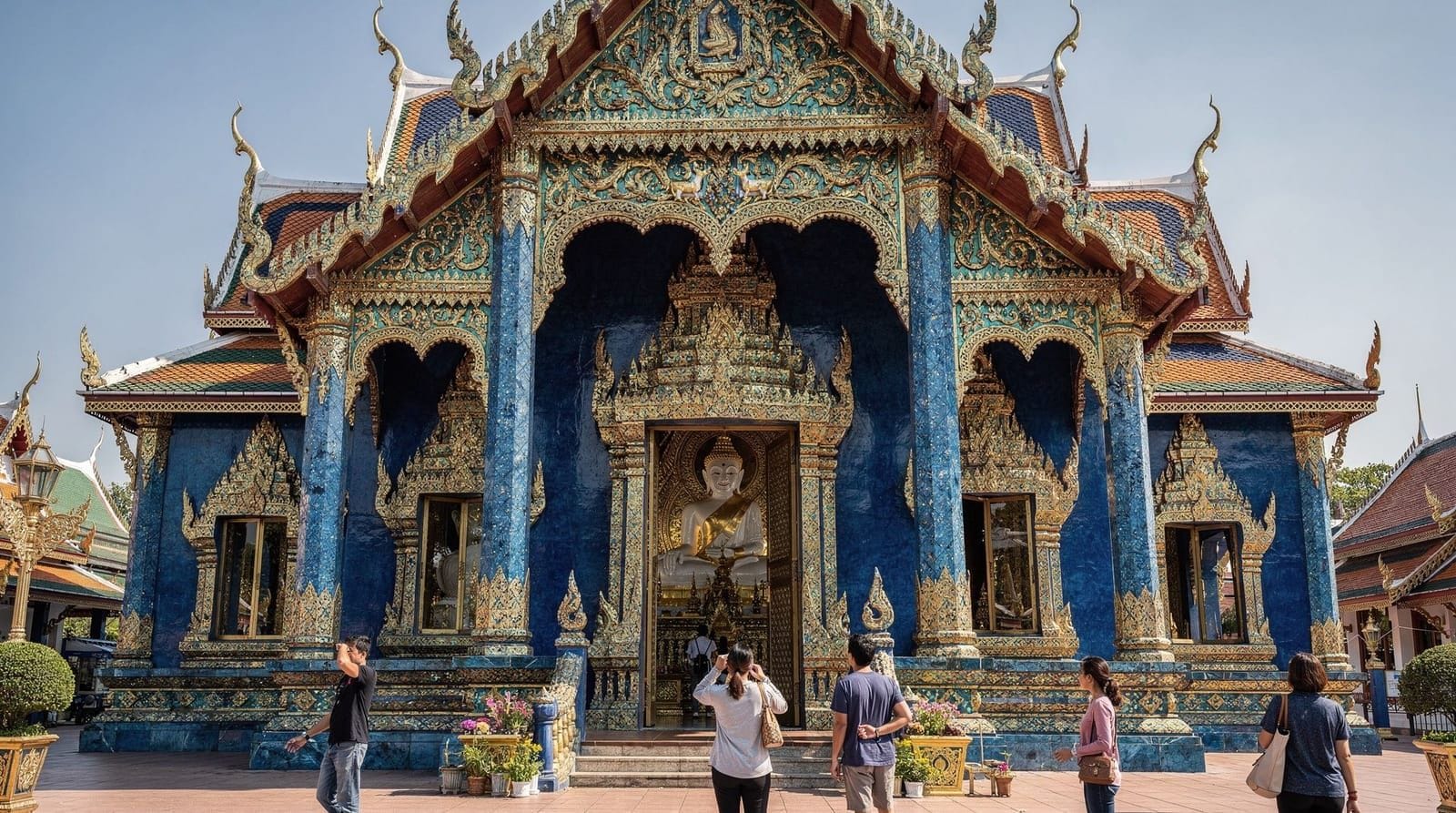
The Blue Temple (Wat Rong Suea Ten) offers a strong visual contrast — a vivid blue-and-gold complex with a striking white Buddha image inside, built more recently and drawing a fraction of the White Temple’s crowds despite comparable visual impact.
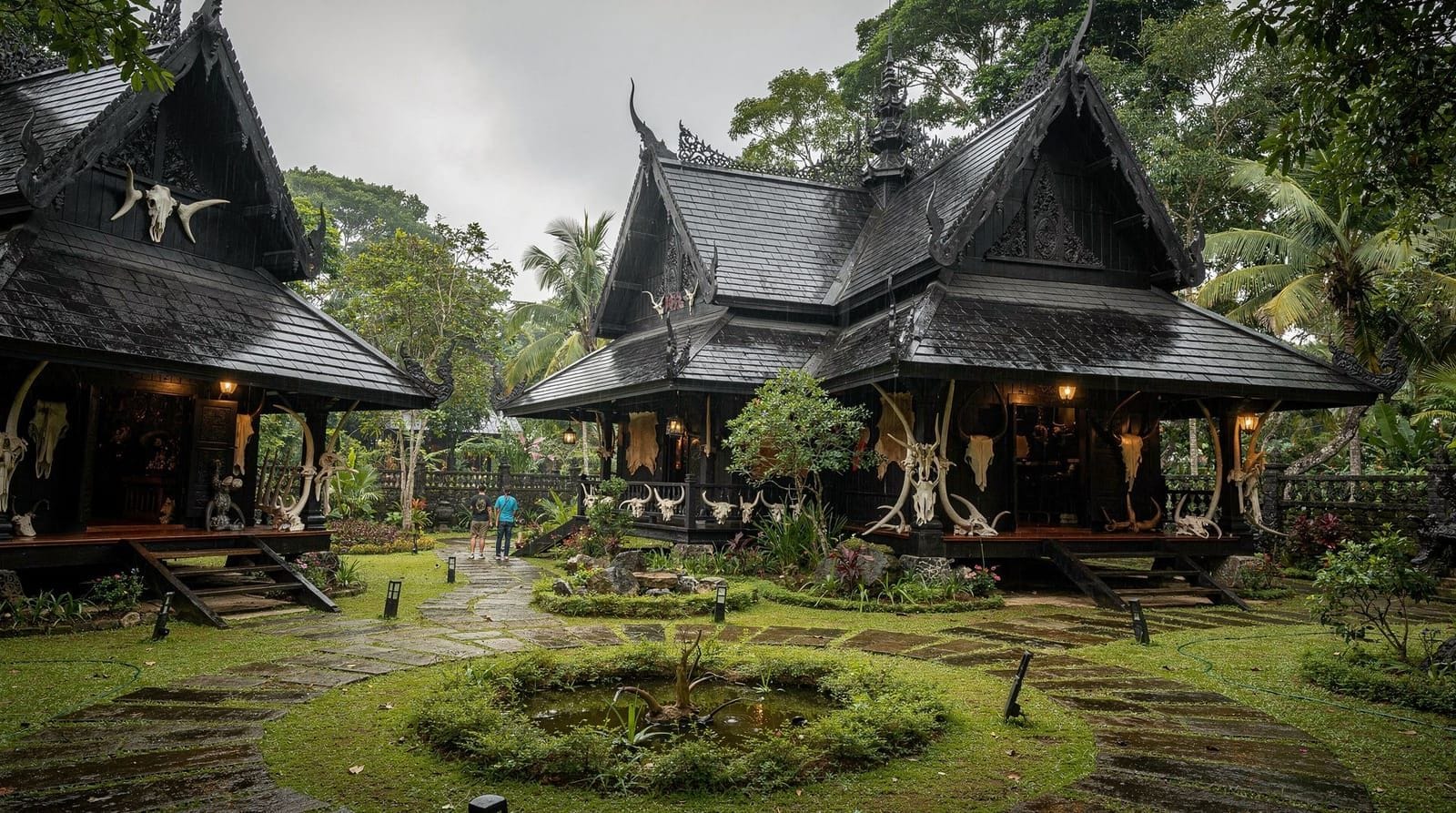
The Black House (Baan Dam) is different in kind rather than degree: the late artist Thawan Duchanee’s private museum-residence, built from dark teak structures filled with animal bones, hides, and unsettling art rather than anything overtly religious. It reads as a deliberate counterpoint to the White Temple’s serenity, and several tours pair the two for exactly that contrast.
Nearly every guided day tour from Chiang Mai bundles some combination of these three, such as a Chiang Rai White, Blue and Red Temple tour or a White Temple, Blue Temple and Black House tour, both of which handle the considerable driving between Chiang Mai and each individual site.
Golden Triangle and the Mekong
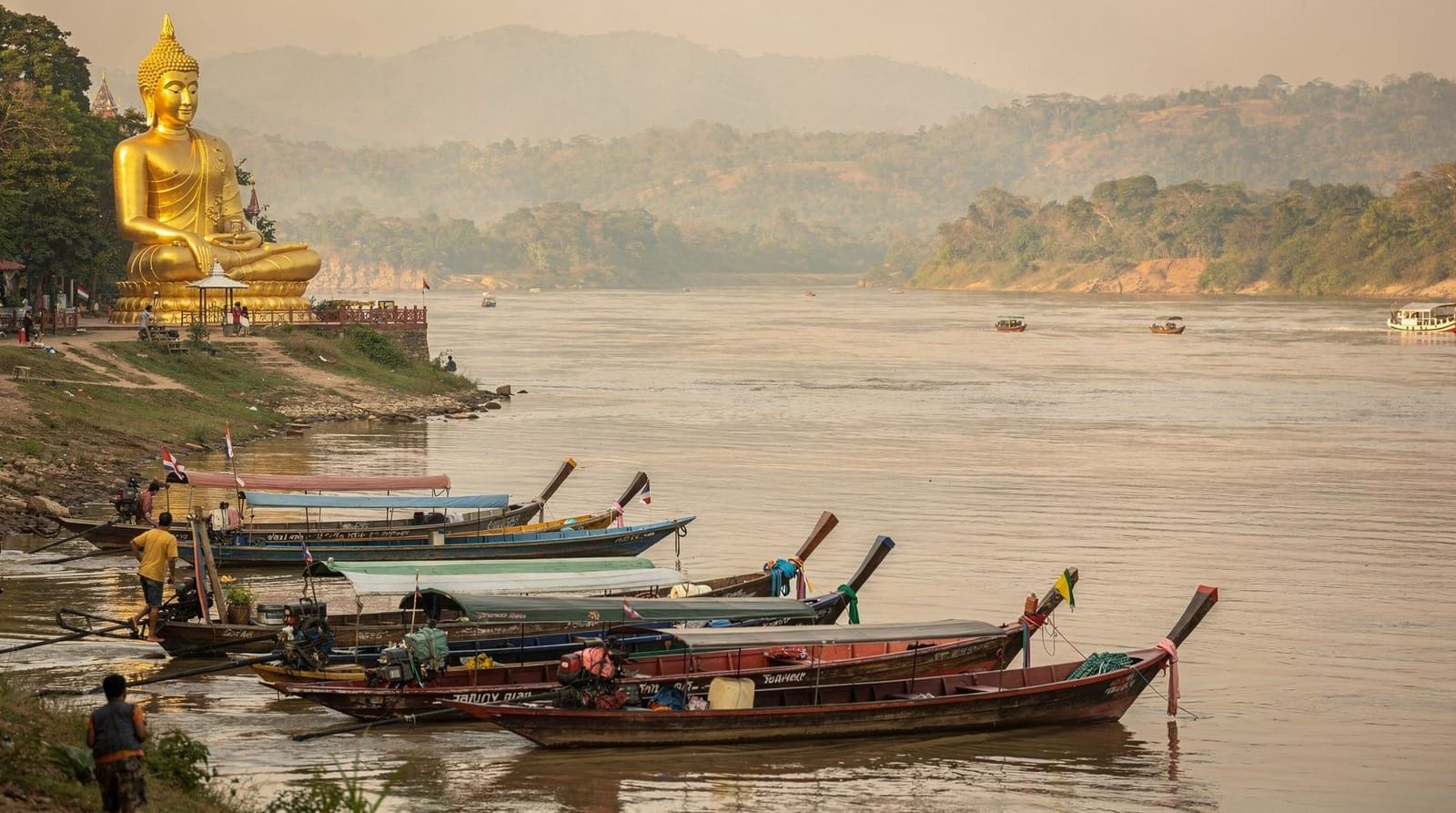
For visitors with a bit more time, the Golden Triangle at Sop Ruak — the point where Thailand, Laos, and Myanmar meet along the Mekong River — sits about an hour further north of Chiang Rai city. It’s historically significant as the former heart of the region’s opium trade, now marked by viewpoints, a large seated Buddha, the Hall of Opium museum, and longtail boat trips onto the river itself. Adding the Golden Triangle to a Chiang Rai day trip makes for a genuinely long day given the additional driving involved, which is why it’s worth checking specifically whether a Chiang Rai tour includes it or treats it as a separate add-on. A combined Chiang Rai temples and Golden Triangle tour or a boat-inclusive seven-highlights tour with a Mekong boat trip both fold this extra distance into a single organized day.
Hill tribes and Singha Park
The hills around Chiang Rai are home to several hill tribe communities — Akha, Karen, Lahu, and others — and many day tours include a village stop as part of a broader itinerary, particularly tours that also cover the Golden Triangle. As with hill tribe stops elsewhere in northern Thailand, the honest advice is the same: look for operators who frame these as visits to working communities rather than staged photo opportunities, and be specifically wary of “long-neck village” stops built around displaying Kayan women in brass neck rings as a paid attraction — a practice widely criticized as exploitative rather than an authentic cultural exchange, and one worth actively avoiding regardless of how it’s marketed.
A gentler, less ethically fraught alternative popular with families is Singha Park, a large tea-and-agriculture park on the edge of the city with rolling green fields, a small zipline, bicycle rental, and a café built around the Singha beer brand’s tea plantation. It’s a pleasant half-day stop that pairs naturally with the temple circuit, offered as part of tours like the Chiang Rai temples and Singha Park day trip.
Night bazaar and the old town
Chiang Rai’s own night bazaar is smaller and less overwhelming than Chiang Mai’s, set around a central pavilion with food stalls, live music some evenings, and handicraft vendors selling goods similar to what you’ll find in Chiang Mai but at a more relaxed pace. If you’re staying overnight rather than day-tripping, it’s a natural place to end the day, and it captures a genuinely different, more Thai-Chinese old-town atmosphere than the heavily tourist-oriented Old City back in Chiang Mai.
Getting there and getting around
Minivans and buses run regularly between Chiang Mai and Chiang Rai, taking roughly 3-3.5 hours each way depending on traffic and stops, with tickets bought at the Arcade bus terminal or through most guesthouses and travel agents. Private car transfers cover the same route with more flexibility and a door-to-door service. Short domestic flights connect the two cities as well, cutting travel time to under an hour, though this only makes sense if you’re staying overnight rather than day-tripping, since the temples and other sights still require ground transport once you land.
Within Chiang Rai itself, songthaews and Grab cover short distances around the city center, but the temple cluster and Golden Triangle are spread widely enough that a private driver, rental car, or organized tour remains the most practical way to see more than one or two sights in a day.
Day trip or overnight: how to decide
If you have limited time in northern Thailand and want to check the major temples off your list, a single guided day tour from Chiang Mai — such as a Chiang Rai highlights in one day tour — is a reasonable, efficient option that handles the long drive for you. If your itinerary has any flexibility at all, staying one or two nights in Chiang Rai lets you see the same sights at a less rushed pace, catch the night bazaar properly, and add the Golden Triangle without turning the day into a marathon. Given how far Chiang Rai sits from Chiang Mai, this is one of the clearer cases in this region where an overnight genuinely changes the quality of the experience rather than just adding convenience.
A brief history of the city
Chiang Rai predates Chiang Mai as a seat of power in the region — founded in 1262 by King Mengrai, who ruled from the city before later establishing Chiang Mai as the capital of the Lanna kingdom in 1296. This history is easy to overlook given how thoroughly the White Temple and Golden Triangle dominate the city’s modern tourist image, but it’s part of why Wat Phra Kaew and a handful of other older temples in the city center carry genuine historical weight rather than being purely modern constructions like the temples further outside town. Chiang Rai remained a comparatively quiet provincial city for most of the 20th century, and its transformation into a major tourist destination is a relatively recent phenomenon, driven largely by the White Temple’s rise to international fame from the 1990s onward alongside growing interest in the Golden Triangle’s history.
Food in Chiang Rai
Chiang Rai’s food scene draws on the same northern Thai (Lanna) culinary tradition as Chiang Mai — khao soi, sai ua (herb-packed northern sausage), and nam prik noom (roasted green chili dip) all appear on menus around the city — but with a noticeably calmer, less touristy dining scene than Chiang Mai’s Old City or Nimman districts. The night bazaar is the most convenient one-stop option for trying a range of northern dishes in a single evening, while the daytime market areas near the old town offer a more local, less curated food experience for visitors staying more than a single night. If you’re only in the city for a few hours as part of a day tour, the night bazaar (assuming your tour’s schedule includes an evening stop) is the most realistic way to sample local food without extra planning.
Where to stay if you overnight
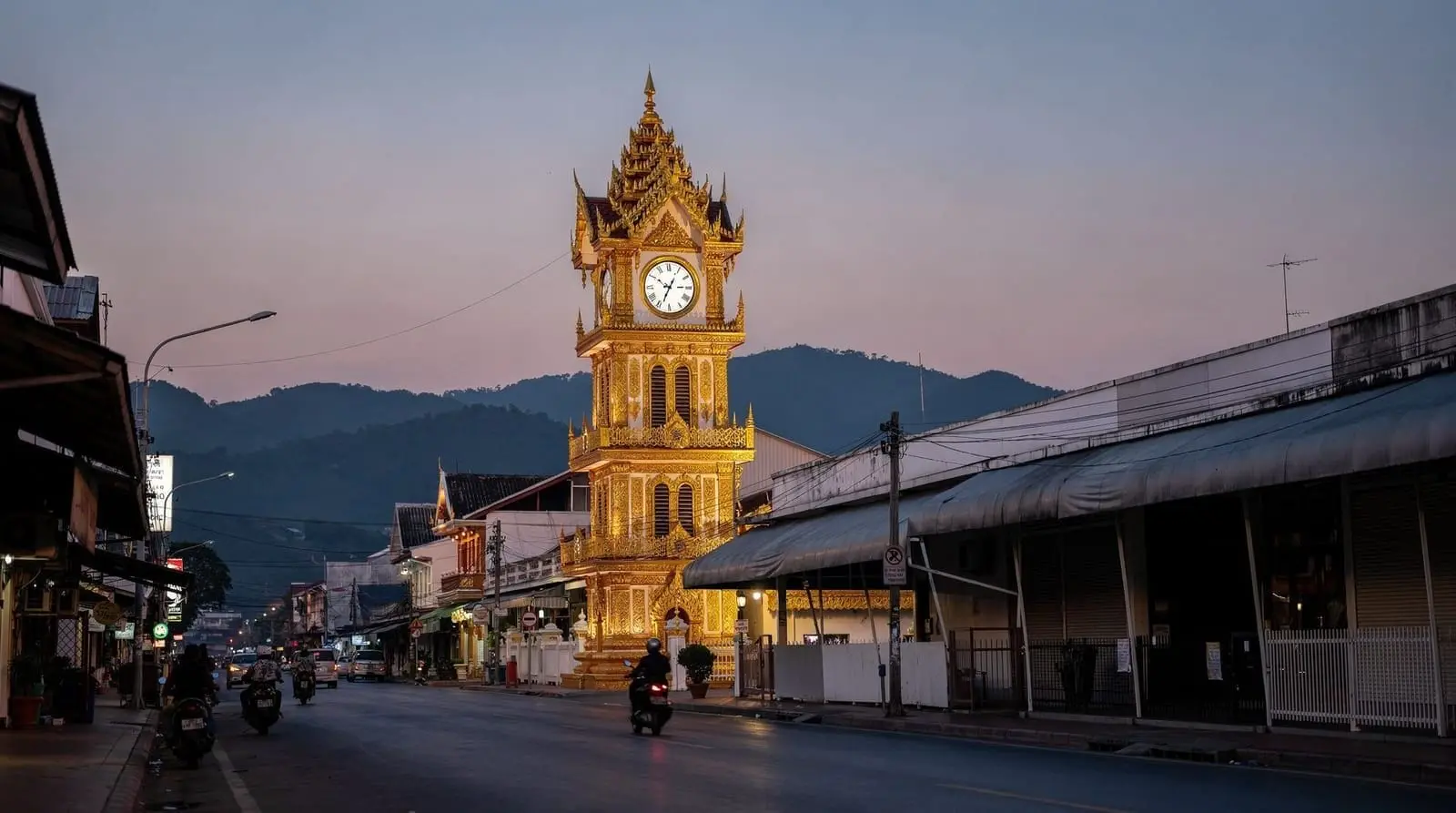
For travelers extending beyond a single day trip, Chiang Rai’s accommodation options cluster mainly around the old town near the clock tower and night bazaar, walkable to Wat Phra Kaew and the main dining areas, with a quieter, more resort-style cluster along the Kok River on the edge of town for those who’d rather have some distance from the town center. Given how spread out the region’s main sights are — the temple cluster to the south and west, the Golden Triangle an hour north — staying centrally in town keeps you within reasonable reach of a rental car, driver, or organized tour departure point regardless of which direction your day trips take you.
Combining with other northern day trips
Chiang Rai sits in the opposite direction from most of Chiang Mai’s other popular day trips. Doi Inthanon lies southwest and is a separate full day; Pai and Mae Hong Son form a mountain loop to the west, generally requiring their own multi-day trip; and Chiang Dao offers a shorter cave-and-mountain alternative closer to Chiang Mai if a second long drive north doesn’t appeal. Because of the distances involved, most travelers treat Chiang Rai (with the Golden Triangle) as its own dedicated day or overnight rather than trying to combine it with any of these other regions in a single trip.
Weather and seasonal planning
Chiang Rai follows the same broad seasonal pattern as Chiang Mai — a cool, dry season from November to February, a hot season from March to May, and a rainy season from June to October — but its position further north and closer to the Myanmar and Laos borders means the February-to-April burning season, when farmers across the region clear fields by fire, often produces noticeably worse air quality here than in Chiang Mai itself. If clear mountain views and comfortable outdoor walking matter to your trip, the November-to-February window is the more reliable choice for Chiang Rai specifically, even more so than for Chiang Mai.
Frequently asked questions about Chiang Rai
How far is Chiang Rai from Chiang Mai?
About 180km, roughly 3-3.5 hours by road. Short domestic flights are also available, cutting travel time to under an hour.
Can I visit the White Temple, Blue Temple, and Black House in one day from Chiang Mai?
Yes, most guided day tours combine all three, though it makes for a long day given the additional round-trip driving time from Chiang Mai. Staying overnight in Chiang Rai spreads the same sights over a calmer schedule.
Is Chiang Rai worth an overnight stay, or is a day trip enough?
A day trip covers the main temples, but an overnight lets you add the night bazaar, Wat Phra Kaew, and the Golden Triangle without the six-plus hours of round-trip driving that a single day trip requires.
What is Wat Phra Kaew in Chiang Rai known for?
It’s where the Emerald Buddha — now housed in Bangkok’s Grand Palace — was originally discovered inside a lightning-struck chedi in 1434. The Chiang Rai temple now holds a jade replica.
Should I visit a hill tribe village near Chiang Rai?
Choose carefully. Genuine village visits framed around everyday community life are worthwhile, but avoid “long-neck village” stops that display Kayan women for photos — widely criticized as exploitative rather than authentic cultural exchange.
Is the Golden Triangle included in most Chiang Rai tours?
Not always — some tours cover only the temple cluster. Check the itinerary specifically if you want the Golden Triangle included, since it adds meaningful driving time north of the city.
When is air quality worst in Chiang Rai?
Roughly February through April, during the regional agricultural burning season, which can affect Chiang Rai even more noticeably than Chiang Mai given its proximity to cross-border burning in Myanmar and Laos.
What’s the best way to get from Chiang Mai to Chiang Rai?
Minivan or bus from the Arcade terminal (roughly 3-3.5 hours), a private car transfer, or a guided day tour that includes transport. Short flights exist but only make sense if you’re staying overnight.
Top experiences
Bookable activities with verified prices and instant confirmation on GetYourGuide.

Chiang Rai White, Blue and Red Temple Tour
Chiang Mai: Chiang Rai Highlights in One Day

From Chiang Mai: Chiang Rai Temples and Golden Triangle Tour

Chiang Mai: White Temple, Blue Temple & Black House Tour
Chiang Rai: 7 Most Famous Highlights with Mekong Boat Trip