Nimmanhaemin
Nimmanhaemin is Chiang Mai's café and design district near Chiang Mai University, with MAYA mall, One Nimman plaza and a dense nightlife scene.
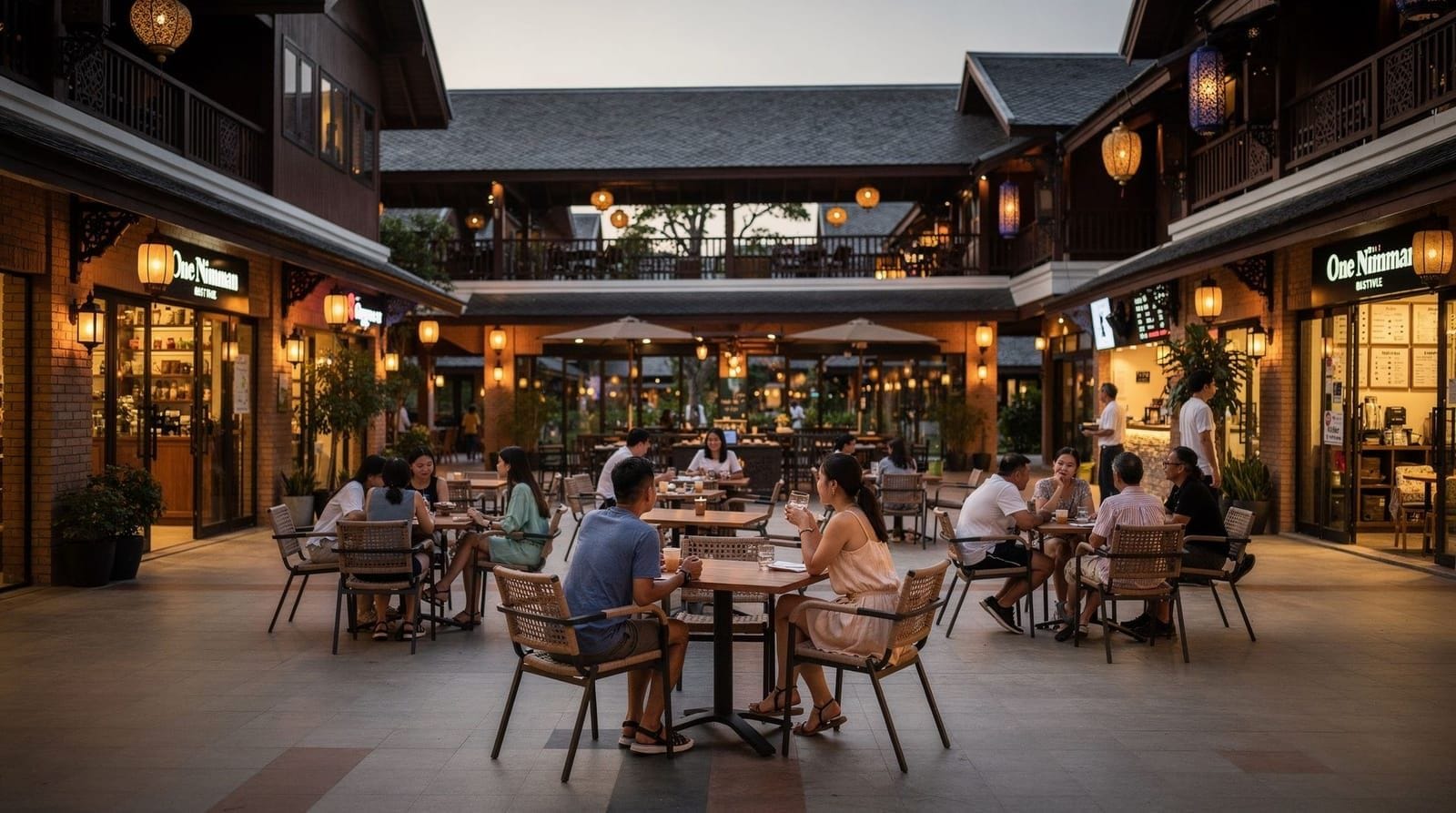
Chiang Mai: Let's Relax Spa Chiang Mai One Nimman
Quick facts
- Getting there
- Songthaew from Old City ~30-40 THB, Grab ~60-90 THB, or a 20-25 min walk from Tha Phae Gate
- Key sight
- MAYA Lifestyle Shopping Center and Nimmanhaemin Soi 1-17 café strip
- Time needed
- Half day for cafés and shopping, a full evening if adding dinner and bars
- Best time
- Late morning for coffee, early evening for dinner and Think Park's night market stalls
- Typical cost
- 80-180 THB for specialty coffee, 150-400 THB for a sit-down meal
Nimmanhaemin, usually shortened to Nimman by everyone who spends more than a day here, is the neighbourhood west of the Old City moat where Chiang Mai stops feeling like a temple town and starts feeling like a small, walkable design city. The main artery, Nimmanhaemin Road, runs north from Huay Kaew Road up past Chiang Mai University, and it is flanked by a dense grid of numbered sois (Soi 1 through Soi 17) packed with specialty coffee roasters, concept boutiques, art galleries, co-working spaces and a nightlife strip that only wakes up after dark.
Quick answer: Nimman is Chiang Mai’s café, design and nightlife district, centred on Nimmanhaemin Road between Huay Kaew Road and Chiang Mai University, roughly a 20-minute songthaew ride or a short Grab from the Old City. Come for a morning of coffee-shop hopping and boutique browsing, come back in the evening for dinner, Think Park’s night market stalls and the rooftop bar scene, and budget 300-600 THB for coffee plus a meal if you are doing both halves of the day.
Why Nimman looks different from the rest of the city
Everywhere else in Chiang Mai proper, the visual grammar is teak, gold leaf and whitewashed temple wall. Nimman is glass frontages, exposed concrete, plywood shelving and hand-lettered signage — the look of a neighbourhood that grew up around Chiang Mai University’s design and architecture faculties and the young Thai creatives who stayed in the area after graduating. That history matters for what you will actually find here: independent furniture studios, small-batch ceramics shops, gallery spaces that double as bars, and a coffee scene deep enough that Chiang Mai is genuinely argued to rival Old City’s temple density as the thing the city is known for internationally.
The practical result is that Nimman reads as more expensive and more Western than Old City temple-hopping, Warorot Market’s wet-market chaos or Night Bazaar’s bargain souvenir stalls. Coffee here runs 80-180 THB a cup against 30-40 THB for basic Thai iced coffee (โอเลี้ยง) elsewhere in the city, and a sit-down dinner easily clears 300-400 THB per person once drinks are added. That is still cheap by international standards, but it is a genuinely different price bracket from the rest of Chiang Mai, and it is worth knowing before you arrive expecting street-food prices.
Getting to and around Nimman
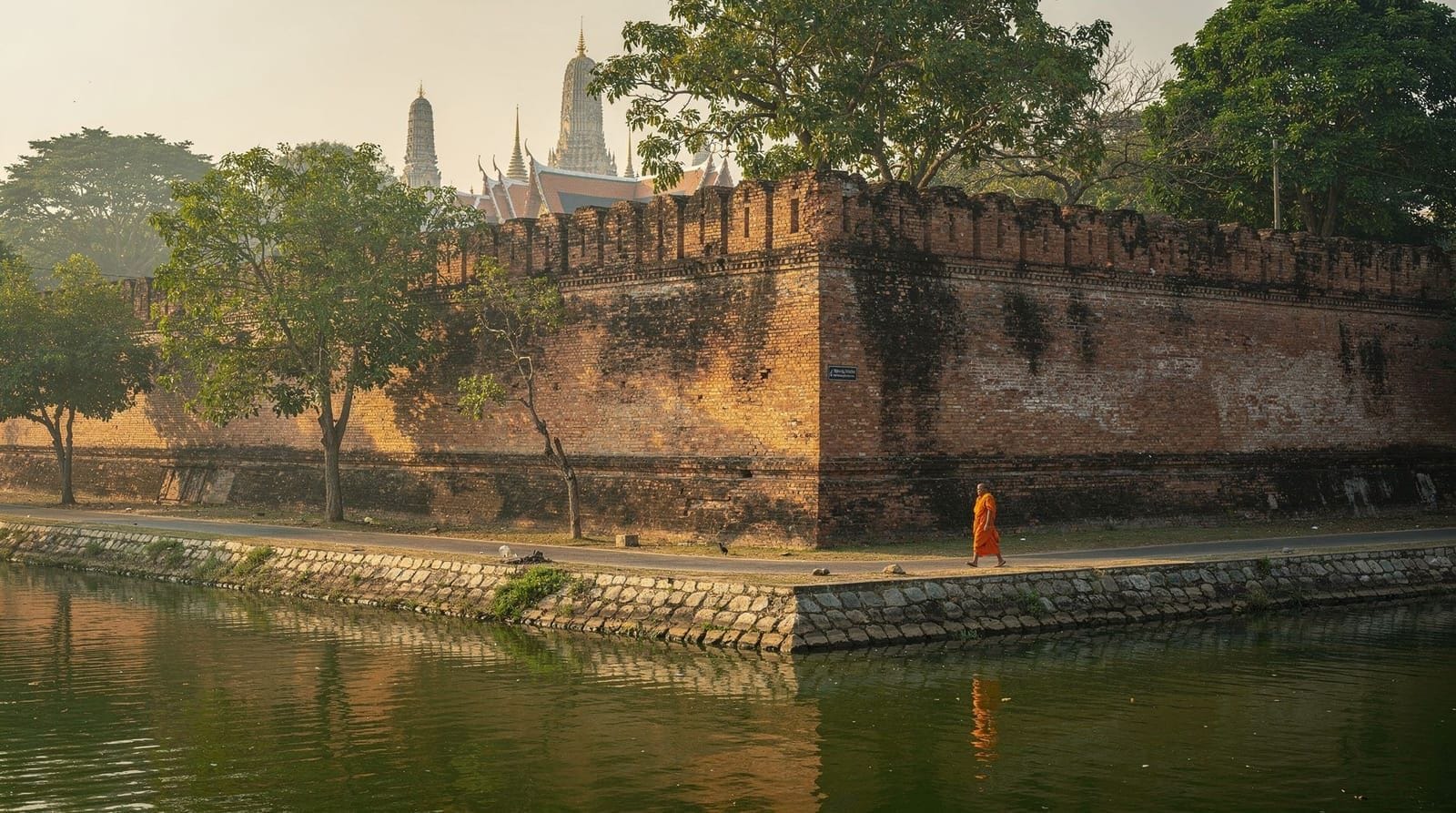
Nimman sits west of the moat, on the far side of Huay Kaew Road from Chiang Mai University’s main gate. From inside the Old City, a red songthaew (shared pickup truck taxi) costs roughly 30-40 THB per person if you are heading in the same general direction as other passengers; expect to pay more, or negotiate a private fare of 100-150 THB, if you want a direct drop at a specific soi. Grab is the more predictable option — typically 60-90 THB from Tha Phae Gate — and useful late at night when songthaews thin out.
Walking is entirely feasible if you are already near Huay Kaew Road: it is about 20-25 minutes on foot from Tha Phae Gate, mostly flat, though there is minimal shade and Chiang Mai’s midday heat makes an 11am walk considerably less pleasant than a 5pm one. Once inside Nimman itself, the neighbourhood is compact enough to explore on foot — most of what matters is within the Soi 1 to Soi 17 grid, a rectangle you can walk end to end in under 15 minutes, though the actual café-hopping takes considerably longer once you start ducking down side sois.
What to see and do
Nimmanhaemin Road and the numbered sois. The core experience is simply walking the sois: Soi 1 and Soi 3 have the highest concentration of long-running cafés and small boutiques, while sois further north toward the university skew toward student-oriented food stalls and cheaper eats. There is no single “correct” route — the pleasure of Nimman is aimless wandering into whichever shopfront looks interesting, which is a different rhythm from the itinerary-driven temple circuit in Old City.
MAYA Lifestyle Shopping Center. The big glass-fronted mall anchoring the southern end of Nimman, MAYA combines a standard shopping-mall floor plan (fashion chains, a cinema, a supermarket basement) with a rooftop and upper-floor restaurant scene that has decent city views back toward Doi Suthep mountain on a clear evening. It is air-conditioned, which after two hours of walking sois in the heat is not nothing.
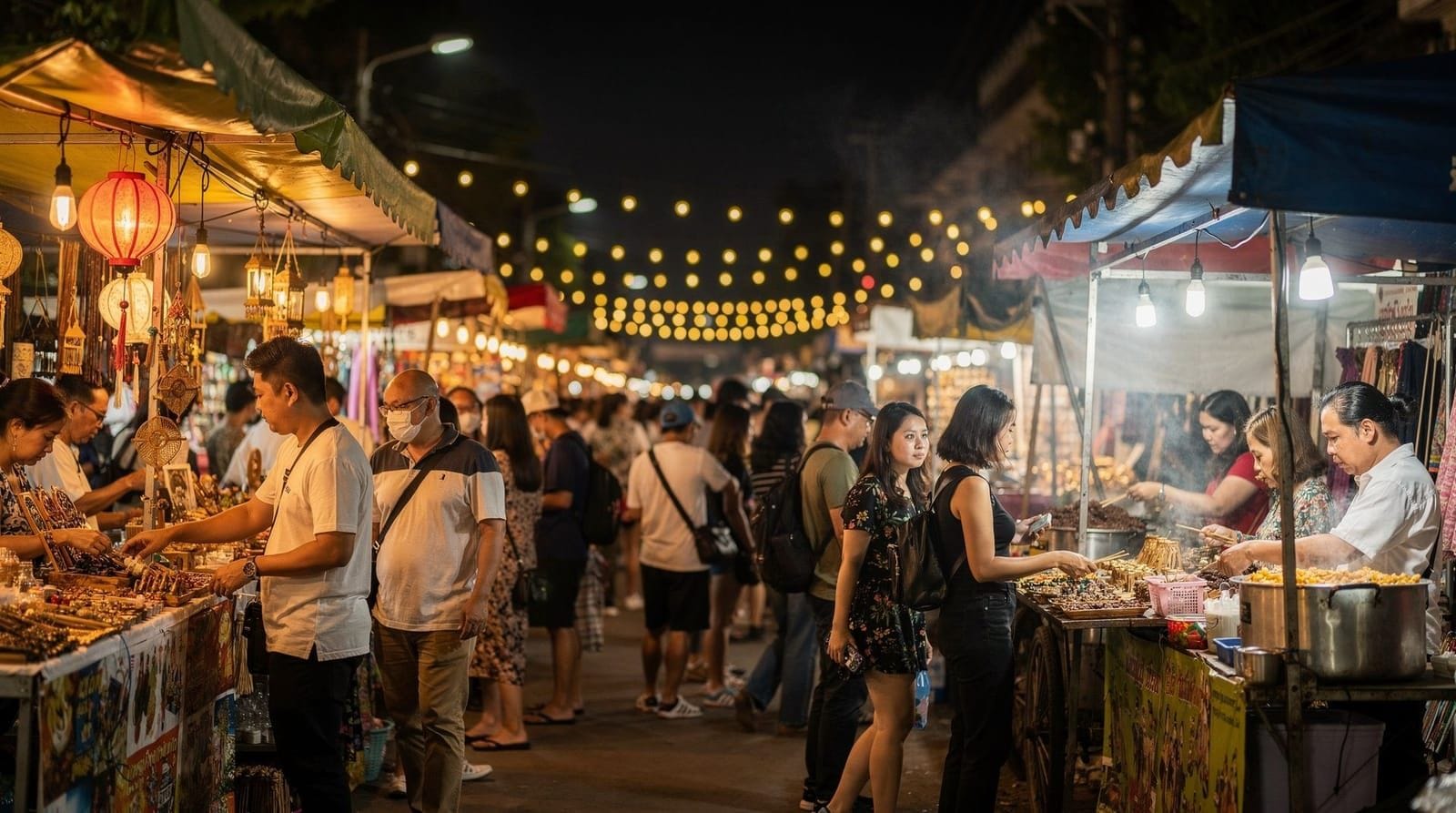
Think Park and the Nimman night market stalls. In the evening, the open-air plaza behind MAYA fills with folding-table vendors selling street food, drinks and small crafts, with live music from a small stage most nights. It is smaller and far less overwhelming than Night Bazaar or the Sunday Walking Street, and functions more as a casual after-dinner hangout spot than a shopping destination.
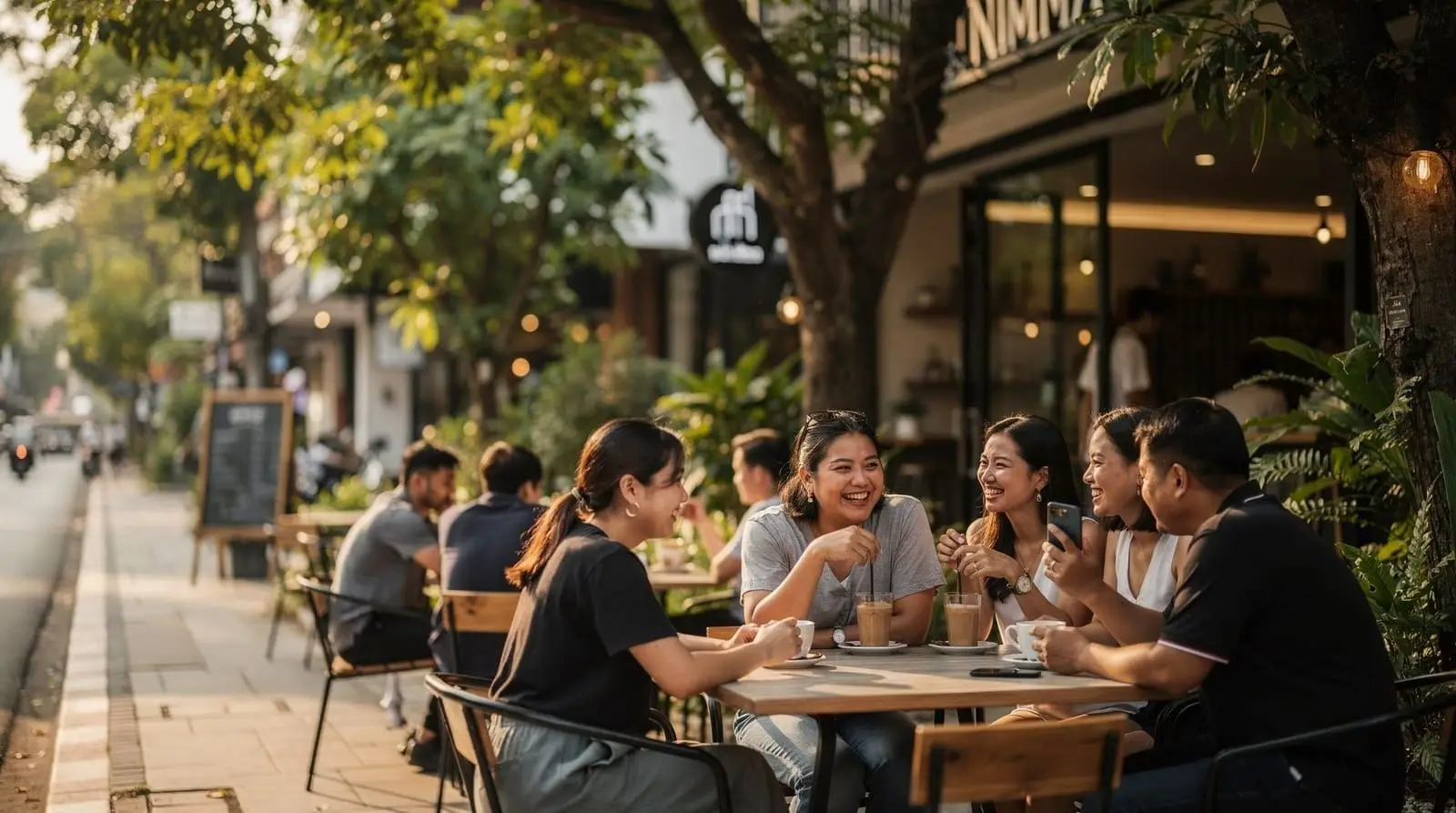
Café-hopping. This is genuinely the main activity, and it deserves to be treated as one rather than an afterthought. Nimman’s coffee scene runs the full range from third-wave specialty roasters serving single-origin pour-overs to design-forward chains and quiet workspace cafés with strong wifi and all-day laptop tolerance — which is exactly why the neighbourhood has become Chiang Mai’s default digital-nomad base. If you only have one café stop in you, prioritise a shop actually roasting on-site over one simply reselling beans; both exist here in roughly equal numbers.
Boutiques and design shops. Ceramics, handmade leather goods, small-batch textiles and locally designed homeware fill the ground floors along Soi 1 through Soi 9. Prices are fixed rather than negotiable, unlike the market stalls at Warorot or Saturday Walking Street, which is either a relief or a disappointment depending on how much you enjoy haggling.
Nightlife. Nimman has Chiang Mai’s densest concentration of bars aimed at a mixed local-expat-tourist crowd, from craft cocktail spots to rooftop bars with mountain views to a livelier late-night strip near Soi 9. It is a meaningfully different scene from the backpacker bars around Night Bazaar — quieter, more design-conscious, and generally more expensive per drink.
Weather, seasons and crowd patterns
Nimman is comfortable to walk year-round compared with more exposed parts of the city, since the density of buildings provides intermittent shade along most sois, but the season still shapes the experience. November through February brings Chiang Mai’s cool, dry season, with mornings genuinely pleasant for an outdoor café crawl and evenings comfortable enough to linger at Think Park without needing air conditioning. March through May is the hot season, compounded in Nimman by the reduced airflow between closely packed buildings, when an air-conditioned café stop becomes less a preference and more a necessity by early afternoon; this period can also coincide with regional agricultural burning that affects air quality across northern Thailand, worth checking before a trip if you have respiratory sensitivities. The rainy season, roughly June through October, brings short, heavy afternoon downpours rather than all-day rain, which in practice means Nimman’s covered café interiors and boutique awnings make it one of the more resilient neighbourhoods to explore even when a sudden shower hits.
Crowd patterns follow a different rhythm than the temple circuit. Nimman is quietest on weekday mornings and busiest on weekend evenings, when both local visitors and tourists converge on Think Park and the bar strip; if a calmer café experience is the priority, a weekday before noon is the reliable window.
Where to stay if you base yourself in Nimman
Basing a stay in Nimman trades temple-walking convenience for café convenience and, usually, a slightly higher nightly rate than equivalent rooms near the Old City moat. It suits travellers staying a week or longer who want reliable wifi, a walkable food scene and an easy Grab ride to everything else, more than it suits a first-time two-night visitor whose main goal is temple-hopping. If you do base here, a spa session at Let’s Relax inside One Nimman is an easy way to fill an evening between café stops, and it sits directly inside the plaza described on the One Nimman page.
Digital nomads and longer stays
Nimman’s reputation as Chiang Mai’s default digital-nomad base did not happen by accident. The neighbourhood combines three things remote workers actually need in combination: reliable, fast wifi in a dense cluster of cafés built specifically to tolerate all-day laptop use, short-term serviced apartments and condos within walking distance of that café cluster, and a food and social scene dense enough to not feel isolating during a multi-week or multi-month stay. Compare that to Old City, where guesthouses are plentiful but cafés built for long laptop sessions are thinner on the ground, or Night Bazaar’s area, which skews toward short hotel stays rather than month-long rentals.
If you are considering a longer stay rather than a day visit, a few practical notes are worth knowing in advance. Condo and apartment rental in Nimman runs noticeably higher than equivalent space in less central parts of the city, reflecting the demand from exactly this remote-work crowd. Café wifi is generally reliable but varies shop to shop — busier cafés during peak hours can slow down noticeably, so it is worth having a backup spot rather than committing to one single café for a full working day. And while the neighbourhood feels walkable, the numbered soi grid is genuinely large enough that renting a bicycle or keeping Grab installed makes moving between apartment, café and gym considerably easier than doing everything on foot in the heat.
Co-working spaces have also grown alongside the café scene, offering day passes or monthly memberships as an alternative to laptop-squatting in a coffee shop, particularly useful during the rainier months when finding a table with good lighting and stable power becomes more competitive. None of this changes what a short-stay tourist needs to know — but if Nimman is where you end up basing for more than a few days, it is worth treating the neighbourhood as a small, functional home base rather than just a café-hopping itinerary stop.
Pairing Nimman with the rest of Chiang Mai
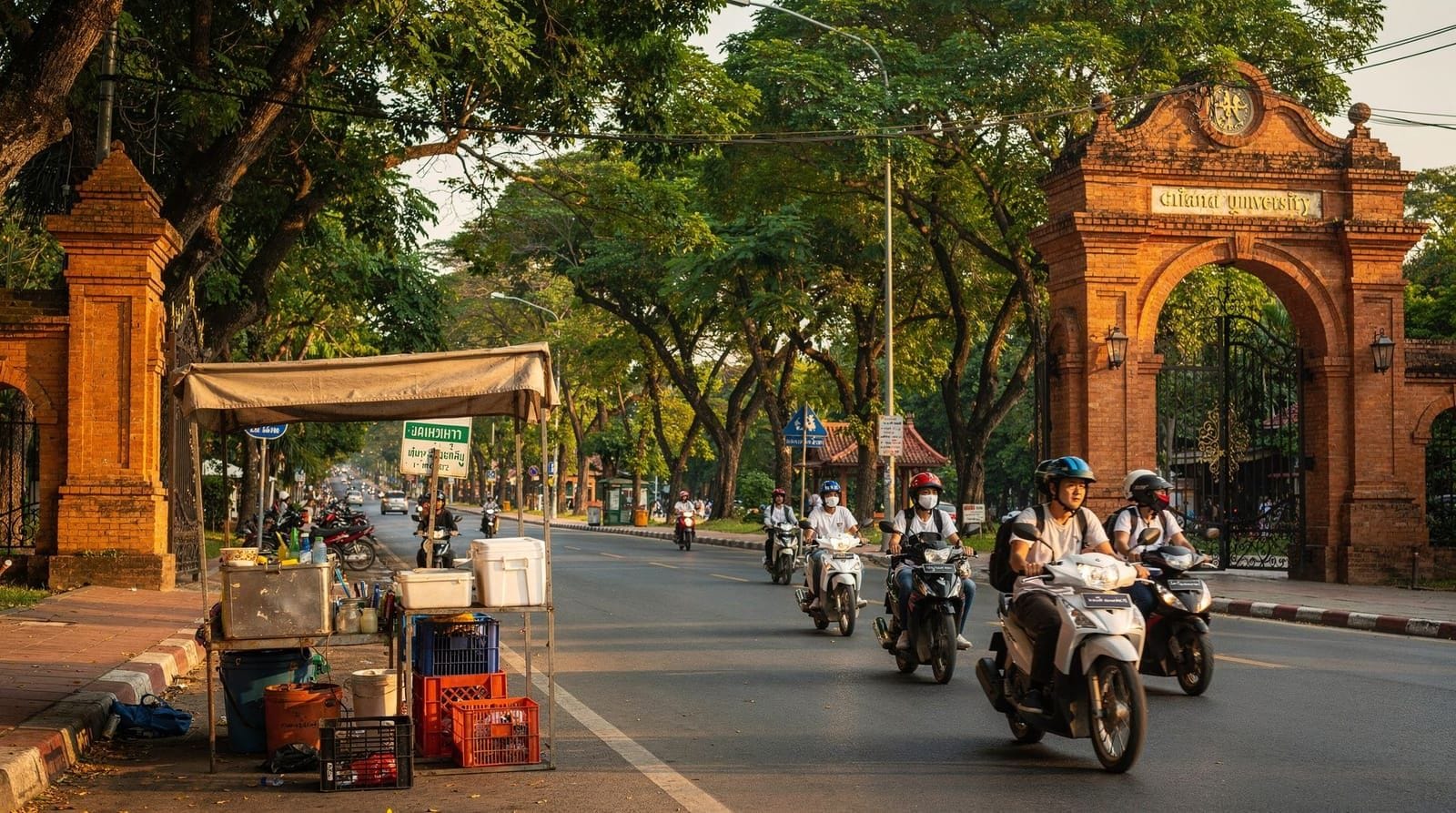
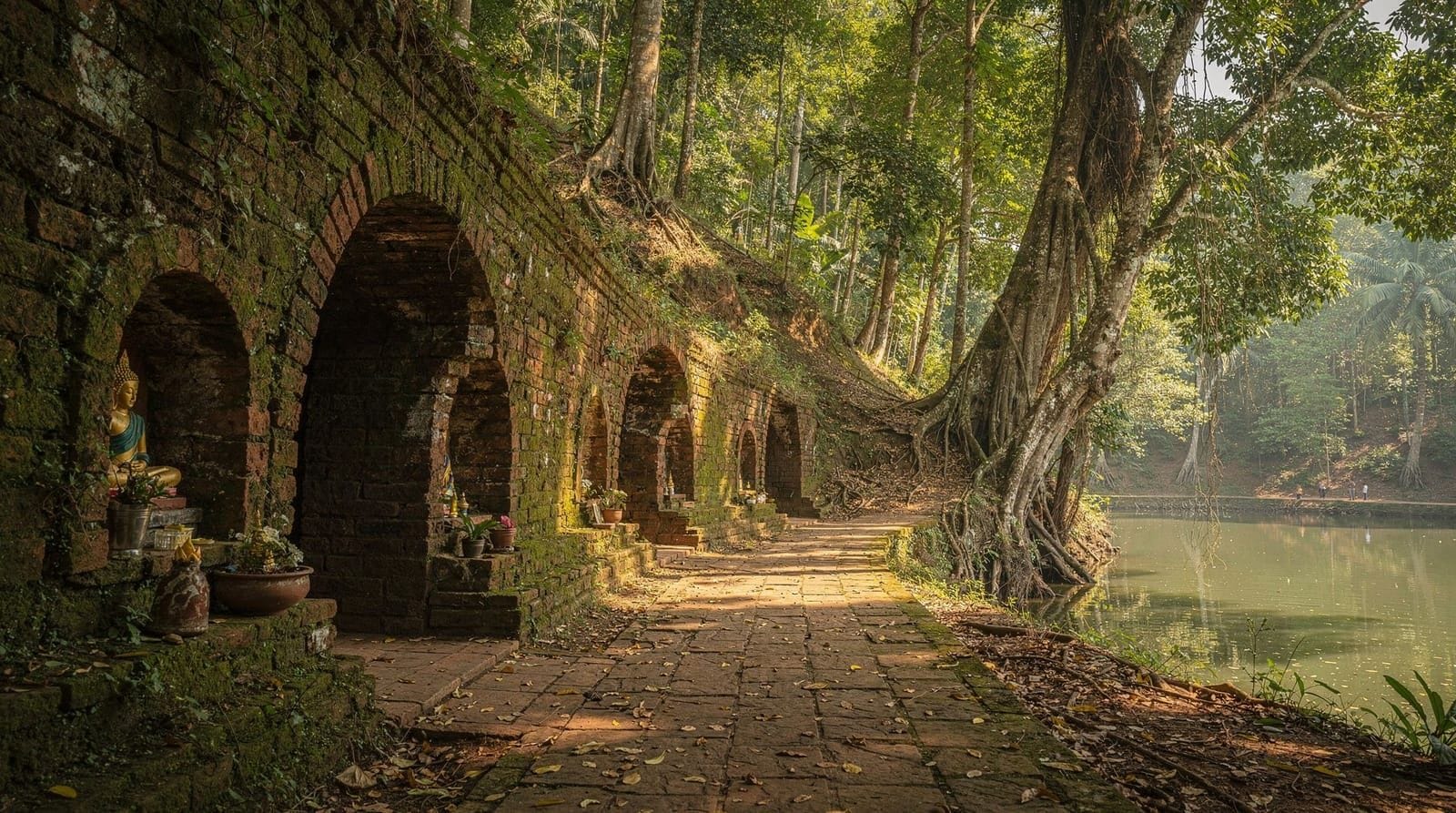
Nimman sits close enough to several other sights that it slots naturally into a wider day rather than needing its own dedicated trip. Chiang Mai University and Huay Kaew Road are a short songthaew ride north, and make sense as a same-day pairing if you want the campus and Huay Kaew’s night-market food stalls alongside Nimman’s café scene. Wat Umong’s forest tunnels and talking-tree proverbs are a genuinely calm contrast a little further southwest, worth combining with Nimman as a “café then temple” half-day. Heading the other direction, it is an easy Grab back into Old City for a temple circuit, or up toward Doi Suthep if you are chasing sunset views over the city.
For a spa stop that ties directly into a Nimman day, Oasis Spa’s Nimman location runs traditional Thai massage and facial packages a short walk from the main café strip, and works well slotted between an afternoon of shopping and an evening dinner reservation. If your Nimman visit is really an excuse to explore Chiang Mai’s wider coffee culture, the off-the-map jungle coffee farm trek is the closest bookable experience to seeing where the beans in your Nimman flat white actually come from, combining a hill-tribe farm visit with a hands-on roast-and-brew session outside the city.
Frequently asked questions about Nimmanhaemin
Is Nimmanhaemin worth visiting in Chiang Mai?
Yes, for a half-day or evening if you enjoy café culture, design shopping or a mixed local-expat nightlife scene. It is not, however, a must-see on the level of Old City’s temples or Doi Suthep, and short-stay visitors should prioritise those first.
How do I get from Old City to Nimman?
A songthaew costs roughly 30-40 THB shared or 100-150 THB private, a Grab runs about 60-90 THB, and walking takes 20-25 minutes from Tha Phae Gate. Grab is the most predictable option, especially after dark.
What is the difference between Nimman and One Nimman?
Nimmanhaemin is the entire district and its main road, roughly a kilometre-long grid of numbered sois. One Nimman is a single brick-paved plaza development within that district, with its own clock tower, boutiques and weekend market.
Is Nimman expensive compared to the rest of Chiang Mai?
Yes, noticeably. Coffee runs 80-180 THB against 30-40 THB for basic Thai iced coffee elsewhere, and restaurant meals are typically 150-400 THB per person, higher than equivalent food at Warorot Market or street stalls near Night Bazaar.
Is Nimman walkable, or do I need transport?
The core Soi 1-17 grid is walkable in itself — under 15 minutes end to end — but getting to Nimman from elsewhere in the city is easier by songthaew or Grab than on foot, especially in midday heat.
What time of day is best for Nimman?
Late morning (9-11am) for café-hopping before the heat peaks, and early evening (5pm onward) for dinner, Think Park’s night market stalls and the bar scene. Midday is the least pleasant window for walking the sois.
Can I combine Nimman with Chiang Mai University in one visit?
Yes — CMU and Huay Kaew Road sit directly north of Nimman and are an easy same-day pairing, particularly if you want to add Huay Kaew’s night market or a walk around Ang Kaew reservoir.
Are there family-friendly things to do in Nimman?
Nimman skews toward adults — cafés, boutiques and bars — though MAYA’s cinema and food court, and Think Park’s relaxed evening atmosphere, work reasonably well with older children. Families with younger kids will generally get more out of Mae Rim’s elephant and garden attractions or Doi Suthep.
Top experiences
Bookable activities with verified prices and instant confirmation on GetYourGuide.