Chiang Mai Old City
The moated square that anchors Chiang Mai: gates, temples, walking streets, and where to base yourself for the whole trip.
Chiang Mai: 3 Hour Old City and Temples Guided Walking Tour
Duration: 3 hours
Quick facts
- Getting there
- 20-min walk from Nimman, or songthaew ~30 THB ($0.85) from anywhere in town
- Distance from airport
- 3 km / 10-15 min by Grab (~80-120 THB, $2.20-3.30)
- Key sight
- Wat Chedi Luang's ruined chedi and the city pillar shrine
- Time needed
- Half a day for the highlights, 2 full days to see every temple unhurried
- Best time
- 7-9am, before tour buses and midday heat
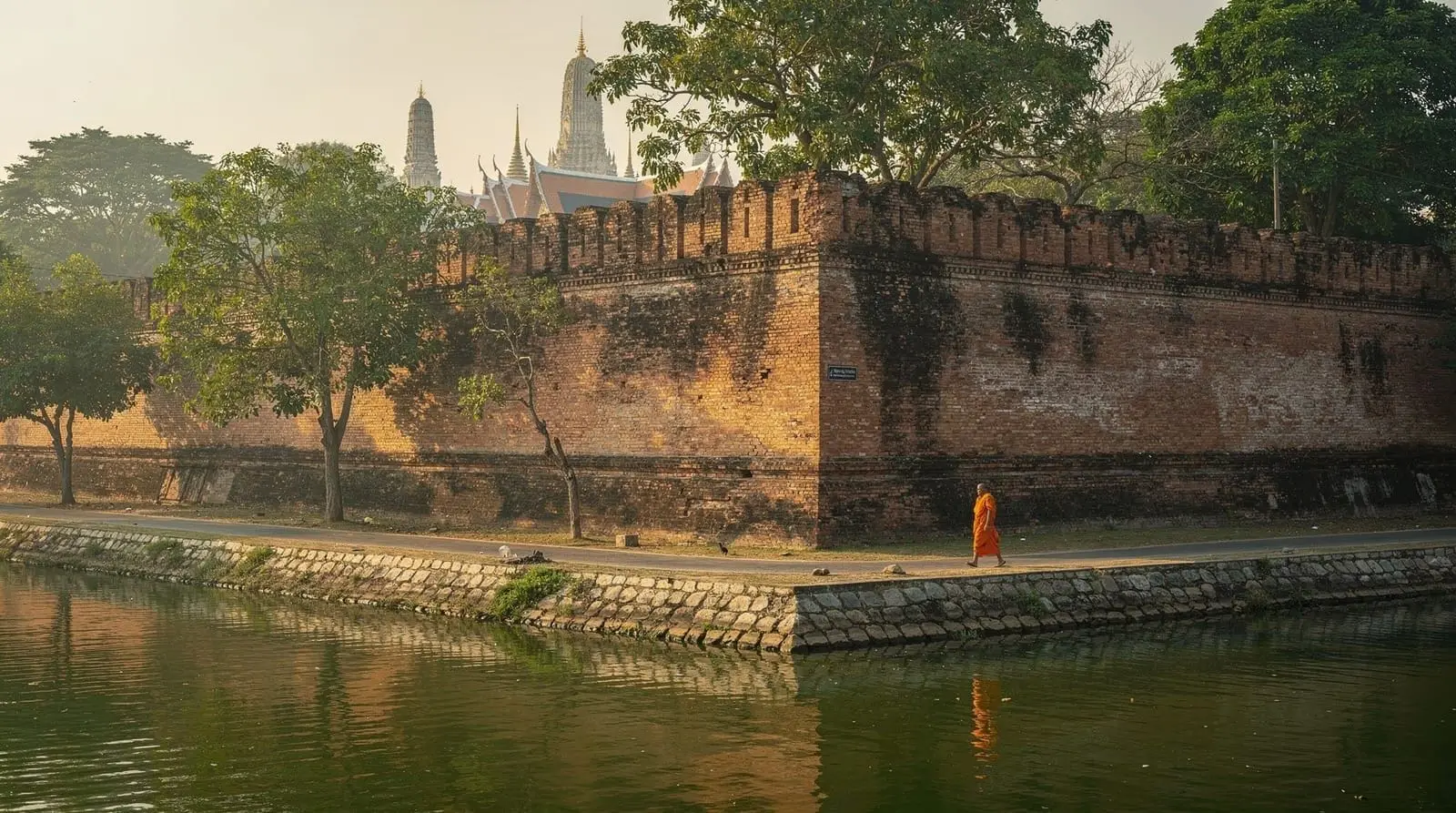
Chiang Mai’s Old City is a one-square-kilometer grid bounded by a brick-and-earth moat and the remnants of a 700-year-old defensive wall, and almost everything a first-time visitor pictures when they think of this city happens inside or just outside that square. It was laid out in 1296 as the fortified capital of the Lanna kingdom, and the moat still runs unbroken around all four sides today, crossed by bridges at the gates and lined with a walking-and-jogging path that locals use every evening once the heat breaks.
Quick answer: the Old City is a walkable square moat-and-wall district packed with over 30 working Buddhist temples, anchored by Tha Phae Gate on the east side and Wat Chedi Luang near the center. Most visitors base themselves here for 2-4 nights, walk or use red songthaew trucks to get around, and treat it as a hub for day trips to Doi Suthep and beyond.
Why a moat and wall in the first place
King Mengrai chose this exact square in 1296 after unifying the Lanna kingdom, moving his capital from Chiang Rai and needing a defensible position between the Ping River and the mountains. The moat and earthen rampart (later rebuilt in brick) protected against Burmese incursions for centuries — Chiang Mai fell under Burmese control from the 16th to 18th centuries, which is part of why so much surviving temple architecture shows Burmese as well as Lanna and Sukhothai influence. The wall was never meant to be pretty; it was a working fortification, and the corner bastions and gate remnants you see today are the practical bones of that defense system, not decoration added later.
Layout: gates, moat, and how the grid works
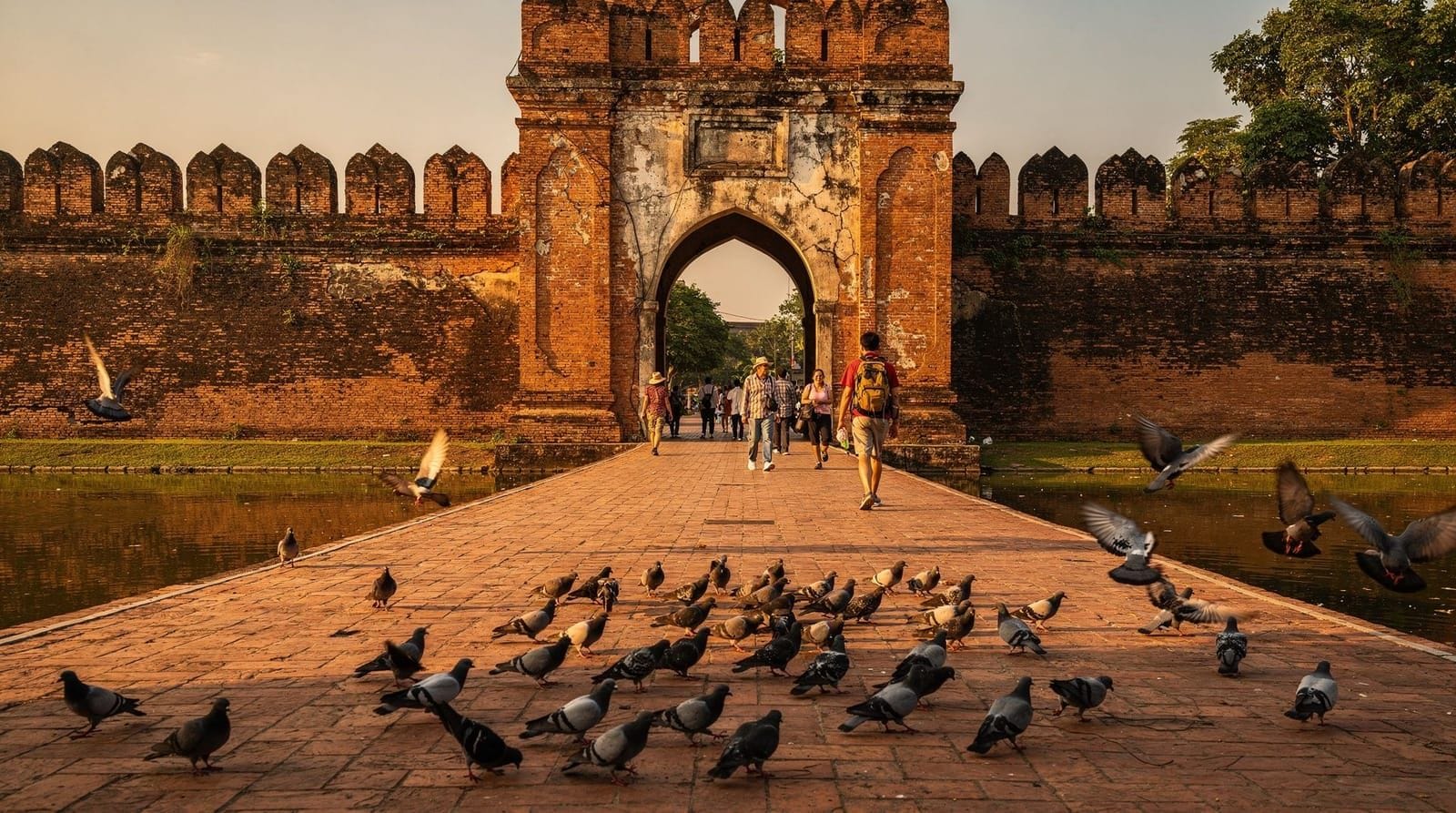
The wall was originally a full brick fortification; only fragments and reconstructed corner bastions survive today, but the square shape and the five gates are intact and still used as the mental map everyone in Chiang Mai navigates by. Tha Phae Gate on the east side is the busiest and most photographed — it’s where the Sunday Walking Street market begins and where most songthaews and tuk-tuks cluster waiting for fares. Chang Phuak Gate to the north leads toward the night market that locals (not tourists) actually shop at; Suan Dok Gate to the west opens toward Wat Umong and the university district; Chiang Mai Gate to the south is the unglamorous, functional one, closest to the day market.
Inside the square, streets run in a rough grid but none of them are numbered avenue-style, so orientation takes a day to click. The moat itself is the most reliable landmark — if you can see water, you know which edge of the square you’re on. Locals cross the moat at the four corner intersections or at pedestrian bridges near the main gates; renting a bicycle for a half-day (widely available for 50-100 THB, $1.40-2.80) is one of the more pleasant ways to get oriented, since the whole loop around the inside of the moat is under 4 km.
Temples: what to prioritize and what to skip
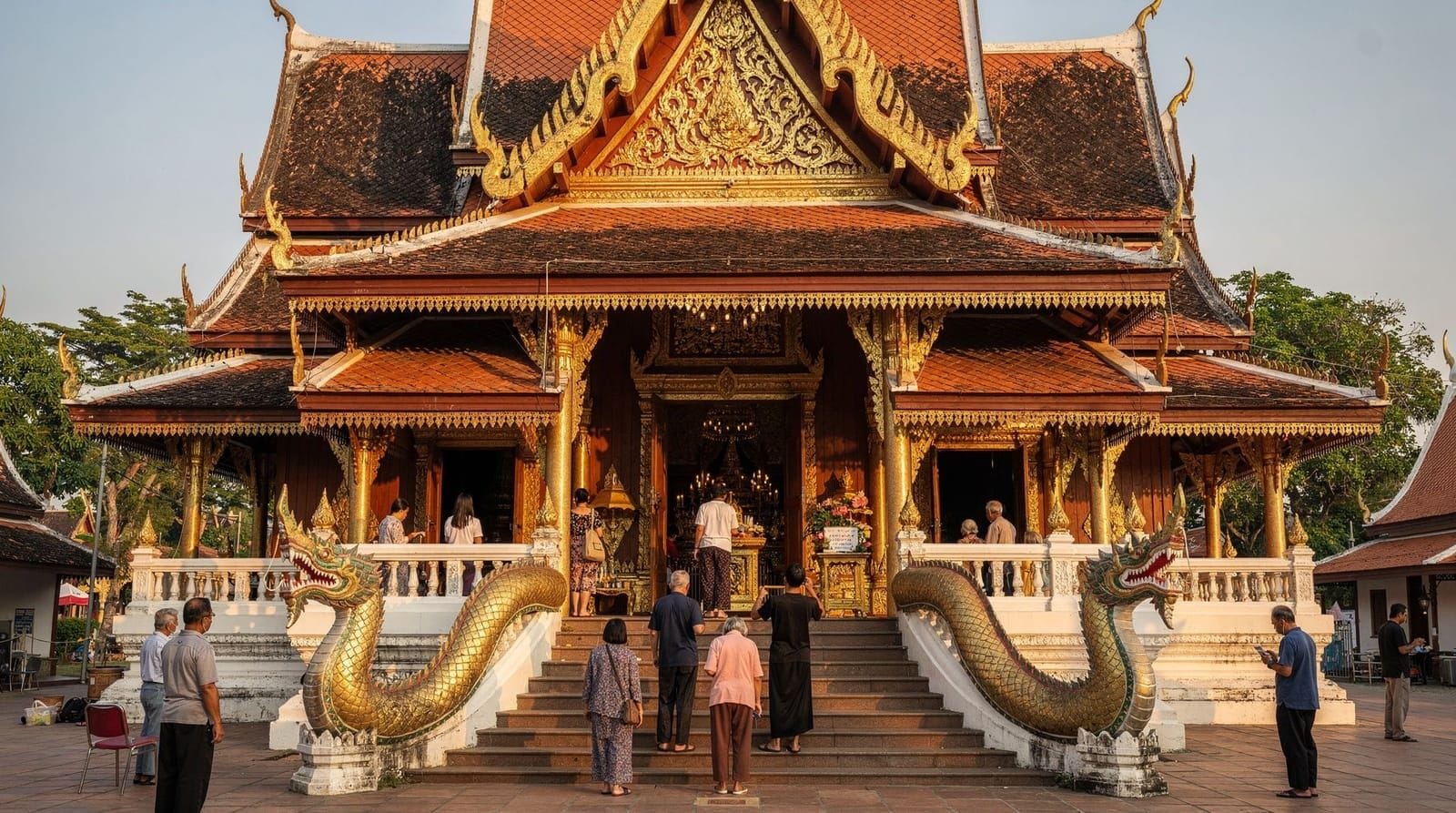
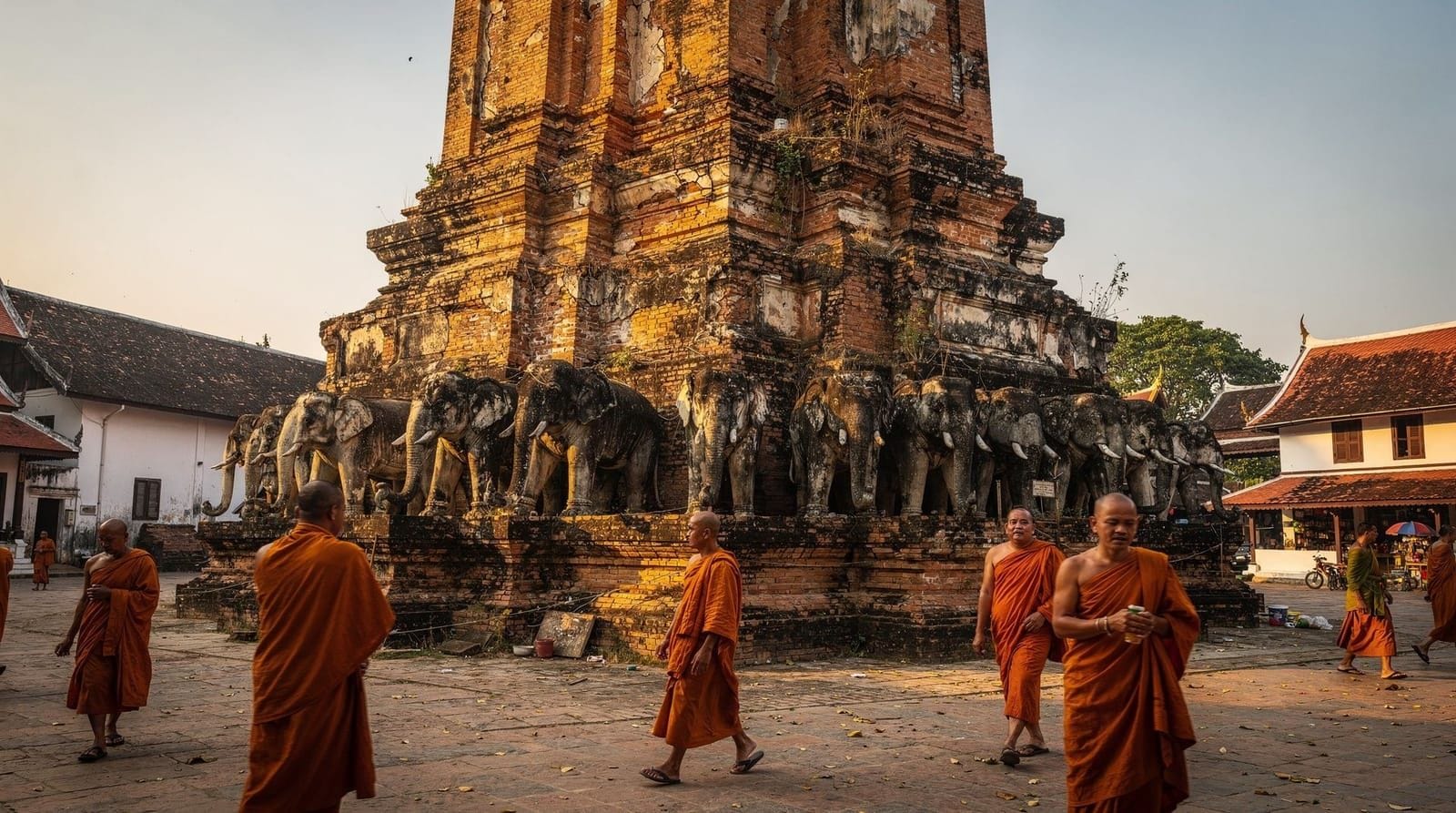
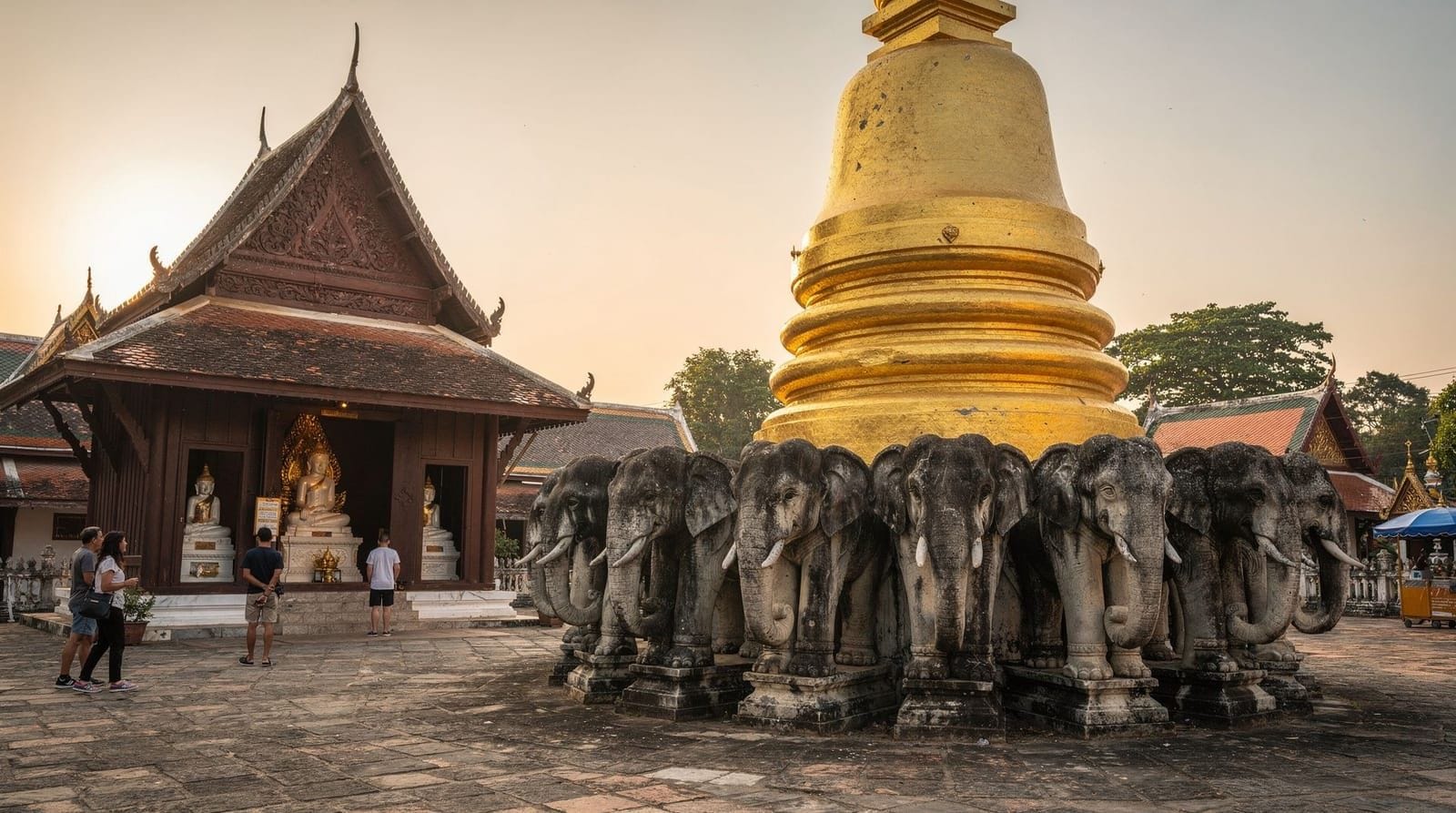
The Old City has more than 30 active temples, and trying to see all of them in one visit is how people burn out on Chiang Mai by day two. Three temples do the heavy lifting for most travelers. Wat Phra Singh, near the west side of the square, holds the city’s most revered Buddha image and the Lai Kham viharn, whose gilded Lanna woodwork is arguably the finest surviving example of the style in Thailand. Wat Chedi Luang, closer to the center, is built around a massive brick chedi that was partially destroyed by a 16th-century earthquake and deliberately left in ruins rather than rebuilt — it’s the most photogenic single structure in the city and also houses the Sao Inthakhin, the city pillar shrine that predates the temple itself. Wat Chiang Man, tucked in the northeast corner, is the oldest temple in Chiang Mai, founded in 1296 by King Mengrai, and holds two Buddha images (Crystal and Marble) considered so sacred they’re only paraded through the streets once a year during Songkran.
Beyond those three, most other Old City temples are worth a glance if you’re walking past rather than a special trip. An honest note on temple fatigue: after your third or fourth wat in a single day, the ornamentation starts to blur together for most visitors. Pick two or three, spend real time in each — sit in the viharn, watch the routines, read the signage — rather than rushing through six.
Dress code is enforced at every temple: shoulders and knees covered for both men and women, shoes off before entering any building with a Buddha image. Some temples rent sarongs at the entrance for travelers in shorts, but it’s easier to just carry a light scarf. Entry is free at most Old City temples; Wat Phra Singh and Wat Chedi Luang charge a small fee, typically 20-50 THB ($0.55-1.40), which goes toward upkeep.
a 3-hour guided walking tour covers the three major temples plus the backstory (Lanna history, monk life, symbolism in the architecture) that’s easy to miss reading signage alone, and it’s a reasonable way to orient yourself on day one before returning to favorites independently.
Monk chat and everyday temple life
Several Old City temples, including Wat Chedi Luang, run “monk chat” programs where young monks studying English sit with visitors for open conversation, usually in the late afternoon on weekdays. It’s free, informal, and genuinely one of the more memorable low-key things to do in the Old City — monks ask about your country as much as you ask about their life, and there’s no pressure to donate, though a small contribution to the temple is appreciated if you found it worthwhile.
Three Kings Monument and the civic core
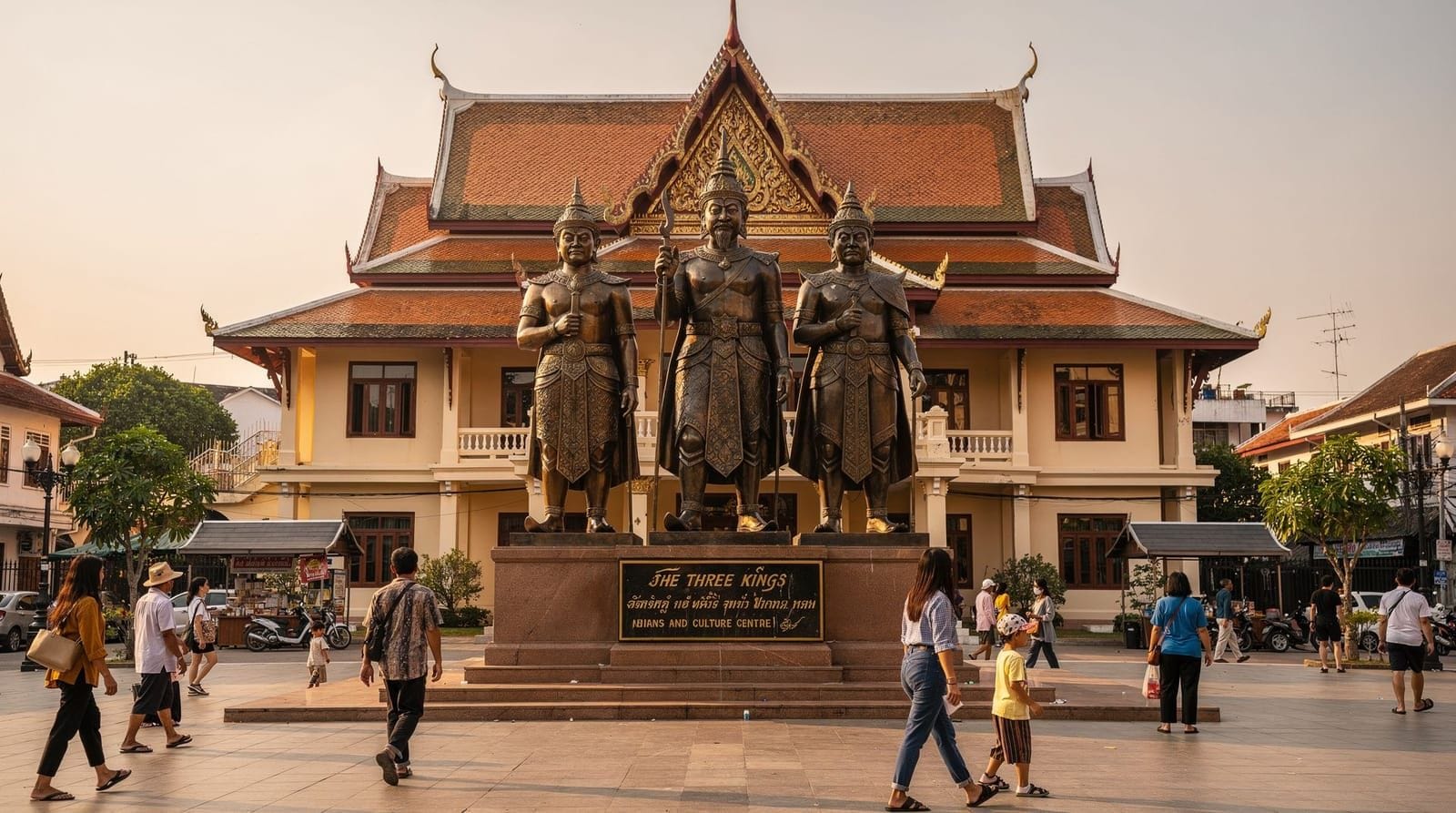
At the geographic heart of the Old City sits the Three Kings Monument, a bronze statue group depicting King Mengrai (Chiang Mai’s founder), King Ramkhamhaeng of Sukhothai, and King Ngam Muang of Phayao, who according to legend advised on the city’s founding location. The square around it hosts the Lanna Folklife Museum and an adjacent contemporary arts space in the old provincial hall building — worth 45 minutes if you want context on Lanna culture (textiles, silverwork, regional dress) beyond what temple visits alone convey. It’s quieter than the temples and rarely crowded, which makes it a decent midday break from the heat.
Sunday Walking Street and market culture
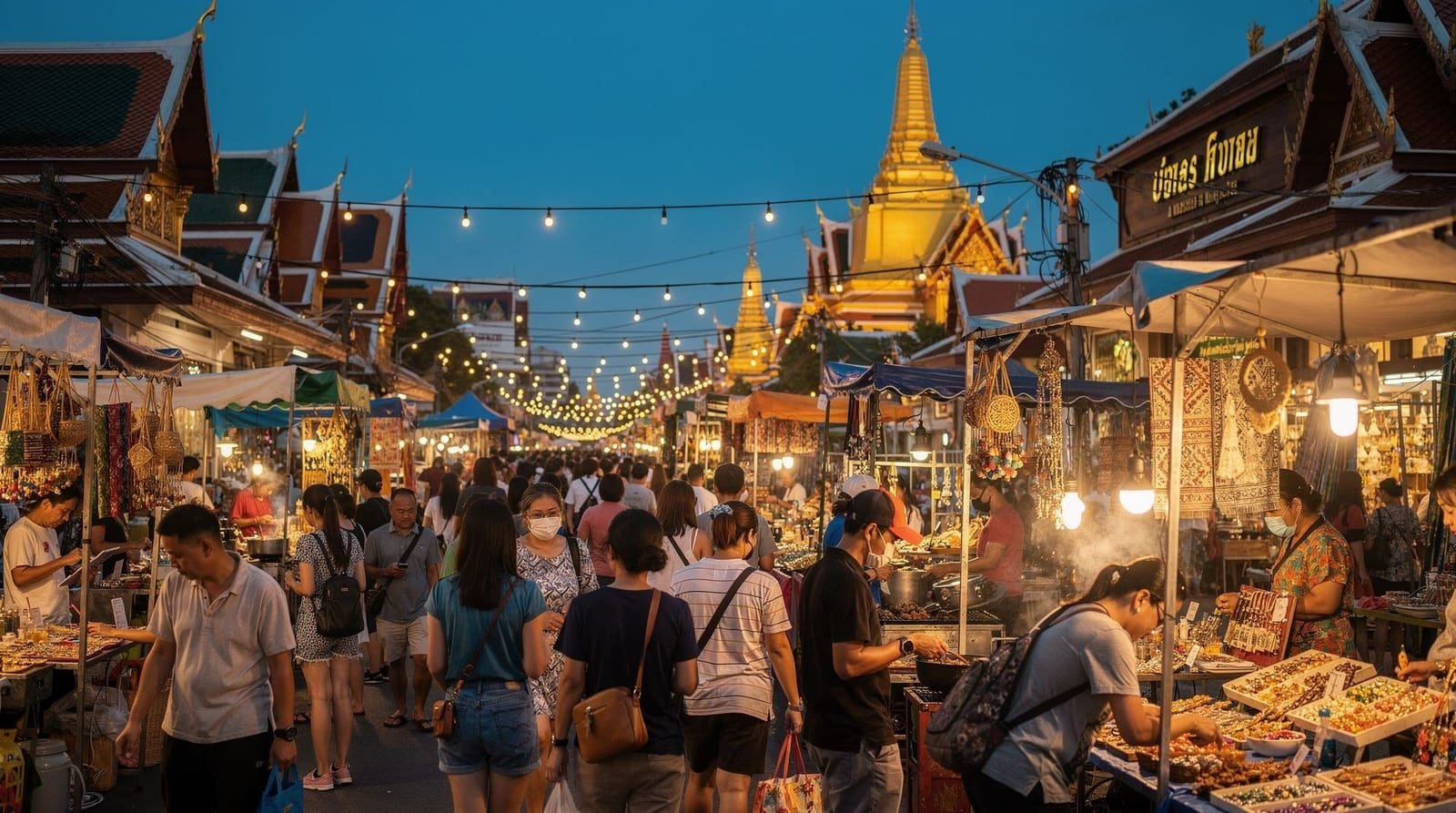
Every Saturday evening, Wualai Road just south of Chiang Mai Gate becomes a silver-and-handicraft street market. Every Sunday, the much larger Sunday Walking Street takes over Ratchadamnoen Road from Tha Phae Gate all the way to Wat Phra Singh, closing the entire street to traffic from mid-afternoon until around 10 or 11pm. Both are genuinely local institutions, not manufactured tourist events, though the Sunday market in particular gets extremely crowded by early evening. Go early (4-5pm) if you want to browse without being swept along by the crowd, or embrace the crush and go later for the food.
Festivals: when the Old City transforms completely
Two annual events turn the Old City into something entirely different from its everyday self. Songkran, the Thai New Year in mid-April, centers on the moat itself — the entire waterway becomes the staging ground for a citywide water fight that runs for several days straight, with pickup trucks full of water guns circling the moat road nonstop. It’s chaotic, soaking, and one of the most talked-about experiences travelers have in Chiang Mai, but worth knowing it also coincides with the tail end of burning season, so daytime heat and haze are both at their peak.
Yi Peng and Loy Krathong, usually falling in November, bring paper lanterns released into the night sky and small floating krathong baskets set adrift on the moat and the Ping River. The mass lantern-release events most visitors picture from photos are actually ticketed, organized gatherings held outside the city (often near Mae Jo University), but the Old City itself still fills with informal lantern-releasing and krathong-floating along the moat on the same nights, free and open to anyone walking past.
Getting around: songthaews, tuk-tuks, and walking
The Old City’s compact size means walking is realistic for most of it, but heat and distance add up. Red songthaews (shared pickup trucks, locally called “red trucks”) run informal routes throughout the city and just outside it for a flat rate of around 30 THB ($0.85) per person for short hops — flag one down, tell the driver your destination, and confirm the price before getting in if it’s not immediately obvious. Grab (the regional ride-hailing app) works reliably in Chiang Mai and removes the negotiation entirely; a ride from one side of the Old City to the other typically runs 40-60 THB ($1.10-1.65).
Tuk-tuks are more expensive and require negotiation upfront — agree on a price before you get in, always. A short Old City hop should run 50-80 THB ($1.40-2.20); quotes above 150 THB for a within-Old-City trip are a tourist markup, and it’s fine to walk away and flag a songthaew or open Grab instead.
Where to stay
The Old City is the default base for a first Chiang Mai visit because of the temple density and walkability, and it ranges from backpacker guesthouses near Tha Phae Gate to boutique hotels in restored teak houses near Wat Phra Singh. The trade-off: it’s touristy in the core streets, thinner on the specific café-and-brunch culture that draws people to Nimmanhaemin, and can get noisy near the gates on Sunday market night. If nightlife and design-forward cafés matter more than temple proximity, Nimman is the better base; if this is a first visit built around history and walking, the Old City wins.
Honest warnings
A few recurring scams and annoyances are worth flagging plainly. Tuk-tuk and taxi touts near Tha Phae Gate sometimes claim a specific temple is “closed today, but I know a better one” — this is almost always a lead-in to a commission-paying gem or tailor shop, not a genuine closure. Politely decline and walk on; reputable temples don’t close without notice. Gem and jewelry “government sale” pitches follow the same playbook citywide, not just here. Songthaew drivers occasionally quote inflated flat rates to visibly foreign passengers — asking “how much” before boarding and knowing the going rate (around 30 THB for a short shared ride) avoids most of this. None of these are dangerous, just mildly annoying friction that a little awareness eliminates.
Photography and quiet hours
If photographs matter to your trip, the two windows that consistently beat the crowds are just after sunrise and just before closing. Wat Chedi Luang’s ruined brick chedi photographs best in the soft light of early morning, when the courtyard is close to empty and the texture of the weathered brick shows clearly; by midday the same scene is flattened by harsh overhead sun and filled with tour groups. The moat itself, especially the stretch near Tha Phae Gate, is at its most photogenic around sunset, when the water reflects the sky and the illuminated gate structure comes alive against the darkening blue. Weekday mornings generally beat weekends across the board — Saturday and Sunday bring both domestic and international visitors in from outside the city specifically for the walking street markets, and that spillover crowds the temples too, even hours before the markets themselves open.
A simple one-day Old City plan
Start at Wat Phra Singh around 8am before tour groups arrive, walk 15 minutes to Wat Chedi Luang for the ruined chedi and city pillar, then continue to the Three Kings Monument and Lanna Folklife Museum for a midday break from the sun. Finish at Wat Chiang Man in the late afternoon when the light is better for photos, then loop back toward Tha Phae Gate for dinner. If it’s a Saturday or Sunday, plan the evening around the walking street market instead of a sit-down restaurant.
For a wider view of the city beyond the moat, a private half-day tuk-tuk city tour is a practical way to combine the Old City highlights with a stop or two just outside it, without the logistics of arranging songthaews between each site yourself.
Frequently asked questions about Chiang Mai Old City
How many days do I need in the Old City?
Half a day covers the three essential temples if you move efficiently. Two full days lets you add the Saturday or Sunday walking street, the Lanna Folklife Museum, and slower time inside each temple rather than a rushed loop.
Is the Old City walkable, or do I need transport?
It’s walkable — the full loop around the inside of the moat is under 4 km — but Chiang Mai’s heat and humidity make songthaews or Grab worth using between the farther corners, especially midday.
Which gate should I use as my main orientation point?
Tha Phae Gate on the east side. It’s the busiest, easiest to find, closest to the Sunday Walking Street start, and most songthaews and tuk-tuks cluster there.
Do I need to pay to enter temples in the Old City?
Most are free. Wat Phra Singh and Wat Chedi Luang charge a small entry fee, typically 20-50 THB ($0.55-1.40), that goes toward temple upkeep.
What should I wear to visit the temples?
Shoulders and knees covered, shoes removed before entering any building housing a Buddha image. Some temples rent sarongs at the entrance if you arrive in shorts.
Is the Old City a good base for a first Chiang Mai trip?
Yes, for most travelers. It’s the most walkable, temple-dense area and puts you within easy reach of day trips. If café culture and nightlife matter more than temple proximity, Nimmanhaemin is the alternative base.
Are the tuk-tuk touts near Tha Phae Gate a scam?
The “temple is closed, let me take you somewhere better” line usually leads to a commission-paying gem or tailor shop, not a real closure. Decline and walk on — legitimate temples don’t close without notice.
Which Old City temple should I prioritize if I only have time for one?
Wat Chedi Luang for scale and the ruined-chedi atmosphere, Wat Phra Singh for finer craftsmanship and gilded woodwork, or Wat Chiang Man if you’d rather skip the crowds entirely and focus on the city’s founding history.
When is the Old City least crowded?
Early morning, 7-9am, before tour buses arrive and before the midday heat. Late Sunday afternoon is the most crowded window because of the walking street market.
Is the Old City a good base for day trips outside Chiang Mai?
Yes. Most tour pickups for destinations like Doi Suthep, Doi Inthanon, and Chiang Rai collect passengers from Old City hotels and guesthouses, since it’s the most common tourist base and easiest for drivers to route through.
Top experiences
Bookable activities with verified prices and instant confirmation on GetYourGuide.

Chiang Mai: 3 Hour Old City and Temples Guided Walking Tour

Chiang Mai: Exploration of Old City by Private Tuk-Tuk
Chiang Mai: Half-Day Private City Tour by Tuk Tuk

Chiang Mai Old City Phra Singh & Big Pagoda Night Tour
Chiang Mai: Historic Temples and City Guided Walking Tour