Sunday Walking Street
The Ratchadamnoen Sunday market: what to expect, when to go, and how to eat and shop without the crush of crowds.
Chiang Mai: Evening Local Street Food Market Tour
Quick facts
- Getting there
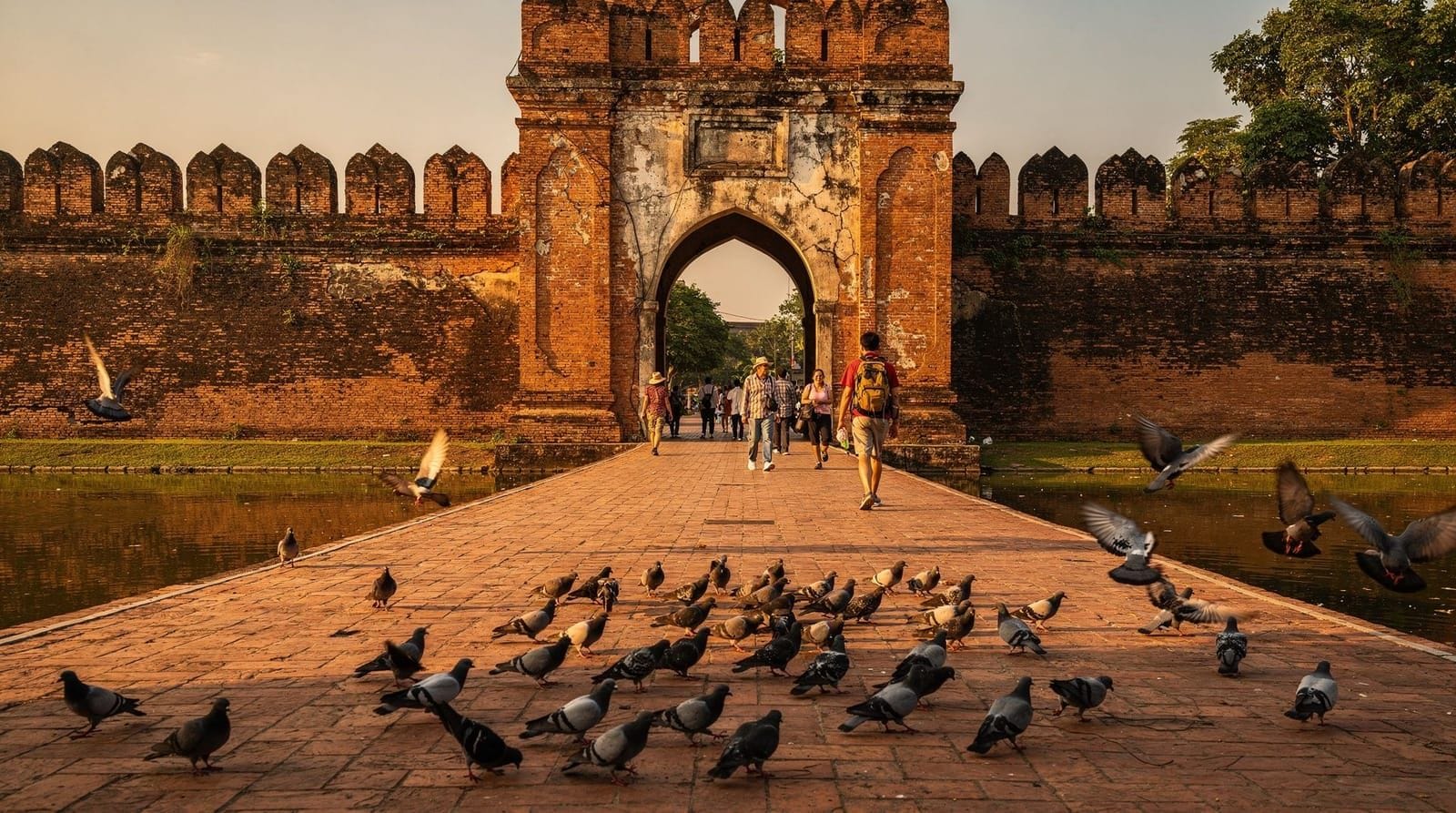
- Starts at Tha Phae Gate, walkable from anywhere in the Old City
- When it runs
- Sundays only, roughly 4pm to 10-11pm
- Key sight
- Ratchadamnoen Road closed to traffic, stalls end to end, temple food courts
- Time needed
- 2-4 hours to browse and eat without rushing
- Entry cost
- Free to enter; budget 300-600 THB ($8-17) per person for food and small purchases
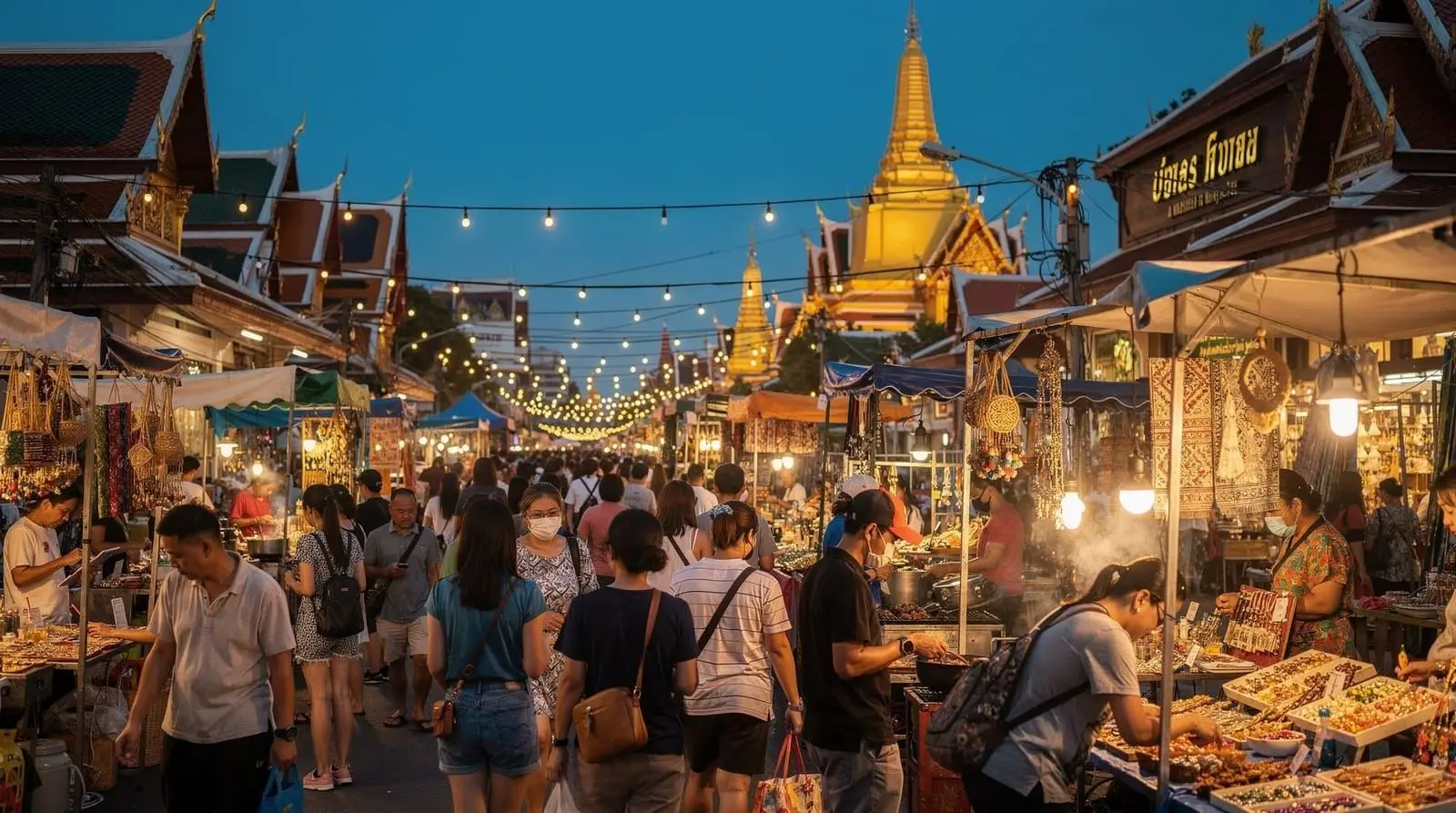
Every Sunday afternoon, Ratchadamnoen Road — the main street cutting through the center of the Old City from Tha Phae Gate to Wat Phra Singh — closes to traffic and fills, end to end, with vendor stalls. This is Chiang Mai’s largest and most famous street market, running the full roughly 1.5 km length of the road plus several side streets and temple courtyards along the way, and by early evening it’s one of the most crowded single spaces in the city.
Quick answer: the Sunday Walking Street market runs along Ratchadamnoen Road from Tha Phae Gate to Wat Phra Singh, roughly 4pm to 10-11pm every Sunday, and it’s the biggest of Chiang Mai’s several walking street markets. Expect handicrafts, clothing, art, and dense street food, especially inside the temple courtyards along the route, which double as informal food courts on market night.
How the market came to be
Ratchadamnoen Road’s Sunday closure for a walking market is a relatively modern civic tradition, formalized by the municipality in the early 2000s to organize what had previously been a looser, smaller gathering of vendors along the same corridor. It grew steadily over the following two decades into the scale seen today, driven both by rising domestic tourism from other parts of Thailand and by Chiang Mai’s growth as an international travel destination. Unlike some markets built primarily for tourists, Sunday Walking Street retains a genuinely mixed crowd — Thai families from Chiang Mai and neighboring provinces make up a significant share of both shoppers and vendors, which shows in the mix of goods on sale: alongside tourist-oriented souvenirs, there’s a steady presence of stalls selling everyday household goods, clothing, and snacks aimed squarely at local shoppers rather than visitors.
The route, start to finish
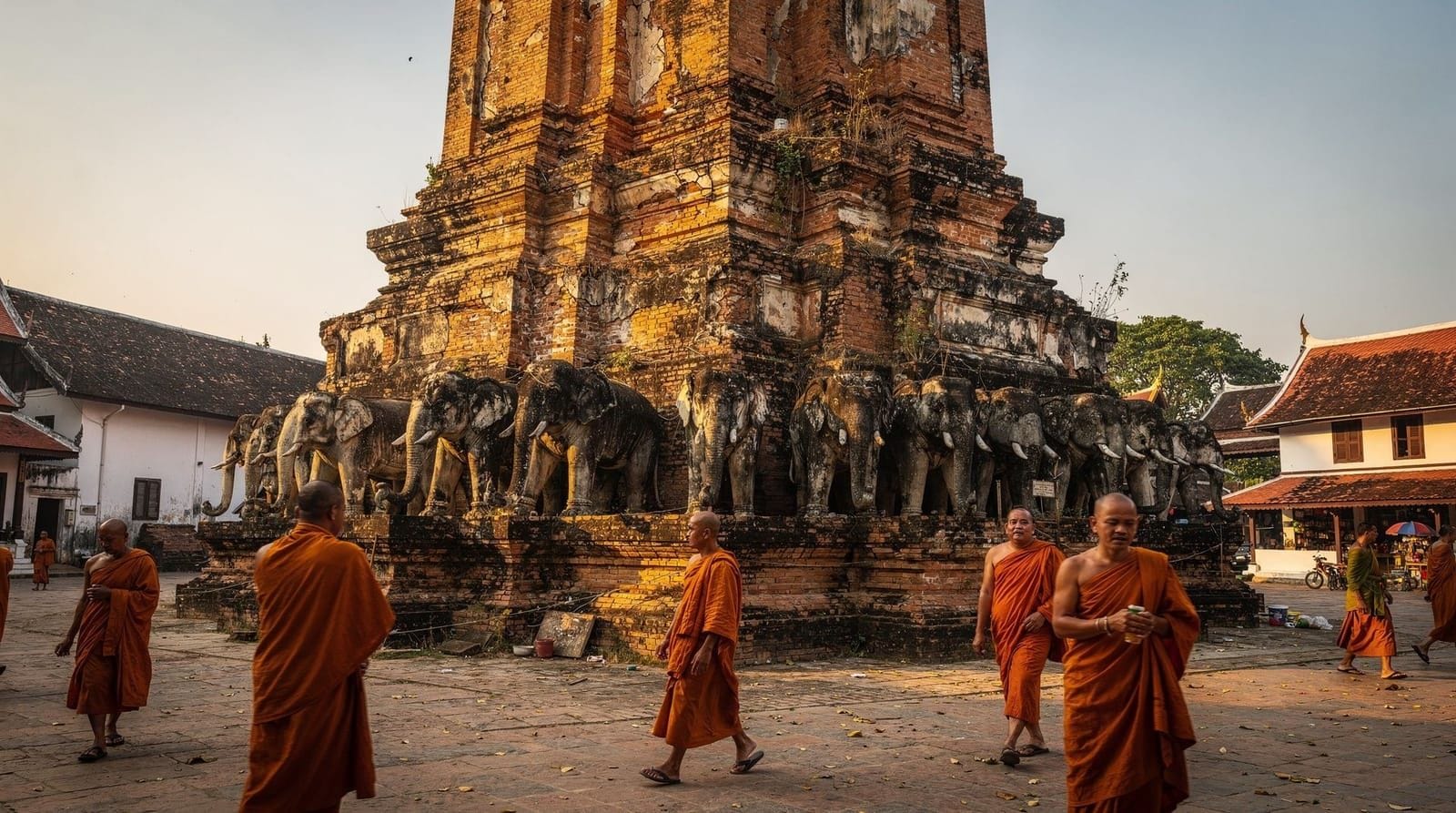
The market’s spine runs the length of Ratchadamnoen Road, starting at Tha Phae Gate in the east and ending near Wat Phra Singh in the west — the same two landmarks that bookend a typical Old City temple walk, just repurposed as a market corridor on Sunday evenings. Along the way, it passes directly by Wat Chedi Luang, whose grounds and side streets often host additional stalls and, notably, some of the best food-court-style eating in the whole market. Several side streets branching off Ratchadamnoen also fill with stalls, effectively widening the market beyond a single line and making full coverage in one visit genuinely difficult if you’re trying to see everything.
A closer look at what to buy
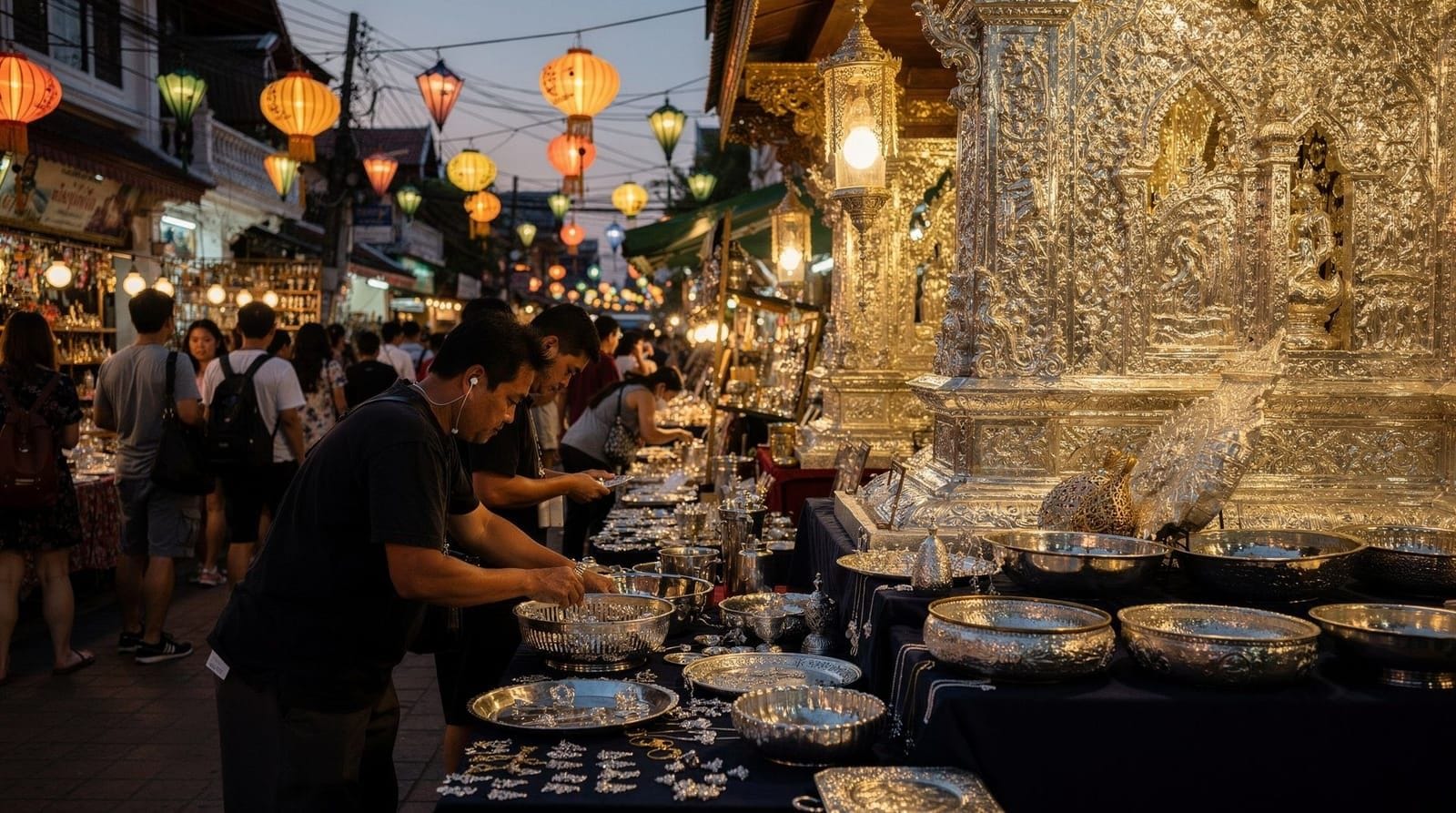
Beyond the general handicraft-and-souvenir mix, a few categories stand out as worth seeking out specifically. Hand-painted umbrellas and paper products, tracing back to the craft tradition centered in Bo Sang village outside the city, show up regularly among the more skilled vendors, distinguishable from mass-produced versions by visibly hand-applied brushwork rather than stenciled patterns. Local artists sell original paintings and prints depicting Lanna temple scenes and northern Thai landscapes, with prices that vary hugely based on size and the artist’s own reputation — worth asking directly about the artist if a piece catches your eye, since many are happy to talk about their work. Silver jewelry appears here too, though the neighboring Saturday Wualai market is the more specialized destination if silver specifically is the priority purchase.
What’s actually for sale
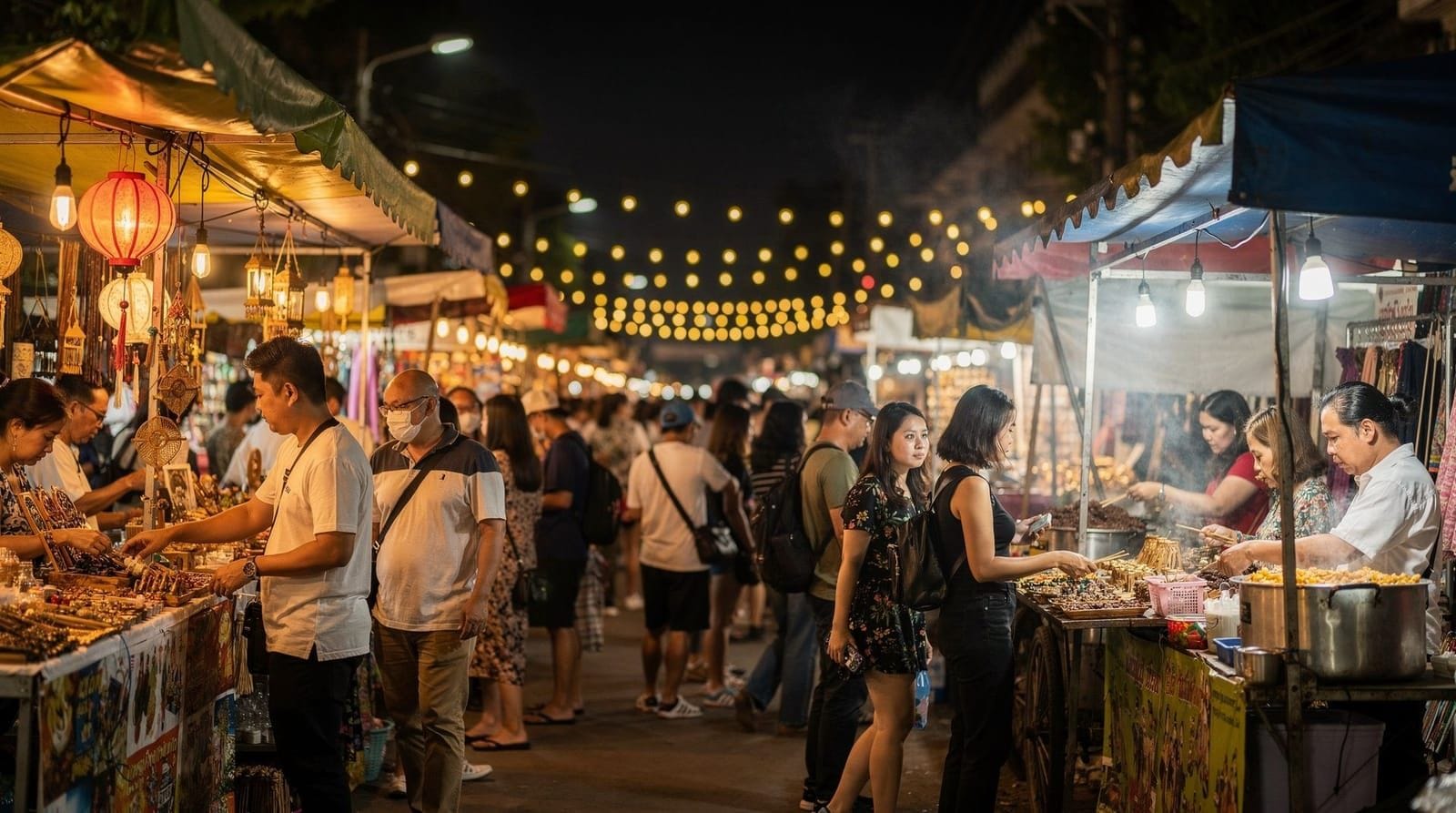
Stalls skew toward handicrafts and small goods rather than the clothing-heavy, low-cost focus of the Night Bazaar across town — hand-painted items, textiles, silverwork, wood carving, local artwork, and a large amount of handmade jewelry and small home goods, alongside the expected T-shirts and souvenir magnets. Quality and pricing vary enormously stall to stall; this is a market where browsing several vendors selling similar items before buying pays off, since prices for near-identical goods can differ by 30-50% between stalls just a few meters apart. Bargaining is expected and normal, though gentler and less aggressive than at some other regional markets — a polite counter-offer usually lands somewhere reasonable without a prolonged negotiation.
The food: the real draw for many visitors
For a large share of both locals and visitors, the food is the actual reason to come. The temple courtyards along the route — Wat Chedi Luang’s grounds in particular — turn into informal open-air food courts on Sunday nights, with plastic tables, communal seating, and a rotating cast of vendors selling everything from khao soi (the region’s signature curry noodle soup) to grilled meats, fresh fruit shakes, and Northern Thai specialties that don’t always make it onto standard restaurant menus. Prices are low by Western standards — most individual dishes run 40-80 THB ($1.10-2.20) — and portion sizes are modest, which makes grazing across several stalls a normal and expected way to eat here rather than committing to one large meal at a single vendor.
a guided evening street food and market tour is a reasonable way to navigate the food options on a first visit, since a local guide can point toward specific stalls worth trying and explain unfamiliar Northern Thai dishes that don’t have obvious English signage.
Crowd patterns and when to go
The market builds steadily from its roughly 4pm start, becomes genuinely crowded by 6-7pm, and stays dense until it winds down around 10-11pm. If browsing comfortably matters more than the full atmosphere, arriving right at 4-4:30pm gets a noticeably easier experience — stalls are set up and open, but the crowd hasn’t built yet. If the crush and energy of a packed Sunday night market is actually part of what you’re after, 7-9pm delivers that in full, with the trade-off of slow-moving foot traffic and difficulty stopping to browse without blocking the flow behind you.
a walking food tour through the market is worth considering for exactly this reason — a guide can navigate the crowd more efficiently than solo wandering and typically times the route to hit food stalls before the worst of the crush.
Combining with a wider Old City evening
Many visitors treat Sunday Walking Street as the centerpiece of a broader Old City evening rather than the sole plan — arriving mid-afternoon to visit Wat Chiang Man or another quieter temple before the market opens, then transitioning into the market itself once Ratchadamnoen Road closes to traffic. This sequencing avoids the awkward gap of arriving too early with nothing yet open, and it takes advantage of the Old City’s compact size to fit meaningful sightseeing and market browsing into a single outing.
Visiting with kids
Sunday Walking Street can work well as a family outing, particularly earlier in the evening before the densest crowds build — the street performers, varied food, and general spectacle tend to hold kids’ attention, and the temple courtyards along the route offer natural rest points with seating away from the busiest foot traffic. That said, strollers are genuinely difficult to maneuver once the crowd thickens after 6-7pm, and the noise and crowd density can overwhelm younger children by that point. Families report better experiences arriving at opening, eating an early dinner in one of the temple food courts, and heading out before the market hits its peak density rather than trying to stay through the busiest hours.
Weather considerations
Chiang Mai’s rainy season, roughly June through October, brings the risk of a Sunday evening downpour that can shut down or significantly thin the market with little warning — vendors pack up quickly when rain starts, and the market can go from full swing to largely empty within twenty minutes of a serious shower. Some stalls have basic tarp cover and stay open through light rain, but a heavy downpour typically ends the evening early. Checking the forecast before heading out during rainy season months is a reasonable precaution, and having a backup indoor dinner plan isn’t a bad idea if clouds look threatening.
Comparing to the Saturday market on Wualai Road
Chiang Mai runs a second, smaller walking street market on Saturday evenings along Wualai Road, just south of Chiang Mai Gate, historically centered on the neighborhood’s silversmithing trade. It’s a fraction of the size of the Sunday market and noticeably calmer, with a stronger emphasis on silver and metalwork specifically rather than the broader handicraft-and-food mix found on Ratchadamnoen. Visitors with only one Saturday-or-Sunday evening free in Chiang Mai should default to Sunday for the larger scale and food variety; the Saturday market is the better pick specifically for silver shopping or for anyone who found Sunday’s crowds overwhelming and wants a gentler version of the same idea.
Photography at the market
The market itself photographs well after dark thanks to the dense string lighting most vendors use and the sheer visual density of stalls stretching into the distance along Ratchadamnoen Road — a wide shot from the Tha Phae Gate end looking down the length of the market captures the scale better than trying to photograph individual stalls. Portraits of vendors or performers are common courtesy to ask permission for first, especially for anyone actively working (cooking, painting, performing) rather than simply standing near their goods; most are happy to be photographed but appreciate being asked rather than shot candidly mid-task. Tripods and larger camera setups are impractical given the crowd density and the market’s flowing foot traffic — handheld shooting is the only realistic approach once the evening gets busy.
Accessibility
Ratchadamnoen Road itself is flat, paved, and closed to vehicle traffic during market hours, which in principle makes it accessible ground. In practice, crowd density from roughly 6pm onward makes navigation genuinely difficult for wheelchair users or anyone needing more space to move, since the market’s informal stall placement narrows the walkable path considerably in the busiest stretches. Arriving early, before 5pm, when stalls are set up but the crowd hasn’t built, is the most realistic way to experience the market comfortably with mobility considerations in mind.
Getting there and moving through the market
Because the market closes the road to vehicle traffic, Grab and songthaew drop-offs happen at the perimeter rather than inside — expect to be dropped near Tha Phae Gate or one of the market’s side-street entrances and walk in from there. If you’re staying inside the Old City, walking directly is usually simpler than arranging transport at all, since most Old City accommodation sits within 10-15 minutes on foot of some point along the route. Once inside, movement is genuinely one-directional in the busiest stretches during peak hours — fighting against the flow of foot traffic is both slow and mildly rude, so plan your route to move with the crowd rather than against it where possible.
Street performances and buskers
Along the market route, especially near Tha Phae Gate and at a few wider intersections along Ratchadamnoen, informal street performers set up throughout the evening — musicians, occasionally traditional Thai dance demonstrations, and the odd novelty act. These aren’t officially organized by the market but tolerated as part of its general atmosphere, and small crowds naturally form and disperse around them. A small tip in the collection container placed nearby is customary if you stop to watch for more than a minute or two, though there’s no obligation and nobody actively solicits payment.
Practical budget expectations
For a couple splitting several food stalls and browsing a handful of purchases, a realistic Sunday Walking Street evening runs somewhere between 600 and 1,200 THB total ($17-33) — food is genuinely cheap (individual dishes rarely exceed 80 THB, $2.20), and the main budget variable is how much shopping you do rather than eating. It’s entirely possible to have a full, satisfying evening for under 500 THB ($14) per person if shopping isn’t a priority and the focus stays on grazing through the food stalls.
Honest notes
The market’s popularity means pickpocket risk, while still low by regional standards, is higher here than in quieter parts of the city simply due to crowd density — standard precautions (bag zipped and worn in front, phone not left loosely in a back pocket) are sensible rather than paranoid. Some stalls selling “handmade” goods are reselling mass-produced items sourced elsewhere; this is common at large markets everywhere and not unique to Chiang Mai, but it’s worth knowing if authenticity of craft specifically matters to your purchase — asking a vendor directly where and how something was made often gets an honest answer, since not every stall is trying to mislead. Toilets along the route are limited and often attached to a small fee (5-10 THB); nearby 7-Eleven convenience stores, common throughout the Old City, are a reliable fallback.
Cash is the practical currency for almost every transaction here — most stalls don’t accept cards or mobile payment from foreign accounts, so arriving with enough small-denomination Thai baht notes and coins saves repeated trips to an ATM mid-market. ATMs are available along the route but often carry a foreign transaction fee on top of your own bank’s charges, so withdrawing a reasonable amount before heading out is more cost-effective than several small withdrawals during the evening.
Frequently asked questions about Sunday Walking Street
What time does Sunday Walking Street start and end?
It typically starts around 4pm as stalls set up and traffic clears, builds through the evening, and winds down between 10 and 11pm.
Where does the market start and end?
It runs along Ratchadamnoen Road from Tha Phae Gate on the east side to Wat Phra Singh on the west side, roughly 1.5 km, with additional stalls on side streets along the way.
Is the food at Sunday Walking Street good?
Yes, and for many visitors it’s the main draw — temple courtyards along the route, especially at Wat Chedi Luang, turn into informal food courts with a wide range of Northern Thai dishes at low prices (typically 40-80 THB, $1.10-2.20 per dish).
Is Sunday Walking Street very crowded?
Yes, especially between 6pm and 9pm. Arriving right at 4-4:30pm gives a noticeably easier browsing experience before the crowd peaks.
How is Sunday Walking Street different from the Saturday Wualai market?
Sunday’s market is much larger with a broader mix of handicrafts and food; Saturday’s Wualai Road market is smaller, calmer, and historically focused on silverwork.
Do I need to bargain at Sunday Walking Street?
Bargaining is normal and expected, though gentler than some regional markets. Comparing prices across a few stalls before buying often reveals a 30-50% price difference for similar goods.
Is Sunday Walking Street safe?
Generally yes, but crowd density does raise pickpocket risk compared to quieter parts of the city. Standard precautions — bag zipped, phone secured — are sensible.
Can I get there by taxi or Grab?
The road itself closes to traffic during market hours, so drop-offs happen at the perimeter near Tha Phae Gate or a side-street entrance, with a short walk in from there.
Does the market run if it rains?
Light rain doesn’t usually stop the market, but a heavy downpour — common during the June-October rainy season — typically clears stalls quickly. Check the forecast during those months and have a backup dinner plan in mind.
Do vendors accept cards?
Rarely. Bring enough Thai baht in cash, since most stalls are cash-only and ATMs along the route often carry additional foreign transaction fees.
Top experiences
Bookable activities with verified prices and instant confirmation on GetYourGuide.