Doi Suthep
The gold-chedi mountain temple above Chiang Mai — Naga staircase, city views, and why arriving early beats the tour-bus crowds and haze.
Chiang Mai: Doi Suthep Temple & Wat Pha Lat Hike
Quick facts
- Getting there
- Songthaew from Chang Phueak or CMU ~50-100 THB round trip, or private car/Grab; ~15km NW, ~1,050m elevation
- Key sight
- Wat Phra That Doi Suthep's gold chedi, reached by the 306-step Naga staircase or funicular
- Time needed
- 2-3 hours round trip from the city, more with Bhubing Palace added
- Best time
- Early morning (7-9am) or late afternoon; avoid 11am-2pm tour-bus peak
- Cost / entry
- ~30-50 THB foreigner entry; funicular optional small fee
The gold chedi of Wat Phra That Doi Suthep is visible from parts of Chiang Mai’s Old City on a clear day, glinting on the mountainside about 15km northwest of the moat. It’s the single most-visited site outside the city itself, and for good reason — but the reason to read this before going is timing, not whether to go at all.
Quick answer: Doi Suthep refers both to the mountain (part of Doi Suthep-Pui National Park) and, most commonly, to Wat Phra That Doi Suthep, the gold-chedi temple near its summit at roughly 1,050m elevation. Reach the temple platform via the 306-step Naga staircase or a funicular, pay a small foreigner entry fee (roughly 30-50 THB), and expect sweeping views over Chiang Mai on a clear day. Go early morning or late afternoon — late morning brings tour-bus crowds and, from February to April, seasonal haze that dulls the view.
The legend and the climb
The temple’s founding legend involves a sacred relic loaded onto a white elephant, which was released to wander until it chose where to stop — climbing the mountain, trumpeting three times, and dying at the spot where the temple now stands. Whether or not you take the story literally, it explains why the temple sits where it does rather than somewhere more accessible, and it’s worth knowing before you arrive since several plaques and murals on site reference it.
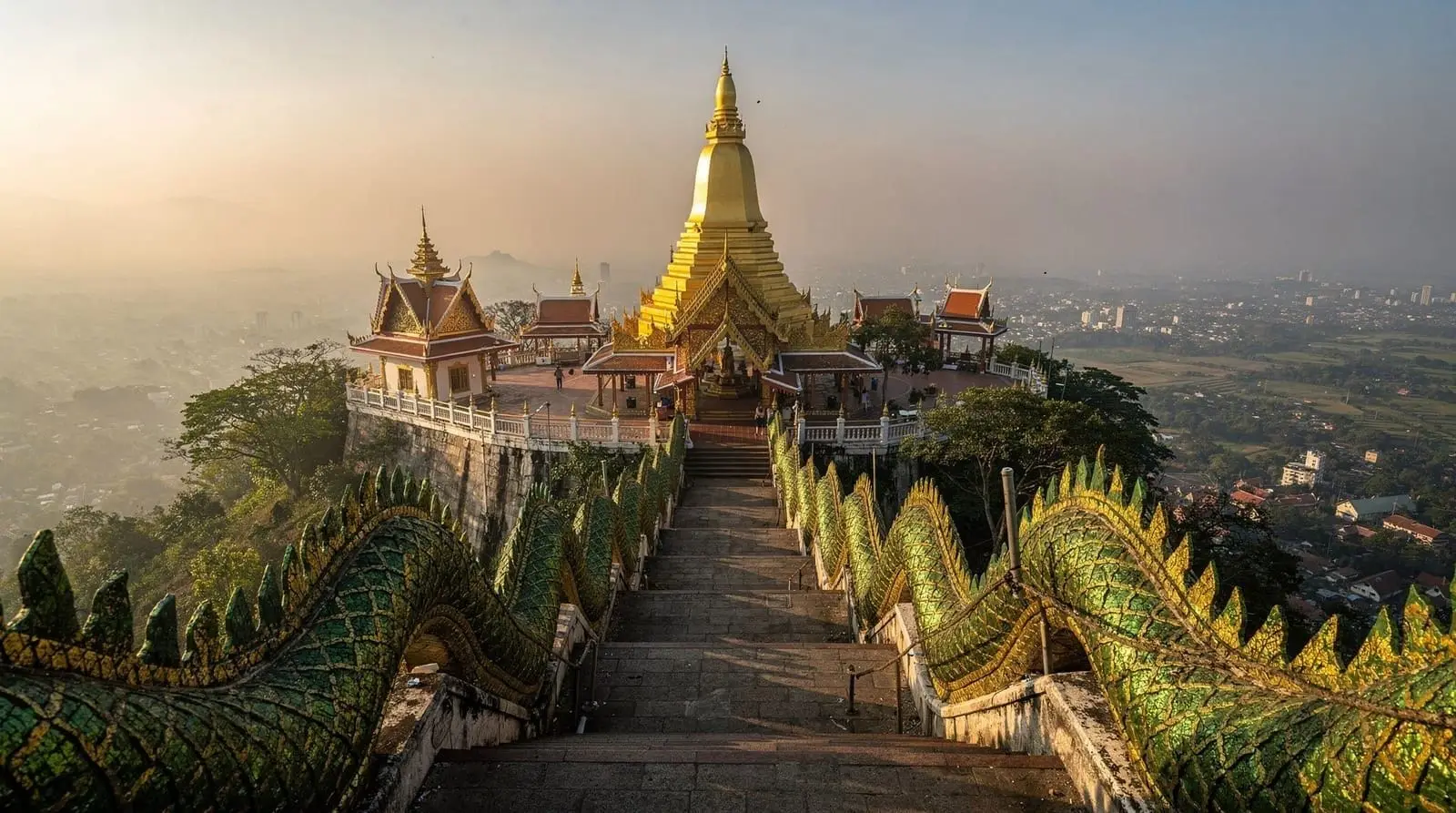
From the car park, the main approach is the Naga staircase: 306 steps flanked by two long naga (serpent) balustrades in gold and green mosaic tile, one of the most photographed staircases in northern Thailand. It’s a genuine climb — steep in sections, shaded only intermittently — but manageable for most fitness levels in 10-15 minutes. A funicular tram runs alongside for a small fee if stairs aren’t an option or you’d rather save your legs for the temple grounds themselves.
What’s at the top
The temple platform is centered on the gold chedi, which visitors circle clockwise, often three times, in a gesture of respect — you’ll see monks, local families, and visitors doing the same. Surrounding the chedi are smaller shrines, bell towers, and a viewpoint terrace on the mountain-facing side of the complex that, on a clear day, gives a genuinely wide view over Chiang Mai’s Old City moat, the Ping River, and the patchwork of the valley beyond. Haze from agricultural burning (roughly February through April) can reduce this view to a grey smudge, which is the single biggest reason to check conditions and season before building your day around the view specifically.
Modest dress is required for temple access — shoulders and knees covered — and sarongs are available to rent or borrow at the entrance if you arrive underdressed.
Getting there
Public songthaews (shared red trucks) run up the mountain from a stand near Chiang Mai University and the Chang Phueak (north) bus terminal, typically charging 50-100 THB (roughly $1.40-2.80) per person round trip, though drivers sometimes wait to fill the truck before departing, which can mean a short wait at either end. A private car, hotel transfer, or Grab is more direct and lets you set your own schedule, at a proportionally higher cost.
Whichever way you go, factor in the mountain road itself: about 30-40 minutes each way from the city centre, on a winding route that climbs roughly 1,000m — worth knowing if you or a travel companion is prone to motion sickness, since the switchbacks are more pronounced than most city driving.
Songthaew overcharging: what to watch for
This is one of the more common minor scams reported around Doi Suthep — drivers at the songthaew stand quoting inflated one-way or round-trip prices to visitors who don’t know the standard rate, or pushing a “private charter” price before mentioning the shared option at all. Ask specifically for the shared songthaew rate, confirm the price before boarding, and don’t be afraid to walk to the next driver if the quote seems high relative to the ranges above. A pre-booked private Doi Suthep city and temple tour sidesteps this entirely with a fixed price agreed in advance, which is worth the modest premium if you’d rather not negotiate transport on the spot.
Wat Pha Lat and the Monk’s Trail
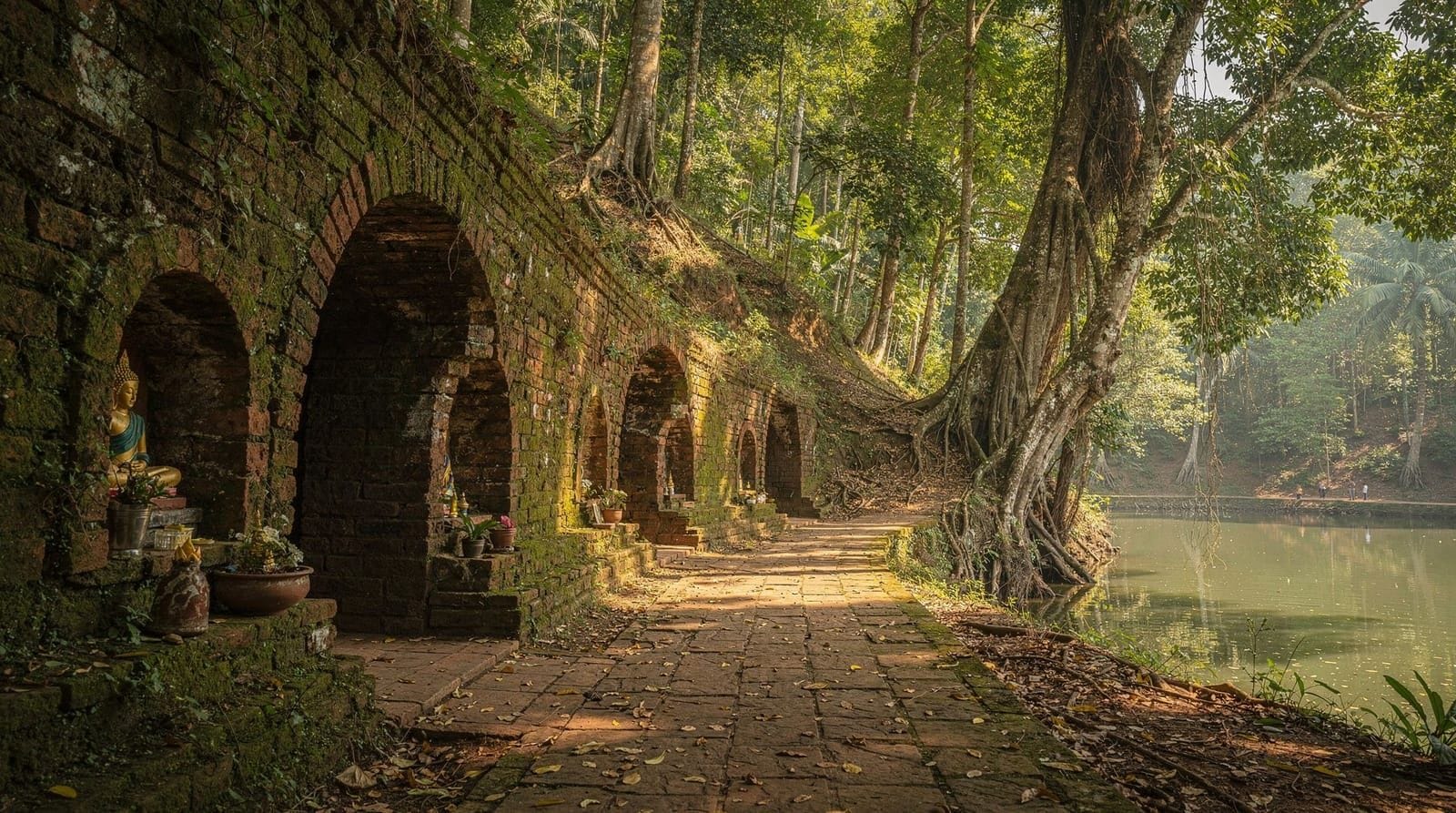
Below the main temple, partway up the mountain, sits Wat Pha Lat — a smaller, quieter forest temple built into the rock and forest, reached either by road or via the Monk’s Trail, a marked hiking path starting near Chiang Mai University’s Huay Kaew Road entrance. The trail climbs through forest for roughly 3km and 1.5-2 hours to Wat Pha Lat, continuing on to Doi Suthep itself for those with the stamina and time. It’s a genuinely different experience from the main temple — shaded, mostly quiet, and used by local monks as a meditation walk, hence the name.
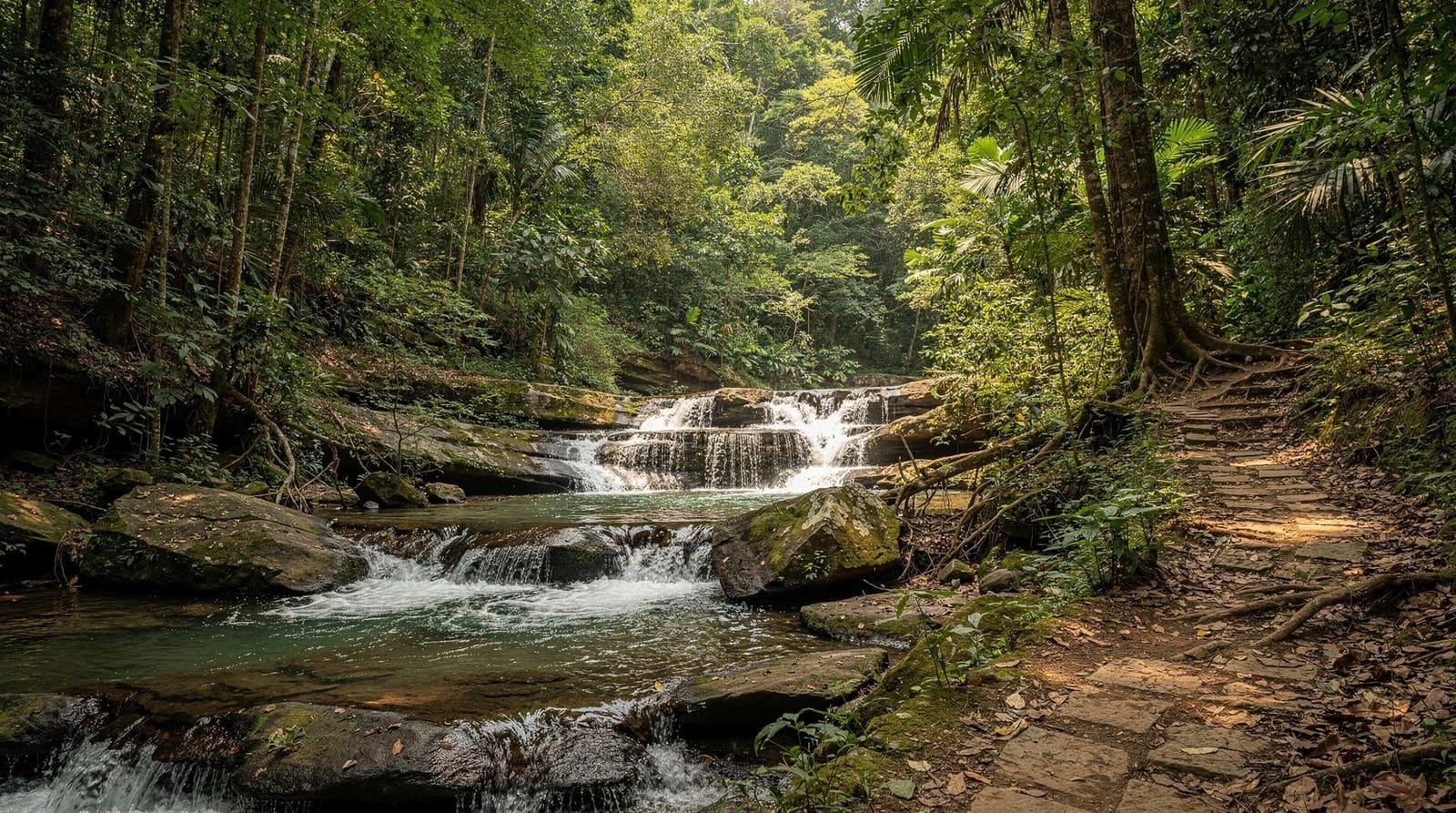
A guided Doi Suthep temple and Wat Pha Lat hike combines both stops with a guide who knows the trail, which is useful if you’d rather not navigate the forest path with only a phone map. For those who want the walk without the crowds at either end, the private Monk’s Trail and Doi Suthep hike runs as a smaller, less rushed group. The trail starts near Chiang Mai University and Huay Kaew Road, making it an easy add-on if you’re already based in or passing through that part of the city, and it descends close enough to Huay Kaew Waterfall that some hikers combine both in a single, longer outing. The forest temple of Wat Umong, with its tunnel architecture and talking trees, sits at the foot of the same mountain range and pairs naturally with an early Doi Suthep visit for travellers who want two temple experiences with very different characters in one morning.
Sunrise and evening options
Because the standard tour-bus schedule clusters around late morning, sunrise and evening visits are the two genuine ways to have the temple close to yourself. A spiritual sunrise tour with alms-giving and meditation gets you to the temple before the day’s tour buses arrive, and includes a chance to participate in the morning alms ritual — a meaningful add-on if you’re interested in the religious practice rather than just the view. On the other end of the day, a Doi Suthep and Wat Umong twilight tour catches the temple as the tour groups thin out and the city lights below begin to show.
Combining with Bhubing Palace and Doi Pui
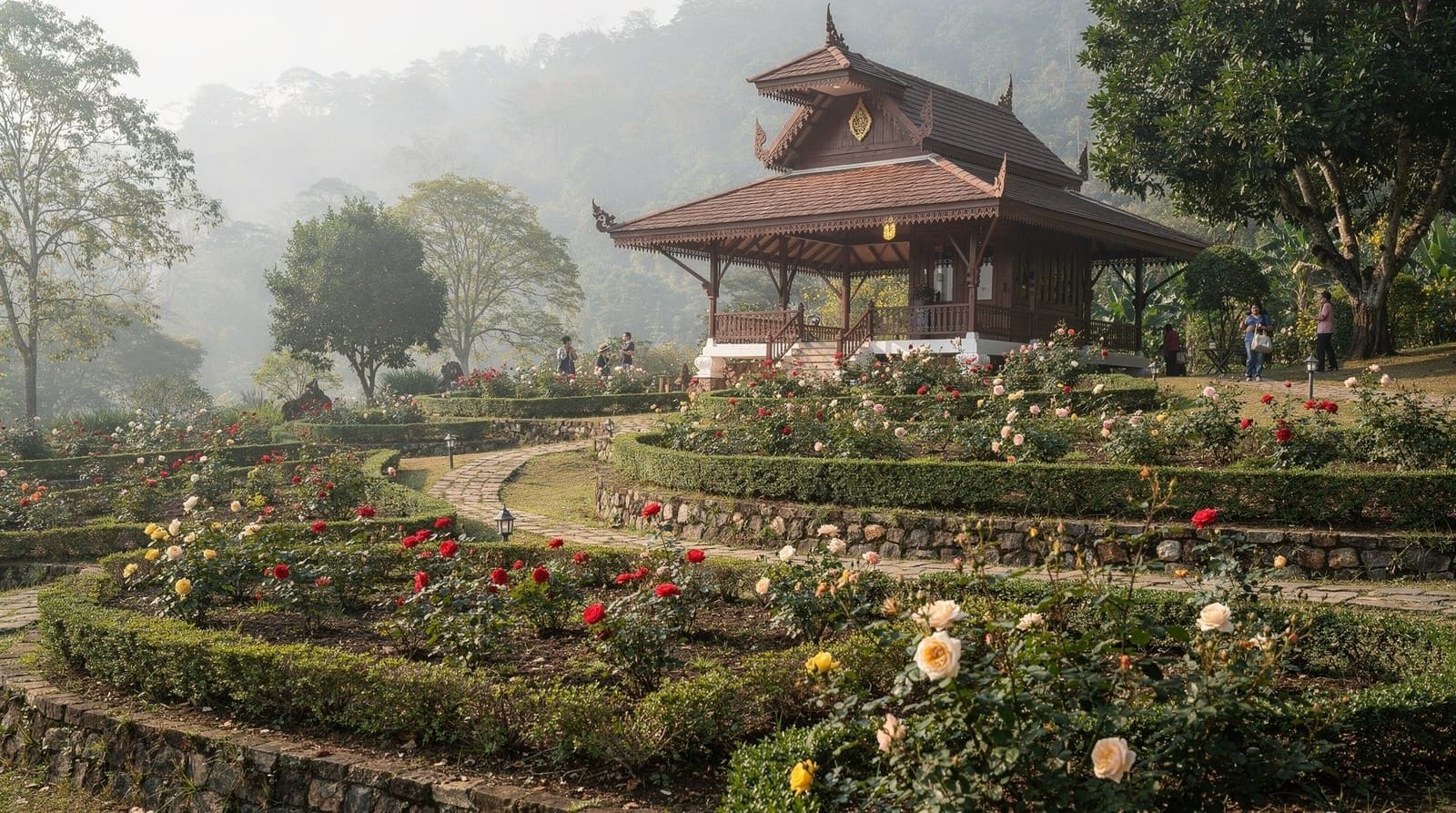
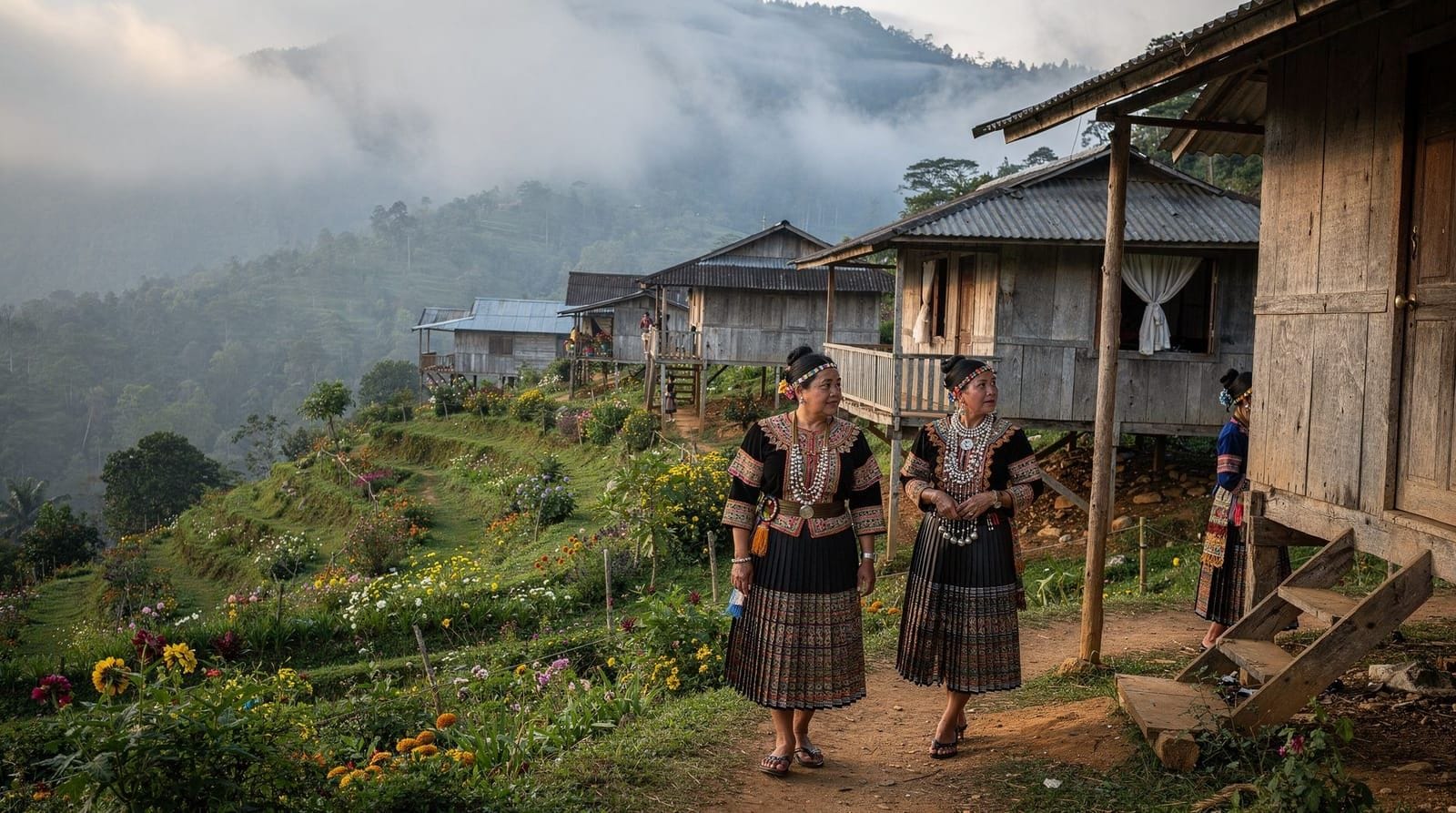
Doi Suthep sits on the same access road as Bhubing Palace, the royal winter residence a further 4km up the mountain, and Doi Pui Hmong Village, higher still. Most half-day and full-day tours combine two or all three stops rather than visiting Doi Suthep in isolation, since the road is shared and the marginal time cost of continuing uphill is modest. A combined Doi Suthep, Bhubing Palace and Hmong village tour is the most efficient way to see all three without arranging separate transport for each.
Note that Bhubing Palace has its own opening days and a stricter dress code (see the Bhubing Palace guide for specifics) — check both before planning a combined day, since the palace occasionally closes to visitors during royal family use.
Practical tips
Bring water — the climb up the Naga staircase and the temple platform itself offer little shade at midday. Small bills help for songthaew fares and the funicular fee. The temple is a working religious site, not solely a viewpoint, so keep voices down near the chedi and be mindful of monks and worshippers going about their normal routines around you.
A short history of Wat Phra That Doi Suthep
The temple dates to the 14th century, founded during the reign of King Kuena of the Lanna kingdom, and its origin story — the relic-bearing white elephant climbing the mountain and dying at the spot it chose — is treated less as folklore and more as an accepted part of the temple’s identity by many Chiang Mai residents. Over the centuries the temple has been expanded and restored repeatedly, with the gold chedi itself re-gilded periodically, most recently maintained as part of ongoing royal and public restoration efforts. The Naga staircase in its current decorative form dates to a mid-20th-century renovation rather than the original 14th-century construction, though it has become so associated with the temple that it’s now one of the most recognizable single images of Chiang Mai. Understanding this layered history helps explain why the site functions simultaneously as an active place of worship, a national symbol, and a major tourist draw — all three identities coexist here without much tension, which is part of what makes an early, quieter visit feel different from a crowded midday one.
Photography and weather notes
The clearest, most photogenic conditions align with Chiang Mai’s cool season, November through February, when low humidity and infrequent rain keep the valley view sharp from the temple’s viewpoint terrace. Early morning light (shortly after opening) is soft and favours photographs of the gold chedi without harsh reflections, while the valley view itself is often clearest slightly later, once any overnight mist has burned off — a small tension worth knowing if photography is a priority for your visit. During the burning season (roughly February to April), even a technically clear morning can produce a hazy, low-contrast valley view in photographs, a genuine limitation rather than a matter of timing that no amount of early arrival fully solves.
Combining with Nimmanhaemin
Because the mountain road down from Doi Suthep feeds directly into the Huay Kaew Road corridor, a Doi Suthep morning combines efficiently with an afternoon in Nimmanhaemin, Chiang Mai’s café and design district — a natural way to trade the temple’s crowds and heat for air-conditioned cafés and boutique browsing once you’re back down the mountain. This pairing works especially well for travellers based in the Nimman area already, since it avoids the need for a separate trip back into the Old City.
Alms-giving and monk chat opportunities
Beyond the main viewing platform, Doi Suthep offers a couple of quieter, more participatory experiences for visitors interested in the temple’s living religious practice rather than just its architecture. Early-morning alms-giving, where visitors can offer food to monks in a traditional merit-making ritual, is available through several of the sunrise-focused tours rather than as a walk-up activity, since it requires coordination with the temple’s monastic schedule. Less formally, monks are sometimes available for conversation in designated areas of the grounds, an informal practice similar to the “monk chat” sessions offered at some Old City temples, though Doi Suthep’s version is less structured and more dependent on which monks happen to be available that day.
How Doi Suthep compares to the Old City temples
Visitors deciding how to split limited time between Doi Suthep and the Old City’s major temples — Wat Phra Singh, Wat Chedi Luang, and Wat Chiang Man — are essentially choosing between two different kinds of experience rather than ranking one temple against another. The Old City temples are walkable from each other within a single morning, architecturally varied, and give a strong sense of Lanna religious history without requiring transport out of the city. Doi Suthep adds elevation, a mountain setting, and the panoramic city view that no Old City temple can match, at the cost of a 30-40 minute drive each way and, at peak hours, more crowding than most Old City temples experience even during busy periods. If you only have one full day for temples, a reasonable split is Old City in the morning, Doi Suthep in the late afternoon and early evening, using the temperature drop and softer light as a natural transition between the two rather than treating them as competing options.
What to bring
Beyond water and small cash, a few items make the visit noticeably smoother: a light scarf or shawl doubles as shoulder cover if you’re wearing a sleeveless top and don’t want to rely on a borrowed sarong, sunglasses help against the glare off the gold chedi and mosaic tiles at midday, and comfortable closed-toe shoes are more practical than sandals for the staircase climb, even though sandals are common and manageable for most visitors. If you’re combining the visit with the Monk’s Trail hike, proper walking shoes and insect repellent become genuinely necessary rather than optional, given the forest terrain.
Accessibility notes
The funicular alongside the Naga staircase is the practical option for visitors who can’t manage 306 steps, running the same vertical distance at a small additional fee. Once at the top, the main temple platform is largely level and paved, making it manageable for most mobility levels, though some inner shrine areas involve a step or low threshold typical of traditional Thai temple architecture. The car park and drop-off area are close to both the staircase base and the funicular entrance, so private transport or a tour with a designated driver removes most of the accessibility friction involved in reaching the mountain in the first place.
Frequently asked questions about Doi Suthep
What is the entry fee for Doi Suthep?
Foreigners typically pay around 30-50 THB to enter the temple platform; the funicular alongside the Naga staircase carries a small additional fee if you choose it over the stairs.
How long does the Naga staircase take to climb?
Most visitors take 10-15 minutes at a comfortable pace. It’s 306 steps, steep in sections, with limited shade.
Is Doi Suthep worth visiting if I don’t have much time in Chiang Mai?
Yes — it’s the single most representative mountain-temple experience near the city, and a half-day is enough to see the temple itself, even without adding Bhubing Palace or the Monk’s Trail.
When is the view from Doi Suthep clearest?
November through February, during Chiang Mai’s cool, dry season. From February to April, agricultural burning haze can significantly reduce visibility over the valley.
How do I avoid songthaew overcharging on the way up?
Ask specifically for the shared songthaew rate rather than accepting a quoted “private” price, confirm the fare before boarding, and don’t hesitate to check with another driver if the number seems high.
Can I walk to Doi Suthep from Chiang Mai city?
Not practically for most visitors — it’s about 15km with a 1,000m elevation gain. The Monk’s Trail hike from Chiang Mai University covers part of this route on foot (about 3km to Wat Pha Lat) but isn’t a full walk from the city centre.
Should I combine Doi Suthep with Bhubing Palace in the same trip?
Yes, if you have half a day rather than just an hour or two — they share the same access road, and most guided tours combine both stops along with Doi Pui village further up the mountain.
What should I wear to Doi Suthep?
Shoulders and knees covered, as at any active Thai temple. Sarongs are available to borrow at the entrance if needed, though bringing appropriate clothing saves time.
Top experiences
Bookable activities with verified prices and instant confirmation on GetYourGuide.

Chiang Mai: Doi Suthep Temple & Wat Pha Lat Hike
Chiang Mai: Private Doi Suthep-Chiang Mai City Temple Tour
Spiritual Sunrise Wat Doi Suthep, Pha Lat, Alms & Meditation
Chiang Mai: Hike on Monk's Trail and Doi Suthep Private Tour
Chiang Mai: Doi Suthep & Wat Umong Twilight Tour with Pickup