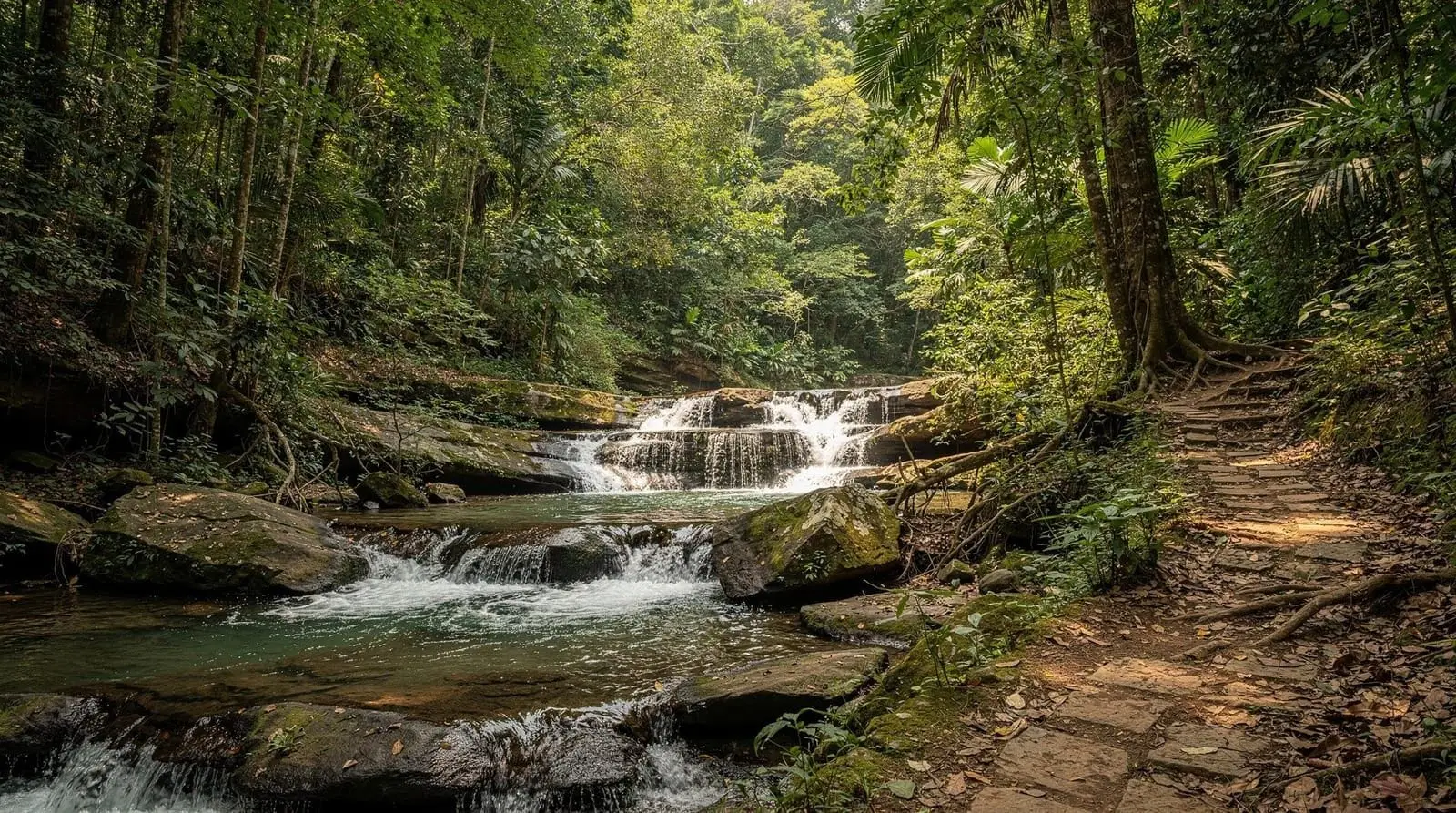
Huay Kaew waterfall
Huay Kaew waterfall sits at the Doi Suthep foothills near CMU and the zoo, and marks the start of the free Monk's Trail hike to Wat Pha Lat.
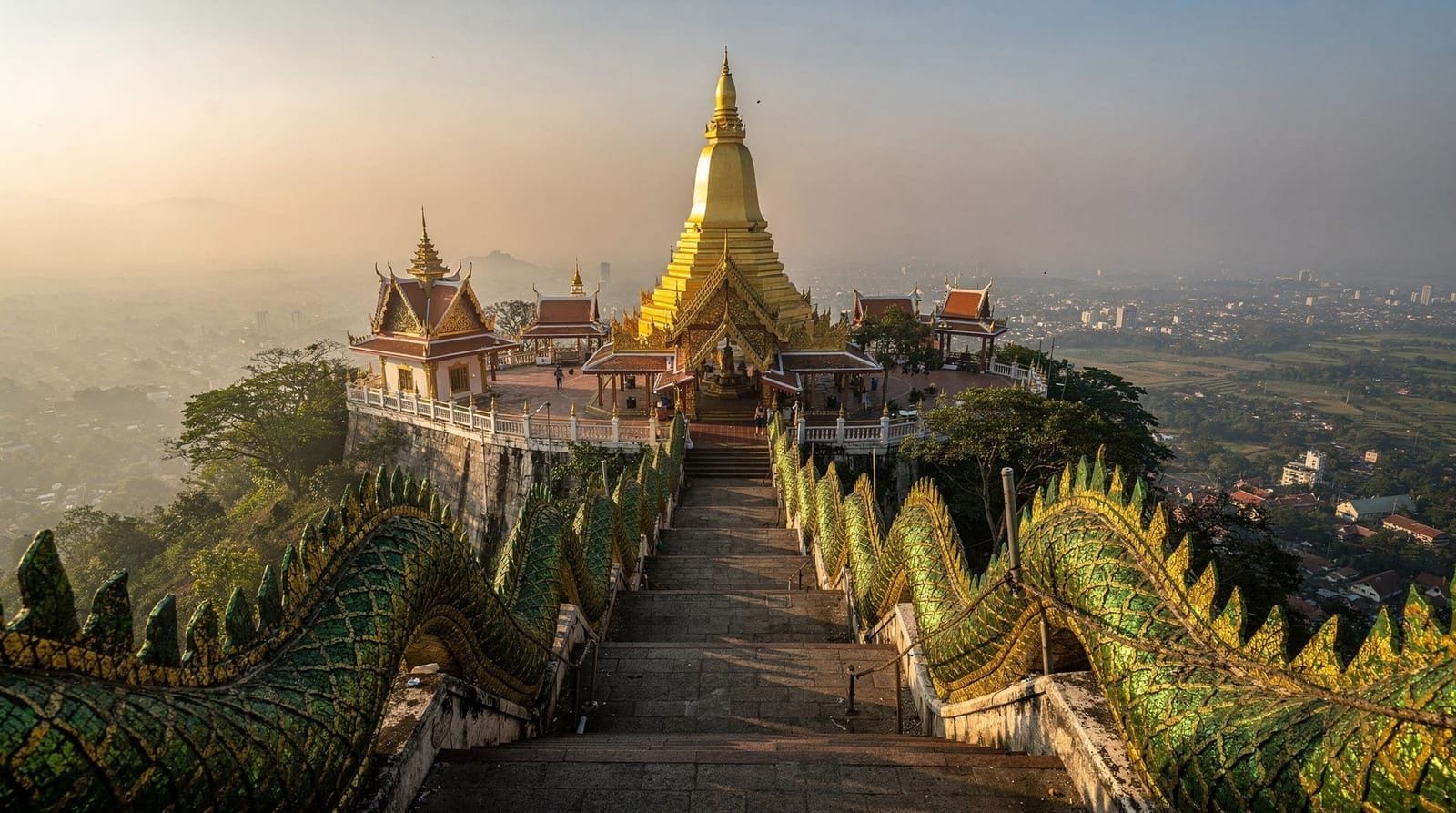
Chiang Mai: Doi Suthep Temple & Wat Pha Lat Hike
Quick facts
- Getting there
- Grab or songthaew from the old city, 20-30 min, roughly 100-150 THB
- Key sight
- Small tiered waterfall and the Monk's Trail (Wat Pha Lat) trailhead
- Time needed
- 1-1.5 hours for the waterfall alone, half a day with the Monk's Trail hike
- Best time
- Early morning; green season (Jun-Oct) for the fullest water flow
- Cost
- Free public park; the Monk's Trail hike is also free
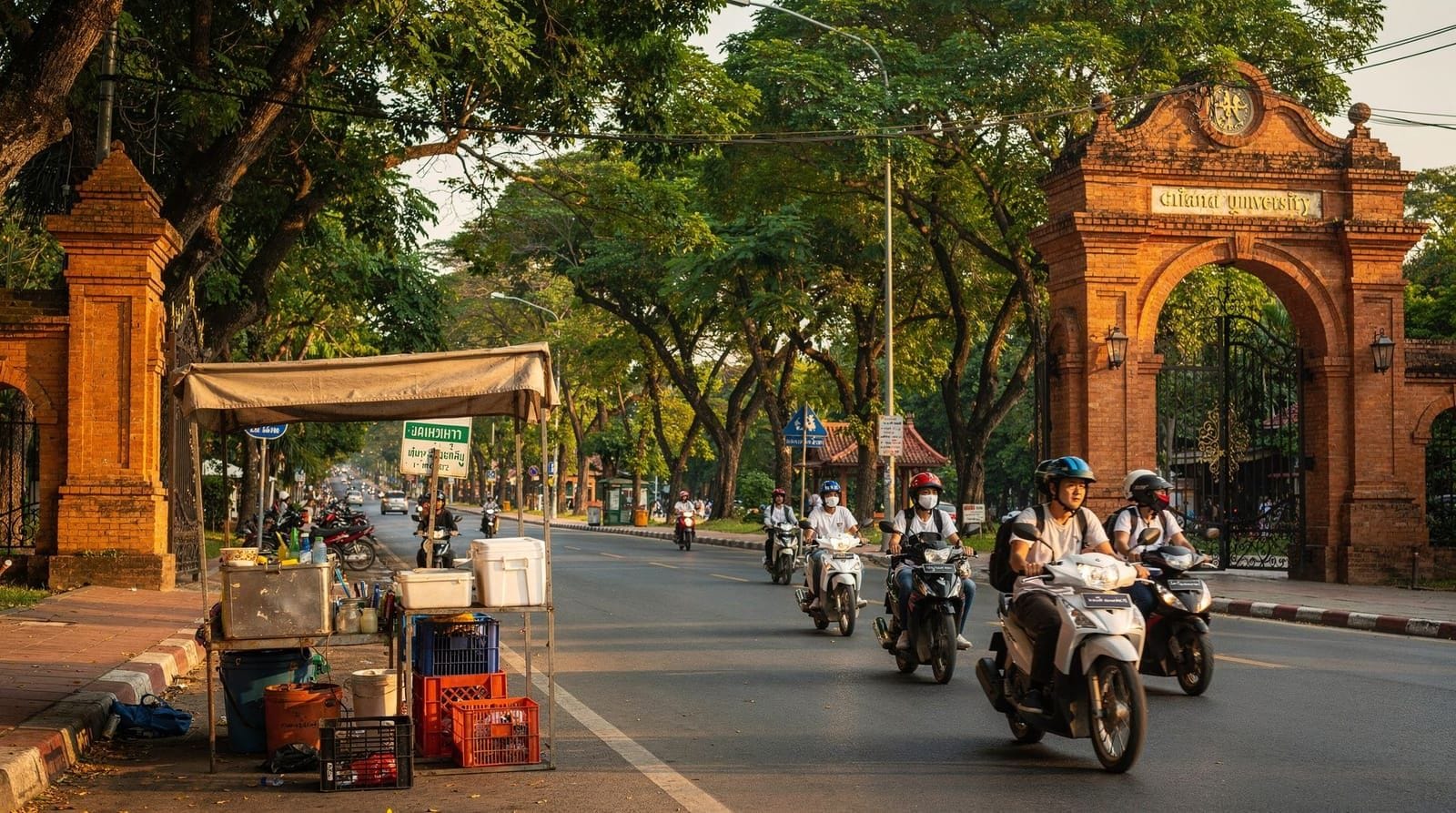
Huay Kaew waterfall sits at the point where the city stops and Doi Suthep’s forested slope begins, a short ride from Chiang Mai University and the zoo at the top of Huay Kaew Road. On its own, the waterfall is modest — a small, tiered cascade in a public park that locals use for weekend picnics rather than a headline attraction. What makes this spot worth knowing is what starts here: the Monk’s Trail, a free, well-marked forest path that climbs roughly 3-4 km through jungle to Wat Pha Lat, a quiet forest monastery, before continuing up to Doi Suthep itself. It’s one of the few genuinely free, self-guided hikes in the Chiang Mai area, and it turns a minor waterfall stop into one of the better half-day outings in the city.
Quick answer: Huay Kaew waterfall is a small public park at the foot of Doi Suthep, about 20-30 minutes from the old city by Grab or songthaew. On its own it takes an hour or so; paired with the Monk’s Trail hike up to Wat Pha Lat and Doi Suthep, budget a half day (3-4 hours) and start early to avoid the midday heat on the exposed upper switchbacks.
The waterfall itself
Huay Kaew (“Glass Stream”) is a public park with a modest multi-tier waterfall, shaded seating areas, and a small stream that locals use for cooling off, especially on hot-season weekends. It’s free to enter, sits right at the end of Huay Kaew Road near Chiang Mai University and the Chiang Mai Zoo, and is easy to combine with a look at either. The waterfall runs fullest in the rainy season (roughly June to October); by the peak of the dry season (March-May) it can slow to a trickle, so if the waterfall itself is your main interest, time your visit for the green months.
Most visitors, though, use Huay Kaew as a starting point rather than a destination — which is exactly how the park’s real value works. The park itself has basic facilities — shaded pavilions, a few food and drink vendors near the entrance on busier days, and paved paths around the lower pools — but nothing that requires more than a passing look before continuing on to the trail. Weekend afternoons bring local families for picnics and swimming in the lower pools, which is a pleasant scene to see but not a reason to plan a special trip around the waterfall alone.
The Monk’s Trail to Wat Pha Lat
Just past the waterfall park, a marked trailhead (look for small painted markers, orange ribbons, and a modest signboard) starts the path known locally as the Monk’s Trail — historically the route monks used to walk between the city and Doi Suthep before the paved road existed, and still used today by a handful of monks and by hikers looking for a free, scenic alternative to driving straight up.
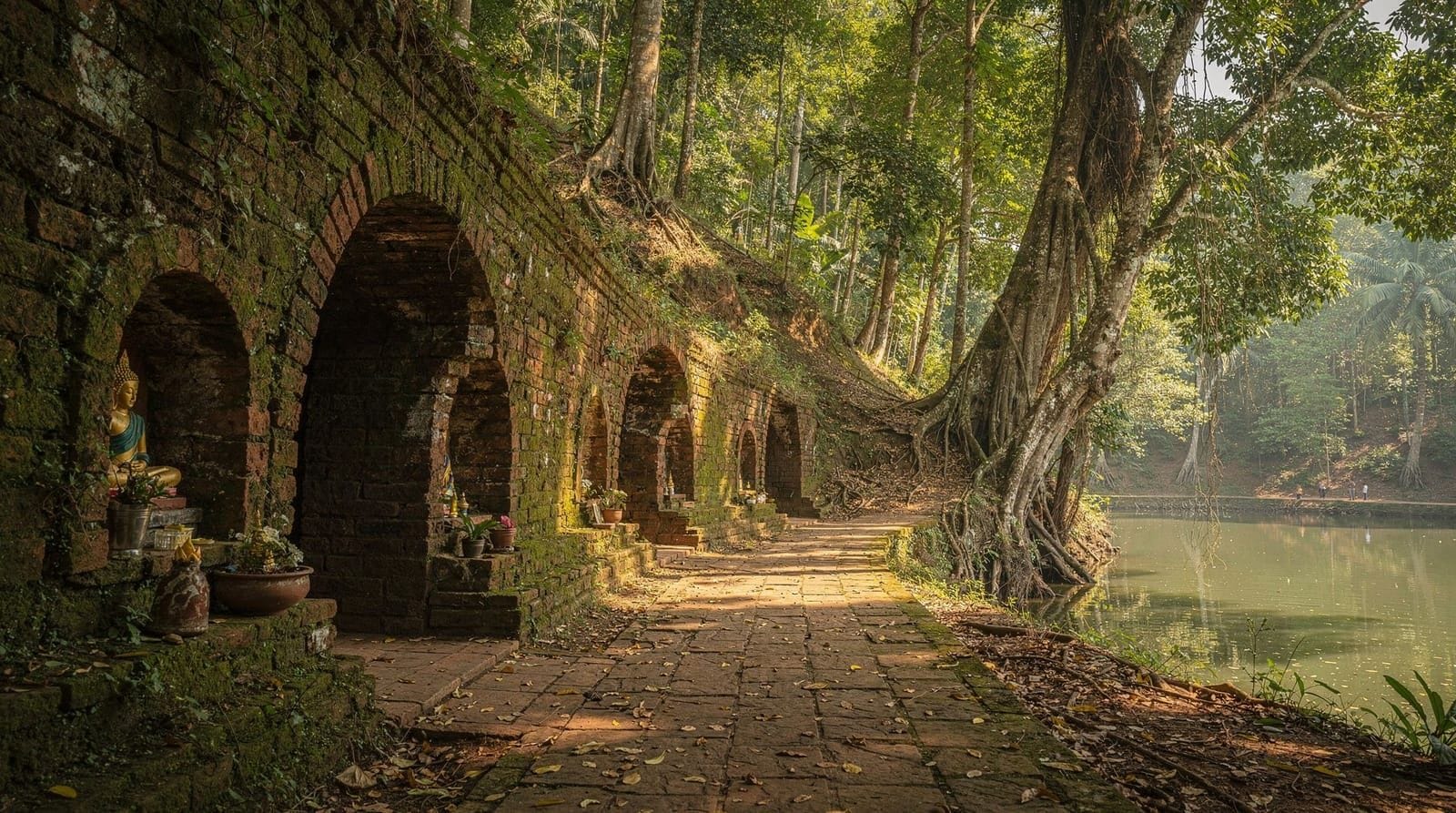
The trail climbs steadily through forest for about 3-4 km to reach Wat Pha Lat, a small, atmospheric temple built into the rock and forest that most vehicle-bound visitors to Doi Suthep never see. Wat Pha Lat’s setting — moss-covered Buddha images, a stream running through the grounds, naga statues half-swallowed by tree roots — is a genuinely different experience from the crowded main temple further up, and worth the walk on its own. From Wat Pha Lat, the trail continues (steeper, and with a stretch that briefly follows the paved road) up to Doi Suthep’s main complex, adding another 1.5-2 km.
Total hiking time for the full Huay Kaew-to-Doi Suthep route is typically 1.5-2 hours one way at a comfortable pace, not counting stops. Most people either:
- Hike up (about 1.5-2 hours) and take a songthaew, Grab, or tour transfer back down, or
- Turn around at Wat Pha Lat for a shorter round trip (roughly 1.5-2 hours total) if the full climb to Doi Suthep isn’t the goal.
Book a guided Doi Suthep temple and Wat Pha Lat hike if you’d rather have a local guide point out the trail markers and explain what you’re seeing at Wat Pha Lat, rather than navigating and researching it solo.
Wat Pha Lat: why it’s the real highlight
It’s worth spending a moment on why Wat Pha Lat, rather than the waterfall or even Doi Suthep itself, is what most repeat visitors to Chiang Mai actually recommend about this hike. The temple was built directly into a granite outcrop partway up the mountain, with a stream diverted to run through the grounds via a small series of stone channels and pools. Unlike Doi Suthep’s gold-and-crowds main complex, Wat Pha Lat sees a fraction of the visitors, most of them hikers rather than bus-tour groups, and the atmosphere reflects that: quiet, shaded by old-growth trees, with weathered stone Buddha images and naga (serpent) figures partially reclaimed by roots and moss. A handful of monks still live and study at the temple, and it’s not unusual to pass one along the trail itself, particularly in the early morning.
Because it sits roughly halfway up the Monk’s Trail, Wat Pha Lat also functions as a natural rest stop — a shaded spot to refill water (small stalls here sometimes sell cold drinks), sit by the stream, and take in a temple that feels genuinely lived-in rather than staged for tour buses, before tackling the steeper, more exposed final stretch up to Doi Suthep.
History of the route
The Monk’s Trail predates the paved road to Doi Suthep by decades. Before the mountain road was built in the 1930s, this forest path — along with a small handful of other routes up the mountainside — was the primary way monks, pilgrims, and porters moved between the city and the temple complex at the summit, a journey that would have taken considerably longer than today’s hike given the additional distance from the old city itself. The path fell out of everyday use once the paved road made vehicle access straightforward, but it was never abandoned entirely, kept alive first by monks who preferred the quieter walking route and later rediscovered by hikers and expats looking for a free, forested alternative to a car or songthaew ride. Local trail groups and the temple itself have maintained the markers and cleared sections of the path over the years, which is part of why it remains walkable and reasonably well-marked today despite receiving nowhere near the maintenance budget of a national park trail.
Practical hiking tips
- Start early. The trail is mostly shaded lower down but opens up on the final stretch near Doi Suthep, which gets hot fast after mid-morning. An early start (7-8am) also means cooler temperatures and a quieter trail.
- Wear real shoes. The path is dirt and root-covered in places, occasionally slick after rain — trainers or hiking shoes, not sandals.
- Carry water. There are no shops along the trail itself; the last easy place to buy water is near the Huay Kaew trailhead or at Wat Pha Lat’s small stalls.
- Follow the markers, not random forks. The trail is well-used but not always obviously marked at every junction — orange ribbons tied to trees and small painted arrows are the main guide. If in doubt, ask any monk or local hiker you pass.
- One-way is fine. Many hikers walk up and simply grab a songthaew or Grab down from Doi Suthep’s parking area rather than retracing the whole route on foot.
See a private Monk’s Trail and Doi Suthep hiking tour for a guided version with transfer back down included.
Combining with nearby stops
Huay Kaew’s location at the base of the mountain makes it easy to fold into a day that also covers Chiang Mai University’s Huay Kaew Road corridor (night market, zoo, campus) or a full loop up to Doi Suthep, Bhubing Palace, and Doi Pui village if you’re driving rather than hiking. For a completely different forest-temple experience on the same side of the city, Wat Umong’s underground tunnels and talking-tree grounds are a short drive away and pair naturally with an evening or twilight visit after a morning hike.
Check the half-day morning Wat Pha Lat and Doi Suthep tour for a guided option that starts early to beat both the heat and the crowds.
Some tour operators also run evening or “twilight” versions of the Wat Pha Lat and Doi Suthep route, timed to catch the temple lit up after dark and the city lights below — a very different atmosphere from the morning hike, and worth considering if you’ve already done Doi Suthep once during the day.
Look at the Wat Pha Lat and Doi Suthep night tour for that evening alternative.
For a version built specifically around the sunrise and a more contemplative pace — alms-giving and a short meditation session at the top rather than a straightforward hike-and-view itinerary — a small number of operators run an early-morning spiritual format combining Wat Pha Lat, Doi Suthep, alms-giving, and guided meditation, worth considering if that slower, more reflective framing appeals to you more than a straightforward hike.
Hiking vs. driving straight to Doi Suthep
If your only goal is reaching Doi Suthep’s temple, driving straight up by Grab, songthaew, or private driver is obviously faster — 20-30 minutes compared to 1.5-2 hours of hiking. The case for starting at Huay Kaew instead comes down to what you’d otherwise miss: Wat Pha Lat isn’t accessible by the main road at all, so skipping the hike means skipping that temple entirely, not just taking a shortcut to the same place. It also means arriving at Doi Suthep having earned the view rather than simply being dropped at the parking lot, which changes how the visit feels even though the destination is identical.
That said, the hike isn’t for everyone. If mobility, heat sensitivity, or simply time pressure make a 1.5-2 hour uphill walk impractical, driving straight to Doi Suthep and treating Wat Pha Lat as a missed side quest rather than a mandatory stop is a completely reasonable choice — plenty of visitors have a great Doi Suthep morning without ever setting foot on the Monk’s Trail.
Frequently asked questions about Huay Kaew waterfall
Is Huay Kaew waterfall worth visiting on its own?
Only if you’re already nearby — the waterfall itself is small and unremarkable compared to falls further from the city like Mae Sa waterfall or the Sticky Waterfalls at Bua Thong. Its real value is as the trailhead for the Monk’s Trail hike to Wat Pha Lat and Doi Suthep.
How long is the Monk’s Trail hike from Huay Kaew?
Roughly 3-4 km and 1.5-2 hours one way to reach Wat Pha Lat and continue to Doi Suthep’s main temple, at a comfortable walking pace with a few stops.
Is the Monk’s Trail free?
Yes. There’s no entry fee for the trail itself. You’ll only pay if you enter Doi Suthep’s main temple complex at the top, which has a modest entry fee for foreign visitors.
Do I need a guide for the Monk’s Trail?
No, the trail is walkable independently and reasonably well-marked with painted signs and ribbons, though a guide adds context about Wat Pha Lat’s history and can be useful if you’re not confident navigating unmarked forest junctions.
Can I do the hike in the rainy season?
Yes, and the waterfall itself looks best then, but the path can be muddy and slippery in places — wear grippy shoes and expect a slower pace than in dry season.
How do I get back down after hiking up to Doi Suthep?
Songthaews and Grab cars regularly wait at Doi Suthep’s main parking area for the return trip to the city, so you don’t need to walk back down the same trail unless you want to.
What should I bring for the Monk’s Trail hike?
Water, sun protection even though most of the lower trail is shaded, proper closed shoes, and cash for any small entry fee at Doi Suthep’s main temple if you continue that far.
Is Huay Kaew waterfall near Chiang Mai University?
Yes, it’s right at the top of Huay Kaew Road, a short distance past the university campus and the Chiang Mai Zoo, making it easy to combine with that side of the city in one trip.
Is there an entry fee for Huay Kaew waterfall park?
No, the park is free to enter, along with the Monk’s Trail itself. The only cost most visitors encounter on this route is the modest entry fee at Doi Suthep’s main temple complex if the hike continues that far.
Is Wat Pha Lat open to visit without hiking the whole trail?
It’s most easily reached on foot via the Monk’s Trail, since it isn’t directly on the main paved road to Doi Suthep. Some guided tours offer a shorter version of the hike that focuses specifically on reaching Wat Pha Lat without continuing all the way to Doi Suthep.
Is the Monk’s Trail safe to hike alone?
Yes, for most reasonably fit hikers — it’s a well-used trail with other hikers and monks passing through regularly, and mobile signal is generally available along most of the route. As with any forest trail, avoid hiking alone right at dusk or after heavy rain when the path is more slippery.
What’s the elevation gain on the Monk’s Trail?
The hike climbs from the city’s foothills up to Doi Suthep’s summit area, a meaningful but manageable elevation gain for most fit hikers spread over the 4-5 km route — steady rather than punishingly steep, with the final stretch near Doi Suthep being the most exposed and demanding section.
Top experiences
Bookable activities with verified prices and instant confirmation on GetYourGuide.