Sticky Waterfalls (Bua Thong)
Bua Thong Sticky Waterfalls are mineral-coated limestone falls near Chiang Mai you can walk up barefoot, free to enter and best visited weekday mornings.
Chiang Mai: Bua Tong Sticky Waterfall, Huge Cave & Thai Buffet
Quick facts
- Getting there
- Grab, private driver or a tour with transfer, about 1 hour northeast near Sri Lanna National Park, roughly 800-1,000 THB (~$23-28) round trip by Grab
- Key sight
- Mineral-coated limestone cascade you climb barefoot, plus the nearby Chok Sae Muang spring
- Time needed
- 2-3 hours including the climb and a stop at the spring
- Best time
- Weekday mornings year-round; rainy season for the fullest flow
- Typical cost
- Free national park entry; parking around 20-50 THB (~$0.60-1.40); optional guide tip
The Sticky Waterfalls — officially Nam Tok Bua Thong, and sometimes called the Bua Thong Sticky Waterfalls — are one of the more genuinely surprising natural attractions near Chiang Mai: a limestone cascade coated in mineral deposits that give the rock a rough, grippy texture, letting you walk straight up the face of the waterfall itself rather than just viewing it from the side. Free to enter, about an hour northeast of the city near Sri Lanna National Park, and requiring no special equipment beyond bare feet, it’s become one of the most-booked half-day activities in the wider Chiang Mai area precisely because it’s such an unusual, low-cost, high-fun combination.
Quick answer: The Sticky Waterfalls sit about an hour northeast of Chiang Mai near Sri Lanna National Park. The falls are mineral-coated limestone that you climb barefoot rather than view from a platform, entry is free, and most visitors spend 2-3 hours here, often combined with a stop at the nearby Chok Sae Muang spring or a longer day trip to Mae Kampong village. Weekday mornings are noticeably calmer than weekend afternoons.
Why the waterfall is “sticky”
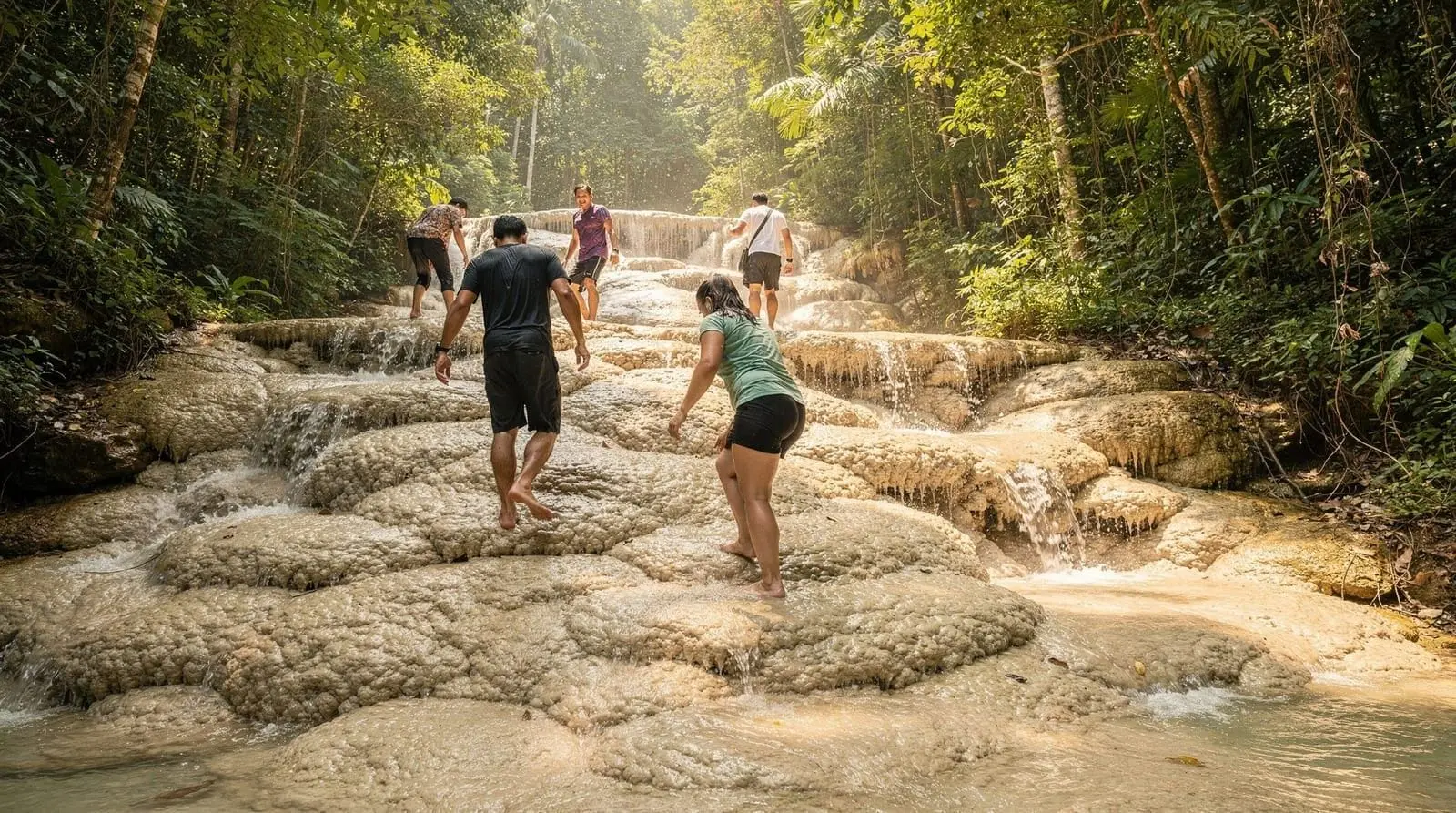
The Bua Thong falls run over limestone bedrock, and over time, mineral-rich water flowing across the rock deposits a layer of calcium carbonate — essentially the same mineral process that forms limestone caves and travertine terraces elsewhere in the world — onto the surface. That deposit builds up into a rough, slightly porous texture that grips bare feet far better than the smooth, algae-slicked rock you’d expect at a typical tropical waterfall. The result is a cascade you can walk directly up, following the natural contours and footholds the mineral coating creates, rather than a waterfall you can only admire from a viewing platform or a single pool at the base.
It’s worth being precise about what this means in practice: the grip works specifically with bare feet against the mineral-coated rock. Shoes, even grippy hiking sandals, generally reduce traction here rather than improve it, which is the opposite of most outdoor hiking advice and catches some first-time visitors off guard.
Climbing the falls: what it’s actually like
The climb itself follows the water up through a series of shallow tiers and small pools, with the mineral-coated rock providing footing at nearly every step. It’s not a technical climb requiring ropes or special skill — most reasonably fit visitors, including many children with a hand held on the steeper sections, manage the ascent without much difficulty — but it is a genuine physical activity involving sustained balance and some effort, not a passive sightseeing stop.
Book the “climb Sticky Waterfall like Spiderman” experience from Chiang Mai city for a guided version of the climb with transport included.
A few practical points make the climb noticeably easier and safer: go barefoot rather than in shoes, take your time on the steeper sections rather than rushing, and follow the route other climbers are visibly using rather than improvising a path up unclimbed sections of rock, since not every part of the falls has the same reliable mineral grip. Local staff and other visitors are generally happy to point out the easier route if you’re unsure.
What to bring for a Sticky Waterfalls visit
Because the climb is the whole point of the visit, packing right makes a real difference to how much you enjoy it. A change of clothes and a dry bag or plastic bag for wet items are worth bringing, since you’ll get thoroughly wet climbing the tiers and pools. Swimwear under light clothing is the most practical setup for most visitors, letting you climb and cool off in the pools without worrying about cotton clothing staying soaked for the rest of the day. As already noted, footwear is best carried rather than worn — a small drawstring bag that you can loop over a shoulder while climbing keeps your hands free for balance.
Sun protection matters too, since much of the falls area is only partially shaded, and a reusable water bottle is worth carrying given the walking and climbing involved, particularly in the hotter months. Cash in small denominations covers parking and any food stall purchases at the entrance, since card payment options are limited this far from the city.
Climbing the falls with children
Bua Thong is a genuinely popular family destination, and many visitors bring children of a range of ages, though it’s worth being realistic about what different ages can manage. Older children, roughly school-age and up, generally handle the climb well with occasional help on the steeper tiers, and often enjoy the activity more than a passive sightseeing stop precisely because it’s physical and hands-on. Very young children can still enjoy the lower, gentler pools near the base without needing to climb the full height of the falls, which is a reasonable way to include the whole family without pushing toddlers onto terrain that’s better suited to older kids and adults.
As with any wet, uneven natural terrain, supervision matters throughout the climb regardless of a child’s age or apparent confidence, since footing can vary tier to tier and a slip on wet rock is a real possibility even on a generally grippy surface.
Sri Lanna National Park and the wider area
The falls sit within the boundaries of Sri Lanna National Park, a protected forest area that also includes Chok Sae Muang, a smaller natural spring near the main falls worth a short additional stop if you have the time. The park setting means the falls are surrounded by genuine forest rather than a purely commercial attraction, which contributes to the site feeling more like an outdoor adventure spot than a manicured tourist facility, even with the parking area, basic facilities and food stalls that have grown up around the entrance to serve visitor numbers.
Check the Bua Tong Sticky Waterfall, cave and Thai buffet tour if you want the falls combined with a nearby cave stop and a lunch buffet in a single guided day.
Food and facilities near the falls
Basic food stalls operate around the parking and entrance area, serving simple Thai dishes, drinks and snacks — enough for a light lunch after the climb, though not a destination in itself the way a proper restaurant would be. Some guided tours build in a more substantial lunch, sometimes at a buffet-style restaurant near the falls or in a nearby cave attraction, as part of a combined half- or full-day package.
Toilets and changing facilities are available near the entrance, basic but functional, which is worth knowing given how wet a full climb of the falls leaves most visitors. Lockers or secure storage for valuables are more limited than at a purpose-built tourist facility, so it’s worth thinking ahead about what you bring down to the water versus what stays safely in a vehicle or with a non-climbing member of your group.
When to visit: crowds, weather and water flow
The Sticky Waterfalls are busiest on weekends and public holidays, when both international tourists and domestic day-trippers from Chiang Mai and further afield converge on the site, sometimes creating real queues at the most popular climbing tiers near the base. Weekday mornings are consistently calmer, with more space to climb at your own pace and shorter waits at photo-worthy spots.
Water flow varies by season: the rainy season (roughly June to October) brings the fullest, most dramatic cascade, while the dry season (especially March-May) can reduce flow noticeably, though the mineral-coated rock and climbable structure remain regardless of exactly how much water is running. Rain also affects rock texture temporarily — a very recent, heavy downpour can leave surfaces wetter and marginally less grippy than a dry morning, though this is a minor factor rather than a reason to avoid a rainy-season visit altogether.
Look at the afternoon Bua Tong Sticky Waterfall tour by red taxi if a half-day afternoon slot suits your schedule better than a full morning trip.
Safety notes worth taking seriously
Bua Thong is a genuinely safe activity for most visitors when approached sensibly, but it is still a natural rock formation, not a purpose-built adventure course, and a few points are worth taking seriously rather than treating as boilerplate warnings. Rock that looks dry can still be slicker than expected in shaded, less-trafficked sections, so testing your footing before committing full weight on an unfamiliar step is a reasonable habit throughout the climb, not just on the first few tiers. Climbing during or immediately after heavy rain increases both slipperiness and the small risk of sudden water-level changes in the stream, so postponing a climb during an active downpour rather than pushing through it is the sensible choice. Alcohol and the climb don’t mix well for obvious reasons, and while it’s rarely an issue at Bua Thong specifically, it’s worth mentioning given how casual and low-key the overall atmosphere can feel.
None of this should discourage a visit — the vast majority of climbs at Bua Thong go smoothly, and the site’s popularity with families and casual tourists reflects how manageable it genuinely is — but a little situational awareness, especially on a first visit before you’ve calibrated to the rock’s actual grip, goes a long way.
Getting to the Sticky Waterfalls
The falls sit roughly an hour northeast of central Chiang Mai, in the Mae On area near Sri Lanna National Park. Whether you’re based in the old city or Nimmanhaemin, transfer time is broadly similar, so pick your base on other criteria rather than proximity to Bua Thong specifically. Options:
- Grab or a private driver: straightforward for a direct there-and-back trip, though Grab availability for the return leg from a rural national park area can be less reliable than in the city, so arranging a driver who’ll wait or a fixed return time is worth doing ahead of time.
- A guided tour with transfer: the simplest option for most visitors, since nearly every Sticky Waterfalls tour includes round-trip hotel pickup, removing the need to arrange transport yourself.
- Rental scooter or car: workable for confident riders, on reasonably well-paved roads for most of the route, though the final stretch into the park area is rural and less signposted than a Chiang Mai city road.
Combining the Sticky Waterfalls with other San Kamphaeng stops
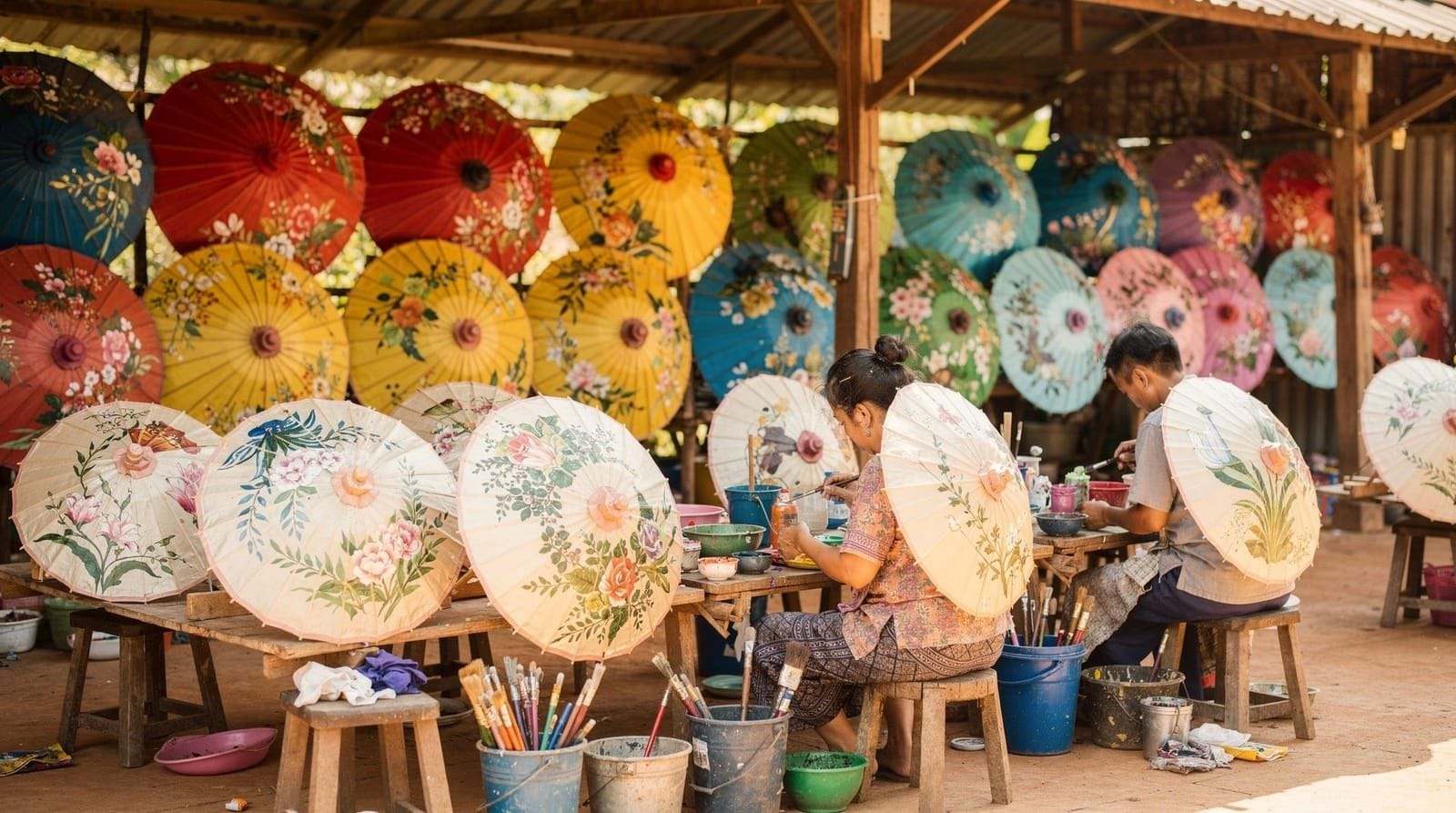
Because the falls sit within the wider San Kamphaeng and Mae On area, they combine naturally with several nearby stops rather than requiring a single-purpose trip. A common full-day pattern pairs a morning at the falls with an afternoon at Mae Kampong village, the misty mountain village further into the hills, since both areas share a broadly similar eastern route out of the city. Alternatively, some visitors combine a morning at the falls with an afternoon at Bo Sang umbrella village or the San Kamphaeng hot springs, trading the mountain-village atmosphere for a craft-and-relaxation focused afternoon instead.
How the Sticky Waterfalls compare to other Chiang Mai-area waterfalls
Chiang Mai’s surrounding hills hold several waterfalls, and it’s worth knowing how Bua Thong differs from the others before deciding where to spend a limited amount of time. Mae Sa waterfall, in the Mae Rim valley on the opposite side of the city, is a ten-tier cascade you walk alongside rather than climb up, set inside a more developed valley with a botanic garden and elephant sanctuaries nearby. Huay Kaew waterfall, closer to the city at the foot of Doi Suthep, is a smaller, more casual local spot popular with residents rather than a dedicated tour destination. Bua Thong’s distinguishing feature — the climbable, mineral-coated rock — isn’t replicated at either of these, which is precisely why it’s developed such a specific, standalone reputation despite being a relatively modest waterfall by sheer size or water volume compared to some of the region’s other cascades.
If you only have time for one waterfall stop during your Chiang Mai trip and want the most physically interactive experience, Bua Thong is the clear choice; if a gentler, walk-alongside waterfall paired with a wider valley of activities suits your day better, Mae Sa is the more natural fit.
Frequently asked questions about the Sticky Waterfalls
Why are the Sticky Waterfalls called “sticky”?
Because mineral deposits (calcium carbonate) built up on the limestone rock over time give the surface a rough, grippy texture that lets you climb the waterfall barefoot, unlike the smooth, slick rock at most tropical falls.
Do I need special shoes to climb the Sticky Waterfalls?
No — bare feet actually grip the mineral-coated rock better than shoes or sandals. Bring a bag to carry your footwear while you climb.
Is there an entrance fee for the Sticky Waterfalls?
Entry to the falls themselves is free, since they sit within Sri Lanna National Park’s public access area; parking typically costs a small fee.
How far are the Sticky Waterfalls from Chiang Mai?
Roughly an hour’s drive northeast of the city, in the Mae On area near Sri Lanna National Park.
Is climbing the Sticky Waterfalls difficult?
Not technically difficult for most reasonably fit visitors, but it is a genuine physical activity requiring balance and some effort on steeper sections, not a passive viewing stop.
When is the best time to visit the Sticky Waterfalls?
Weekday mornings for the smallest crowds, and the rainy season (roughly June-October) for the fullest water flow, though the falls are climbable year-round.
Can children climb the Sticky Waterfalls?
Many families with older children do, generally with a hand held on the steeper sections. Very young children may find some tiers challenging.
What is Chok Sae Muang?
A natural spring near the main Bua Thong falls, within the same Sri Lanna National Park area, worth a short additional stop if you have extra time.
Can I combine the Sticky Waterfalls with Mae Kampong village in one day?
Yes, both sit in the broader eastern hills area out of Chiang Mai, and many visitors pair a morning at the falls with an afternoon in Mae Kampong village.
Are the Sticky Waterfalls crowded?
They can be, especially on weekends and holidays, when both tourists and domestic day-trippers arrive in numbers. Weekday mornings are noticeably quieter.
What should I wear to climb the Sticky Waterfalls?
Swimwear or clothes you don’t mind getting wet, with footwear carried in a bag rather than worn, since bare feet grip the mineral-coated rock far better than shoes.
How is Bua Thong different from Mae Sa waterfall?
Mae Sa waterfall is a ten-tier cascade you walk alongside on marked paths; Bua Thong’s mineral-coated rock lets you climb directly up the face of the falls barefoot. They’re genuinely different experiences, and some visitors do both on separate days.
Top experiences
Bookable activities with verified prices and instant confirmation on GetYourGuide.