Mae Sa valley
Mae Sa valley in Mae Rim district holds a ten-tier waterfall, the Queen Sirikit Botanic Garden and several adventure parks north of Chiang Mai.
One-Day Private Tour with Driver: Temples & Mae Sa Waterfall
Duration: Full day
Quick facts
- Getting there
- Grab or private driver from the old city, 30-40 min, roughly 500-700 THB one-way
- Key sight
- Mae Sa waterfall's ten tiers and the Queen Sirikit Botanic Garden
- Time needed
- Half to a full day depending on how many stops you combine
- Best time
- June to October for full waterfall flow; November to February for comfortable hiking weather
- Typical cost
- Waterfall entry around 100 THB, garden around 100 THB, zipline packages 1,500-3,000 THB
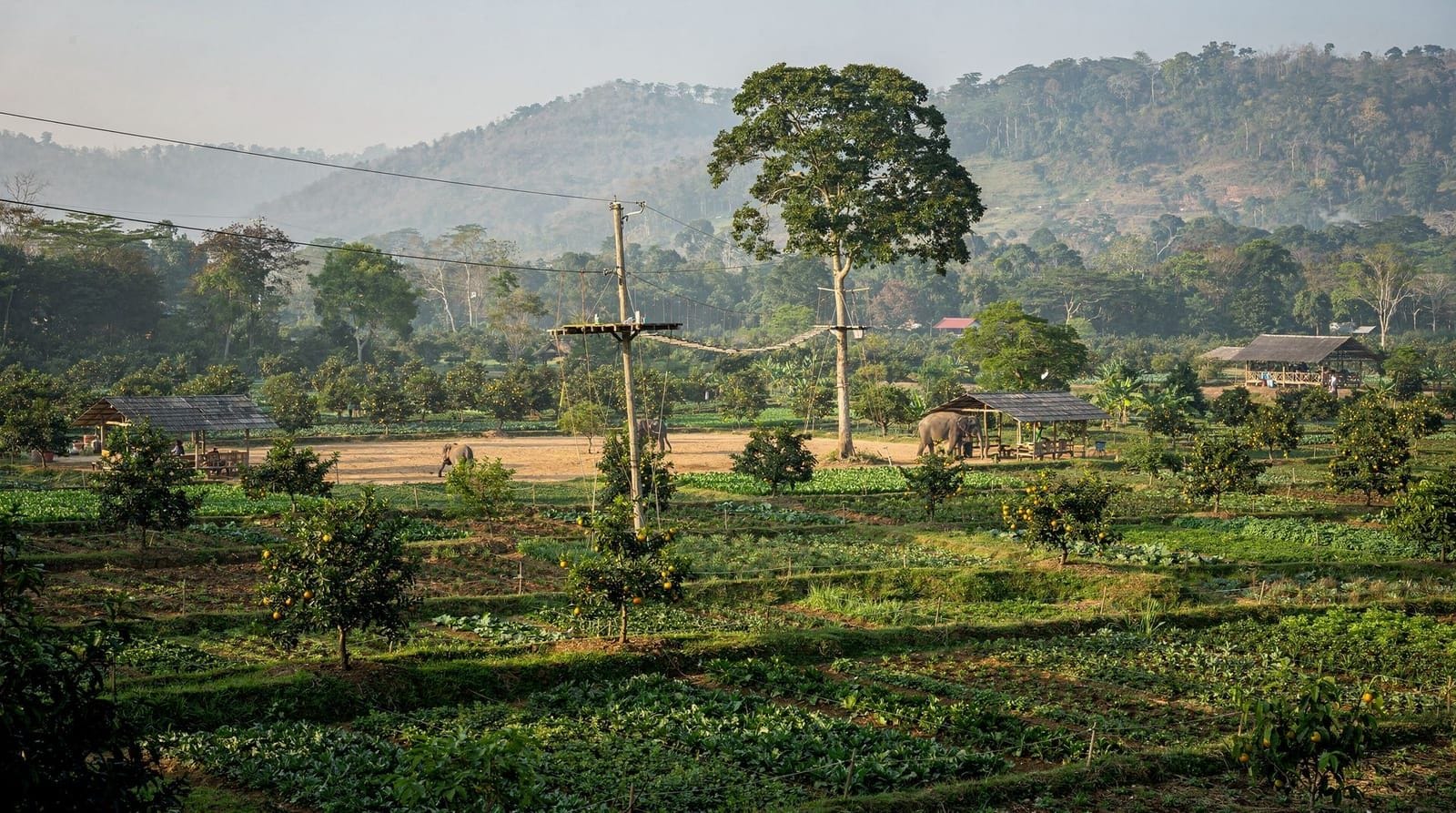
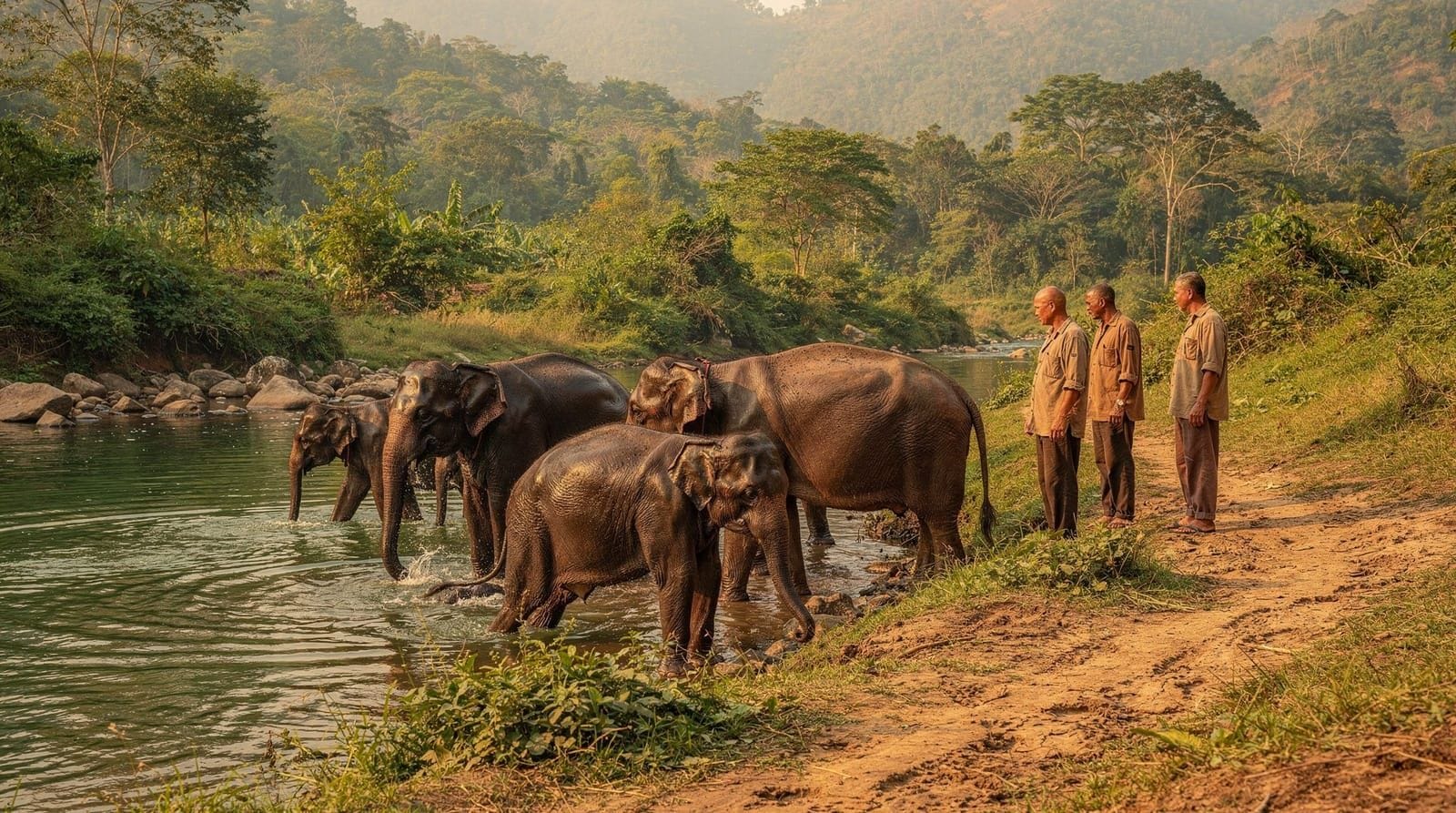
Mae Sa valley is the stretch of route 1096 that runs deepest into Mae Rim district, and it’s where the area’s two signature nature stops sit within a few kilometers of each other: Mae Sa waterfall, a ten-tier cascade you can climb tier by tier through forest, and the Queen Sirikit Botanic Garden, a large public garden built around a rainforest canopy walkway. Between and around them sit several zipline and adventure park operators, a scattering of orchid and butterfly farms, and the valley’s growing strip of resorts and farm cafés. If Mae Rim as a whole is defined by its elephant sanctuaries, Mae Sa valley specifically is defined by these two nature stops — and picking the right one (or both, if you have the time) is the main planning decision.
Quick answer: Mae Sa valley sits about 30-40 minutes north of the old city, along the same road that leads to most of the district’s ethical elephant sanctuaries. The ten-tier Mae Sa waterfall and the Queen Sirikit Botanic Garden are the two headline stops, each worth 1.5-2.5 hours, and both pair naturally with a morning elephant sanctuary visit or an afternoon zipline course.
Mae Sa waterfall
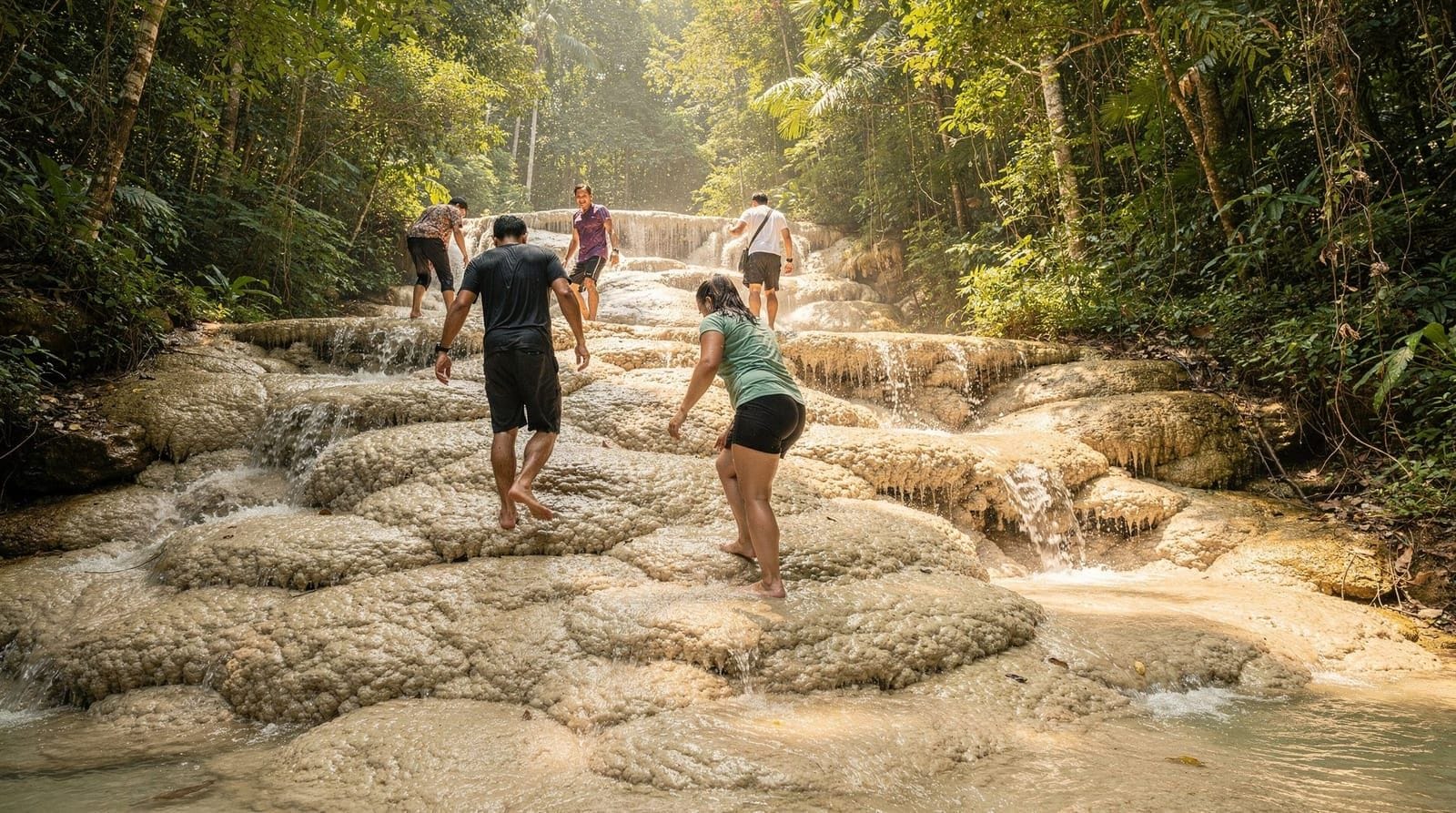
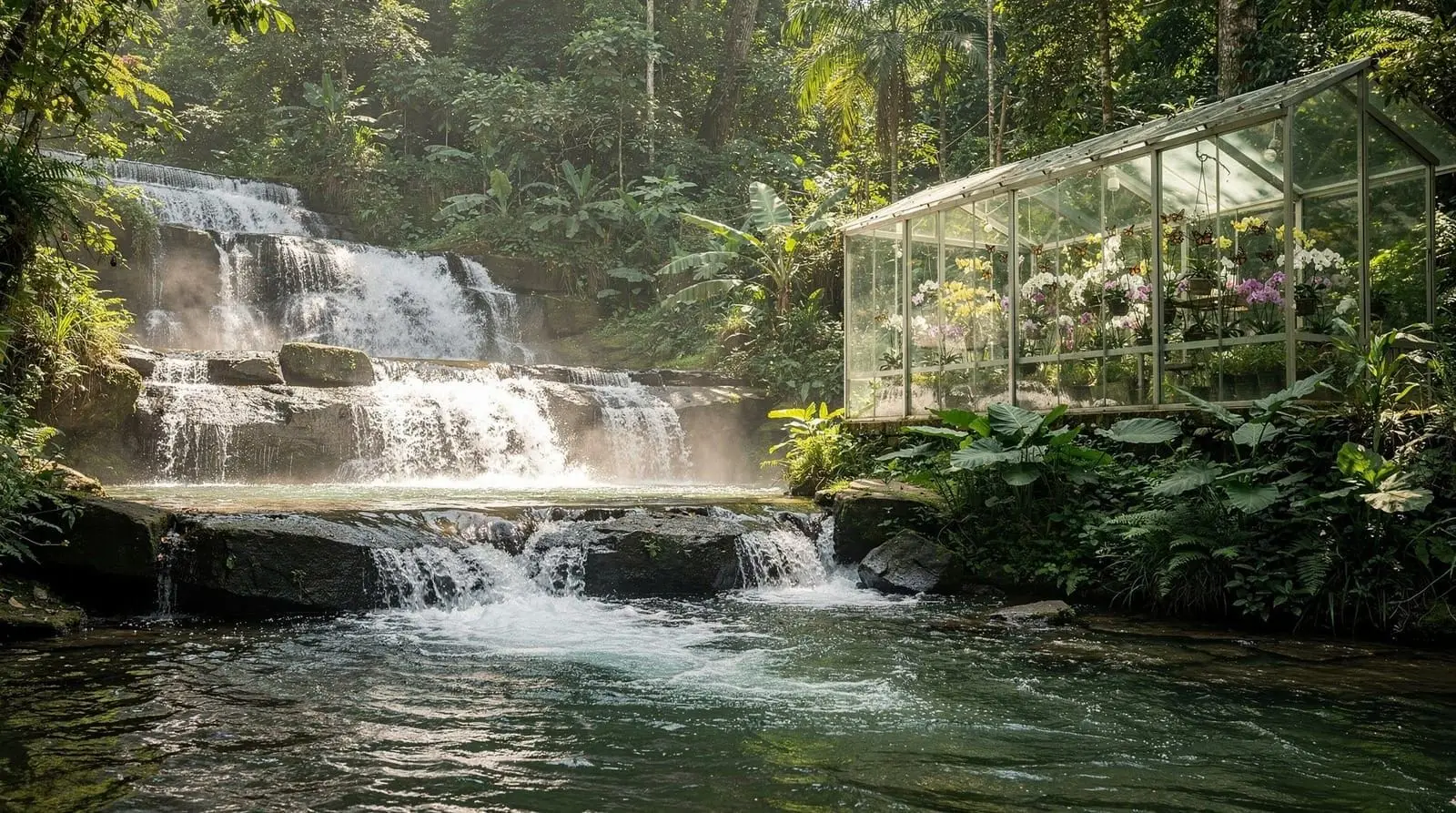
Mae Sa waterfall cascades down ten distinct tiers inside a national park area, connected by a marked path that follows the stream uphill. Unlike a single-drop waterfall you view from a platform, Mae Sa is designed to be walked: a path with informal steps and stream crossings takes you from tier to tier, with swimming possible in several of the calmer pools depending on water level and season. The lower tiers, closest to the entrance, get the most visitors; the higher tiers require more walking and reward you with quieter, less crowded pools.
Flow is strongest in the rainy season (roughly June to October), when the ten tiers are at their most dramatic; by the height of the dry season (March-May) the upper tiers can slow to a trickle, though the lower pools usually still hold water. If seeing the waterfall at full force is the priority, plan a rainy-season visit and go on a weekday morning to avoid both crowds and the early-afternoon rain that green-season days often bring.
Book a one-day private driver tour covering temples and Mae Sa waterfall if you want the waterfall combined with a temple stop and full flexibility on timing.
Getting to Mae Sa valley and getting around once there
Mae Sa valley starts roughly where the Mae Rim district’s main road (route 1096) begins climbing away from the flatter farmland near Mae Rim town, continuing another 10-15 km deeper into the hills. From central Chiang Mai, that’s about 30-40 minutes by Grab or private driver, longer if traffic near the city’s outer ring road is heavy during morning rush hour.
Because the valley’s sights — the waterfall, the botanic garden, the zipline operators, Mon Cham further up — are spread across several kilometers of a single winding road rather than clustered in a walkable area, a private driver or a self-arranged scooter is genuinely more useful here than in, say, the compact old city. Most visitors fall into one of three patterns:
- A single-activity tour with transfer included — the simplest option if you’re focused on the waterfall, garden, or an elephant sanctuary and don’t want to think about logistics.
- A private driver for a half or full day — the most flexible choice if you’re combining two or more stops, since drivers will wait at each location rather than requiring you to arrange a fresh ride onward.
- A rental scooter — feasible for confident riders on the well-paved 1096, though the valley’s length means a full loop covering the waterfall, garden, and Mon Cham makes for a long day, and the road does narrow and climb noticeably past the garden.
Within the valley itself, parking at both the waterfall and the botanic garden is close to the entrance, so once you’ve arrived at a specific stop, getting around on foot is straightforward — the walking is all within each attraction rather than between them.
What else is in the valley: farms, cafés and smaller stops
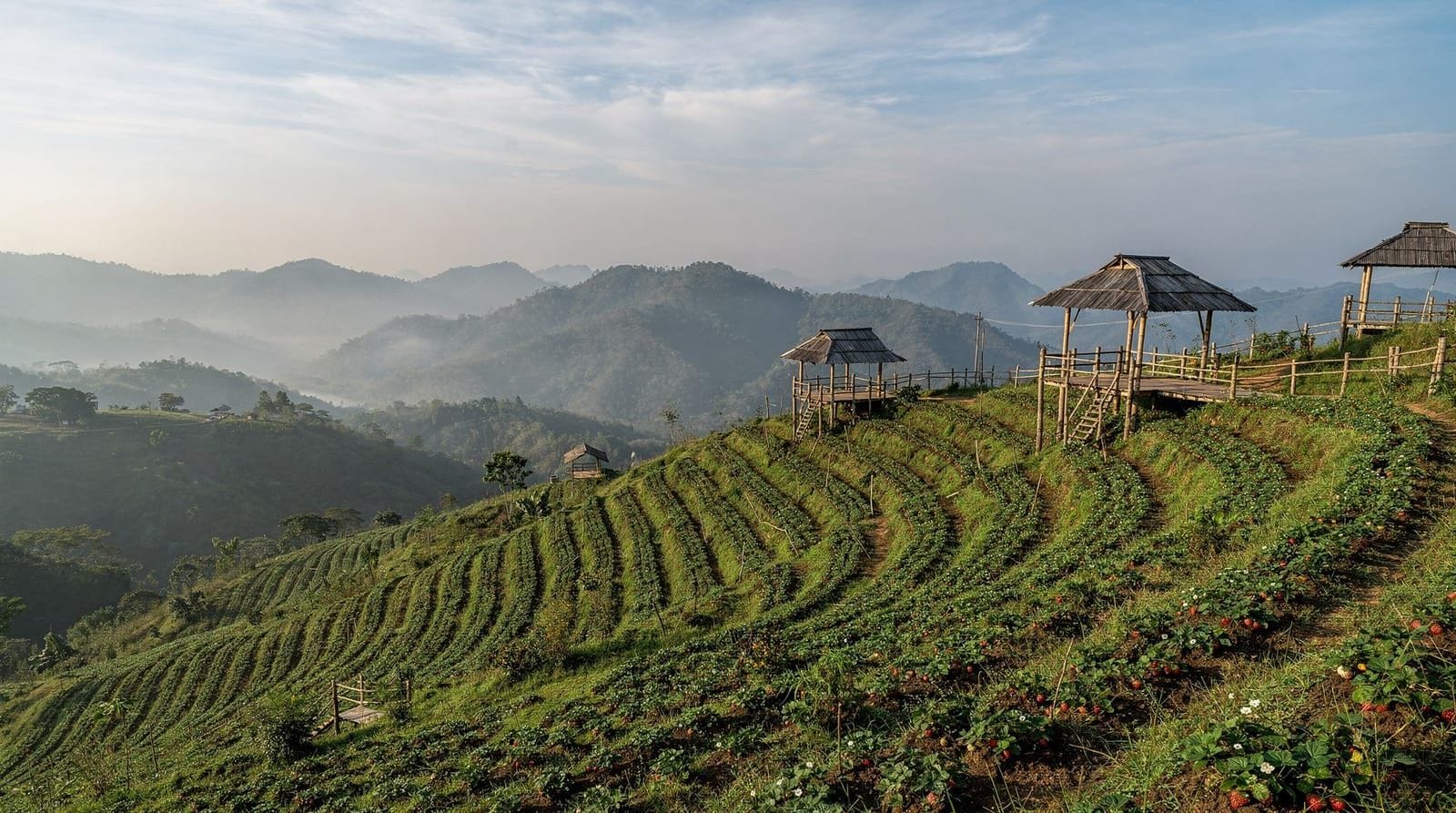
Beyond the two headline nature stops, the Mae Sa valley has developed a strip of smaller attractions that reward a slower pace if you have more than a single day here. Orchid and butterfly farms sit along parts of the main road, offering short, low-cost stops that work well with children or as a brief break between longer activities. Strawberry farms cluster more toward the upper valley near Mon Cham, at their best in the cool season (roughly December to February) when the fruit is in season and pick-your-own visits are common.
The valley’s café and farm-stay scene has grown substantially over the past decade, catering to both day-trippers and the weekend resort crowd from Chiang Mai. These range from simple roadside noodle stops to garden cafés built specifically around a photogenic setting — flower fields, mountain views, or a stream-side deck. None are destinations in themselves the way the waterfall or garden are, but they’re a genuinely pleasant way to break up a day of driving between stops, and locals as much as tourists use them.
Weekend crowds at these smaller farms and cafés tend to skew heavily toward domestic Thai visitors rather than international tourists, particularly during the cool-season strawberry harvest, which makes for a noticeably different atmosphere from the more internationally-oriented elephant sanctuaries and waterfall — worth knowing if you’re specifically looking for a slice of how Chiang Mai locals spend a weekend day trip rather than a purely tourist-facing stop.
Queen Sirikit Botanic Garden
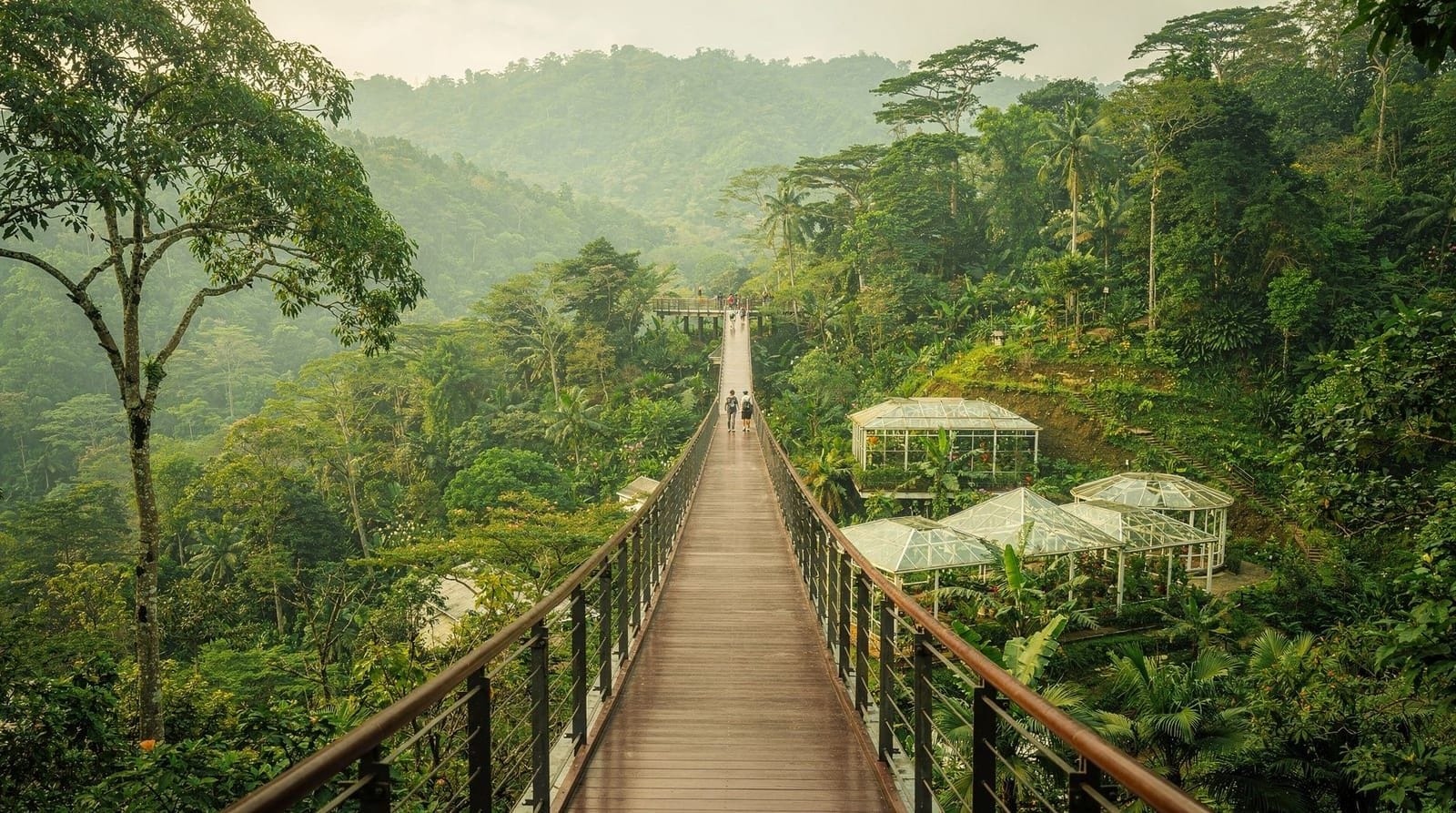
A short drive from the waterfall, the Queen Sirikit Botanic Garden is a large public botanic garden built into the hillside, with landscaped grounds, several glasshouses covering different plant zones (arid, aquatic, economic plants, and more), and its main draw: a rainforest canopy walkway that lifts you above the forest floor on a series of elevated steel bridges and platforms. It’s a genuinely different pace from the waterfall or an elephant sanctuary — quieter, more horticultural, and better suited to a slow two-hour wander than an adrenaline-focused morning.
Entry is inexpensive (in the range of 100 THB for adult foreign visitors, though check current signage as fees are periodically adjusted), and the garden is large enough that a shuttle or tram sometimes covers the distance between the entrance, the glasshouses, and the canopy walkway, useful if you’d rather not walk the full grounds in the midday heat. Full detail on this stop is on the dedicated Queen Sirikit Botanic Garden page.
Ziplines and adventure parks
The Mae Sa valley hosts several zipline and canopy adventure operators, distinct from the well-known Flight of the Gibbon course, which actually operates on the opposite side of Chiang Mai near Mae Kampong village — a mix-up worth double-checking before you book, since tour listings sometimes use “Chiang Mai zipline” loosely for both locations. The valley-based courses typically combine a segway or short jungle walk with a zipline circuit through the canopy, running a few hours in total.
Check the Segway and eco canopy zipline adventure in the valley for one of the Mae Sa-based options.
Beyond ziplining, a few operators run combined waterfall-and-adventure days — bamboo rafting on the stream below the falls, short ATV circuits on valley back roads, or a waterfall stop paired with an elephant sanctuary visit for a fuller day.
Look at the elephant sanctuary, waterfall and bamboo rafting combination if you want three activities across one booked day rather than arranging each separately.
Choosing between the waterfall, the garden and a zipline
If time forces a single choice rather than a combination, it helps to think about what kind of experience you actually want rather than which stop is “better” in the abstract:
- Choose the waterfall if you want to be active, get in the water, and don’t mind a bit of scrambling over wet rock between tiers. It’s the most physically engaging of the three and the most rewarding in the rainy season specifically.
- Choose the botanic garden if you’d rather walk at a relaxed, shaded pace, are traveling with young children or older relatives who prefer flatter terrain, or simply want a quieter couple of hours after a more active morning elsewhere.
- Choose a zipline course if adrenaline and a physical adventure activity matter more to you than either nature stop — these run a few hours and typically include multiple line segments through the canopy plus a short jungle walk or segway component depending on the operator.
None of these are mutually exclusive if you have a full day, but for a half day, picking based on this rather than trying to squeeze in all three tends to produce a better trip.
Planning a Mae Sa valley day
Because the waterfall and garden sit only a short drive apart, most visitors comfortably fit both into a single afternoon, especially if the morning was already spent at an ethical elephant sanctuary nearby. A rough half-day sequence:
- Morning: elephant sanctuary visit (most run 4-5 hours including transfer)
- Early afternoon: Mae Sa waterfall (1-1.5 hours) or the botanic garden (1.5-2.5 hours) — pick one if time is tight, or do both if you have a full day
- Late afternoon: a stop at one of the valley’s farm cafés on the drive back, or continue up to Mon Cham for the viewpoint if you still have daylight
If wildlife tourism isn’t part of your plan, the waterfall and garden alone make a satisfying half day, especially paired with lunch at one of the valley’s café-farms.
See the Mae Sa and Mon Cham full-day motor scooter tour for a guided way to cover the valley floor and the hilltop viewpoint together.
Frequently asked questions about Mae Sa valley
How many tiers does Mae Sa waterfall have?
Ten, connected by a walking path that follows the stream uphill. Most visitors walk at least the first three or four tiers; reaching all ten takes more time and effort but leads to quieter pools.
Can you swim at Mae Sa waterfall?
Yes, in several of the calmer pools, depending on the current water level and season. Wear grippy water shoes — the surrounding rock is often slick.
Is Mae Sa waterfall better than Bua Thong Sticky Waterfalls?
They’re different experiences. Mae Sa is a classic tiered forest waterfall you walk alongside; the Sticky Waterfalls at Bua Thong are famous for their mineral-coated, climbable rock surface that lets you walk straight up the cascade itself. Many visitors do both on different days since they’re on opposite sides of the wider Chiang Mai area.
How much does the Queen Sirikit Botanic Garden cost to enter?
Roughly 100 THB for adult foreign visitors, though it’s worth checking current entrance signage since fees are adjusted periodically. Details are on the botanic garden page.
Is Flight of the Gibbon zipline in Mae Sa valley?
No, that specific course operates on the opposite side of Chiang Mai near Mae Kampong village. The Mae Sa valley has its own separate zipline and canopy operators.
Can I visit Mae Sa waterfall and the botanic garden in one day?
Yes, they’re a short drive apart, and most visitors combine both with an elephant sanctuary visit for a full day in the valley.
What’s the best season for Mae Sa waterfall?
June to October, during the rainy season, when all ten tiers run at full flow. The dry season (especially March-May) reduces the upper tiers to a trickle, though lower pools usually still hold water.
Do I need a guide to visit Mae Sa waterfall?
No, it’s walkable independently with marked paths between tiers, though a guided tour or private driver is convenient if you’re combining the waterfall with other Mae Rim stops in one trip.
How far is Mae Sa valley from Chiang Mai city?
Around 25-35 km depending on exactly which stop you’re heading to, roughly 30-40 minutes by car from the old city.
Is there public transport to Mae Sa valley?
Not directly. There’s no regular public bus route into the valley, so a Grab, private driver, rental scooter, or a tour with transfer included is the practical way to get there.
Can I visit Mae Sa valley as a day trip without a tour?
Yes, if you’re comfortable arranging your own transport — a private driver for the day is the most common self-organized approach, since it lets you set your own pace between the waterfall, garden, and any other stops.
What should I pack for a Mae Sa valley day?
Water shoes or grippy sandals if you’re visiting the waterfall, a swimsuit if you plan to get in the pools, sun protection for the more exposed garden and roadside stops, and cash in small denominations for entry fees and café purchases.
Is Mae Sa valley worth visiting if I’ve already done an elephant sanctuary elsewhere in Mae Rim?
Yes — the waterfall and botanic garden are separate experiences from any elephant sanctuary and stand on their own regardless of whether you’ve already done a wildlife-focused stop nearby.
Is Mae Sa valley the same thing as Mae Rim district?
Not exactly — Mae Sa valley is the specific stretch of road and cluster of nature attractions within the wider Mae Rim district. In everyday conversation the two names are often used interchangeably, but Mae Sa valley refers more precisely to this particular section of it.
Top experiences
Bookable activities with verified prices and instant confirmation on GetYourGuide.