Queen Sirikit Botanic Garden
Queen Sirikit Botanic Garden in Mae Rim has a rainforest canopy skywalk, glasshouses and an arboretum, one of the quieter nature stops near Chiang Mai.
Quick facts
- Getting there
- Grab or private driver from the old city, 30-40 min, roughly 400-600 THB one-way
- Key sight
- Rainforest canopy skywalk and multiple themed glasshouses
- Time needed
- 2-3 hours
- Best time
- Morning, cool season (Nov-Feb) for comfortable walking weather
- Cost
- Roughly 100 THB adult entry; check current signage for updates
The Queen Sirikit Botanic Garden sits in the hills of the Mae Rim district, a short drive past the district’s cluster of elephant sanctuaries and waterfalls, and it offers something genuinely different from the rest of the valley: a quiet, unhurried walk through landscaped grounds, themed glasshouses, and a rainforest canopy skywalk that lifts you above the forest floor on a series of elevated steel bridges. Where most of Mae Rim’s attractions are built around wildlife encounters or adrenaline, the botanic garden is built around plants, and it’s a welcome change of pace if you’ve already spent a morning with elephants or on a zipline course nearby.
Quick answer: The Queen Sirikit Botanic Garden is roughly 30-40 minutes from the old city, in the Mae Rim valley near Mae Sa waterfall. Entry costs around 100 THB for adult foreign visitors, and 2-3 hours is enough to walk the main grounds, the glasshouses, and the canopy skywalk. It’s a strong pairing for the afternoon after a morning elephant sanctuary visit, since the pace and focus are so different.
What’s in the garden
The grounds are large and organized around a network of paths connecting several distinct areas:
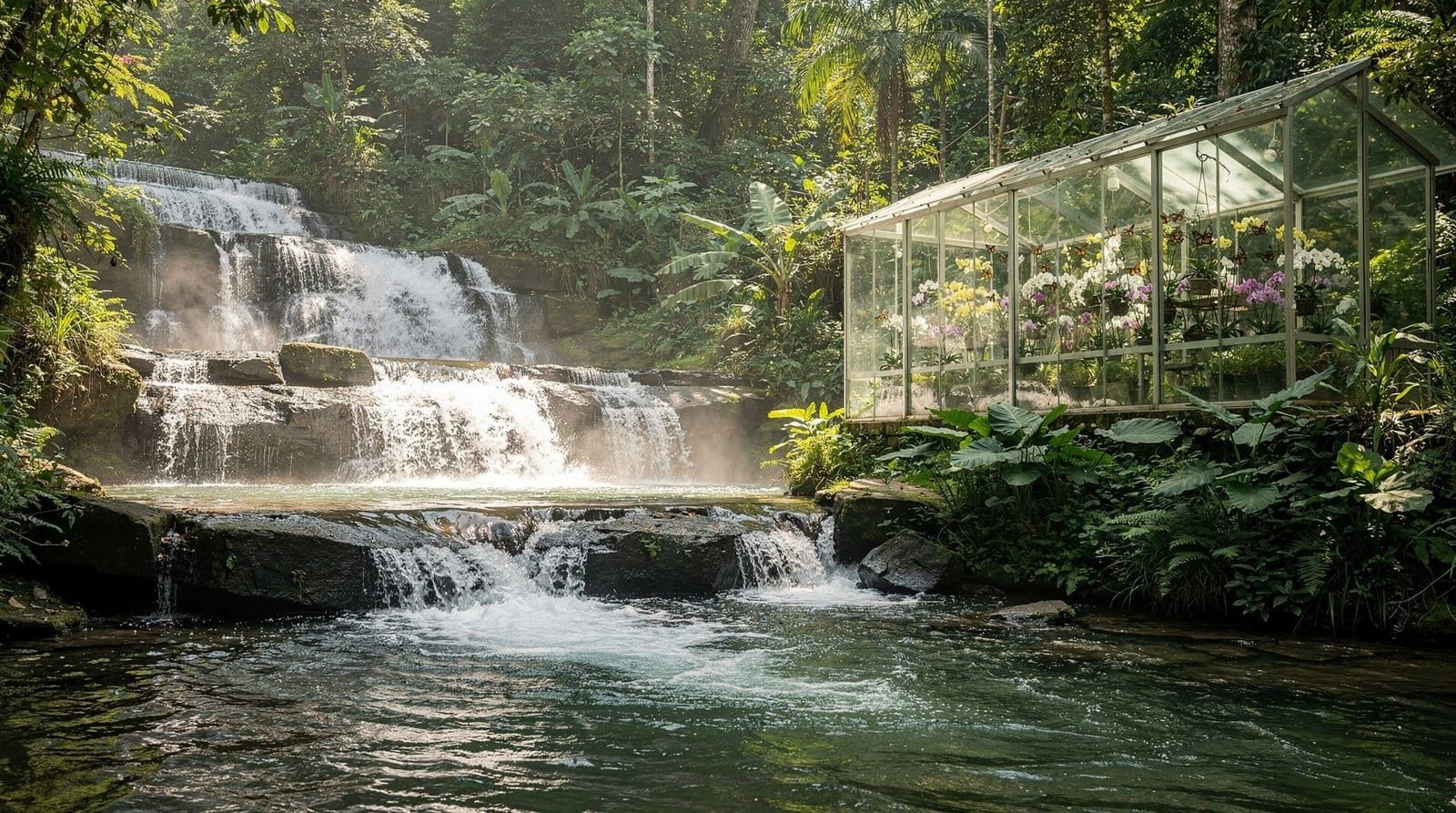
The glasshouses. A series of climate-controlled buildings, each themed around a different plant environment — arid and desert species, aquatic and wetland plants, economically significant crops, and orchids among them. Walking through all of them takes roughly 45 minutes to an hour, depending on how much you linger.
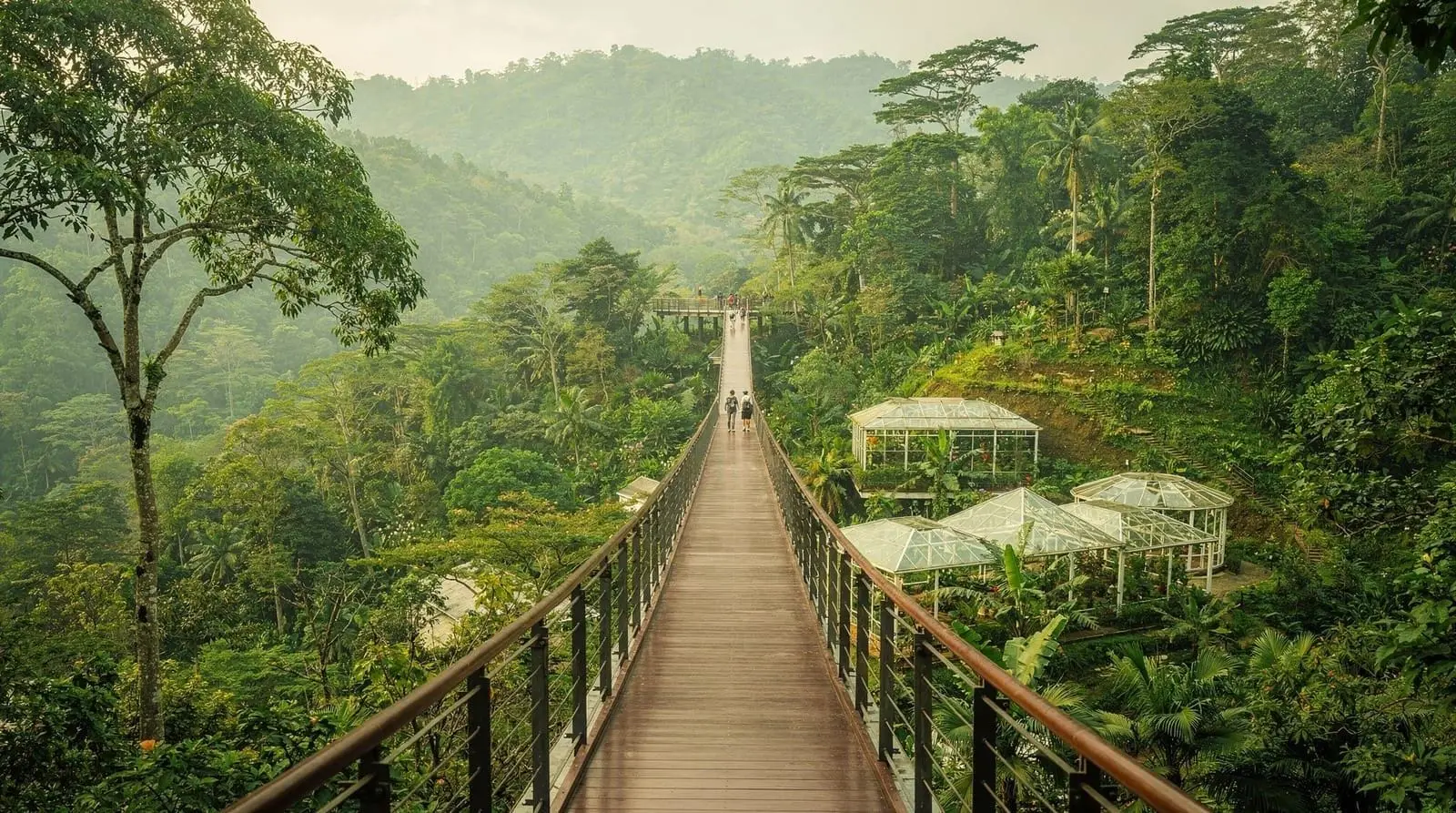
The rainforest canopy walkway. The garden’s signature feature: a series of elevated steel walkways and platforms strung through the tree canopy, letting you walk at treetop height above the forest floor rather than looking up at it. It’s a genuinely unusual vantage point for seeing a tropical forest, and the walkway is stable and well-maintained, suitable for most visitors including children (though not ideal for anyone with a significant fear of heights, since some sections have open views straight down).
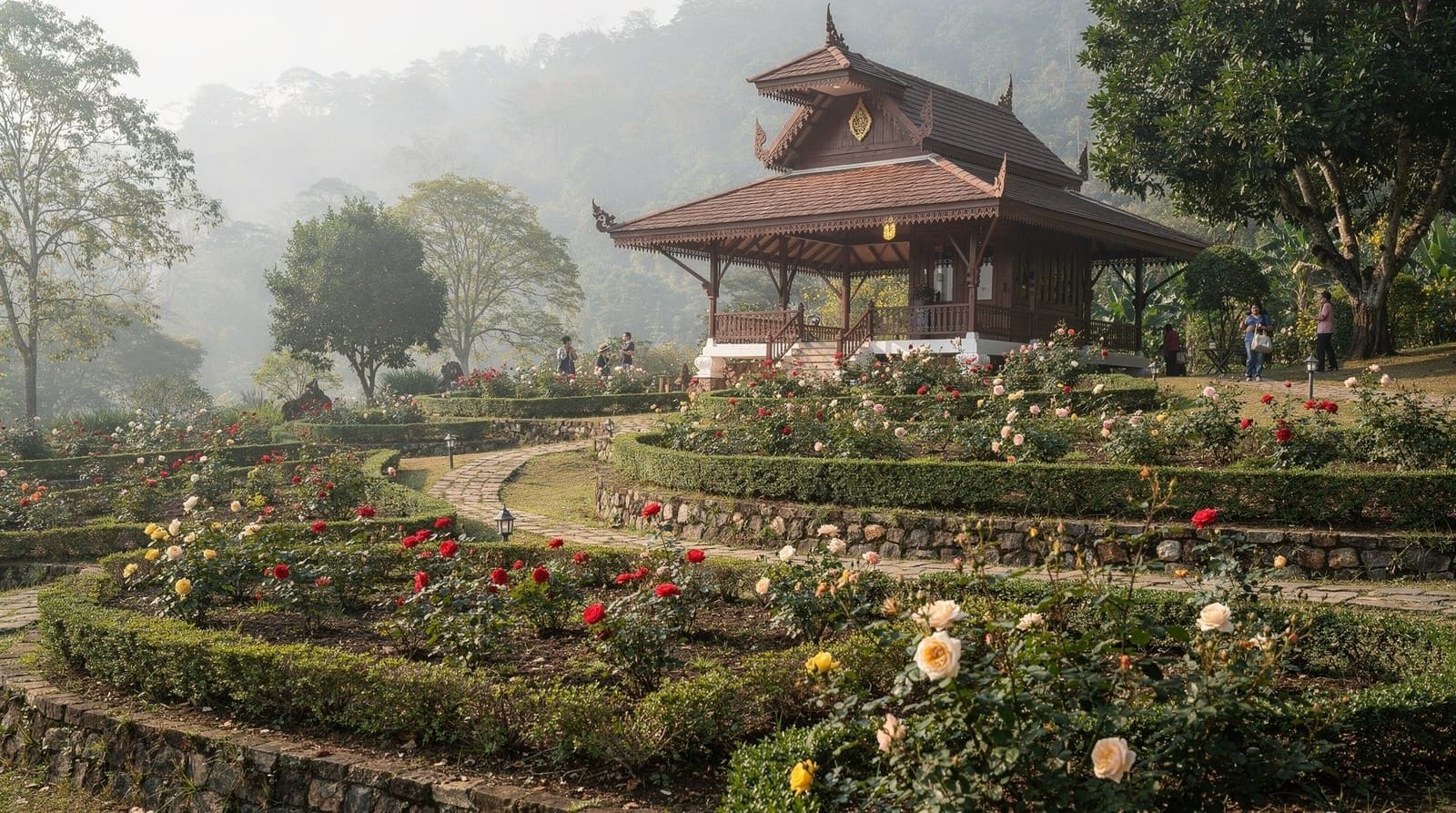
The arboretum and landscaped grounds. Broader planted areas with labeled trees and shrubs, walking paths, and shaded rest areas — the part of the garden best suited to an unhurried wander rather than a checklist of specific sights.
The visitor centre and research areas. The garden also functions as a working botanical research institution, not purely a tourist attraction, which is part of why the grounds feel more substantial and less commercially built-up than some of the valley’s other stops.
A brief history of the garden
The Queen Sirikit Botanic Garden was established in the 1990s as Thailand’s first public botanic garden built specifically for plant conservation, education, and research on a national scale, named in honour of Queen Sirikit’s long-standing patronage of botanical and forest conservation projects. It’s run under a dedicated foundation rather than a private tourism operator, which explains a few things about the visitor experience: the plant labeling is unusually thorough for a Thai tourist attraction, the grounds prioritize conservation displays over photo backdrops, and the pace of a visit tends to be quieter and more educational than a typical Mae Rim stop. The canopy walkway, added later as the garden’s signature visitor feature, has become the single most photographed element and the main reason most first-time visitors come, but the garden’s underlying purpose is scientific — collecting, propagating, and studying plant species from across Thailand and the wider region, many of them native to the country’s diminishing forest cover.
That research mission is also why the garden feels considerably larger and more spread out than a typical municipal park — it was designed to hold living collections across multiple climate zones, not just a walking loop for visitors. Several of the glasshouses double as active research spaces, and signage throughout the grounds explains conservation status and the specific threats facing individual plant families, which gives the visit a bit more substance than a pure sightseeing stop.
What makes the canopy walkway worth the trip
The rainforest canopy walkway deserves a closer look on its own, since it’s genuinely one of the more unusual vantage points available near Chiang Mai. Most forest experiences in the region put you on the ground looking up through the canopy; this walkway inverts that, lifting visitors on a series of connected steel bridges and viewing platforms to roughly treetop height, so you’re looking across and sometimes down into the upper forest canopy rather than up at it. On a clear morning, the platforms offer views out across the surrounding Mae Rim hills as well as directly into the forest structure — epiphytes, vines, and the layered canopy itself are all visible at close range in a way that’s hard to replicate from ground level.
The structure itself is built for sustained visitor traffic — solid steel construction, guardrails throughout, and a route designed as a loop rather than an out-and-back, so foot traffic generally moves in one direction without much backtracking or crowding at pinch points. It’s a 15-25 minute walk end to end at an unhurried pace, longer if you stop often for photos, and it connects back to the main garden paths at both ends rather than requiring a separate ticket or entrance.
Comparing the garden to other Chiang Mai nature stops
It’s worth being clear about what this garden is not, since Mae Rim’s marketing sometimes blurs the lines between its various nature attractions. Unlike Mae Sa waterfall, there’s no swimming and no dramatic natural cascade — this is a cultivated, landscaped garden, not a wild river feature. Unlike the district’s ethical elephant sanctuaries, there’s no animal encounter component at all. And unlike Mon Cham’s open hilltop views, the garden’s best views (from the canopy walkway) are through and across forest rather than out over open valley terrain.
If you’re choosing between the botanic garden and Bhubing Palace’s royal gardens near Doi Suthep, the two scratch a similar itch — organized, landscaped garden grounds with less crowd pressure than the district’s headline attractions — but Bhubing Palace adds royal architecture and closes seasonally when the royal family is in residence, while the Queen Sirikit garden is open more consistently and adds the canopy walkway, which Bhubing Palace doesn’t have.
Seasonal highlights: what’s blooming when
Because the garden holds a genuine research collection rather than a single ornamental display, what looks best changes noticeably through the year. The cool season (November to February) is generally considered the strongest all-round period — comfortable walking temperatures, good light for photography, and many of the garden’s temperate and highland species at their best, since the climate at this elevation in the hills mimics cooler conditions more closely during these months. The hot season (March to May) sees some tropical flowering species at their peak even as walking comfort drops, so an early-morning visit is worth prioritizing if you’re visiting during these months specifically for particular blooms. The rainy season (June to October) brings the most consistent greenery across the arboretum and can make the aquatic and wetland glasshouse displays especially lush, though outdoor walking is naturally more weather-dependent and a rain jacket or umbrella is worth carrying.
Orchid displays in the dedicated glasshouse are maintained on a rotating basis so there’s usually something in bloom regardless of season, which makes the orchid house one of the more reliably rewarding stops if timing your visit around a specific outdoor bloom isn’t practical.
Getting there and getting around
The garden sits along the same general route as Mae Sa waterfall and many of the district’s elephant sanctuaries, about 30-40 minutes from central Chiang Mai by Grab or private driver. There’s no direct public bus route, so a car, scooter, or driver is the practical way in. Once inside, the grounds are large enough that some visitors prefer to walk at a relaxed pace between areas rather than trying to cover everything — a shuttle sometimes operates between the entrance and the more distant sections, useful if you’re visiting in the heat of the day or with young children.
Planning your visit
Morning visits, ideally before 10-11am, are noticeably more comfortable than afternoon ones — the garden’s paths are partly exposed, and cool-season mornings (November to February) make the canopy walkway and glasshouse circuit a pleasant couple of hours rather than a hot one. Because the garden sits so close to Mae Sa waterfall and several ethical elephant sanctuaries, it pairs naturally as a second stop on a Mae Rim day — most visitors do an elephant visit or the waterfall in the morning and the garden in the early-to-mid afternoon, when the pace slows down.
If you’re planning a full Mae Rim day that includes the hilltop viewpoint at Mon Cham, the garden works well as a midday stop between the valley floor and the higher ground, since it’s roughly on the route between the two.
Practical tips
- Wear comfortable walking shoes. The grounds are extensive, and even a focused visit to the highlights involves a fair amount of walking between the glasshouses, canopy walkway, and arboretum.
- Bring water and sun protection. Parts of the walking paths are exposed to full sun, especially around the arboretum.
- Check the canopy walkway’s operating hours separately. Some sections of the garden, including the skywalk, can have slightly different opening times or occasional maintenance closures from the main grounds — worth a quick check before you go if it’s the main reason for your visit.
- Combine with a nearby stop rather than visiting alone. The garden is worthwhile on its own, but most visitors get more out of a day that also includes an elephant sanctuary, the waterfall, or Mon Cham given the drive time involved.
Photography and quiet-time tips
The canopy walkway is at its best for photography in the first hour or two after opening, when the light is softer and the walkway itself is least crowded — by late morning on weekends, popular viewing platforms can have a short queue for an unobstructed photo. The glasshouses, being indoors and climate-controlled, are a reliable option regardless of time of day or weather, and the orchid and aquatic plant houses in particular photograph well given how deliberately their collections are arranged and lit.
For visitors more interested in a quiet walk than a checklist of sights, the arboretum’s outer paths, away from the canopy walkway entrance, are where the garden feels most like what it actually is: a working plant collection rather than a tourist stop. Weekday mornings, outside of Thai school holiday periods, are consistently the quietest time to experience that side of the garden.
Frequently asked questions about Queen Sirikit Botanic Garden
How much does the Queen Sirikit Botanic Garden cost to enter?
Roughly 100 THB for adult foreign visitors, though it’s worth checking current entrance signage since fees are periodically adjusted.
How long should I spend at the garden?
2-3 hours covers the glasshouses, the canopy walkway, and a reasonable amount of the arboretum without rushing.
Is the canopy walkway suitable for children?
Yes, it’s a stable, well-maintained structure suitable for most ages, though some sections have open views straight down that may not suit anyone with a strong fear of heights.
How do I get to the Queen Sirikit Botanic Garden from Chiang Mai?
By Grab, private driver, or rental scooter — there’s no direct public bus route, and the drive takes roughly 30-40 minutes from the old city.
Can I combine the botanic garden with an elephant sanctuary visit?
Yes, this is one of the most common Mae Rim day pairings — an elephant sanctuary in the morning and the garden in the early afternoon, since the pace and focus of each activity contrast well.
Is the garden busy with tourists?
Generally less crowded than the valley’s waterfall or elephant sanctuaries, since it draws a different, quieter kind of visitor. Weekday mornings are the least busy time.
What’s the best time of year to visit?
November to February, when cooler, drier weather makes walking the grounds and the exposed sections of the canopy walkway more comfortable.
Is there anywhere to eat inside the garden?
There are basic food and drink facilities near the visitor centre, though options are limited compared to the cafés along the main Mae Sa valley road just outside.
When was the Queen Sirikit Botanic Garden established?
It was founded in the 1990s as Thailand’s first public botanic garden built for conservation, education, and research, named for Queen Sirikit’s patronage of forest conservation projects, and it continues to operate as an active research institution alongside its visitor grounds.
How does it compare to Bhubing Palace’s gardens near Doi Suthep?
Both are organized, landscaped gardens with a calmer pace than Mae Rim’s headline attractions. Bhubing Palace adds royal architecture but closes seasonally when the royal family is in residence; the Queen Sirikit garden is open more consistently and has the canopy walkway, which Bhubing Palace doesn’t offer.
Is the whole garden wheelchair or stroller accessible?
The main paths and glasshouse walkways are reasonably flat and manageable, though some sections of the canopy walkway involve stairs to reach the elevated platforms, so accessibility varies by section — worth checking current facilities directly if this is a firm requirement.
Can I visit the garden without also doing an elephant sanctuary or waterfall?
Yes, it works perfectly well as a standalone half-day trip if wildlife tourism or waterfalls aren’t your priority, especially combined with lunch at one of the valley’s cafés on the way back to the city.