Mae Sa Waterfall guide: the tiered falls of Mae Sa Valley
One-Day Private Tour with Driver: Temples & Mae Sa Waterfall
Duration: Full day
What is Mae Sa Waterfall and is it worth visiting?
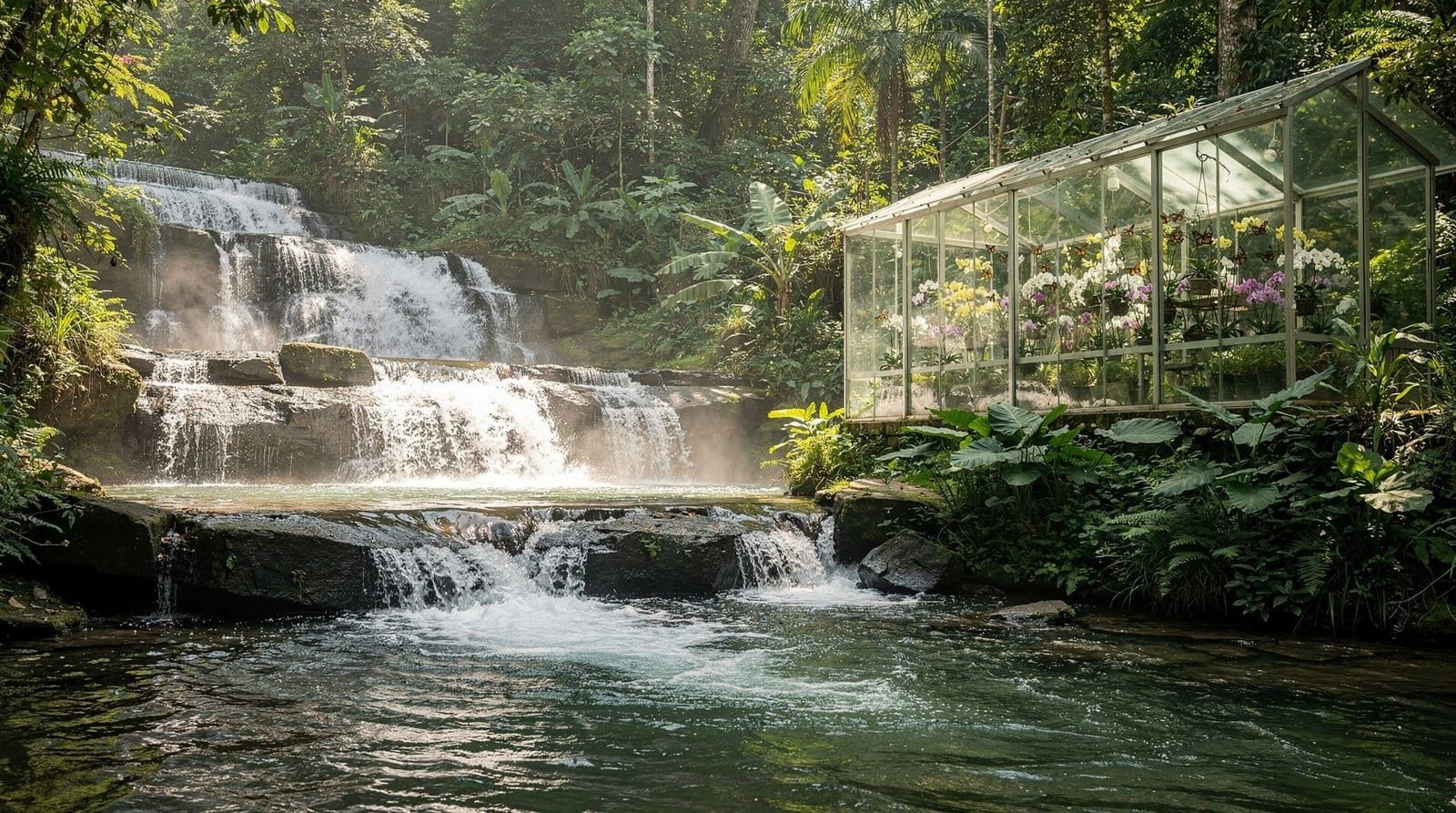
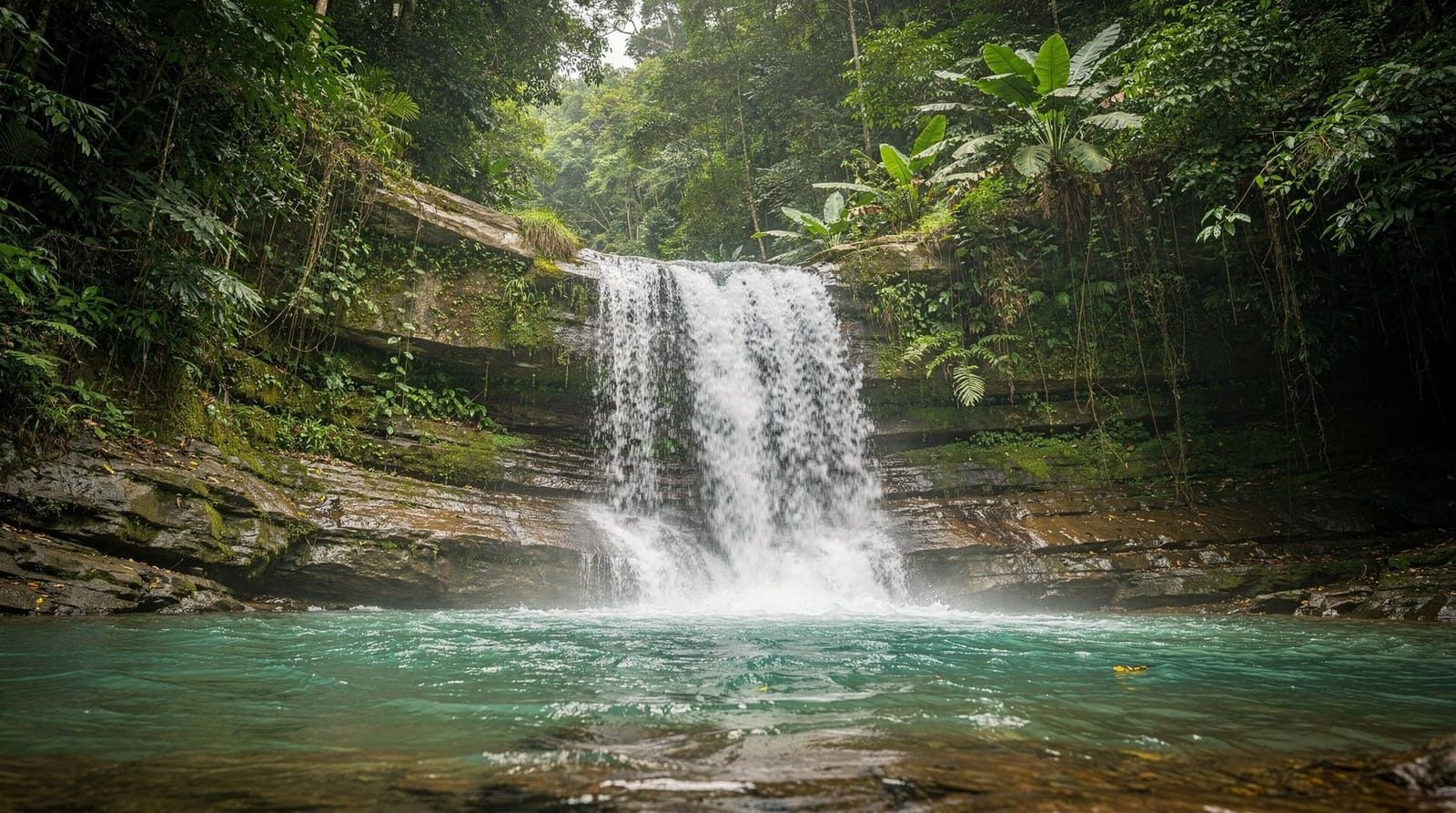
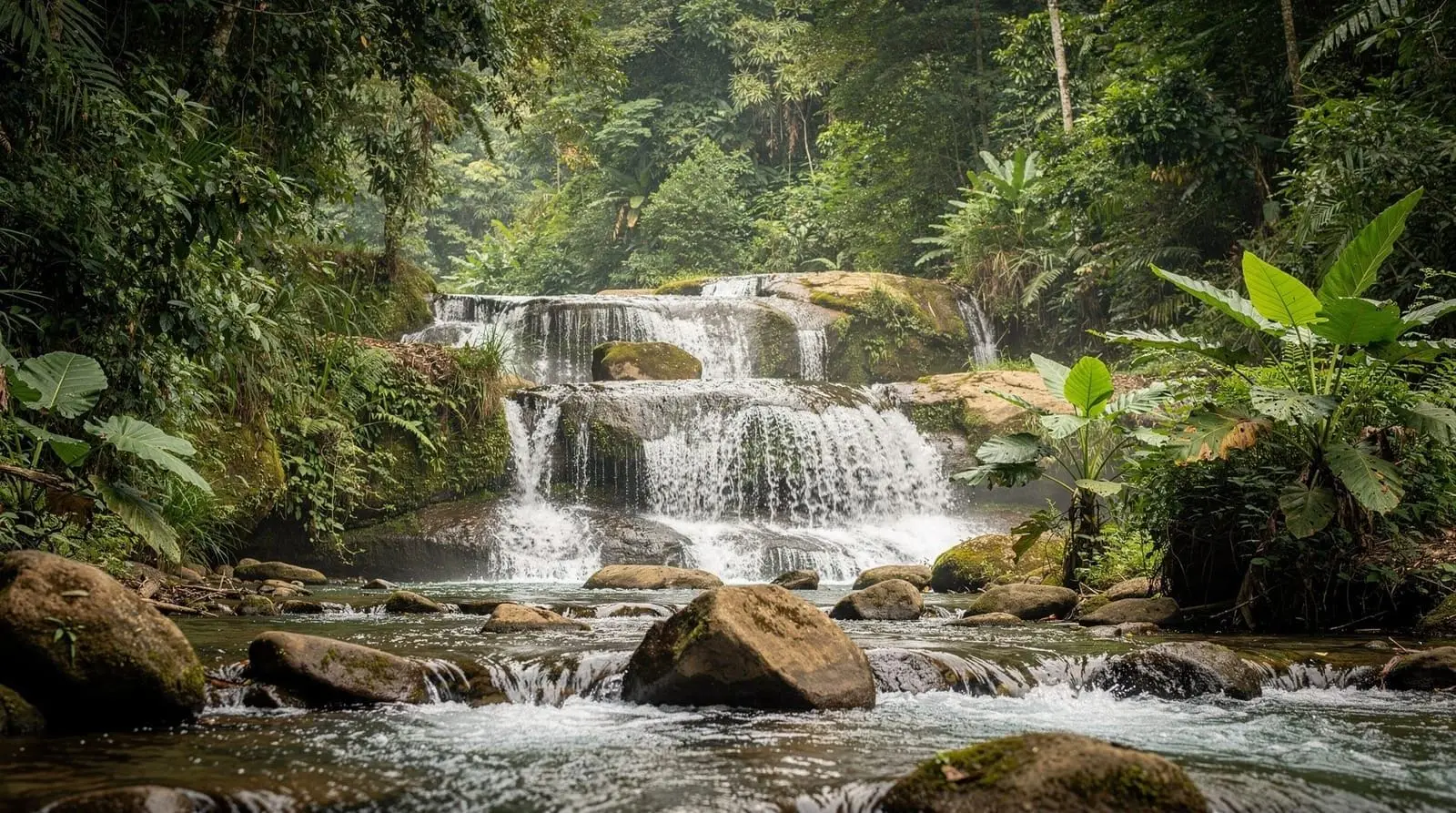
Mae Sa Waterfall is a multi-tiered cascade dropping across roughly ten distinct levels up a forested hillside in the Mae Sa Valley, about 45 minutes northwest of Chiang Mai. The lower tiers near the parking area are easy and crowded; the upper tiers require real walking and see far fewer visitors. It's worth visiting as part of a broader Mae Sa Valley day rather than a standalone trip, since it sits alongside gardens, elephant experiences, and viewpoints on the same road.
Mae Sa Waterfall sits at the start of the Mae Sa Valley loop northwest of Chiang Mai, a multi-tiered cascade that climbs a forested hillside in roughly ten distinct drops rather than a single dramatic curtain of water. It’s less famous than Doi Inthanon’s falls or the climbable novelty of Sticky Waterfalls, but its position at the entrance to one of the region’s most-visited valleys — home to elephant experiences, botanic gardens, and viewpoints — makes it an easy, natural stop rather than a destination requiring its own dedicated trip.
The tiered layout, level by level
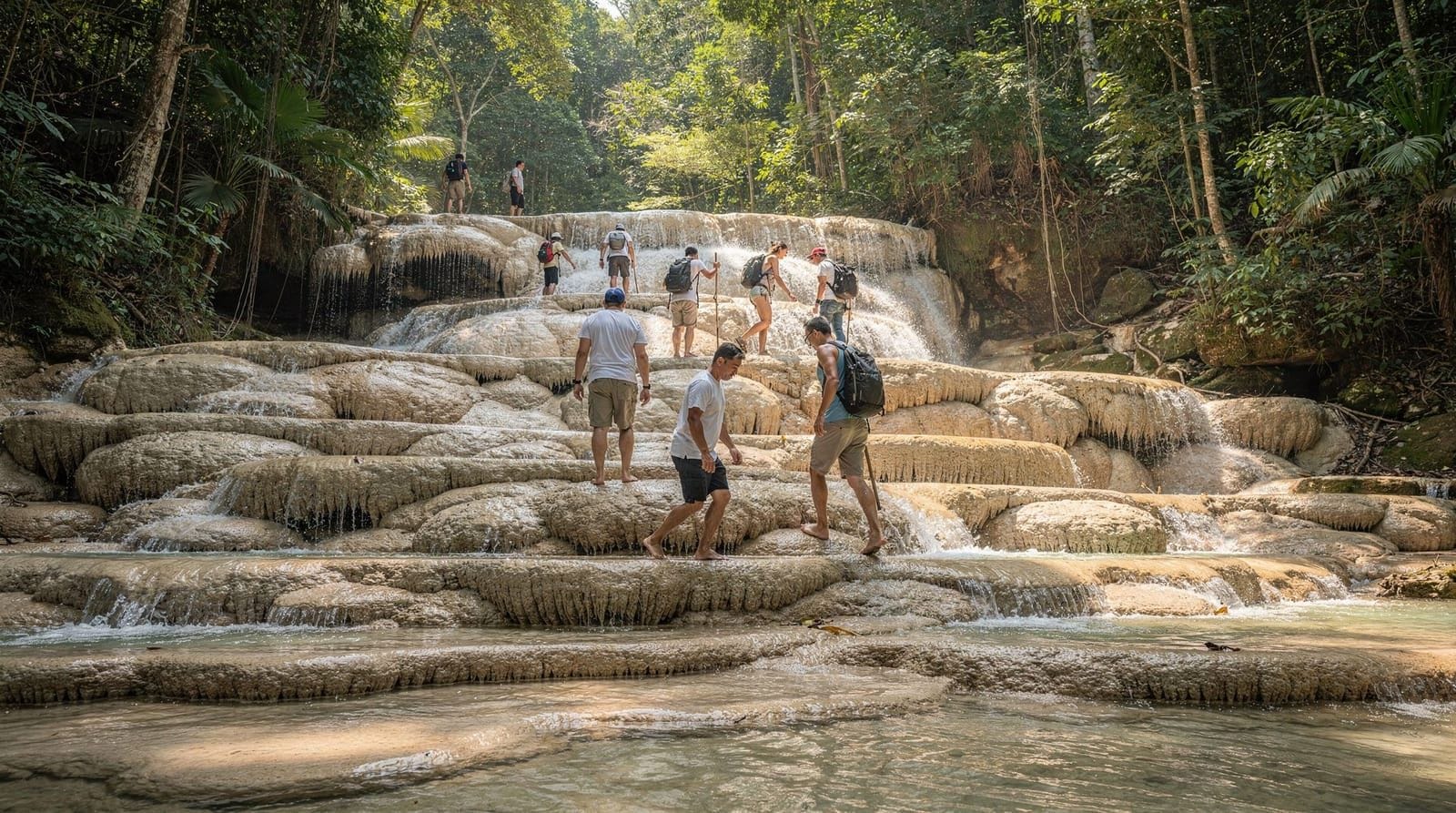
Mae Sa’s defining feature is its sequence of tiers, each with its own small pool and cascade, connected by a marked path climbing the hillside. The lowest one or two tiers sit within a short, easy walk of the main parking and entrance area, with paved or well-maintained sections that most visitors, including families with young children, can manage without difficulty. These lower pools are also the busiest, since they require the least effort to reach.
Climbing further up the trail, the tiers become progressively quieter and, in most visitors’ judgment, more scenic — denser forest canopy, less manicured surroundings, and pools less crowded with day-trippers who stopped only at the bottom. Reaching the upper sections realistically takes 30-60 minutes of uphill walking round trip, on a path that’s maintained but genuinely uneven in places, not a paved boardwalk.
Is it worth the climb to the top?
Honestly, it depends on your fitness and how much time you’ve budgeted for the stop. If you’re squeezing Mae Sa into a broader Mae Sa Valley day that also includes a botanic garden, a viewpoint, or an elephant sanctuary, the lower tiers alone are a perfectly reasonable stop that won’t eat significantly into your schedule. If waterfalls specifically are the point of your visit and you have an hour or more to spare, the upper tiers reward the walk with noticeably fewer people and a more immersive forest setting — closer to what people picture when they imagine a “hidden” waterfall, even though it’s a well-known, signposted trail rather than an off-the-beaten-path discovery.
Entrance fee and practical basics
A modest entrance fee applies at Mae Sa, generally lower than Doi Inthanon’s roughly 300 THB foreigner park charge, since this is a smaller, more localized protected area rather than a full national park. Facilities at the entrance include basic food stalls and toilets, though options thin out considerably once you start up the tiered trail itself, so bring water with you rather than assuming you’ll find a stall partway up.
When to visit
Like most waterfalls in the region, Mae Sa runs fuller and more dramatic during the rainy season (roughly June-October), while the cool season (November-February) brings a gentler flow alongside more comfortable hiking temperatures for the uphill sections. The hot season (March-May) can see some of the upper, smaller tiers reduce to a comparatively modest trickle, which is worth knowing if you’re specifically chasing a dramatic waterfall photo rather than a shaded forest walk.
Combining Mae Sa with the rest of the valley
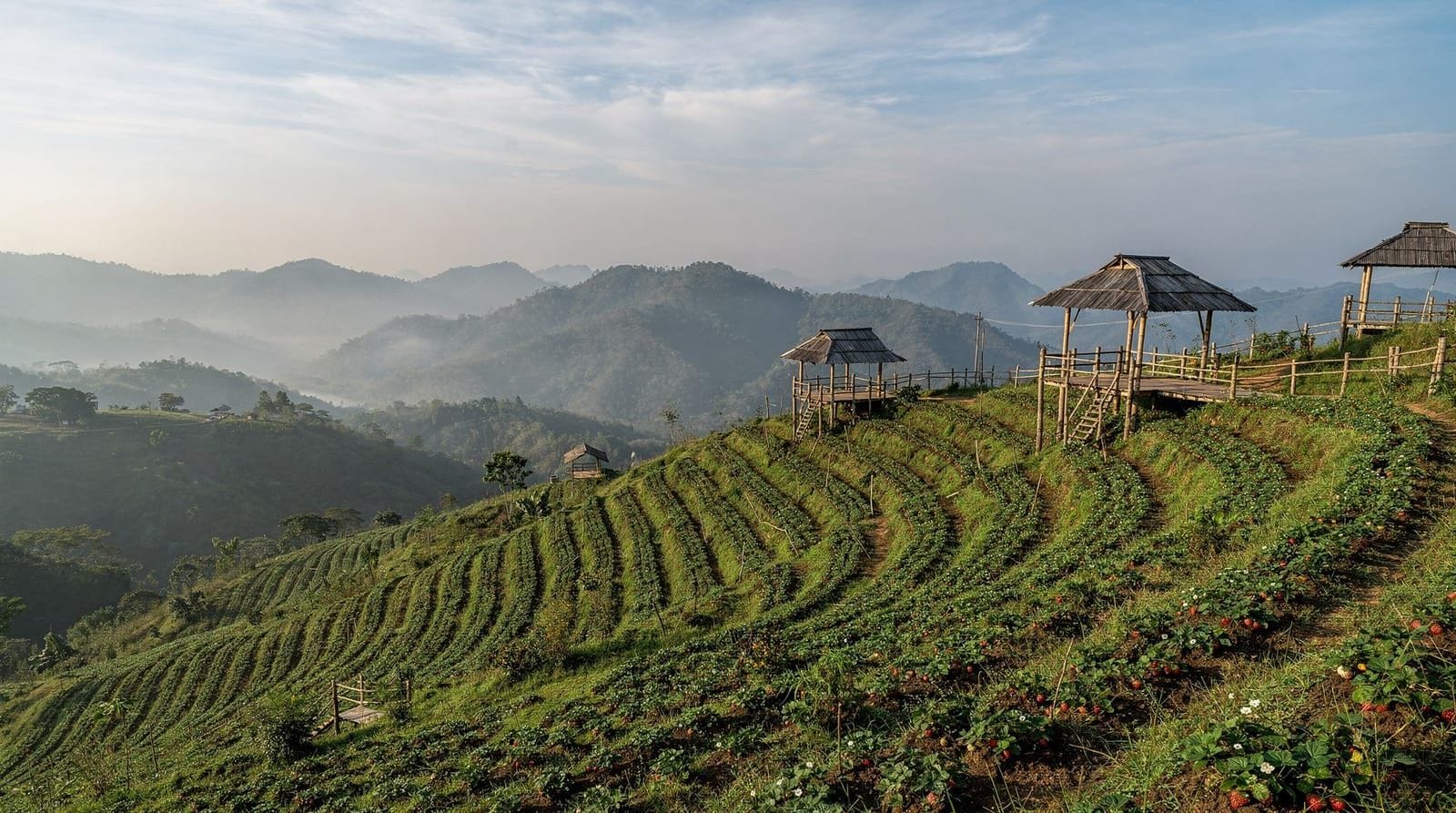
Mae Sa Waterfall sits at the base of a valley that includes several of the region’s most popular family and nature attractions along the same road — elephant experiences, the Queen Sirikit Botanic Garden, and further up the loop, the hilltop viewpoint at Mon Cham. Rather than treating the waterfall as a standalone trip, most visitors fold it into a half or full day covering two or three of these stops. Our best viewpoints guide covers Mon Cham and the valley’s other lookout points in more detail if you’re planning the fuller loop.
A private driver day tour combining temples and Mae Sa Waterfall is one straightforward way to include the falls alongside a temple stop without arranging transport yourself, while a full-day Mae Sa and Mon Cham scooter tour is a more independent, flexible option for travelers comfortable riding a scooter through the valley’s winding roads, stopping at whichever tiers or viewpoints interest them along the way.
Getting there
Mae Sa Waterfall is roughly 45 minutes northwest of central Chiang Mai by car, forming the entrance point to the broader Mae Sa Valley loop road. Songthaews serving the general Mae Rim direction exist but don’t reliably cover the full valley circuit, so most independent visitors either rent a car or scooter, or hire a driver for the day, particularly if multiple valley stops are planned. See the Mae Sa Valley and Mae Rim destination pages for the fuller area overview beyond the waterfall itself.
What to bring
Swimwear if you plan to use any of the pools, a change of dry clothes, sturdy walking shoes rather than flip-flops if you intend to climb toward the upper tiers, and cash for the entrance fee and any food stalls, since card payment isn’t reliably available at the site.
How it compares to the rest of the region’s waterfalls
Mae Sa is a conventional forest waterfall built for walking and viewing rather than the climbable novelty of Sticky Waterfalls or the scale of Doi Inthanon’s Mae Ya. If you’re choosing a single waterfall for your trip and want something climbable and free, Sticky Waterfalls wins; if you want a multi-tiered forest walk that naturally combines with a broader valley day of gardens and viewpoints, Mae Sa is the better fit. Our best waterfalls near Chiang Mai roundup ranks the full set side by side.
A short history of the valley
The Mae Sa Valley’s development as a tourism corridor dates back several decades, growing initially around orchid and butterfly farms established to take advantage of the valley’s cooler microclimate compared to the city floor, before elephant camps, adventure parks, and the botanic garden followed over subsequent years. The waterfall itself predates all of this commercial development, having long served as a local swimming and gathering spot for nearby communities before the valley’s roads were improved and the area became a standard stop on Chiang Mai day-trip itineraries. Unlike some of the valley’s newer attractions, the waterfall requires no ongoing operational investment beyond basic trail maintenance, which is part of why it remains one of the more low-key stops along an otherwise increasingly commercialized route.
Wildlife along the trail
The forested tiers above the lower pools support a reasonable range of birdlife and small mammals, more visible in the quieter early morning hours before the lower pools fill with visitors. The vegetation shifts noticeably as you climb — denser, more established forest canopy the further up the tiers you go, in contrast to the more open, managed landscaping immediately around the entrance and lower pools. It’s not a dedicated wildlife-watching destination, but the upper trail offers a more genuine forest experience than the manicured lower section suggests.
Accessibility notes
The lowest one or two tiers are reachable via a relatively flat, well-maintained path suitable for most visitors, including those with limited mobility, though the surface can be uneven and slippery near the water’s edge. Beyond this point, the trail to the upper tiers involves genuine uphill walking on natural, sometimes root-covered ground without handrails, making the higher sections unsuitable for visitors with significant mobility limitations. If accessibility is a concern for your group, the lower pools alone still give a representative sense of the falls without requiring the more demanding climb.
Food and facilities
Basic food stalls and simple restaurants cluster near the entrance and parking area, serving straightforward Thai dishes to the steady flow of valley visitors — adequate for a lunch stop but not destination dining in its own right. Facilities thin out quickly once you start up the tiered trail, so carrying your own water is sensible if you’re planning to explore the upper sections rather than staying near the entrance.
Photography at Mae Sa Waterfall
The lower tiers, with their more open sightlines and easier access, suit quick smartphone photography well, particularly in the softer light of early morning before the pools fill with swimmers. The upper tiers, framed by denser forest canopy, reward a bit more patience — a slower shutter speed captures the classic silky-water look at the smaller cascades, best attempted with a steady hand or small travel tripod given the lower light levels under the canopy.
Is Mae Sa Waterfall worth a dedicated trip on its own?
Honestly, probably not as a standalone destination if you’re short on time — the falls are pleasant but don’t have the singular novelty of Sticky Waterfalls or the scale of Doi Inthanon’s Mae Ya, and a dedicated round trip just for Mae Sa alone would be a lot of travel time for what it offers in isolation. Where it earns its place is as one stop among several in a broader Mae Sa Valley day, where the incremental cost of adding it to a route you’re already driving is minimal and the tiered forest walk provides a genuinely different texture from the valley’s gardens, elephant experiences, and viewpoint stops.
Realistic time budget for a Mae Sa Valley day
If you’re planning a full day covering Mae Sa Waterfall alongside the botanic garden, Mon Cham, and perhaps an elephant sanctuary, be realistic about how much time each stop actually needs: 30-45 minutes at the waterfall’s lower tiers, 1.5-3 hours at the botanic garden if visiting, an hour or so at Mon Cham for the view and a coffee, and a half or full day at an ethical elephant sanctuary if that’s part of your plan. Trying to fit all of these into a single day alongside the waterfall often means rushing at least one stop — most visitors are better served picking two or three priorities rather than attempting the entire valley in one visit, especially given the driving time between each stop along the valley’s winding road.
Comparing the valley’s two main waterfall stops
Some visitors confuse Mae Sa Waterfall with the valley’s other water-based attractions, so it’s worth being clear: Mae Sa Waterfall is a natural, free-flowing cascade with no entrance activities beyond walking and swimming, while some of the valley’s adventure parks include artificial water features and ziplines as part of a paid activity package. If your interest is specifically in a natural waterfall setting rather than an adventure park experience, make sure you’re heading to the actual Mae Sa Waterfall trailhead rather than a similarly-named commercial attraction further along the same road.
Safety notes for the climb
The path to the upper tiers, while maintained, crosses natural terrain without handrails along most of its length, and the rock immediately beside the pools can be slick regardless of season. Moving at a measured pace rather than rushing between tiers, testing footing before committing weight to wet rock, and supervising children closely near any of the pools are all sensible precautions rather than excessive caution. After heavy rain, currents in the upper pools can strengthen noticeably, and it’s worth observing conditions before swimming rather than assuming every pool is calm regardless of recent weather.
A realistic half-day plan around the falls
A sensible sequence for a half day centered on Mae Sa: arrive at the entrance by mid-morning, spend 45 minutes to an hour exploring the lower tiers and, if energy and time allow, continuing up toward the quieter upper sections, then move on to a second valley stop such as the botanic garden or Mon Cham for the remainder of your time before heading back to the city in the afternoon. This keeps the waterfall as a meaningful but proportionate part of a broader valley day rather than either rushing past it or over-allocating time to a site that, while pleasant, isn’t typically anyone’s single reason for visiting the Mae Sa Valley.
Frequently asked questions about Mae Sa Waterfall
Is Mae Sa Waterfall suitable for a short visit?
Yes — the lower one or two tiers are reachable within a few minutes of the parking area, making a brief stop realistic even on a packed Mae Sa Valley itinerary.
Is the upper trail maintained or is it a rough scramble?
It’s a maintained, signposted path rather than a technical scramble, but it’s genuinely uneven in sections and involves real uphill walking, not a paved boardwalk like some of Doi Inthanon’s trails.
Can I visit Mae Sa Waterfall without a car?
It’s difficult without your own transport or a hired driver, since regular songthaew routes don’t reliably cover the full Mae Sa Valley loop. Most visitors arrive by rental car, scooter, or private driver.
Is Mae Sa Waterfall included in Mae Sa Valley day tours?
Often, yes, though some valley-focused itineraries prioritize the gardens, elephant experiences, or Mon Cham viewpoint over spending significant time at the waterfall itself — worth confirming if the falls specifically matter to you.
What’s the best time of day to visit?
Morning, both to beat the day’s heat for the uphill sections and to reach the lower pools before tour groups from the city arrive in the late morning and early afternoon.
Top experiences
Bookable activities with verified prices and instant confirmation on GetYourGuide.