Best waterfalls near Chiang Mai: a ranked shortlist
Chiang Mai: Doi Inthanon National Park & Waterfall Day Tour
Duration: Full day
What is the single best waterfall near Chiang Mai?
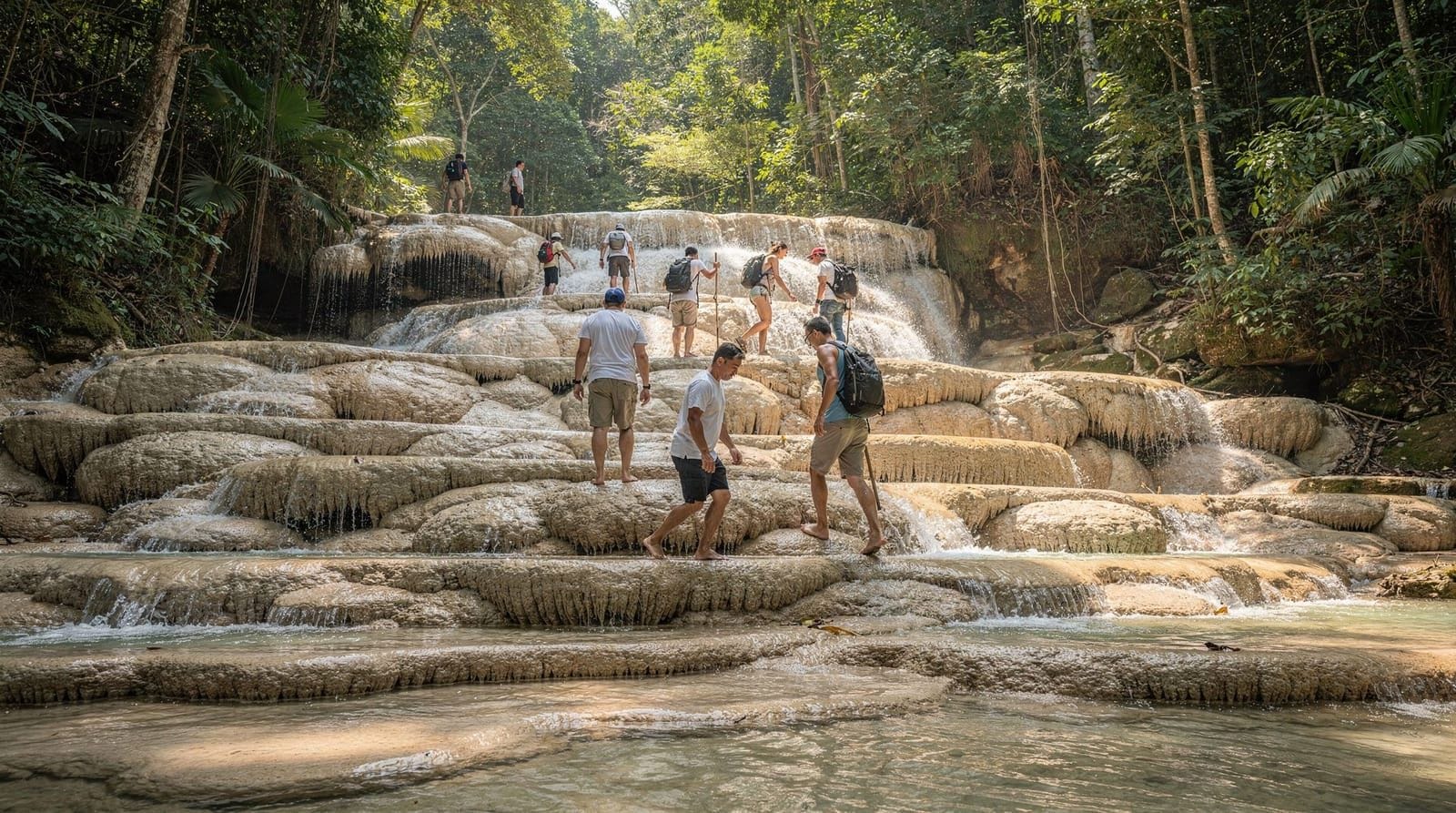
It depends what you want. Bua Thong (Sticky Waterfalls) is the most distinctive because you can climb its mineral-coated rock barefoot; Mae Ya inside Doi Inthanon National Park is the most powerful by volume; and Huay Kaew, on the city's edge, is the easiest to reach without any tour at all. Most first-time visitors are best served by Sticky Waterfalls or a Doi Inthanon day trip that includes Wachirathan.
Northern Thailand’s mountainous terrain around Chiang Mai produces a genuinely varied set of waterfalls, from a climbable limestone cascade you can barely believe exists to Thailand’s highest national park’s dramatic falls. Rather than repeating the same generic list every operator uses, this roundup ranks the region’s main waterfalls by what actually distinguishes each one — distance, effort, crowd levels, and what you’d realistically pair the visit with.
Bua Thong (Sticky Waterfalls): the most distinctive
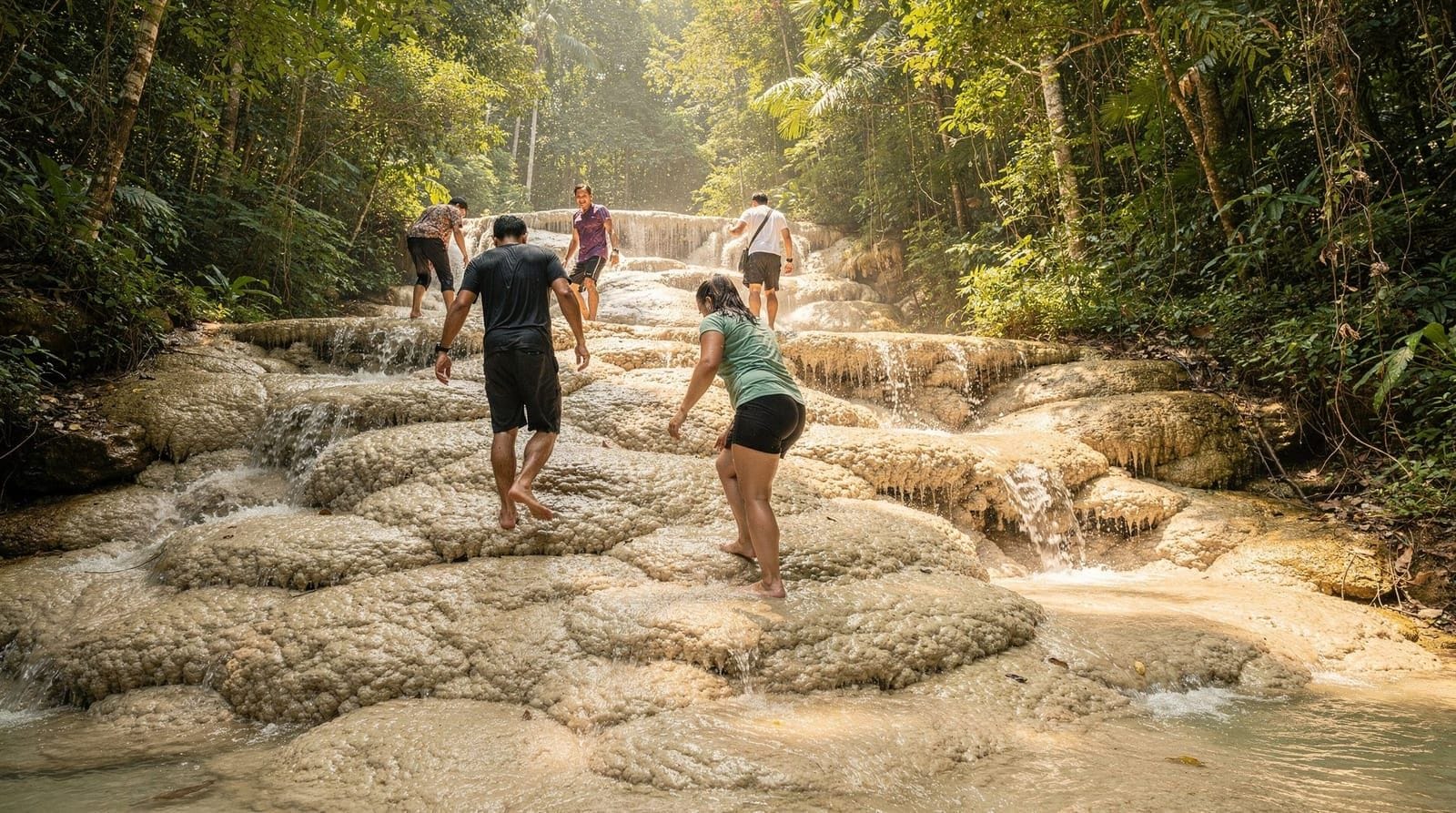
If you only visit one waterfall near Chiang Mai and want something you can’t find anywhere else nearby, make it Bua Thong. Mineral deposits from the water coat the rock in a rough, grippy crust that lets visitors climb barefoot straight up the cascades without slipping — a genuine geological quirk rather than a gimmick. Entry is free, the site is about 45-60 minutes northeast of the city in San Kamphaeng, and most visits run 1-2 hours of actual climbing and swimming. See our full Sticky Waterfalls guide for exactly what the climb feels like and how to visit.
Mae Ya (Doi Inthanon): the most powerful
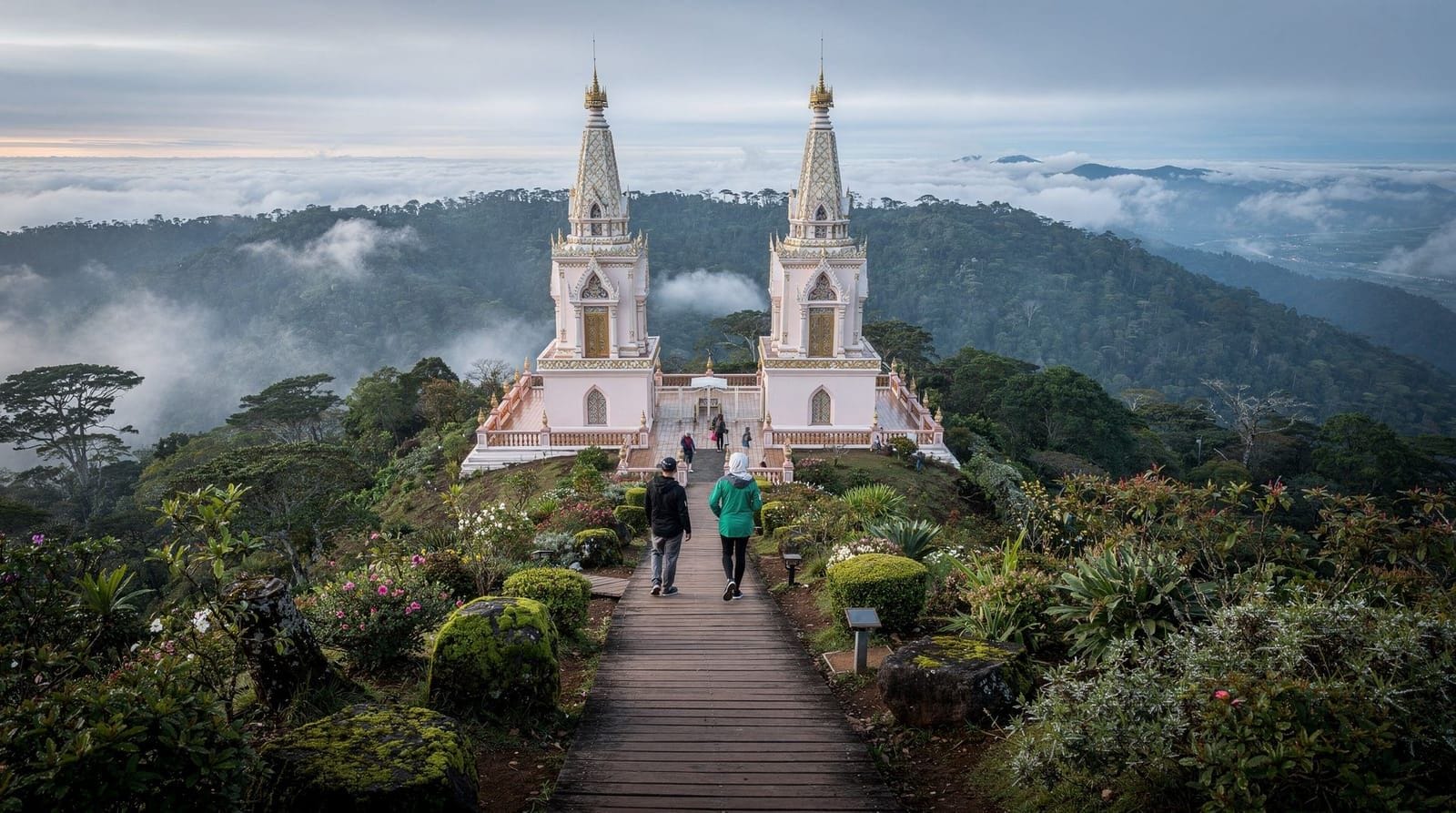
Inside Doi Inthanon National Park, Mae Ya is generally regarded as the most impressive of the park’s three falls by sheer volume, but it sits on a separate access route off the main park road, which means some shorter, time-pressed tours quietly skip it in favor of the easier roadside Wachirathan stop. If seeing Mae Ya specifically matters to you, confirm it’s included before booking a tour built around Doi Inthanon’s summit and pagodas. A Doi Inthanon National Park and waterfall day tour built specifically around the falls is the more reliable way to see it. Our Doi Inthanon guide covers the full park in more detail.
Wachirathan (Doi Inthanon): the easiest big waterfall
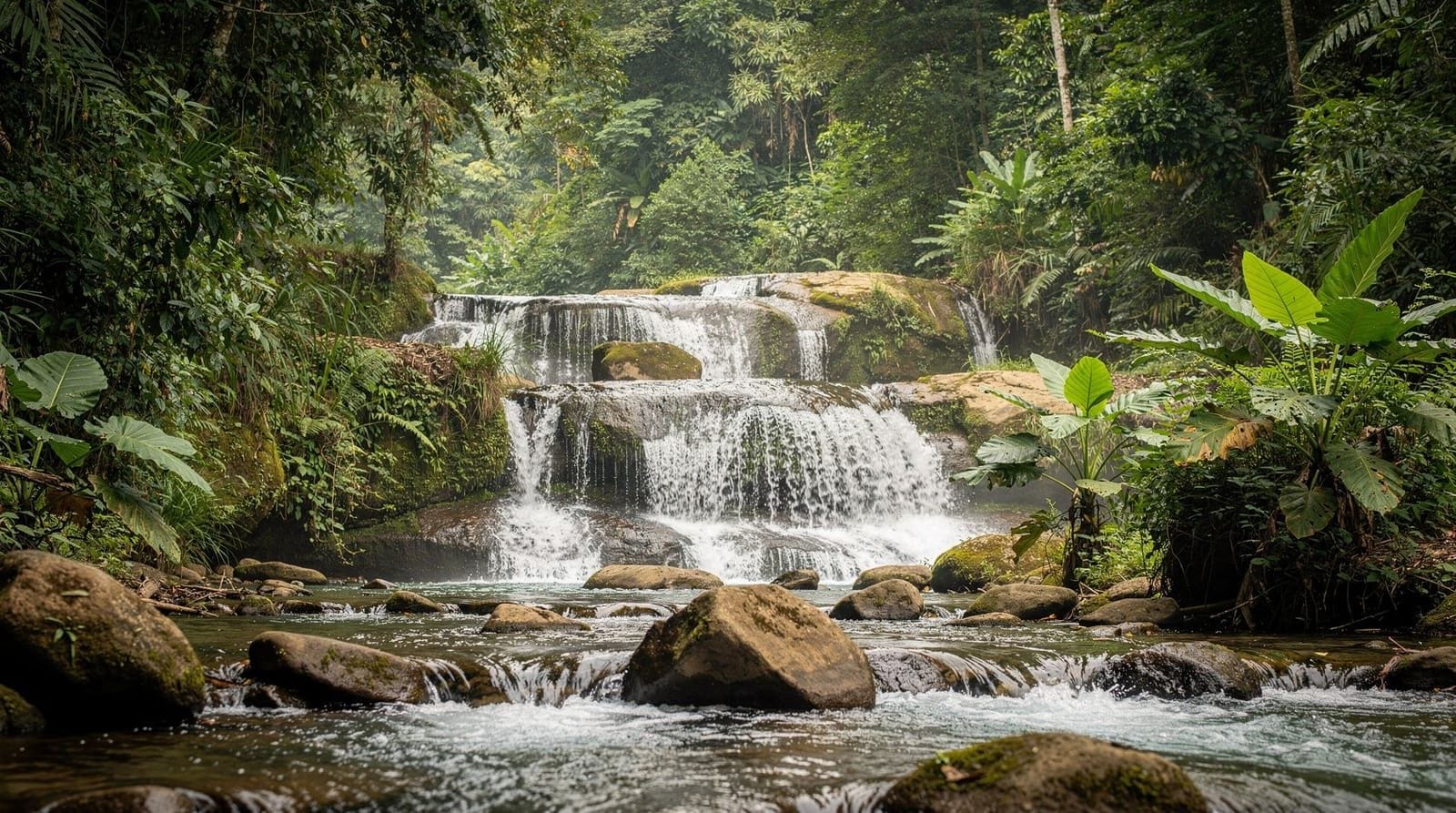
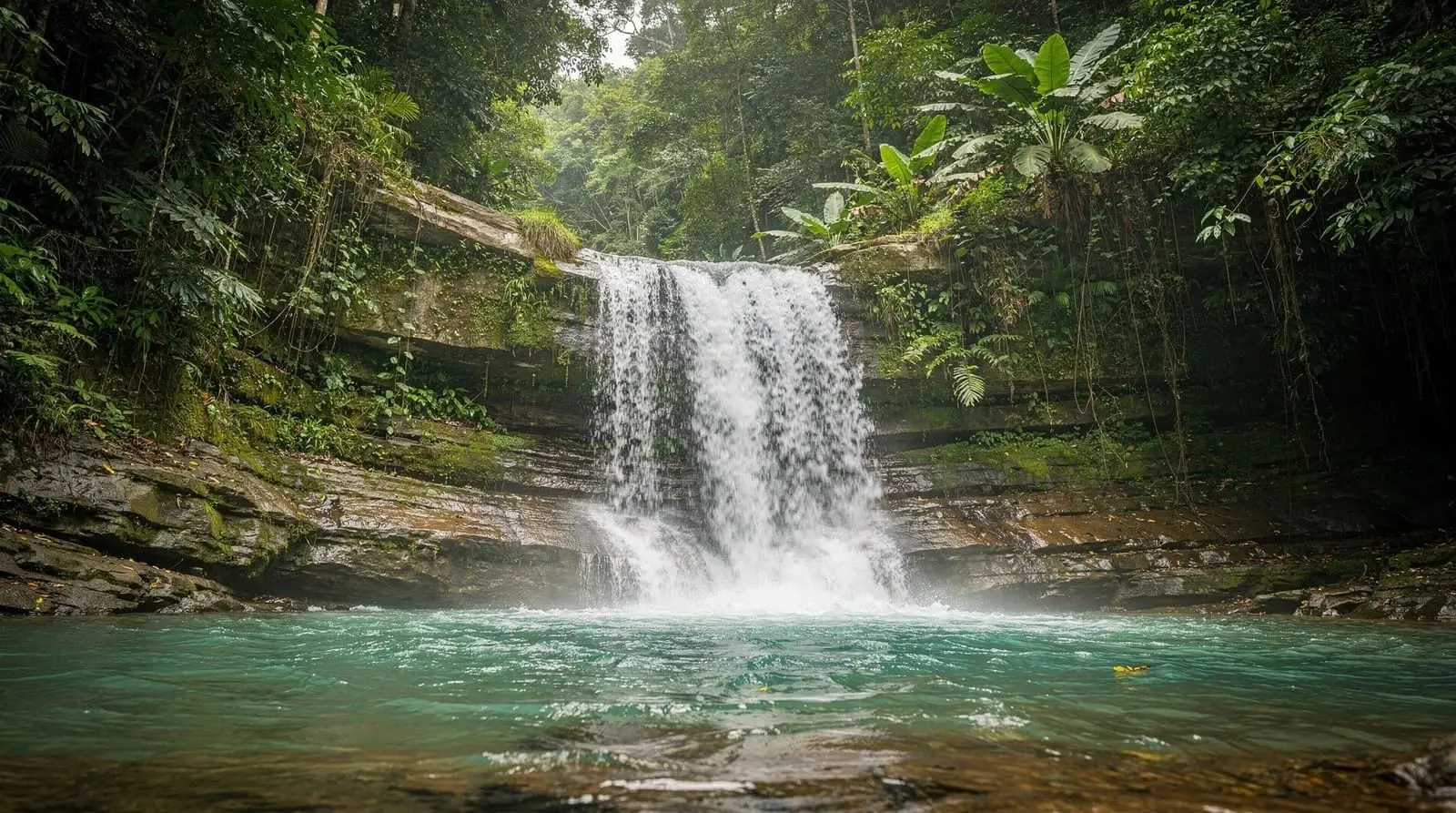
Also inside Doi Inthanon, Wachirathan is a wide, powerful curtain of water reachable via a short paved path from the main road, with enough spray on a strong-flow day to feel like rain from the viewing platform. It’s the waterfall stop on nearly every Doi Inthanon itinerary precisely because it requires so little walking relative to its scale, making it the most reliable “big waterfall” experience for visitors who don’t want a long approach hike.
Sirithan (Doi Inthanon): the quiet alternative
Smaller than Wachirathan and set slightly off the main road down a short trail, Sirithan draws noticeably fewer visitors than its more famous neighbor within the same park. It’s a reasonable stop if you’d rather see a genuine waterfall without a crowd of tour groups clustered around the viewing platform, though it lacks Wachirathan’s scale.
Mae Sa Waterfall: the tiered valley option
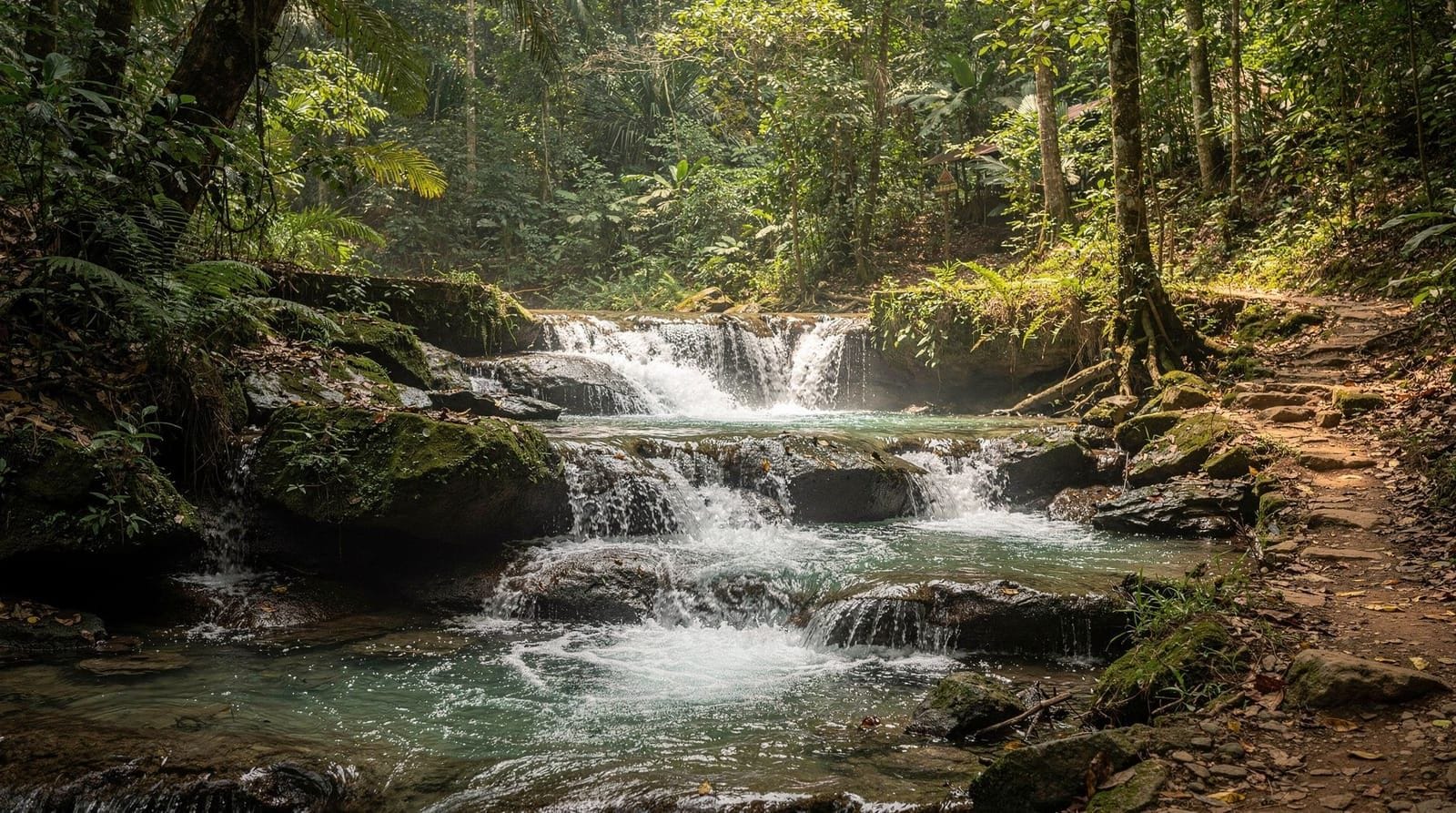
In the Mae Sa Valley northwest of the city, Mae Sa Waterfall drops across roughly ten tiers up a forested hillside, with the lower pools near the parking area busier than the higher tiers, which require more walking and reward visitors willing to climb further. It sits within a broader valley circuit that includes botanic gardens, elephant experiences, and viewpoints, making it a natural stop on a Mae Rim day rather than a standalone destination. See our Mae Sa Waterfall guide for the tiered layout in detail, and a private driver tour combining temples and Mae Sa Waterfall is one practical way to fold it into a fuller day.
Huay Kaew Waterfall: the closest to the city
On the lower slopes of Doi Suthep, Huay Kaew is genuinely close to central Chiang Mai — about 15-20 minutes by songthaew or short drive — and requires no full-day tour commitment at all. It’s a modest waterfall compared to Doi Inthanon’s falls, more of a pleasant short walk than a destination in its own right, but its proximity makes it the obvious choice if you have a spare hour or two and don’t want to arrange transport for a longer trip. It’s also the starting or ending point for the well-known Monk’s Trail hike up toward Wat Pha Lat — see our Huay Kaew Waterfall and Monk’s Trail guide for the full walking route.
Chiang Dao area waterfalls: paired with the cave
Several smaller waterfalls sit near Chiang Dao’s cave system, about 1.5 hours north of the city, and operators commonly bundle a waterfall stop into a cave-focused day rather than treating either as standalone. A Chiang Dao cave, temple, and waterfall tour is a reasonable way to see one of these falls without a dedicated separate trip, particularly if your primary interest is the cave and the waterfall is a bonus stop along the way. Our Chiang Dao cave and hiking guide covers the cave itself in full.
How to choose between them
If you want a genuinely unique, active experience and don’t mind getting fully wet, Sticky Waterfalls wins outright — nothing else on this list lets you climb the rock itself. If you want the most powerful, classic waterfall photo and don’t mind a longer day, Doi Inthanon’s Mae Ya (or the easier Wachirathan if time is tight) is the better pick, especially since it comes packaged with the summit, pagodas, and a nature trail in the same trip. If your time is genuinely limited to an hour or two with no interest in a full day trip, Huay Kaew is the only realistic option that doesn’t require significant travel time.
For travelers building a nature-focused itinerary across several days rather than picking just one, it’s entirely reasonable to combine two of these — Sticky Waterfalls with a San Kamphaeng hot-springs stop, or Doi Inthanon’s falls with the summit and pagodas — rather than treating waterfalls as a single once-per-trip box to check.
Seasonal timing across all of them
Waterfall volume follows the same broad seasonal pattern region-wide: fullest and most dramatic during the rainy season (roughly June-October), gentler and clearer during the cool season (November-February), and at their lowest during the hot season (March-May), when some smaller falls can reduce to a trickle. The one exception worth noting is Sticky Waterfalls, where the climbing experience is arguably more comfortable at lower flow, since stronger rainy-season currents make the higher tiers more physically demanding despite the grippy rock. Our best time to visit Chiang Mai guide covers the fuller seasonal picture if you’re timing a trip around several nature stops.
What none of these waterfalls are worth doing
Skip any itinerary that promises “five waterfalls in one day” as a headline sell — in practice this usually means five brief drive-by photo stops rather than any meaningful time actually at each site, and at least one of the five is typically a minor roadside trickle rather than a genuine destination. A day built around one or two waterfalls with real time to enjoy them, paired with a complementary stop like a cave, hot spring, or village, is a far better use of a day than a rushed collection tour.
Packing checklist for a waterfall day
Regardless of which waterfall you’re visiting, a few items make the difference between a comfortable outing and a frustrating one: quick-dry swimwear worn under your regular clothes so you’re not searching for a changing room, a dry bag or waterproof phone pouch, a full change of clothes for the drive home, sturdy sandals with good grip for the walk in (except at Sticky Waterfalls, where bare feet work better on the climb itself), and more water than feels necessary, since not every site has reliable places to refill. A basic first-aid kit or at least some plasters is worth keeping in the car, given how easy it is to scrape a foot or ankle on wet rock at any of these sites.
Photography tips across the region’s waterfalls
Waterfall photography rewards patience with light more than any other single factor. Overcast conditions, counterintuitively, often produce better waterfall photos than harsh midday sun, since diffused light avoids the blown-out highlights that direct sun creates on white, churning water. A slower shutter speed captures the classic silky-water effect at falls like Wachirathan or Mae Sa, though this requires either a tripod or a very steady hand and works best in the lower-light conditions of early morning or an overcast sky. At Sticky Waterfalls, the most compelling images tend to be action shots of climbers on the rock rather than static shots of the water itself, since the climbing is the actual story of that particular site.
Waterfalls and the region’s ethnic communities
Several of the waterfalls on this list — particularly those inside Doi Inthanon National Park and near Chiang Dao — sit within or adjacent to areas where Karen, Hmong, and other hill-tribe communities live and farm. Responsible operators typically brief visitors on basic etiquette when a village stop is included alongside a waterfall visit, and it’s worth choosing tours that frame these stops around genuine community life — rice terraces, coffee production, everyday activities — rather than posed photo opportunities. This distinction matters more at Doi Inthanon’s Mae Klang Luang village stop than at the more purely natural sites like Sticky Waterfalls or Huay Kaew, which don’t typically include a village component.
Weather patterns and realistic expectations by month
Northern Thailand’s weather follows three broad seasons that affect every waterfall on this list, though not equally. June through October (rainy season) brings the fullest flow and the most dramatic photos, at the cost of occasional access disruptions after heavy storms and a higher chance of muddy approach trails. November through February (cool season) offers the most comfortable temperatures for hiking to any of these falls and generally clear skies, though flow volume drops from the rainy-season peak. March through May (hot season) brings the lowest water levels at smaller falls and overlaps with the region’s burning-season haze, which doesn’t affect the waterfalls directly but can dull the broader mountain scenery around sites like Doi Inthanon and Chiang Dao.
Lesser-known waterfalls worth a mention
Beyond the main names covered above, the wider region around Chiang Mai has a scattering of smaller, less-visited falls that rarely make standard tour itineraries but reward travelers with their own transport and a willingness to explore. Small cascades near Mae Kampong village, on the same general route as the San Kamphaeng crafts road, offer a quiet forest-walk alternative for visitors who’ve already done the region’s bigger-name falls and want something less trafficked. These smaller sites generally lack any dedicated tour infrastructure, meaning self-driving or a private driver is realistically the only way to reach them, and facilities on-site are minimal to nonexistent — worth keeping expectations modest if you go looking for them.
Building a two-day nature itinerary around waterfalls
For travelers with more than a single day to dedicate to the region’s nature sites, pairing Doi Inthanon’s full-park experience on one day with a more relaxed second day at Sticky Waterfalls plus a San Kamphaeng crafts stop gives a genuinely varied two-day nature loop without repeating the same type of experience twice. Alternatively, combining a Chiang Dao cave-and-waterfall day with a separate Mae Sa Valley day covering Mae Sa Waterfall, the botanic garden, and Mon Cham spreads the region’s nature highlights across two more northerly and westerly routes respectively, useful if you’re trying to avoid backtracking over the same roads twice during a longer stay.
What locals actually think of these waterfalls
Ask most Chiang Mai residents which waterfall they’d actually recommend to a friend, and Sticky Waterfalls and the smaller, less-touristed falls near villages like Mae Kampong tend to come up more often than the bigger-name Doi Inthanon falls, which locals more often associate with tour buses and foreign visitors specifically. This isn’t a knock on Doi Inthanon’s falls, which remain genuinely worth seeing, but it’s a useful data point if you’re deciding between a well-trodden, more infrastructure-heavy option and a quieter, more local-feeling alternative for at least one of your waterfall stops during a longer trip.
Final ranking summary
If forced to rank the region’s main waterfalls for a first-time visitor with only one slot in their itinerary: Sticky Waterfalls first, for its genuinely unique climbable rock and zero entrance fee; Doi Inthanon’s falls second, since they come bundled with the park’s summit, pagodas, and trails for a fuller day out; Mae Sa third, as a pleasant but more interchangeable stop best combined with the rest of its valley; and Huay Kaew last on pure scale, though first on convenience if you genuinely only have an hour free near the city. This ranking reflects overall experience rather than raw waterfall size, since the smaller, more distinctive Sticky Waterfalls objectively offers less water volume than Doi Inthanon’s Mae Ya but a more memorable visitor experience for most travelers.
Frequently asked questions about waterfalls near Chiang Mai
Can I visit more than one waterfall in a single day?
Yes, though it depends which ones — Sticky Waterfalls and the San Kamphaeng hot springs pair naturally on one route, while Doi Inthanon’s three falls already sit within a single park and don’t need a separate trip added.
Are these waterfalls safe to swim in?
Most have designated swimming pools at their base, though currents strengthen noticeably after heavy rain. Signage and local staff at busier sites like Sticky Waterfalls typically flag when conditions aren’t suitable for swimming.
Which waterfall is best for young children?
Huay Kaew’s short, easy access and Sticky Waterfalls’ gentler lower tiers are both manageable for families, though supervision matters at any of these sites given natural, unmanaged terrain.
Do any of these waterfalls require an entrance fee?
Sticky Waterfalls and Huay Kaew are free. Doi Inthanon’s falls are included in the park’s roughly 300 THB foreigner entrance fee rather than charged separately per waterfall.
Is it worth hiring a private driver instead of a group tour to see waterfalls?
If you want to linger longer at one or two specific falls rather than following a fixed group schedule, yes — a private driver gives you control over timing, which matters most at less crowded spots like Sirithan or Mae Sa’s upper tiers.
Top experiences
Bookable activities with verified prices and instant confirmation on GetYourGuide.