Best time to visit Chiang Mai: month-by-month
What is the best time to visit Chiang Mai?
November through February is the best overall window: cool, dry, low humidity, and the two big festival dates (Yi Peng/Loy Krathong in November, the Flower Festival in February). The honest trade-off is that this is also the most crowded and most expensive stretch. Mid-February through April brings a genuine air-quality problem from agricultural burning that many first-time visitors don't know about until they're already booked.
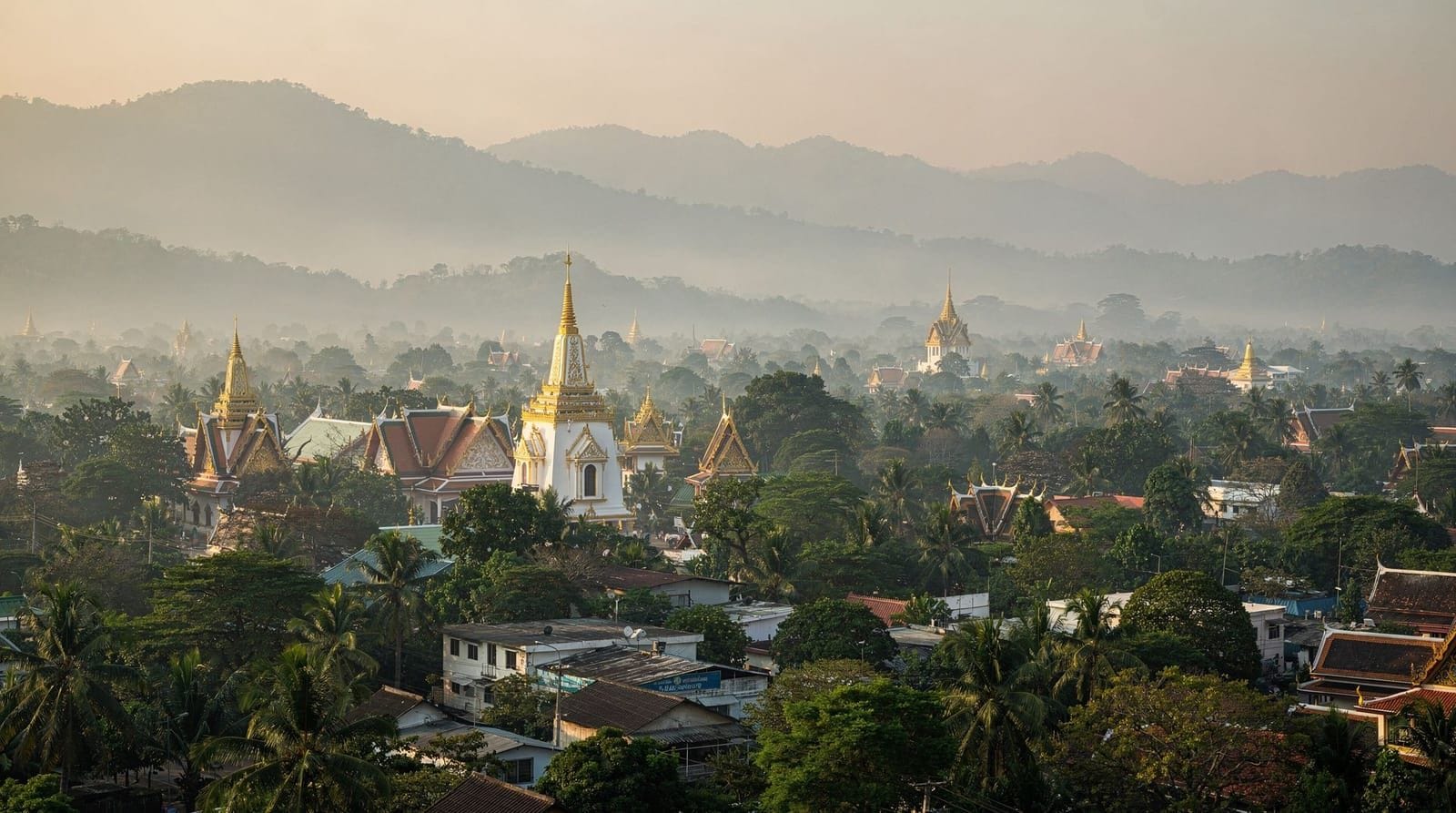
Chiang Mai runs on three seasons rather than the four most visitors expect, and each one changes the trip in ways that go well beyond “pack an umbrella or don’t.” Northern Thailand’s climate splits into a cool-dry season, a hot season that quietly overlaps with a genuine air-quality problem, and a green rainy season, and the difference between arriving in the wrong week and the right one shows up in everything from what you can actually see from Doi Suthep’s viewpoint to how much a decent guesthouse costs per night.
The honest short answer is that November through February is the best overall window for most travelers, combining cool temperatures, low humidity, and the year’s two headline festivals. But “best” comes with real trade-offs the tourism marketing tends to skip over, chief among them a crowded, pricier city and the fact that the shoulder into February starts brushing up against the region’s agricultural burning season. This guide breaks down what each season actually feels like on the ground, month by month, so the choice can be made with real information rather than a generic “anytime is fine” shrug.
The three seasons, in plain terms
Northern Thailand’s year splits roughly into cool season (November-February), hot season (March-May), and rainy season (June-October), though the boundaries blur by a few weeks in either direction depending on the year. Cool season is the closest thing Chiang Mai has to a comfortable Western-style autumn: low humidity, blue skies, and nighttime temperatures that genuinely justify a light jacket, especially outside the city or up in the mountains. Hot season lives up to its name, with April commonly the hottest month of the entire year and daytime highs regularly above 35°C (95°F) in the city itself. Rainy season brings the year’s greenest landscapes and its lowest prices, trading a predictable afternoon downpour for noticeably thinner crowds almost everywhere.
Layered on top of that three-season structure is the detail most first-time visitors miss entirely: a stretch of roughly six to eight weeks, usually mid-February through April, when smoke from agricultural burning across northern Thailand, Myanmar, and Laos settles into the Chiang Mai valley and pushes air quality into genuinely unhealthy territory on the worst days. This overlaps uncomfortably with the tail end of cool season and all of hot season, and it’s covered in full in our dedicated burning season guide, but it needs flagging here too since it’s a real factor in choosing when to come, not a footnote.
Cool season: November to February
This is peak season for a reason. Humidity drops noticeably compared to the rest of the year, skies are mostly clear, and daytime temperatures settle into a genuinely pleasant 25-30°C (77-86°F) range, with evenings cool enough for long sleeves, particularly in December and January when lows can dip to 13-18°C (55-64°F) outside the city center. This is the season when a walk through the Old City or a morning at Doi Suthep feels comfortable rather than something to be endured between air-conditioned stops.
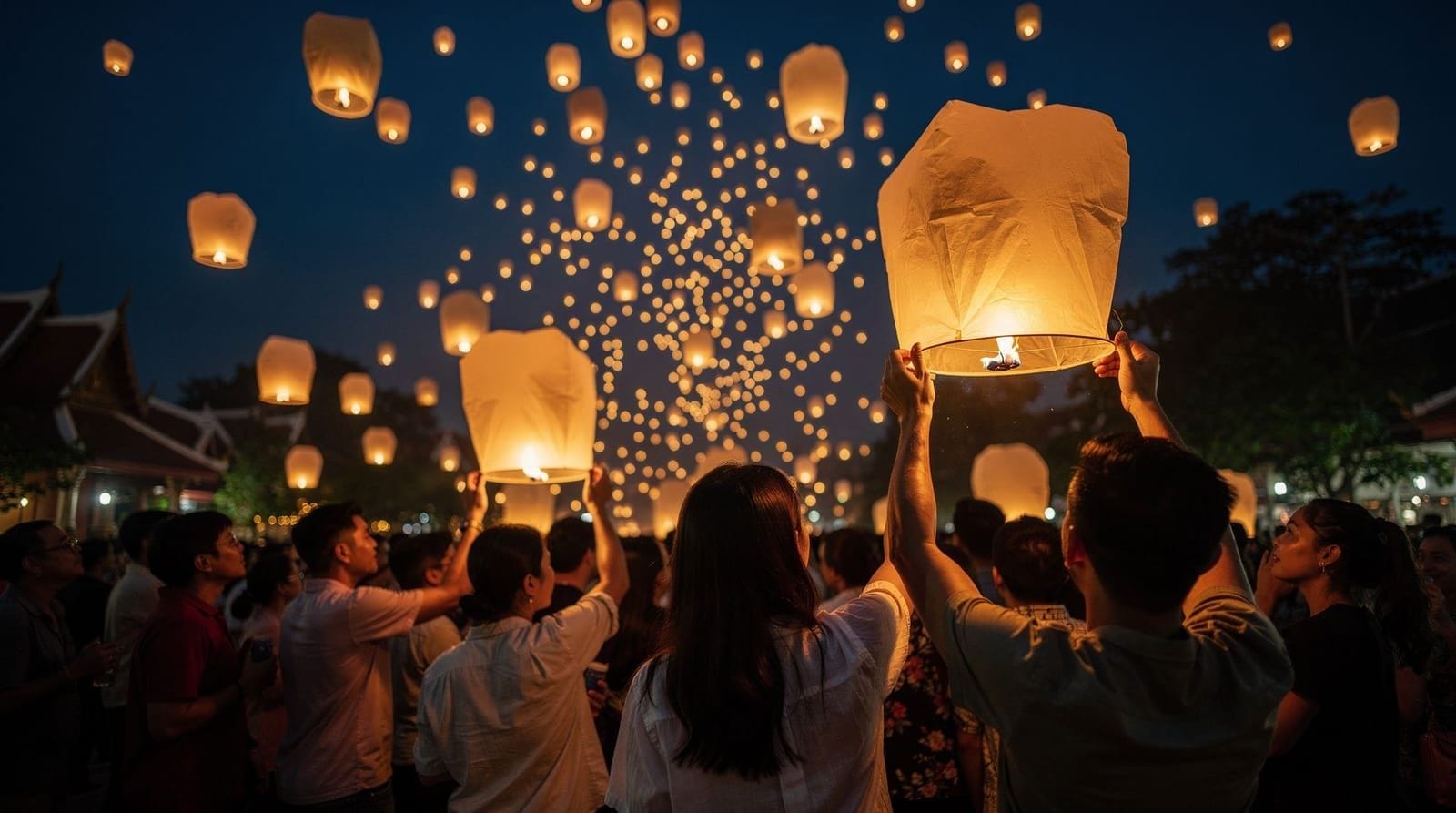
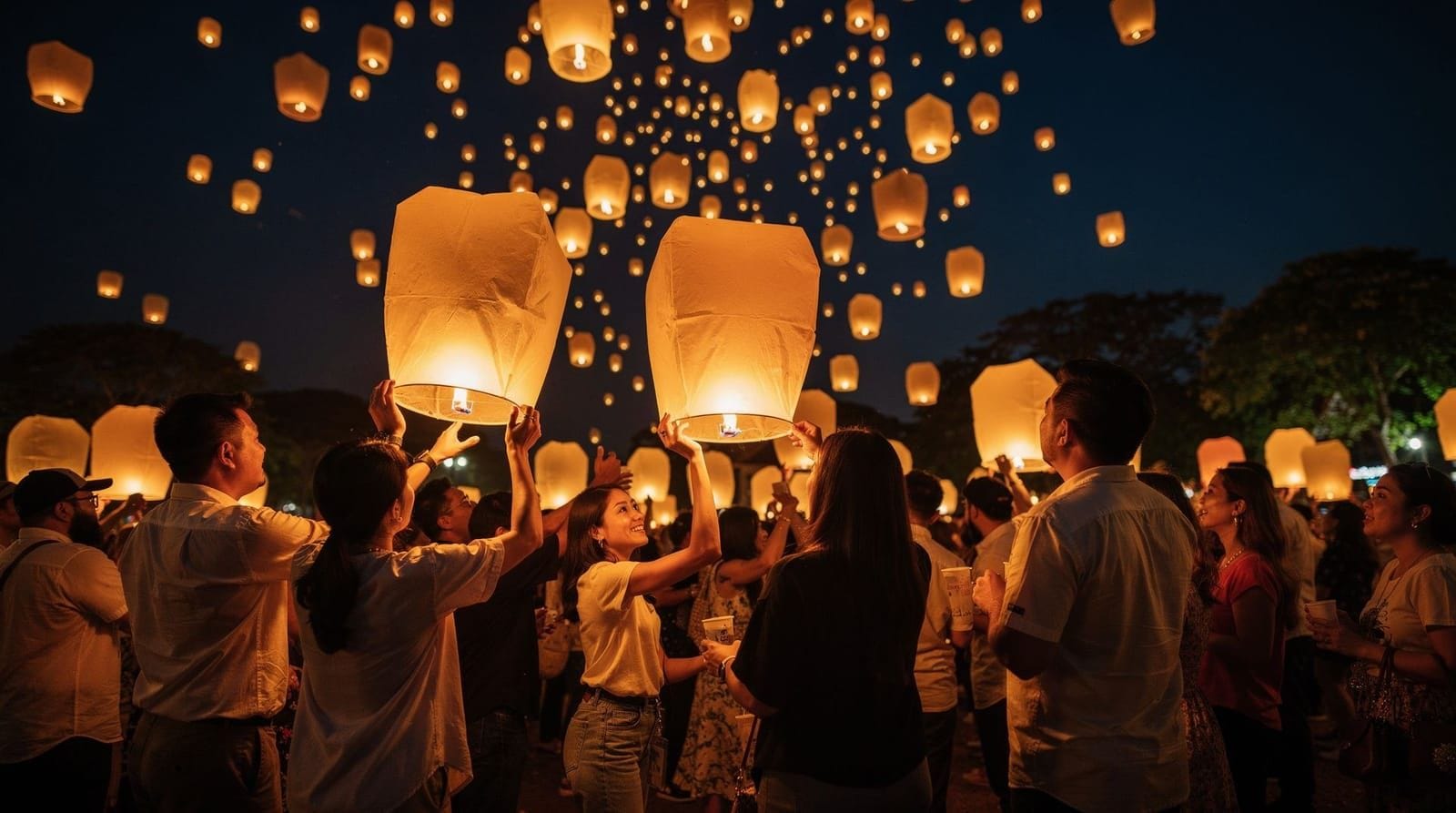
November carries the year’s two biggest events, Yi Peng and Loy Krathong, when thousands of paper lanterns rise over the city and krathong floats drift down the Ping River. Exact dates shift with the lunar calendar each year, so anyone planning around the festival specifically should check confirmed dates rather than assuming a fixed date range, and should expect hotel prices in the city center to spike accordingly for the surrounding week. December and January are the most reliably comfortable months of the whole year, cool, dry, and clear, though also the most crowded alongside the overlapping Christmas-New Year holiday period when European and North American visitor numbers peak. February brings the Flower Festival parade in the first week, still comfortably within cool-dry conditions, but it’s also the month when the first haze of burning season typically starts to show up, so late-February travel already needs the air-quality caveat in mind. Full detail on this window lives in our cool season guide.
Hot season: March to May
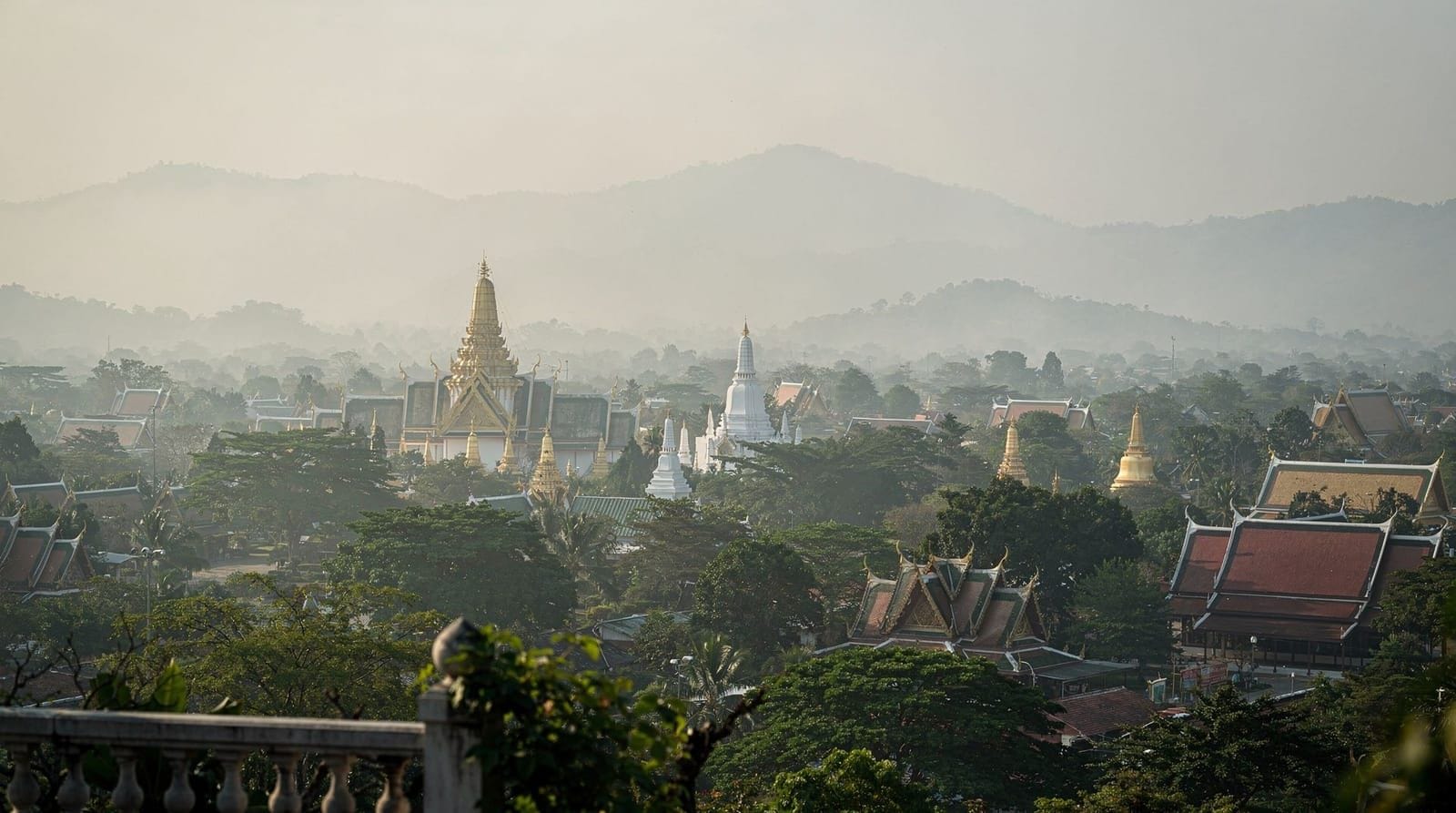
March through May is Chiang Mai at its hottest and, for a meaningful chunk of that window, its smokiest. Daytime highs commonly exceed 35-38°C (95-100°F) through April, which is reliably the hottest month of the year, and humidity climbs steadily as the season progresses toward the rains. This is also the peak of burning season, when farmers across the region clear fields and forest ahead of the planting season, and the resulting smoke haze can push Chiang Mai’s air quality index into the “unhealthy” or occasionally “hazardous” range on its worst days, generally worst in March. Visibility from viewpoints like Doi Suthep or Mon Cham can drop from a clear mountain panorama to a grey haze within the space of a single bad week.
There’s a genuine upside worth naming: Songkran, Thailand’s water festival marking the traditional New Year, falls in mid-April and turns the entire city into a multi-day water fight, one of the most purely fun, chaotic events on the Thai calendar and a real draw for visitors who specifically want it. But April also sits squarely inside the hottest, often smokiest stretch of the year, so travelers coming for Songkran should go in accepting that trade-off rather than being surprised by it. May starts to ease slightly as the first rains typically arrive toward the month’s end, settling the dust and clearing the air somewhat ahead of the wetter months. Full seasonal detail, including specific air-quality figures and honest guidance on whether to avoid these months entirely, is in our burning season guide.
Rainy season: June to October
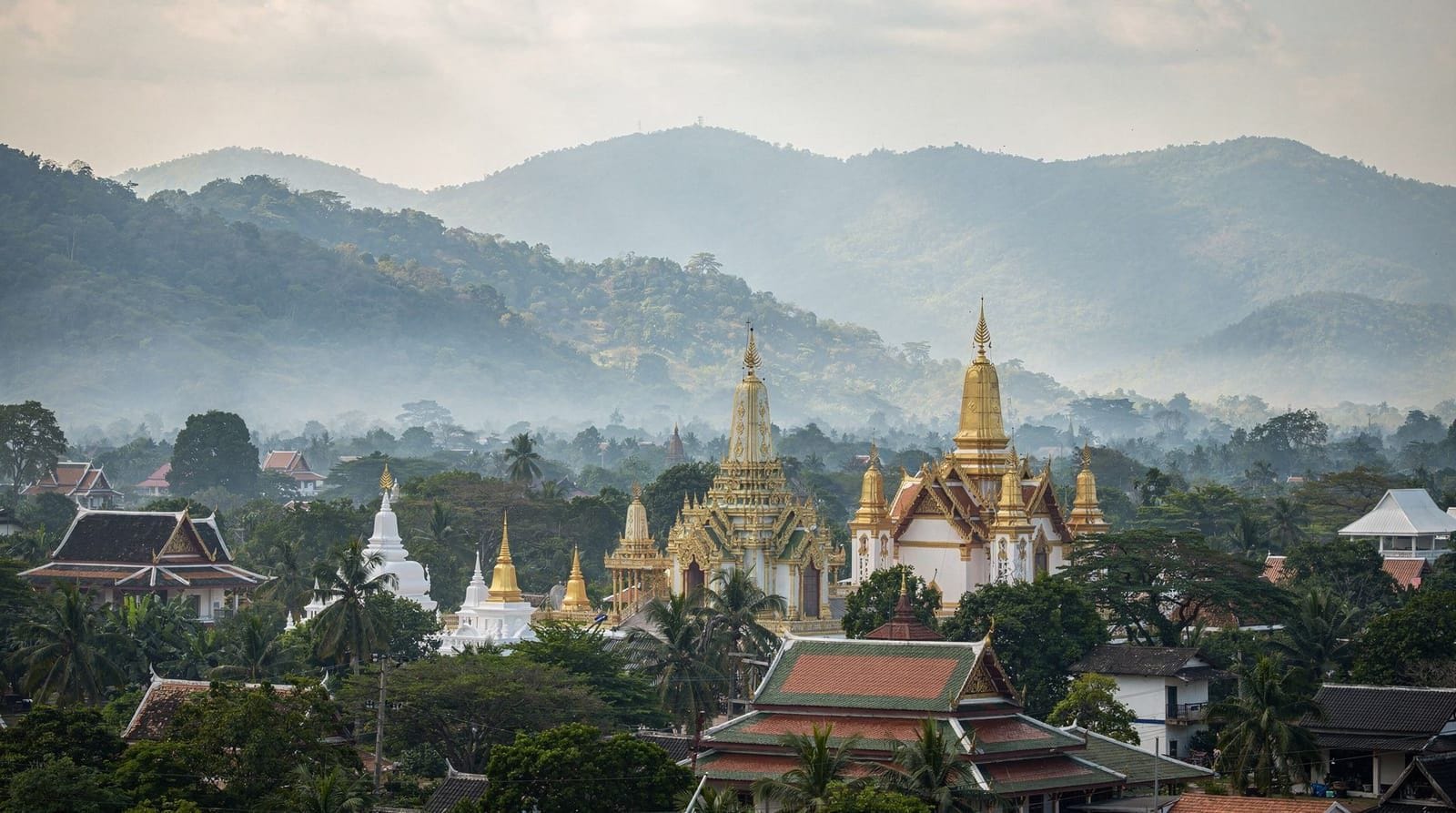
Rainy season is the most underrated window on the Chiang Mai calendar for a specific kind of traveler. The valley turns a deep, saturated green that cool and hot season simply don’t produce, waterfalls like Bua Thong’s Sticky Waterfalls and the falls around Mae Sa Valley run at their fullest and most photogenic, hotel prices drop 20-40% below cool-season peaks, and the crowds at major temples and markets thin out considerably. The rain itself is usually more manageable than the word “monsoon” implies: a typical day brings sunny or partly cloudy mornings followed by an intense but relatively short downpour, often one to three hours, in the afternoon or early evening, rather than an all-day washout.
September is typically the wettest month by total rainfall, with August and early October running close behind, and this is when isolated street flooding is most likely in the lower-lying parts of the city and when a handful of trekking routes toward Doi Inthanon and the hill-tribe areas can turn muddy enough that some operators pause or reroute specific trails. June and October sit at the gentler edges of the season, generally lighter and more predictable rainfall, and are worth particular consideration for anyone who wants the rainy-season pricing and crowd levels without the heaviest downpours of peak monsoon. Full month-by-month detail on this stretch is in our rainy season guide.
Matching the season to your priorities
If avoiding crowds and getting the best prices matters more than avoiding rain, June, July, and October are the strongest picks: genuinely lower hotel costs, thinner queues at the major temples, and a manageable amount of rain that rarely derails a full day. If comfort and reliable clear skies matter most and budget is more flexible, December and January are close to unbeatable, just booked well ahead of the festival crowds that spill over from November. If a specific festival is the whole point of the trip, plan directly around confirmed Yi Peng, Loy Krathong, Songkran, or Flower Festival dates and accept the corresponding price and crowd trade-off as the cost of timing it right.
Travelers with any respiratory sensitivity, or simply a strong preference for clean air and clear photos, are best served avoiding mid-February through April entirely if dates are flexible, or at minimum checking a live air-quality index (readily available via apps like AirVisual) before finalizing those specific dates. For everyone else, the honest summary is that there is no single wrong month to visit Chiang Mai, only a set of trade-offs, comfort against crowds, festival access against price, guaranteed sun against guaranteed rain, that this guide is meant to make explicit rather than leave to chance.
A handful of genuine shoulder-season sweet spots deserve a specific mention. Early November, before the final pre-Yi Peng price surge, often delivers cool-season weather at close to rainy-season rates for travelers willing to arrive a week or two ahead of the festival crowd. Late May, right at the rainy season’s opening, similarly offers a brief window of thinner crowds and softening heat before the heaviest of the June-October downpours settle in. Neither is a secret exactly, but both are underused compared to the obvious December-January peak, and both are worth real consideration for anyone whose dates have some flexibility.
Crowds and prices, month by month
Beyond weather, the calendar also drives two very practical variables: how busy the major sights feel and what a room actually costs. These move together more than most visitors expect, since the same festival dates and school-holiday overlaps that fill Sunday Walking Street also push up guesthouse rates across the Old City and Nimman.
- November — crowds build steadily through the month as Yi Peng and Loy Krathong approach; prices climb 20-40% above the June-October baseline in the final two weeks, and lantern-adjacent guesthouses can sell out a month or more ahead.
- December — the single busiest month of the year once Christmas and New Year overlap with the best weather of the cool season; expect 30-60% higher rates than low season and book accommodation at least a few weeks out.
- January — still busy and still pricey, though marginally calmer than December once the New Year crowd clears in the first week or two.
- February — crowds start to thin from the December-January peak, prices ease slightly, but this is also the month the first burning-season haze typically appears, so the “quieter” trade-off comes with an air-quality catch.
- March-April — the lightest crowds of the traditional dry season stretch, since the heat and haze push away a meaningful share of leisure travelers, though Songkran in mid-April brings its own short, intense spike in domestic and international visitors.
- May — genuinely quiet, with prices at or near the yearly low as the heat lingers but the rains haven’t yet arrived to draw the rainy-season crowd of value-focused travelers.
- June-August — steady low season: thinner queues at Doi Suthep and the major temples, and hotel rates commonly 20-40% below the November-January peak.
- September — the wettest month by rainfall and correspondingly one of the quietest and cheapest, useful for travelers prioritizing budget over guaranteed sun.
- October — rain starts to ease, crowds start to build again ahead of the cool season, and prices begin their gradual climb back toward November’s peak.
What to pack by season
Packing sensibly for Chiang Mai changes meaningfully by season, and getting it wrong is a common source of minor but avoidable discomfort. Cool season (November-February) rewards layers: light clothing for the day, a long-sleeved shirt or light jacket for the evening, and closed shoes if a Doi Inthanon or Doi Suthep sunrise visit is on the itinerary, since temperatures at elevation run noticeably cooler than in the city. Hot season (March-May) is straightforward heat management: breathable fabrics, strong sun protection, and, during the worst burning-season weeks, a well-fitted N95 or KN95 mask is genuinely worth packing rather than buying locally under time pressure. Rainy season (June-October) calls for a compact umbrella or light rain jacket, quick-dry clothing, and waterproof or at least water-resistant footwear, since afternoon downpours can turn certain streets into shallow, temporary puddles within minutes. Our full packing list guide breaks this down further by activity as well as season.
Planning around the season you pick
Once a season is chosen, the rest of the logistics tend to follow naturally. Our how many days in Chiang Mai guide and trip planning checklist both help build out an itinerary once the calendar is settled, and anyone weighing a side trip should check whether their chosen window suits mountain destinations like Pai, which can turn foggy and slightly cooler than the city itself in December and January mornings. Whichever season ends up working for your dates, arriving with realistic expectations about temperature, rain, and, during the February-April window, air quality, tends to make for a noticeably smoother trip than discovering the season’s real character after landing.
Frequently asked questions about the best time to visit Chiang Mai
What is the single best month to visit Chiang Mai?
December is the strongest all-round choice: reliably cool and dry, before the worst of the burning-season haze sets in and after the November festival crowds have thinned slightly. November is a close second if you specifically want to see Yi Peng or Loy Krathong, accepting higher prices and bigger crowds as the trade-off.
Is Chiang Mai’s burning season really that bad?
Yes, on the worst days. Roughly mid-February through April, agricultural burning across the region and neighboring countries pushes PM2.5 readings well above WHO safety thresholds, sometimes into the range described as hazardous. It isn’t constant, day to day it varies, but it’s a genuine health consideration, not tourist-board exaggeration, and worth checking an air-quality index before locking in those specific dates.
Is it worth visiting Chiang Mai during rainy season?
Yes for many travelers. June through October brings lush, deep-green scenery, noticeably fewer tourists, and lower hotel prices, with rain typically arriving as a heavy but short afternoon downpour rather than an all-day washout. The trade-offs are occasional flooding on low-lying streets and a few trekking routes that get muddier or temporarily close.
When is Chiang Mai most crowded?
Late November through early January, driven by the Yi Peng and Loy Krathong festivals plus the Christmas-New Year holiday overlap with European and North American travelers. Hotel prices in this window commonly run 30-60% higher than the June-October low season.
Does Chiang Mai have a real winter?
Not by most definitions, but the cool season (November-February) genuinely earns its name relative to the rest of the year. Nighttime lows in December and January can dip to 13-18°C (55-64°F), especially outside the city or up on Doi Suthep and Doi Inthanon, cool enough that a light jacket is genuinely useful in the evening.
Should I avoid Chiang Mai entirely during burning season?
Not necessarily, but go in with clear eyes. Some years and some weeks are considerably worse than others, and the haze tends to be less severe on higher ground and directly after rain. If you have flexible dates and sensitive lungs, cool season or rainy season are the safer bets; if you’re locked into March or April travel, check a real-time air-quality app before you arrive and have an indoor backup plan.
What’s the wettest month in Chiang Mai?
September typically records the highest rainfall total, though August and early October run close behind. Even in the wettest months, a fully washed-out day is uncommon; the more typical pattern is a sunny morning followed by an intense one-to-three-hour downpour in the afternoon or early evening.