Chiang Mai cooking class: the complete guide
Chiang Mai: Traditional Thai Cooking Class with Market Tour
What should you look for in a Chiang Mai cooking class?
Look for small groups (under 12 people), a real market or farm visit rather than a token stop, hands-on paste-pounding rather than pre-made curry paste, and a printed or digital recipe booklet to take home. Half-day classes run roughly 900-1,400 THB (about USD 25-39) per person; full-day and farm-based classes run 1,200-1,800 THB (about USD 33-50).
Why Chiang Mai is Thailand’s cooking class capital
Chiang Mai has more dedicated cooking schools than any other city in Thailand, a legacy of the northern Lanna food tradition and the city’s long-running backpacker and expat scene, which created steady demand for hands-on classes decades before cooking classes became a standard item on every destination’s tour list. That density means genuine competition on quality: schools that cut corners on ingredients or crowd twenty people into a single kitchen tend to get outcompeted by smaller operators who keep groups tight and sourcing local. It also means the format is mature — most schools have converged on a similar structure, which makes comparison shopping easier than it looks at first glance.
A half-day class with hotel pickup, a short market stop, and four to six dishes typically runs 900 to 1,400 THB per person (roughly USD 25-39 at an approximate rate of 36 THB to the dollar). Full-day classes, and anything that includes a proper farm visit rather than a market walkthrough, run 1,200 to 1,800 THB (about USD 33-50), reflecting the extra transport, the farm land itself, and usually a bigger lunch built into the day. Private classes booked directly with boutique schools can run higher still, sometimes 2,000-2,500 THB per person for a small dedicated group.
What’s typically included
Almost every class in Chiang Mai follows the same basic shape, whether it is based in the Old City or out on a farm in the Mae Rim direction. Hotel pickup and drop-off is standard for anything booked online, usually within a defined central zone covering the Old City, Nimmanhaemin, and the riverside area near Ping Riverside. If your hotel sits further out — toward the airport, or well past the ring road — check the listing for a pickup radius before booking, since some schools charge a small surcharge or ask you to meet at a fixed point instead.
The ingredient-sourcing component is where classes genuinely differ. Market-based classes walk you through a local fresh market — sometimes a neighborhood market, occasionally the larger Warorot Market — to point out fresh turmeric, galangal, three kinds of Thai basil, and the fish sauce and shrimp paste that anchor almost every savory dish. Farm-based classes instead drive you out to a small organic plot, often 20-40 minutes from the center, where you walk the rows and pick your own lemongrass, kaffir lime leaves, and chilies before cooking starts. Both formats work; the difference is atmosphere and pacing more than substance, and we cover the trade-off in more depth in our dedicated guide to market-tour classes.
The cooking itself typically runs 3-4 hours and covers 4-6 dishes selected from a set list, usually with some choice built in — pick your curry, pick your protein, pick your noodle dish. A realistic lineup looks something like: a curry (red, green, or massaman), a stir-fry (cashew chicken or pad kra pao), a soup (tom yum or tom kha), fresh or fried spring rolls, a noodle dish (pad thai or the northern specialty khao soi if the school offers it), and a dessert, almost always mango sticky rice. Every dish you cook, you also eat — lunch or dinner is built into the class rather than served separately.
Nearly every school sends participants home with a printed or digital recipe booklet covering that day’s dishes, which is genuinely useful if you plan to cook Thai food afterward — curry paste ratios and fish sauce quantities are hard to remember precisely after the fact. Some schools throw in a small apron, a certificate, or a takeaway bag of dried spices, though none of this is standard across the board, so treat it as a bonus rather than something to book around.
Half-day versus full-day: which to choose
A half-day class (roughly 3-4 hours, either morning or afternoon) suits travelers who want the experience without giving up a whole day of sightseeing — you could do a morning class and still see the Old City temples or Wat Phra Singh in the afternoon. It covers fewer dishes (typically 4-5) and usually skips the farm component in favor of a shorter market stop.
A full-day class (6-8 hours) makes more sense if cooking is the priority for that day rather than an add-on, and almost always includes a farm visit, a longer market segment, and more dishes (5-6, sometimes with a second round of tasting or a bonus recipe). Full-day classes also tend to build in more downtime — a proper sit-down lunch rather than eating between cooking stations — which some travelers value and others find slower than necessary. If you’re short on days in Chiang Mai and have a packed itinerary around Doi Suthep or the northern day trips, the half-day format is the pragmatic choice; if a cooking class is one of the main things you came to Chiang Mai for, the full-day, farm-based version delivers noticeably more.
Curry paste from scratch: why it matters
The single detail that separates a good class from a mediocre one is whether you actually pound your own curry paste in a granite mortar and pestle, or whether the school hands you a pre-made paste and has you skip straight to the stir-fry pan. Pounding your own paste — lemongrass, galangal, garlic, shallots, chilies, and shrimp paste, worked down by hand until it turns into a rough, fragrant mass — takes 10-15 minutes of real effort and is, by a wide margin, the most memorable and most educational part of the day. It’s also the step most likely to get shortened or skipped in a rushed, high-volume class, because it slows down the group and requires enough mortars and pestles for everyone. When comparing schools, this is the question worth asking directly: do participants make their own paste, or is it provided pre-made? A school that’s proud of its process will usually say so upfront in the listing description.
Khao soi: the dish worth seeking out
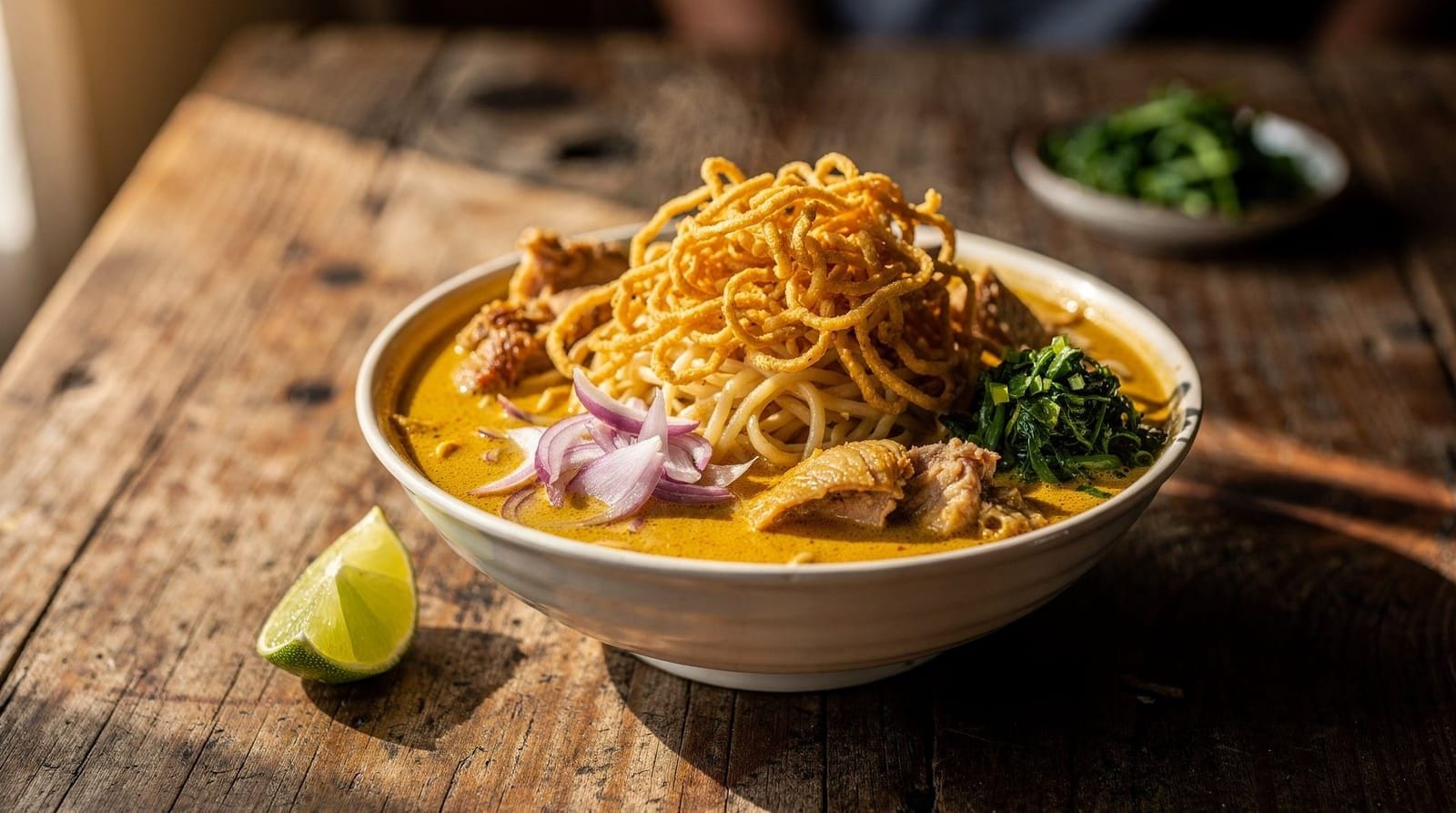
If a school offers khao soi — the turmeric-yellow, coconut-based curry noodle soup that is northern Thailand’s signature dish, topped with crispy fried noodles and usually served with chicken or beef — it’s worth prioritizing on the dish list over a generic pad thai, which you can find at cooking classes anywhere in the country. Khao soi is specific to Chiang Mai and the wider Lanna region, and getting a demonstration of the curry paste (typically including dried chilies, curry powder, and coconut milk reduced slowly rather than just heated through) is harder to find outside northern Thailand. Not every school includes it in the standard rotation, since it’s more involved than the classic six dishes, so if it matters to you, check the listing or ask before booking. Our khao soi recipe guide goes deeper into which schools teach it and how the dish is actually built.
Vegetarian and vegan accommodation
None of the classes on this site’s catalog are marketed as exclusively vegan, but the overwhelming majority of Chiang Mai schools can substitute tofu for meat, and skip fish sauce and shrimp paste in favor of soy sauce, on request — Thai cuisine’s reliance on vegetables, curry pastes, and rice or noodles as a base makes this a fairly straightforward substitution for an experienced kitchen. The practical step is to flag your dietary needs at booking rather than on arrival, since it gives the school time to prep separate paste batches (standard curry paste often contains shrimp paste, so a vegan paste has to be made separately, not just have the shrimp paste omitted from someone else’s batch). Our dedicated guide to vegetarian and vegan cooking classes covers which dishes adapt best and exactly what to ask.
What a market-tour add-on actually delivers
It’s worth setting realistic expectations here: “market tour included” ranges from a genuinely useful 45-minute walkthrough with a guide pointing out unfamiliar produce, to not much more than a 10-15 minute walk-past on the way to the van. If the market component matters to you — and it’s one of the best ways to actually understand what you’re eating for the rest of your trip — look for classes that explicitly describe the market segment in some detail in the listing, rather than mentioning it in a single line. Our guide to cooking classes with a market tour breaks down which format each school tends to run.
Choosing between the well-known schools
Several long-running Chiang Mai cooking schools have built reputations over many years, including Thai Farm Cooking School (farm-based, out toward Mae Rim), Asia Scenic Thai Cooking School (multiple locations, market and farm options), and Baan Thai Cookery School (Old City-adjacent, market-focused). Rather than picking blind, it helps to compare format (market versus farm), group size, and dish list side by side — our comparison guide to the best cooking schools in Chiang Mai lays out exactly that.
Booking practicalities
Book through a platform that shows recent reviews and a clear cancellation policy, and confirm your hotel falls within the pickup zone described in the listing. Arrive in comfortable clothes you don’t mind getting a little splattered — you’ll be standing at a wok or stove for a meaningful part of the day — and bring a reusable water bottle, since Chiang Mai’s cooking schools operate in the same heat and humidity as the rest of the city, particularly from March through May. If you have any food allergies beyond a general vegetarian or vegan request (shellfish and peanuts are both common in Thai cooking), state them explicitly rather than relying on the general dietary field in a booking form, since substitutions for allergies need more care than a straightforward vegetarian swap.
What a typical class day actually looks like, hour by hour
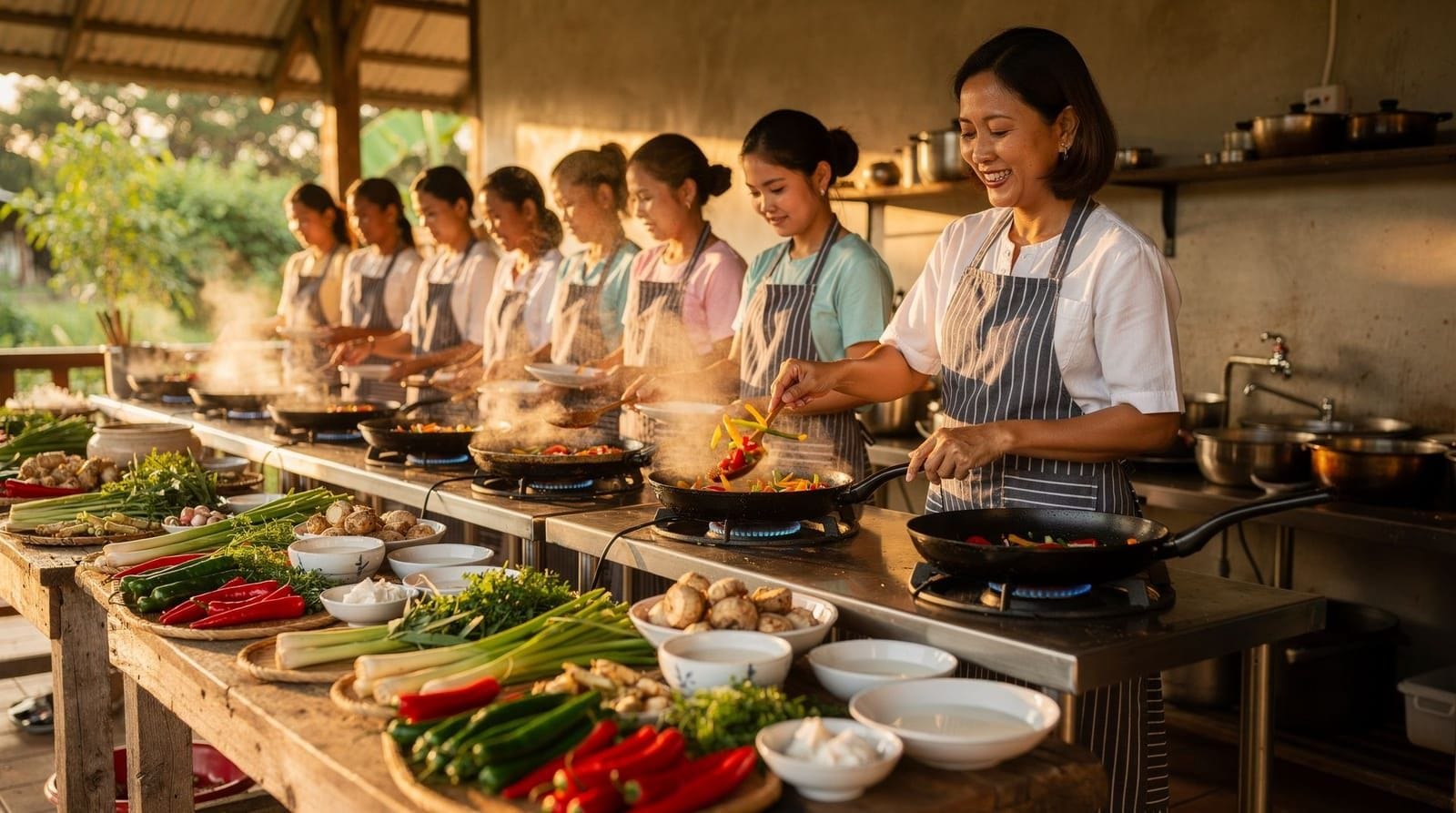
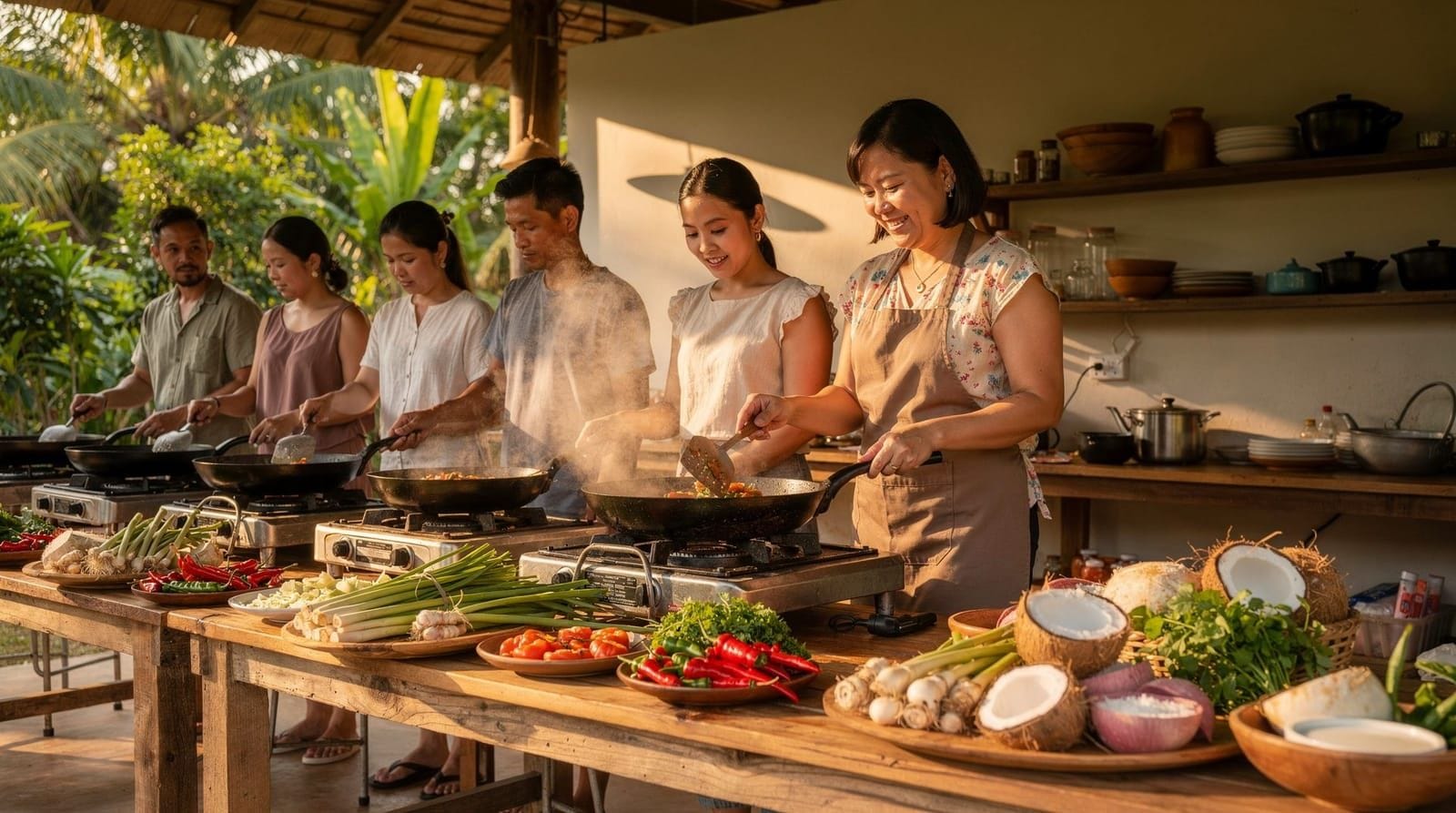
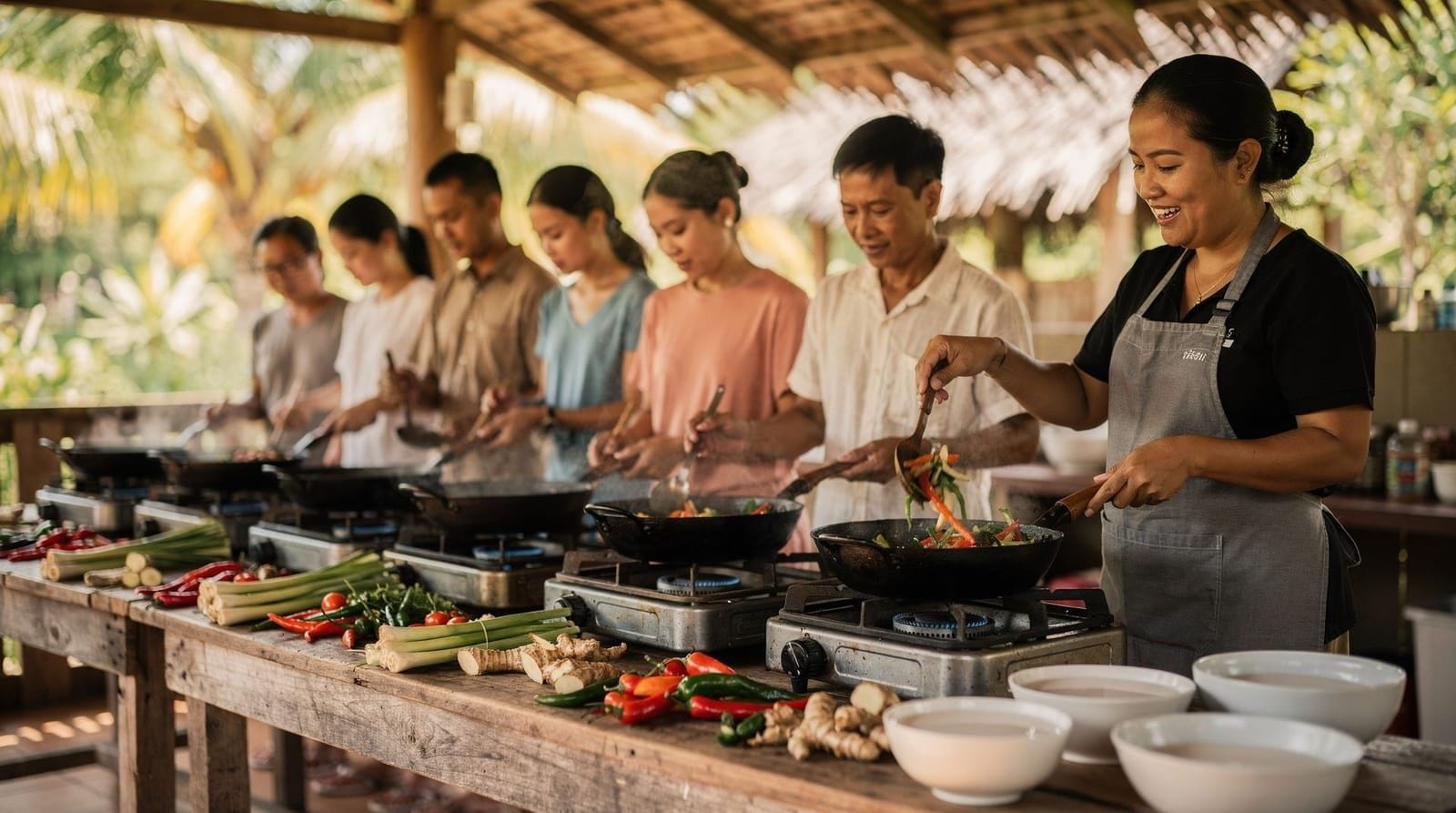
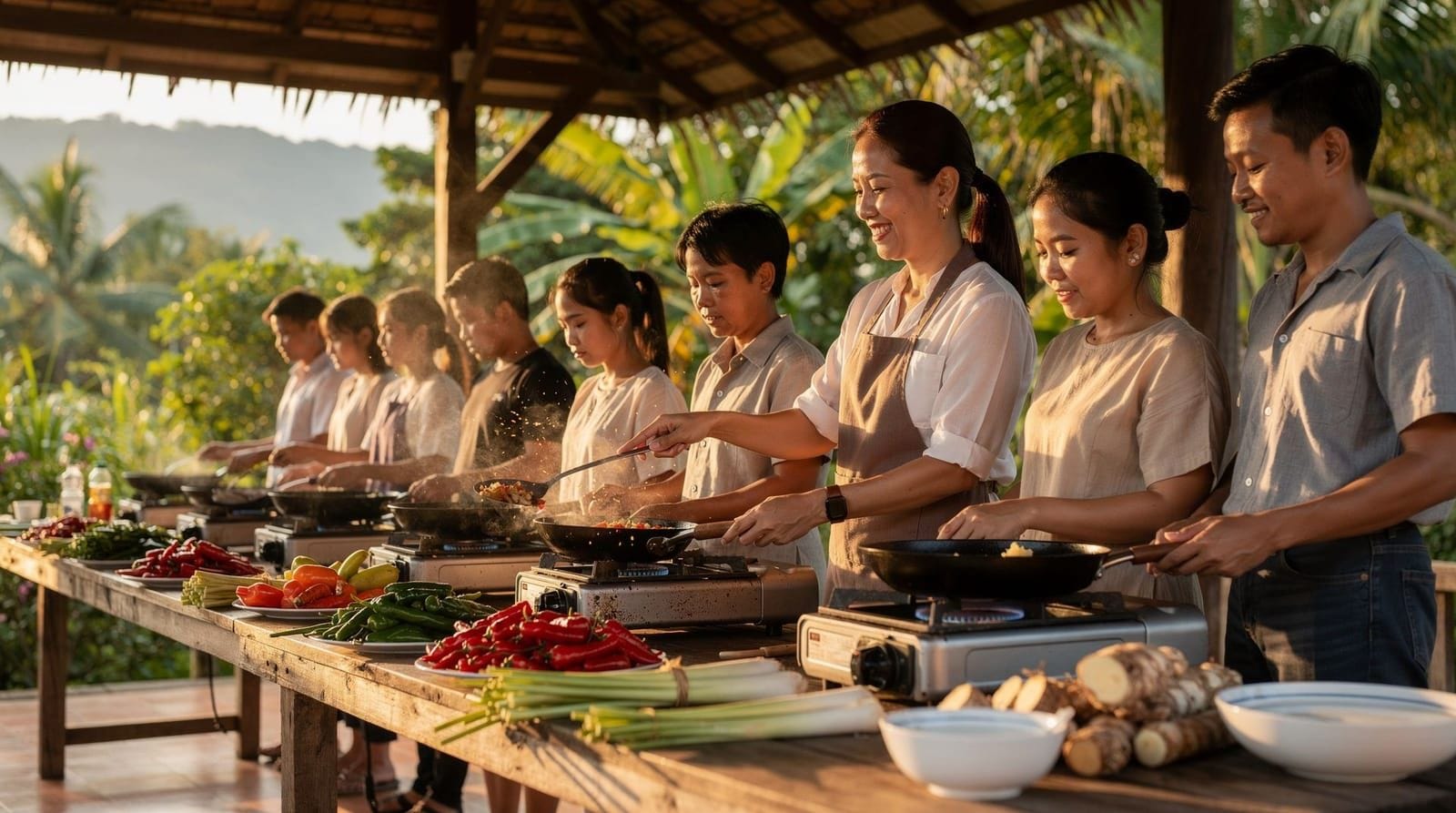
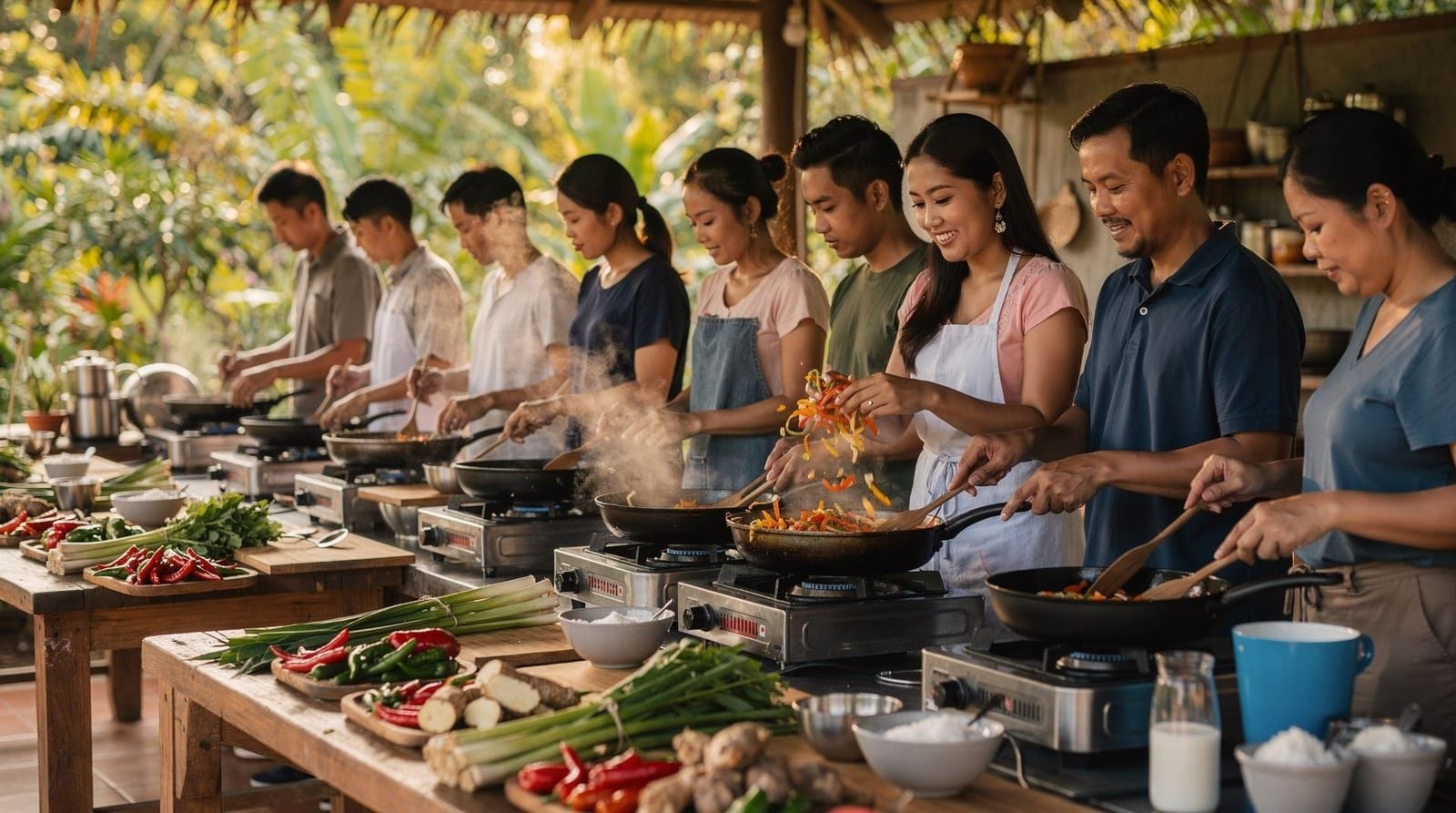
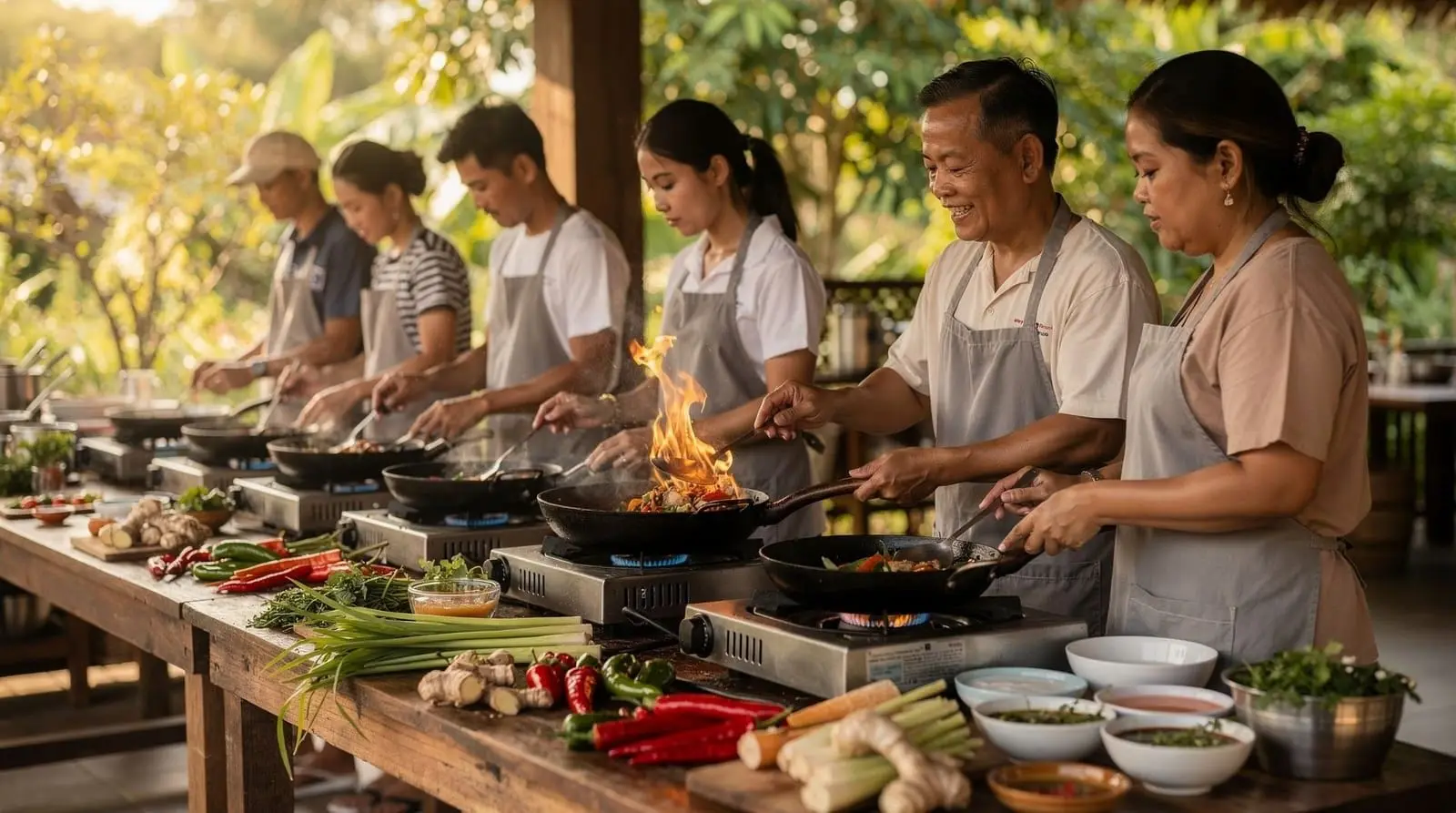
A representative half-day morning class starts with pickup around 8:00-8:30am, timed to reach the market before the day’s heat and crowds build. The market segment, when it’s genuine rather than a token stop, runs 30-45 minutes, with a guide walking the group past produce stalls, pointing out curry pastes, herbs, and the fish sauce and shrimp paste that anchor most savory dishes. From there it’s a short drive or walk to the teaching kitchen, where the group is usually seated at individual or paired cooking stations — mortar and pestle, wok, gas burner — rather than watching a single demonstration table.
Curry paste-pounding, when it’s part of the class, comes early, since it’s the most time- and labor-intensive step and everything else builds on it. From there the group typically works through the remaining dishes in a set order — soup, stir-fry, spring rolls, noodle dish, dessert — with the instructor circulating between stations rather than running the whole group through each step in lockstep. Lunch is eaten as you go, dish by dish, rather than served as a single sit-down meal at the end, which suits the format but means you’re often full well before the dessert course arrives. A half-day class typically wraps by early-to-mid afternoon, with drop-off back at your hotel and the recipe booklet handed out on the way out.
Booking timing and seasonal considerations
Chiang Mai’s cool season, roughly November through February, is peak travel season for the city generally, and cooking classes book up accordingly — popular schools and time slots can be full a week or more in advance during this window, particularly weekends. The rainy season, June through October, is quieter, with same-day or next-day availability often possible, though a handful of afternoon showers are common and rarely disrupt an indoor kitchen-based class. The hot season, March through May, sits in between for booking pressure but is worth factoring into your own comfort planning — market walkthroughs and any outdoor farm component are more physically taxing in the heat, and starting early in the morning becomes more valuable than in cooler months.
Note also that Chiang Mai’s burning season, which overlaps with the tail end of the hot season (typically February through April), brings smoke haze that can affect outdoor components of farm-based classes on the worst days — it doesn’t usually cancel classes, since teaching kitchens are indoors, but it’s a reason some travelers specifically favor cool-season dates if air quality is a personal concern. Our guide to the best time to visit Chiang Mai covers this in more detail if you’re still choosing your travel dates.
For a broader sense of what a typical session actually feels like hour by hour, our guide to what to expect at a Thai cooking class in Chiang Mai walks through a representative day from pickup to recipe booklet in more depth. And if you’re weighing a cooking class against other food experiences in the city — a street food tour, a market food crawl through Warorot Market — our guide on whether a Chiang Mai food tour is worth it and our northern Thai dishes primer both help frame that decision alongside this one.
Where to stay for easy pickup
Since almost every class includes hotel pickup within a defined central zone, staying in the Old City, Nimmanhaemin, or along the Ping riverside near Ping Riverside and Wat Ket generally puts you well inside the standard collection radius, with no surcharge and a shorter start to the day than accommodation further out toward the airport or the outer ring road. If your hotel sits outside the usual zone, most schools will still arrange pickup at a fixed nearby meeting point — worth confirming at booking rather than assuming, since it can add 15-20 minutes to an already early start.
A note on realistic expectations
None of this should be read as a warning against booking a class — the format is mature, competition keeps quality reasonably consistent, and even a middling class in Chiang Mai tends to outperform a cooking class booked in most other cities. The point of setting expectations clearly is simply that “cooking class” covers a wider range of experiences here than the marketing copy on any single listing suggests, and a few minutes spent comparing format, group size, and the market or farm component before booking makes a bigger difference to how the day feels than which specific school you end up with.
Frequently asked questions about Chiang Mai cooking class: the complete
How much does a cooking class in Chiang Mai cost?
Do I need to book in advance?
Is a Chiang Mai cooking class worth it if I don't cook at home?
What's the difference between a market-based and a farm-based class?
Can I do a cooking class as a vegetarian or vegan?
How many dishes do you typically cook?
Do I get to keep anything from the class?
Is transport included?
Top experiences
Bookable activities with verified prices and instant confirmation on GetYourGuide.