Is Chiang Mai street food safe? Hygiene tips for cautious eaters
Chiang Mai: Local Food and Markets Guided Walking Tour
Is it safe to eat street food in Chiang Mai?
Yes, for the large majority of visitors, provided you choose stalls with a steady queue of local customers and food cooked fresh to order rather than food that's been sitting out. Fried, grilled and freshly-boiled dishes carry lower risk than pre-cut fruit, anything with mayonnaise-based sauces left unrefrigerated, or ice made from a chipped block rather than a factory bag.
An honest answer, not a blanket reassurance
This guide covers the specific, actionable factors that determine street food safety in Chiang Mai — not a generic reassurance and not an alarmist warning, but the practical detail that lets you make informed choices stall by stall, dish by dish, throughout your trip.
Most travel content either dismisses street food safety concerns entirely (“it’s all fine, don’t worry”) or overstates the risk to the point of scaring people away from one of Chiang Mai’s genuine highlights. Neither is especially useful. The honest position is: street food in Chiang Mai is safe for the large majority of visitors most of the time, a meaningful share of travelers will have at least one uncomfortable day regardless of how careful they are, and a small number of specific, identifiable risk factors account for most of the actual problems. This guide focuses on those specific factors rather than vague reassurance.
What actually causes stomach upsets
Understanding cause and effect here is more useful than a vague sense of danger, since it lets you make targeted, sensible choices rather than avoiding street food wholesale out of general anxiety.
Contrary to the common assumption that “spicy food” or “unfamiliar food” itself causes illness, the real culprits are usually more specific:
- Food held too long at room temperature — pre-made dishes sitting in a tray for hours, especially anything with dairy, mayonnaise-based sauces, or cooked seafood, rather than food cooked fresh in front of you.
- Contaminated ice or water — block ice chipped with a pick (rare now, but still found occasionally) carries more risk than factory-produced bagged ice, which is the standard at the vast majority of Chiang Mai stalls and easy to identify by its distinctive cylindrical shape with a hole through the center.
- Cross-contamination from prep surfaces — a cutting board used for raw meat and then immediately for ready-to-eat items like herbs or lime wedges, without an intervening clean or wash.
- A genuine adjustment period — even careful travelers sometimes experience a day or two of mild digestive adjustment simply from a change in diet, climate and gut bacteria exposure, separate from any actual contamination.
How to choose a stall: the practical checklist
None of these signals are foolproof on their own, but combined they give a reasonably reliable read on any given stall within a minute or two of observation, before you’ve committed to ordering.
- A queue of local customers. This is the single most reliable signal — Chiang Mai residents eat at these stalls daily and know which ones are consistently good; a stall with a steady local following has effectively been vetted by thousands of repeat customers.
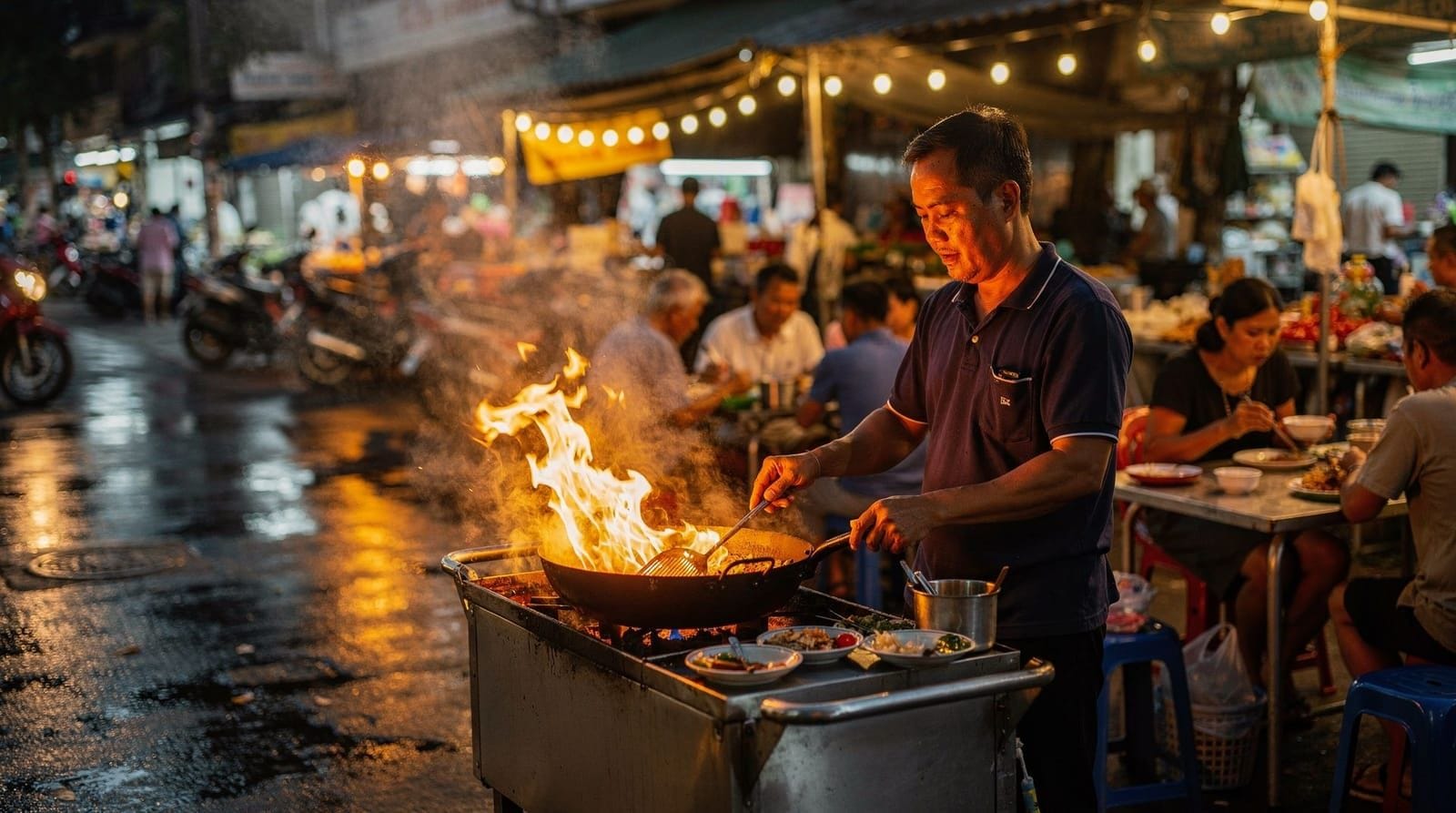
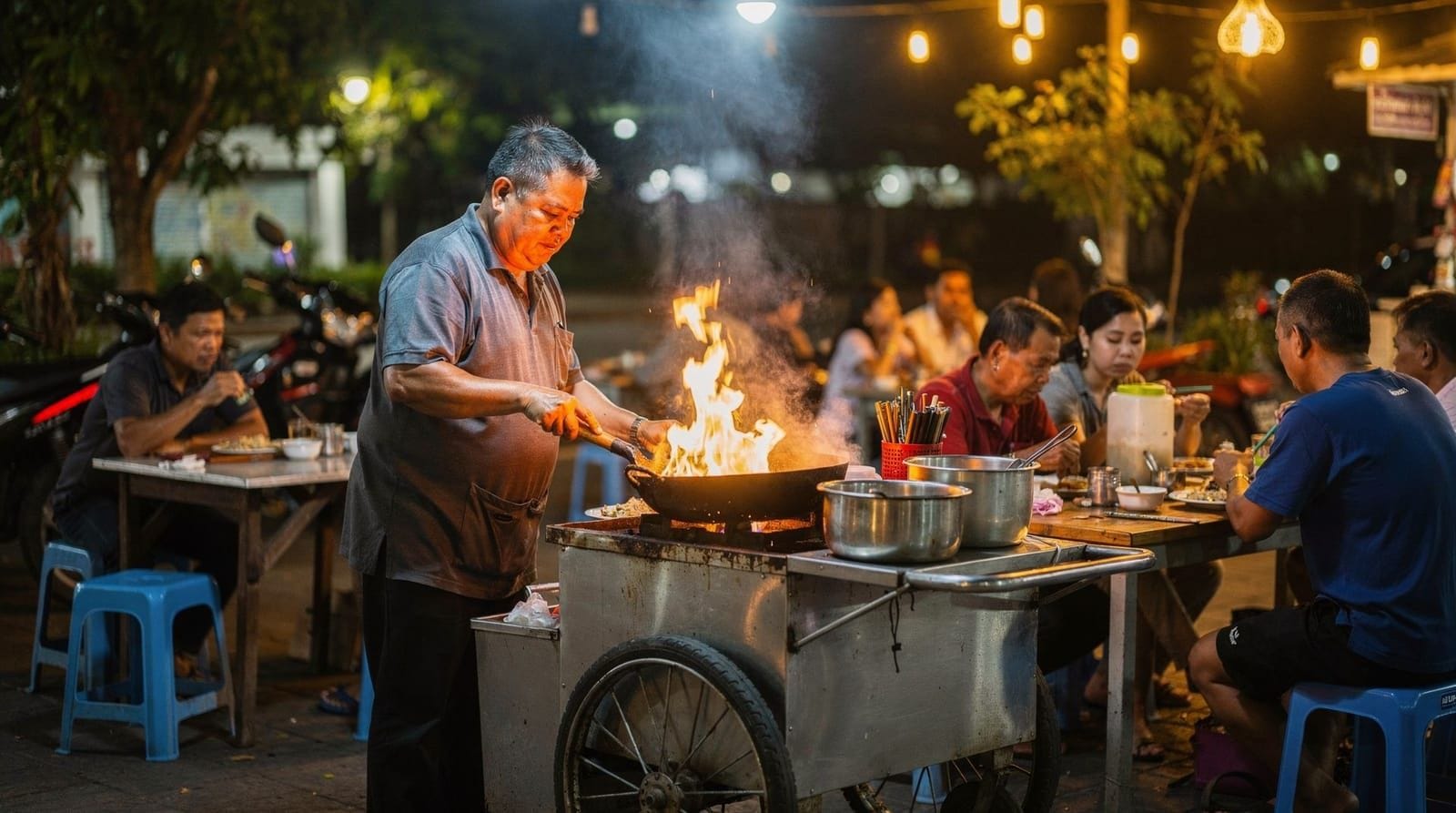
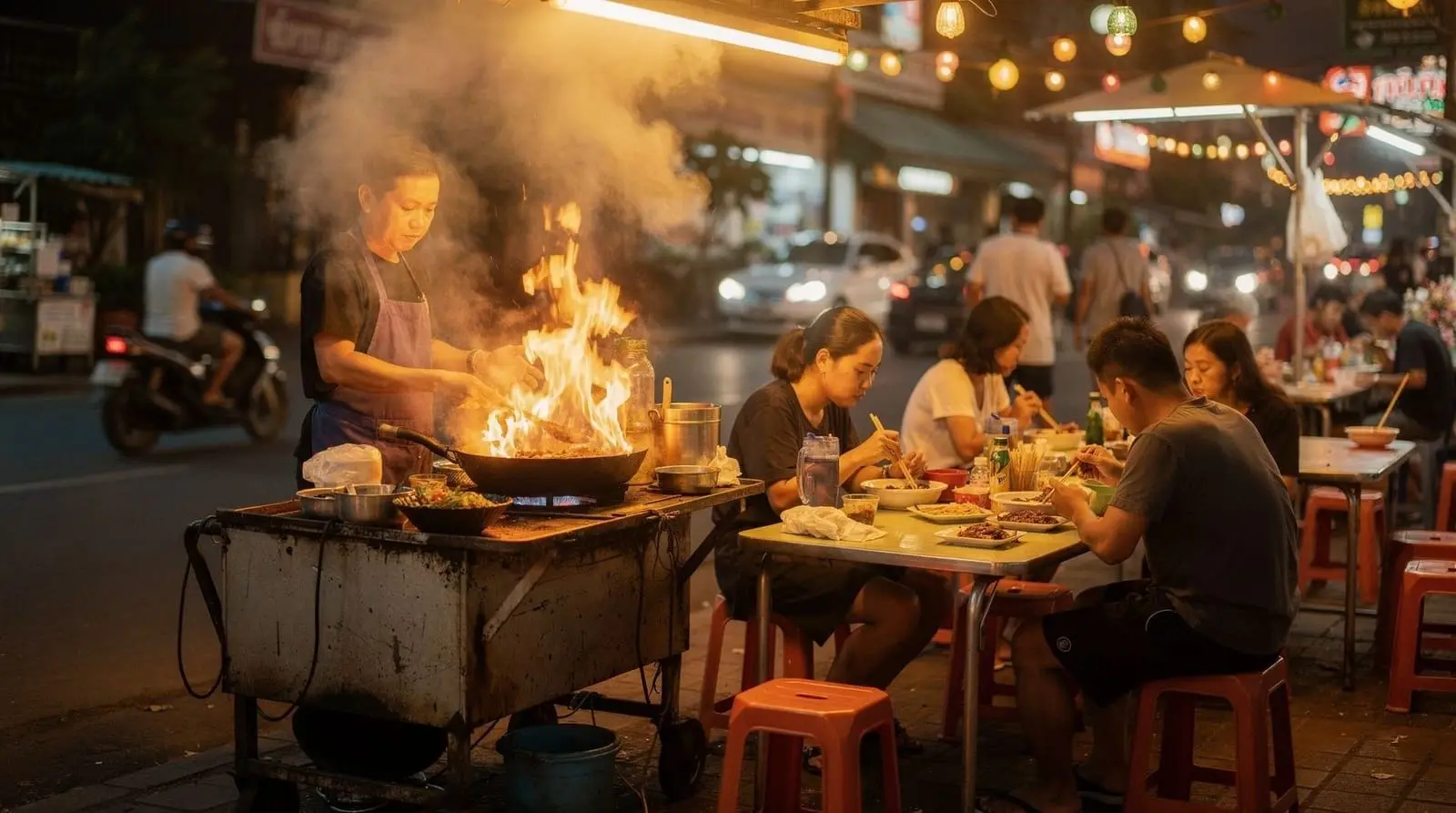
- Food cooked to order, not sitting pre-made. Watch for a visible flame, wok or grill actively in use, rather than trays of food assembled hours earlier.
- High turnover. A stall selling through its stock steadily and restocking ingredients is fresher than one with the same-looking tray sitting since opening.
- Bagged ice, not block ice. Look at the shape — cylindrical with a center hole means factory-produced and safer.
- Clean-looking prep area, though this is a softer signal than the others since a genuinely excellent stall can still look rough by Western standards; use it as one factor among several, not a disqualifier on its own.
How this compares across Chiang Mai’s different markets
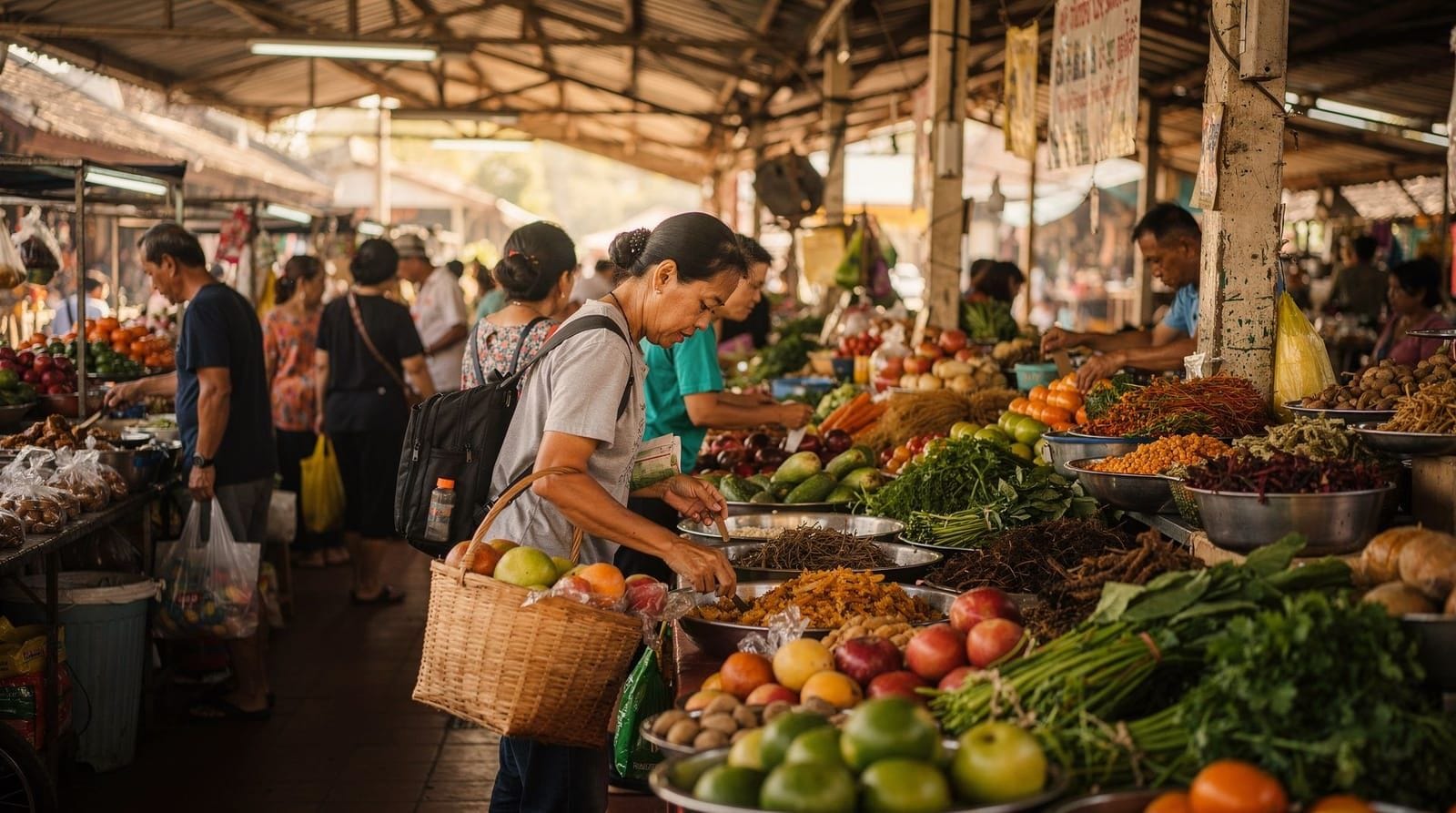
Risk isn’t uniform across every market in the city, and it’s worth understanding where the queue-and-turnover principle applies most and least reliably, which rounds out a practical, market-by-market understanding of food safety across the whole city. Warorot Market, with its high daytime turnover and largely local customer base, is generally the most reliable environment for applying the “busy stall, fresh food” heuristic, since the sheer volume of daily local shoppers keeps most vendors on their toes. The evening markets covered in our best night markets for food guide vary more: Night Bazaar-area food courts, being more static and less driven by rapid local turnover, benefit from covered, semi-controlled conditions but are worth the same scrutiny as anywhere else regarding how long food has been sitting out. Sunday Walking Street’s sheer scale means quality and hygiene standards vary more between individual stalls than at a smaller, more consistent market — the size that makes it exciting for variety also makes it harder to generalize about safety across the board.
Water and drink safety specifically
Food isn’t the only thing worth thinking carefully about — what you drink alongside it matters just as much for staying comfortable throughout your trip.
Beyond food itself, drinks deserve their own consideration. Fresh fruit shakes and juices, a staple of Chiang Mai’s markets, are generally prepared to order and safe, though the same ice-type caution applies — factory bagged ice is standard and low-risk, while the rarer block ice carries more risk. Bottled water is the standard, safe choice for drinking throughout your stay; tap water is not considered safe to drink directly. Fresh coconut water, served directly from the coconut, is essentially self-contained and among the lowest-risk drink options available at any market. Alcohol served over ice at bars and some night market stalls follows the same ice-quality logic as any other drink — worth a quick visual check of the ice type if you’re being cautious.
Categories worth extra caution
Beyond the general stall-selection checklist, a few specific food categories warrant an extra moment of thought before ordering.
- Pre-cut fresh fruit sitting out at room temperature for extended periods, rather than cut to order or kept properly chilled.
- Raw or undercooked seafood or meat, less common in Chiang Mai’s inland cuisine than in coastal Thai cities but still worth checking if unsure of a dish’s preparation.
- Buffet-style trays where food has been held for an unknown length of time, versus items cooked directly in front of you.
- Mayonnaise or dairy-based sauces left unrefrigerated for hours, particularly relevant at stalls selling Western-style snacks alongside Thai food.
None of this means avoiding these categories entirely — a busy stall selling fresh-cut fruit to a constant stream of customers is a different risk profile from one with the same tray sitting untouched since morning. The queue-and-turnover principle applies here too.
What to do if you do get sick
Most cases are mild and self-limiting, but it helps to know the practical steps in advance rather than figuring them out while unwell in an unfamiliar place.
Mild digestive upset — the most common outcome — usually resolves within 24-48 hours with rest, oral rehydration salts (available cheaply at any pharmacy), plain water, and avoiding dairy and heavy food until symptoms settle. If symptoms include a high fever, blood, or persist beyond 48 hours without improvement, it’s worth visiting a clinic or hospital rather than waiting it out — Chiang Mai has several well-regarded private hospitals experienced in treating international travelers, and this isn’t a situation to be stoic about if it escalates. This is general practical guidance, not medical advice; consult a doctor for anything beyond mild, short-lived symptoms.
Taste of Chiang Mai: Michelin Guide and street food tourIs a guided food tour a safer option?
This is one of the most common questions travelers ask when weighing independent eating against a curated experience, and it deserves a direct answer rather than a vague one.
To a meaningful degree, yes — a local guide typically brings visitors to stalls they’ve personally vetted through repeated visits, effectively transferring the “queue of locals” signal onto a single trusted person’s judgment rather than requiring you to assess every stall yourself. It’s a genuine advantage for cautious first-time visitors or anyone traveling with a sensitive stomach, though it’s not an absolute guarantee, since the same underlying risk factors (ice, holding times, prep surfaces) still apply. We cover the broader value of guided tours, safety aside, in the is a Chiang Mai food tour worth it guide.
Food allergies and specific dietary safety concerns
Safety isn’t only about contamination and hygiene — for a meaningful number of travelers it’s also about avoiding specific ingredients that could trigger a serious reaction, a separate concern worth its own section.
Beyond general hygiene, travelers with food allergies face a separate set of safety considerations worth addressing directly. Peanuts and other tree nuts appear in various forms across Thai cooking, including some sauces and garnishes that aren’t always obvious from a dish’s name, and shellfish (particularly shrimp paste and dried shrimp) is used as a base seasoning in many dishes that don’t visibly contain shellfish, similar to the fish sauce issue discussed in our vegetarian and vegan restaurants guide. Carrying a card with your specific allergy written in Thai, prepared in advance, is a genuinely practical tool at street stalls where English may be limited, and it removes ambiguity far more reliably than trying to explain a complex allergy verbally in the moment. For severe allergies, carrying appropriate emergency medication (such as an epinephrine auto-injector, if prescribed) is standard travel precaution regardless of destination, and worth confirming with your doctor before any trip involving unfamiliar cuisine.
What Chiang Mai’s food safety standards actually look like in practice
It’s worth understanding the broader regulatory context rather than assuming either strict enforcement or total absence of standards. Thailand’s public health authorities do run food safety inspection and certification programs, and some markets and vendors display certification stickers or plaques indicating a passed inspection, though this system is less comprehensive and less consistently enforced than in many higher-income countries, and its absence at a given stall doesn’t necessarily indicate a problem — many excellent, safe stalls are simply small enough to operate somewhat below the radar of formal certification schemes. Larger, more established markets like Warorot and shopping-center food courts near the Night Bazaar are more likely to have visible certification and more formal hygiene practices, while smaller independent street carts rely more heavily on the informal, reputation-based trust system (the queue-of-locals principle) discussed throughout this guide.
Building confidence gradually
If reading through all of the above still leaves you uncertain, a gradual, low-pressure approach works better than trying to apply every principle perfectly from the first meal.
If you’re anxious about street food generally, a reasonable approach is starting at Warorot Market during its busiest morning hours, where turnover is highest and the queue-of-locals signal is easiest to read, before moving on to less busy or evening-only markets later in your trip. See the Chiang Mai street food guide for the fuller market landscape once you’re comfortable.
Common overreactions worth avoiding
Just as it’s important to be genuinely cautious about real risk factors, it’s equally worth flagging a few common but overstated worries that shouldn’t stop you from enjoying Chiang Mai’s food scene. The assumption that spicy food itself is risky is a myth — heat level is a matter of personal tolerance, not hygiene, and adjusting spice at the table doesn’t change a dish’s safety. The idea that all street food is inherently less safe than restaurant food is also an overreach; a busy, high-turnover street stall frequently has fresher food and faster ingredient rotation than a quiet sit-down restaurant, which is exactly why the queue-and-turnover principle matters more than the formality of the setting. Similarly, avoiding all fruit out of an abundance of caution is unnecessary — whole fruit you peel yourself carries essentially no risk, and even pre-cut fruit from a busy stall selling through its stock quickly is a reasonably low-risk choice, distinct from fruit that’s been sitting exposed for hours.
A realistic risk perspective for first-time visitors
It’s worth putting the actual risk in perspective rather than letting caution tip into anxiety that undermines one of Chiang Mai’s genuine highlights. Most travelers who apply the basic principles in this guide — favoring busy, high-turnover stalls, being mindful of ice type, and avoiding food that’s clearly been sitting out — eat street food throughout their trip without significant issues. A mild, short-lived stomach adjustment in the first day or two of any Southeast Asia trip is common enough to be considered a normal part of travel rather than a sign of a specific mistake, and it typically resolves on its own well before it would require medical attention. Treating this guide’s precautions as sensible defaults rather than a reason for anxiety is the right calibration — the goal is informed enjoyment, not avoidance.
Frequently asked questions about street food safety in Chiang Mai
Are travel vaccinations recommended before visiting Chiang Mai?
This is a medical question best directed to a travel health clinic or doctor ahead of your trip, since recommendations depend on your itinerary, health history and vaccination background — not something to rely on general travel content for.
Is bottled water necessary even for brushing teeth?
Most travelers use bottled or filtered water for drinking and are more relaxed about brief tooth-brushing contact with tap water, though a cautious traveler may prefer to use bottled water throughout as a simple precaution.
Does spicy food itself cause stomach problems?
Not typically — spice level is a matter of tolerance and comfort rather than a hygiene or safety issue; you can ask for less spicy (“mai phet”) preparation at most stalls without it affecting food safety.
Is it safer to eat at restaurants than at street stalls?
Not automatically — a busy, high-turnover street stall can be safer than a quiet restaurant with food sitting under a heat lamp; the same selection principles (turnover, fresh cooking, ice type) matter more than the formality of the setting.
Should I bring my own medication for stomach upsets?
A basic travel kit with oral rehydration salts and an anti-diarrheal is a reasonable precaution for any trip to Southeast Asia, available cheaply at Chiang Mai pharmacies as well if you’d rather buy locally.
Does this guide’s advice apply equally to rural areas and day trips?
Broadly yes, though rural areas and smaller villages have fewer stall options to choose between, so the “pick a different stall if unsure” strategy is less available — packing a few reliable snacks for longer day trips is a sensible backup.
Should I avoid ice entirely to be extra safe?
Not necessarily — factory-produced bagged ice, identifiable by its cylindrical shape with a center hole, is standard practice at the overwhelming majority of Chiang Mai stalls and considered safe; avoiding all ice is an unnecessary precaution that mainly costs you a cooler drink on a hot day without a meaningful safety benefit.
Are hotel and guesthouse breakfasts a safer alternative to street food?
Not automatically safer, since the same core principles (fresh preparation, proper holding temperatures, ice quality) apply regardless of setting — a reputable hotel buffet with good turnover and a busy, well-run street stall carry broadly comparable risk profiles, and neither guarantees safety on appearance alone.
Top experiences
Bookable activities with verified prices and instant confirmation on GetYourGuide.