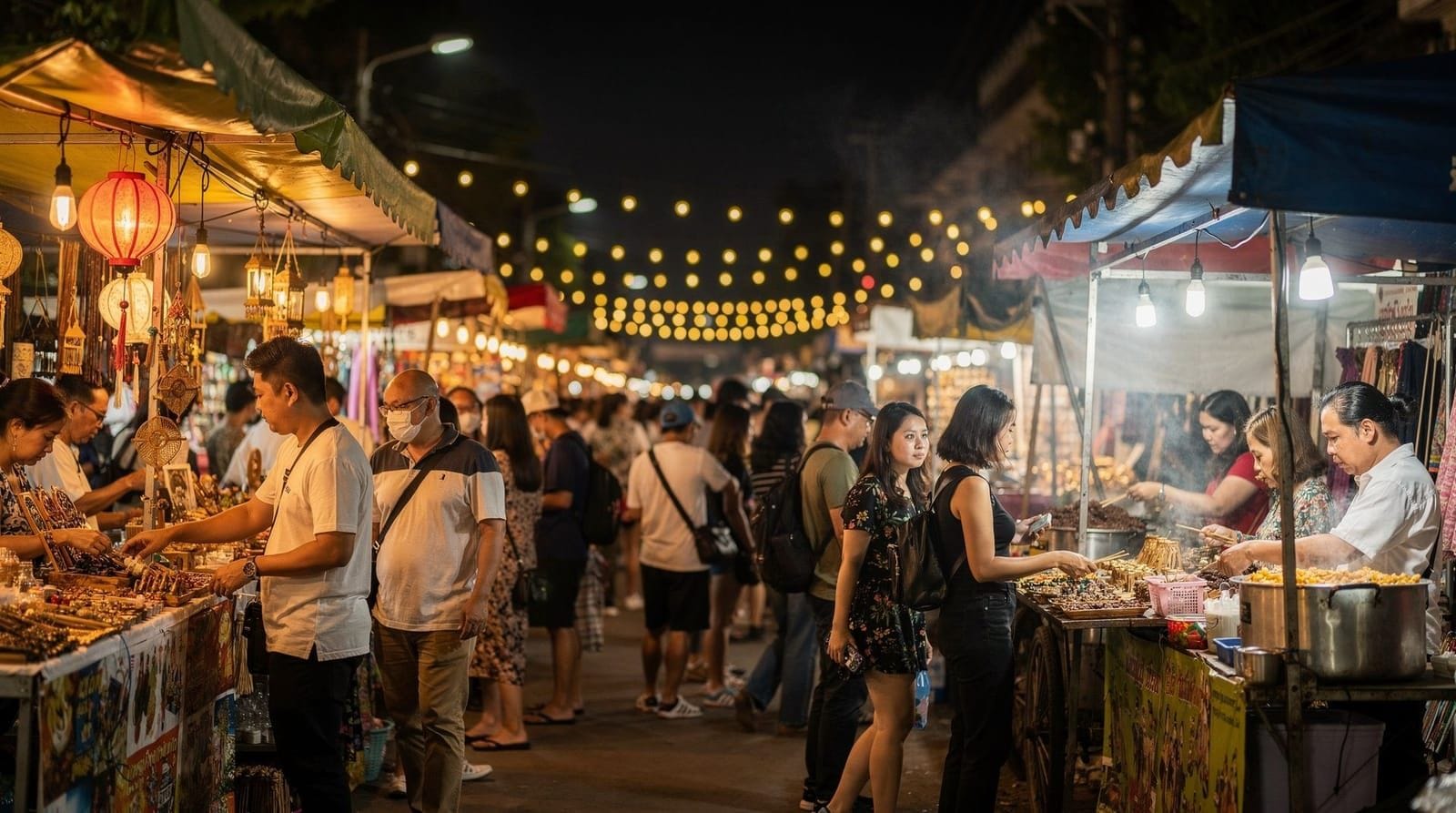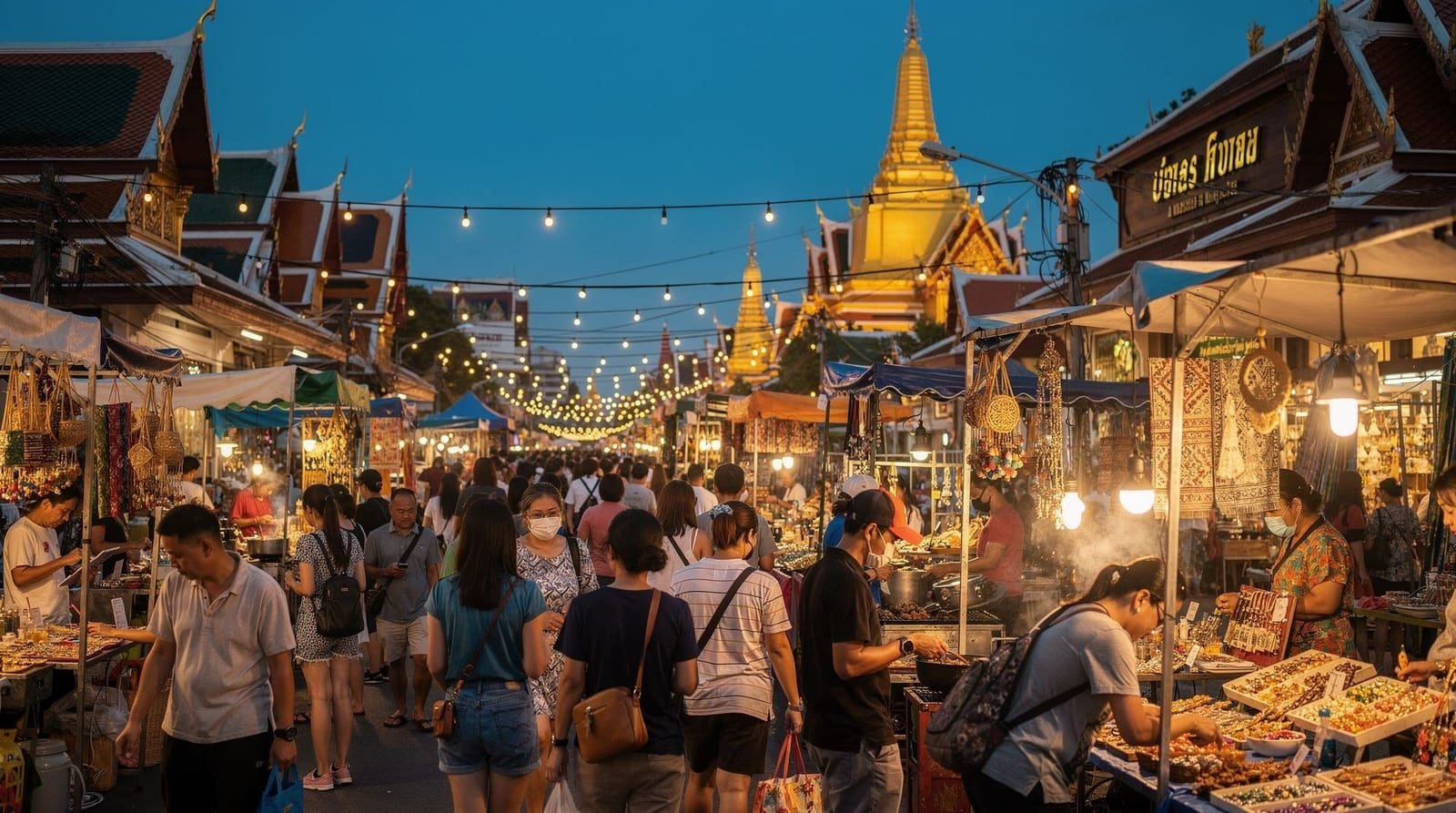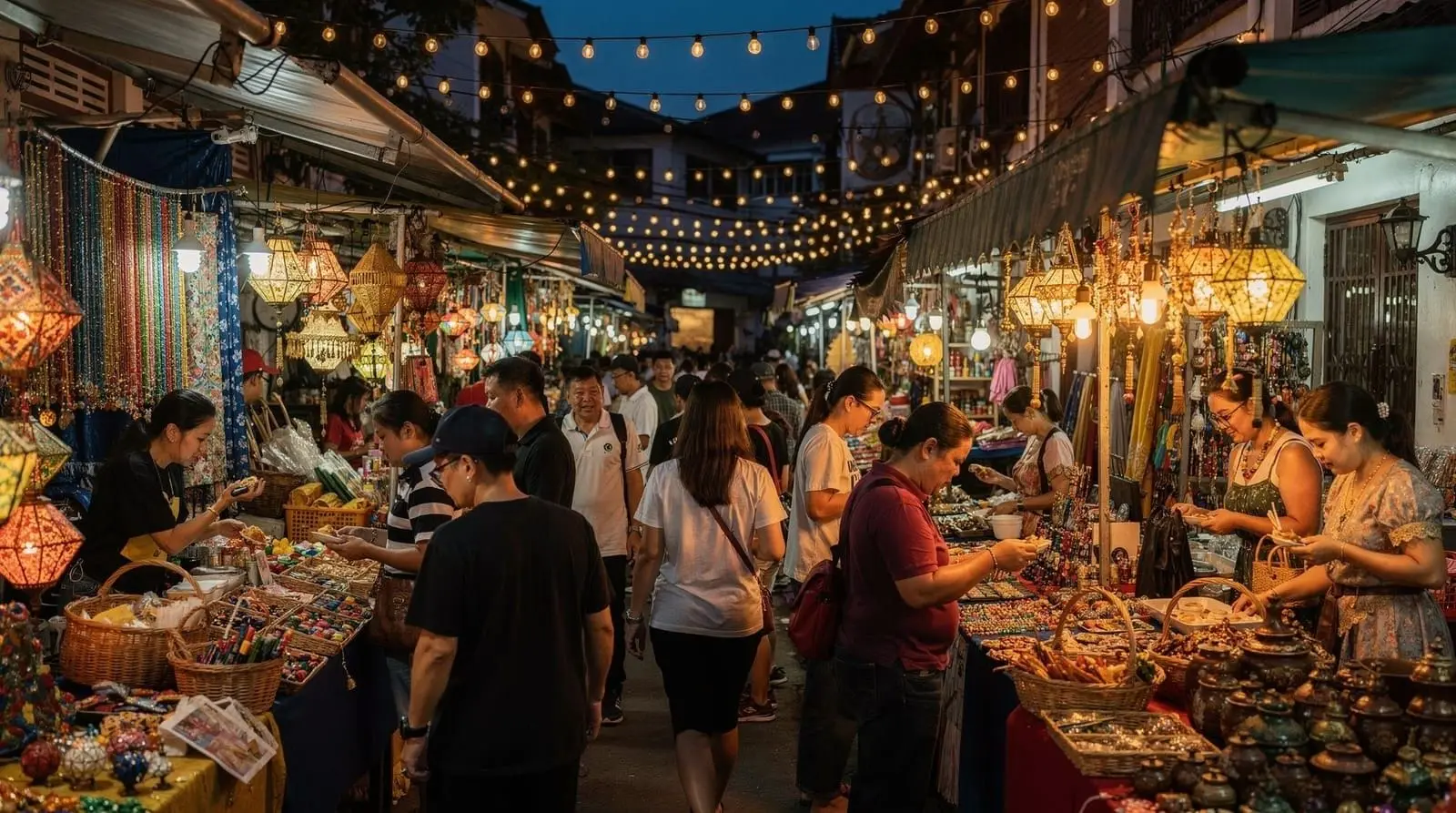
Best night markets in Chiang Mai for food, ranked honestly
Chiang Mai: Night Food Scene Tour
Which Chiang Mai night market has the best food?
Chang Phueak Gate's nightly market is the strongest pure-food option and the least aimed at tourists, followed by Sunday Walking Street for variety and atmosphere (Sundays only). The Night Bazaar's Kalare and Ploen Ruedee food courts are the most convenient if you're staying in that area, but run 20-40% above local prices for the same dishes.
Ranking Chiang Mai’s night markets on food alone
This ranking is built specifically around repeated, practical eating experience rather than general reputation, since the two don’t always line up the way you’d expect.
Chiang Mai has enough overlapping night markets that “which one should I go to” is a genuinely confusing question, especially since travel content often ranks them for shopping or general atmosphere rather than what you’ll actually eat. This guide ranks them specifically for food — quality, value and how touristy the pricing feels — based on what’s realistically available on any given night of the week.
The short version: no single market wins on every count. Chang Phueak Gate is the strongest everyday food option, Sunday Walking Street is the best one-off event if your dates line up, and the Night Bazaar area is the most convenient if you’re not willing to travel for dinner.
1. Chang Phueak Gate night market — best everyday food, least touristy
This is the market to prioritize if you only take one piece of advice from this guide and want the closest thing to how Chiang Mai residents actually eat dinner on an ordinary night.
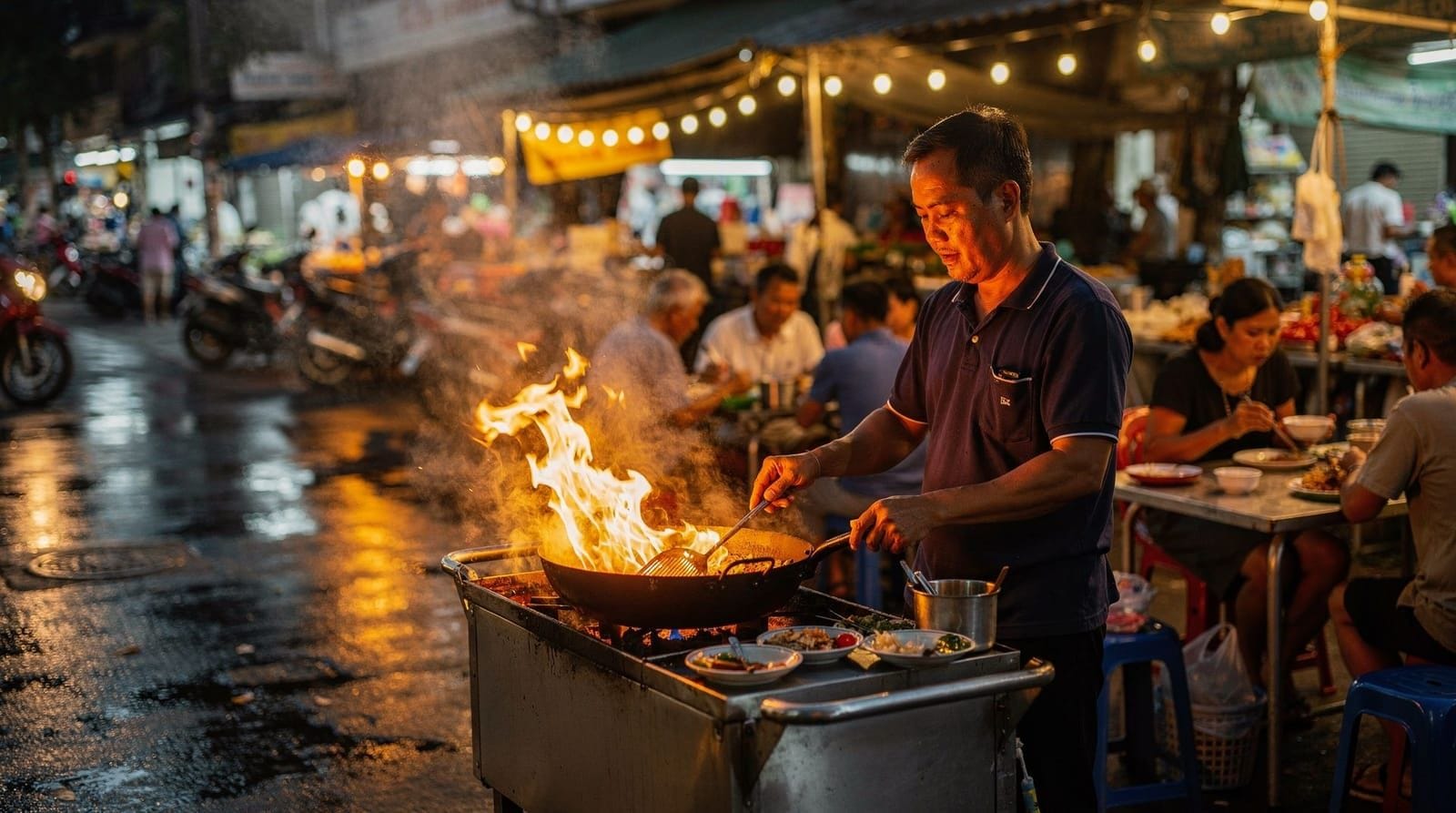
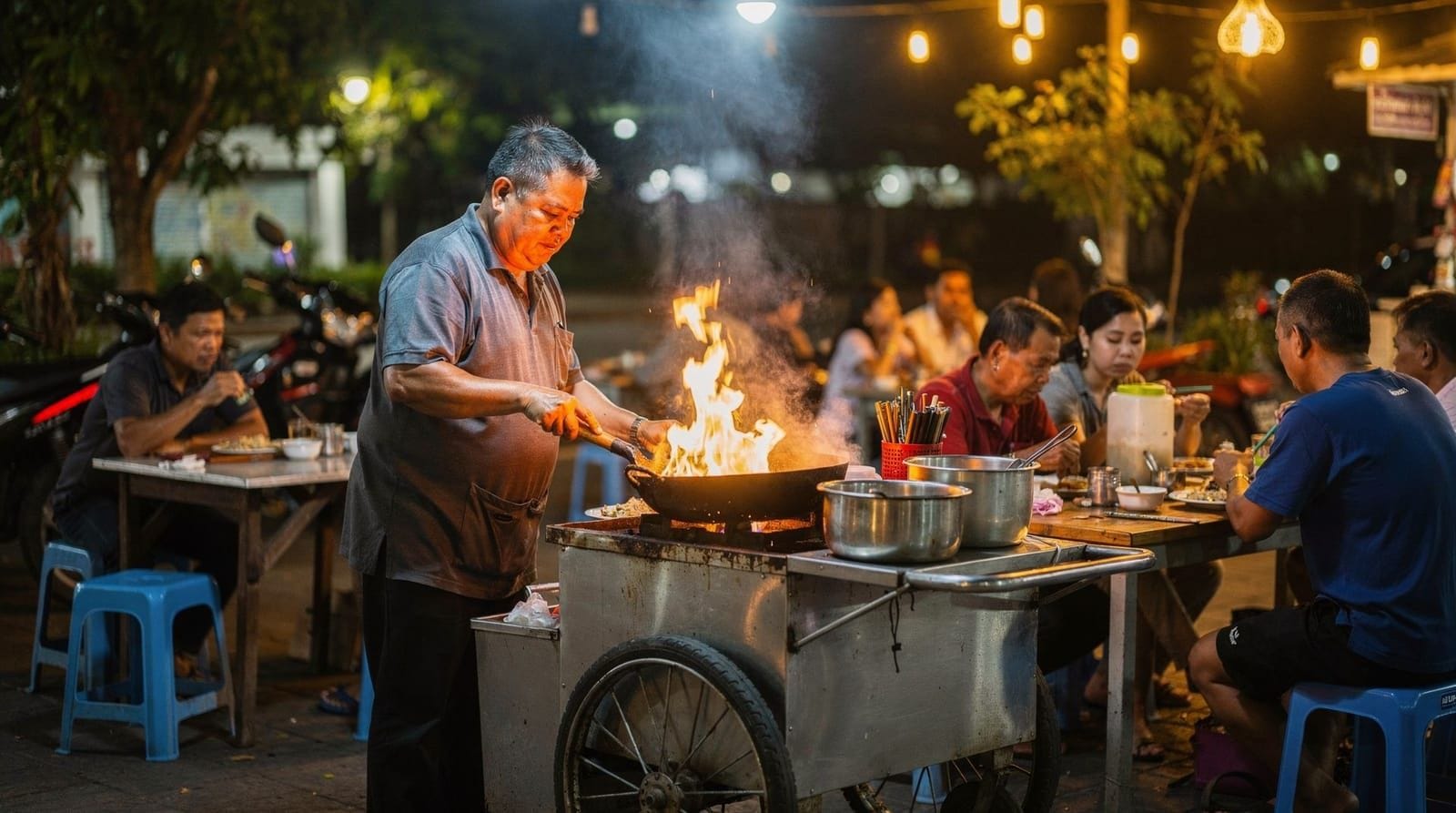
Running nightly just outside the Old City’s north gate, this market skews heavily toward what Chiang Mai residents actually eat for dinner rather than what’s designed to catch a tourist’s eye. Its best-known vendor is the woman locally nicknamed the “Cowboy Hat Lady” (Pa Suk), who has sold khao kha moo — stewed pork leg served over rice with a soft-boiled egg and pickled greens — from the same spot for decades, building a loyal following well beyond her immediate neighborhood. Beyond her stall, the market runs the standard range of grilled meats, noodle soups and desserts at prices close to Warorot Market’s baseline (see the Warorot Market food guide for that comparison point).
There’s no entrance drama, no craft stalls competing for space, just food carts and folding tables — which is exactly the appeal if you’ve already done the bigger, more curated markets and want something closer to how the city actually eats on an ordinary Tuesday.
Night food scene tour2. Sunday Walking Street — best variety, but Sundays only
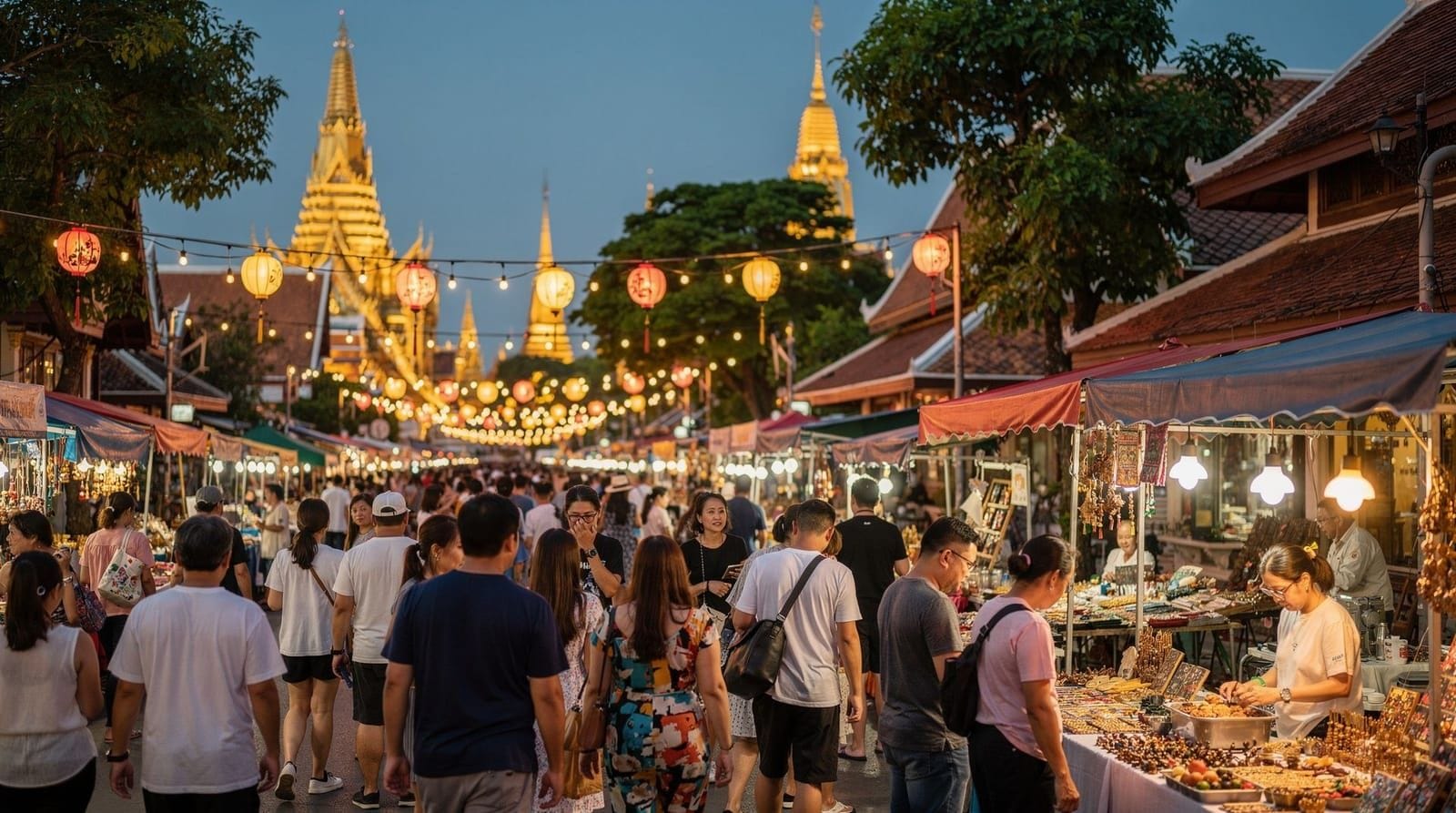
The weekly Ratchadamnoen Road market, running the length of the Tha Phae Gate to Wat Phra Singh corridor through the Old City, is the single biggest concentration of food stalls in the city on any given evening — but only on Sundays. The trade-off for that scale is crowding: expect to shuffle rather than stroll during peak hours (7-9pm), and some stalls along the busiest stretches do price slightly above the Chang Phueak Gate baseline. It’s still worth the crowd for the sheer range on offer. A full stall-by-stall breakdown is in the Sunday Walking Street food guide.
Temples and street food night tour by tuk-tuk3. Saturday Walking Street (Wua Lai) — smaller sibling, quieter
Wua Lai’s Saturday market runs the same basic format as Sunday’s but shorter and more locally used, historically tied to the street’s silversmithing heritage. Food here is a smaller portion of the market than crafts, but what’s there tends to be less crowded and priced closer to neighborhood rates than the bigger Sunday event.
4. Night Bazaar area (Kalare and Ploen Ruedee food courts) — most convenient, most marked up
The Chang Khlan Night Bazaar itself is now mostly clothing, souvenirs and electronics, but the adjacent Kalare Night Bazaar and Ploen Ruedee food courts run nightly, are partly covered (useful in rainy season), and sit within walking distance of most Night Bazaar-area hotels. Expect prices roughly 20-40% above Warorot or Chang Phueak Gate for equivalent dishes — a real cost, but one that buys convenience if you’re not willing to travel across town for dinner. There’s also a live-music, tourist-friendly atmosphere here that some travelers specifically want.
Evening sightseeing and local food guided tour5. Anusarn Market — the quiet, low-key option
Anusarn Market, tucked just off the Night Bazaar cluster, combines a smaller food court with massage shops and is noticeably calmer than its bigger neighbors. It’s not a destination market in its own right, but a sensible dinner stop if you’re staying nearby and want something unhurried rather than the crowd-and-hustle of the bigger markets.
How these markets fit into a broader week in the city
If you’re staying in Chiang Mai for four or more nights, it’s worth deliberately spreading your night-market visits rather than clustering them all in the first two days. A sensible rhythm is Chang Phueak Gate or Anusarn early in your trip (both low-pressure, easy introductions), Sunday or Saturday Walking Street if your dates allow (the standout single-evening experience), and the Night Bazaar food courts toward the end of your stay if you want a convenient, low-effort dinner near your accommodation on a night you’d rather not travel far. This also naturally paces your spending — the walking streets and Night Bazaar area run somewhat higher than Chang Phueak Gate or Anusarn, so alternating higher and lower cost evenings keeps a multi-night food budget more predictable.
What each market lacks, honestly
No honest comparison should only list strengths. Chang Phueak Gate, for all its authenticity, has limited seating and no real atmosphere beyond the practical business of eating — it’s not a place to linger for an evening out, more a place to eat efficiently and move on. Sunday Walking Street’s scale is also its weakness: the crowding at peak hours can make it genuinely uncomfortable for anyone who dislikes dense crowds, and the sheer length of the route means decision fatigue sets in if you try to evaluate every stall rather than picking a plan in advance. Saturday Walking Street’s smaller scale means less variety if you’re hoping for a big night out. The Night Bazaar area’s food courts, while convenient and comfortable, are the least distinctly “Chiang Mai” of the options — the food and setup would feel similar in several other Thai tourist cities, trading local character for consistency. Anusarn Market’s low-key atmosphere, an advantage for a quiet dinner, means it’s genuinely quiet some nights, occasionally to the point of feeling a little sleepy compared to its livelier neighbors.
Drinks and desserts across the markets
Food isn’t the only draw at these markets — each has a reasonable showing of drinks and desserts worth building into your evening. Fresh fruit shakes and coconut-based drinks are near-universal across all five markets, a reliable way to cool down given the evening heat even in cool season. Desserts vary more by location: Sunday Walking Street has the widest dessert selection of any of them, including multiple mango sticky rice vendors (see the mango sticky rice guide for what to look for), grilled banana and coconut pancakes. The Night Bazaar area’s food courts often have a wider selection of Western-style desserts and ice cream alongside Thai options, reflecting the area’s more international customer base. Chang Phueak Gate and Anusarn lean more toward simple, traditional Thai sweets sold from small carts rather than dedicated dessert stalls.
Combining a night market visit with daytime sightseeing
Each of these markets sits close to worthwhile daytime attractions, making it easy to build a full day around an evening market rather than treating the market as a standalone outing. Chang Phueak Gate is a short walk from the northern edge of the Old City, making it a natural finish to an afternoon of temple visits. Sunday and Saturday Walking Street both run directly past or near major Old City temples, discussed further in our Sunday Walking Street food guide. The Night Bazaar area and Anusarn sit close to the Ping River and Wat Ket riverside district, making a late-afternoon riverside walk a good lead-in to an evening at either market.
Side-by-side comparison
| Market | Frequency | Food focus | Crowd level | Price vs. baseline |
|---|---|---|---|---|
| Chang Phueak Gate | Nightly | High | Low-medium | At baseline |
| Sunday Walking Street | Sundays only | Very high | High | Slightly above |
| Saturday Walking Street (Wua Lai) | Saturdays only | Medium | Low-medium | At baseline |
| Night Bazaar (Kalare/Ploen Ruedee) | Nightly | Medium | Medium-high | 20-40% above |
| Anusarn Market | Nightly | Medium | Low | At baseline |
Accessibility and comfort considerations
Worth factoring in if mobility, heat sensitivity or crowd tolerance are concerns for you or someone in your group. Sunday Walking Street’s uneven crowd density and closed-to-traffic street surface can be genuinely difficult to navigate with mobility aids or a wheelchair during peak hours, though the wider, less crowded stretches near the western end are more manageable. The Night Bazaar’s Kalare and Ploen Ruedee food courts have more even, seated-dining layouts and partial covering, making them a more comfortable option in this respect. Chang Phueak Gate and Anusarn are smaller and less crowded, generally easier to navigate at a relaxed pace regardless of mobility needs. For anyone sensitive to evening heat even after sunset (a real factor March-May), the covered food courts again have an edge, sometimes offering fans or, in a few cases, air-conditioned seating sections.
Practical tips that apply across all of them
- Arrive by 6-6:30pm if you want to eat before the heaviest crowds, particularly at Sunday Walking Street.
- Cash only, small notes — none of these markets are set up for card payment at individual food stalls.
- Eat across several stalls rather than filling up at the first one — northern Thai market food is designed to be sampled in small portions from multiple vendors.
- Rain is common June-October — Kalare and Ploen Ruedee’s partial covering is a genuine advantage in that window; the open-air walking streets can get disrupted by a sudden downpour.
If you’d rather have it curated
A guided evening food tour — by tuk-tuk, songthaew or on foot — typically threads together stops across two or three of these markets or neighborhoods in one outing, which solves the “which market” question by simply doing several in sequence with a local guide ordering along the way. We cover the cost-versus-DIY trade-off fully in the is a Chiang Mai food tour worth it guide. For markets outside the night-time category — namely Warorot’s daytime scene — see the Chiang Mai street food guide.
Tuk-tuk night tour with temples and street foodWhy rank on food specifically, rather than overall experience
Most general coverage of Chiang Mai’s night markets ranks them on a blend of shopping, atmosphere and food, which can be misleading if food is genuinely your priority — a market can be a fantastic place to buy souvenirs and a mediocre place to eat, or vice versa. Separating the two is useful because the two things pull in different directions: the Night Bazaar’s clothing and souvenir stalls are genuinely strong, but that same commercial focus means its food is more of an afterthought (hence the food-court model rather than dedicated food stalls threaded throughout). Sunday Walking Street balances both reasonably well, while Chang Phueak Gate has essentially no shopping angle at all and exists purely as a food market, which is exactly why it ranks so well here despite rarely appearing on general “best markets” lists aimed at shoppers first.
Combining a guided tour with independent exploration
Several of the guided tour options covered throughout this site’s food coverage route specifically through two or three of these markets or neighborhoods in a single evening, which is a reasonable way to sample multiple locations without the planning overhead of researching each yourself. If you’d rather explore independently after getting oriented, doing one guided evening early in your trip and then returning to whichever market you liked best on your own terms — without a fixed schedule — captures much of the benefit of both approaches. We cover this trade-off in full in the is a Chiang Mai food tour worth it guide.
Weeknight vs weekend patterns
Beyond the obvious Saturday/Sunday-only markets, the nightly options also shift noticeably by day of the week. Chang Phueak Gate and the Night Bazaar food courts are both busiest Friday and Saturday nights, when local residents join the usual tourist footfall for their own weekend dinners out, and quietest on Monday and Tuesday, when you’ll find more elbow room and marginally shorter waits at popular stalls. This cuts both ways: a quieter weeknight visit is more comfortable but slightly less lively, while a weekend visit has more buzz but also more competition for seating at the food courts specifically. If you’re flexible with your schedule and crowd tolerance is a genuine concern, a Tuesday or Wednesday visit to any of the nightly markets is the most relaxed option available.
Frequently asked questions about Chiang Mai’s night markets for food
Which night market is best for a first-time visitor with only one evening?
If it’s a Sunday, Sunday Walking Street gives the widest sample in one outing. On any other night, Chang Phueak Gate offers the most authentic, least crowded experience.
Can I combine two night markets in one evening?
Realistically only if they’re close together — Anusarn and the Night Bazaar food courts sit within a short walk of each other, but Chang Phueak Gate and Sunday Walking Street are a songthaew ride apart and better treated as separate evenings.
Are these markets family-friendly in the evening?
Yes, all of them are casual, open-air, walk-through markets with no age restrictions, though strollers can be difficult to maneuver through Sunday Walking Street’s peak crowds.
Do any of these markets have seating, or is it all takeaway?
Kalare and Ploen Ruedee have proper seated food-court areas; Chang Phueak Gate and Anusarn have scattered folding tables; the walking streets are mostly takeaway-and-walk, though some side sois off the main route have seated noodle shops.
Is it safe to walk around these markets alone at night?
Yes, all of these are busy, well-lit, heavily trafficked areas with a strong police and vendor presence — standard city-center caution applies, but they’re not considered risky areas after dark, and solo travelers, including solo women, regularly visit all five without particular incident.
Do these markets get busier or quieter during Chiang Mai’s major festivals?
Noticeably busier — during Yi Peng and Loy Krathong (typically November) and Songkran (April), all of these markets see a substantial jump in both local and visitor footfall, and some, particularly those near the Old City and Ping River, extend their hours or add temporary stalls specifically for the festival crowds.
What happens to these markets during Chiang Mai’s rainy season?
The open-air walking streets can be disrupted or thinned out during heavy downpours (roughly June-October), while the partially covered Kalare and Ploen Ruedee food courts continue largely as normal, which is worth factoring in if your trip falls in that window.
Top experiences
Bookable activities with verified prices and instant confirmation on GetYourGuide.