Best mango sticky rice in Chiang Mai: where to find khao niaw mamuang
Where can I find the best mango sticky rice in Chiang Mai?
Warorot Market and its surrounding stalls, plus dedicated dessert vendors in the Old City and near the Nimman-Wat Ket area, are reliable spots — look for vendors selling it fresh rather than pre-packaged and note that quality depends heavily on being in mango season (roughly March to June), when the classic Nam Dok Mai mango variety is at its best.
Why mango sticky rice deserves its own shortlist
This guide focuses specifically on this one dish rather than folding it into a broader dessert roundup, treating it with the same level of attention this site gives to khao soi — because, like khao soi, it’s simple enough that ingredient quality and technique make an outsized difference to the final result, and worth understanding in its own right rather than as an afterthought to a savory meal.
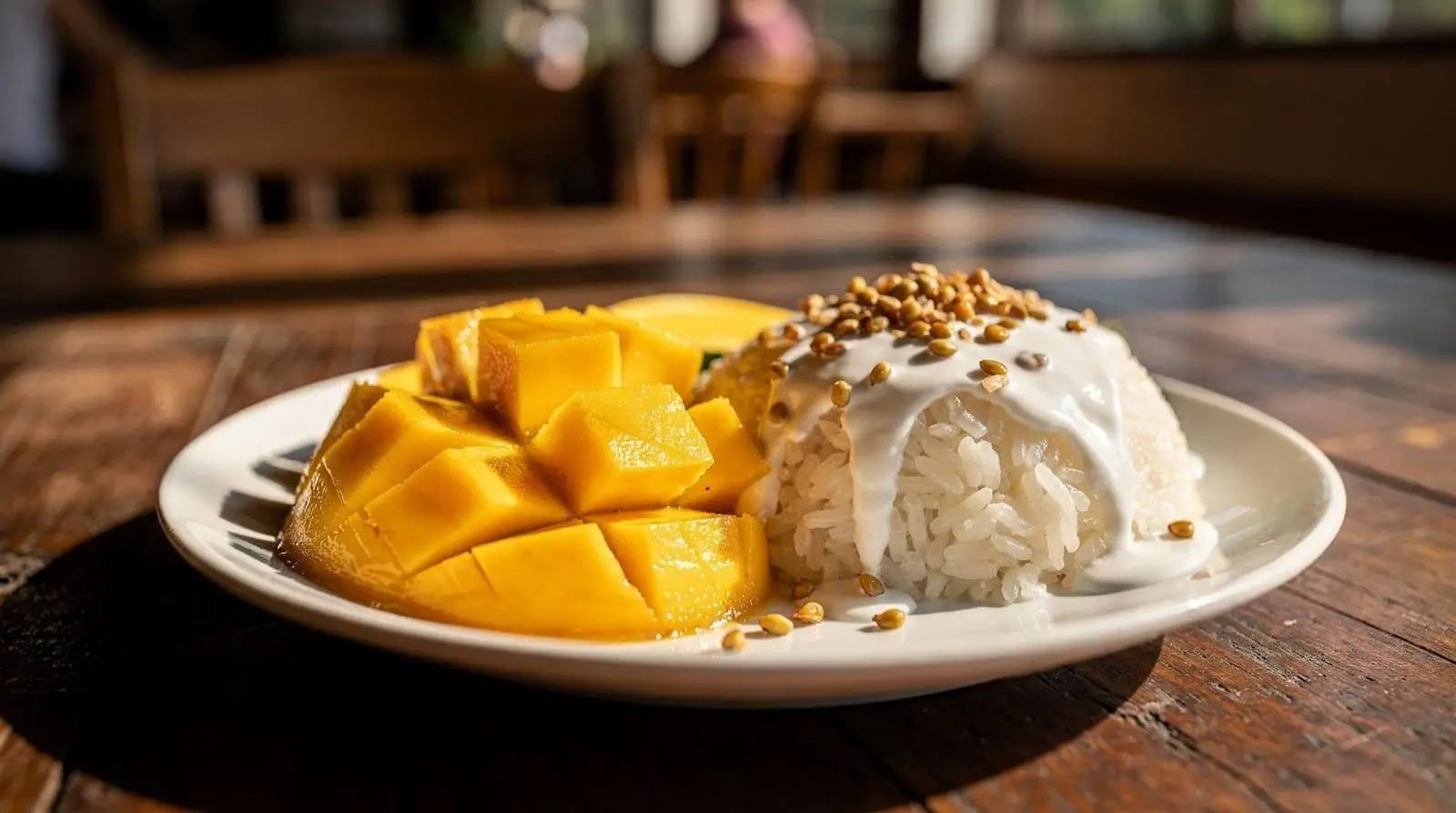
Khao niaw mamuang — mango sticky rice — is probably the single most photographed dessert in Thailand, which means it’s also one of the easiest dishes to get a mediocre, tourist-priced version of without realizing it. The dish itself is simple: ripe mango, steamed glutinous rice, and a coconut cream sauce, sometimes finished with crispy fried mung beans for texture. But simplicity is exactly what makes ingredient quality so obvious — there’s nowhere for a subpar mango or over-steamed rice to hide behind sauce or spice, unlike a complex curry.
This guide focuses specifically on getting this one dessert right: what actually makes a good version, when to time your visit for the best mango, and realistic pricing so you know when you’re paying for quality versus paying for location.
Where this dessert fits within Chiang Mai’s wider food scene
Mango sticky rice is just one part of the broader food and markets scene that draws so many visitors to Chiang Mai in the first place, and it’s worth treating it with the same care you’d apply to choosing where to eat a savory meal, discussed throughout our Chiang Mai street food guide. It’s easy to treat dessert as an afterthought after focusing energy on finding the best khao soi or the best night market stall, but given how much this specific dish depends on fresh, in-season ingredients, it arguably rewards careful vendor selection more than many savory dishes do.
What makes a genuinely good version
A handful of concrete factors separate a memorable bowl from a forgettable one, worth knowing before you order rather than judging purely by appearance.
- The mango. Nam Dok Mai is the classic variety used for this dish — yellow, fragrant, sweet without excessive fiber. A vendor using this variety at proper ripeness, rather than a firmer, less sweet variety used mainly for green mango salads, makes an immediate difference.
- The sticky rice. Should be properly steamed (not boiled), served slightly warm rather than cold, with a distinct chew rather than mushiness. Some vendors tint it slightly with butterfly pea flower or turmeric for color, which doesn’t affect flavor but is a nice visual touch.
- The coconut sauce. Rich and slightly salty rather than purely sweet — a small pinch of salt is traditional and balances the dish; a version drowning in an overly sweet syrup, sometimes done to mask lower-quality mango, is a sign to look elsewhere next time.
- The mung bean topping, when included, adds a crispy textural contrast and is a mark of a vendor putting a bit more care into presentation, though its absence doesn’t necessarily mean a lower-quality dish.
Where to find it
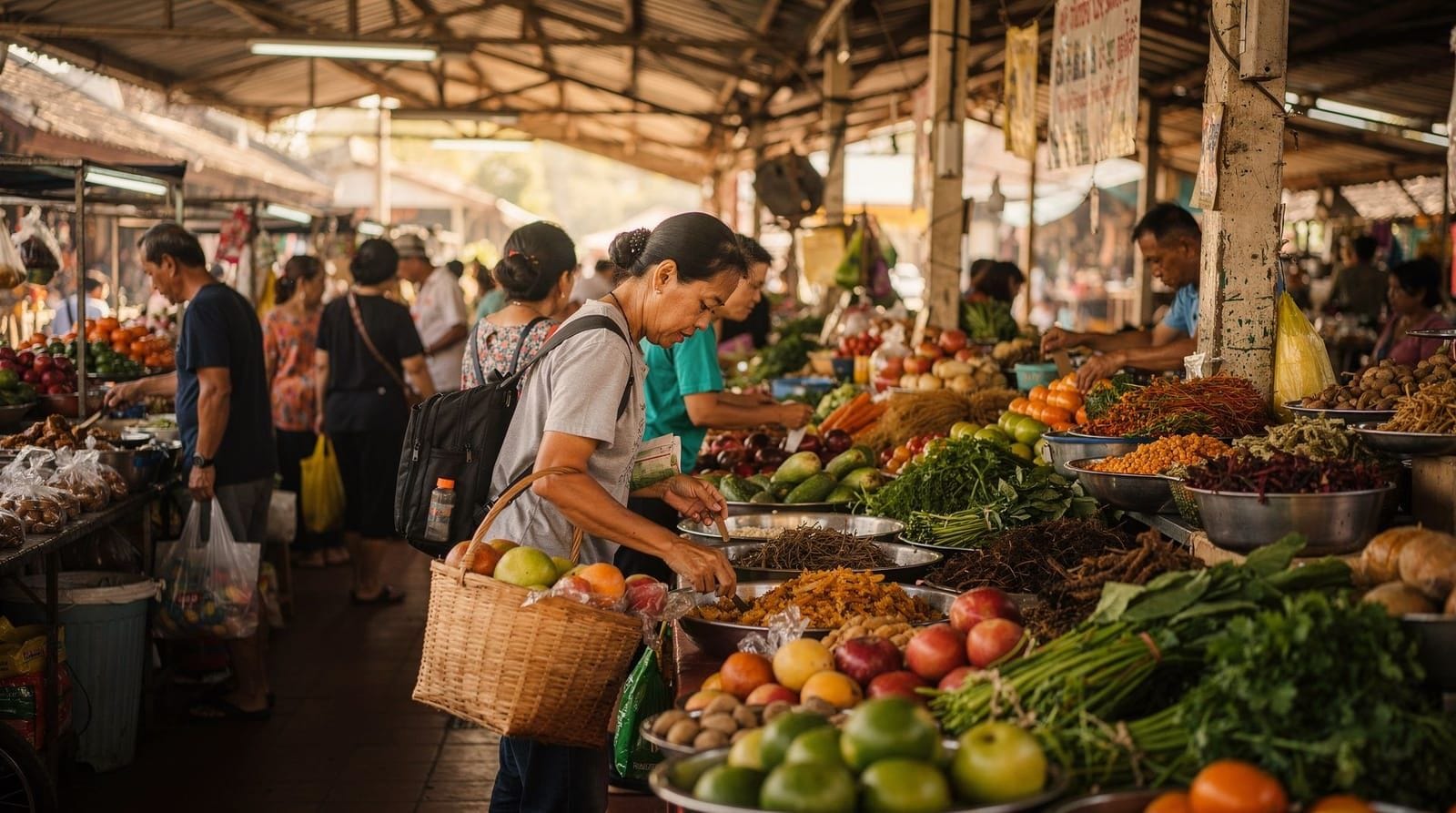
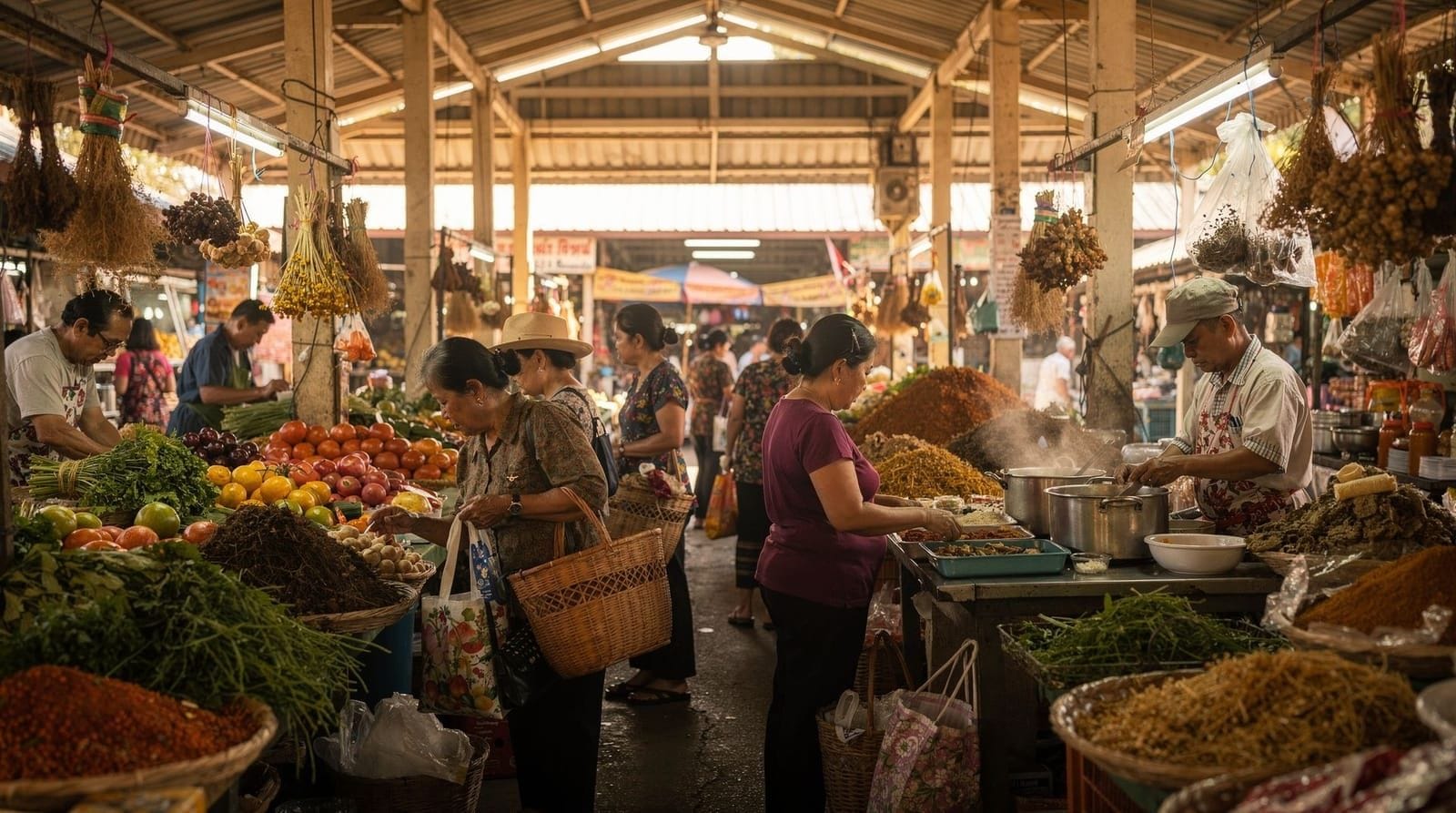
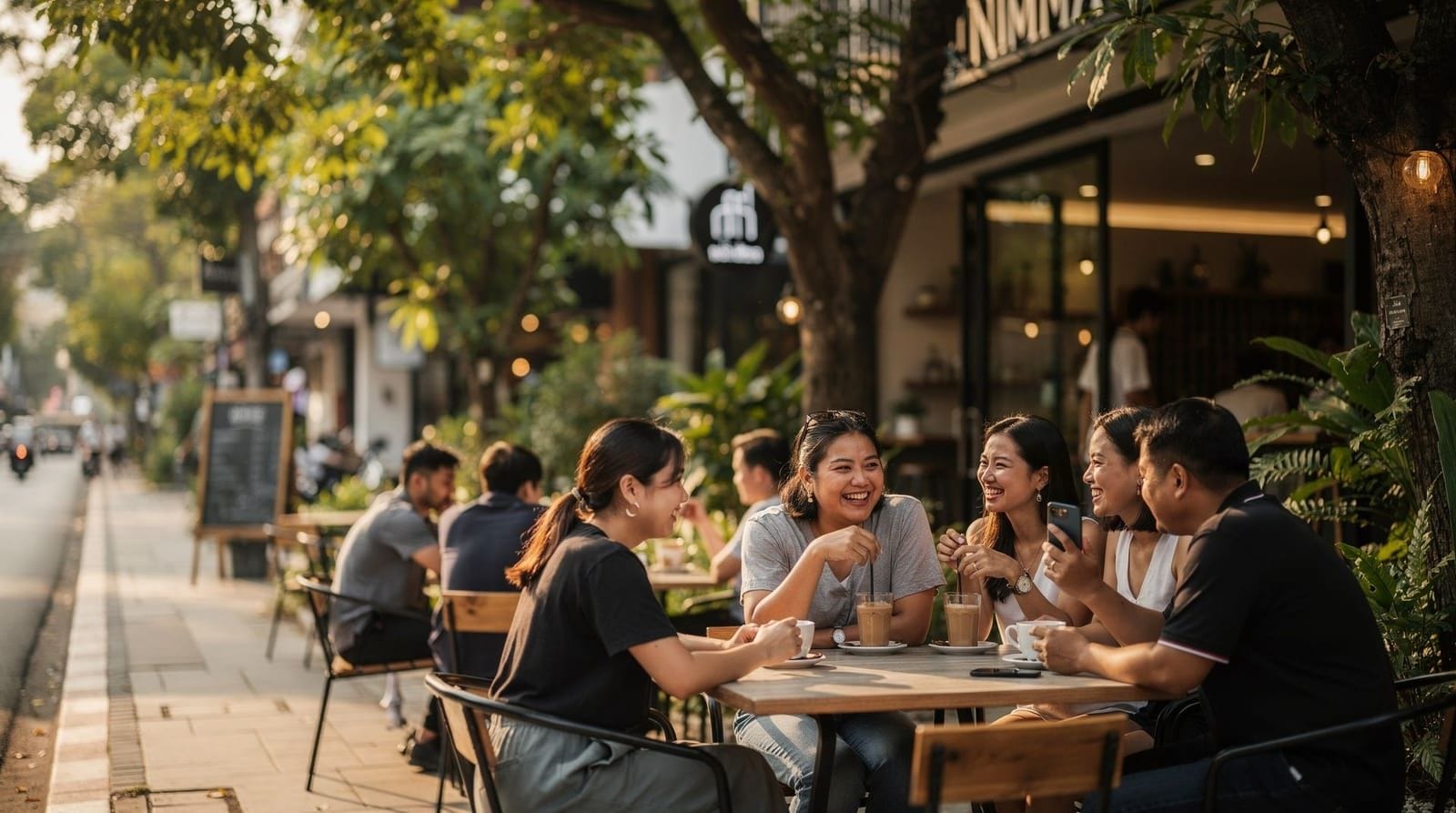
Warorot Market and its surrounding stalls are a reliable starting point, consistent with the market’s overall reputation as an honest baseline for Chiang Mai food prices — see the Warorot Market food guide for the wider context. Old City dessert stalls, particularly those clustered near the main temples and along routes toward Sunday Walking Street, are another dependable option, especially in the evening. Nimman has a handful of more polished dessert cafés serving a dressed-up version of the dish, at a higher price point that reflects the setting rather than necessarily better ingredients.
Seasonality: the detail most visitors miss
Of everything covered in this guide, timing your visit relative to mango season is the single factor most likely to change your actual experience of the dish, more so than which specific vendor you choose.
Thai mango season runs roughly March through June, and this genuinely matters for this specific dish more than almost any other in Chiang Mai’s food scene, since the mango itself — not the rice or sauce — is doing most of the flavor work. Outside this window, some vendors substitute imported or stored mango, which is noticeably less fragrant and sweet. If mango sticky rice is a priority for your trip and your travel dates are flexible, timing a visit within peak mango season will make a real difference to the quality of what you’re served. Outside that window, it’s still worth trying, just with slightly adjusted expectations.
Pricing: what’s fair
| Setting | Typical price (THB) |
|---|---|
| Market stall (Warorot, night markets) | 50-80 |
| Old City dessert stall | 50-90 |
| Nimman dessert café | 90-150 |
Prices meaningfully above this range for a basic, unadorned portion usually reflect location and presentation rather than better underlying ingredients — though a well-regarded café version with extra elements (multiple mango varieties, premium coconut cream, elaborate plating) can justify some of that premium if that’s the experience you want.
The history behind a seemingly simple dish
Mango sticky rice’s apparent simplicity hides a genuinely long culinary history. Sticky rice itself has been the staple grain of the Lanna region for centuries, historically distinguishing northern Thai cuisine from the jasmine-rice-based cooking of central Thailand, discussed further in our northern Thai food dishes guide. Pairing it with coconut cream and fruit as a dessert format predates the dish’s current global fame by a considerable margin, and its rise to international recognition — partly driven by mango season coinciding with peak tourist season in parts of Thailand, and partly by its straightforward, photogenic presentation — is a relatively recent development layered on top of a much older regional dessert tradition. Locally, it’s eaten far more casually and far more frequently than its “special dessert” status abroad might suggest, treated as an everyday market snack rather than a restaurant-only indulgence.
Mango varieties beyond Nam Dok Mai
Once you’ve tried the classic version enough times to have a clear sense of it, exploring the less common varietal options is a natural next step for anyone genuinely curious about the dish.
While Nam Dok Mai is the classic choice for this specific dish, it’s worth knowing that Thailand grows numerous mango varieties, and a few vendors experiment with alternatives worth trying if you have the chance. Ok Rong, a firmer, less overtly sweet variety, is sometimes used and offers a different textural experience, less immediately sweet but with its own appeal for those who find Nam Dok Mai’s sweetness slightly one-note. Some higher-end dessert restaurants in Nimman offer a choice of mango variety specifically, a genuine point of differentiation rather than pure marketing, letting you compare textures and sweetness levels side by side if that level of detail interests you. Sticking with the classic Nam Dok Mai is a perfectly good default if you’re not looking to go deeper into the varietal differences, but it’s worth knowing the option exists.
A few honest cautions
- Pre-packaged, refrigerated versions sold at some convenience-adjacent stalls are convenient but noticeably inferior to fresh-made versions — the rice loses its proper texture once chilled and reheated.
- Overly ambitious tourist-menu versions — sometimes served with ice cream, extra fruits, or unusual garnishes — can be enjoyable as a novelty but move away from the traditional dish; there’s nothing wrong with trying them, just don’t expect them to represent the classic version.
- Vendors far from any mango-growing region relying entirely on stored or imported fruit outside season are the least likely to deliver the dish at its best — a market with good general turnover, per the broader street food safety principles in our street food safety guide, is also generally a better bet for freshness here.
Where mango sticky rice fits into a wider day of eating
Thinking about when and where to fit this dessert into a broader day of eating is just as useful as knowing which specific vendor to choose.
Mango sticky rice works well as a mid-afternoon treat between meals rather than only as a dessert to close out dinner, which is genuinely how many Chiang Mai residents treat it. A natural pairing is a morning visit to Warorot Market, followed by a break for this dessert once the morning market browsing winds down, or as a sweet finish to an evening at Sunday Walking Street or another night market, discussed in our best night markets for food guide. Because it’s inexpensive and widely available, there’s little reason to limit yourself to one portion across a multi-day trip — trying it at two or three different vendors across your stay is a reasonable, low-stakes way to develop your own opinion on which version you prefer, similar to the comparison approach recommended in our khao soi where-to-eat guide.
Making an informed comparison across vendors
For travelers who enjoy a bit of structured comparison rather than simply eating whatever’s convenient, a few specific details are worth tracking across different stalls.
If you want to be more systematic about finding your preferred version, a few specific things to compare across vendors are worth tracking: whether the rice is served warm or has cooled to room temperature (warm is generally preferable and a sign of more recent preparation), whether the coconut sauce is poured on generously or sparingly (a matter of personal preference, but worth noting which style you like), and whether the mango is cut into thick, substantial slices or thin, sparse ones relative to the price charged. None of these details make one version definitively “correct,” but tracking them across two or three vendors gives you a more informed basis for choosing where to return if you have a longer stay in the city, rather than relying on a single visit to form a lasting opinion.
Combining a mango sticky rice stop with mango season activities
For travelers whose visit happens to align with the harvest, there’s a genuine opportunity to engage with the season beyond just the finished dessert.
If you’re visiting during peak mango season (March-June) and want to go beyond simply eating the dessert, it’s worth knowing that some orchards and farms in the wider Chiang Mai region occasionally welcome visitors during harvest, though this is a much smaller and less organized activity than the city’s more established cooking classes or food tours. For most visitors, engaging with mango season is more practical through the food itself — seeking out this dessert specifically during those months, when quality is at its yearly best, rather than planning a dedicated orchard visit, which typically requires more advance arrangement than a casual day-trip.
Learning to make it yourself
For travelers who want to take the dish home in a more meaningful way than a photo, several Chiang Mai cooking classes include mango sticky rice as a dessert component alongside main savory dishes, teaching the specific steaming technique for the rice and the correct ratio for the coconut sauce. This is a genuinely useful option if replicating the dish accurately at home matters to you, since getting the rice’s texture right — properly steamed rather than boiled, with the correct chew — is harder to reverse-engineer from a recipe alone than it might appear from how simple the finished dish looks. It also gives useful context on why quality varies so much between vendors, since you’ll see firsthand how much technique and ingredient choice affects a dish that has only three core components.
How this dessert differs from versions found elsewhere in Southeast Asia
Mango and sticky rice desserts exist in various forms across Southeast Asia, and it’s worth knowing what makes the Thai, and specifically northern Thai, version distinct if you’ve encountered similar dishes elsewhere. The emphasis on Nam Dok Mai mango specifically, the use of a salted (rather than purely sweet) coconut sauce, and the crispy mung bean topping are all reasonably specific to the Thai version rather than universal across the region’s various mango-and-rice desserts. If you’ve had a version in a different country and found it sweeter or less textured, the Chiang Mai version, done well, is likely to feel like a more balanced, less one-dimensionally sweet take on a broadly similar concept.
Frequently asked questions about mango sticky rice in Chiang Mai
Is mango sticky rice traditionally a dessert or can it be eaten any time of day?
It’s classified as a dessert but is commonly eaten as a snack throughout the day rather than strictly after a meal — it’s normal to see it eaten mid-afternoon at a market rather than only after dinner.
Can I find a vegan version?
Yes, essentially by default — the traditional recipe (mango, sticky rice, coconut cream) contains no animal products beyond occasional dairy substitutions some modern cafés experiment with, so it’s naturally vegan-friendly in its classic form; always confirm with the specific vendor if this matters to you.
Is it worth seeking out a “famous” mango sticky rice vendor specifically?
It can be worthwhile if a specific vendor is genuinely well-regarded and convenient to your route, but the quality gap between a well-chosen ordinary stall in season and a famous one is often smaller than the price difference suggests.
Does the color of the sticky rice indicate flavor differences?
Slightly tinted rice (blue-purple from butterfly pea flower, yellow from turmeric) is primarily decorative rather than flavor-changing; black glutinous rice versions do have a genuinely different, nuttier flavor, which is a real rather than cosmetic distinction.
How should I store leftover mango sticky rice if I don’t finish it?
It doesn’t hold up well — the rice firms up and loses its texture once refrigerated, so it’s best treated as a same-day, ideally same-hour dessert rather than something to save.
Can I buy the components separately to make my own at home?
Sticky rice and coconut cream mix packets are sold at Warorot and other markets for exactly this purpose, though sourcing genuinely ripe Nam Dok Mai mango outside Thailand is the harder part of replicating the dish elsewhere.
Is mango sticky rice always served cold, or can it be a warm dish?
It’s traditionally served with the rice still warm from steaming and the mango and sauce at room temperature or slightly chilled — a fully cold version, sometimes served that way at more Westernized cafés, is a variation rather than the classic presentation.
How can I tell if a vendor is using genuinely ripe, in-season mango versus stored fruit?
Look at the mango’s color and firmness — genuinely ripe Nam Dok Mai should be a deep yellow with a slight give when gently pressed and a distinctly fragrant smell; pale, firm, less aromatic fruit is a sign of underripe or out-of-season stock, regardless of what a vendor might claim about freshness.