Best cooking schools in Chiang Mai compared
Chiang Mai: Asia Scenic Thai Cooking School
Which cooking school format is best in Chiang Mai?
There's no single best school — it depends on whether you want a market walkthrough or a full farm visit, a half-day or full-day commitment, and a larger or smaller group. Long-running names like Thai Farm Cooking School, Asia Scenic Thai Cooking School, and Baan Thai Cookery School each anchor a different format; compare group size, dish list, and the market or farm component before booking.
How to shortlist a school without guessing
Chiang Mai’s cooking school scene is old enough and dense enough that there’s no shortage of choice, which cuts both ways — plenty of solid options, but also enough noise that picking blind rarely goes well. Rather than ranking schools on a single “best” axis, it’s more useful to sort them by format (market-based versus farm-based), group size, and duration, then match that against what you actually want out of the day. This guide walks through the well-known long-running names by reputation and format, alongside the bookable options in our own catalog, so you can compare like against like.
For a full walkthrough of what any class typically includes — the market or farm component, the dish lineup, the take-home recipe book — see our main Chiang Mai cooking class guide, which this page assumes as background.
The well-known names, by format
Thai Farm Cooking School is one of the longest-running farm-based operations in the area, built around its own organic plot out toward the northern edge of the city, where classes walk the rows before cooking. It’s a useful reference point for the farm-based format generally: expect a longer day, a slower pace, and a stronger sense of where your ingredients actually came from, at the cost of more transport time than a city-center class.
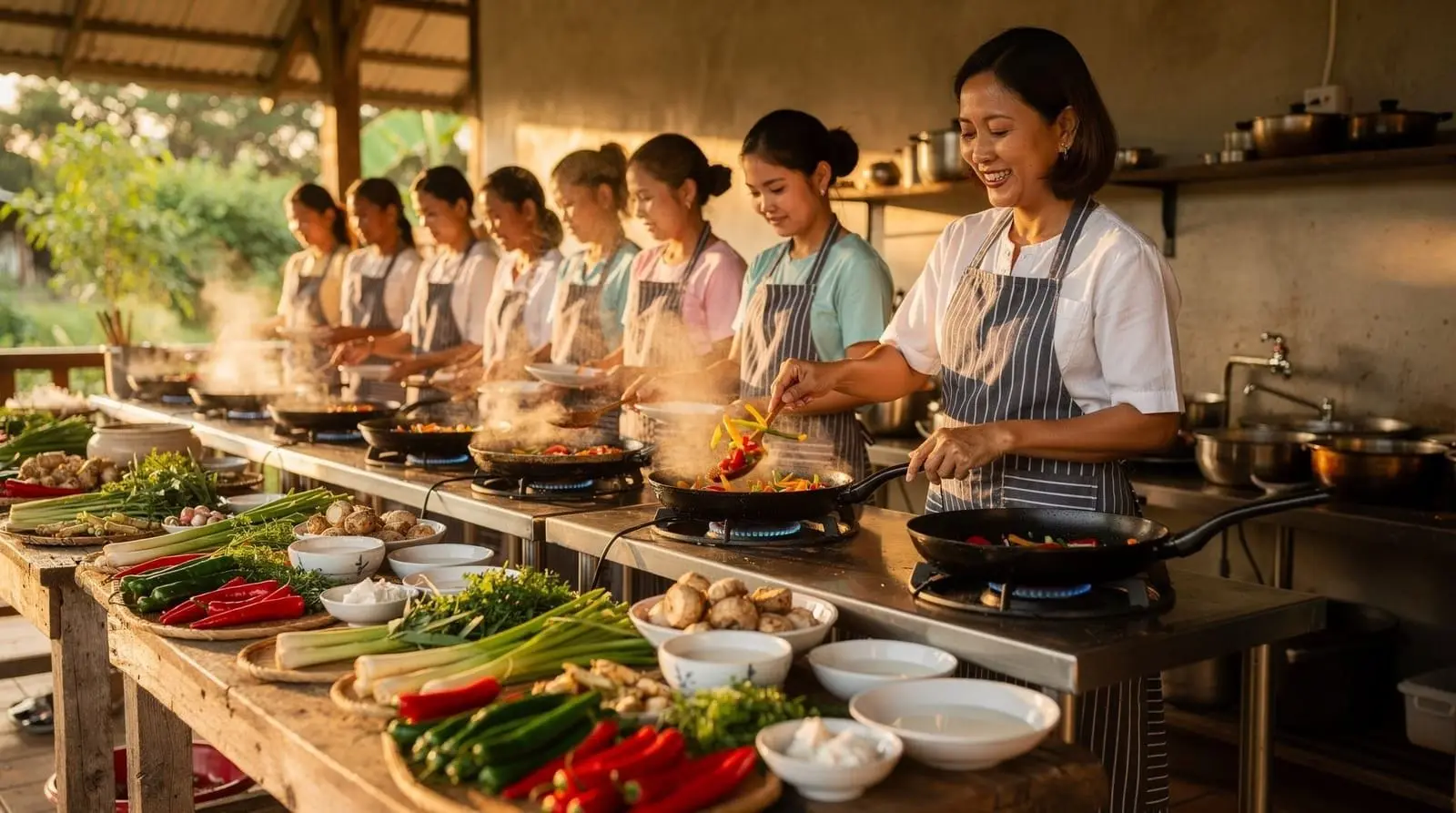
Asia Scenic Thai Cooking School runs both market and farm-based formats and has built a long-standing reputation for structured, beginner-friendly instruction — each step, including hand-pounding your own curry paste, gets walked through explicitly rather than assumed. It’s a solid default if you’re not sure which format suits you, since the school itself offers both.
Baan Thai Cookery School is a well-known Old City-adjacent option built around the market-based format — a walk through a nearby fresh market followed by cooking at a dedicated teaching kitchen close to the center, which suits travelers who don’t want to lose half a day to transport out to a farm.
These three names come up repeatedly in independent travel writing about Chiang Mai and are worth knowing as reference points for what “market-based” and “farm-based” look like at their best, even where a specific class isn’t part of this site’s own bookable catalog.
Bookable formats in our catalog, compared
Among the classes bookable through this site, the clearest split is between farm-based full-day options and market-based half-day options.
On the farm-based side, the full-day cooking class at an organic farm and market combines both components in a single long day — a market stop plus a farm visit — which suits travelers who want the complete picture and have a full day to give it. The half-day cooking course at a Thai cooking farm compresses the farm experience into half a day, a reasonable middle ground if you want the farm setting without committing your whole day. Mama Noi’s organic farm cooking class is a smaller, named operation with its own farm plot, useful if you’re looking for something with a more personal, family-run feel rather than a larger operation.
On the market-based side, the authentic cooking class with market and farm visit actually blends both components into a shorter format than the full-day farm options, worth comparing directly against the pure farm-based listings above if you want a taste of both without the longest possible day.
Group size and what it changes
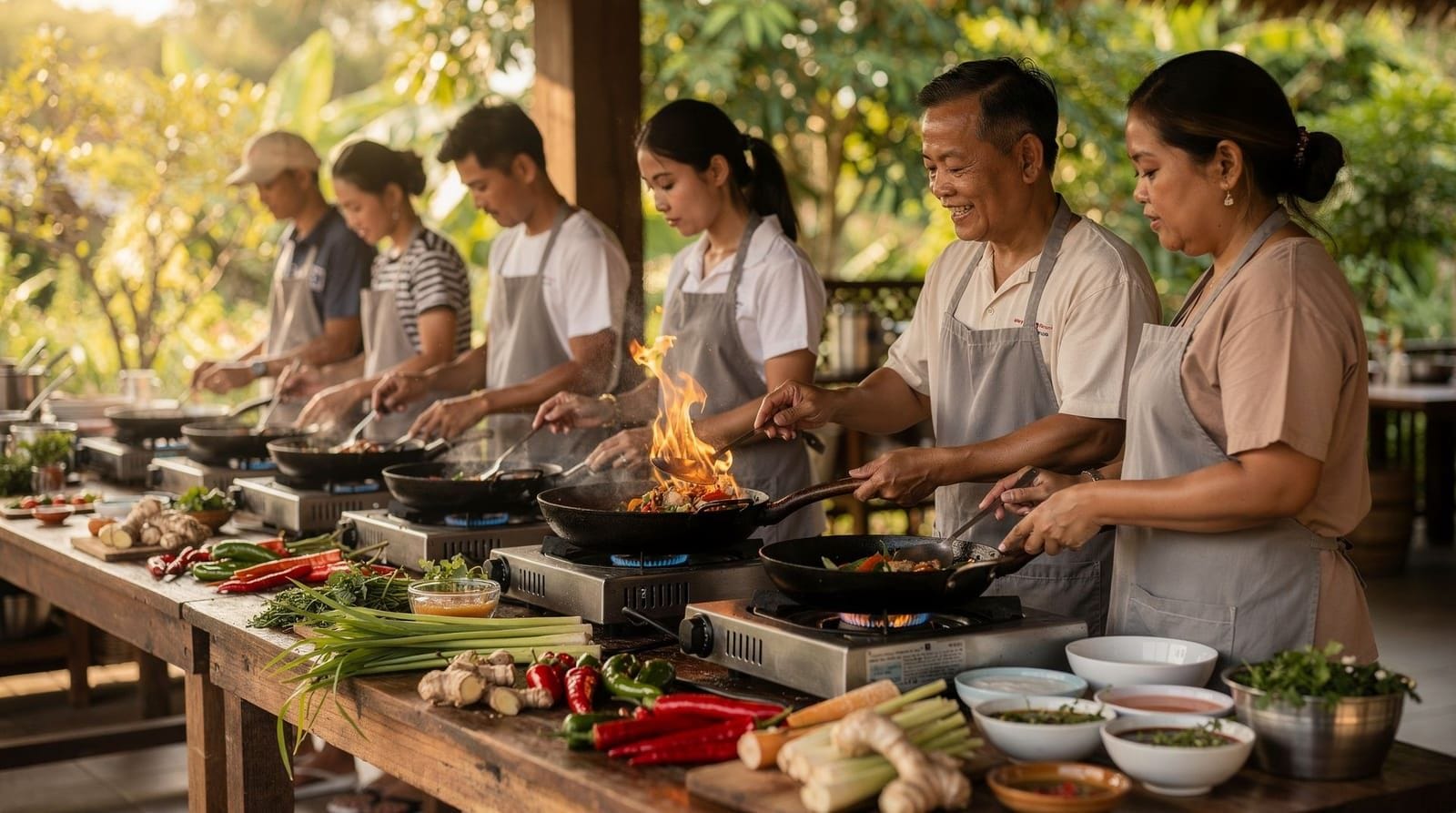
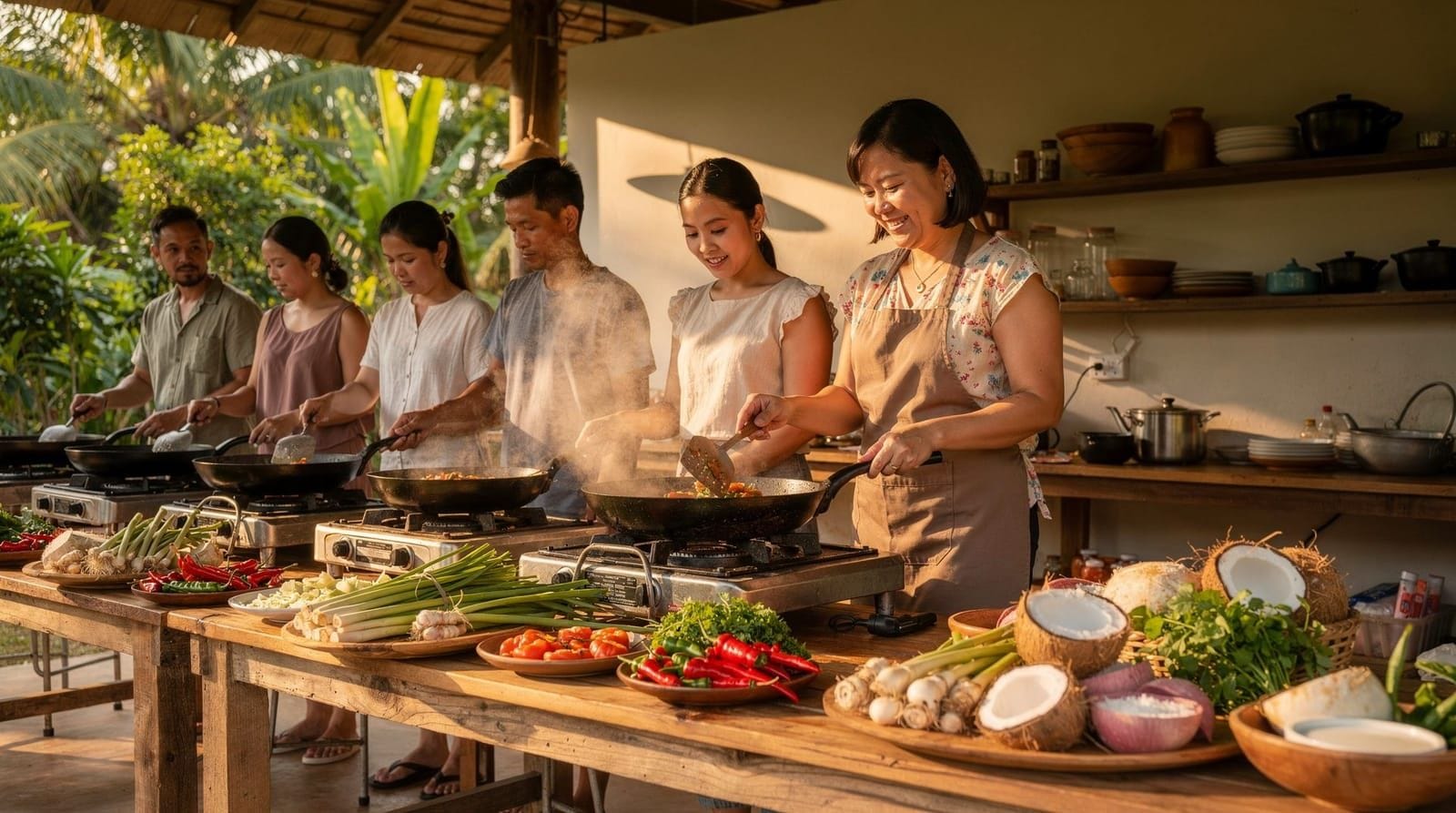
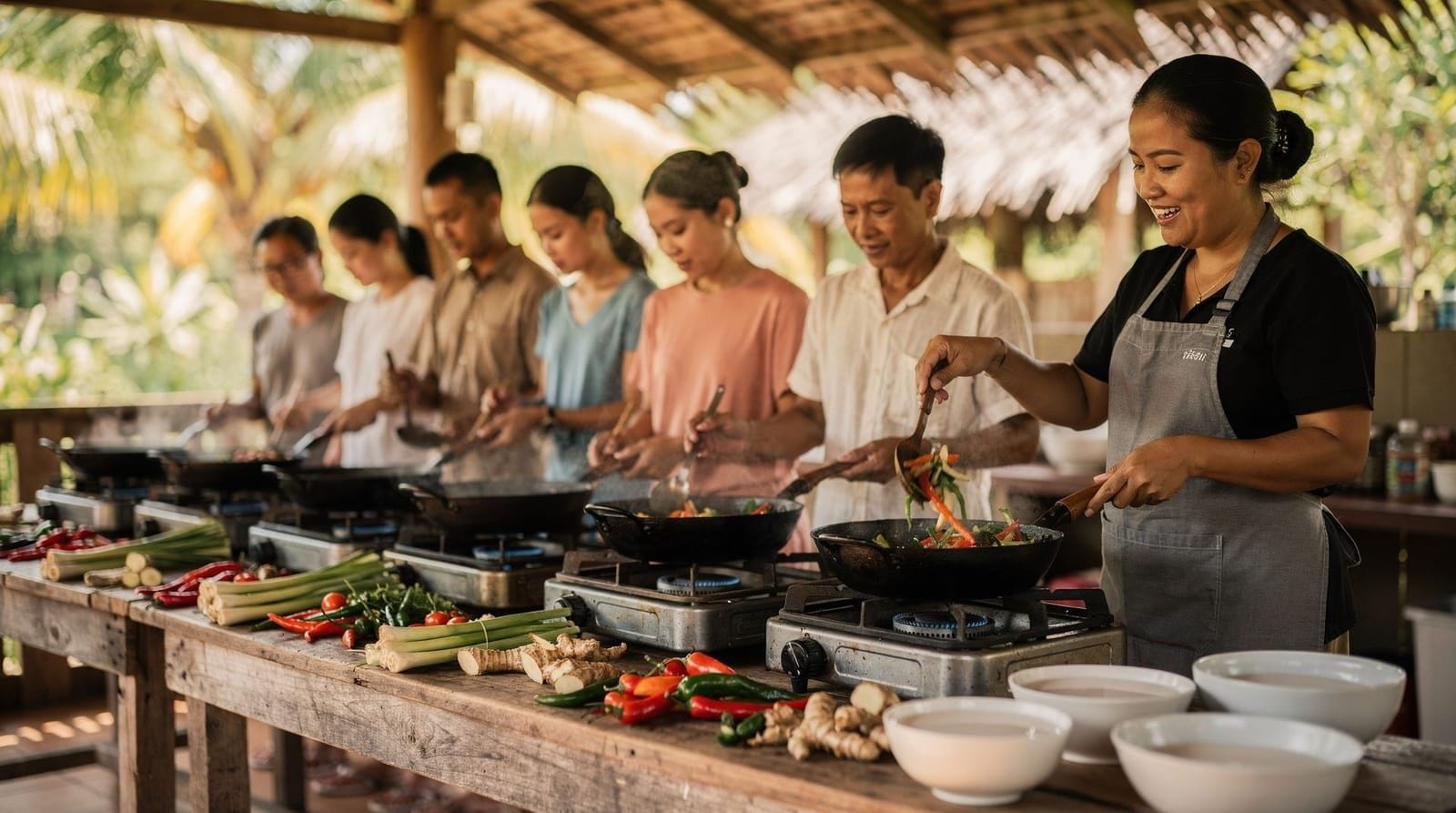
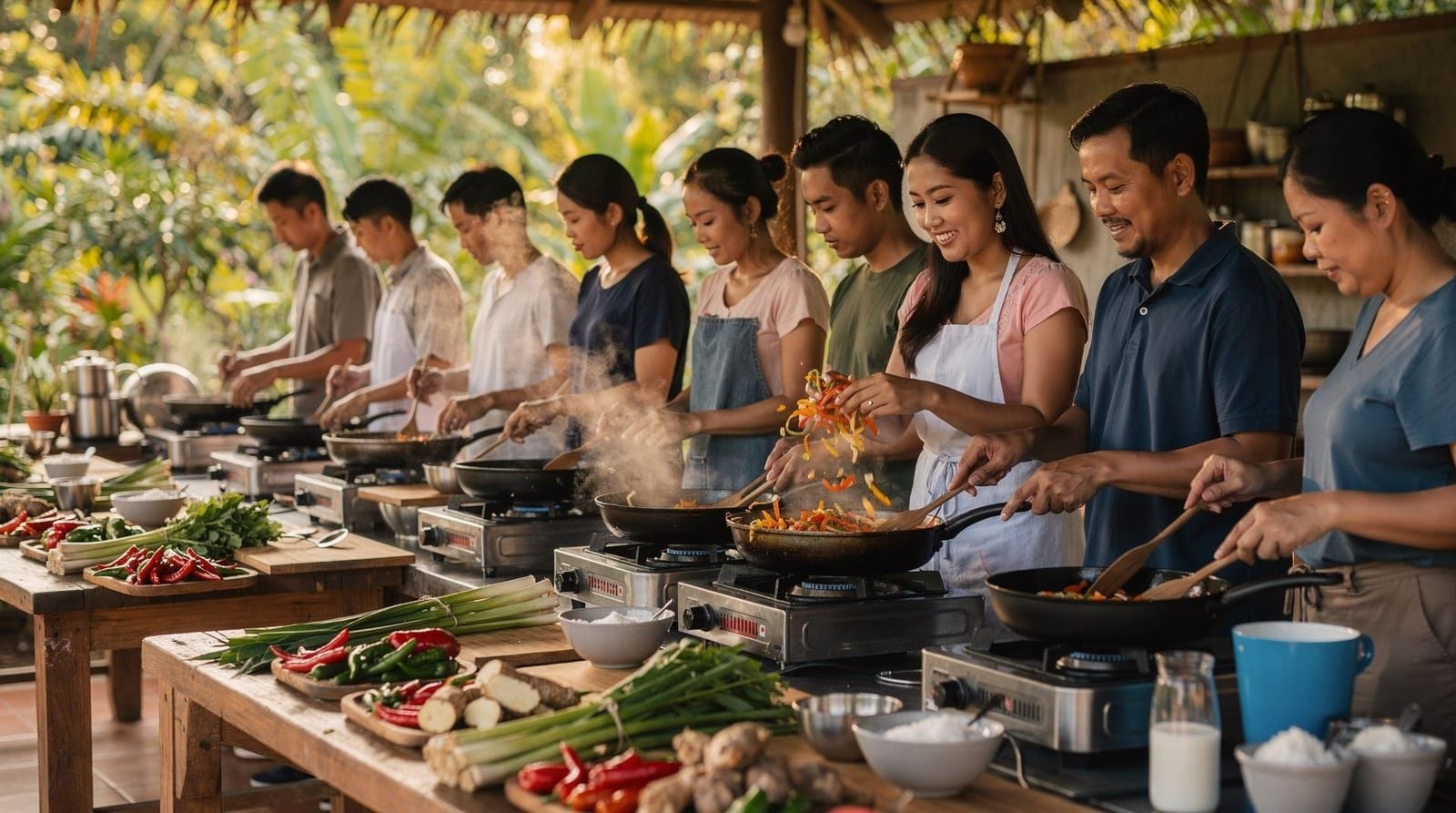
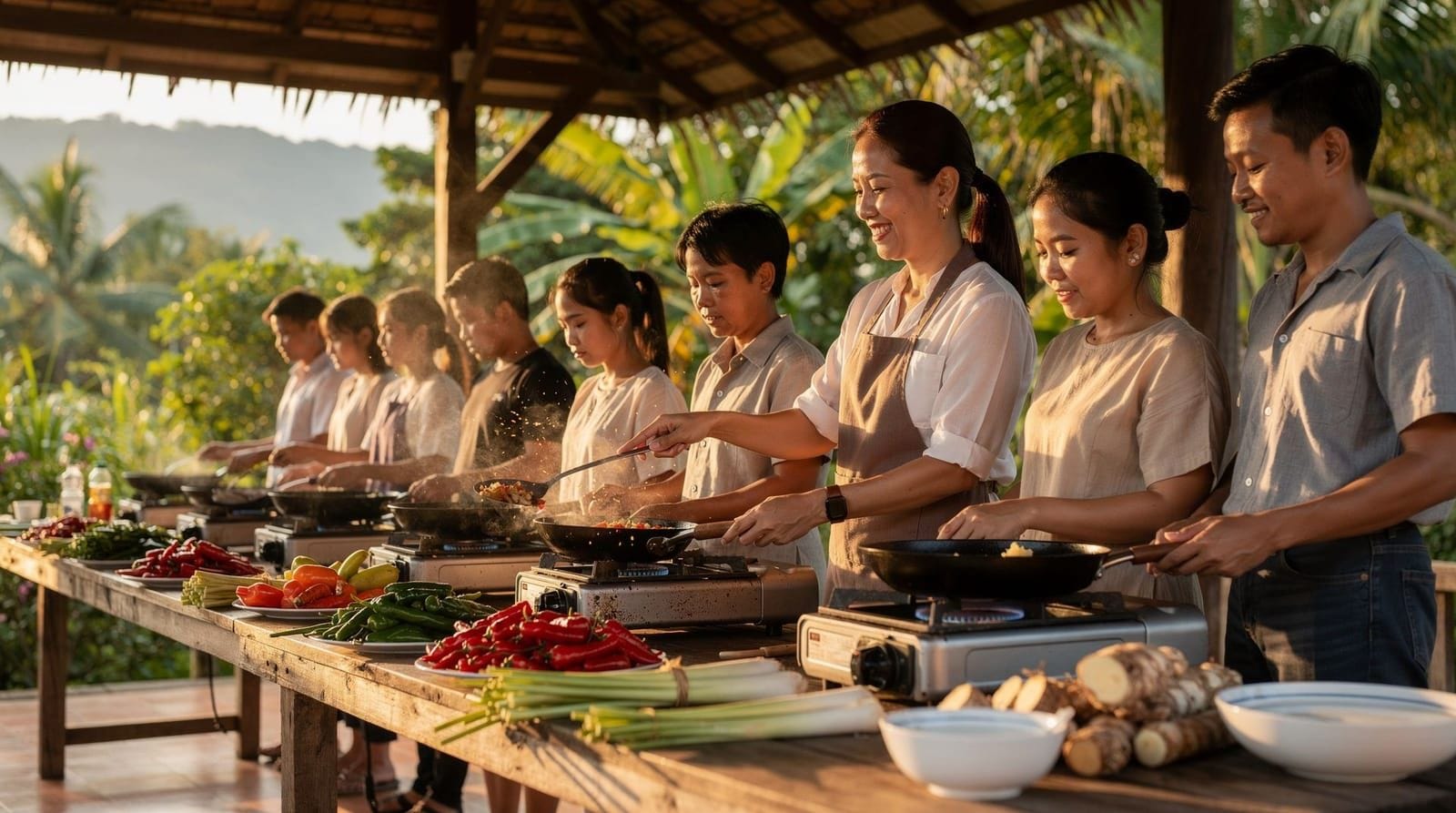
Group size matters more than most other variables once you’ve settled on a format, because it directly determines how much individual instruction and hands-on time you get at the stove or mortar and pestle. A class with 6-10 people per instructor means everyone pounds their own paste and works their own wok; a class that crowds 20+ people into one kitchen space often means paired stations, longer waits between steps, and less individual correction if your curry paste texture is off. Listings don’t always state a maximum group size explicitly, so check recent review photos for a sense of scale, or look for language like “small-group” in the title, as with the small-group cooking class with market tour, which is worth considering specifically because it flags group size upfront rather than leaving it ambiguous.
Price ranges across formats
Half-day, market-based classes generally run 900-1,400 THB per person (roughly USD 25-39), while full-day and farm-based classes run 1,200-1,800 THB (about USD 33-50), reflecting the extra transport and the land itself. Private or boutique small-group bookings run higher, sometimes 2,000-2,500 THB per person. These ranges hold across both the well-known independent schools and the classes bookable through this site’s catalog — treat any listing significantly outside this range, in either direction, as worth a second look at exactly what’s included before booking.
What to check regardless of which school you pick
Whichever format and school you land on, four things are worth confirming before you book: whether curry paste is pounded from scratch or provided pre-made (the single biggest quality signal, covered in more depth in our main cooking class guide), whether the market or farm component is a genuine 30-45 minute segment or a brief walk-past, whether hotel pickup covers your specific accommodation, and whether vegetarian or vegan substitutions are available if you need them — most schools can accommodate this with advance notice, but it’s worth confirming rather than assuming. Our guide to cooking classes with a market tour and our guide to vegetarian and vegan cooking classes both go deeper on those two specific points.
When a farm visit changes the calculus
If a school’s main selling point is its own dedicated farm — as with Thai Farm Cooking School among the well-known names, or the farm-based listings in our catalog — the farm itself becomes as much a reason to book as the cooking instruction. Walking rows of lemongrass, kaffir lime trees, and chili plants before cooking with what you picked gives a tangible sense of ingredient freshness that a market stop, however good, can’t fully replicate. It does mean more transport time (often 30-45 minutes each way from central Chiang Mai, sometimes near the Mae Rim area), so weigh that against how much of your day you want to spend on this one activity versus, say, the Doi Suthep temple complex or a morning at Warorot Market.
Fitting a class around the rest of your Chiang Mai days
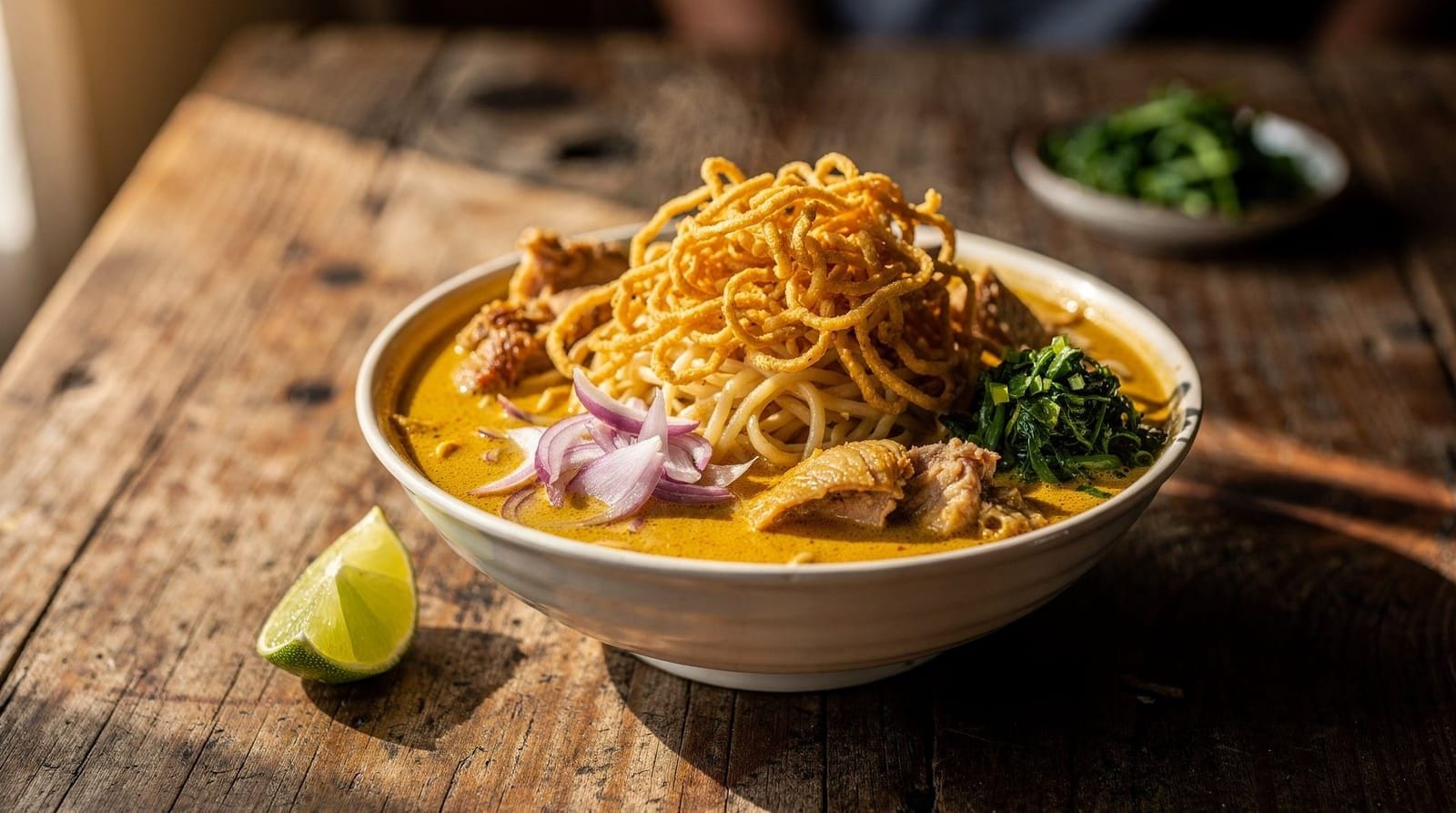
A cooking class pairs naturally with a broader food-focused day: many travelers combine a morning market-based class with an afternoon browsing the Warorot Market food stalls, or a farm-based full-day class with a rest day the following morning before tackling the Old City temples or Nimmanhaemin’s café scene. Our guide to whether a Chiang Mai food tour is worth it alongside a cooking class, and our northern Thai dishes primer, both help place a cooking class in the context of the wider food experience the city offers, particularly if khao soi and northern Lanna cuisine specifically are what drew you here in the first place — our khao soi recipe guide points to which schools and restaurants take that dish most seriously.
Reading reviews critically
Star ratings on any booking platform tend to cluster high across nearly every Chiang Mai cooking school, which makes them a poor discriminator on their own — the more useful signal is in the text of recent reviews, specifically whether reviewers mention the things that separate a good class from an average one. Look for mentions of group size (“felt intimate,” “a bit crowded”), whether curry paste was pounded from scratch or provided ready-made, how substantial the market or farm segment actually was, and whether dietary substitutions were handled smoothly if that’s relevant to you. A school with hundreds of reviews and a high average but few specific details in the text tells you less than one with fewer reviews that consistently mention the paste-pounding step or a hands-on farm walk.
It’s also worth checking review recency rather than just volume — a school that scored well two or three years ago may have scaled up group sizes or changed instructors since, and recent reviews (the last three to six months) are a better guide to what you’ll actually experience than a school’s overall historical average.
Location and transport time, by format
Where a school is based changes your morning more than most other variables. Old City and Nimmanhaemin-based schools, generally following the market-based format, keep transport to a minimum — often a 10-15 minute walk or short drive to the market, then straight to a nearby kitchen. Farm-based schools, including Thai Farm Cooking School and most of the full-day options in this site’s catalog, are typically located toward Mae Rim or similar areas 30-45 minutes outside the center, meaning your pickup window starts earlier and a larger share of the day’s total time goes to transport rather than cooking or market time. Neither is wrong, but it’s worth factoring into how you plan the rest of that day — a farm-based full-day class realistically consumes most of a waking day once transport is included, while a central market-based half-day class leaves a genuine half-day free afterward.
Certificate and take-home value, compared
Nearly every school across both formats sends participants home with a printed or digital recipe booklet, but a smaller number also offer a completion certificate, a small gift (an apron, a bag of dried spices or curry paste ingredients), or a follow-up digital resource such as a recipe video. None of these extras should be the deciding factor over format and group size, but if you’re choosing between two otherwise similar options, it’s a reasonable tiebreaker — check the listing’s inclusions list rather than assuming based on price alone, since the correlation between price and extras is loose at best.
A note on long-running reputations versus newer entrants
The well-known names — Thai Farm Cooking School, Asia Scenic, Baan Thai Cookery School — earned their reputations over many years and remain safe, well-documented choices precisely because there’s a long paper trail of independent reviews to draw on. That doesn’t mean newer or less internationally known schools are worse; Chiang Mai’s cooking school market has enough competition that plenty of smaller, newer operators run tight, well-regarded classes without the same volume of English-language reviews built up yet. If you’re drawn to a newer or smaller name not covered here, apply the same checklist — group size, paste-pounding, genuine market or farm time, clear dietary accommodation — rather than defaulting to the biggest names purely on brand recognition.
A simple decision framework
If you’re short on time to compare every option in depth, a workable shortcut is to answer three questions in order. First, do you have a full day or only half a day to give to this — that alone splits the field roughly in half between farm-based full-day options and market-based half-day options. Second, does group size matter enough to you to pay a premium for a small-group or private option, or is a standard-sized group (10-15 people) fine — if the former, filter specifically for listings that mention small groups by name. Third, is there a specific dish (khao soi, for instance) or dietary need you want confirmed in advance — if so, check the listing description or message the operator before booking rather than assuming. Working through these three in order narrows a genuinely large field of options down to two or three realistic candidates fairly quickly, at which point recent review text becomes the tiebreaker.
Weighing cost against what you actually get
It’s worth resisting the temptation to treat price as a straightforward quality signal here, since the spread across schools has more to do with format (farm-based costs more due to transport and land) and group size (smaller groups cost more per person) than with the quality of instruction itself. A well-run half-day market-based class at the lower end of the price range can deliver a more satisfying, hands-on day than an overcrowded full-day farm class at the higher end, if the smaller class keeps its paste-pounding and market segments genuine rather than rushed. Use the format and group-size questions above as the primary filter, and treat price mainly as a rough guide to which category of experience — farm versus market, small-group versus standard — you’re looking at.
Frequently asked questions about Best cooking schools in Chiang Mai compared
What's the difference between Thai Farm Cooking School and a market-based class?
Is Asia Scenic Thai Cooking School good for beginners?
How do I compare group sizes before booking?
Do the top-rated schools include khao soi in the dish list?
Are farm-based schools worth the extra cost and time?
Can I book a private class instead of a group class?
Which schools work well for vegetarians?
Top experiences
Bookable activities with verified prices and instant confirmation on GetYourGuide.