Thai cooking class in Chiang Mai: what to expect
Chiang Mai: Cooking Class with Market and Pickup
What actually happens during a Chiang Mai cooking class?
A typical day starts with hotel pickup, followed by either a wet-market or organic-farm stop to buy or harvest ingredients, then two to five hours at a cooking station working through four to six dishes in sequence, eating each one as you finish it, and leaving with a printed recipe booklet. No prior cooking experience is needed, and half-day and full-day versions are both widely available.
Chiang Mai has one of the highest concentrations of cooking schools of any city in Southeast Asia, and the format has become so standardized that most first-time visitors have a rough idea of what’s coming before they book. That said, “rough idea” and “accurate expectations” aren’t quite the same thing, and the gap between them is usually where disappointment creeps in — not because the classes are bad, but because a booking page rarely tells you how a 15-person class actually feels compared to a 6-person one, or what happens if you’re vegetarian, or whether you’ll be sweating over a wok in 34-degree heat with no air conditioning.
A cooking class here typically runs four to eight hours depending on format, covers a market or farm stop plus a cooking station, walks you through four to six dishes cooked and eaten in sequence, and sends you home with a printed recipe booklet. No cooking experience is required, ingredients are pre-measured at your station, and an instructor demonstrates each step before you repeat it yourself. Beyond that baseline, though, the details — group size, pacing, how hands-on it really is — vary enough between operators that it’s worth knowing what to look for before you book rather than after.
The typical day, roughly hour by hour
Most half-day classes follow a version of this schedule, whether morning or afternoon:
Pickup (8:00-8:30am or 12:30-1:00pm): A van or songthaew collects you from your hotel, usually with several other pickups along the route, which can add 20-30 minutes before you even reach the school — worth factoring in if you have a tight schedule later that day.
Market or farm stop (45 minutes to 1 hour): Most classes start at a local wet market — Warorot Market is a common stop for schools based near the old city — where the instructor walks the group through Thai herbs, chilies, and produce, occasionally letting you choose or buy ingredients yourself. Farm-based classes substitute a working farm visit instead, where you harvest herbs and vegetables directly rather than buying them; see the farm-to-table cooking class guide for how that format differs.
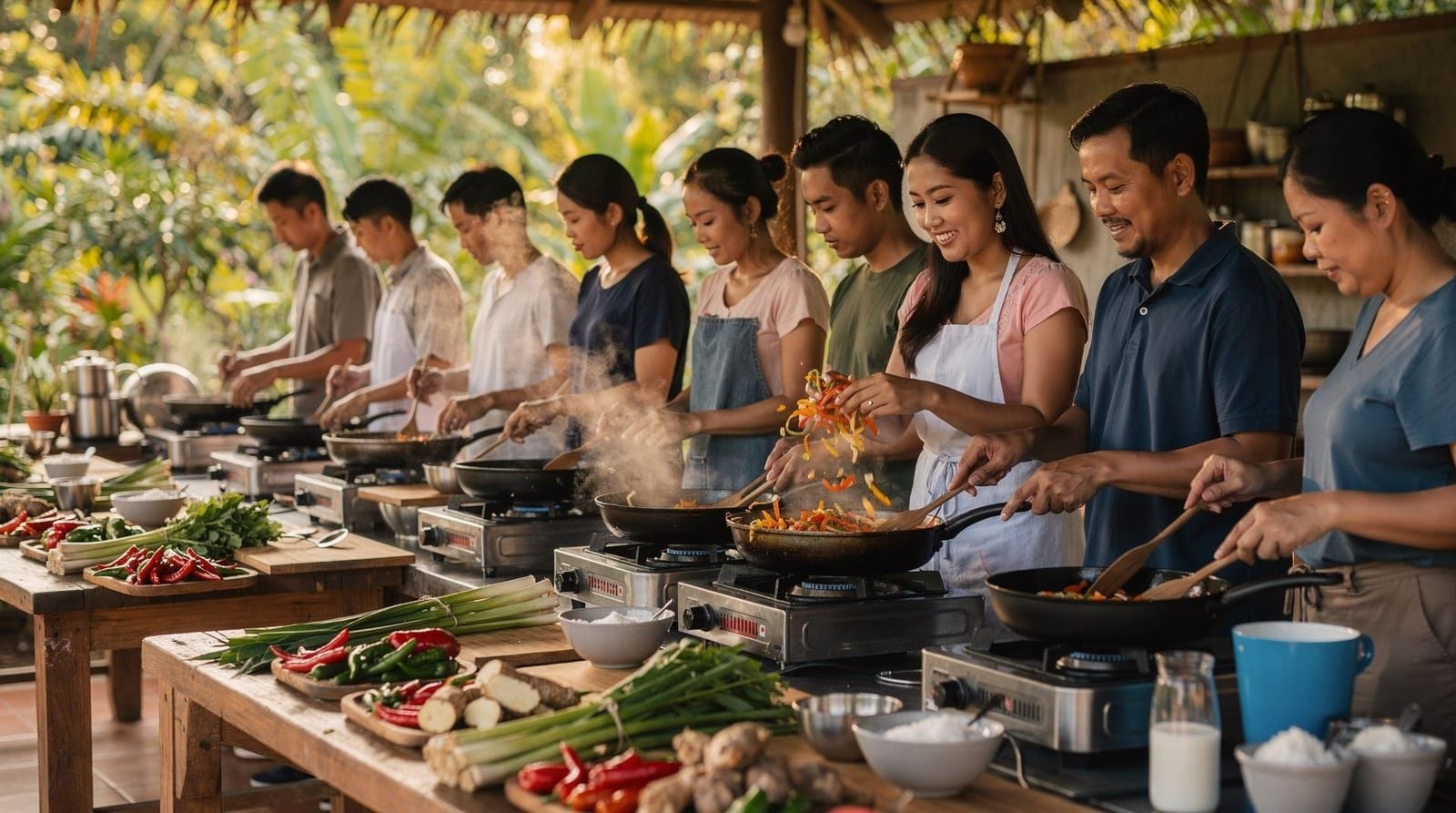
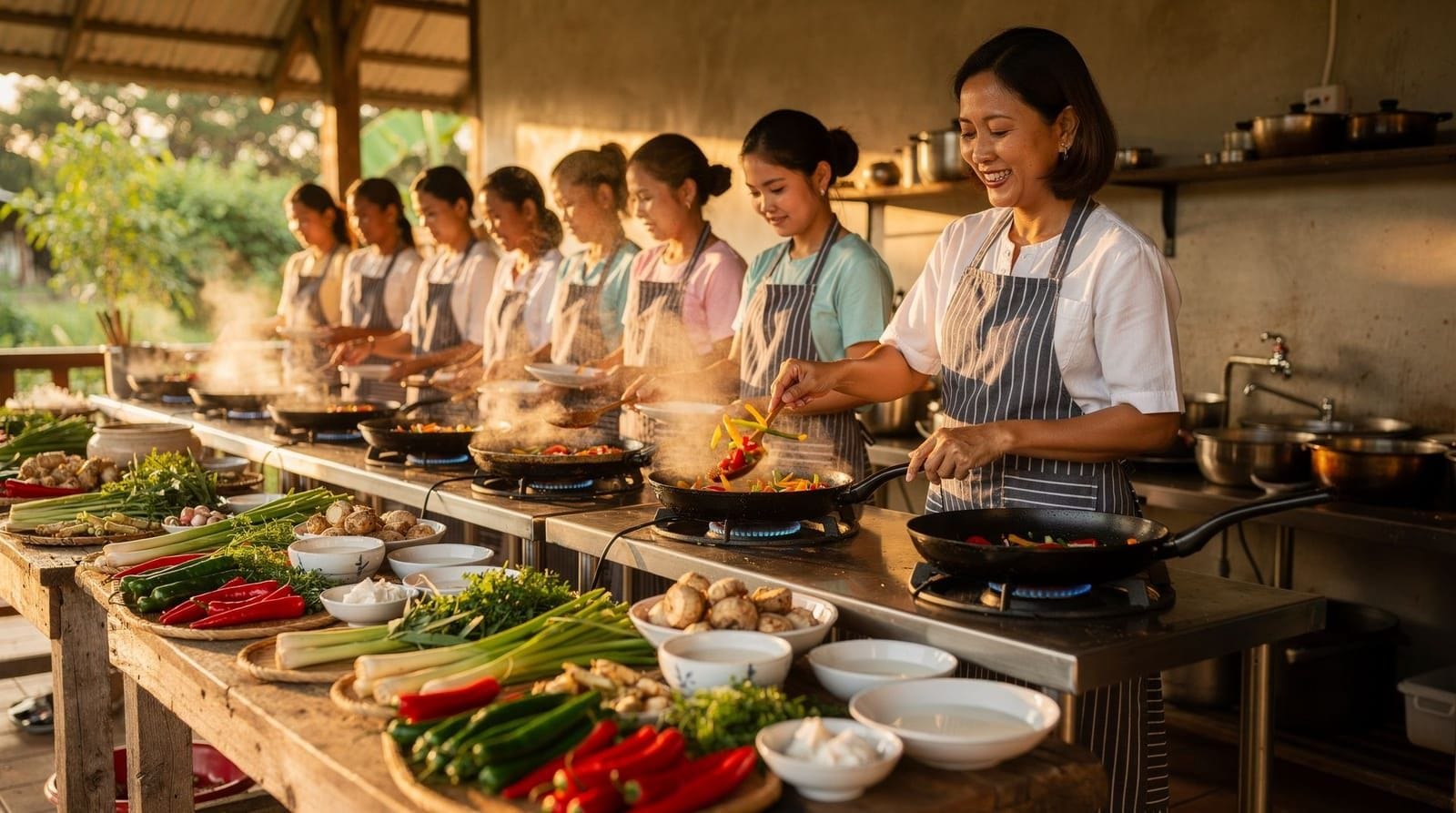
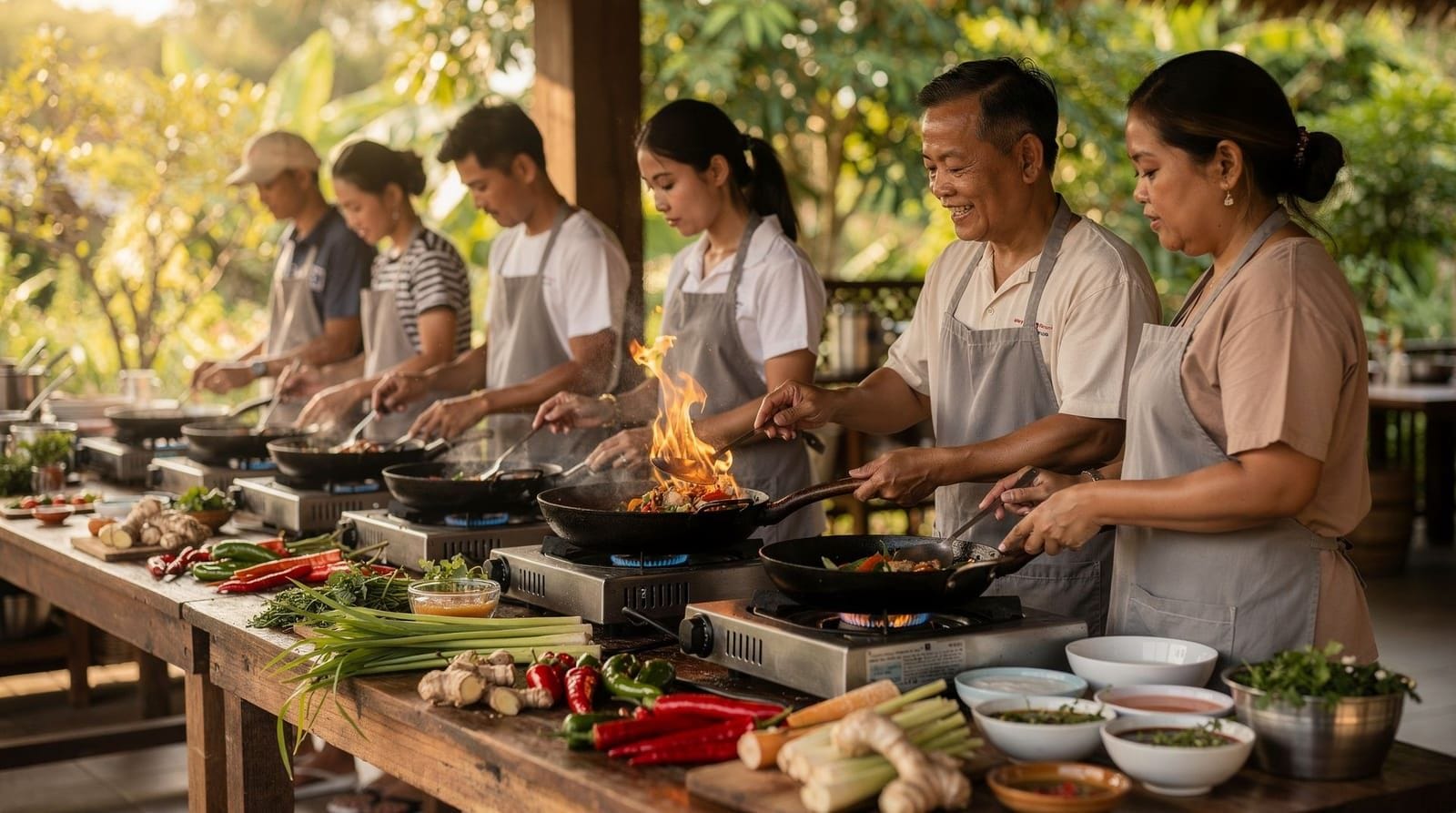
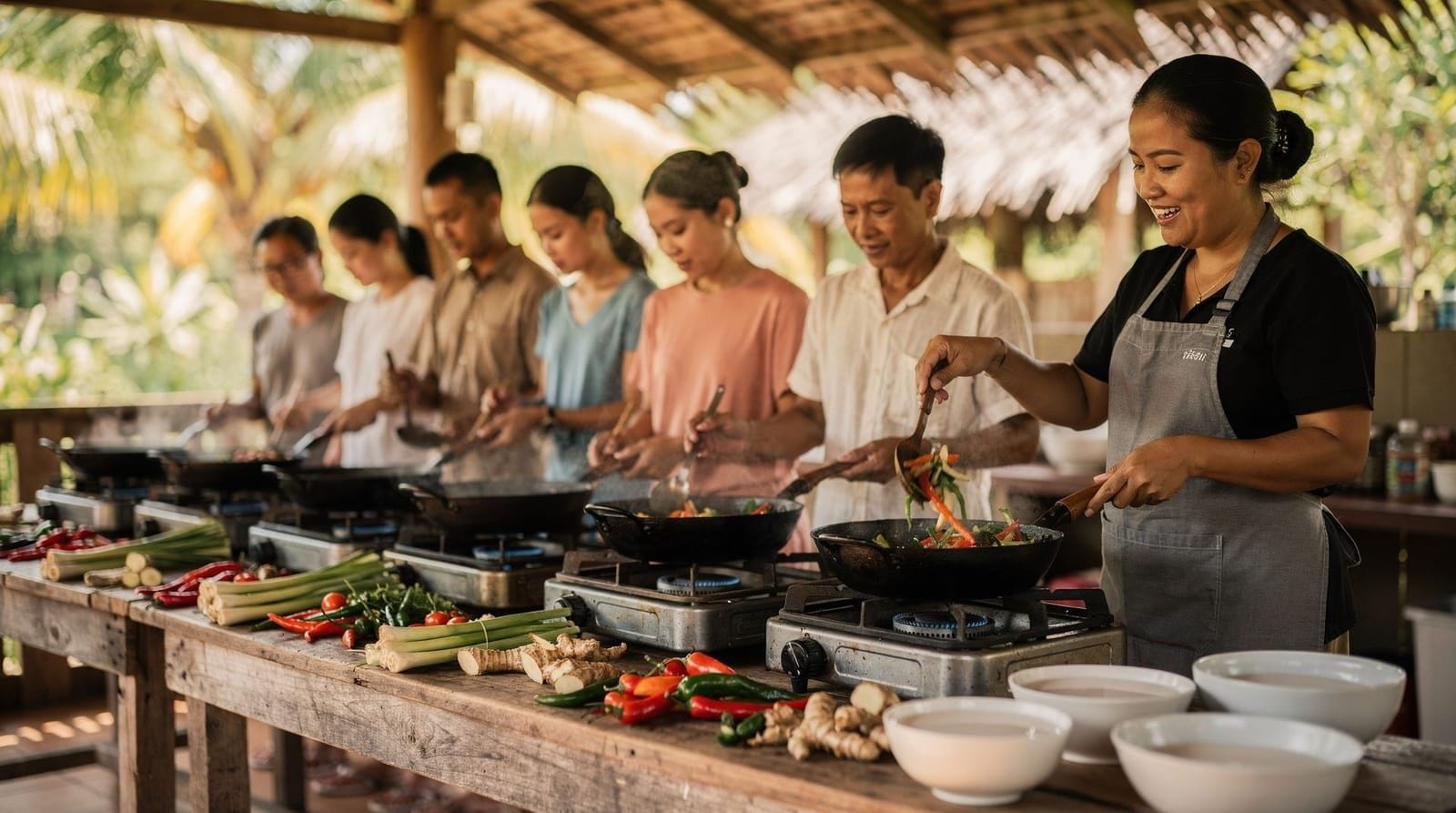
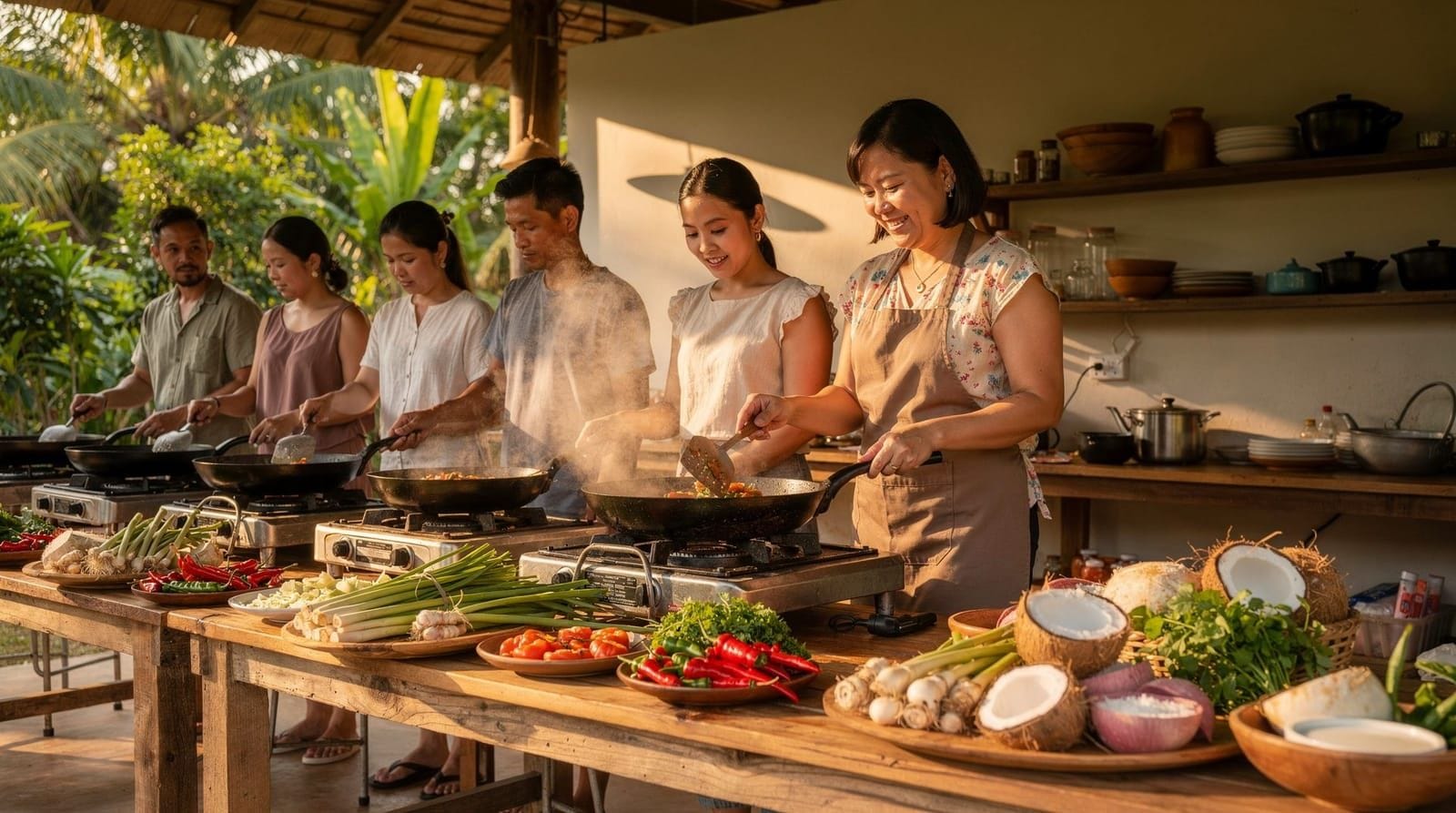
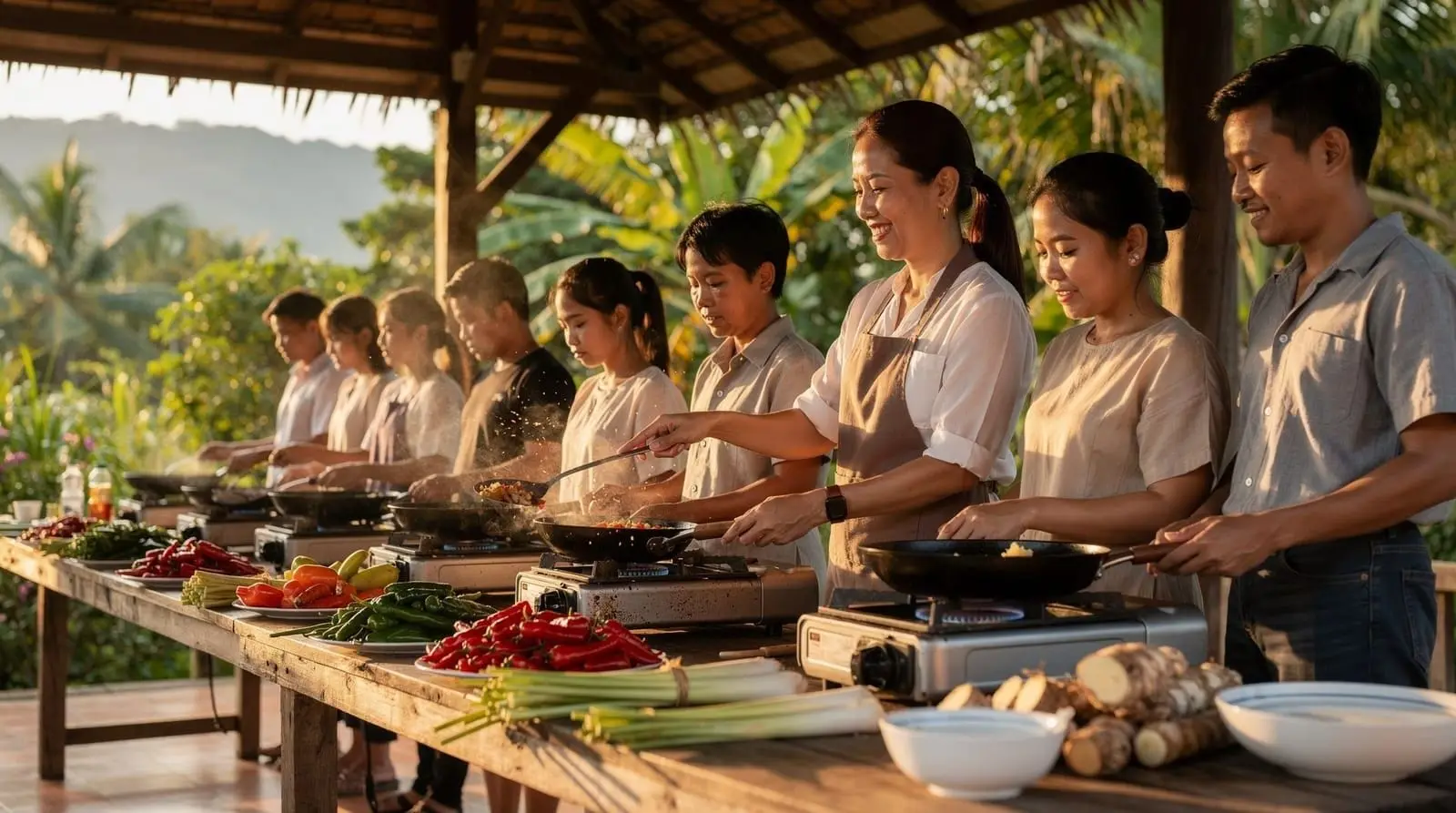
Arrival and station setup (15-20 minutes): At the cooking school itself, you’re assigned an individual cooking station — usually a portable gas burner, a wok, a mortar and pestle, and a tray of pre-portioned ingredients for the day’s dishes. A brief safety and equipment overview follows, plus a menu run-through if you have any dish choices to make.
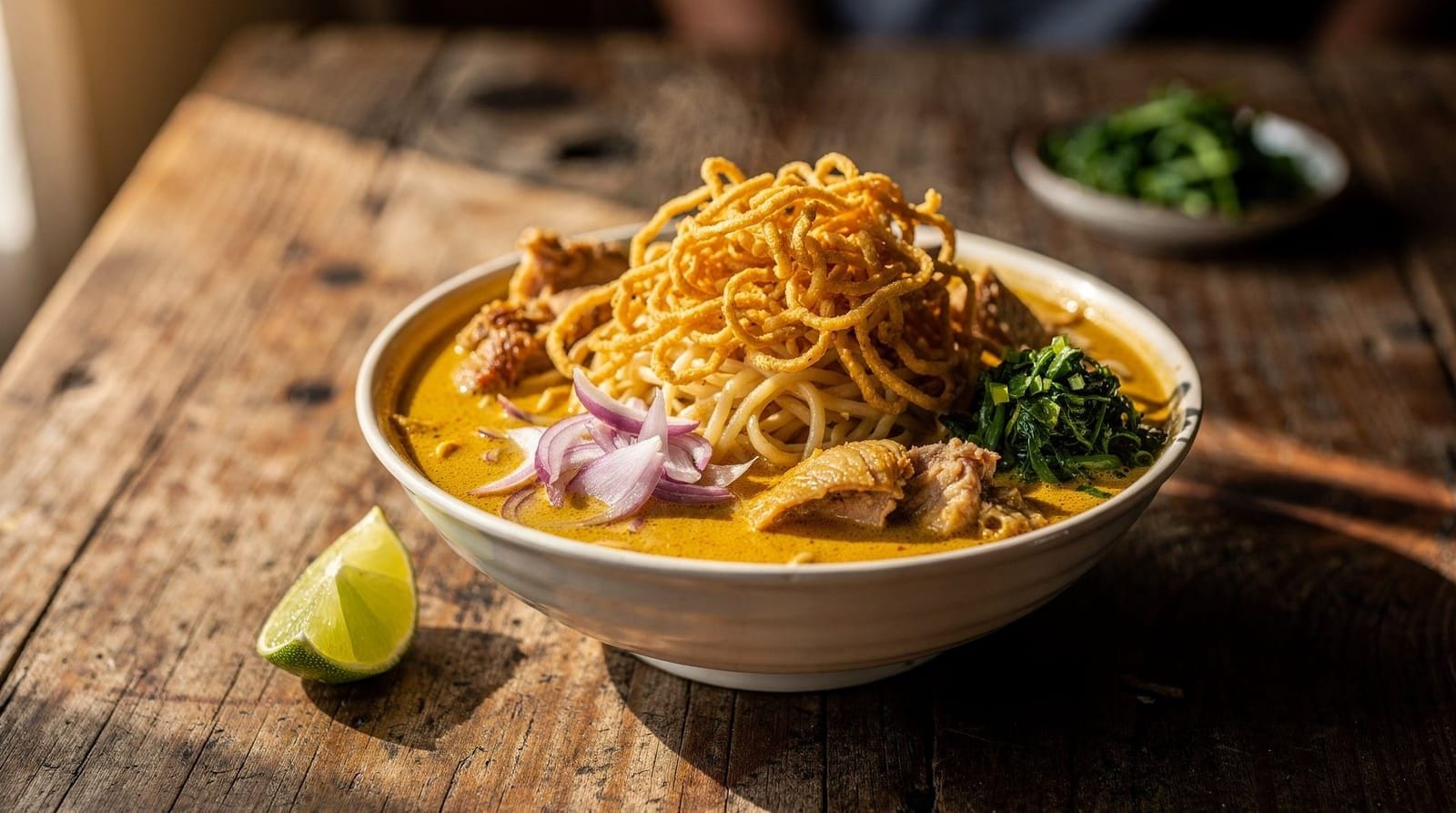
Cooking, dish by dish (2-4 hours): Dishes are cooked and eaten one at a time rather than all at once — the instructor demonstrates a dish, everyone cooks their own version, then the group eats together before moving to the next dish. A standard sequence often runs: a soup (tom yum or tom kha), a stir-fry (pad thai, cashew chicken, or basil chicken), a curry (green, red, or a northern option like khao soi if it’s on the day’s menu), a dip or salad (som tam green papaya salad is common), and a dessert (mango sticky rice or bananas in coconut milk).
Wrap-up and recipe booklet (10-15 minutes): Most schools hand out a printed booklet with every recipe cooked that day, sometimes with space for notes, and occasionally a certificate of completion — more of a keepsake than a credential, but a nice touch.
Return transfer: Drop-off back at your hotel, typically finishing by early-to-mid afternoon for a morning class or early evening for an afternoon class. Full-day classes stretch this same structure across seven to eight hours, adding either a second market or farm stop, more dishes, or both.
Check the small-group cooking class with market tour for a format that keeps to roughly this structure with a capped group size, which matters more than it might sound like — more on why below.
What to wear and bring
Comfortable clothes you don’t mind getting a little oil or turmeric on are the practical baseline — most schools provide an apron, but splashes happen at the wok station regardless. Closed-toe shoes aren’t strictly required by most schools (many kitchens are open-air with tile floors), but they’re a reasonable choice if you’re clumsy around hot oil, which most of us are at least once during a five-dish day. If your class includes an outdoor market or farm stop, a hat and sunscreen are worth packing, since that portion happens outdoors regardless of midday heat. Bring a small amount of cash if the market stop allows optional purchases or snacks, and a phone or camera — the market and plating moments are consistently the best photo opportunities of the day.
Group size: the detail that changes everything else
This is the single biggest variable between a class that feels personal and one that feels like a factory line, and it’s also the detail booking pages are least upfront about. Small-group classes — six to ten participants, sometimes fewer — mean the instructor can actually watch your knife technique, correct your wok heat, and answer questions mid-dish. Larger tour-style classes, especially during high season when a single school runs multiple back-to-back sessions, can push past twelve or even fifteen participants in one group. At that size, expect less individual correction, more “everyone follow along at the same pace regardless of where you are,” and noticeably less time at the market stop since a group of fifteen simply takes longer to move through narrow market aisles than a group of six.
None of this makes a larger class bad — the food still gets made, and the day is still enjoyable for most people — but if personal attention and a relaxed pace matter to you, it’s worth specifically checking (or messaging the operator to ask) how many participants a given date typically has before booking, rather than assuming “cooking class” means the same experience everywhere.
Look at We Cook Thai Home Garden Cooking School for a garden-based format that tends to run smaller groups by virtue of its setting, which limits how many stations a single site can accommodate.
Dietary accommodation
Vegetarian and vegan substitutions are widely available and usually straightforward — tofu or extra vegetables replace meat, and most schools can swap fish sauce for a soy-based alternative on request, though it’s worth confirming this specifically rather than assuming every dish defaults to a vegan-friendly base. Gluten-free is generally manageable too, since most dishes are rice-based (rice noodles, rice, coconut milk curries) rather than wheat-based, though soy sauce and some noodle dishes do contain gluten unless substituted. The most reliable approach for anyone with specific dietary needs is booking a class that explicitly markets itself as vegetarian-friendly or messaging the operator ahead of time — the vegetarian and vegan cooking class guide covers which schools handle this best and what to ask for.
Skill level needed: genuinely none
This is one area where the marketing matches reality. Ingredients arrive at your station pre-washed and largely pre-cut (you’ll still do some chopping, particularly for garnishes and aromatics), quantities are pre-measured or clearly indicated, and the instructor demonstrates every technique — knife cuts, wok tossing, paste pounding — before you attempt it. If you’ve never cooked Thai food, or cooked much of anything, the format is built to accommodate that; if you’re an experienced home cook, you’ll likely find the pace comfortable rather than challenging, though the technique corrections (particularly around wok heat management and curry paste balance) are often useful even for people who already cook regularly.
Duration options: half day, full day, and evening
Half day (4-5 hours): The most common format, covering one market or farm stop and four to five dishes. Typically priced 900-1,400 THB per person (about $25-39).
Full day (7-8 hours): Adds either a second stop (market plus farm) or a longer dish list, often six to seven dishes including a more involved curry. Typically priced 1,300-1,800 THB (about $36-50).
See Asia Scenic Thai Cooking School for a well-established full-day option that includes both a market stop and its own working garden, giving a middle-ground experience between a pure market class and a full farm-based one.
Evening classes: Less common but available at a handful of schools, usually a shorter three-to-four-dish format without a market or farm component, aimed at travelers with daytime plans already booked.
What’s included in the price (and what usually isn’t)
Nearly every Chiang Mai cooking class quotes an all-in price that covers hotel pickup and return transfer, all ingredients, the meal itself (you eat everything you cook, so no separate lunch or dinner budget is needed for that day), and the printed recipe booklet. What’s typically not included: alcoholic drinks if you want a beer with your meal, optional souvenirs at the market stop (spice packs, cooking utensils some markets sell specifically for visitors), and tips for the instructor, which aren’t obligatory but are commonly given for a small-group class where you’ve had direct one-on-one guidance for several hours. A few higher-end or farm-based classes also include a take-home ingredient kit (a small bag of dried chilies or curry paste) as a bonus, though this varies by operator and isn’t something to assume without checking the listing.
How to actually choose between similar-looking classes
With dozens of Chiang Mai cooking schools competing for the same booking, most listings look interchangeable at a glance — market stop, cooking station, five dishes, recipe booklet, similar price. A few questions cut through that faster than reading every review: What’s the typical group size for your specific date (not just the school’s general marketing, since the same school runs both small and large sessions depending on season)? Is the cooking station individual (your own wok and burner) or shared between two or more people, which directly affects how hands-on the experience actually is? Does the class rotate its dish list, and can you find out in advance what you’ll actually be cooking, particularly if there’s a specific dish — khao soi, for instance — you’re hoping to learn? And is the venue a commercial teaching kitchen, a home kitchen, or a working farm, since that setting shapes the whole feel of the day more than the dish list does. Messaging the operator directly with these questions before booking, rather than relying solely on the listing description, tends to produce a more accurate picture than star ratings alone.
Instructor language and communication
Most Chiang Mai cooking schools that cater primarily to international visitors run classes in English, with instructors who are used to explaining Thai ingredient names, techniques, and substitutions to non-Thai speakers. That said, English fluency varies by instructor, and demonstration-based teaching (watch, then repeat) does most of the communication work regardless of language, so a language gap rarely gets in the way of actually learning the dishes. If you’re traveling with a group that includes non-English speakers, it’s worth checking whether an operator offers other languages, though this is the exception rather than the rule among schools built around the international tourist market.
Honest expectations: what can feel rushed
Not every class lives up to the relaxed, personal-attention image on its marketing page, and it’s worth setting expectations accordingly. During peak season (November through February), some schools run multiple large groups per day to meet demand, and a class with twelve or more participants can feel more like a guided assembly line than a cooking lesson — ingredients handed out on a schedule, limited time to ask questions, and a market stop that turns into a fast walk-through rather than genuine browsing time. This isn’t universal, and it doesn’t mean the food turns out badly, but if you’ve read reviews describing a class as “intimate” or “personal,” check the typical group size for your specific date rather than taking that description at face value, since the same school can run a six-person session on a slow Tuesday and a sixteen-person session on a busy Saturday.
Book the traditional Thai cooking class with market tour for a consistently well-reviewed format that balances market time and cooking time reasonably even during busier periods.
If a slower, more personal pace is the priority, farm-based and home-kitchen-style classes generally handle group size better than large commercial cooking schools near the old city, partly because the physical setting (a private home or a farm rather than a multi-station commercial kitchen) naturally caps how many people can be accommodated at once. See the farm-to-table cooking class guide for specifics on that format, and the broader best cooking schools in Chiang Mai guide for a side-by-side look at the main operators. For the wider category overview, the Chiang Mai cooking class guide and the market-tour-focused cooking class guide both cover related angles, and the cooking classes hub rounds up every format in one place.
Frequently asked questions about Chiang Mai cooking classes
Do I need any cooking experience to join a Chiang Mai cooking class?
No. Classes are designed for complete beginners, with pre-measured ingredients, step-by-step demonstration before each task, and instructors who correct technique as you go.
How many dishes do you typically cook in one class?
Half-day classes usually cover four to five dishes (a soup, a stir-fry, a curry, and a dessert, sometimes a salad or dip); full-day classes often stretch to six or seven with an additional course or a more involved curry.
What’s the difference between a small-group and a large-group cooking class?
Small groups (roughly six to ten people) get more individual instructor attention and a more relaxed market or farm stop; larger groups (twelve-plus, common in peak season) move at a fixed group pace with less one-on-one correction and a faster market walk-through.
Can vegetarians or vegans take a Chiang Mai cooking class?
Yes, most schools substitute tofu or extra vegetables for meat and can adjust fish sauce for a soy-based alternative on request. Confirming dietary needs at booking, rather than on arrival, gets the most reliable result.
Do I get to keep the recipes after the class?
Nearly all schools provide a printed recipe booklet covering that day’s dishes, and some include space for personal notes or substitution ideas.
Is a half-day or full-day class better for a first-timer?
A half day is enough to get a solid introduction (four to five dishes) without a long time commitment; a full day suits anyone who wants a farm visit included, more dishes, or simply a fuller day out.
What should I wear to a cooking class?
Comfortable clothes you don’t mind getting a little oiled or splashed on, since most schools provide an apron but splashes still happen at the wok station. A hat and sunscreen are worth packing if your class includes an outdoor market or farm stop.
Are Chiang Mai cooking classes worth it if I already know how to cook Thai food at home?
Many experienced home cooks still find value in the hands-on technique corrections, particularly around wok heat management and curry paste balance, plus the market or farm-sourcing angle most home cooking doesn’t include. If you specifically want new techniques rather than just new recipes, a farm-based or home-kitchen-style class tends to go deeper than a large commercial one.
Top experiences
Bookable activities with verified prices and instant confirmation on GetYourGuide.