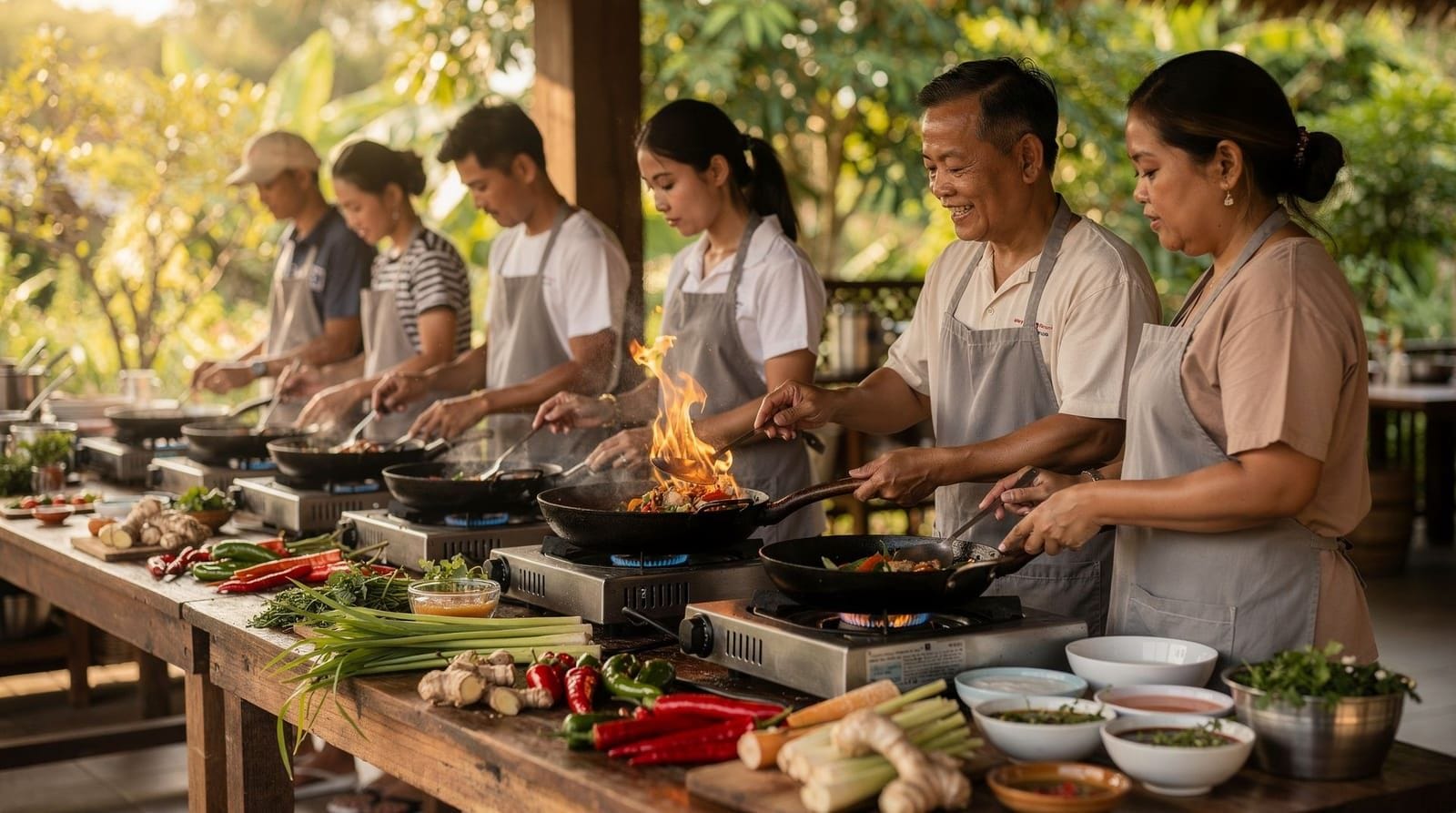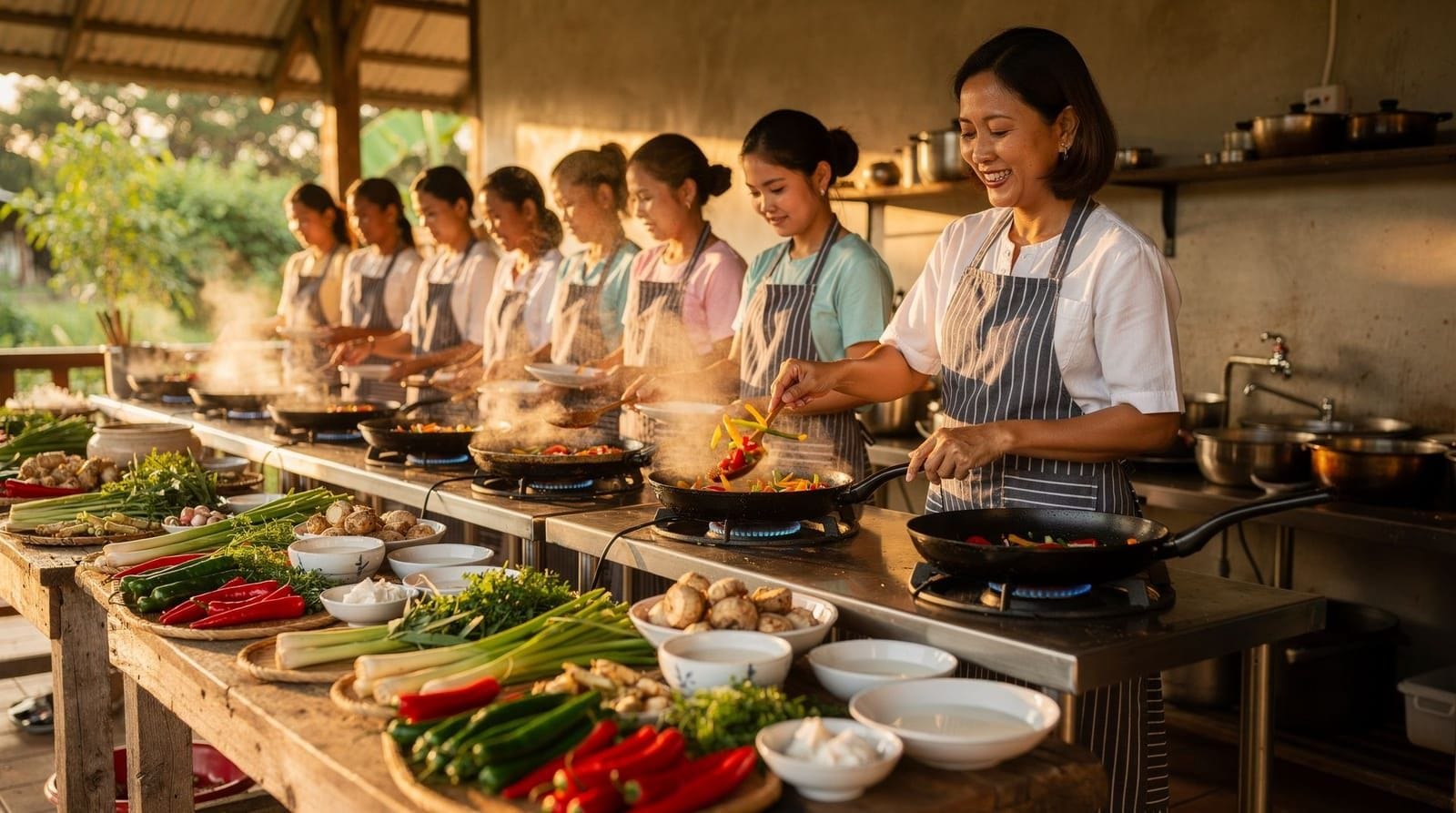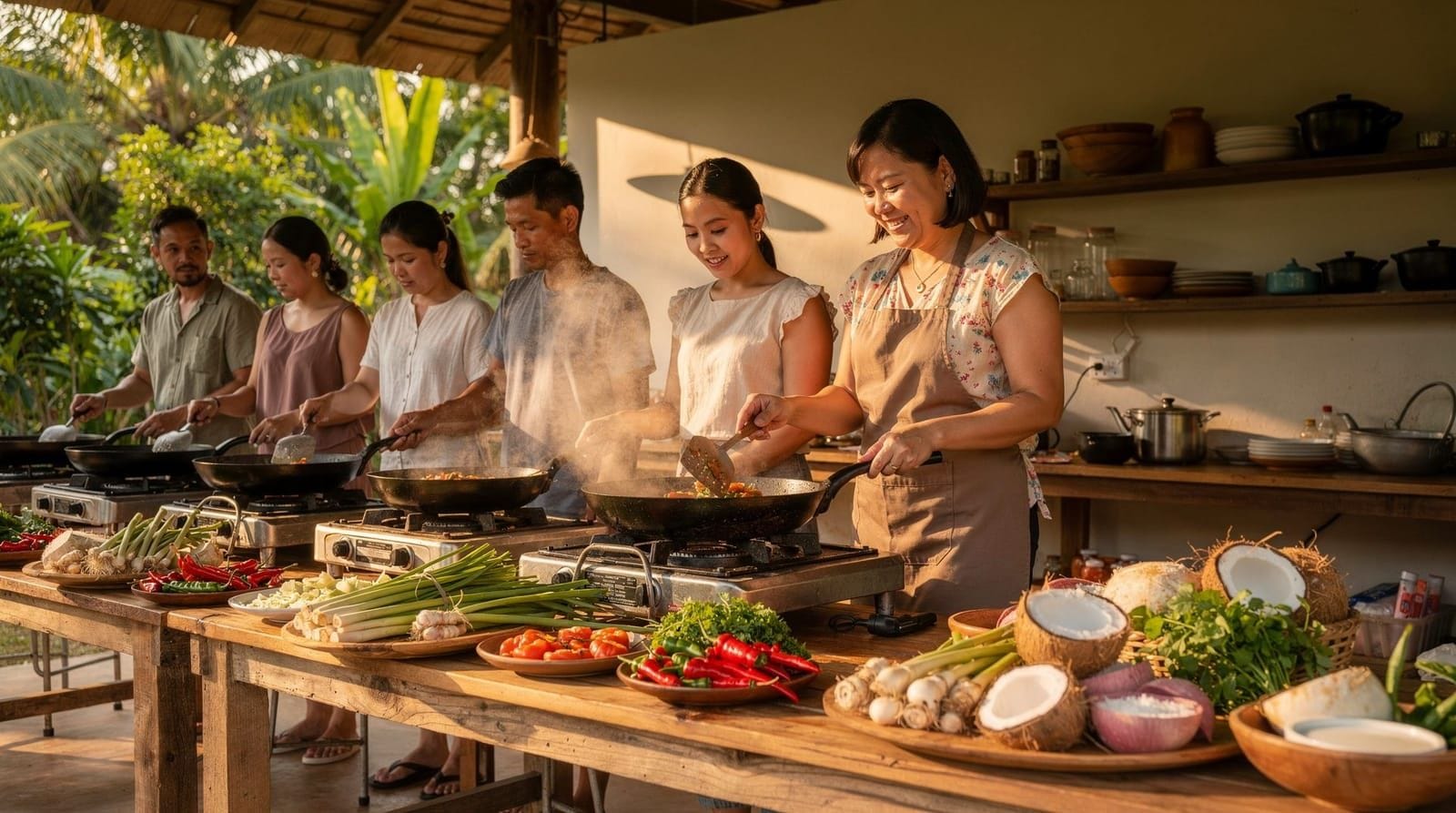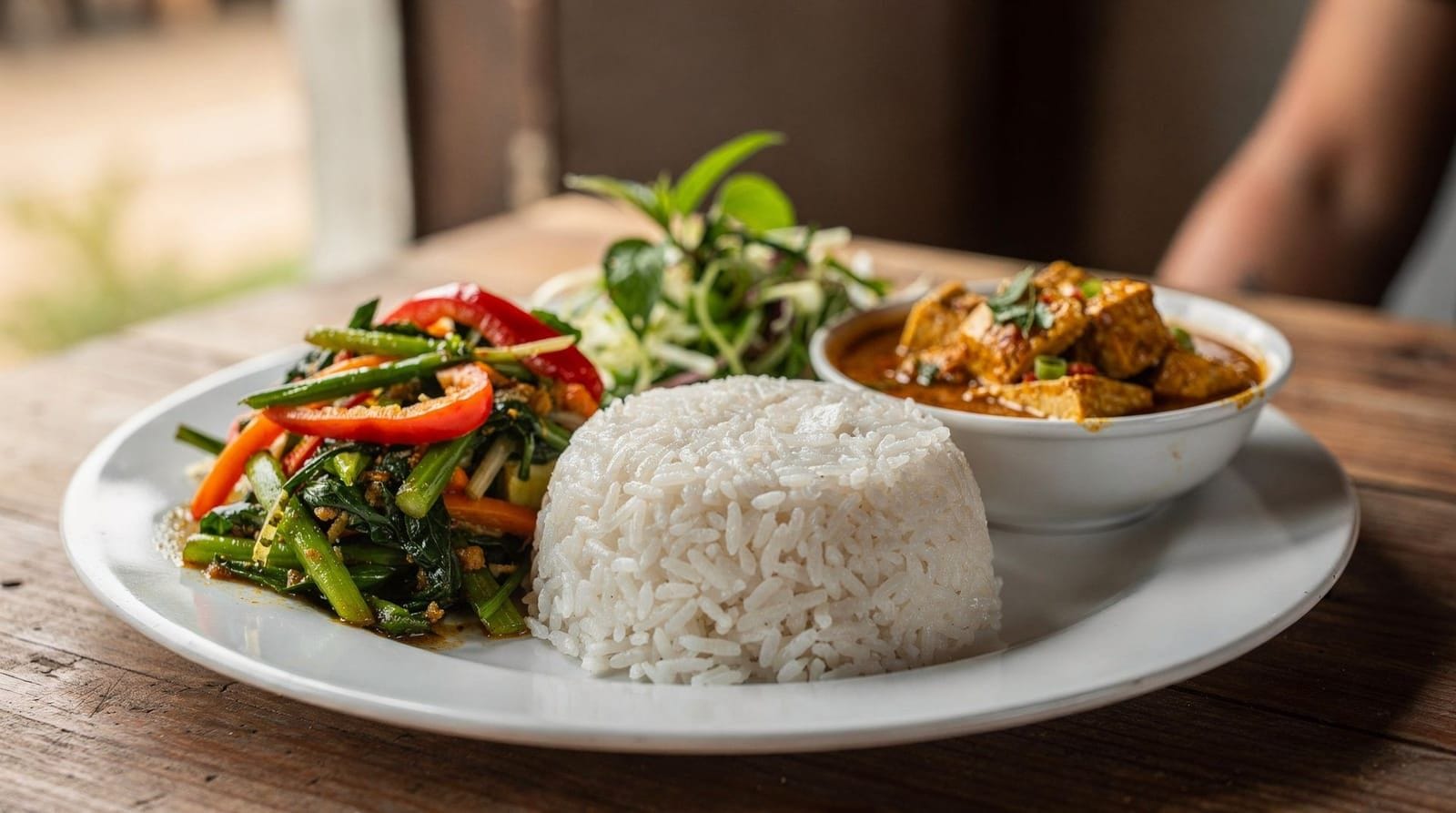
Vegetarian and vegan cooking classes in Chiang Mai
Chiang Mai: Authentic Cooking Class with Market & Farm Visit
Can vegetarians and vegans do a Chiang Mai cooking class?
Yes, though there's no class in Chiang Mai marketed as exclusively vegan — most established schools can substitute tofu for meat and swap fish sauce and shrimp paste for soy sauce on request, since Thai cooking's reliance on curry pastes, vegetables, and rice or noodles makes this a manageable substitution. The key step is confirming this at booking, not on arrival, since a separate vegan curry paste batch needs to be prepped in advance.
The honest starting point: no class is exclusively vegan-labeled
Worth saying plainly before anything else: there is no cooking class in Chiang Mai’s bookable catalog, or in the wider market generally, that’s marketed as an exclusively vegan or vegetarian experience. What exists instead is a large number of standard classes — market-based and farm-based alike — that can accommodate vegetarian and vegan requests within their normal format, because Thai cooking’s core building blocks (curry paste, coconut milk, rice, noodles, vegetables, tofu) are naturally plant-friendly once fish sauce, shrimp paste, and meat are substituted out. The practical implication is that booking a “vegan cooking class” as a search term won’t get you far; booking a well-reviewed standard class and flagging your dietary needs clearly in advance will.
Which dishes adapt well
Curries are the most forgiving dish on any class’s standard lineup. A red, green, or massaman curry is built from curry paste, coconut milk, and whatever protein and vegetables go in last — removing chicken or beef and adding tofu and extra vegetables changes almost nothing about the technique you’re learning, since the paste-making and simmering steps are identical. The only catch, covered below, is that the paste itself sometimes contains shrimp paste and needs a vegan version made separately.
Som tam, the green papaya salad ubiquitous across Thailand and often included or offered as a side in classes, sits closest to vegan by default among common Thai dishes — its core ingredients (green papaya, lime, chili, palm sugar, tomato, long beans) contain nothing animal beyond the fish sauce and dried shrimp typically stirred in, both easily substituted or omitted.
A vegetable or tofu pad thai works well as a substitution for the standard version, since the noodle, sauce, and stir-fry technique carry over directly — swap the shrimp or chicken for firm tofu, and the fish sauce and dried shrimp in the sauce for soy sauce, and the dish holds together in both texture and flavor balance.
A plain vegetable stir-fry (typically a mix of Chinese broccoli, morning glory, or mixed vegetables in garlic and soy sauce) needs essentially no adaptation — the main watch-out is oyster sauce, which some recipes use for depth and which has a plant-based substitute available in most kitchens if you ask.
Tofu dishes more broadly — a tofu satay, a tofu and vegetable curry, a stir-fried tofu with basil (a tofu version of pad kra pao) — are common enough substitutions that most instructors can walk you through them without disrupting the class’s overall flow for the rest of the group.
What doesn’t adapt as cleanly
Tom yum and tom kha soups, staples of most class lineups, traditionally rely on fish sauce and often shrimp for depth; they adapt reasonably well to a vegetable and tofu version with soy sauce standing in, though the flavor profile shifts more noticeably here than in a curry, since fish sauce’s specific umami isn’t fully replicated by soy sauce alone. Spring rolls, another common inclusion, are usually already vegetable-based or easy to make so, but check the wrapper if you’re strictly vegan, since a small number of recipes use egg in the wrapper itself. Desserts like mango sticky rice generally involve coconut milk and rice rather than dairy or eggs, making them naturally vegan in most versions, though it’s still worth confirming since recipes vary slightly by school.
Why curry paste needs advance notice, not a same-day request
The single most important thing to understand about vegan accommodation in Thai cooking is that traditional curry paste very often includes shrimp paste (kapi) as a foundational ingredient, pounded in alongside the chilies, lemongrass, and galangal rather than added at the end. This means a school can’t simply “leave it out” of the paste everyone else in the class is making — it needs a separate small batch prepared specifically without shrimp paste, usually substituting extra salt or soy sauce to maintain the salt balance. Well-prepared schools do this routinely, but it requires knowing in advance, which is why messaging the operator or noting it clearly in the booking form when you reserve — rather than mentioning it when you arrive — makes the difference between a smooth accommodation and a rushed, less satisfying substitution made on the spot.
What to ask when booking
Four questions are worth asking directly, either through the booking platform’s message function or by checking the listing description closely: whether the curry paste can be made without shrimp paste for your group; whether fish sauce is swapped for soy sauce or a mushroom-based alternative across all the dishes you’ll cook, not just one; whether tofu is kept on hand as a standard substitution or needs to be specifically requested; and whether the market or farm visit component includes any tastings that aren’t automatically plant-based. None of these are unusual or difficult requests for an experienced Chiang Mai school, but asking upfront, ideally at the time of booking, gives the kitchen time to prep separately rather than scrambling mid-class.
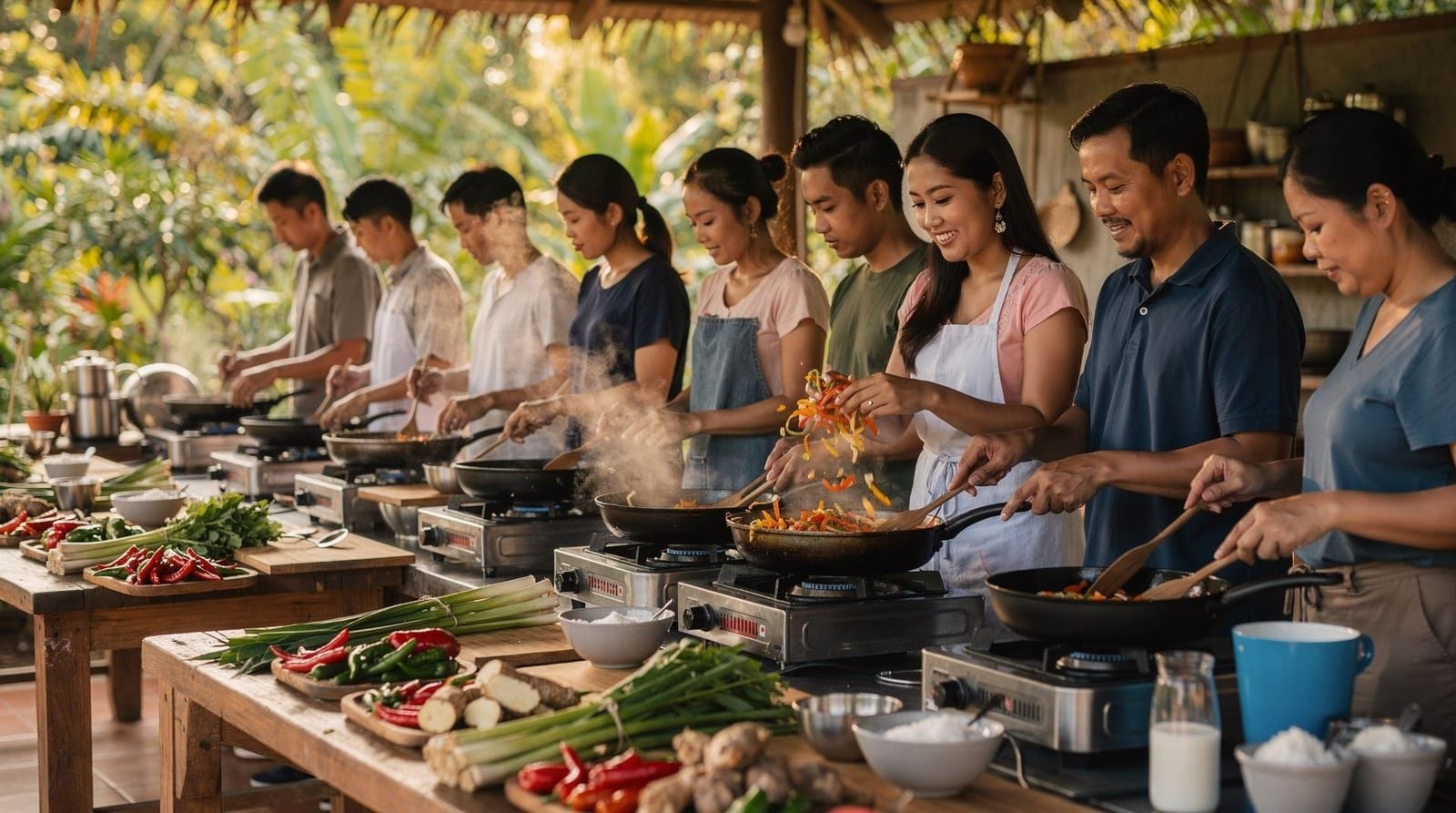
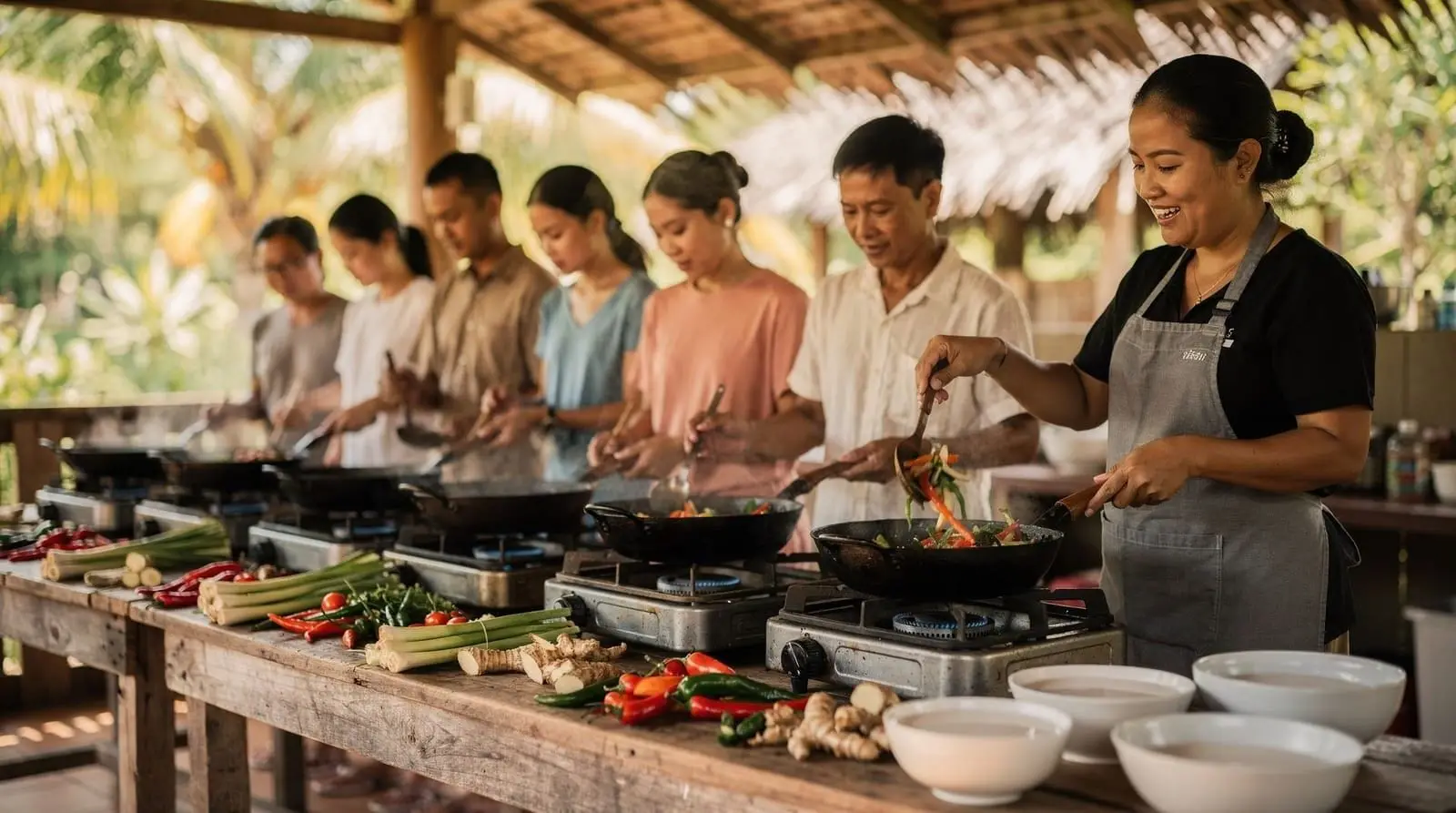
The authentic cooking class with market and farm visit and the half-day cooking class at an organic farm both center on fresh vegetables and herbs as the core ingredient set, which in practice makes vegetarian and vegan substitution more natural than in classes built more heavily around meat and seafood dishes — worth keeping in mind when you’re choosing among the farm-based options specifically. The local Lanna cooking class at grandma’s home is also worth asking about directly, since smaller, family-run classes are often more flexible about last-minute substitutions precisely because the group and kitchen are smaller.
Beyond the cooking class: eating vegetarian and vegan in Chiang Mai
If a cooking class gives you a good grounding in which Thai dishes translate naturally to plant-based eating, it’s worth carrying that knowledge into the rest of your trip — Chiang Mai has a genuinely strong vegetarian and vegan restaurant scene, notably around Nimmanhaemin and the Old City, that goes well beyond what a single cooking class can cover. Our guide to vegetarian and vegan restaurants in Chiang Mai picks up where this leaves off, and our northern Thai dishes guide flags which regional specialties (beyond the dishes typically taught in a class) are naturally plant-based or easy to order that way. If you’re also curious how a market visit fits into understanding these ingredients firsthand, our guide to cooking classes with a market tour and our main Chiang Mai cooking class guide both cover that ground from a general, not diet-specific, angle.
How the market or farm segment handles plant-based sourcing
If your class includes a market walkthrough, the guide can generally point out which fresh curry pastes at market stalls are made without shrimp paste, since some vendors do sell a plain or vegetable version alongside the standard one — worth asking about specifically if you’re curious how it’s done outside the cooking school kitchen. Farm-based classes, where the segment focuses on herbs and vegetables grown on-site rather than prepared pastes or condiments, sidestep this question almost entirely, since everything picked at that stage of the day is plant-based by default regardless of what happens with paste and sauce substitutions back at the kitchen. This is one reason farm-based classes can feel like a slightly easier fit for vegetarian and vegan travelers specifically, even though the accommodation itself happens at the cooking stage rather than the sourcing stage.
What a typical vegan-adapted dish lineup looks like
A realistic vegan-adapted version of a standard class lineup might run: a vegetable or tofu green curry in place of a chicken version, a tofu pad thai in place of the shrimp or chicken version, a vegetable stir-fry with soy sauce instead of oyster sauce, fresh spring rolls with a peanut dipping sauce (confirm no fish sauce in the dip itself), a tom yum or tom kha soup made with a vegan stock and soy sauce rather than fish sauce, and mango sticky rice for dessert, which is naturally plant-based in most versions. This is close enough to the standard non-vegan lineup that most participants in a mixed group — some vegan, some not — end up eating recognizably similar meals, just with different proteins and seasoning bases, rather than a completely separate parallel menu.
Traveling with a mixed group
If you’re booking as part of a group where some people eat meat and others don’t, most Chiang Mai schools handle this comfortably by preparing dishes in parallel batches — one with the standard ingredients, one adapted — rather than forcing the whole group onto one version. This is worth flagging clearly when booking for a group specifically, noting how many people need the plant-based version versus how many don’t, since it changes how the kitchen plans quantities and paste batches for the day. Smaller, family-run classes are sometimes more flexible on this front than larger operations simply because the kitchen is used to accommodating a wide range of individual requests within one group.
Confirming before you pay, not after
The single most useful habit here is treating dietary confirmation as part of the booking process itself rather than an assumption to sort out on arrival. Most booking platforms allow a message to the operator at the time of booking, or a notes field where you can specify vegetarian or vegan needs in detail — use it to state your restriction plainly (vegan, not just “no meat”) and to specifically mention fish sauce and shrimp paste, since these are the two ingredients most likely to be overlooked by a generic vegetarian label. Confirming this before payment, rather than hoping it works out on the day, is the difference between a smoothly adapted class and a last-minute scramble that leaves both you and the kitchen staff working around a request nobody planned for.
Vegetarian versus strictly vegan: why the distinction matters here
It’s worth separating vegetarian from strictly vegan when you communicate with a school, since the substitutions differ slightly. A vegetarian request in Thai cooking generally still needs to address fish sauce and shrimp paste explicitly, since a dish can look and even be labeled vegetarian in casual conversation while still containing both — these aren’t meat, but they aren’t vegetarian either. A strictly vegan request adds honey (occasionally used in dressings) and, in rare cases, dairy-based garnishes to the list of things to flag, though dairy is far less common in savory Thai cooking than in many other cuisines. Being precise about which of the two you are, rather than using the terms interchangeably, helps the kitchen prepare the right substitutions on the first attempt rather than needing a correction mid-class.
Realistic expectations for taste and texture
A fair note to end on: a vegan-adapted curry or stir-fry will taste noticeably different from its traditional version, mainly because fish sauce and shrimp paste contribute a specific savory depth that soy sauce and salt approximate but don’t fully replicate. This isn’t a flaw in the substitution — it’s simply a different dish, and most experienced Thai cooking instructors are upfront about this rather than pretending the swap is flavor-for-flavor identical. Going in with that expectation, rather than expecting an exact match to a non-vegan version you may have tasted at a restaurant, makes for a more satisfying class overall, since you’re evaluating the dish on its own terms rather than against a benchmark it was never going to hit.
Frequently asked questions about Vegetarian and vegan cooking classes in Chiang Mai
Is there a cooking class in Chiang Mai that's specifically vegan?
Which dishes adapt best to a plant-based version?
Does the curry paste itself contain animal products?
What about fish sauce specifically?
Should I book a specific class or ask any school?
Can vegans still do the market or farm visit component?
Is khao soi possible as a vegetarian dish?
What should I say when booking to be clear about my diet?
Top experiences
Bookable activities with verified prices and instant confirmation on GetYourGuide.