Warorot Market food guide: what to eat at Chiang Mai's Kad Luang
Chiang Mai: Local Food and Markets Guided Walking Tour
What should I eat at Warorot Market?
Go early (7-9am) for the best selection of northern sausage (sai oua), khanom jeen noodles with curry, Thai-Chinese pastries and fresh fruit, then walk next door to Ton Lamyai flower market. Most items cost 20-60 baht (US$0.55-1.70), making it the cheapest, most authentic food market in the city and the best baseline for comparing prices elsewhere.
Why Warorot is the market to know first
Most first-time visitors head straight for Chiang Mai’s evening markets, and while those are worth doing, Warorot Market — known locally as Kad Luang, “big market” — is the more useful stop if you want to understand what Chiang Mai residents actually eat and pay day to day. It’s a working day market rather than an event built around tourist footfall, trading since the early 1900s in a multi-storey building near the Ping River, and its prices are the honest baseline against which every other market in the city can be measured.
This guide covers layout, what to actually eat, and timing — the practical information that turns “big confusing market building” into a plan you can follow in under an hour.
Layout: what’s where
Warorot occupies a several-storey building with distinct zones:
- Ground floor and street-facing stalls — the strongest food section, dense with prepared dishes, snacks and grab-and-go items.
- Upper floors — mostly textiles, fabric, clothing and household goods, worth a browse but not the food priority.
- Surrounding street stalls — food carts and vendors ring the building on multiple sides, sometimes cheaper than the equivalent inside the main structure.
- Ton Lamyai flower market, directly adjacent — Chiang Mai’s main wholesale flower market, worth a walk-through even if you’re not buying, for the sheer visual density of it.
What to actually eat
- Sai oua (northern sausage) — sold by weight at multiple stalls, coiled and grilled, herb-forward with lemongrass, galangal and chili. A reliable, portable snack that travels well if you’re eating it back at your hotel.
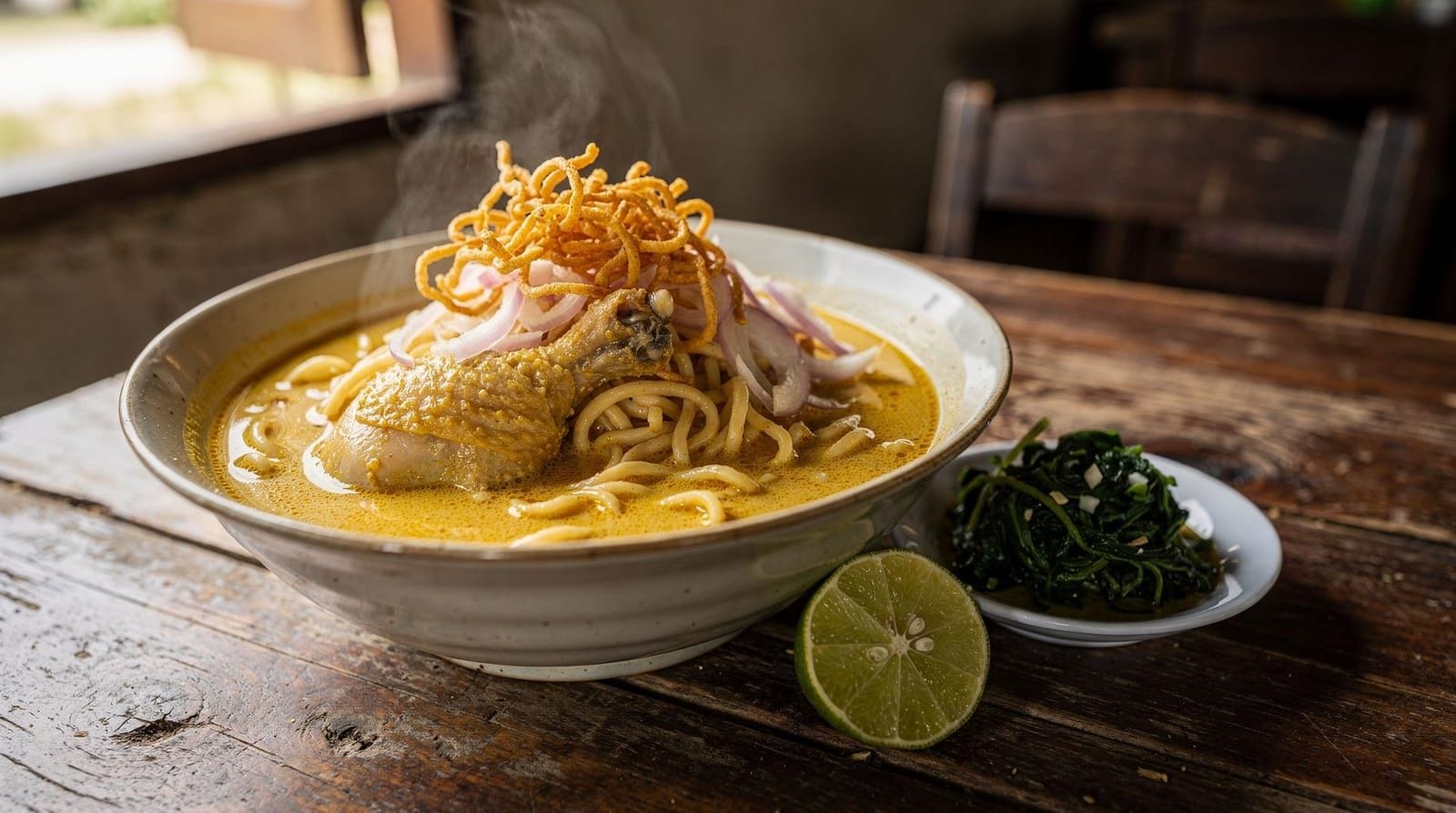
- Khanom jeen — fresh round rice noodles served with a choice of curries or the tomato-and-pork-blood based nam ngiao broth, a genuinely regional dish less commonly found outside markets like this one.
- Moo yor — Vietnamese-influenced Isaan-style pork sausage, reflecting the market’s broader Thai-Chinese and cross-regional trading history.
- Thai-Chinese pastries and snacks — a legacy of the market’s historical role serving Chiang Mai’s Chinese merchant community, including steamed buns, sweet pastries and preserved fruits.
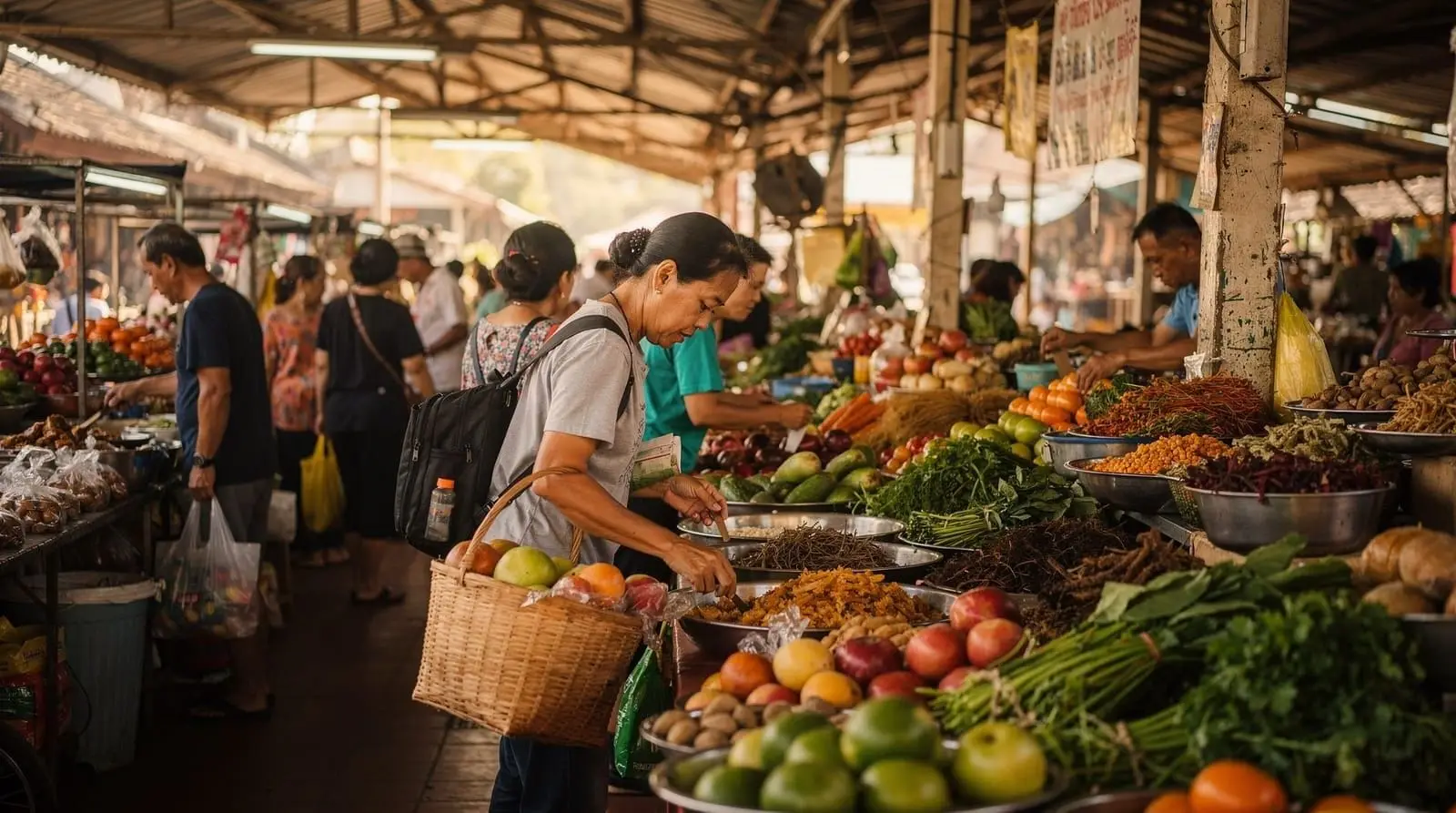
- Fresh fruit — seasonal, cheap, and a good gauge of what’s actually in season locally rather than what’s shipped in for tourist-facing restaurants.
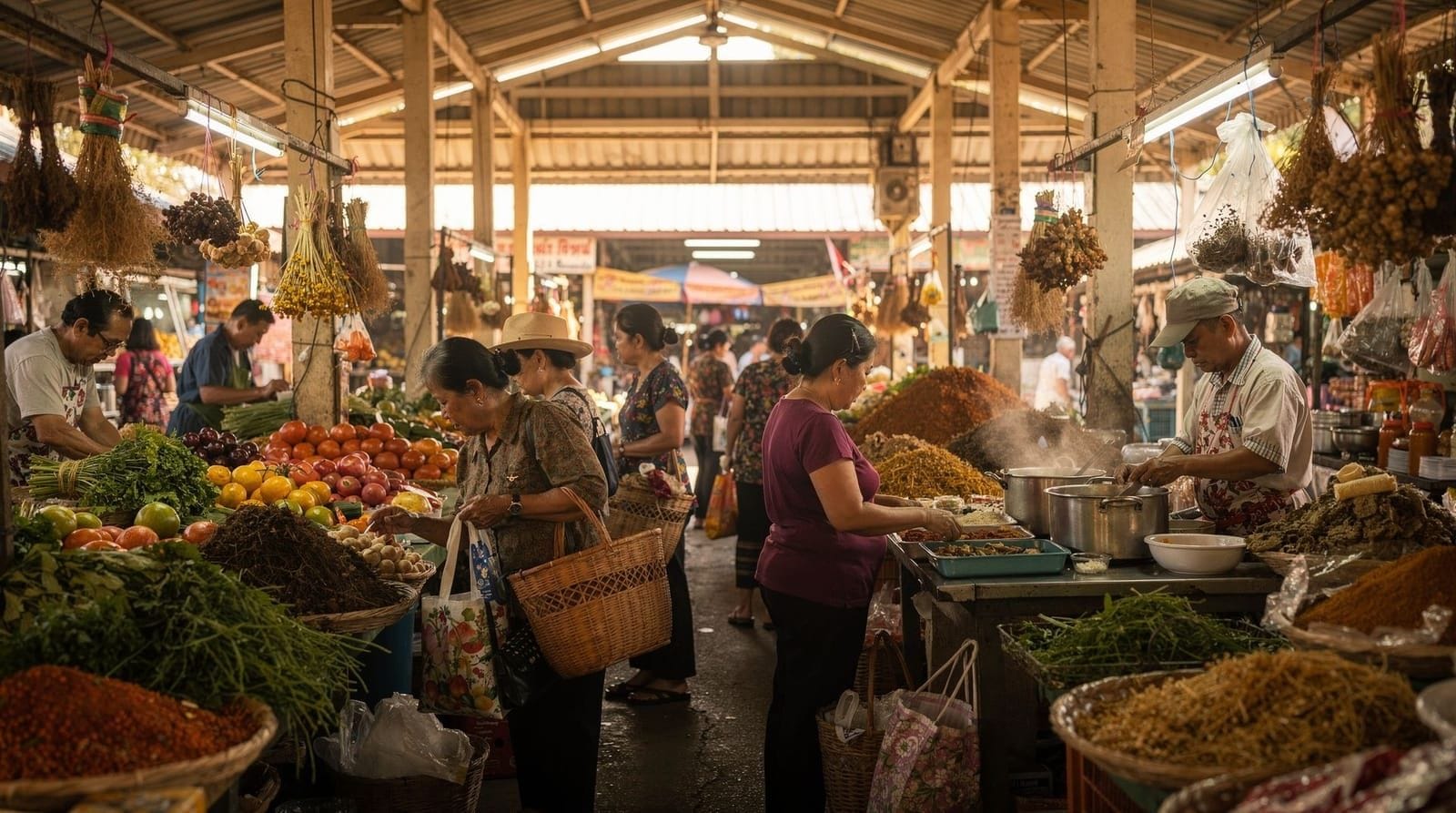
- Dried goods — chilies, spices, preserved meats and northern curry paste bases, useful even if you’re not cooking, just to see what goes into the dishes you’ve been eating elsewhere in the city.
For the broader regional context behind sai oua, nam prik and other northern dishes seen here, see the northern Thai food dishes guide.
Guided local food and markets walking tourBest times to visit
Early morning (6-9am) is the clear best window — freshest stock, the widest selection of prepared food, and the market operating at its normal working rhythm rather than for visitors. Late afternoon (4-6pm) is a smaller secondary window as some vendors sell down remaining stock before closing, occasionally at a modest discount. Midday (11am-2pm) is noticeably quieter and less rewarding, with some stalls closed or reduced.
Warorot generally runs daily from roughly 5am to 6pm, with the surrounding street stalls sometimes extending a little later into the early evening.
The market’s history and why it matters for the food
Warorot’s roots go back to the reign of King Rama V in the late 19th century, when it developed as Chiang Mai’s central trading point, eventually growing into the multi-storey building that stands today. Its long history as a genuine trading hub — rather than a market built for tourism from the outset — is directly reflected in the food you’ll find: Thai-Chinese pastries and preserved goods trace to the Chinese merchant community that settled around the market over generations, while the presence of northern Thai specialties like sai oua and khanom jeen reflects its role as the point where produce and goods from the surrounding Lanna countryside were brought into the city. Understanding this history helps explain why Warorot feels different from a market purpose-built for evening tourist footfall: everything about its layout, hours and pricing evolved to serve daily commerce rather than visitor experience, which is precisely its appeal.
A closer look at specific stalls worth seeking out
Within the ground floor and surrounding street stalls, a few categories are worth deliberately seeking out rather than just wandering past. Look for the sai oua vendors clustered together, since being able to compare two or three stalls’ sausage side by side, sniffing for the balance of lemongrass and kaffir lime, is a genuinely useful way to find a version you like before committing to a full portion. The khanom jeen stalls typically offer a choice of curry toppings, and it’s worth asking what’s freshest that day rather than defaulting to the first option pointed at, since the curries are made in batches and quality can vary through the day as they’re reheated. The dried goods section, while not something most visitors buy in quantity, is worth walking through even briefly — seeing the range of dried chilies, shrimp and preserved fruits gives useful context for the flavors underlying dishes eaten elsewhere in the city, discussed in our northern Thai food dishes guide.
Ton Lamyai flower market: more than a walk-through
The adjacent Ton Lamyai flower market deserves more than a passing mention. It’s Chiang Mai’s main wholesale flower market, supplying temples, hotels and vendors across the city, and it operates on its own rhythm — often busiest in the very early morning hours (before 6am) when wholesale buyers are active, though it remains interesting to walk through later as well. While it’s not a food market itself, the sheer density and color of the flower stalls make it a worthwhile five-to-ten-minute detour immediately before or after your Warorot food visit, and the two markets are close enough together that treating them as one combined stop makes practical sense.
A realistic morning plan
A useful way to structure a Warorot visit: arrive by 7-7:30am, spend the first 30-40 minutes working through the ground-floor food stalls (sai oua, khanom jeen, a pastry or two), then walk through Ton Lamyai for ten minutes, before finishing with a slower browse of the upper textile floors if that interests you. This whole sequence comfortably fits in 90 minutes to two hours, after which the Ping River and Wat Ket area makes a natural next stop for a slower riverside walk once the morning’s market energy has been enough.
Prices: the city’s honest benchmark
| Item | Typical price (THB) |
|---|---|
| Sai oua, per portion | 30-60 |
| Khanom jeen with curry | 20-35 |
| Moo yor, per portion | 30-50 |
| Thai-Chinese pastry/snack | 10-25 |
| Fresh fruit, per bag | 20-40 |
These prices are consistently below equivalent dishes at tourist-facing night markets, which is why Warorot is repeatedly used as the reference point elsewhere in our food coverage — see the Chiang Mai street food guide for that broader comparison and the best night markets for food guide for how the evening options measure up against it.
Combining Warorot with a cooking class
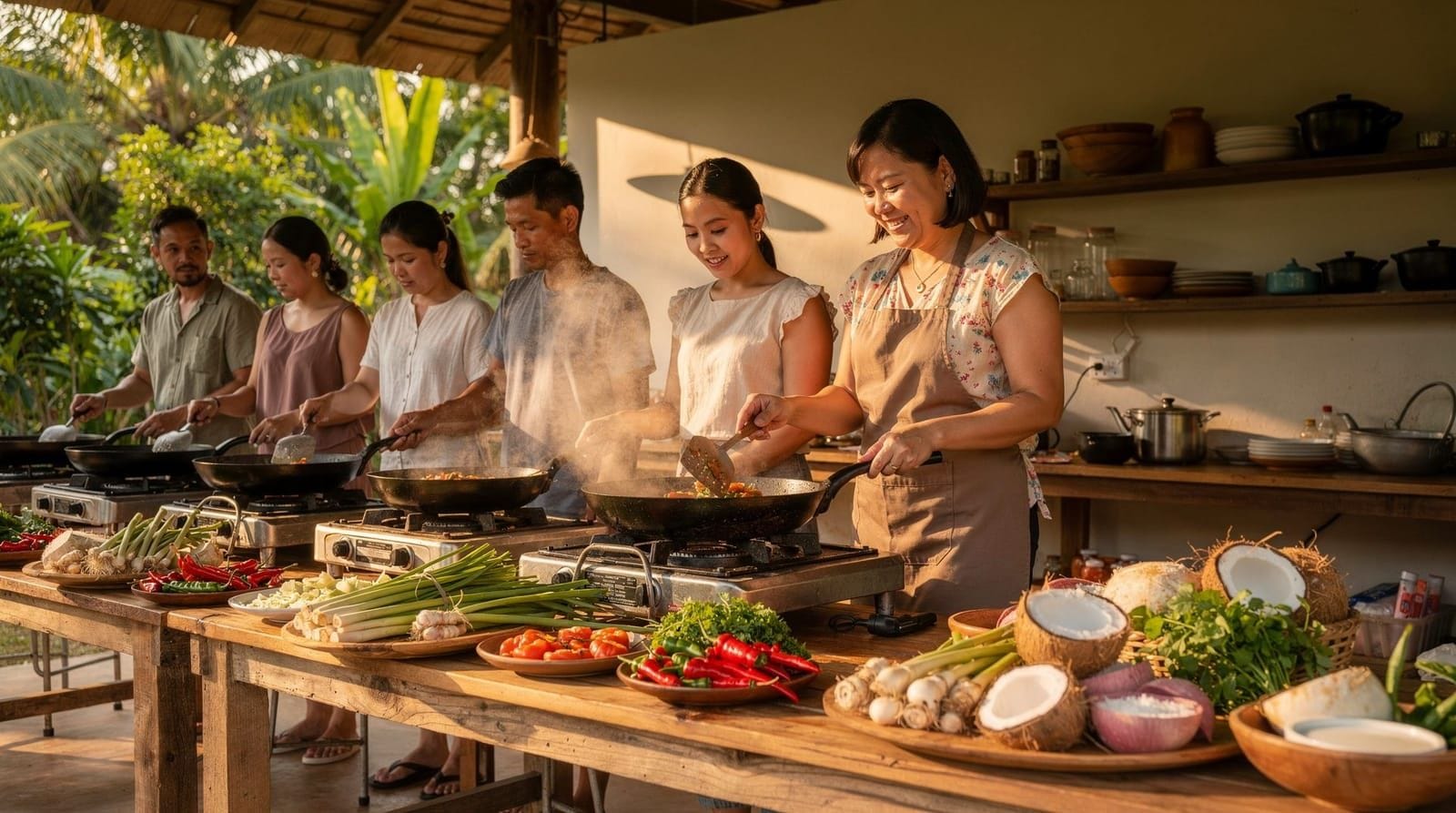
Several Chiang Mai cooking schools build their morning session around a Warorot market visit specifically, walking students through ingredient selection before heading to the kitchen — a genuinely useful way to understand the market beyond just eating there. This is a different experience from a pure food tour, more educational and slower-paced.
Traditional Thai cooking class with market tourHow Warorot compares to the evening markets
It’s worth being explicit about what Warorot does and doesn’t offer relative to the city’s evening markets, since the two serve genuinely different purposes. Warorot has no atmosphere in the “night out” sense — no music, no strolling crowds, no craft stalls alongside the food — it’s a working market where the transaction is the point, and it closes by early evening rather than building toward a nighttime peak. What it offers instead is authenticity of price and product: because so few visitors specifically prioritize it over the more famous night markets, prices and quality haven’t drifted toward tourist expectations the way they have at parts of the Night Bazaar. For a full comparison of the evening options, see the best night markets for food guide; for the broader picture of how Warorot fits into a full trip’s eating plan, see the Chiang Mai street food guide.
Vegetarian and dietary options at Warorot
Warorot’s Chinese-Thai heritage means genuine vegetarian (“je”) stalls are present, particularly noticeable during the September vegetarian festival period when yellow flags mark participating vendors throughout the market. Outside that window, vegetarian options require a bit more searching — tofu dishes and fresh fruit are the most reliable fallback, and it’s worth specifically asking about fish sauce in anything that looks like a vegetable dish by default, since it’s a common seasoning here as elsewhere in Chiang Mai. See the vegetarian and vegan restaurants guide for a fuller breakdown of navigating this citywide, and the halal food guide for the separate, smaller cluster of halal options concentrated around Ban Ho rather than Warorot itself.
Bargaining etiquette at Warorot
Unlike the crafts and clothing sold at markets like Sunday Walking Street, food prices at Warorot are generally fixed and not subject to bargaining — attempting to haggle over a portion of sai oua or a pastry is unusual and not really part of local practice. Bargaining is more relevant on the upper textile and household-goods floors, where a modest amount of negotiation on larger purchases is more normal, though even there it’s a gentler, less theatrical process than in markets built around tourist souvenir sales. If in doubt, watching how other local customers interact with a stall — quick, polite, no drawn-out negotiation over food items — is the best guide to local norms.
Seasonal considerations
Warorot’s covered structure means it operates consistently across seasons, unlike open-air markets that can be disrupted by rain. That said, the fresh fruit and produce on offer shifts noticeably through the year — mango season (roughly March-June) brings the best mango for dishes like mango sticky rice (see the mango sticky rice guide), while the cooler months (November-February) bring a wider range of temperate produce grown in the surrounding highlands. Visiting during a specific season won’t change what’s fundamentally on offer, but it’s worth knowing that the freshest, most impressive produce displays vary somewhat month to month.
What’s nearby
Warorot sits close to the Ping River and Wat Ket riverside area, making it easy to combine a morning market visit with a slower riverside walk, a temple stop, or a coffee break at one of the small galleries along the river. It’s also a reasonable base for exploring the eastern edge of the Old City on foot or by short songthaew ride.
A note on photography and etiquette
Warorot is a working market first and a visitor attraction second, which is worth keeping in mind when taking photos. Photographing the food itself, the general market scene and the flower stalls at Ton Lamyai is generally fine and common practice, but it’s courteous to ask before photographing individual vendors directly, especially at smaller family-run stalls where a camera pointed at someone mid-transaction can feel intrusive rather than flattering. Most vendors are relaxed about this if asked, and a smile and a simple gesture toward the camera usually gets a clear yes or no without needing shared language. Avoid blocking narrow walkways for photos during the busiest early-morning hours, since local shoppers moving through the market on a tight schedule take priority over a lingering photo opportunity in the market’s own working rhythm.
Edible souvenirs worth bringing home
If you’re looking for food-related souvenirs rather than just an on-the-spot meal, Warorot is one of the better places in the city to find them. Dried northern chilies and pre-mixed curry powder blends used for dishes like gaeng hang lay travel well and give a genuine taste of the region’s cooking to recreate at home, discussed further in our northern Thai food dishes guide. Vacuum-packed or dried versions of sai oua are sometimes available, though fresh sausage doesn’t travel as well and is better eaten locally. Thai-Chinese preserved fruits and traditional sweets, many with a longer shelf life than fresh desserts, are another reasonable option, and they’re noticeably cheaper here than at souvenir shops explicitly aimed at visitors elsewhere in the city. As with food eaten on the spot, prices for packaged goods here reflect local rather than tourist-area rates, making Warorot worth a specific stop near the end of your trip if edible souvenirs are on your list.
Frequently asked questions about the Warorot Market food guide
Is Warorot Market touristy?
Not particularly — it’s used far more by local shoppers than by tour groups, which is exactly why its prices and selection stay honest compared to markets built for evening tourist footfall.
Do I need cash, or can I use a card at Warorot?
Cash only, and small notes are strongly preferred — very few stalls can break a 500 or 1,000 baht note for a 20-baht item.
Is Warorot Market safe for solo travelers?
Yes, it’s a busy, well-established daytime market with a strong regular vendor presence and no particular safety concerns beyond standard city awareness.
Can I find vegetarian food at Warorot?
Yes, particularly Chinese-Thai vegetarian stalls, most visible during the September vegetarian festival period — see the vegetarian and vegan restaurants guide for more on that.
How long should I plan for a Warorot Market visit?
45 minutes to an hour covers the main food stalls and a walk through Ton Lamyai flower market; add more time if you plan to browse the upper textile floors as well.
Is Warorot Market walkable from the Old City?
It’s a bit far for most travelers to walk comfortably (roughly 20-25 minutes from the eastern Old City gates), so a short songthaew or Grab ride is the more practical option, particularly in the morning heat.
Are there ATMs near Warorot Market if I run out of cash?
Yes, several banks and ATMs are located within a short walk of the market, useful given that virtually every stall inside requires cash and larger notes can be hard to break at individual food vendors.
Can I get breakfast at Warorot Market, or is it more of a lunch destination?
It’s genuinely a breakfast destination first — the earliest hours (6-9am) are when the food stalls are freshest and busiest with local shoppers picking up their own morning meals, making it one of the better breakfast options in the city rather than just a place to browse.
Top experiences
Bookable activities with verified prices and instant confirmation on GetYourGuide.