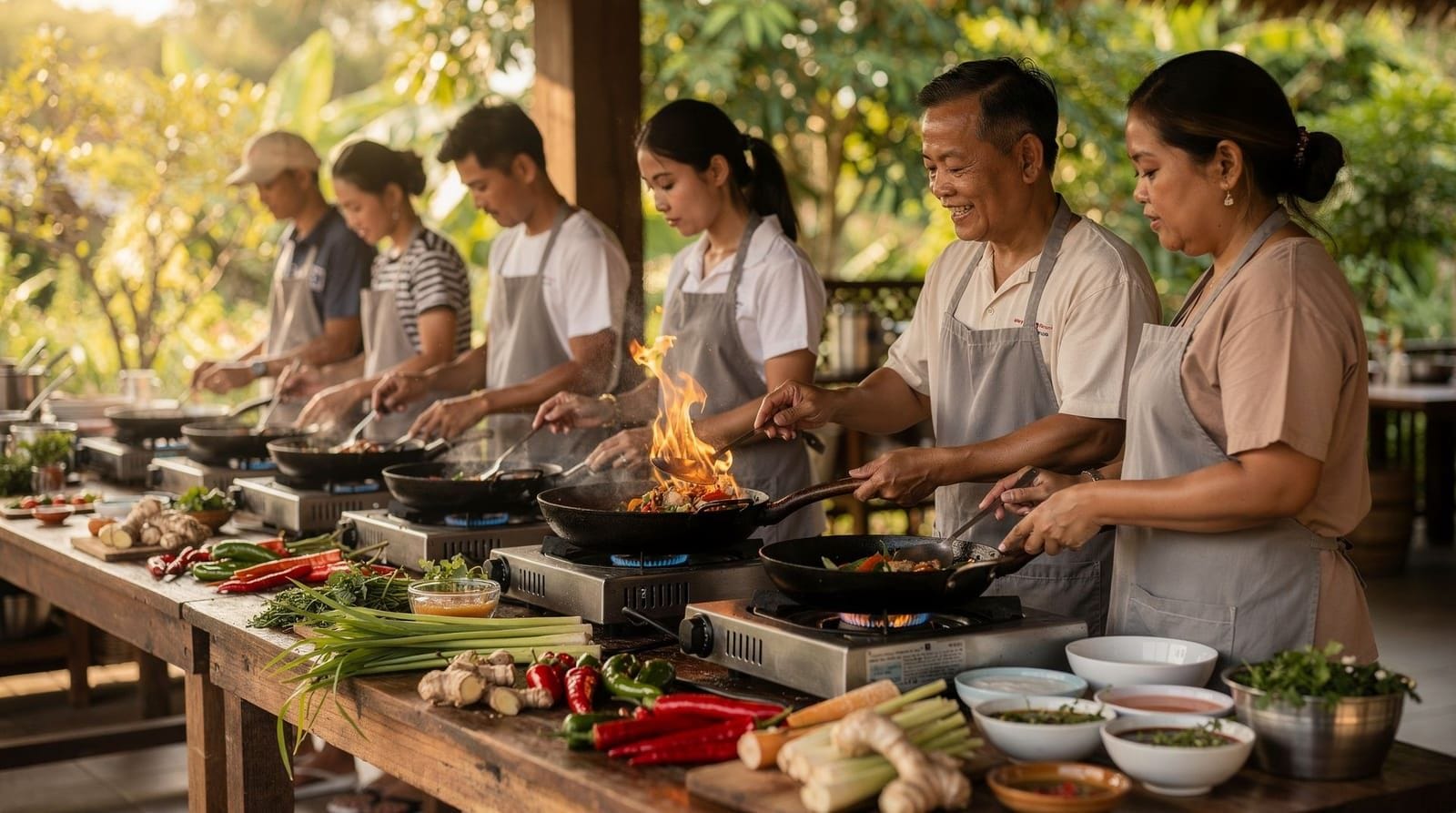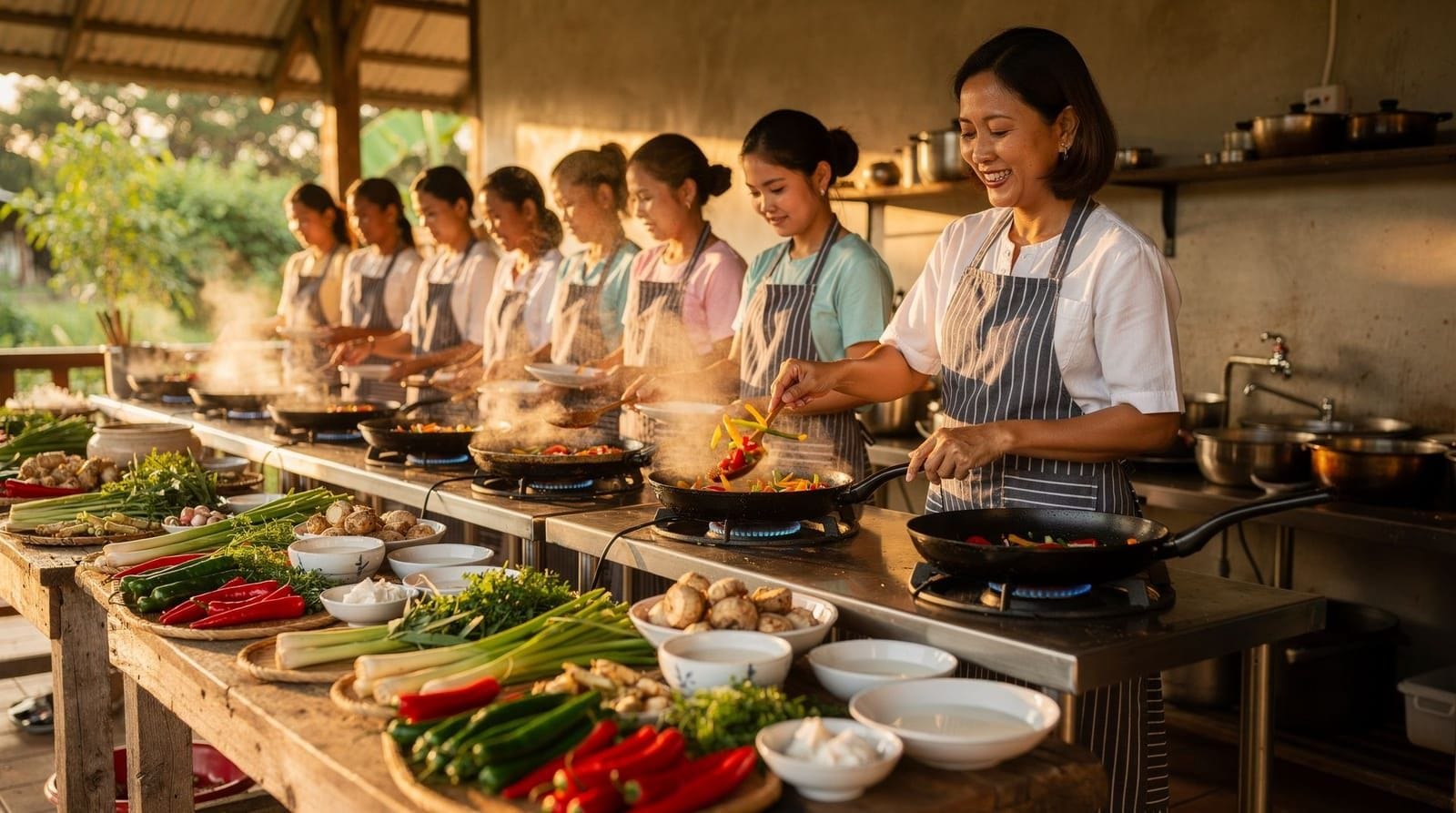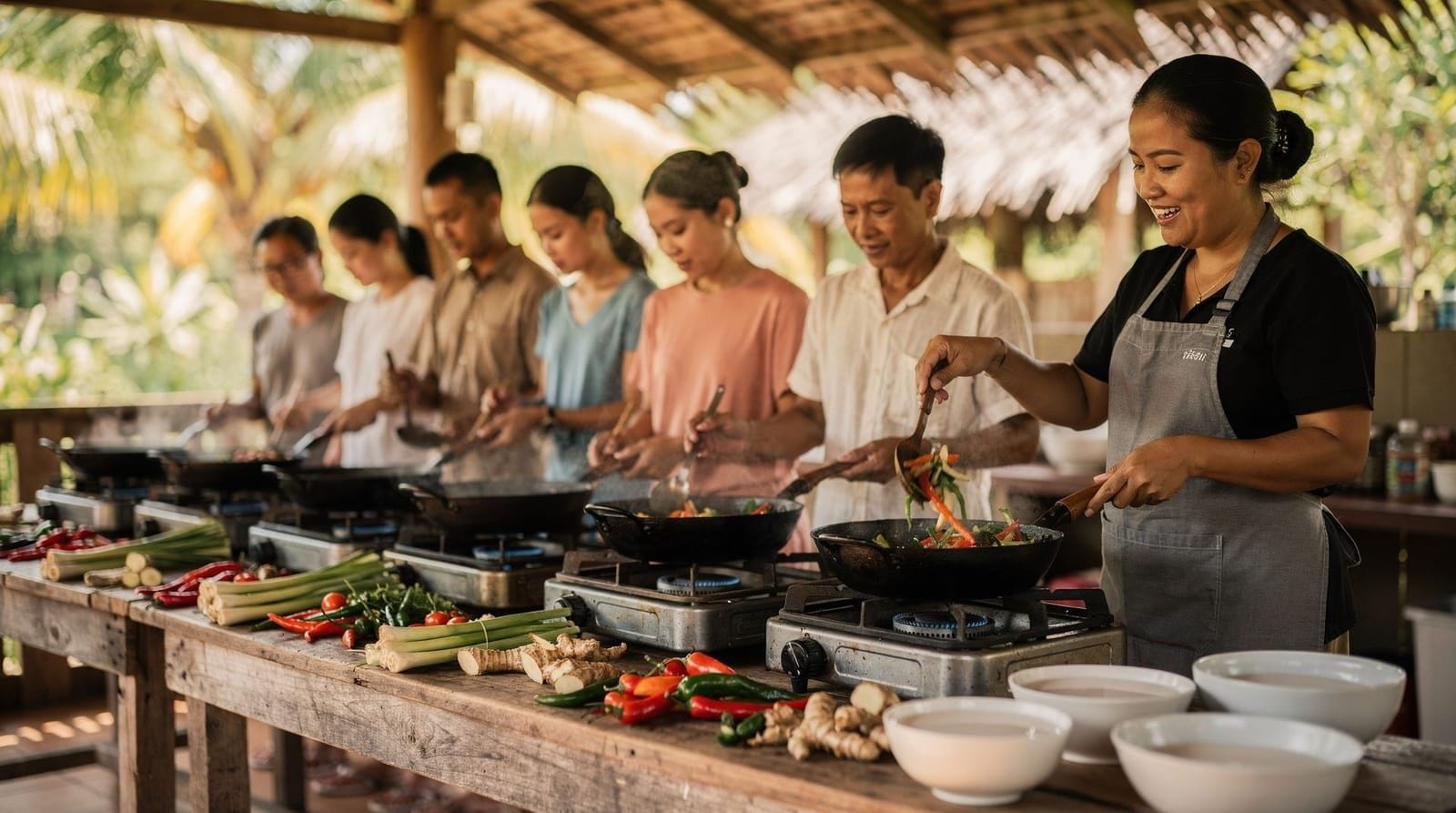
Chiang Mai cooking classes with a market tour
Chiang Mai: Traditional Thai Cooking Class with Market Tour
What does the market tour in a cooking class actually cover?
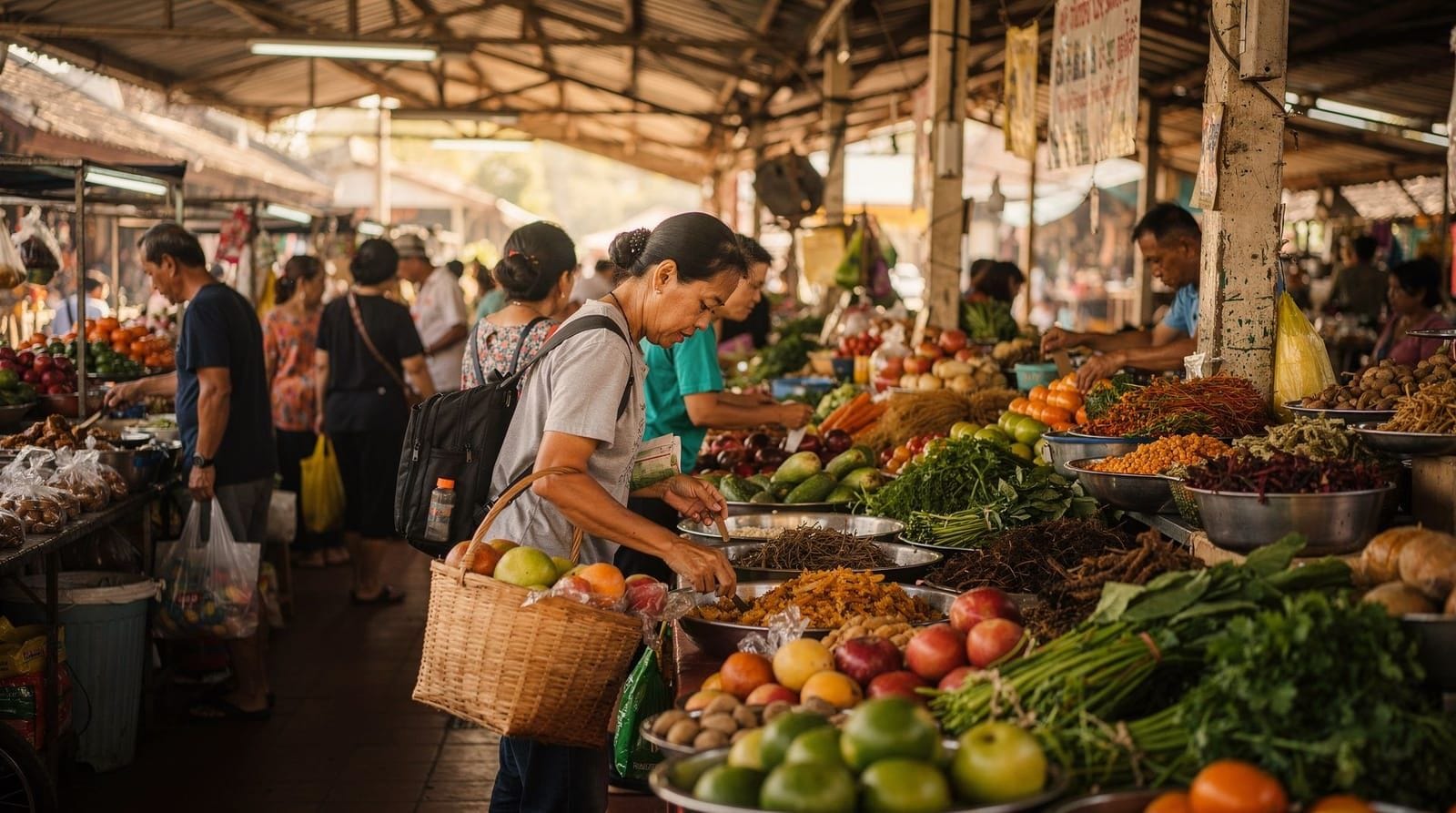
A genuine market-tour segment runs 30-45 minutes and walks you through a local fresh market with a guide, pointing out ingredients like galangal, three types of Thai basil, palm sugar, and fresh curry pastes, explaining what goes into the dishes you're about to cook. Some listings use the phrase more loosely to describe a brief 10-15 minute walk-past on the way to the kitchen, so it's worth checking the listing description for specifics before booking.
What the market component is actually for
A market visit tacked onto a cooking class exists to do one specific job: connect the ingredients you’re about to cook with, and the dishes you’ll eat all week, to names and uses you can actually recognize. Without it, a curry is just a curry; with a decent market walkthrough beforehand, you start noticing that the red curry paste you made contains dried chilies and galangal rather than fresh chilies and ginger, and that the fish sauce on every restaurant table is the same one that went into your tom yum. It’s a small addition in terms of time, usually 30-45 minutes when done properly, but it changes how the rest of the class — and arguably the rest of your trip’s meals — lands.
Which market classes typically use
Most cooking classes route their market segment through a smaller, local fresh market close to the teaching kitchen, rather than the city’s biggest market, simply because a compact market is easier to walk a group of eight to twelve people through without losing anyone or blocking narrow aisles. These neighborhood markets carry the same core ingredients — fresh curry pastes already pounded by market vendors, a wall of fresh and dried chilies, galangal, turmeric, three or four visually similar herbs that turn out to be different types of Thai basil — without the scale of Warorot Market, the city’s largest and oldest market near the riverside.
Some classes, particularly those based in or near the Old City and the Ping riverside area, do route through Warorot itself, which adds scale and a wider range of stalls (dried goods, flowers, textiles alongside the food sections) at the cost of a longer, sometimes more crowded walkthrough. If browsing a bigger market matters to you independent of the cooking class, it’s worth doing a separate visit to Warorot on another day rather than relying on the class’s shorter, cooking-focused version — our Warorot Market food guide covers what to look for there in more depth.
What you actually learn identifying ingredients
The specific, concrete things a decent market guide points out tend to be the ones that make the rest of the trip’s food make more sense: the difference between galangal (woodier, more citrus-forward) and ginger; the three common Thai basils (Thai basil, holy basil, and lemon basil) and which dish each goes into; palm sugar versus white sugar and why Thai savory-sweet balance depends on it; the difference between light soy sauce, dark soy sauce, and fish sauce, and how much of Thai cooking’s saltiness comes from the latter rather than table salt; and fresh curry pastes sold pre-pounded by market vendors, which is worth seeing even in a class that has you pound your own paste back at the kitchen, since it shows you what you’re aiming for texture-wise. None of this is complicated, but seeing it in person, with someone pointing at the actual vegetable or paste, sticks in a way that reading about it beforehand doesn’t.
Why the market component matters for understanding Thai cooking
Thai cooking, and northern Thai cooking specifically, leans heavily on fresh aromatics and pastes made to order rather than shelf-stable spice blends, which is part of why the cuisine tastes different from a supermarket version of the same dish name. Seeing where those aromatics come from — a market stall rather than a jar — reframes the cooking portion of the class from “follow the recipe card” to “understand why the recipe calls for this.” It’s also the most direct way to prepare yourself to order confidently at restaurants for the rest of your trip, since you’ll recognize galangal in a soup or holy basil in a stir-fry rather than treating every dish as an unfamiliar block.
Setting honest expectations: not every market tour is equal
It’s worth being direct about this: “market tour included” in a listing title ranges from a genuinely useful 30-45 minute guided walkthrough to, in some cases, not much more than a 10-15 minute walk past a few stalls on the way to the van. Neither is dishonest exactly, but they deliver very different experiences, and the difference usually isn’t obvious from the listing title alone. The more reliable signal is in the listing’s fuller description — does it name specific things you’ll see or learn at the market, or does it mention the market in one generic sentence buried in a longer paragraph about the cooking itself? Reviews sometimes flag this too, if past participants specifically mention the market segment (or its brevity) rather than just the food.
If the market walkthrough is genuinely important to you, the small-group cooking class with market tour and the cooking class with market and Thai herbs garden tour both build the market or herb-garden segment into their core structure rather than treating it as an afterthought, which is generally a reasonable signal that it gets real time. The traditional Thai cooking class with market tour is the most straightforward version of the format if you want a class built specifically around this component from the outset.
Market tour versus farm visit: which to prioritize
If you have to choose between a class built around a market visit and one built around a farm visit, the honest answer depends on what you want to see. A market shows you Thai cooking’s supply chain as it actually functions day to day in the city — a mix of local produce, imported goods, prepared pastes, and packaged staples — which is arguably more representative of how home cooks actually shop. A farm visit is narrower but more hands-on: you’re picking a specific plant yourself rather than watching a vendor sell it. Neither is objectively better; a market visit suits travelers who want a broader, faster-paced introduction to Thai ingredients, while a farm visit suits those who want a slower, more physically engaged morning. Our main cooking class guide and our comparison of the best cooking schools both cover the farm-based alternative in more detail if you’re weighing the two formats against each other.
Building a market visit into the rest of your day
A market-based cooking class pairs naturally with independent time at Warorot Market on a separate day, or with a broader street food crawl through the night bazaar area in the evening, since both give you more exposure to the same ingredients and dishes from a different angle. If you’re trying to decide whether a dedicated food tour adds enough on top of a cooking class’s market segment to be worth booking separately, our guide on whether a Chiang Mai food tour is worth it addresses that trade-off directly, and our street food guide and northern Thai dishes primer both make good follow-up reading once you’ve done the market walkthrough and want to go looking for more of the same ingredients on your own.
What to bring and how to behave in the market
A market visit as part of a cooking class moves through working spaces where vendors are conducting their normal business, not a staged tourist attraction, so a few practical habits go a long way: bring small denomination cash in case the guide offers time to buy a snack or a piece of fruit, wear closed-toe shoes since market floors are often wet from ice or produce washing, and ask before photographing individual vendors directly rather than assuming it’s fine. Most guides will tell the group where photography is welcome and where it’s better to hold off, particularly around prepared-food stalls where a vendor’s workspace is tight. None of this is unusual for anyone who has visited a fresh market anywhere, but it’s worth mentioning since a cooking class’s market segment is often a first-time market experience for many participants.
How instructors typically structure the walkthrough
A well-run market segment usually follows a loose route rather than a random wander: starting at the produce section to cover vegetables and herbs, moving to a section with fresh curry pastes and dried spices, then past the fish sauce, shrimp paste, and other bottled condiments before finishing near a fruit or snack stall, sometimes with a small tasting included. This structure mirrors the order ingredients get used back at the kitchen — aromatics and pastes first, condiments and seasoning next — which is part of why a guide-led walkthrough teaches more than browsing the same market alone would, even though the ingredients themselves are identical either way.
Comparing the market-tour classes directly
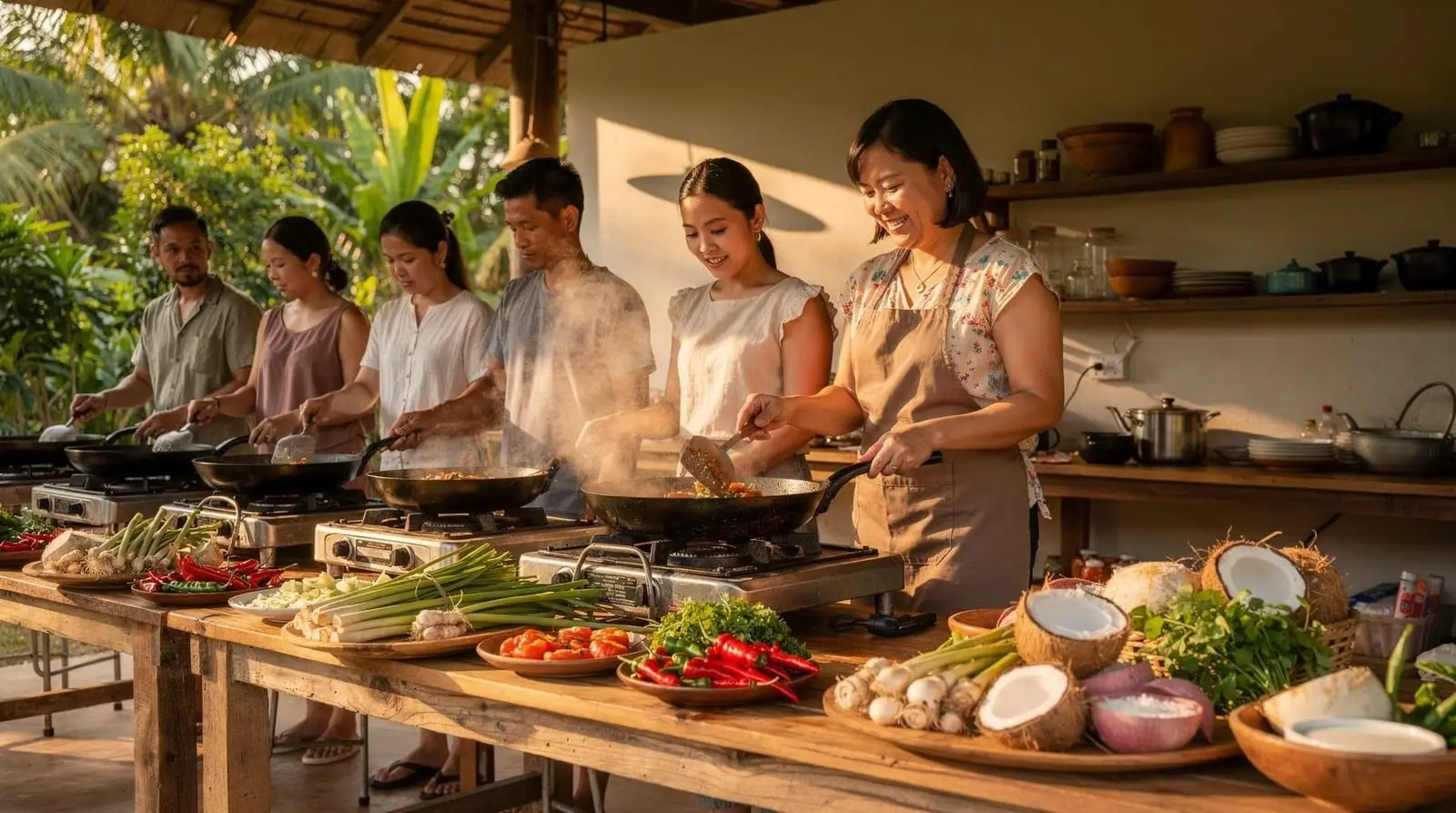
Among the market-focused options in this site’s catalog, the differences are mostly in structure and group size rather than ingredients covered. The traditional Thai cooking class with market tour is the most straightforwardly built-around-the-market option, making it a reasonable default if the market segment is your main priority. The home garden cooking school’s market visit pairs the market walkthrough with a home-style teaching setting rather than a larger commercial kitchen, which suits travelers who want a more personal, smaller-scale feel alongside the market component. The small-group option explicitly caps group size, which — as covered in our schools comparison guide — tends to translate into more individual attention during both the market walkthrough and the cooking itself. The class combining a market visit with a Thai herbs garden tour adds a second ingredient-focused segment on top of the market, effectively splitting the difference between a pure market-based and a pure farm-based format if you want a taste of both without committing to a full farm day.
When a shorter market segment is actually fine
Not every traveler needs or wants the full 45-minute guided walkthrough — if you’ve already spent time independently exploring Warorot Market or a similar fresh market elsewhere in Thailand, a shorter market segment folded into a class is a reasonable refresher rather than a gap. In that case, prioritizing group size, the paste-pounding step, and the dish lineup over the market component specifically is a sensible way to choose, and a class with a brief market stop but strong fundamentals elsewhere shouldn’t be discounted just because its market segment is compact.
Questions worth asking before booking a market-focused class
A short list of direct questions, either through the booking platform’s messaging function or in the listing’s fine print, tends to separate a genuine market-tour class from one using the phrase loosely: how long does the market segment run, does the group stay together with a guide narrating or disperse to browse independently, which specific market does the class visit, and does the segment include any tasting along the way. None of these require a lengthy back-and-forth — a school confident in its market component will usually answer specifically and quickly, while a vague or delayed response is itself a useful signal.
How market-based classes handle rainy season
Because the market segment happens outdoors or under open-air market roofing, the rainy season (roughly June through October) occasionally means a market walkthrough happens under intermittent light rain, which most markets and guides handle without issue since covered walkways run through the core of most fresh markets. It’s rarely a reason to reschedule, but it’s worth packing a light rain layer if you’re booking a market-based class during these months, and worth knowing that a farm-based alternative might mean more genuinely open-air exposure than a market visit does, if weather is a specific concern for your dates.
Summing up the trade-off
A market-tour cooking class earns its place as the more approachable, lower-commitment version of ingredient-focused cooking classes in Chiang Mai — shorter transport, a broader cross-section of Thai ingredients on display, and generally a half-day rather than full-day time commitment. Its main risk is inconsistency in how seriously different schools treat the market segment itself, which is why checking the specifics of a listing, rather than trusting the phrase “market tour included” at face value, is the most useful single habit to bring into the booking process.
Frequently asked questions about Chiang Mai cooking classes with a market tour
Which market do most Chiang Mai cooking classes visit?
Is the market visit worth prioritizing when choosing a class?
What's the difference between a market visit and a farm visit?
Do I need to arrive hungry for the market segment?
Can I ask questions during the market walkthrough?
How long does the market portion usually last?
Top experiences
Bookable activities with verified prices and instant confirmation on GetYourGuide.