Chiang Mai foodie itinerary: 3 days of khao soi, markets, and a cooking class
Chiang Mai: Traditional Thai Cooking Class with Market Tour
Chiang Mai rewards a slower approach to eating than most cities: the best meals here are rarely the ones with the longest queue or the flashiest sign, and three days is enough time to move past the obvious khao soi shops into the day markets, the shophouse restaurants, and the one proper cooking class that ties the whole trip together. This plan keeps the pace realistic — no more than one big planned activity per day — and leaves room to simply wander and eat when something smells right.
Quick answer: three days lets you cover the essentials without rushing — one day exploring the Old City’s temples and khao soi shops, one day at a hands-on cooking class followed by a guided evening food walk, and one day split between a market visit and the city’s night markets. Budget roughly 1,500-2,500 THB (USD 42-69) per person per day for food and one paid activity, more on the cooking-class day.
Getting oriented: markets, songthaews, and timing
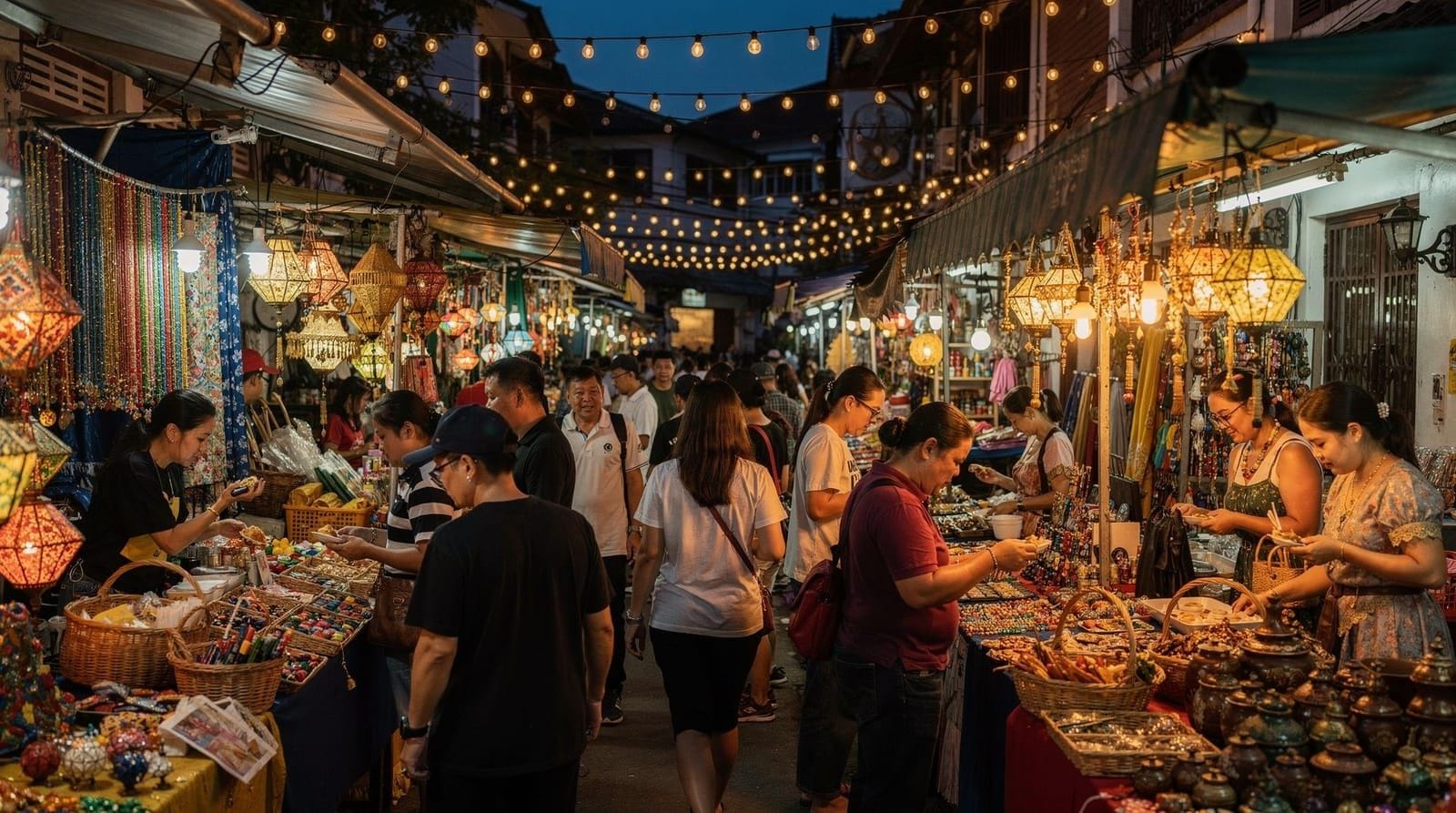
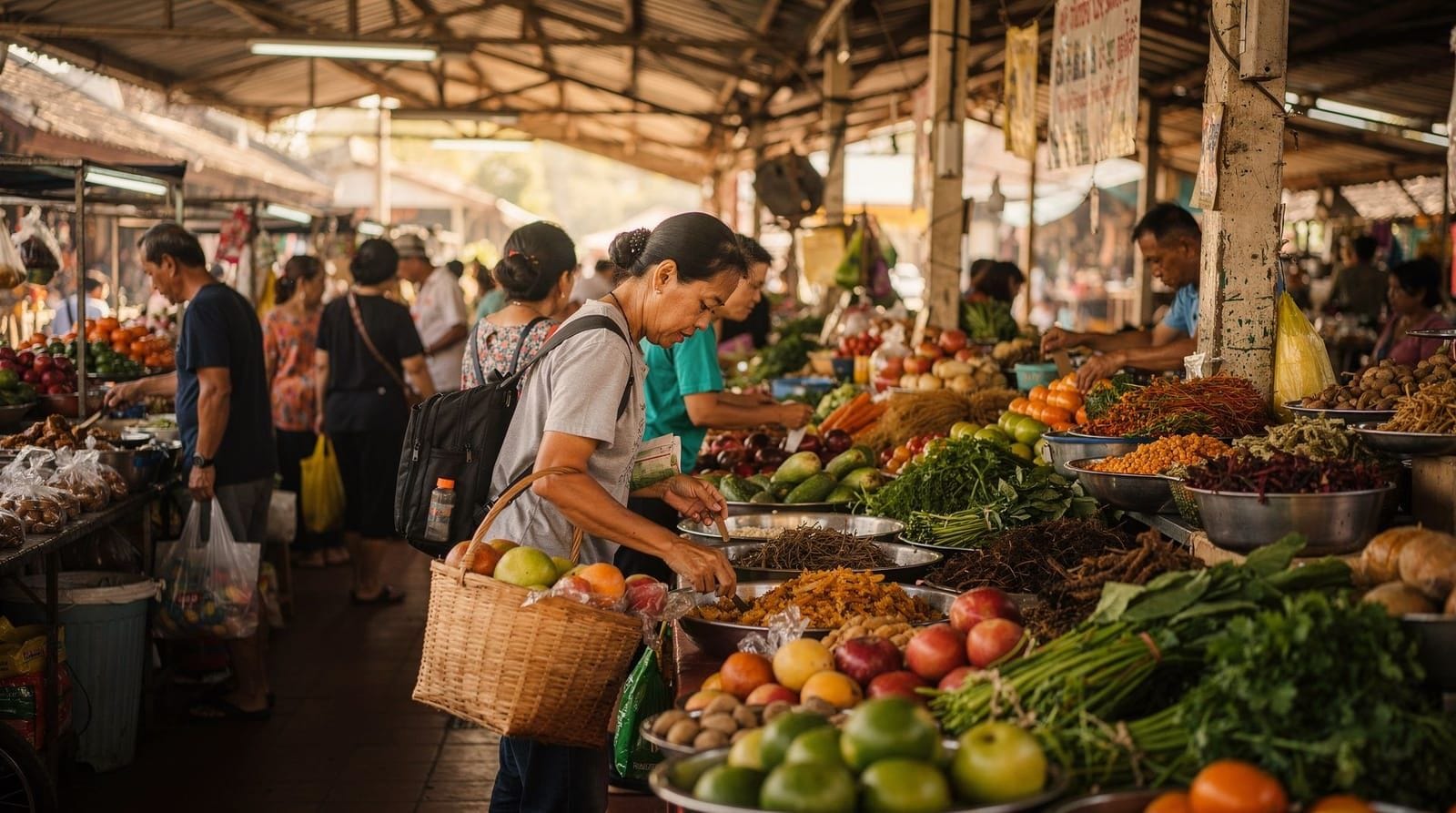
Chiang Mai’s food geography splits into a few zones worth understanding before you start. Warorot Market (also called Kad Luang) is a working day market that opens before dawn and starts winding down by mid-afternoon — it’s where locals buy northern Thai staples like sai oua sausage and nam prik ong, and it’s the best single stop for breakfast. The Old City itself has a dense cluster of khao soi shops, noodle stalls, and coffee spots inside the moat. In the evening, the Night Bazaar and Anusarn Market both run from roughly 6pm to 11pm along Chang Khlan Road, with Anusarn skewing slightly more toward seafood grills and open-air seating.
Getting between zones is easy and cheap. A shared red songthaew (the ubiquitous red pickup trucks) within the city center runs about 30-40 THB (USD 0.85-1.10) per person for short hops; Grab (Southeast Asia’s ride-hailing app) typically quotes 50-90 THB (USD 1.40-2.50) for a private car across town, and it’s the more reliable option after dark when songthaews thin out. Nothing in this itinerary requires a car or scooter — everything is walkable within a zone, with a short ride between zones.
Day 1: Old City temples, khao soi, and Nimman coffee
Morning. Start early at Warorot Market, ideally before 8am when the stalls are freshest and the heat hasn’t set in. Walk the covered market hall and the surrounding lanes for a breakfast of jok (rice porridge) or khanom jeen (fermented rice noodles with curry), both sold by the bowl for 25-40 THB (USD 0.70-1.10). Our Warorot Market food guide has a stall-by-stall breakdown if you want a plan rather than a wander.
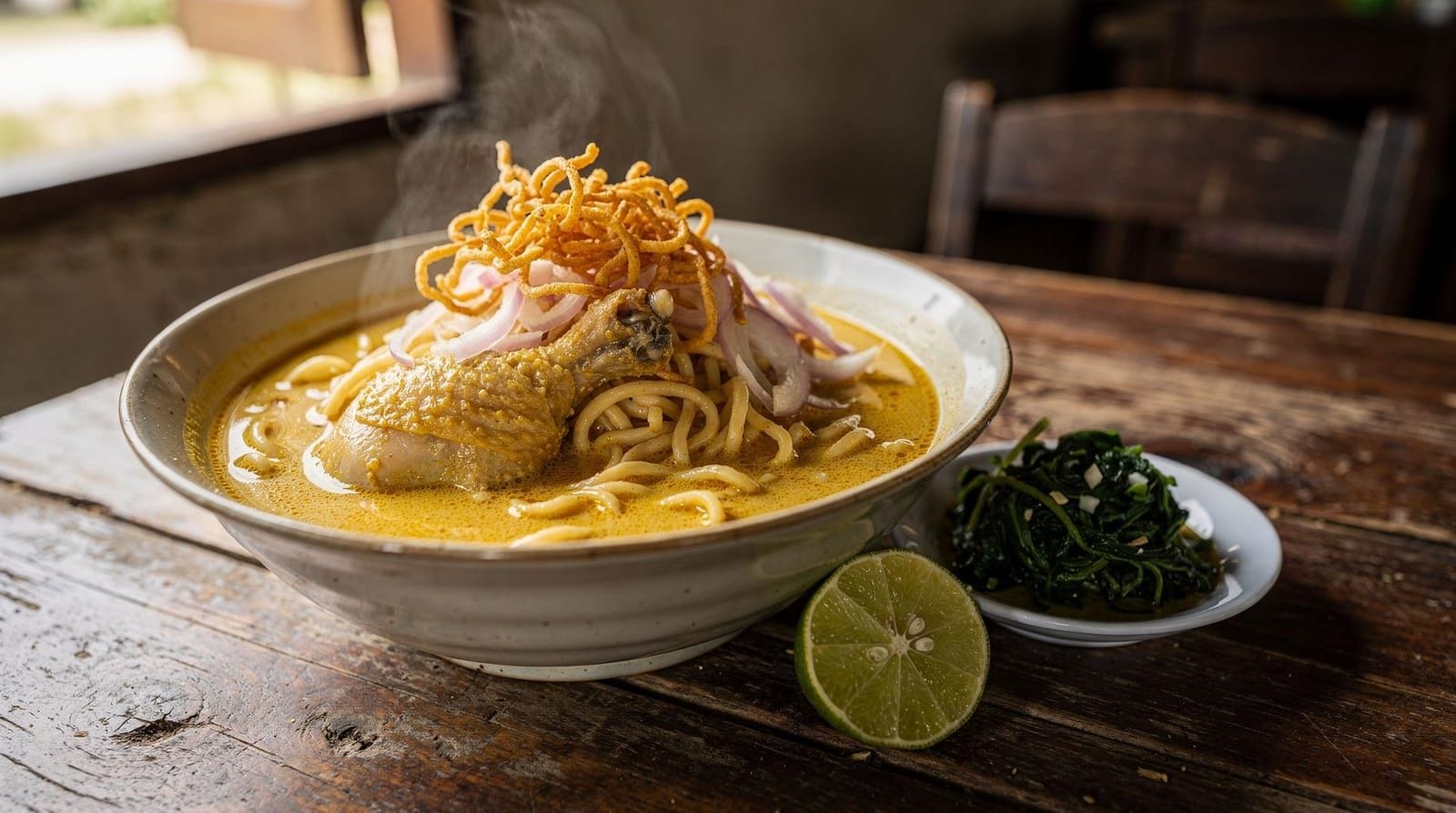
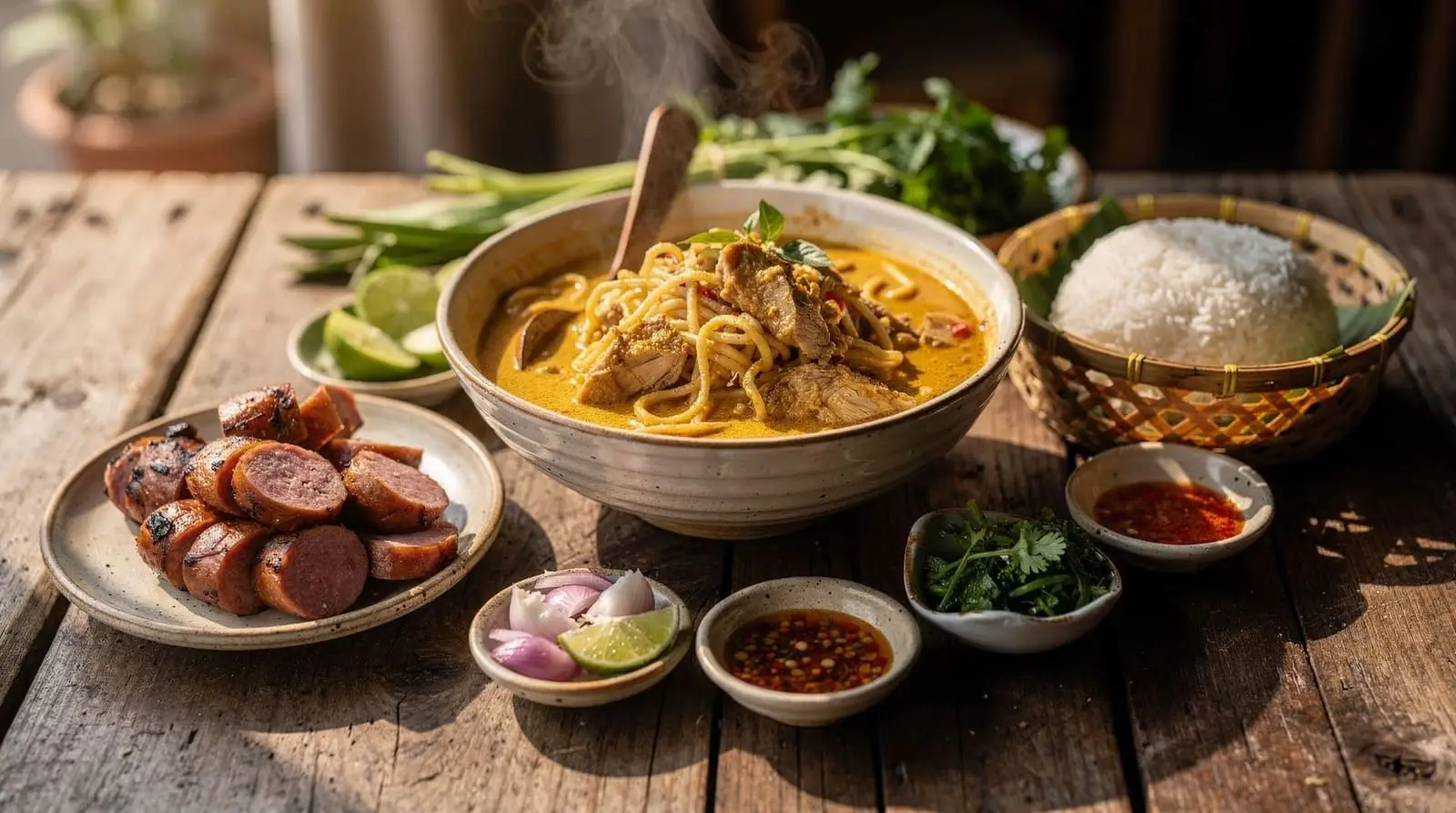
Afternoon. Cross into the Old City on foot or by a short songthaew ride and spend an hour or two temple-hopping — Wat Phra Singh and Wat Chedi Luang are both a 10-15 minute walk apart and cost 20-40 THB entry each. By early afternoon, sit down for khao soi, the turmeric-yellow coconut curry noodle soup that’s northern Thailand’s signature dish. Shophouse versions inside the Old City run 50-80 THB (USD 1.40-2.20) a bowl; our khao soi guide lists specific shops rather than generic recommendations, which matters here since quality varies a lot between stalls that look identical.
Evening. Head to Nimmanhaemin for the contrast: this is Chiang Mai’s café and design district, with a different food scene entirely — brunch spots, specialty coffee, and a younger, more design-forward crowd. Have dinner at one of the casual Nimman restaurants (expect 150-300 THB / USD 4-8 per dish, a step up from Old City street prices) and end with coffee; our coffee culture guide covers the roasters worth seeking out if caffeine is part of your trip.
Day 2: Cooking class day, then a guided food walk
This is the itinerary’s anchor day, built around one proper hands-on class rather than a rushed sampling of everything.
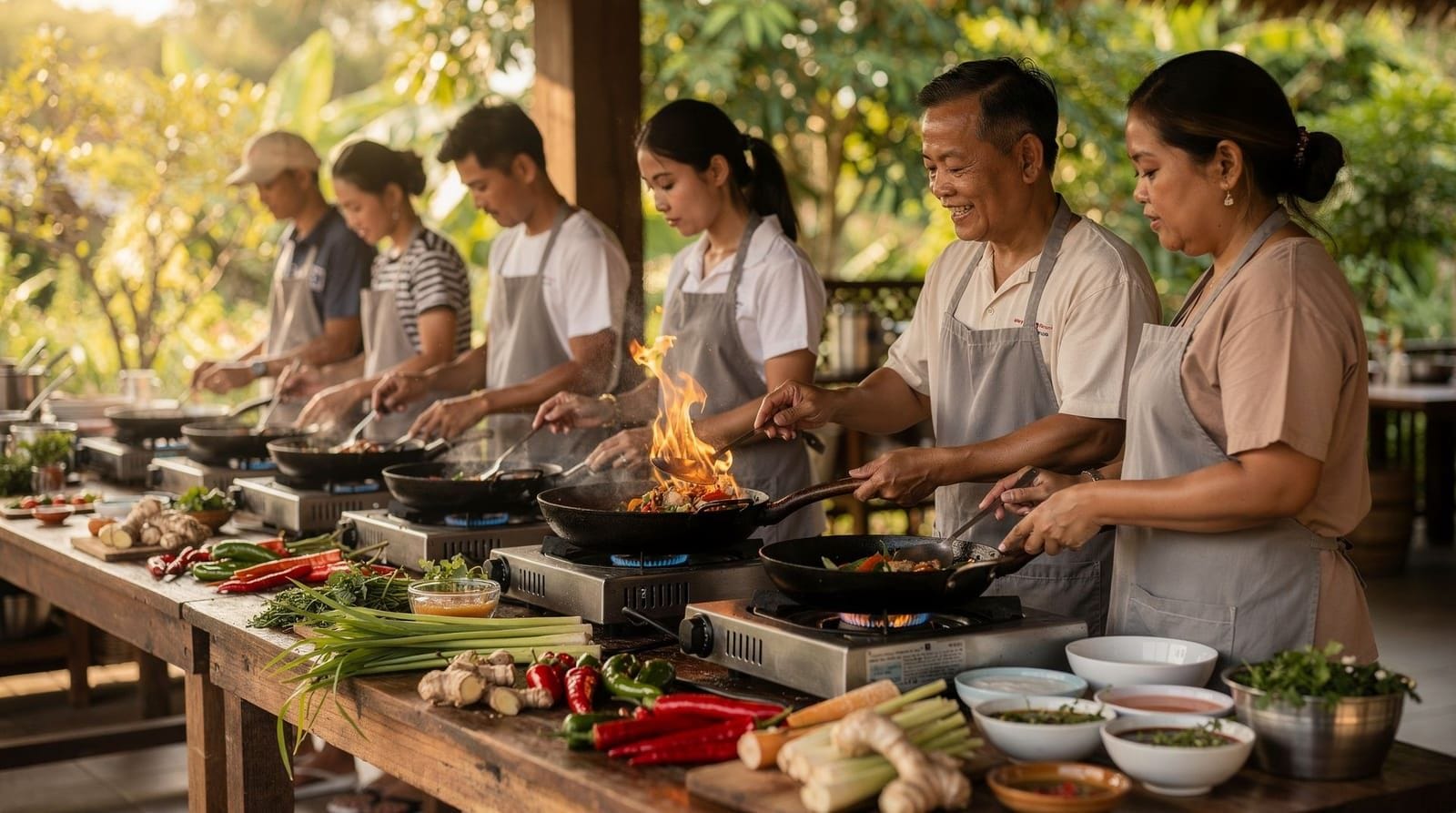
Morning to early afternoon. Book a half-day Thai cooking class that starts with a market tour, which typically runs 900-1,400 THB (USD 25-39) per person and includes hotel pickup, a walk through a local market to identify fresh ingredients, and hands-on cooking of 4-6 dishes including your own curry paste pounded from scratch. It’s a genuinely different experience from eating out — you leave understanding why northern Thai food tastes the way it does. Our full cooking class guide covers what to look for if you’d rather compare schools yourself.
Afternoon. Rest, or wander back through Nimman or the Old City — this is intentionally an unstructured block since the cooking class runs long and includes lunch.
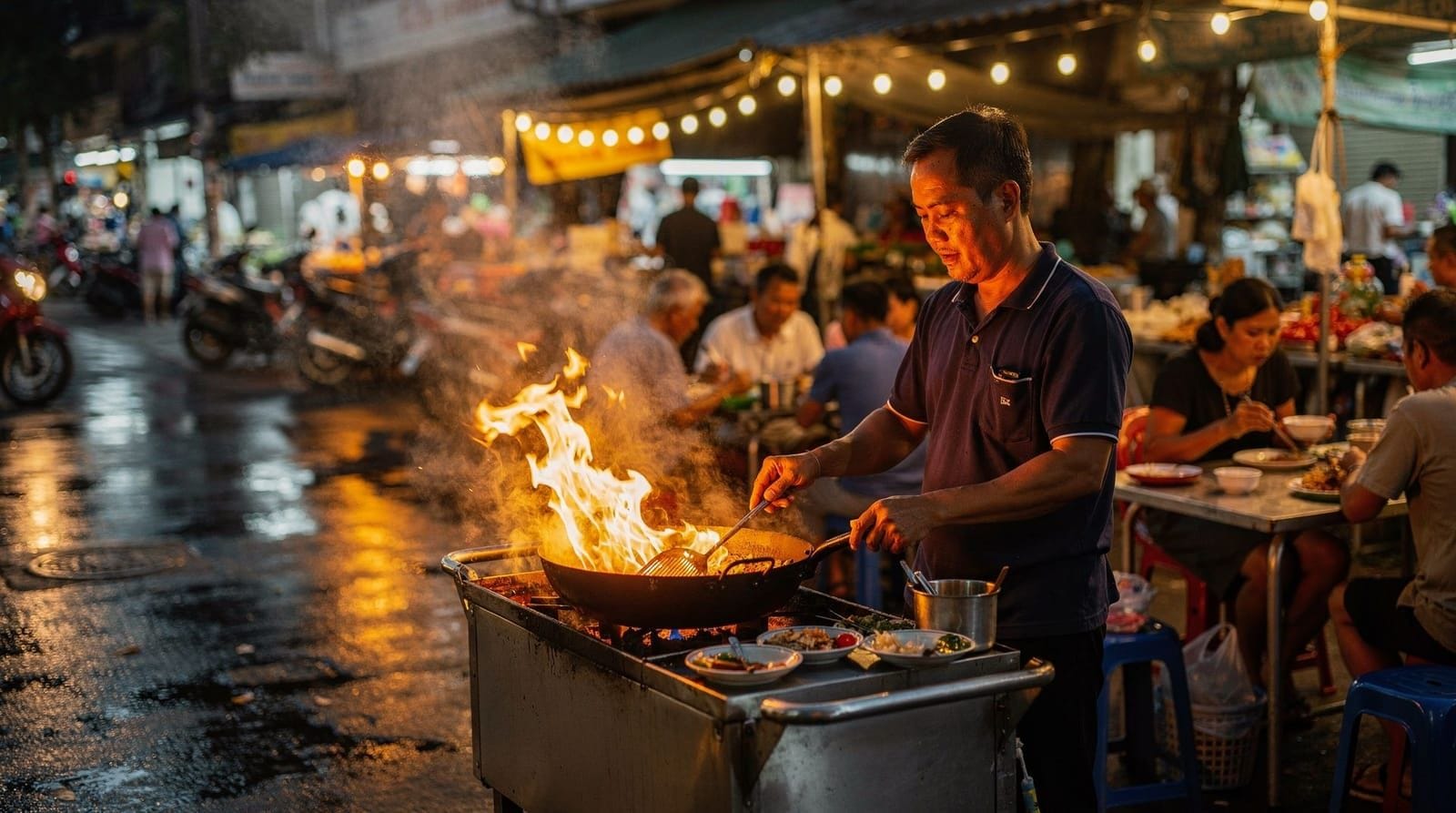
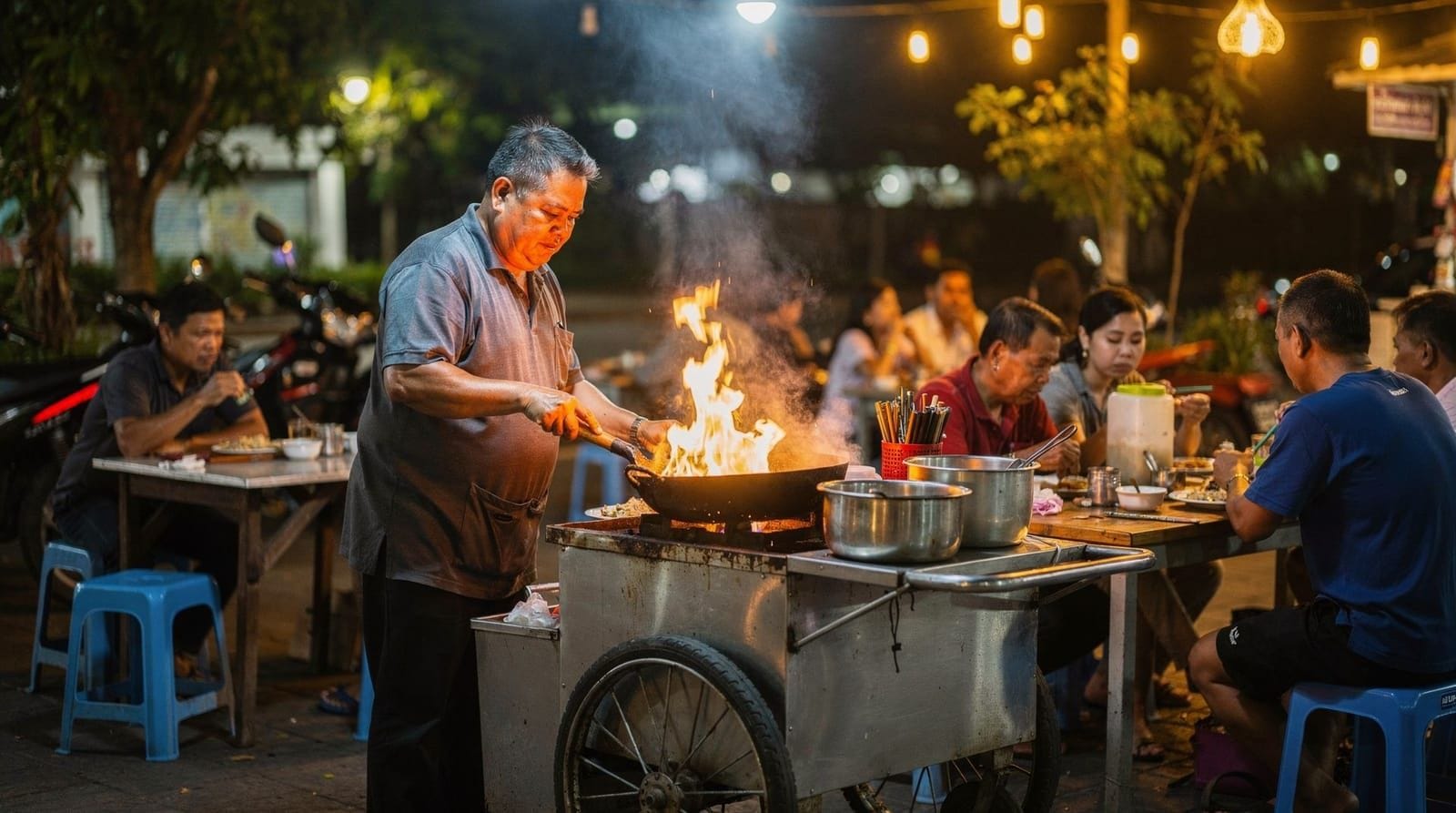
Evening. Join an evening local street food and market tour, priced around 900-1,300 THB (USD 25-36) for roughly 3 hours with a guide who takes you to stalls you’d likely walk past on your own — this is less about volume of food and more about context: what a dish is called, why a stall has a queue, which vendor has been there for decades. If you’d rather do this independently, our street food guide maps out a self-guided version with prices.
Day 3: Markets, mango sticky rice, and a final night out
Morning. If your third day falls on a Sunday, prioritize the Sunday Walking Street — but note it only runs Sunday afternoons and evenings (roughly 4pm-11pm along Ratchadamnoen Road), so plan your three days around that if the timing matters to you. Our Sunday Walking Street food guide covers what to eat there. If it isn’t a Sunday, spend the morning at a covered food court instead, or revisit Warorot for anything you missed on Day 1.
Afternoon. For a broader, guided sampling across neighborhoods rather than one market, book a food tour by songthaew with 15+ tastings, which runs around 1,000-1,500 THB (USD 28-42) and covers more ground than walking alone would allow in an afternoon — useful if you’re leaving the next day and want to cover dishes you haven’t tried yet. Save room: don’t skip mango sticky rice, sold everywhere from 40-70 THB (USD 1.10-1.95) a plate; our mango sticky rice guide ranks the versions worth the calories.
Evening. Close the trip at Anusarn Market or the Night Bazaar for grilled seafood, mango shakes, and one last round of stalls — our best night markets for food guide compares the two if you only have time for one. If you’d rather do a fully independent evening, a self-paced walking food tour booked in advance gives you a route without locking you into a guide’s schedule.
Is a guided food tour worth it, or should you DIY?
Chiang Mai’s street food scene is easy enough to navigate independently if you’re comfortable pointing at what you want and asking “phet mai?” (is it spicy?) before ordering. The value of a guided tour isn’t access — nearly every stall here is open to anyone — it’s context and pacing: a guide tells you what a dish is actually called, steers you away from the two or three tourist-priced stalls that inflate prices for foreigners, and keeps you moving so you don’t fill up on the first thing you try. Our food tour worth it guide breaks down the trade-off in more detail, but as a rule of thumb: book one guided experience (the cooking class, since it’s genuinely hands-on and hard to replicate alone) and do the rest independently using the guides linked above.
Market etiquette, drinks, and what to order if you’re unsure
A few small habits make ordering at markets and street stalls smoother. Point at the dish rather than trying to pronounce a name you’re unsure of — vendors are used to this and it avoids confusion far better than a mispronounced attempt. If a dish comes with a small bowl of extra chili, fish sauce, or sugar on the side, that’s for you to adjust to taste rather than a sign it’s already seasoned wrong. “Mai phet” (not spicy) is worth learning if you’re sensitive to heat, since northern Thai food, and khao soi in particular, can run spicier than the Thai food you may be used to elsewhere.
On drinks: fresh coconut water sold straight from the shell (25-40 THB / USD 0.70-1.10) is the easiest safe hydration option at any market, and Thai iced tea (cha yen) — strong black tea with condensed milk over ice — is worth trying even if you don’t usually take milk in tea. Local beers (Chang, Singha, Leo) run 60-90 THB (USD 1.65-2.50) for a large bottle at most street-level restaurants, noticeably cheaper than the markup at bars aimed at tourists.
If you’re unsure what to order and don’t want to over-plan, a reasonable default at any market stall is whatever dish has the longest queue of Thai customers rather than tourists — it’s not a perfect signal, but it’s a genuinely useful one across Chiang Mai’s markets.
What to pack for a food-focused trip
Pack light and practical rather than for a typical sightseeing trip: comfortable slip-on shoes you can remove easily (temples require it, and some restaurants do too), hand sanitizer for market stalls without handwashing stations, and a reusable water bottle, since tap water isn’t safe to drink but bottled and filtered refill stations are everywhere. If you’re prone to spice sensitivity, consider bringing your own antacids — northern Thai food leans heavier on chili than some regional Thai cuisines, and a three-day food-focused trip means more cumulative exposure than a typical visit.
Budget summary
Across three days, plan for roughly:
- Street food and market meals: 600-1,000 THB (USD 17-28) per day if eating mostly at stalls
- One cooking class: 900-1,400 THB (USD 25-39)
- One guided evening food tour: 900-1,500 THB (USD 25-42)
- Local transport (songthaew/Grab): 150-300 THB (USD 4-8) per day
Total for the three days, excluding accommodation, typically lands between 4,500 and 7,000 THB (USD 125-195) per person — modest by most food-trip standards, since Chiang Mai’s actual cost driver is the paid experiences, not the food itself.
Frequently asked questions about this Chiang Mai foodie itinerary
Do I need to book the cooking class in advance?
Yes, especially November through February when the city is busiest — popular schools can fill a week or more ahead. In the rainy season (June-October) a day or two of notice is usually enough.
Is Chiang Mai street food safe to eat?
Generally yes. Stick to stalls with visible turnover (a queue of locals, not just tourists) and food cooked to order rather than sitting out at room temperature for hours. Bottled water is sold everywhere for 10-15 THB.
What’s the difference between khao soi and other noodle soups here?
Khao soi is specifically northern Thai: a coconut-milk curry broth with egg noodles, topped with crispy fried noodles, usually served with chicken or beef. It’s distinct from the clear broths and tom yum-style soups found elsewhere in Thailand.
Can I do this itinerary as a vegetarian?
Yes — most cooking schools and many street stalls can substitute tofu, and Chiang Mai has a reasonably developed vegetarian scene in Nimman specifically. Confirm dietary needs when booking the cooking class.
How much cash should I carry per day?
1,500-2,000 THB (USD 42-56) covers food, a couple of songthaew rides, and small purchases comfortably, with card or bank transfer available for larger bookings like the cooking class.
Is three days really enough for a food-focused trip?
It’s enough to hit the highlights without feeling rushed, but if food is your main reason for visiting, extending to four or five days lets you add a second cooking class format (farm-based rather than market-based) or a day trip to a smaller town’s market.
Do I need a scooter or car for this itinerary?
No — every stop here is reachable by songthaew, Grab, or on foot within a zone. This is one of the easiest itineraries in Chiang Mai to do entirely car-free.
What if it’s raining?
Warorot Market and the covered sections of the Old City food streets have roofed areas; the night markets have some covered stalls but plenty of open-air seating too, so a light rain jacket is worth packing during the rainy season (June-October).
Top experiences
Bookable activities with verified prices and instant confirmation on GetYourGuide.