Chiang Mai coffee culture: Nimman's café scene and the hill-grown beans behind it
Why is Chiang Mai known for good coffee?
Northern Thailand's highland provinces — the same cool, high-altitude terrain used for hill-tribe agriculture — grow genuinely good Arabica coffee, much of it through direct-trade projects with Akha, Lisu and Karen farming communities. That supply chain, combined with a dense, competitive café scene in the Nimman district, has made Chiang Mai one of Thailand's strongest specialty coffee cities rather than one relying on imported beans.
Why Chiang Mai has a genuine coffee culture, not just a café trend
This guide is written for two overlapping kinds of traveler: those who simply want a good, reliable coffee stop between sightseeing and temple visits, and those genuinely curious about the supply chain and culture behind Chiang Mai’s reputation as a serious coffee city. Both are covered below, from the practical (where, what it costs, how to work from a café comfortably) through to the deeper context (where the beans come from, who grows them, and why the scene developed the way it did).
It’s easy to assume Chiang Mai’s abundance of stylish cafés is simply a byproduct of the city’s popularity with digital nomads and long-stay travelers — and that’s part of the story. But the deeper reason Chiang Mai’s coffee scene is taken seriously by people who care about coffee elsewhere in Thailand and beyond is supply: the mountainous provinces of the north, including areas within a few hours of the city, have the altitude and cool climate Arabica needs, and a growing number of direct-trade brands source specifically from hill-tribe farming communities — Akha, Lisu, Karen and others — who have shifted or diversified from other crops into coffee over recent decades. That combination of genuine local sourcing and a competitive, quality-focused café district gives Chiang Mai’s coffee identity real substance.
Nimman: the center of the scene
Nearly every serious conversation about Chiang Mai coffee eventually circles back to this one district, and for good reason given how much of the scene is concentrated there.
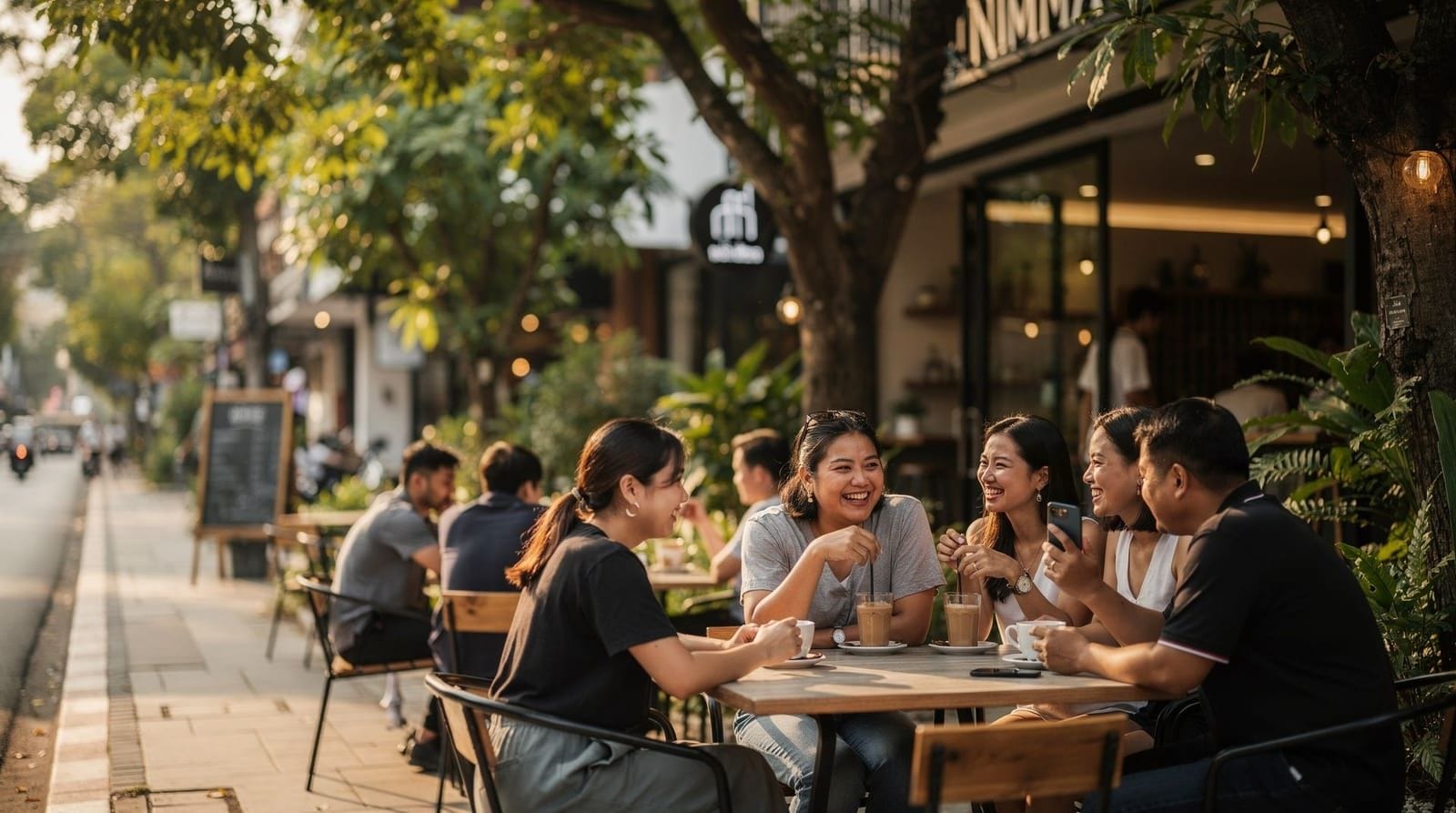
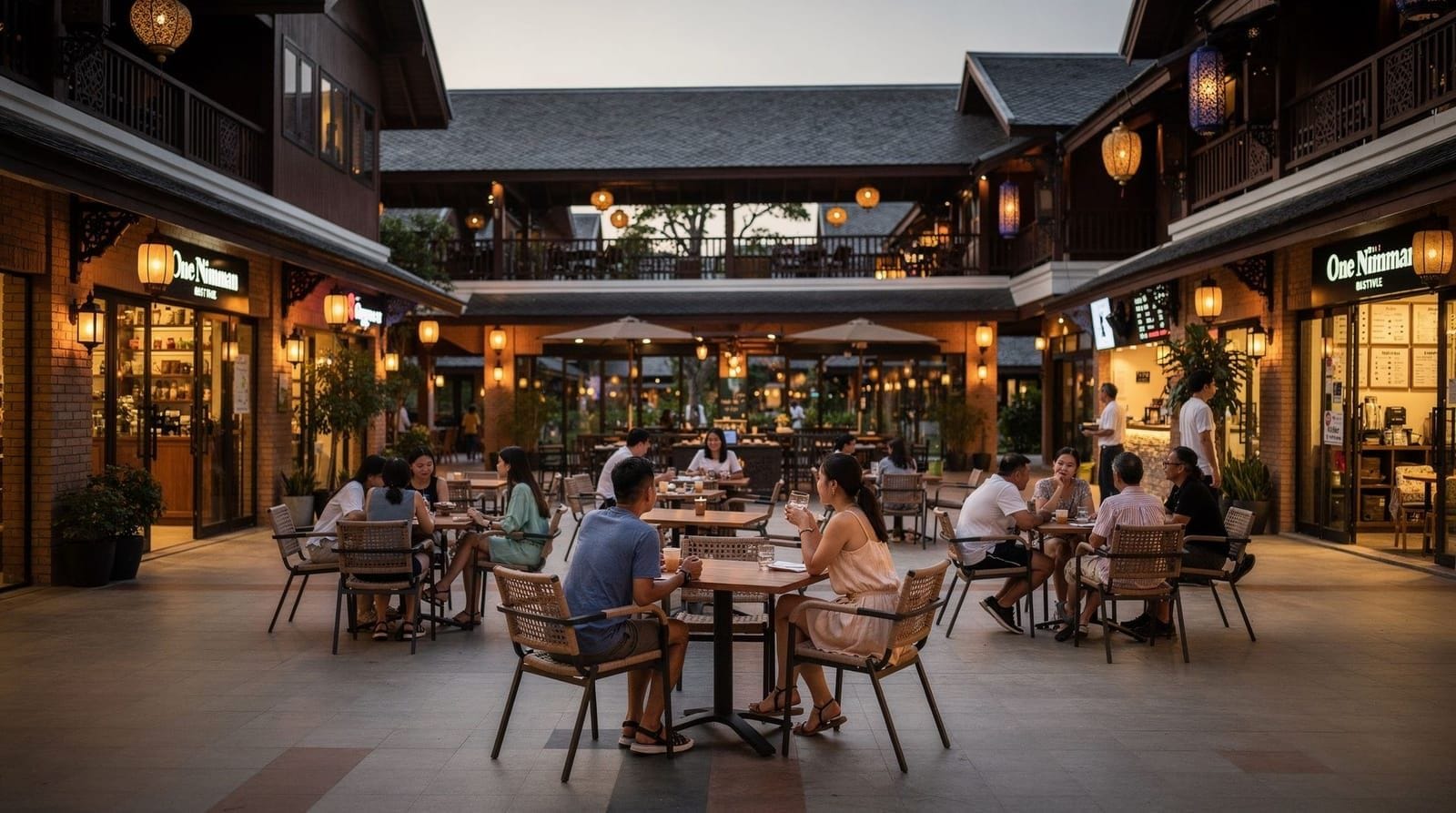
Nimmanhaemin is where Chiang Mai’s coffee culture concentrates most visibly — a dense grid of small sois filled with independent cafés, several run by baristas with national or international competition backgrounds, alongside design studios, boutiques and restaurants. The district’s café density means genuine specialization: some shops focus tightly on single-origin pour-overs and manual brewing methods, others on latte art and espresso-based drinks, and a few on their own house roasting operations sourcing directly from named highland farms.
One Nimman, the lifestyle plaza anchoring the district, adds a cluster of additional café and dessert options in a more open, plaza-style setting, useful if you want a break between browsing its boutiques and events space.
Hill-tribe coffee: where the beans actually come from
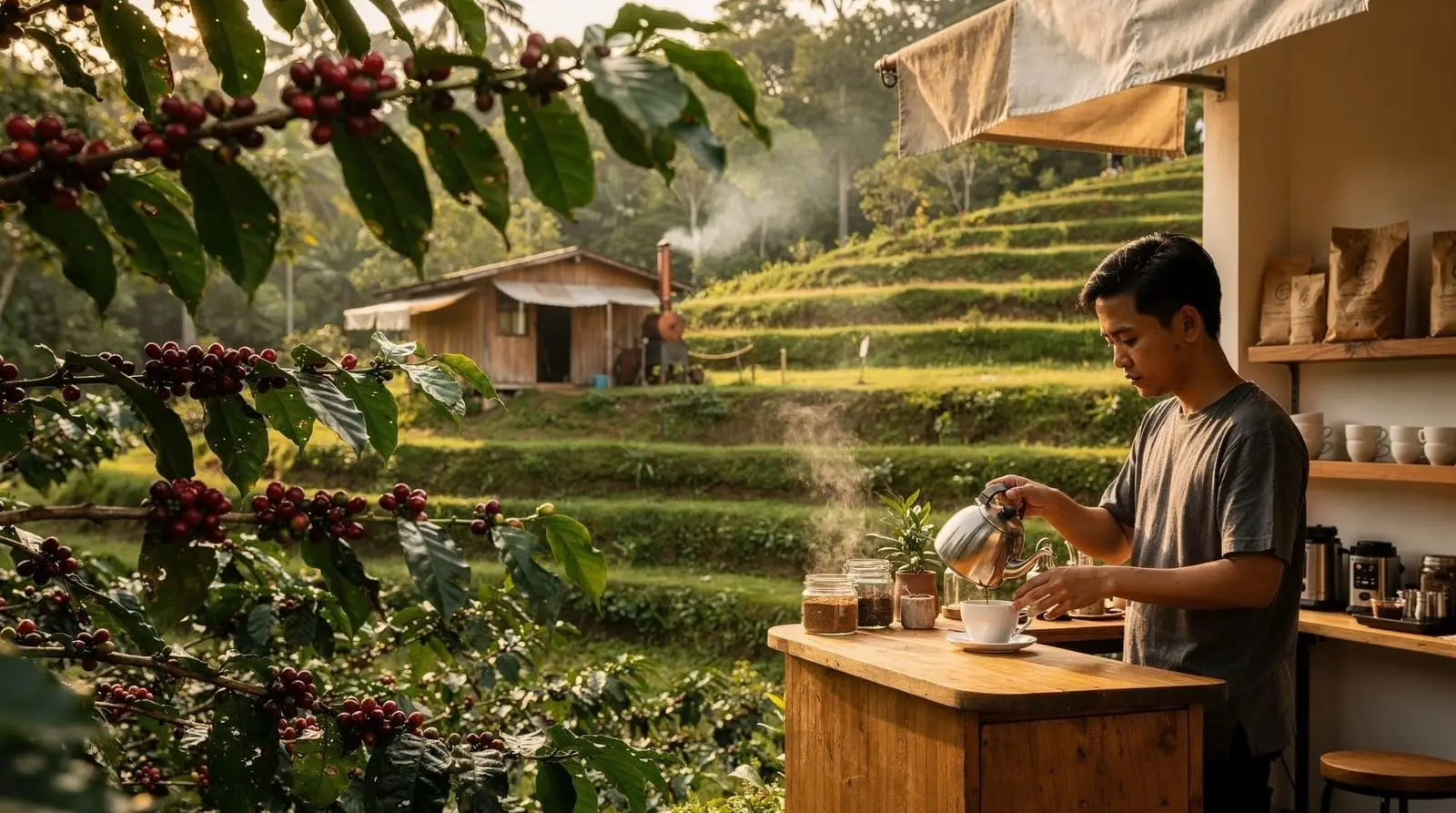
A meaningful and growing share of northern Thai coffee comes from direct-trade relationships with hill-tribe farming communities in the highlands around Chiang Mai and neighboring Chiang Rai province. These projects typically pay farmers above standard commodity rates and market the coffee under the farm or community’s name rather than as anonymous “Thai coffee” — a shift that’s given genuine economic alternatives to communities historically pressured toward less sustainable agriculture. Cafés that highlight a specific highland origin or hill-tribe community by name on their menu are generally reflecting a real, traceable supply chain rather than using it as vague marketing language.
Mae Kampong: seeing the crop itself
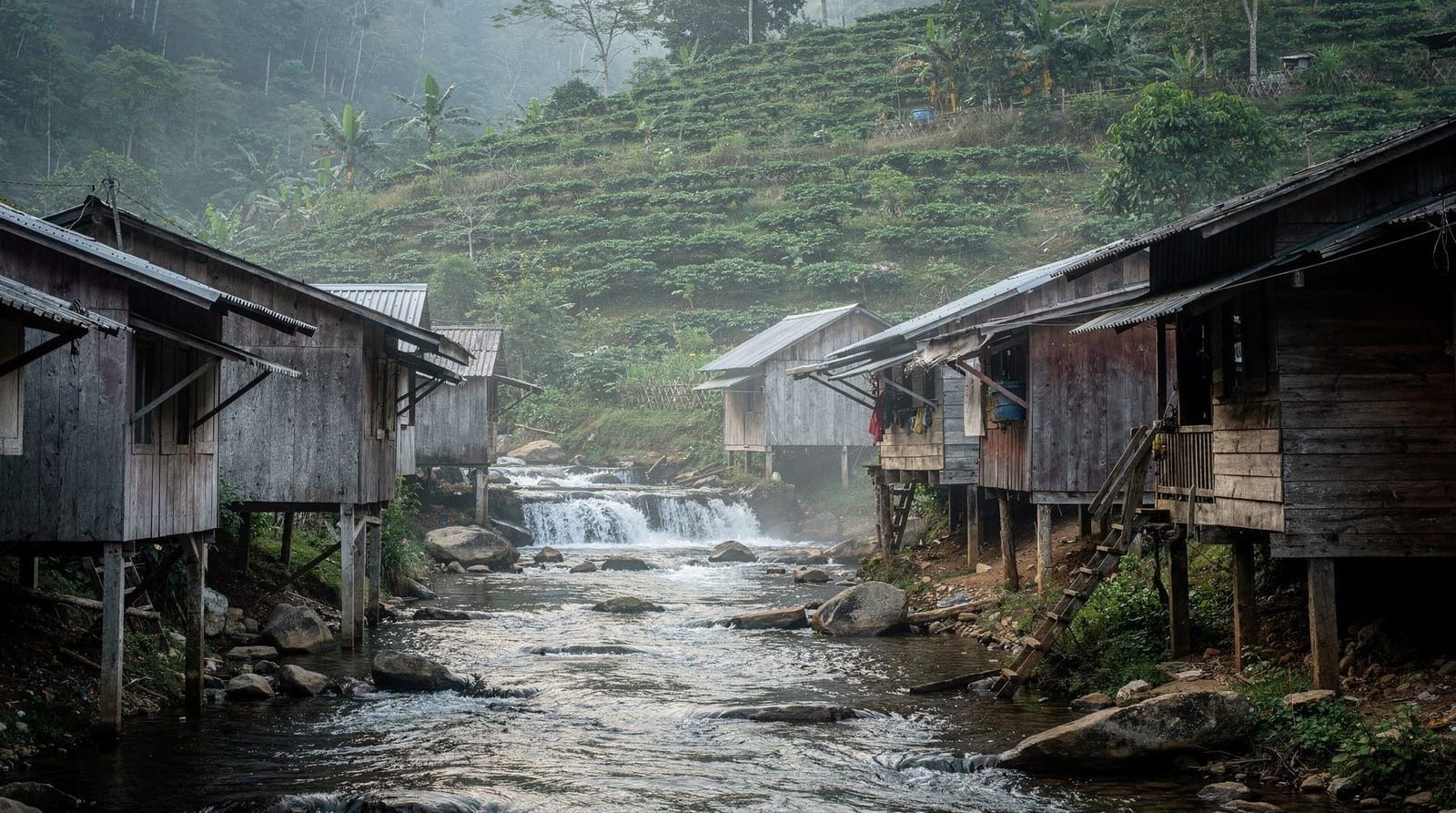
Mae Kampong, a mountain village roughly an hour northeast of the city, is one of the more accessible places to see coffee actually growing rather than just drinking the finished product. The village combines a coffee-growing economy with a waterfall, homestay tourism and a slower mountain pace than the city center, making it a reasonable half-day or overnight trip if the growing side of the story interests you as much as the café side.
The competition-level baristas behind the scene
Part of what distinguishes Nimman’s café culture from a generic “trendy café district” is the number of serious competitive baristas who’ve opened shops there over the past decade. Thailand’s national barista and latte art competitions have produced several winners and finalists who’ve gone on to open their own Chiang Mai cafés, bringing a level of technical rigor around extraction, milk texturing and bean sourcing that goes beyond typical café operations. This matters practically for visitors: cafés associated with a known competitive background are generally a safe bet for technically well-executed espresso drinks specifically, even if you don’t recognize the name, since Nimman’s dense café market makes it hard for a technically mediocre shop with that kind of pedigree to survive the competition from equally credentialed neighbors.
Roasteries: where the beans get processed
Beyond simply serving coffee, several Nimman-area businesses operate as full roasteries, buying green (unroasted) beans directly from highland farms and handling the roasting process themselves rather than buying pre-roasted beans from a third party. This vertical integration lets these businesses control quality more precisely and often means fresher roasts reaching your cup than at a café simply retailing another company’s beans. Visiting a working roastery, where the roasting equipment is often visible from the café seating area, gives a different, more production-focused perspective on the coffee than the growing side seen at Mae Kampong, and combining both if coffee is a genuine trip priority gives a fuller picture of the supply chain from farm to cup.
Thai iced coffee vs. specialty coffee: two different categories
It’s worth separating traditional Thai iced coffee — often called oliang or gafae yen, a strong, sometimes chicory-blended brew served heavily sweetened with condensed milk over ice from street carts and basic shops — from the specialty coffee scene described above. They’re genuinely different products serving different purposes: oliang is a cheap, quick, sweet everyday drink (25-40 baht), while Nimman’s specialty cafés are closer to a dedicated coffee-tasting experience (70-150 baht). Neither is a “better” or more authentic version of Chiang Mai coffee culture — they coexist as separate traditions, and trying both is worthwhile rather than assuming one replaces the other.
Prices: a realistic range
| Type | Typical price (THB) |
|---|---|
| Thai iced coffee (street cart) | 25-40 |
| Basic filter/drip coffee | 40-70 |
| Specialty espresso drink (Nimman café) | 70-150 |
| Single-origin pour-over | 90-180 |
Coffee stops on day trips outside the city
If you’re heading out to Doi Inthanon, Mae Rim or other highland day-trip destinations, it’s worth knowing that decent coffee becomes considerably harder to find once you’re outside the city center, ironic given that’s exactly where much of the bean supply is grown. A handful of small cafés have opened at scenic viewpoints and along popular day-trip routes specifically to serve passing tourist traffic, but they’re inconsistent in quality compared to Nimman’s dedicated scene. A practical approach for coffee-dependent travelers is picking up a proper coffee in the city before heading out, or accepting that a day trip may mean a day off from specialty coffee in favor of whatever simpler options are available en route.
Best times to visit Nimman’s cafés
Timing matters more in Nimman than you might expect, given how popular the district has become. Weekday mornings (roughly 8-11am) tend to be the most pleasant window at the best-known cafés, busy with the digital-nomad crowd settling in for a work session but not yet at capacity. Weekend afternoons, particularly Saturday and Sunday from around 11am to 4pm, are the busiest and hardest to find seating, as both residents and visiting Thai tourists from other cities treat Nimman as a specific weekend destination. Evenings are generally calmer again, with some cafés transitioning toward a more relaxed, dinner-oriented atmosphere as the day cools. If a specific well-known café is on your list and seating matters to you, arriving right at opening or in the early evening avoids the worst of the midday and weekend crowds.
Working from a Chiang Mai café
Nimman’s café scene has grown alongside the city’s large digital-nomad and long-stay resident population, and many cafés are set up accordingly — reliable wifi, ample seating, and hours that extend well into the evening. The trade-off is that the best-known spots get genuinely crowded during standard working hours (roughly 9am-5pm on weekdays), so arriving early or seeking out a second-tier, less internet-famous café is a reasonable workaround if you want a quiet table.
The coffee harvest calendar
Northern Thailand’s coffee harvest generally runs from around November through February, aligning with the region’s cool, dry season — the same window that’s peak tourist season in Doi Suthep and the surrounding hills for exactly the same climate reasons. If seeing active harvest and processing is specifically of interest, this is the window to target a highland visit; outside these months, farms are in their growing rather than harvesting phase, and a visit will show the crop developing rather than being picked and processed. Cafés generally don’t run out of good coffee outside harvest season, since roasted and stored beans keep reasonably well, but freshly harvested and processed lots are genuinely a different, more sought-after product among serious coffee drinkers, similar to how a wine harvest year matters more to specialists than casual drinkers.
Sustainability and the direct-trade model in more depth
The direct-trade relationships between Chiang Mai-area roasters and hill-tribe farming communities are worth understanding a bit further, since they represent a genuine alternative to how coffee is sourced in much of the rest of the world. Rather than selling into an anonymous commodity market where prices are set by global exchanges with little connection to a specific farm’s costs or quality, direct-trade buyers negotiate directly with named farms or cooperatives, generally paying a premium tied to quality and traceability rather than pure volume. For Akha, Lisu and Karen communities that have historically faced pressure to shift away from coffee toward other cash crops during periods of low commodity prices, this model has provided a more stable, higher-value alternative that keeps coffee farming viable as a livelihood. Cafés that participate in this model typically display the specific farm or community name on their menu or packaging — a genuine, checkable claim rather than vague ethical marketing, and one worth supporting if it matters to you as a visitor.
Coffee as part of Chiang Mai’s broader expatriate economy
It’s worth understanding how deeply intertwined Nimman’s coffee scene is with the city’s status as one of Southeast Asia’s most established digital-nomad and long-stay expatriate hubs, since this context explains a lot about the district’s specific character. Many of Nimman’s cafés function as much as informal co-working spaces and social hubs for the resident foreign community as they do as standalone coffee destinations, which shapes everything from seating layouts (more individual work-friendly tables, fewer purely social configurations) to opening hours (often open from early morning through evening, accommodating both traditional coffee hours and later work sessions) to menu breadth (many offer full food menus, not just coffee, to serve customers who might spend several hours in one sitting). Visitors who simply want a quick specialty coffee stop should have no trouble finding one, but understanding this broader context explains why some cafés feel more like semi-permanent workspaces than a typical quick-coffee café model familiar from elsewhere.
How coffee fits into a broader food day
A coffee stop works naturally between other food experiences covered elsewhere in our guides — a late-morning break after a Warorot Market visit, or a mid-afternoon pause in Nimman before heading out for evening market food; see the Chiang Mai street food guide for how to sequence a full day of eating around the city.
Coffee alongside the rest of Chiang Mai’s food scene
Coffee culture is just one part of a broader food and markets scene that defines much of what makes Chiang Mai worth visiting for food-focused travelers. Where khao soi, night markets and Warorot represent the city’s savory, market-driven food identity, Nimman’s café scene represents something closer to Chiang Mai’s modern, internationally-connected side — the two coexist without much overlap, and a well-rounded food itinerary in the city genuinely benefits from including both rather than treating one as more “authentic” than the other. Plenty of visitors build a full day around exactly this contrast: markets and street food in the morning and evening, a slower café-based afternoon in between.
A brief comparison: Nimman cafés vs. traditional Thai coffee shops
It’s worth being clear-eyed about what you’re choosing between when picking a coffee spot. Traditional Thai coffee shops — small, family-run, serving oliang and basic filter coffee alongside simple snacks — exist throughout the city outside Nimman, largely unchanged in format for decades, and offer an entirely different, much cheaper experience focused on quick, functional coffee rather than a destination visit. Nimman’s specialty cafés, by contrast, are destinations in their own right, often worth visiting independent of needing coffee specifically, with design-forward interiors, extended stays encouraged, and pricing that reflects that experience. Neither is objectively better — a traveler wanting an authentic slice of everyday Thai life might prefer the traditional shops, while someone genuinely curious about specialty coffee and willing to pay for it will find Nimman’s scene the more rewarding of the two.
Frequently asked questions about Chiang Mai’s coffee culture
Is Chiang Mai coffee expensive compared to Bangkok’s specialty scene?
Broadly comparable — Nimman’s top cafés price similarly to equivalent specialty shops in other major Thai cities, though basic Thai iced coffee remains cheap everywhere.
Do Chiang Mai cafés serve food as well as coffee?
Many do, ranging from pastries and light Western breakfast options to full Thai and fusion menus, particularly in Nimman where cafés often double as all-day restaurants.
Can I buy roasted beans to take home?
Yes, most of the district’s serious roasters sell bagged beans, often labeled with the specific highland farm or region of origin, making a reasonable and packable souvenir.
Is it easy to find oat milk or other plant-based milk options?
Increasingly yes, especially in Nimman, reflecting the district’s international and long-stay resident customer base — smaller neighborhood cafés outside that area may have more limited options.
Are there coffee tours or tastings available near Chiang Mai?
Some Mae Kampong-focused trips and a handful of specialty cafés offer tastings or brewing demonstrations, though it’s a smaller, less commercially organized category than the city’s cooking classes or food tours.
What’s the best neighborhood to base myself in if coffee is a priority?
Nimman, without much competition — it has by far the highest density of serious cafés, though the Old City and Santitham have a growing number of good options as well if you’d rather stay somewhere quieter.
Are there coffee-focused events or festivals in Chiang Mai?
Smaller-scale coffee-focused pop-up events and competitions occur periodically, often tied to the harvest season or organized by the roasting community, though this is a less commercially organized calendar than the city’s larger food festivals — worth checking local event listings closer to your travel dates rather than planning specifically around one.
Is it easy to find single-origin coffee from a specific named farm?
Yes, at the district’s more serious roasteries — many actively market their coffee by specific farm or cooperative name rather than a generic regional label, part of the direct-trade transparency described earlier in this guide.