Santitham neighborhood guide: Chiang Mai's local, budget-friendly area
Chiang Mai: Walking Food Tour
Is Santitham a good place to stay in Chiang Mai?
Yes, for long-stay visitors, budget travellers and anyone who has already covered the Old City's temples and wants a cheaper, quieter, genuinely local base. It sits within a short Grab of both the Old City and Nimman, at noticeably lower prices than either, but it lacks its own walkable sightseeing.
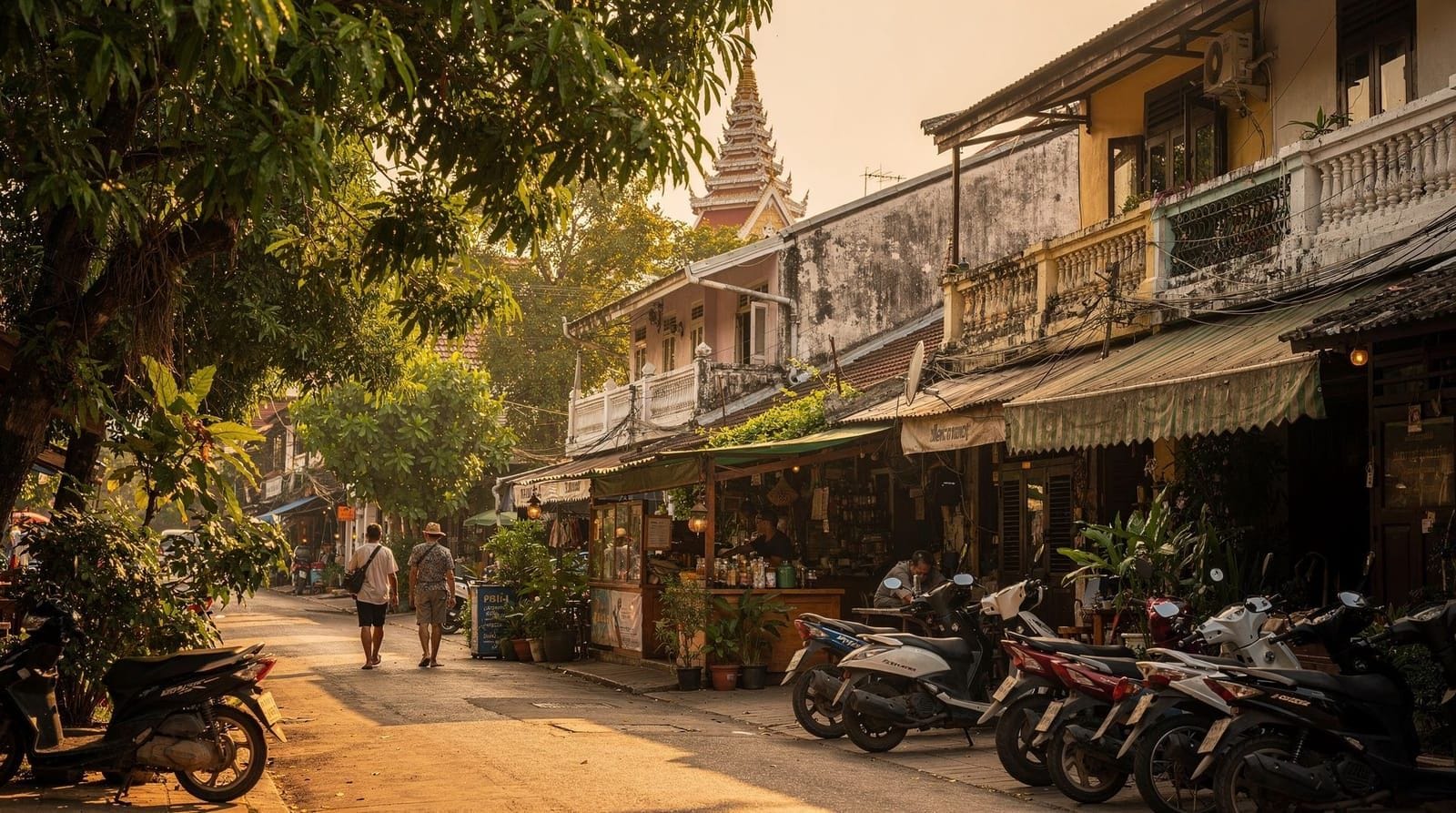
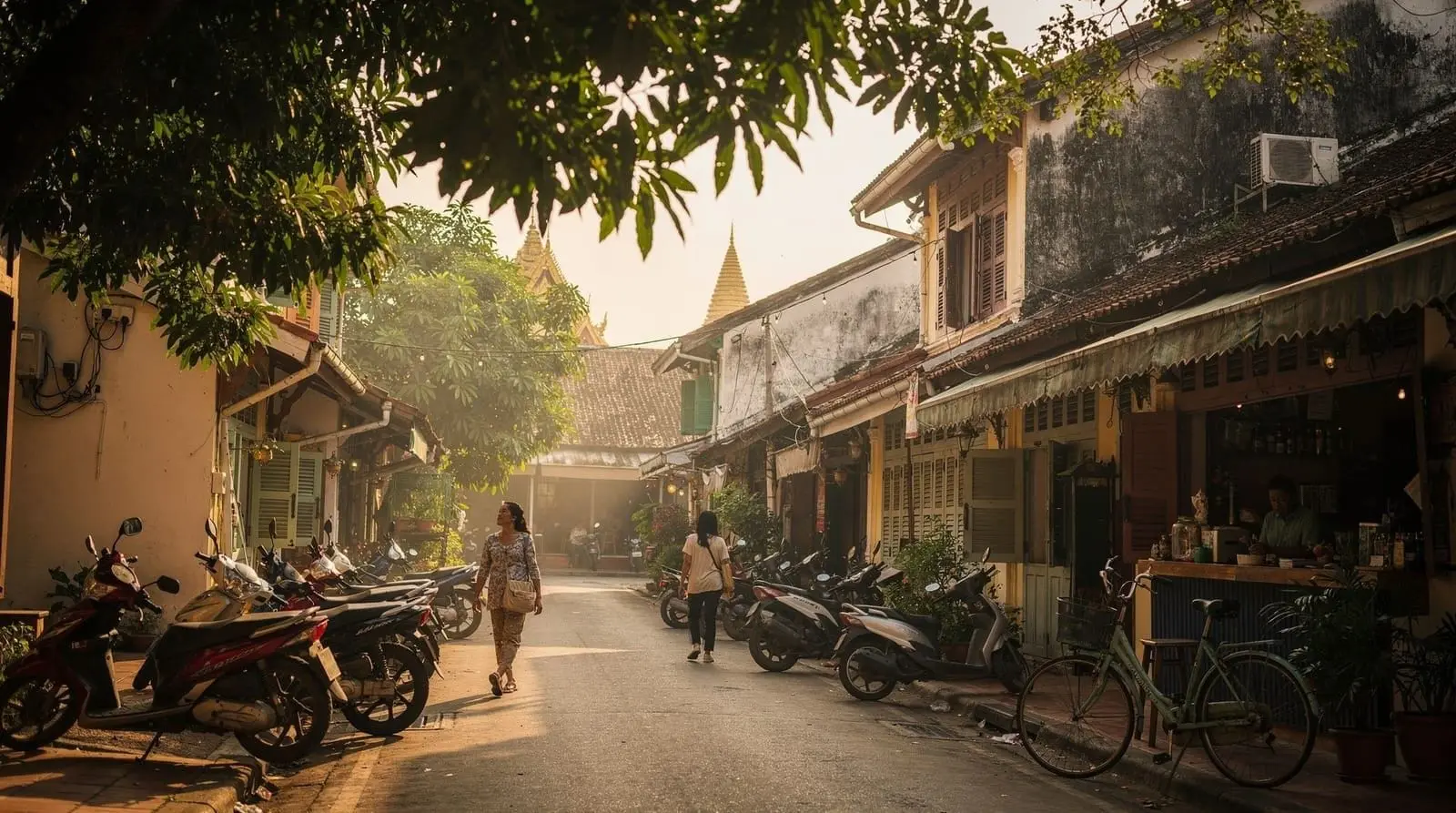
Santitham is the neighbourhood most first-time visitors never hear about and most long-stay residents eventually gravitate toward. Sitting immediately north of the Old City moat, roughly between Chang Phueak Gate and Huay Kaew Road, it is a plain, functional grid of local shops, motorbike repair stalls, noodle stands and residential streets rather than anything built around tourism, and that is precisely its appeal for a specific kind of traveller. It has no major temples, no walking street market, no design-district cafés — what it has is genuinely local pricing, far fewer tourists, and a short, cheap ride to both the Old City and Nimman.
This guide is an honest one: Santitham is not a hidden gem stuffed with unmissable sights, and anyone expecting that will be disappointed. What it offers instead is a lower-cost, lower-tourist-density base that suits certain trips considerably better than the more obvious neighbourhoods this site covers elsewhere, and it’s worth understanding exactly what that trade-off involves before booking here.
What Santitham actually is
Santitham grew up as an ordinary residential extension of the walled city, and it still functions that way today — a working-class-to-middle-class Thai neighbourhood with its own daily rhythms of markets, food stalls and small businesses that exist for local residents first and visitors only incidentally. The area blends without a hard boundary into the Old City to the south and the wider Chang Phueak district around the north gate, and its main commercial spine, Santitham Soi 6 and the surrounding sois, holds a dense, unpretentious cluster of restaurants, 7-Elevens, laundry services and small guesthouses that have sprung up specifically to serve the growing number of long-stay foreign residents who have discovered the area’s value over the past several years.
Cost: the clearest reason to consider Santitham
Santitham’s prices are the honest heart of its appeal. A full meal at a local noodle shop or khao soi stall commonly runs 40-60 THB (USD 1.10-1.65), on par with or slightly cheaper than equivalent Old City street food and noticeably less than Nimman’s café-driven pricing. Accommodation follows the same pattern: simple guesthouse rooms run 400-700 THB (USD 11-19) a night, and monthly apartment rentals aimed at long-stay visitors commonly start around 6,000-10,000 THB (USD 168-280) a month for a basic studio, considerably less than equivalent serviced apartments in Nimman. For a visitor planning a month or longer in Chiang Mai, the accumulated savings from a Santitham base over an equivalent Nimman stay can be substantial, often enough to meaningfully extend a travel budget elsewhere.
Food in Santitham
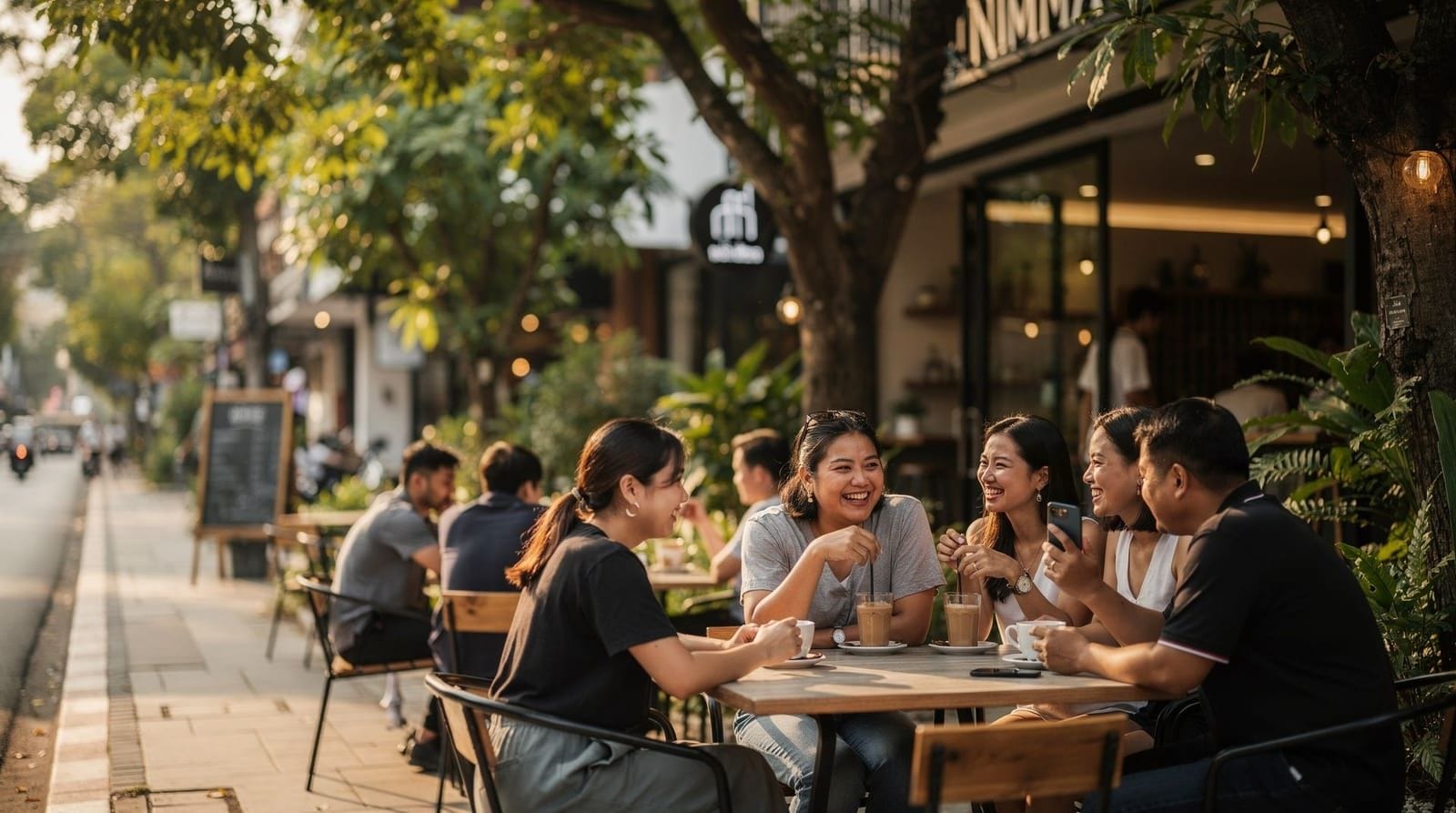
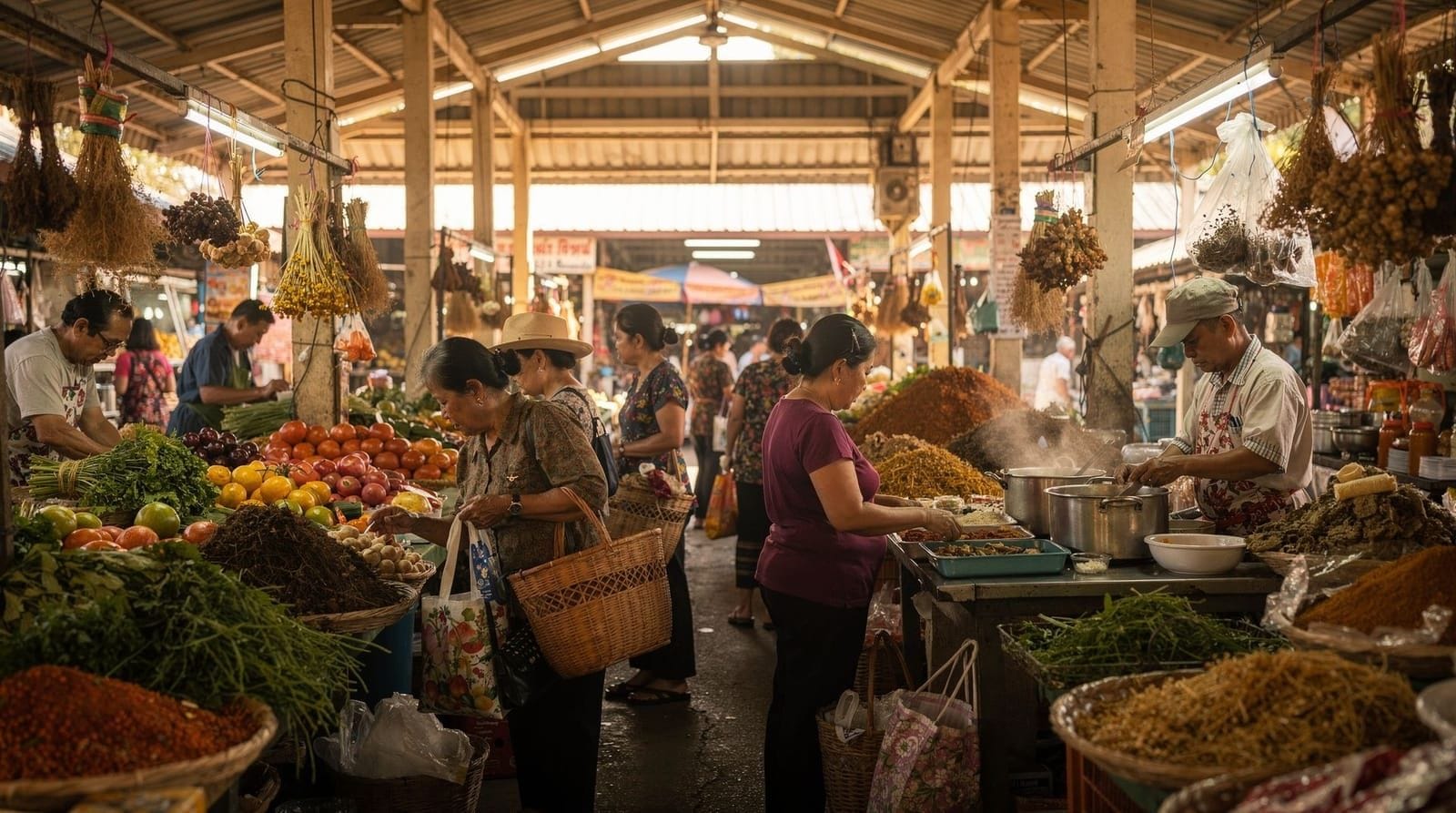
The neighbourhood’s food scene is its strongest genuine draw beyond price. Santitham Soi 6 in particular has developed a reputation among long-stay residents as one of the city’s better, more varied casual dining strips, covering northern Thai standards, noodle soups, grilled meats and a scattering of newer, younger-run restaurants and bars that have opened alongside the older local businesses as the area’s long-stay population has grown. It lacks the specialty coffee density of Nimman or the sheer volume of street stalls found around the Old City’s markets, but what it does have is reliably good, reliably cheap, and served without any tourist-pricing markup. Visitors wanting a more structured introduction to this kind of everyday Thai eating, whether in Santitham or elsewhere in the city, can get a useful primer from a walking food tour or a night food scene tour, both of which cover similar territory to what Santitham offers its own residents daily.
A typical day based in Santitham
A day built around a Santitham base looks different from one built around the Old City or Nimman, and honestly so — there is rarely a reason to stay in the neighbourhood itself past breakfast. A typical morning starts with noodles or a simple Thai breakfast at a local shop for well under 50 THB, followed by a short Grab into the Old City for temple sightseeing or into Nimman for coffee and work, depending on the day’s priorities. Santitham functions best as a place to sleep, eat cheaply and recharge rather than a place to spend the bulk of a day, and visitors who try to build a full day of sightseeing around the neighbourhood itself will come away underwhelmed, simply because that is not what it is for.
Evenings tend to work better locally than daytime sightseeing does. Santitham Soi 6 fills with diners from the surrounding area after dark, and a simple dinner followed by a walk through the local market stalls that pop up along some of the side sois gives a genuinely unfiltered look at ordinary Chiang Mai life that neither the Old City’s tourist-facing evening markets nor Nimman’s café scene quite offers. It is a quieter, plainer kind of evening than either of those neighbourhoods, and that plainness is exactly what some long-stay visitors come to prefer over time.
Language schools and long-stay infrastructure
Santitham’s proximity to several well-regarded Thai-language schools has shaped part of its long-stay foreign population, drawing students on month-long or longer study visas who value the area’s low cost and short commute to both the Old City and Nimman. This has produced a small supporting ecosystem of monthly-rate guesthouses, simple gyms and a handful of cafés catering specifically to this slower-paced, budget-conscious crowd, without the neighbourhood tipping into the more visibly foreign-oriented atmosphere found in parts of Nimman. For a visitor planning a genuine long stay rather than a short holiday, this existing infrastructure is a practical advantage worth knowing about, even if the area holds little obvious appeal on a first afternoon’s walk-through.
What’s missing: the honest trade-off
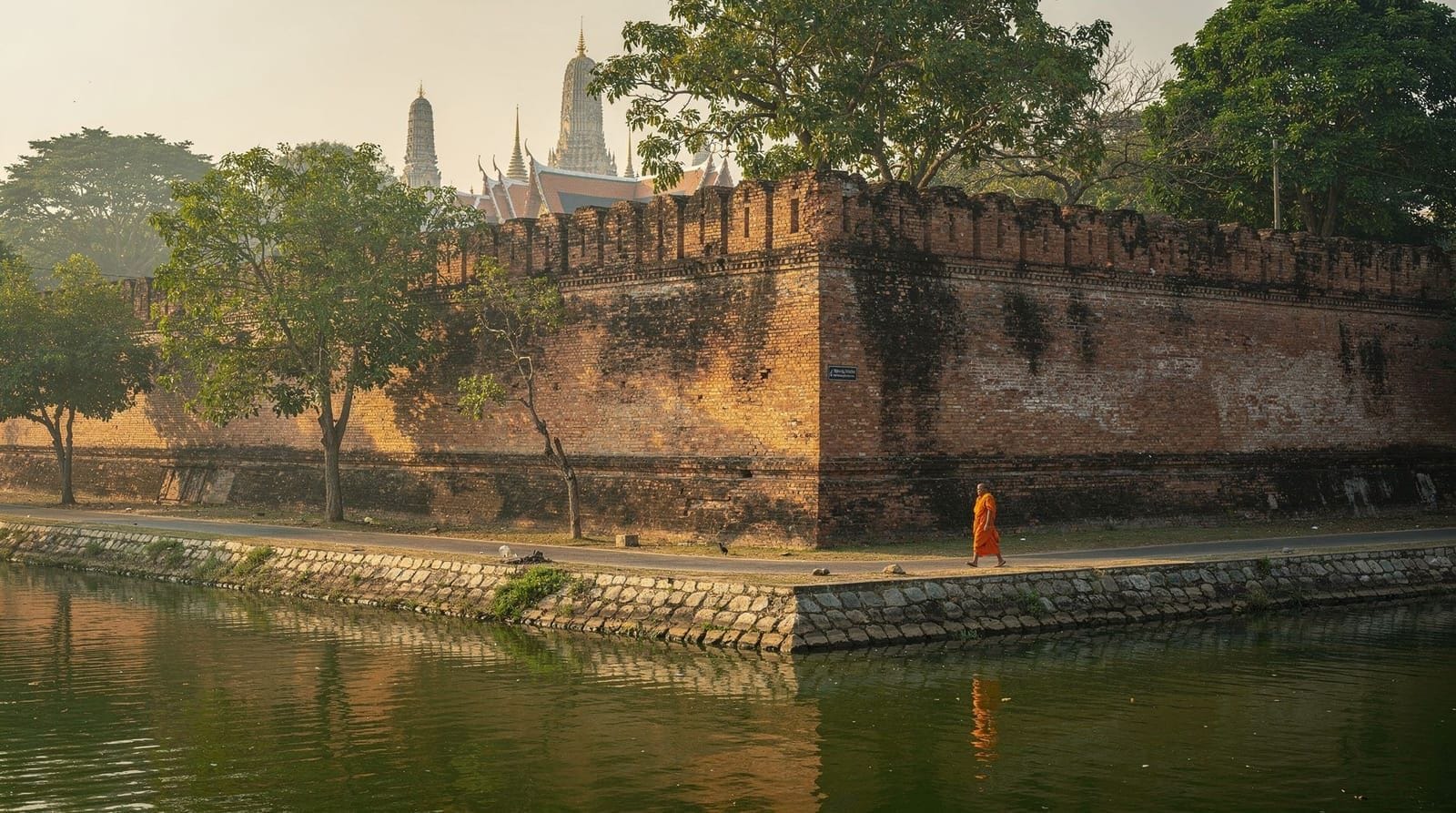
Santitham has no major temple of its own worth a dedicated visit, no weekly walking street, and none of Nimman’s design-boutique density or the Night Bazaar’s nightly market energy. Its nearest notable sight, Wat Chiang Man, the Old City’s oldest temple, sits just across the moat at the southern edge of the neighbourhood and is easily reached on foot, but beyond that, sightseeing from a Santitham base means a short Grab into the Old City, Nimman or elsewhere almost every day. This is the trade-off that makes Santitham unsuitable as a sole base for a short, sightseeing-dense first trip, and it’s worth being clear-eyed about that before booking here expecting a quieter version of the Old City experience.
Who lives here and why
Santitham’s foreign resident population skews toward long-stay digital nomads, retirees on extended stays, and language students attending the area’s several Thai-language schools, drawn by the combination of low cost and proximity to Nimman without Nimman’s premium pricing. This has produced a small but genuine expat-adjacent infrastructure — a handful of coworking-friendly cafés, gyms and language schools — without the neighbourhood losing its fundamentally local character the way parts of Nimman arguably have. It is a neighbourhood in a comfortable middle state: enough foreign long-stay presence to have a few conveniences built around it, not so much that it feels like a bubble separate from the city around it.
Comparing Santitham to the Old City and Nimman
Against the Old City, Santitham trades walkable temple sightseeing and a dense guesthouse scene for genuinely lower prices and far fewer tourists, at the cost of needing a Grab for almost all major sightseeing. Against Nimman, it offers a similarly short commute to the café district’s coworking spaces and social scene at a fraction of the accommodation and food cost, but without Nimman’s own specialty coffee, boutiques or design-forward restaurants on the doorstep. Neither comparison should be read as Santitham losing outright — for the specific traveller it suits, the savings and quiet are the whole point, and the lack of on-site attractions is an acceptable, even welcome, trade for a lower-cost, lower-tourist-density stay. The Old City vs Nimman guide covers the two more obvious choices in depth for visitors who decide Santitham’s trade-offs don’t suit their trip.
Practical booking notes
Santitham has a thinner presence on international booking platforms than the Old City or Nimman, since a meaningful share of its accommodation, particularly monthly apartment rentals, gets arranged informally through Facebook groups, local agents or direct walk-ins rather than listed on Booking.com or Airbnb. Visitors planning a short stay should expect a smaller, plainer selection of listed guesthouses than in more tourist-oriented neighbourhoods, while those planning a month or longer often find better value asking around in person or through Chiang Mai long-stay expat groups once they arrive, rather than trying to lock in a monthly rate remotely in advance. It’s worth budgeting a few days of flexible, shorter-term accommodation on arrival while sorting out a longer-term Santitham rental, rather than committing to a full month sight unseen.
Seasonal considerations
Santitham’s plain, mostly low-rise streetscape offers little natural shade, making the hot season from March to May similarly demanding here as in the Old City, though the shorter daily walking distances typical of a Santitham-based routine — mostly to nearby food stalls rather than temple-hopping — make the heat somewhat less of a daily obstacle. The cool season from November to February is comfortable for the neighbourhood’s evening market and street-dining scene, and burning season’s air quality effects, roughly February to April, apply city-wide rather than specifically to Santitham, worth checking via the site’s best time to visit guide regardless of base.
Getting around from Santitham
Santitham’s position just north of the Old City and a short distance from Nimman makes it one of the best-connected budget bases in the city. A Grab to either the Old City’s northern gate or central Nimman typically takes 5-10 minutes and costs 40-70 THB (USD 1.10-1.95), often cheaper and faster than the equivalent Old City-to-Nimman journey given Santitham’s more central position between the two. Warorot Market and the everyday Chang Phueak street food scene are both within easy reach as well, making Santitham a genuinely practical hub for visitors who want quick access to several parts of the city without paying a premium to be inside any single one of them.
Scooters, traffic and daily practicalities
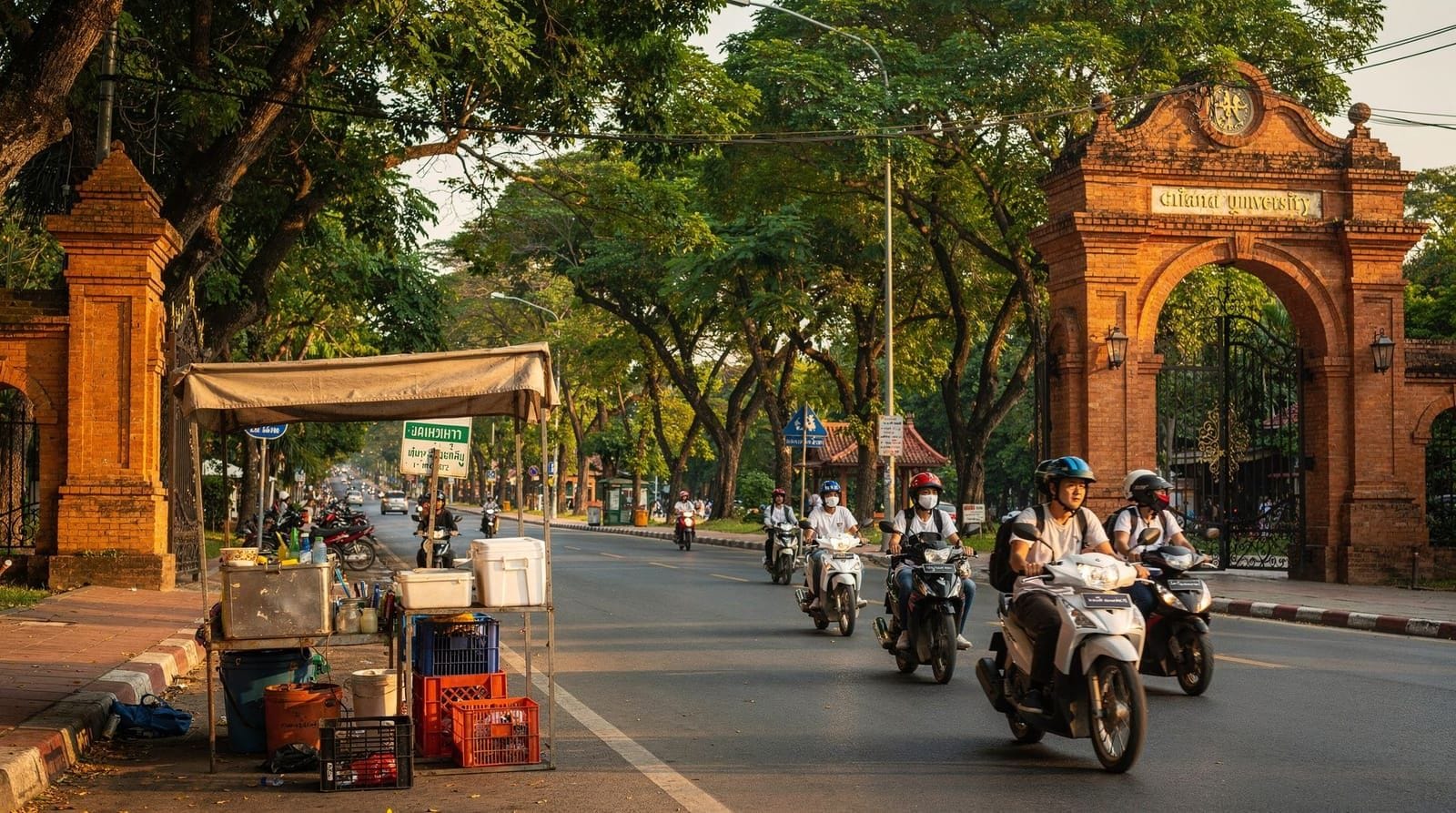
A larger share of Santitham’s visitors rent scooters than in the Old City or Nimman, partly because the neighbourhood’s longer average stays make the daily cost of scooter rental worthwhile, and partly because its wider, straighter local roads are somewhat easier to navigate than the Old City’s narrower lanes. Scooter rental typically runs 150-250 THB (USD 4.20-7) a day for a basic automatic, cheaper by the week or month for long-stay visitors, though standard cautions around Thai traffic rules, helmet use and checking a rental shop’s insurance terms apply here exactly as they do anywhere else in the city. Parking is generally easier to find than in the denser Old City, another small but genuine convenience for visitors planning to explore the wider Chiang Mai region independently rather than relying solely on Grab.
Everyday errands are straightforward from a Santitham base: the neighbourhood has a reasonable spread of 7-Elevens, pharmacies, laundry services and local markets for fresh produce, sufficient for anyone staying long enough to settle into a routine rather than treating every day as active sightseeing. This everyday practicality, more than any single attraction, is the real case for Santitham, and it is worth weighing honestly against the Old City’s or Nimman’s more curated, visitor-facing convenience before choosing a base for a longer Chiang Mai stay.
Who Santitham suits (and who it doesn’t)
Santitham suits long-stay visitors, budget travellers, language students and digital nomads who want lower costs than Nimman without sacrificing much in the way of commute time to it. It suits repeat visitors who have already covered the Old City’s temples and don’t need to be inside the walls again, and it suits anyone whose priority is stretching a travel budget over weeks or months rather than packing a short trip with sightseeing. It suits it less well for first-time visitors on a short trip prioritising walkable sightseeing, and less well for anyone wanting an immediately photogenic, atmosphere-forward base, since Santitham’s plain, functional streetscape is genuinely part of what keeps its prices down. It is, in short, a neighbourhood that rewards familiarity and a longer time horizon over a first, brief impression. The Chiang Mai neighborhoods guide and the first-time visitor decision guide both help place Santitham in context against the city’s more obvious choices.
Should you actually stay here
The honest answer for most visitors reading this site is no, not for a first trip. Santitham’s value proposition is built for a specific traveller — long stays, tight budgets, or a deliberate preference for the ordinary over the curated — and trying to force a short first-time visit into that mould generally means more time spent in Grabs and less time actually experiencing the city’s headline sights. For the traveller it does suit, though, the fit is genuinely good, and the neighbourhood rewards exactly the kind of unhurried, settle-in approach that a short holiday rarely allows for. Anyone still weighing Santitham against the more obvious options should start with the broader Chiang Mai neighborhoods guide, which places it in context against the Old City, Nimman and the riverside district side by side.
Frequently asked questions about Santitham
Where exactly is Santitham in Chiang Mai?
Santitham sits immediately north of the Old City moat, roughly between Chang Phueak Gate and Huay Kaew Road, functioning as a mixed residential and commercial grid rather than a tourist district in its own right.
Is Santitham safe?
Yes, by ordinary standards, and arguably quieter and less prone to petty tourist-area theft than the busier Old City or Night Bazaar, given its lower density of casual tourist foot traffic and correspondingly fewer opportunistic touts.
How far is Santitham from the Old City and Nimman?
Both are typically a 5-10 minute Grab away, and parts of southern Santitham are within a 10-15 minute walk of the Old City’s northern gate, making it a genuinely convenient, cheaper alternative base to either.
Is there anything to see in Santitham itself?
Not much in the way of major sights, which is the honest trade-off of basing here. Its appeal is the everyday local market, food stalls and residential streets rather than temples or attractions, and most sightseeing from a Santitham base means a short ride into the Old City or elsewhere.
Who should avoid staying in Santitham?
First-time visitors on a short three-to-five day trip prioritising walkable temple sightseeing are usually better served by the Old City, since Santitham requires a Grab for almost all major attractions rather than offering them within walking distance.
Is Santitham good for long-term stays?
Yes, and it is increasingly popular for exactly that reason, offering apartment-style accommodation at meaningfully lower monthly rates than Nimman while remaining a short, cheap ride from Nimman’s cafés and coworking spaces.
Top experiences
Bookable activities with verified prices and instant confirmation on GetYourGuide.