Chiang Mai University and Huay Kaew Road
Chiang Mai University's leafy campus, Huay Kaew Road's night market and Ang Kaew reservoir sit just north of Nimman, an easy half-day detour.
Chiang Mai: Tuk-Tuk City Tour
Quick facts
- Getting there
- Songthaew from Old City ~30-40 THB, Grab ~70-100 THB, or walk north from Nimmanhaemin Road (15-20 min)
- Key sight
- Ang Kaew reservoir on the CMU campus, with Doi Suthep rising directly behind it
- Time needed
- 2-3 hours for the campus and Ang Kaew, longer with the zoo or night market added
- Best time
- Late afternoon for Ang Kaew and campus light, evening for the Huay Kaew night market
- Typical cost
- Campus access is free; CM Zoo entry and songthaew rides are the main costs
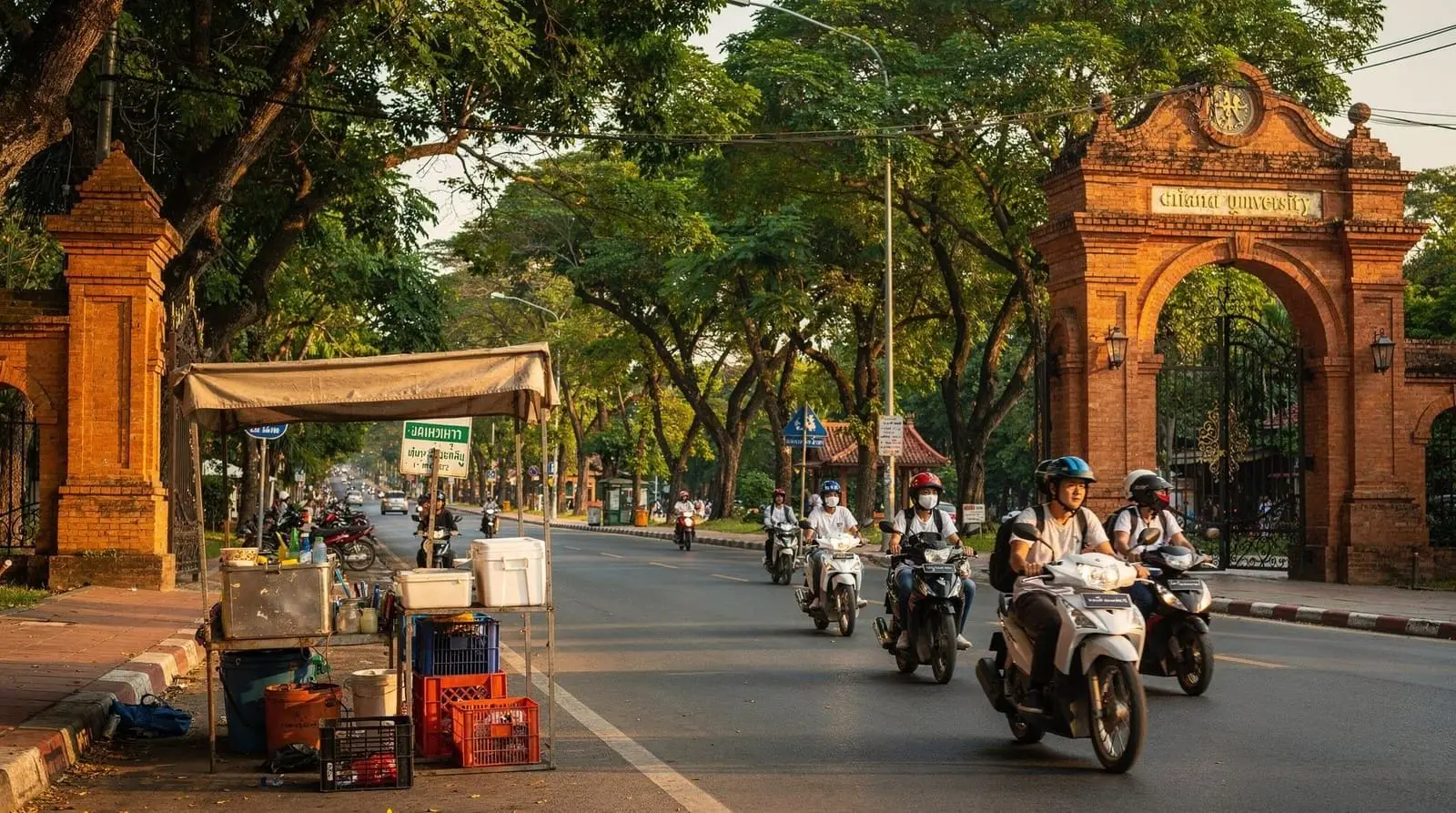
Huay Kaew Road runs east-west just north of Nimmanhaemin, connecting the base of Doi Suthep mountain to the ring road, and it happens to pass two things worth a detour: the large, leafy campus of Chiang Mai University (CMU), and a stretch of budget-friendly student food stalls and a low-key night market that runs most evenings. Neither is a headline Chiang Mai attraction on the level of a major temple, but together they make a genuinely relaxing half-day for anyone who wants a break from the tourist circuit.
Quick answer: Chiang Mai University’s main campus sits at the western end of Huay Kaew Road, a 15-20 minute walk or short songthaew/Grab ride north of Nimman. The main draws are Ang Kaew reservoir (a quiet lake with Doi Suthep views, popular for jogging and cycling), the Chiang Mai Zoo next door, and Huay Kaew Road’s evening food stalls and night market. Campus access is free; budget half a day, more if you add the zoo.
Chiang Mai University’s campus
CMU is the largest and most prestigious university in northern Thailand, and its campus reflects that scale — a genuinely sprawling, tree-covered grounds at the western end of Huay Kaew Road, backing directly onto the lower slopes of Doi Suthep. Unlike a walled, ticketed attraction, it functions as an open public space: locals jog and cycle its roads every morning and evening, and visitors are welcome to walk or cycle through without any entry formality.
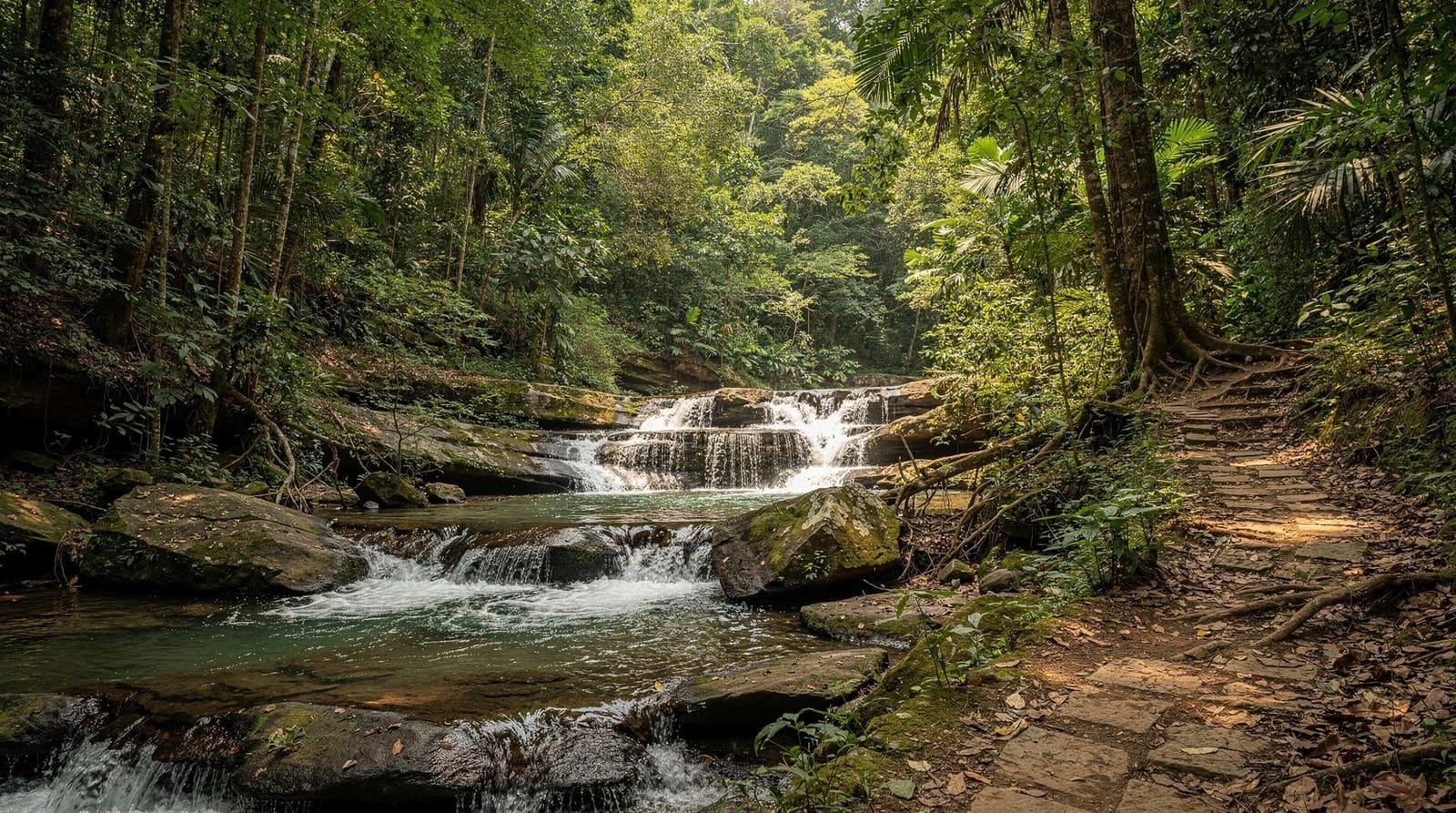
The centrepiece for most visitors is Ang Kaew, a reservoir lake inside the campus grounds ringed by a paved path popular with joggers, cyclists and picnicking students. Late afternoon is the best window to visit: the light softens, the heat of the day has passed, and on clear days Doi Suthep rises directly behind the water, giving one of the more understated mountain-and-water views in the city — understated because almost no tour bus stops here, so it stays genuinely quiet even at peak hours. It is a useful contrast to the more curated, ticketed views from partway up Doi Suthep itself.
Chiang Mai Zoo
Immediately adjacent to the CMU campus on Huay Kaew Road, Chiang Mai Zoo is one of the larger zoos in Thailand, built into the hillside with a mix of walkable enclosures and a cable-car-style aerial tram covering the steeper upper sections. It is a reasonable half-day option for families travelling with children, though it should be weighed like any zoo against personal views on animal enclosures — visitors with strong ethical reservations about zoos in general will feel the same way here as anywhere else, and should look instead to the responsibly run wildlife encounters described on the ethical elephant sanctuary page for a lower-impact wildlife experience.
Huay Kaew Road’s food stalls and night market
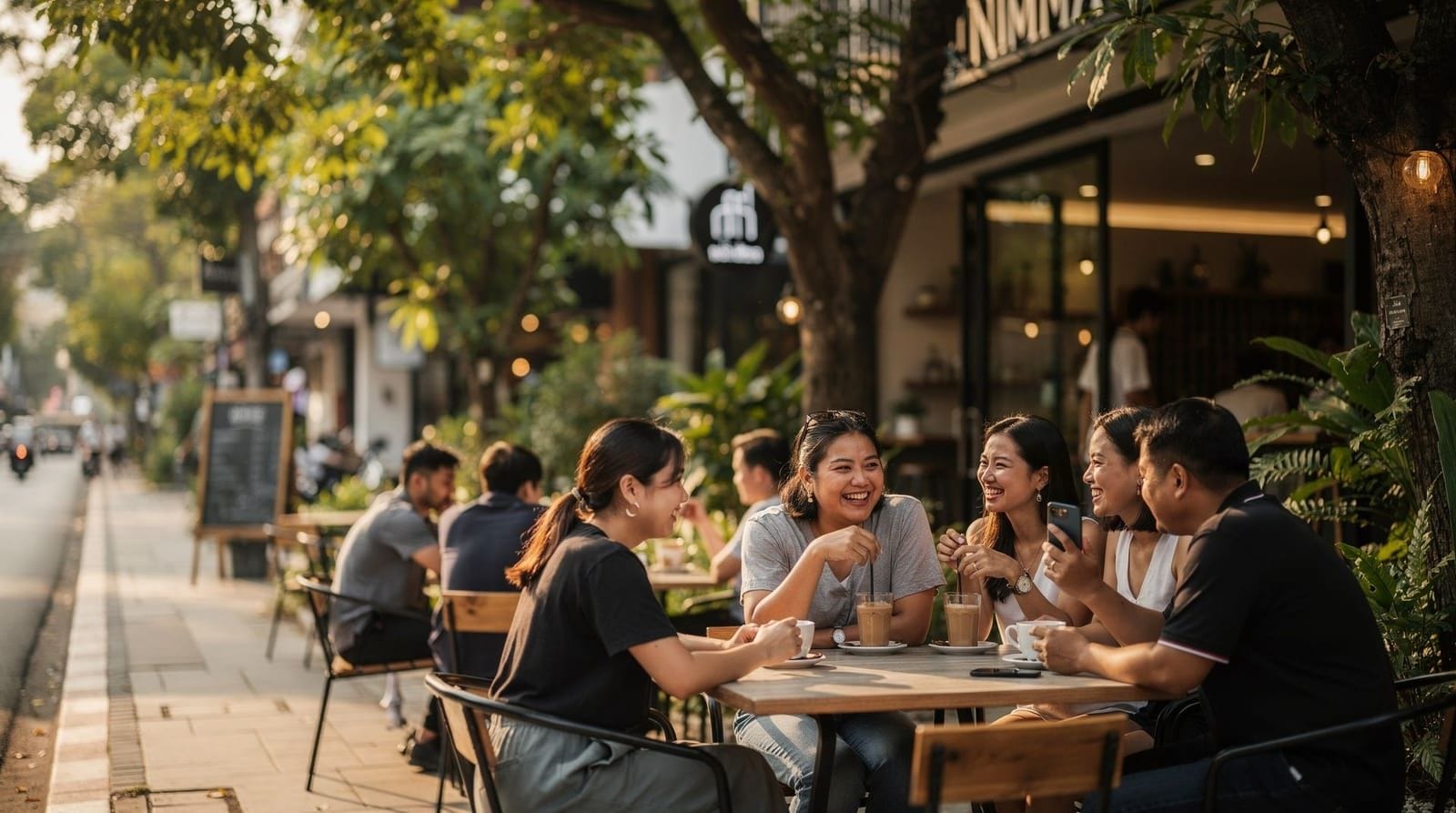
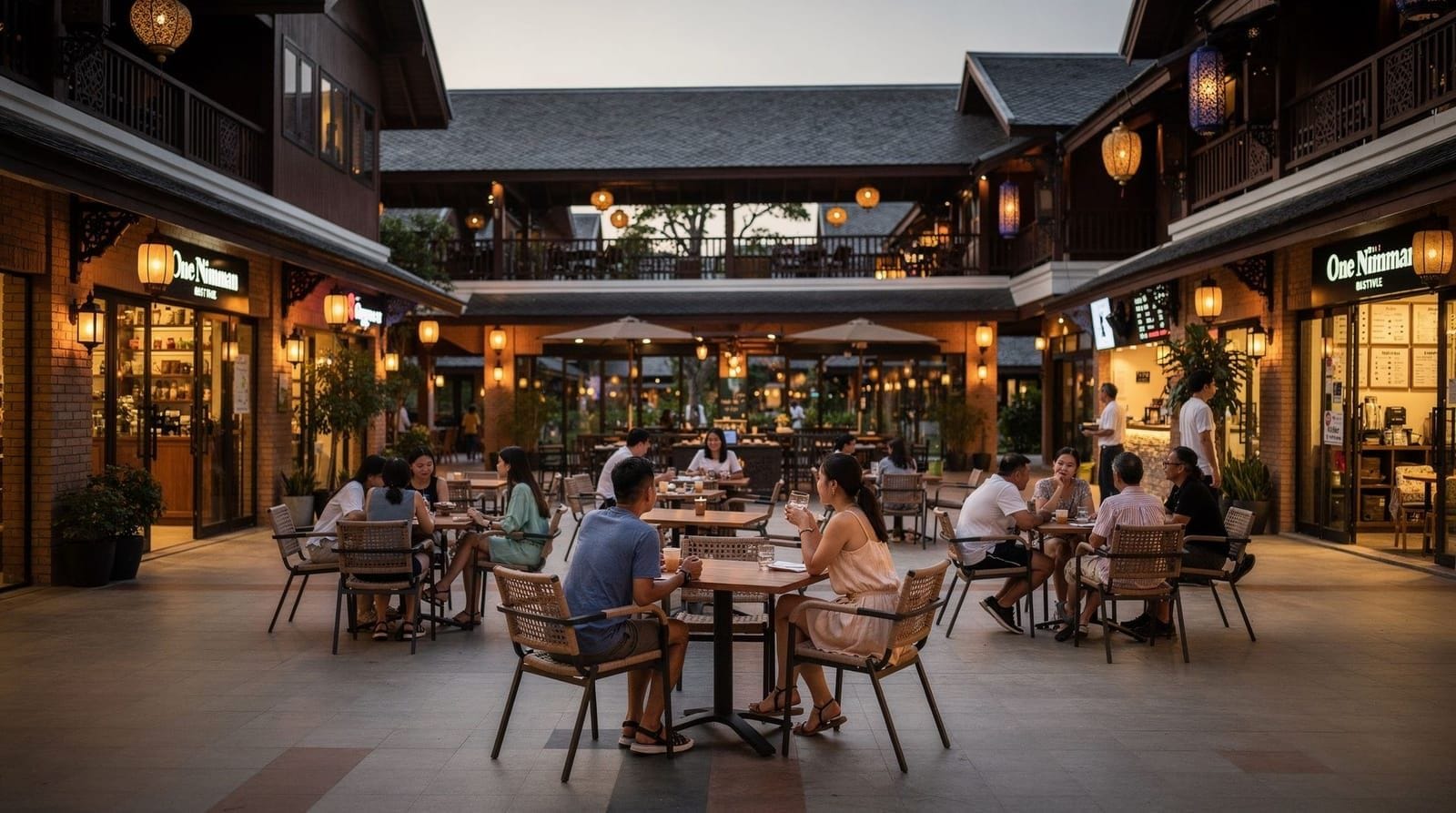
Because Huay Kaew Road runs directly past the university, the stretch nearest campus has developed a dense run of budget food stalls and small restaurants priced for student wallets — genuinely some of the cheapest sit-down meals available in this part of the city, well below Nimman’s café-district prices a few hundred metres south. In the evening, a modest night market sets up along part of the road, smaller and far less touristed than Night Bazaar downtown, selling clothing, snacks and household goods to a mostly local, student clientele.
This is a useful reality check on Chiang Mai food prices generally: a full meal here can cost a third of the equivalent dish in Nimman, purely because the customer base is students rather than tourists or expats. If your trip has skewed toward Nimman’s café prices, an evening on Huay Kaew Road recalibrates what “normal” local pricing actually looks like.
A brief history of the area
Chiang Mai University was established in 1964 as the first university in Thailand founded outside Bangkok, a decision that reshaped this part of the city as much as it reshaped higher education in the north. The choice to build the campus at the base of Doi Suthep, rather than closer to the historic Old City centre, meant a whole new district grew up around it over the following decades — student housing, budget eateries, bookshops and eventually the wider creative and café culture that spread south into what is now Nimmanhaemin. In a real sense, Nimman’s entire café-and-design identity traces back to this university’s presence: the original demand for affordable, laptop-friendly cafés near a large student population is what allowed the more design-forward, internationally minded coffee scene to take root and eventually grow beyond the campus’s immediate orbit.
Ang Kaew reservoir itself was built as a practical water-management feature for the campus, only becoming a recreational draw for joggers, cyclists and visitors as the surrounding tree cover matured over the following decades. That gradual, unplanned evolution from utilitarian infrastructure to a genuine local beauty spot is part of what makes it feel different from Chiang Mai’s more deliberately curated viewpoints.
Cycling, jogging and using the campus like a local
Because CMU’s roads are open and lightly trafficked outside of class-change periods, the campus has become one of the more popular places in the city for cycling and jogging, both among students and residents from surrounding neighbourhoods. Bicycle rental stands operate near several of the campus gates, typically charging a modest hourly or daily rate, and a loop around Ang Kaew reservoir plus a stretch of the internal ring road makes a genuinely pleasant hour of exercise with mountain views for most of the route — a rare combination in a city where most outdoor exercise routes are either flat and shadeless or steep and touristed, like the stairs up to Doi Suthep itself.
Early morning, roughly 6-8am, is when the campus sees the most local joggers and cyclists, and the light and temperature are at their best for it. Visitors without their own transport can simply walk the same loop at a slower pace; it takes longer, but nothing about the route requires a bicycle specifically.
Getting there and getting around
The CMU-Huay Kaew area sits directly north of Nimman, and it is genuinely walkable from there — about 15-20 minutes north along Nimmanhaemin Road to the Huay Kaew Road junction, then a short walk west to the CMU main gate. From the Old City directly, a songthaew runs roughly 30-40 THB and a Grab costs 70-100 THB depending on traffic.
Once at the campus, distances stretch out considerably — CMU’s grounds are large enough that walking from the main gate to Ang Kaew reservoir takes 15-20 minutes on its own, and many visitors rent a bicycle at the campus entrance or simply flag a passing songthaew for the internal loop. There is no dedicated Chiang Mai tour built specifically around CMU and Ang Kaew in the current GYG catalogue for this area — most visitors treat it as a self-guided stop by Grab, bicycle or on foot rather than a booked tour, which suits the low-key, unstructured nature of the place anyway.
Eating like a student on Huay Kaew Road
The food stalls and small restaurants nearest CMU’s main gate are worth a section of their own, because they represent a genuinely different price tier from almost anywhere else a visitor typically eats in Chiang Mai. Northern Thai staples like khao soi, som tam and grilled meats run at prices set for student budgets rather than tourist ones, often a third to half of what the same dish costs in Nimman just a few hundred metres south, or in tourist-facing restaurants near Night Bazaar. Portion sizes tend to be generous rather than tourist-scaled down, and turnover is high enough that food is generally fresh even at stalls with minimal seating.
This is not an area to expect English menus or particularly tourist-friendly service — most vendors cater to students and staff, and pointing at a photo or a neighbouring table’s dish works as well as anywhere in Chiang Mai. It rewards a spirit of casual exploration rather than a planned restaurant visit, in keeping with the generally low-key, unstructured character of the whole area. Seating is typically plastic tables and stools rather than proper restaurant furniture, and turnover during peak lunch and dinner hours can mean sharing a table with strangers — a normal, unremarkable part of student-area dining rather than anything unusual.
Practical tips for visiting
A few things make a CMU and Huay Kaew visit smoother. Bring cash — student-area food stalls and smaller shops rarely accept cards, unlike the more tourist-oriented cafés in Nimman. Sun protection matters more here than in shadier parts of the city, since much of the campus’s open road network and the Ang Kaew reservoir path lack consistent tree cover at midday, reinforcing the case for an early morning or late afternoon visit. Mobile signal and wifi are generally reliable across the area, unsurprising given the concentration of students, though public wifi specifically is less consistently available than in Nimman’s café-dense sois.
If visiting Chiang Mai Zoo, note that its hillside layout involves a reasonable amount of walking and some inclines even with the aerial tram covering the steepest sections, worth factoring in for visitors with mobility considerations or travelling with young children who tire on foot.
Nearby and easy to combine
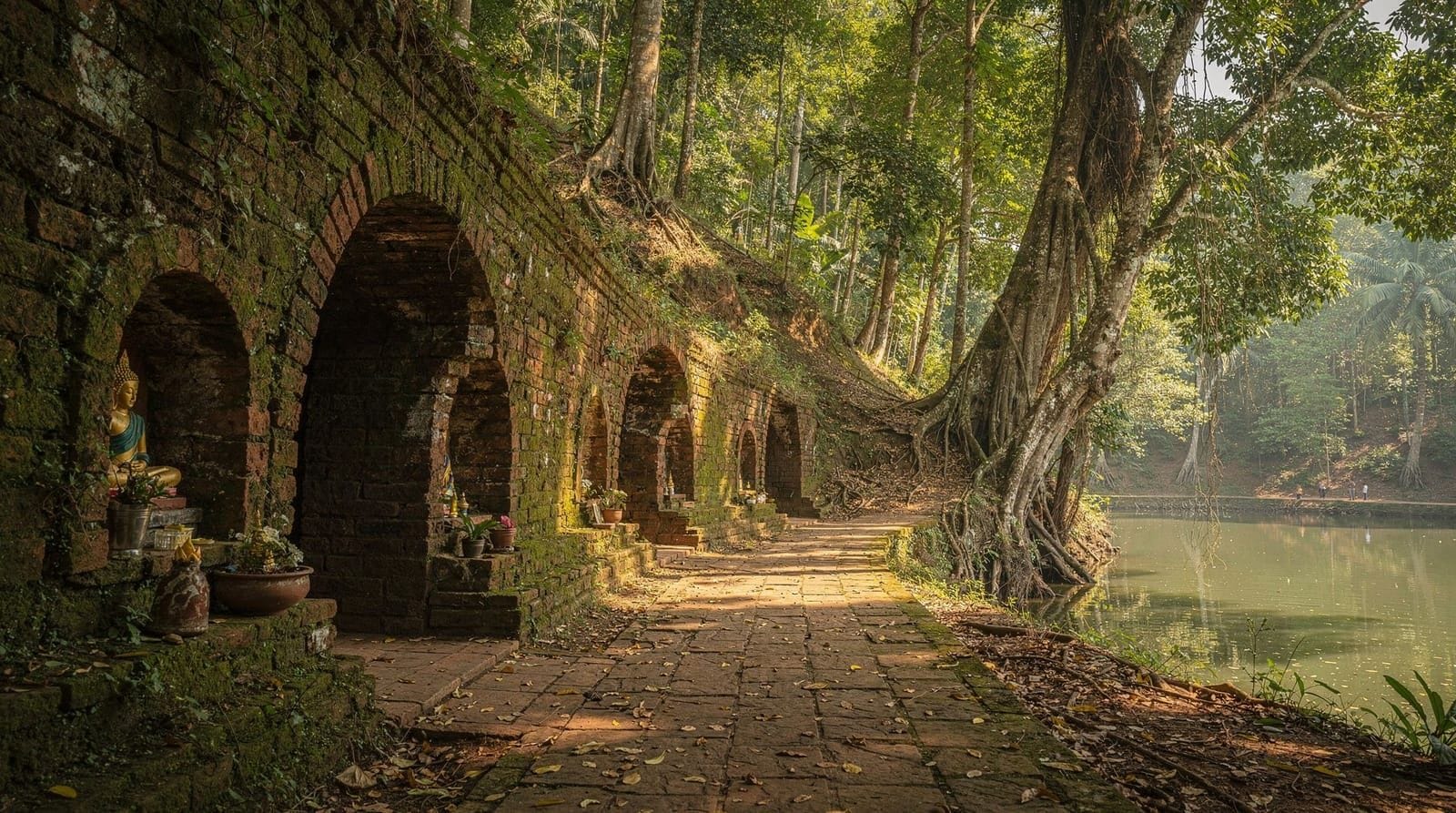
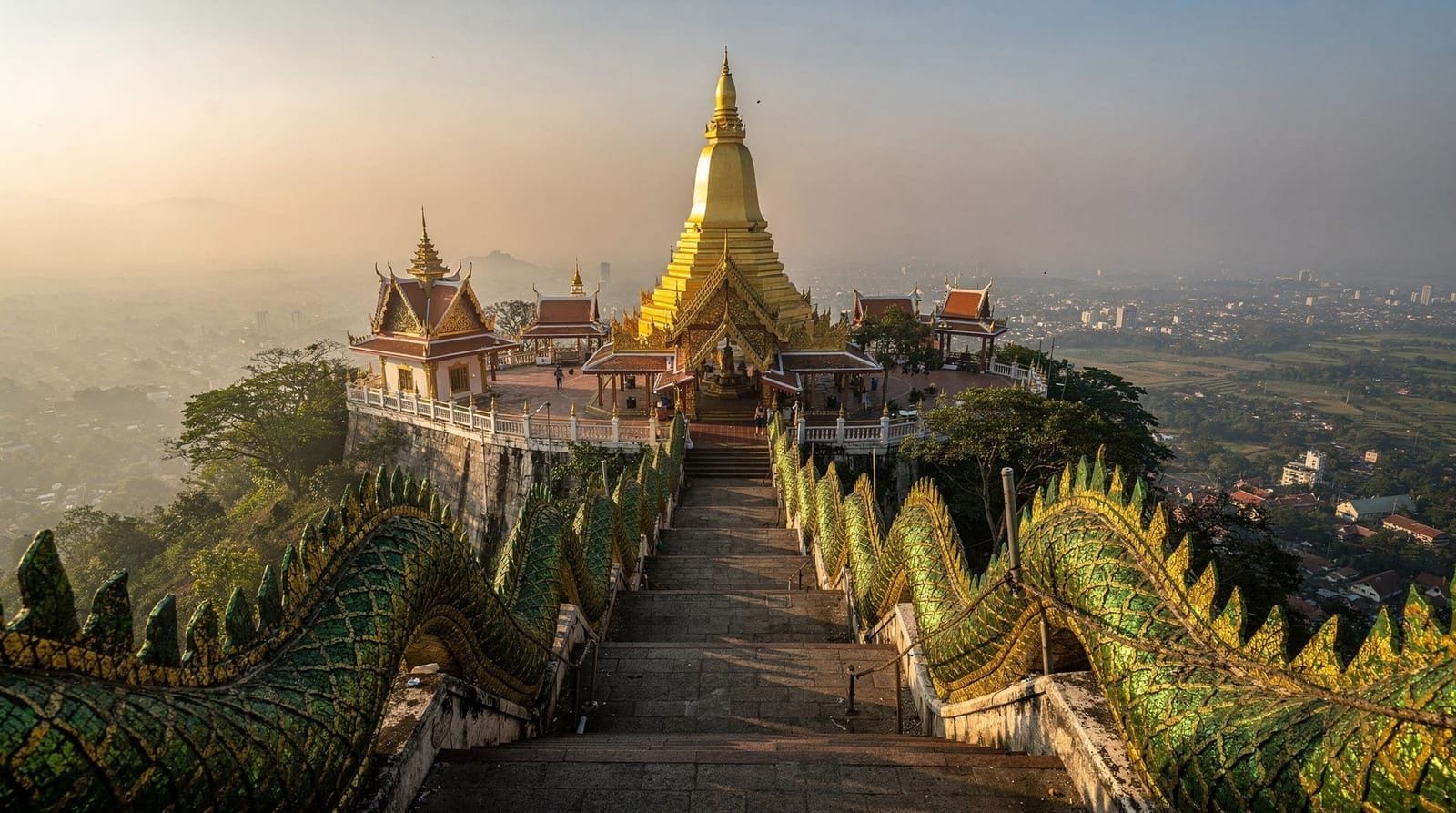
The obvious pairing is Nimmanhaemin itself, a short walk south — spend the morning in Nimman’s cafés, then walk up to CMU and Ang Kaew for the late afternoon light before heading back down for dinner. Wat Umong’s forest temple sits a little further southwest and pairs naturally as a calmer, more spiritual stop in the same half-day loop. If mountain views are the draw, continuing up the same road eventually reaches Doi Suthep, though that is a longer trip requiring its own transport arrangement rather than a same-afternoon add-on.
For visitors who want a broader city overview before or after this quieter half-day, a tuk-tuk city tour covers the more famous Old City temples and can be booked separately, since CMU and Huay Kaew are better suited to independent exploration than a guided circuit.
A sensible full-day structure for anyone building this into a wider itinerary: morning temple-hopping in Old City, lunch and a café stop in Nimman, then a late-afternoon walk or cycle at CMU and Ang Kaew before the light fades, finishing with dinner back on Huay Kaew Road at student-priced local food. That sequencing front-loads the more heat-exposed temple walking earlier in the day and saves the shaded, late-afternoon-friendly campus loop for when the sun has eased — broadly the same logic that applies to sequencing a day around Wat Umong’s forest grounds as well.
Frequently asked questions about Chiang Mai University and Huay Kaew Road
Can visitors walk around Chiang Mai University’s campus?
Yes — CMU’s grounds are open to the public with no entry ticket or restriction, and locals jog, cycle and picnic there daily. The main draw for visitors is Ang Kaew reservoir inside the campus.
What is Ang Kaew reservoir?
Ang Kaew is a lake inside the CMU campus grounds, ringed by a paved path and backed by the lower slopes of Doi Suthep. It is popular with joggers and cyclists and offers a quiet, free mountain-and-water view, best visited in late afternoon light.
Is Chiang Mai Zoo worth visiting?
It depends on your general view of zoos — Chiang Mai Zoo is large and well-established, built into the hillside beside CMU with an aerial tram for the steeper sections, but it is a standard zoo rather than an ethical wildlife sanctuary. Visitors who prefer no-riding, low-impact wildlife encounters should look at the ethical elephant sanctuary option instead.
How do I get to CMU and Huay Kaew Road from the Old City?
A songthaew costs roughly 30-40 THB, a Grab runs 70-100 THB, and it is walkable (about 35-40 minutes total) from Tha Phae Gate via Nimman, though most visitors combine transport with the walk rather than doing the whole distance on foot.
Is the Huay Kaew night market worth visiting?
It is worth a stop for cheap, authentic local food rather than souvenir shopping — it is considerably smaller and more local-oriented than Night Bazaar downtown. Go hungry rather than looking for gifts.
How much time should I set aside for this area?
Two to three hours covers the campus and Ang Kaew comfortably; add another hour or two if visiting Chiang Mai Zoo, and factor in an evening return if you want the Huay Kaew night market as well.
Can I combine this with a visit to Nimman in one day?
Yes, easily — the two areas are directly adjacent, connected by a 15-20 minute walk along Nimmanhaemin Road, and are commonly done as a single half-day loop combining café time with the quieter campus and reservoir walk.
Is there an entry fee for Chiang Mai University or Ang Kaew reservoir?
No, the CMU campus and Ang Kaew reservoir are free and open to the public with no ticket required. Only Chiang Mai Zoo, a separate adjacent attraction, charges an entry fee.
Can I rent a bicycle at Chiang Mai University?
Yes, bicycle rental stands operate near several campus gates at a modest hourly or daily rate, a popular way to cover the reservoir loop and internal ring road without walking the full distance in the heat.
Top experiences
Bookable activities with verified prices and instant confirmation on GetYourGuide.