One Nimman
One Nimman is a brick-paved lifestyle plaza in Chiang Mai's Nimman district, with boutiques, a clock tower, cafés and a weekend craft market.
Chiang Mai: Let's Relax Spa Chiang Mai One Nimman
Quick facts
- Getting there
- Songthaew from Old City ~30-40 THB, Grab ~60-90 THB, or a 20-min walk from Tha Phae Gate
- Key sight
- The brick-paved plaza and clock tower at the corner of Nimmanhaemin Road and Soi 1
- Time needed
- 1-2 hours, longer on weekend market evenings
- Best time
- Weekend evenings for the craft market, weekday late afternoons for a quieter visit
- Typical cost
- Free to browse; 100-300 THB for a café stop, more for spa treatments
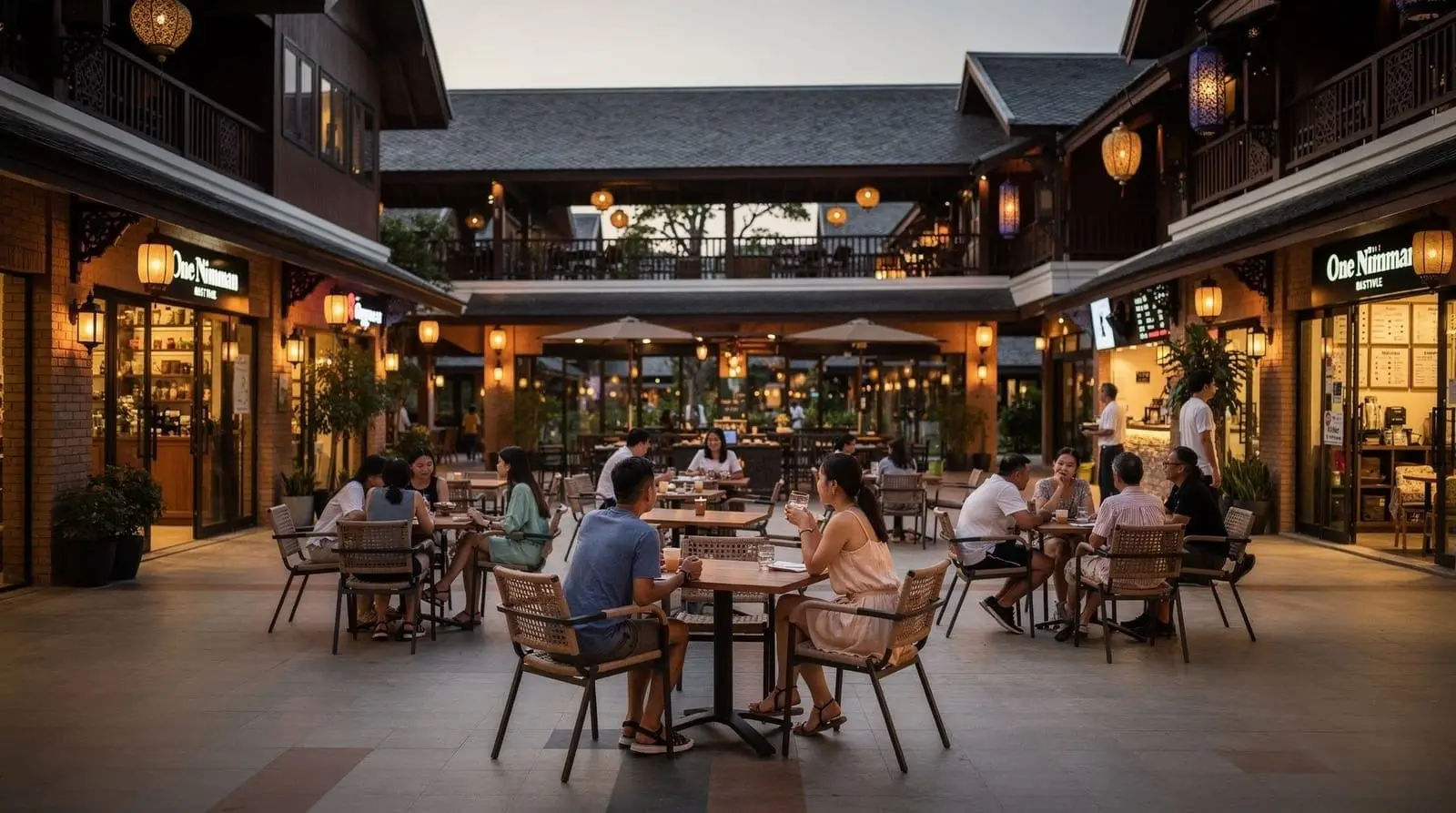
One Nimman is the single most recognisable corner of the wider Nimmanhaemin district: a purpose-built, brick-paved plaza at the intersection of Nimmanhaemin Road and Soi 1, anchored by a small clock tower and lined with two- and three-storey shophouse-style buildings housing boutiques, cafés and restaurants. It reads less like an organic Thai streetscape and more like a designed lifestyle development, because that is exactly what it is — and that intentional, photogenic layout is precisely why it has become a default stop for anyone spending time in Nimman.
Quick answer: One Nimman is a landscaped plaza and low-rise retail development at Nimmanhaemin Soi 1, easy to reach by songthaew (30-40 THB) or Grab (60-90 THB) from the Old City. Visit on a Friday, Saturday or Sunday evening for the weekend craft market that fills the plaza with stalls, or any afternoon for a quieter browse through the permanent boutiques and cafés; budget an hour or two, more if the weekend market is running.
What One Nimman actually is
Confusingly for first-time visitors, “One Nimman” is not simply a nickname for the whole Nimmanhaemin district — it is a specific, gated commercial development within it, built around a central open plaza rather than an enclosed mall. The architecture leans into a European-village aesthetic: red brick paving, a small clock tower, string lighting and low buildings with balconies overlooking the square, which makes it noticeably more photogenic (and more Instagrammed) than the plainer shopfronts along the rest of Nimmanhaemin Road.
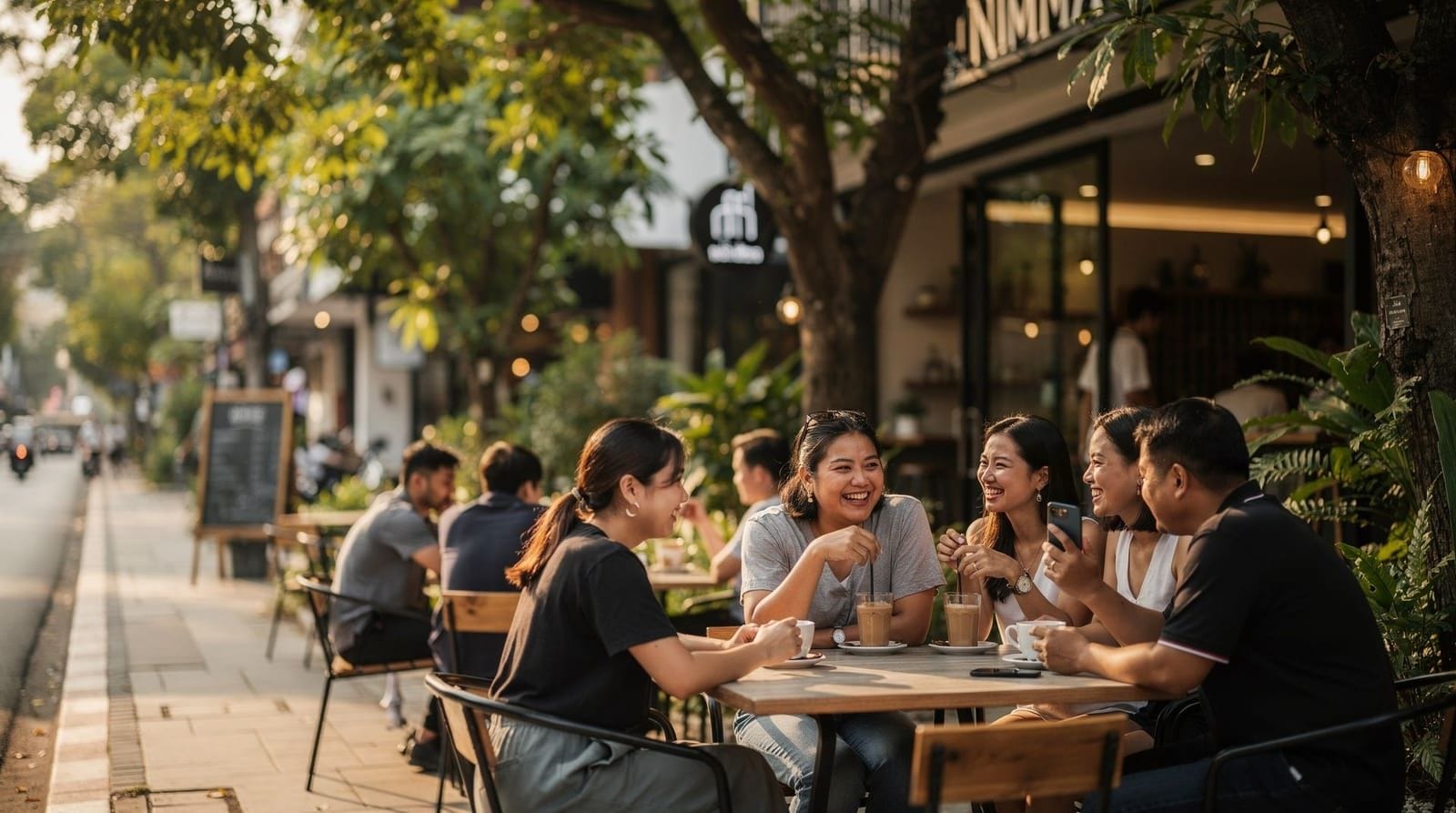
Functionally, it operates as a mixed retail-and-dining plaza. The ground floors of the surrounding buildings hold boutiques selling clothing, accessories and homeware, mixed in with a solid run of cafés and restaurants that spill tables out onto the plaza itself. It is a smaller, more curated space than Night Bazaar, and a considerably calmer one — there is no bargaining culture here, prices are fixed, and the crowd skews toward a mix of local young professionals, expats and tourists rather than the tour-bus volume you get at Night Bazaar.
How it fits into Nimman’s development
One Nimman is best understood as a deliberate, developer-led extension of the organic café-and-boutique scene that grew up along Nimmanhaemin Road over the preceding years. Rather than another shopfront squeezed into an existing soi, it was built as a standalone plaza with a coherent architectural theme, aimed at giving the district a single, walkable centrepiece rather than leaving visitors to piece together a route through the numbered sois on their own. That intentional design is visible in details a purely organic street would not have: consistent building heights and materials around the square, planned pedestrian flow between the clock tower and surrounding storefronts, and lighting designed for evening use rather than added as an afterthought.
This matters for how you should think about visiting. Where the rest of Nimmanhaemin rewards aimless wandering into whichever shopfront looks interesting, One Nimman rewards simply walking the plaza’s perimeter once, since its compact, planned layout means you will naturally pass most of what is on offer without needing a route.
The weekend market
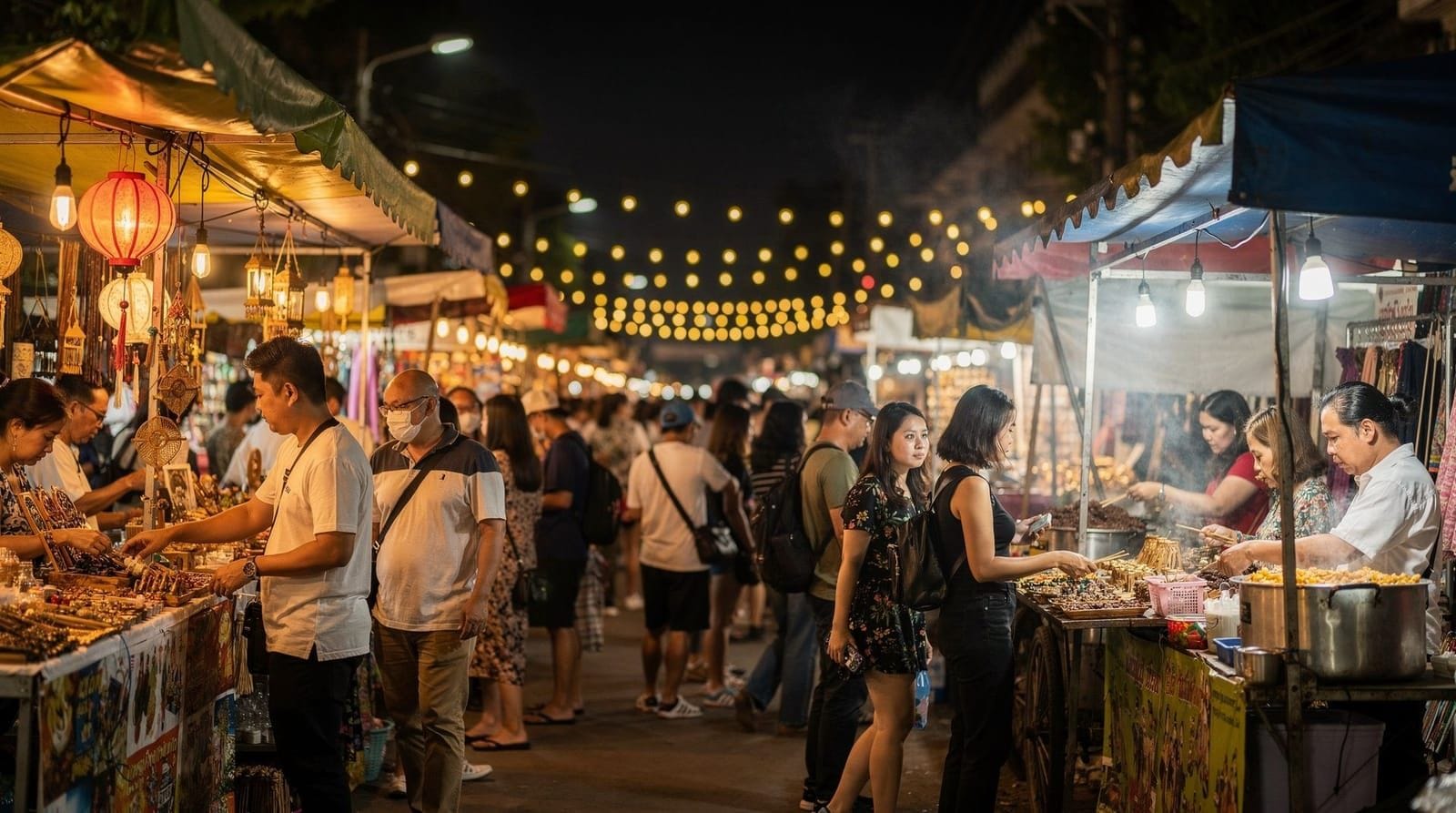
The plaza’s biggest single draw is its weekend market, which typically runs Friday through Sunday evenings and fills the open brick square with folding-table vendors selling handmade crafts, jewellery, small design objects and street food, often with a live acoustic act on a small stage. It is considerably smaller in scale than the citywide Sunday Walking Street around Ratchadamnoen Road, but that smaller footprint is itself the appeal — it takes 30-45 minutes to see everything rather than the two-plus hours a full Sunday Walking Street circuit demands, which makes it a realistic add-on to an evening that already includes dinner in the area.
Weekday visits are noticeably quieter: most of the permanent boutiques stay open, but the market stalls are absent and the plaza feels more like a pleasant place to sit with a coffee than an event to attend. Neither version is wrong — it depends on whether you want the market energy or the calmer browse.
Shops, cafés and the clock tower
The permanent retail mix at One Nimman runs toward small independent boutiques rather than international chains, with clothing, jewellery, ceramics and locally designed homeware making up most of the storefronts. Prices are fixed and generally mid-range by Chiang Mai standards — this is not the place to look for bargain souvenirs, which are better found at Warorot Market or the Saturday Walking Street in Wualai.
The clock tower at the plaza’s centre is the de facto photo spot and meeting point, especially once the string lights come on after dusk. Around it, cafés and restaurants occupy most of the ground-floor frontage, ranging from casual coffee-and-pastry counters to full sit-down Thai and international restaurants with plaza-facing seating — a reasonable dinner stop before or after browsing the rest of Nimman.
Upper floors of several buildings around the square house smaller studio businesses — hair and beauty salons, yoga studios and the occasional co-working space — reflecting the same young, design-oriented demographic that defines the wider Nimmanhaemin district. It is worth glancing upward as you walk the plaza; not everything at One Nimman is at street level, and a few of the better rooftop-adjacent cafés are easy to miss if you only look at ground-floor signage.
For photography specifically, the clock tower framed against the string lights is the standard shot, best taken just after sunset when there is still enough ambient light in the sky to avoid a flat black background but the lights themselves have come on. Shooting from the plaza’s edges rather than its centre generally produces a cleaner composition, since the centre tends to have the highest foot traffic on weekend evenings.
Getting there and getting around
One Nimman sits at Nimmanhaemin Soi 1, at the southern end of the wider Nimmanhaemin strip, making it one of the easier corners of the district to find — most songthaew drivers and Grab routes into Nimman drop passengers within a short walk of the plaza. From the Old City, a shared songthaew runs roughly 30-40 THB, a Grab costs 60-90 THB, and walking from Tha Phae Gate takes about 20 minutes on flat ground.
Once there, the plaza itself is entirely pedestrian and compact — you can see the whole layout in a five-minute lap before deciding which shops or cafés to actually stop into. Parking for anyone self-driving a scooter or car is limited around the plaza, which is a recurring issue across Nimman generally, so Grab or songthaew remains the more practical choice for most visitors.
If you are coming from further afield — say, after a morning at Doi Suthep or a day trip further out of the city — factor traffic into your timing. Nimman’s roads, including the approach to One Nimman, tend to back up during the late-afternoon commute (roughly 4:30-6:30pm on weekdays), which can turn what should be a 15-minute Grab ride into 30 or more. Arriving slightly before or well after that window generally avoids the worst of it.
One Nimman by time of day
The plaza changes character noticeably depending on when you visit, more so than most Chiang Mai destinations, because its whole design is built around a single open square rather than a spread of independent attractions. Morning brings the quietest version: shops are still opening, a handful of cafés serve breakfast to early risers, and the brick paving and clock tower are easy to photograph without other people in the frame. Midday shifts toward a lunch crowd, mostly office workers and students from the nearby Chiang Mai University area rather than tourists, filling the restaurant tables around the square’s edges.
Late afternoon into evening is when One Nimman is at its best. The string lighting around the plaza switches on as the sky dims, the clock tower becomes genuinely photogenic against the darkening sky, and on Friday through Sunday the market stalls begin setting up in the open space between buildings. This is also, unsurprisingly, the busiest window — if a quieter photo of the plaza matters more than the market atmosphere, an earlier weekday evening visit, after the shops open but before the Friday-Sunday market crowd, threads that needle reasonably well.
Practical tips for visiting
A few details make a One Nimman visit smoother. Most shops and restaurants accept card payment, unlike many of Chiang Mai’s street markets, which lean cash-only — useful to know if you are trying to preserve THB for elsewhere in the city. Toilets are available inside several of the surrounding restaurants and cafés rather than as a dedicated public facility, so it is worth timing a stop around a coffee or meal rather than assuming standalone restrooms. The plaza itself has minimal shade at midday, since it is an open square rather than a covered market, which reinforces the case for a morning or evening visit over an afternoon one in the hotter months.
Dress code is casual throughout — there is no temple etiquette to observe here, unlike most other stops on a typical Chiang Mai itinerary, which makes One Nimman a comfortable stop to fold in without needing to plan around covering shoulders or knees. Wifi is generally available in the cafés lining the plaza, though not as a dedicated public network across the square itself, so plan on ordering something if you want to sit and work rather than expecting free open access.
Nearby and easy to combine
One Nimman’s location inside Nimmanhaemin means it naturally combines with a wider café-and-shopping half-day in the district — walk the rest of the numbered sois before or after a plaza visit. Chiang Mai University is a short ride further north if you want to add the campus and Huay Kaew Road’s night market stalls, and Wat Umong’s forest temple is a calm, contrasting stop a little further southwest for anyone who wants a temple visit in the same half-day. Heading back toward the centre, it is an easy Grab into Old City for temple-hopping, or to Night Bazaar if you want a bigger, louder evening market after One Nimman’s quieter one.
A common, efficient day structure runs: morning at Old City temples, lunch and coffee somewhere along Nimmanhaemin Road, a late-afternoon stop at One Nimman for the plaza and clock tower, then dinner either at the plaza itself or back toward the centre. This sequencing works well because it fronts the more physically demanding, sun-exposed temple walking earlier in the day and saves the shaded, evening-friendly plaza for when the heat has eased — the same logic that makes One Nimman a better late-day stop than a midday one on its own.
For a relaxing finish to a plaza visit, Let’s Relax Spa’s location inside One Nimman runs traditional Thai massage and reflexology sessions a short walk from the clock tower, a genuinely convenient add-on since it sits within the plaza itself rather than requiring a separate trip. Oasis Spa’s nearby Nimman branch is a similar alternative a few minutes’ walk up Nimmanhaemin Road if the first is fully booked.
Frequently asked questions about One Nimman
What is One Nimman in Chiang Mai?
One Nimman is a brick-paved plaza and low-rise retail development at Nimmanhaemin Soi 1, built around a central clock tower and lined with boutiques, cafés and restaurants. It sits within the wider Nimmanhaemin district rather than being a separate area.
Is One Nimman the same as Nimman?
No. Nimmanhaemin is the entire district and its main road, spanning numbered sois 1 through 17. One Nimman is a single plaza development within that district, at the Soi 1 end.
When is the One Nimman weekend market?
The craft and street-food market typically runs Friday through Sunday evenings in the plaza, with vendor stalls and often a small live music act. Weekday evenings are quieter, with the permanent boutiques and cafés open but no market stalls.
How do I get to One Nimman from the Old City?
A shared songthaew costs roughly 30-40 THB, a Grab runs 60-90 THB, and walking from Tha Phae Gate takes about 20 minutes on flat, direct roads.
Is One Nimman good for shopping bargains?
Not particularly — prices are fixed and mid-range, aimed at a boutique clientele rather than bargain hunters. For negotiable prices, visit Warorot Market or the Saturday Walking Street instead.
How much time should I spend at One Nimman?
An hour or two covers the plaza comfortably, longer on a weekend market evening when there are stalls to browse and a place to sit for dinner. It combines easily with a wider visit to the rest of Nimman.
Is One Nimman worth visiting if I only have a couple of days in Chiang Mai?
It is a reasonable add-on to a Nimman café visit, but should not take priority over Old City temples or Doi Suthep on a short first trip. Save it for when you are already in the neighbourhood.
Does One Nimman accept card payment?
Yes, most of the shops, cafés and restaurants around the plaza accept card payment, which is more consistent than Chiang Mai’s street markets, where cash is generally expected. It is still worth carrying some THB, since a few smaller stalls at the weekend market may be cash-only.
Top experiences
Bookable activities with verified prices and instant confirmation on GetYourGuide.