Saturday Walking Street (Wualai)
Wualai Road's Saturday Walking Street is Chiang Mai's silversmith-quarter night market, with silver crafts, street food and the Silver Temple.
Chiang Mai: Silver Craftwork Temple Tour with Monk Meeting
Quick facts
- Getting there
- Walk south from Chiang Mai Gate (5-10 min), or Grab/songthaew ~40-60 THB from elsewhere in the Old City
- Key sight
- Wat Sri Suphan, the hand-hammered silver temple on Wualai Road
- Time needed
- 1.5-2 hours to walk the full market and browse silver stalls
- Best time
- Saturday, 5pm to around 10-11pm; arrive by 6pm to beat the busiest hour
- Cost
- Free to walk; street food 30-60 THB per item, silver jewellery from a few hundred THB up
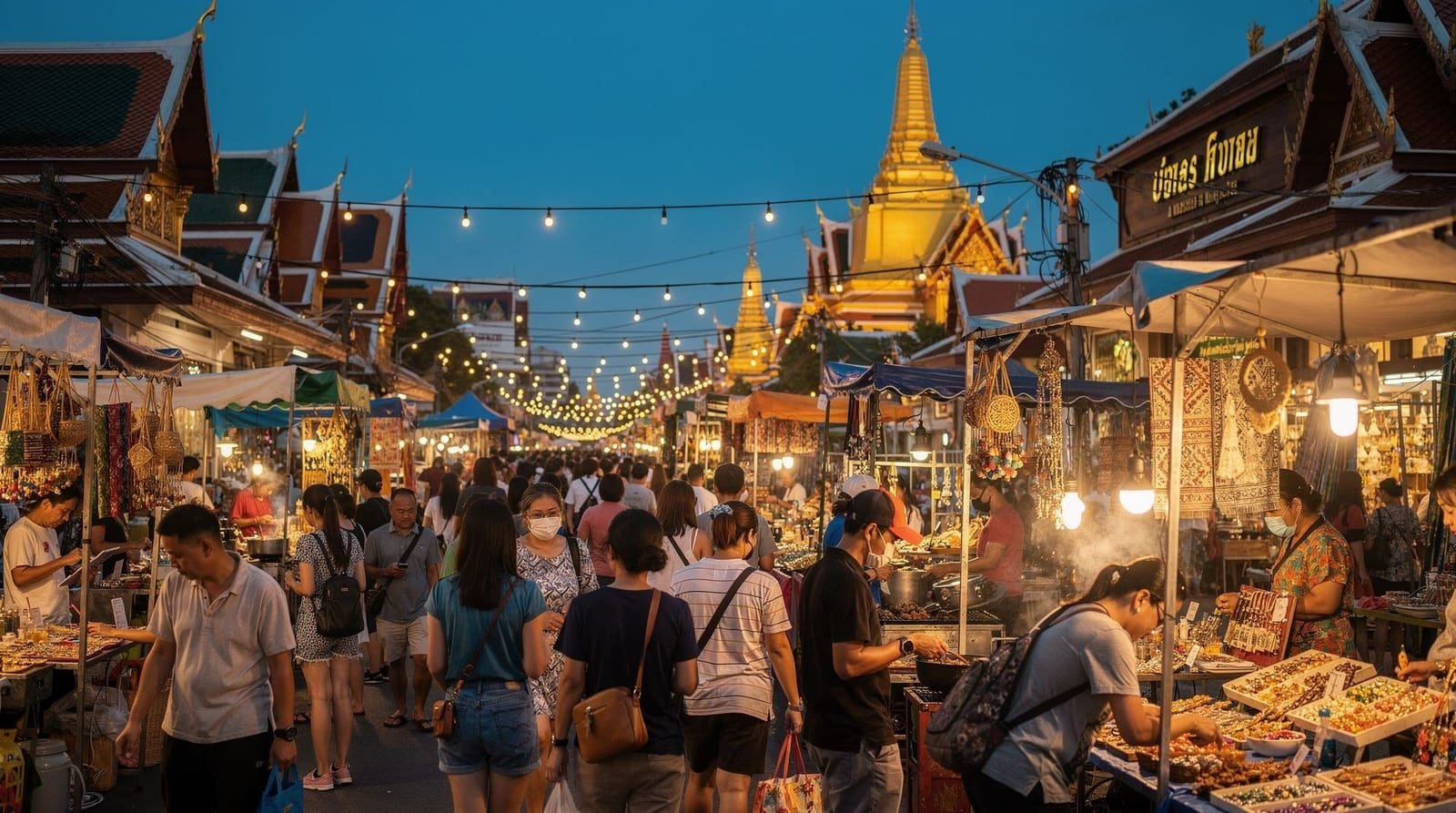
Wualai Road, running south from Chiang Mai Gate outside the Old City moat, has been Chiang Mai’s silversmith quarter for generations, and every Saturday evening it closes to traffic and turns into the Saturday Walking Street — a market built specifically around that silver heritage, smaller and noticeably less overwhelming than its bigger Sunday sibling inside the walls.
Quick answer: Saturday Walking Street runs along Wualai Road, just south of Chiang Mai Gate, every Saturday from around 5pm to 10-11pm. It is Chiang Mai’s silversmith-quarter market — expect hammered silver jewellery and homeware, street food stalls and a close look at Wat Sri Suphan, the ornately silver-clad temple partway down the street. It is a five-to-ten-minute walk from Chiang Mai Gate, considerably calmer than Sunday Walking Street, and worth 1.5-2 hours of an evening.
Why Wualai means silver
Long before it became a market street, Wualai was Chiang Mai’s traditional silversmithing neighbourhood, home to generations of craftsmen hand-hammering silver bowls, jewellery and ceremonial pieces using techniques passed down within families. That history is still visible in the workshops lining the road, some of which double as stalls on market night, selling pieces made on the premises rather than imported stock. It gives Saturday Walking Street a genuine craft identity that distinguishes it from the more general souvenir mix at Sunday Walking Street or Night Bazaar — if silver jewellery, bowls or decorative items are what you are actually shopping for, Wualai on a Saturday is the more purpose-built stop of the two.
Wat Sri Suphan, the silver temple
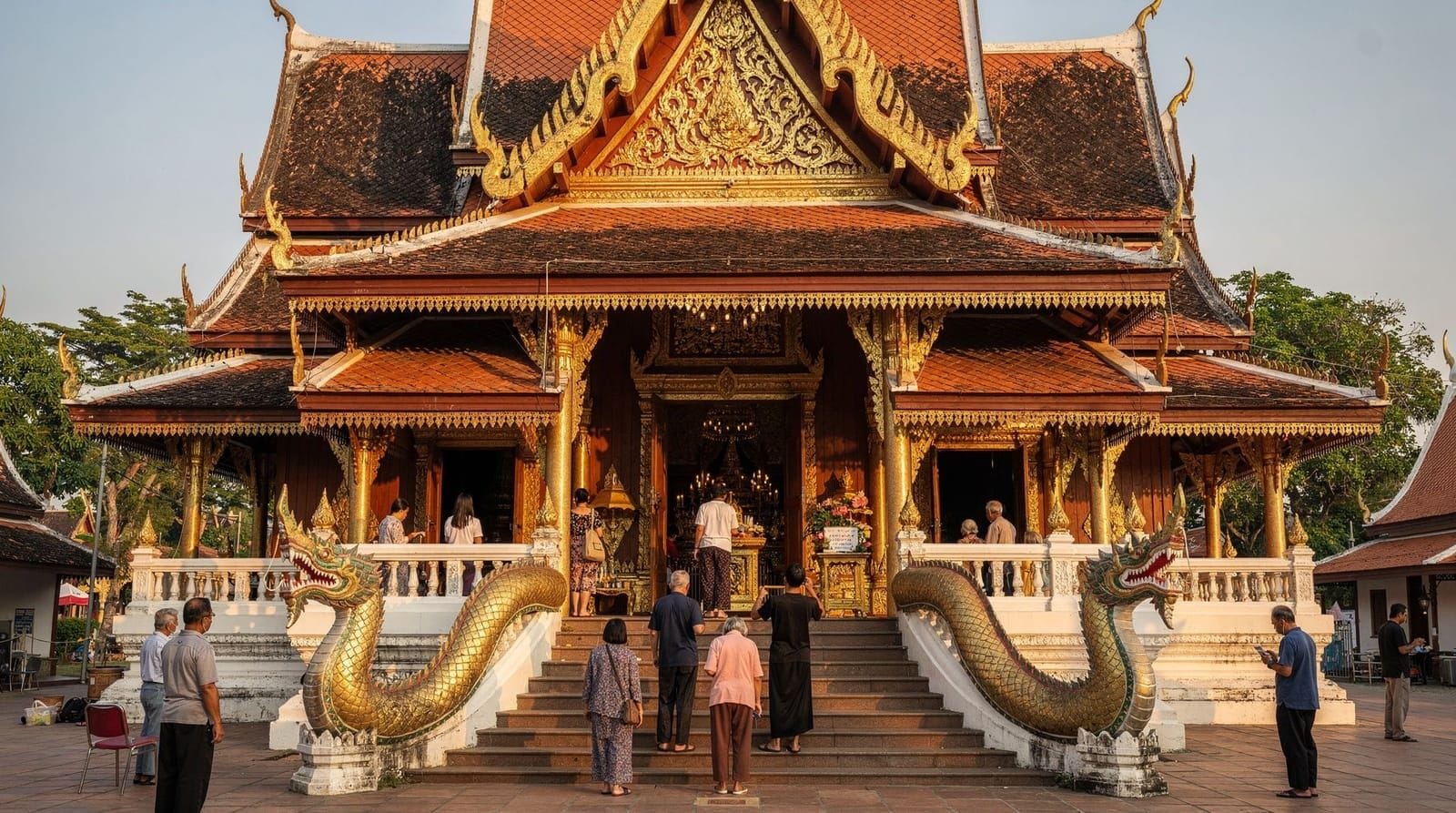
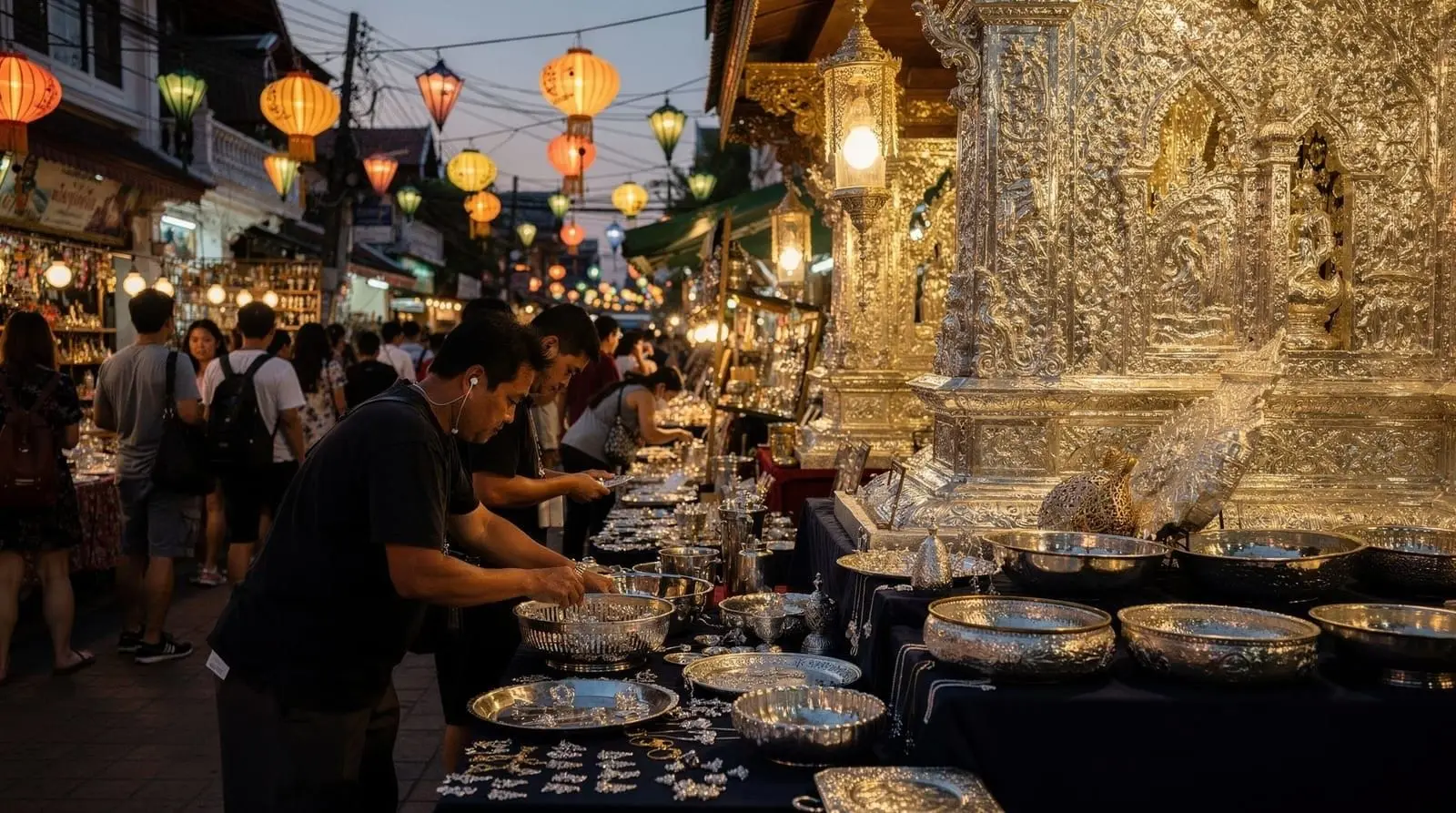
The market’s visual centrepiece is Wat Sri Suphan, a working Buddhist temple partway down Wualai Road whose ordination hall (ubosot) is clad, inside and out, in hammered silver and aluminium panels crafted by local silversmiths — a direct, physical expression of the neighbourhood’s silver-working tradition applied to sacred architecture rather than jewellery. The detail on the exterior panels, depicting Buddhist stories and Lanna motifs, rewards a slow look rather than a quick photo, and the temple is lit for the evening market, making a Saturday visit noticeably more atmospheric than a daytime one.
A note worth knowing before visiting: as with several older Thai temples, women have traditionally not been permitted to enter the ordination hall’s inner sanctum at Wat Sri Suphan, though the temple grounds and exterior remain open to all visitors. Check current signage on arrival, since temple rules can be updated, and it is a good example of the kind of practical, honest detail worth knowing before you go rather than discovering at the door.
Walking the market
Saturday Walking Street runs for several hundred metres of closed-off road, considerably shorter than the full length of Sunday Walking Street’s Ratchadamnoen Road route, which is exactly why it takes 1.5-2 hours rather than a half-day to see properly. Stalls mix silver jewellery and homeware with general handicrafts, clothing and a solid run of street food — grilled meats, khao soi, mango sticky rice and other Chiang Mai staples at 30-60 THB per item, similar pricing to the city’s other walking street markets.
Crowds build steadily from around 6pm and peak between 7 and 9pm; arriving by 6pm gives a genuinely easier walk before the densest crowds arrive, and also allows time to see Wat Sri Suphan while there is still some daylight for comparison against the evening lighting.
What to buy and how to shop it wisely
Silver is the obvious purchase, and it comes in a wide range at Wualai — from small, inexpensive charms and rings suitable as gifts, to larger hand-hammered bowls and decorative pieces that represent a genuine craft investment. As with any silver purchase in Thailand, it is worth knowing that pure silver is soft and rarely used undiluted in jewellery; most pieces sold as “silver” are sterling silver (a 92.5% silver alloy) or a lower-purity mix, and reputable stalls will generally be upfront about which grade a piece is if asked directly. Buying from a stall attached to a visible workshop, where you can see silversmithing tools and half-finished pieces, is a reasonable proxy for buying from an actual maker rather than a reseller of imported stock, though it is not a guarantee either way.
Beyond silver, the market’s food stalls are worth budgeting real time for rather than treating as a quick bite between shopping stops — this is one of the better walking-street markets in the city for grazing a full meal across several stalls, from grilled skewers to noodle dishes to Thai desserts, generally in the same 30-60 THB per-item range found at Chiang Mai’s other night markets.
Practical tips for visiting
Cash is essential — while some larger craft stalls may accept mobile payment apps common among Thai vendors, small food and craft stalls overwhelmingly expect THB cash, and ATMs are not conveniently placed within the market itself. It is worth withdrawing what you expect to spend before arriving rather than planning to find a machine mid-market. Comfortable, closed shoes are a better choice than sandals given the amount of standing and shuffling through crowds involved, and a small cross-body bag is more practical than a backpack for navigating tightly packed stalls.
Modest dress is worth keeping in mind if you plan to enter Wat Sri Suphan’s grounds rather than just photographing from outside — shoulders and knees covered, as at any Chiang Mai temple, applies here too despite the market atmosphere surrounding it. Mobile signal and Grab availability are generally reliable throughout the market’s duration, useful for arranging a pickup once you are ready to leave rather than trying to flag down transport on a closed road. Set a pickup point a block or two back from the closed section in advance, since drivers cannot enter the market street itself while it is running.
Getting there and getting around
Wualai Road starts just south of Chiang Mai Gate, one of the Old City’s main southern gates, making the market a five-to-ten-minute walk for anyone already staying inside or near the moat. From elsewhere in the Old City or from areas like Night Bazaar, a Grab or songthaew costs roughly 40-60 THB, and is the more practical option given the road closes to regular traffic during market hours, meaning any vehicle drop-off needs to happen a block or two back from the market’s edge.
The market itself is flat, paved and entirely pedestrian for its duration, though it gets genuinely crowded at peak hours between 7 and 9pm, with stalls set up close enough together that fast movement becomes difficult. Comfortable shoes matter more than they might seem to on paper — an evening of shuffling through a packed market street adds up.
A brief history of Wualai’s silversmithing craft
Wualai’s association with silverwork stretches back generations, tied historically to communities of craftsmen who settled in this specific area south of the city walls and passed hammering and repoussé techniques down within families and workshops over successive generations. Unlike some craft traditions that have become largely ceremonial or tourist-facing, Wualai’s silversmithing has maintained a genuine working presence — several of the workshops visible along the road today have operated continuously for decades, producing everything from small decorative bowls to temple ornamentation, including the silver panelling used at Wat Sri Suphan itself.
This continuity is part of why Wualai’s Saturday market feels different from a market built purely around imported souvenir stock: the silverwork on sale here connects directly to a living local craft economy rather than existing solely as a tourist product. That said, as with any craft tourism, not every stall selling “silver” goods is necessarily made on-site or by hand — mass-produced pieces mixed in among genuinely handmade ones is a reality at any craft market, and it is worth treating claims of handmade origin with the same reasonable scepticism you would apply anywhere else in the world.
Nearby and easy to combine
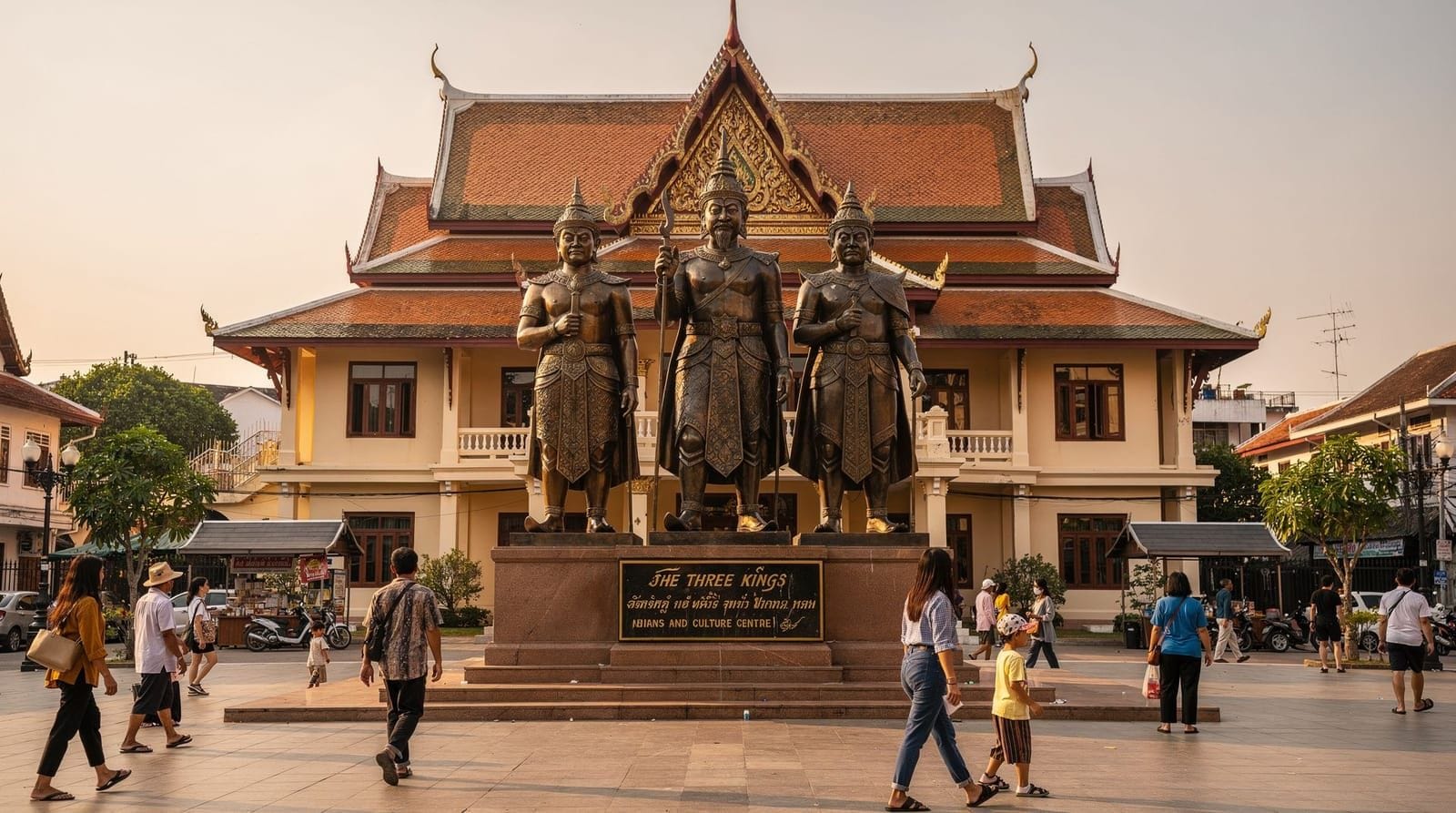
Wualai’s proximity to the southern edge of the Old City moat makes it an easy add-on to a wider day of temple-hopping — Old City’s core temples, including Wat Phra Singh and Wat Chedi Luang, are a short walk or ride north, and make sense to visit earlier the same Saturday before returning for the evening market. Three Kings Monument and its surrounding museums sit within the same walkable Old City core if you want a cultural stop before dinner. For a bigger Sunday version of the same walking-street format, Sunday Walking Street runs the following night along Ratchadamnoen Road.
For visitors who want the silversmithing history explained rather than self-guided, a silver craftwork and temple tour with a monk meeting covers Wualai’s silver heritage alongside a temple visit and a conversation with a local monk, a useful way to get context that a self-guided evening walk would miss. This works particularly well for visitors whose Saturday evening is already free but who would rather have a guide explain the craft techniques and Wat Sri Suphan’s iconography than piece it together from signage alone.
A broader tour combining the Silver Temple with other Chiang Mai top sites is worth considering for visitors who want Wualai’s silver heritage folded into a wider day of sightseeing rather than treated as a standalone evening market visit — useful if your schedule does not have a free Saturday evening but does have a free day at some point during the week, since Wat Sri Suphan itself is open daily even without the market running.
A calmer alternative for a first Chiang Mai trip
For visitors trying to decide between the two big walking-street markets on a first trip to Chiang Mai, it is worth being honest about what each actually delivers. Sunday Walking Street is bigger, more famous and covers considerably more ground, but that scale comes with genuinely dense crowds during peak hours and a shopping experience built around volume rather than a single craft narrative. Saturday Walking Street at Wualai trades that scale for a more contained, thematically coherent evening — a market genuinely built around one neighbourhood’s craft history, anchored by one distinctive temple, walkable start to finish in under an hour even at a leisurely pace.
Neither choice is wrong, and many visitors who stay in Chiang Mai across a full weekend simply do both. But if forced to pick one, the deciding factor is usually less about which night you happen to be in the city and more about what kind of evening you want: overwhelming variety, or a smaller, more focused craft-and-temple experience.
Frequently asked questions about Saturday Walking Street Wualai
What is Saturday Walking Street in Chiang Mai?
It is a weekly night market that closes Wualai Road, just south of Chiang Mai Gate, to traffic every Saturday evening from around 5pm to 10-11pm, built around the neighbourhood’s traditional silversmithing craft.
What is the difference between Saturday Walking Street and Sunday Walking Street?
Saturday Walking Street runs along Wualai Road with a silver-craft focus and is shorter and calmer. Sunday Walking Street runs along Ratchadamnoen Road inside the Old City, is considerably larger, and covers general souvenirs and crafts rather than a single specialty.
What is Wat Sri Suphan, the silver temple?
Wat Sri Suphan is a working Buddhist temple on Wualai Road whose ordination hall is clad in hand-hammered silver and aluminium panels made by local silversmiths, reflecting the neighbourhood’s craft tradition. Note that women have traditionally not been permitted into the inner ordination hall, though the grounds are open to all.
How do I get to Wualai Road from the Old City?
It is a five-to-ten-minute walk south from Chiang Mai Gate. From elsewhere in the Old City or Night Bazaar, a Grab or songthaew costs roughly 40-60 THB.
What time should I arrive at Saturday Walking Street?
Arrive by 6pm to see the market and Wat Sri Suphan before the busiest crowds build between 7 and 9pm. The market generally winds down by 10-11pm.
Is Saturday Walking Street good for buying silver jewellery?
Yes, it is genuinely the better of Chiang Mai’s walking-street markets for silver specifically, given the neighbourhood’s craft history and the workshop-front stalls selling handmade pieces.
Is Saturday Walking Street crowded?
It gets busy between 7 and 9pm but is noticeably less crowded than Sunday Walking Street’s Ratchadamnoen Road route, owing to its shorter length and smaller scale.
Can I combine Saturday Walking Street with Old City temple visits?
Yes — Old City’s core temples and Three Kings Monument are a short walk north, making it easy to spend the day temple-hopping before finishing at Wualai in the evening.
Do I need cash for Saturday Walking Street?
Yes, cash in THB is essential — most food and craft stalls do not accept card payment, and ATMs are not conveniently placed within the market itself. Withdraw what you expect to spend before arriving.
Is the silver sold at Saturday Walking Street genuine?
Most pieces sold as silver are sterling silver or a lower-purity alloy rather than pure silver, which is standard practice for silver jewellery worldwide. Buying from stalls attached to a visible workshop is a reasonable, though not foolproof, indicator of handmade, locally produced pieces over imported stock.
Top experiences
Bookable activities with verified prices and instant confirmation on GetYourGuide.