Wat Phra Singh
Chiang Mai's most revered temple: the Phra Singh Buddha, the gilded Lai Kham chapel, and how to visit without the crowds.
Chiang Mai Old City Phra Singh & Big Pagoda Night Tour
Quick facts
- Getting there
- 15-min walk from Tha Phae Gate, or songthaew ~30 THB ($0.85)
- Distance from Tha Phae Gate
- 1.1 km / 12-15 min on foot
- Key sight
- The Phra Singh Buddha image and the Lai Kham viharn's gilded woodwork
- Time needed
- 45-60 minutes
- Entry cost
- ~40 THB ($1.10) for foreign visitors; free to sit in the main viharn
Wat Phra Singh sits toward the west side of the Old City, and of the roughly thirty working temples inside the moat, this is the one Chiang Mai residents themselves treat as the most important. It houses the Phra Singh Buddha, the image the temple is named for, and it’s the traditional starting point for the Songkran procession each April, when the statue is carried through the streets so people can pour water over it for blessing — a role no other temple in the city holds.
Quick answer: Wat Phra Singh is a 14th-century temple complex centered on the revered Phra Singh Buddha and the Lai Kham viharn, whose interior woodwork and murals are considered the finest surviving example of classical Lanna temple art. It takes under an hour to visit, costs a small entry fee for the Lai Kham chapel, and pairs naturally with a walk to Wat Chedi Luang fifteen minutes away.
What’s actually here
The temple complex was founded in 1345 by King Pha Yu to house the ashes of his father, and it has been expanded and rebuilt across several centuries since, which is why the compound today mixes architectural styles rather than presenting a single unified design. The main viharn facing the street is the largest structure and the one most visitors see first — it’s active as a working assembly hall, with monks holding regular chanting sessions, and entry here is free.
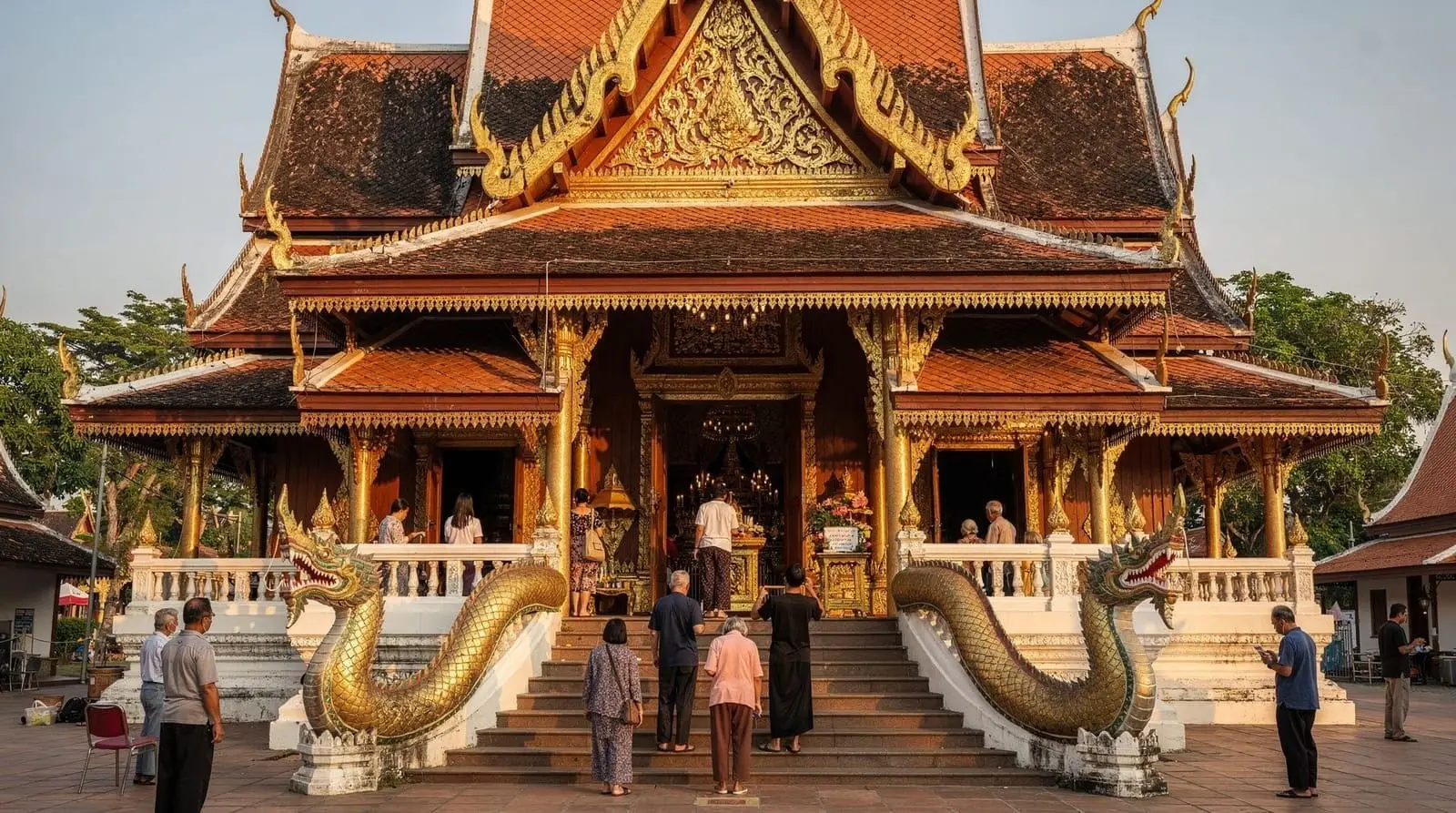
Behind it, and requiring the temple’s small entry fee, sits the Lai Kham viharn, a smaller and older chapel that is the actual reason art historians rank this temple so highly. Its walls carry two sets of murals depicting Buddhist Jataka tales (stories of the Buddha’s past lives) painted in the 19th century, still legible today despite fading, alongside gilded wood carving on the roof brackets and doors that represents Lanna decorative art at its most refined. The Phra Singh Buddha itself sits inside this chapel — a seated bronze image whose exact origin is disputed by historians (northern Thai, Sri Lankan, and Southeast Asian influences have all been argued), but whose devotional importance to Chiang Mai residents isn’t in question.
Elsewhere in the compound: a bell-shaped chedi behind the main viharn, a scripture library (ho trai) raised on a base to protect manuscripts from insects and flooding, and a small ordination hall. None of these require the entry fee and are worth a slow walk-through if you have the extra twenty minutes.
Lanna temple architecture, explained
Understanding a few basics of Lanna temple design makes the Lai Kham chapel read very differently than if you walk through cold. The multi-tiered roof, stacked in three or four descending layers, is a Lanna signature distinct from the steeper single-pitch roofs common in central Thai temples further south — the tiers are meant to echo the surrounding mountain silhouette and reduce the visual scale of a large building. Naga (serpent) finials run along the roof ridges and gable ends, guardians in Buddhist-Hindu cosmology believed to protect the sacred space inside. The distinction between a viharn (assembly hall, open to lay visitors, where most ceremonies happen) and an ubosot (ordination hall, more restricted, used specifically for monastic ordination rites) explains why some buildings in the compound feel more accessible than others — the main viharn welcomes everyone, while smaller structures may be off-limits or monk-only.
The gilding technique used on the Lai Kham’s doors and roof brackets — thin gold leaf applied over black lacquer on carved teak — is called lai kham, which literally gives the chapel its name (“gold pattern”). It’s a slow, expensive process, redone periodically as gold leaf wears thin from humidity and handling, and it’s one of the clearest visual markers separating a wealthy, historically significant temple like this one from a smaller neighborhood wat with plainer decoration.
A living temple, not a museum
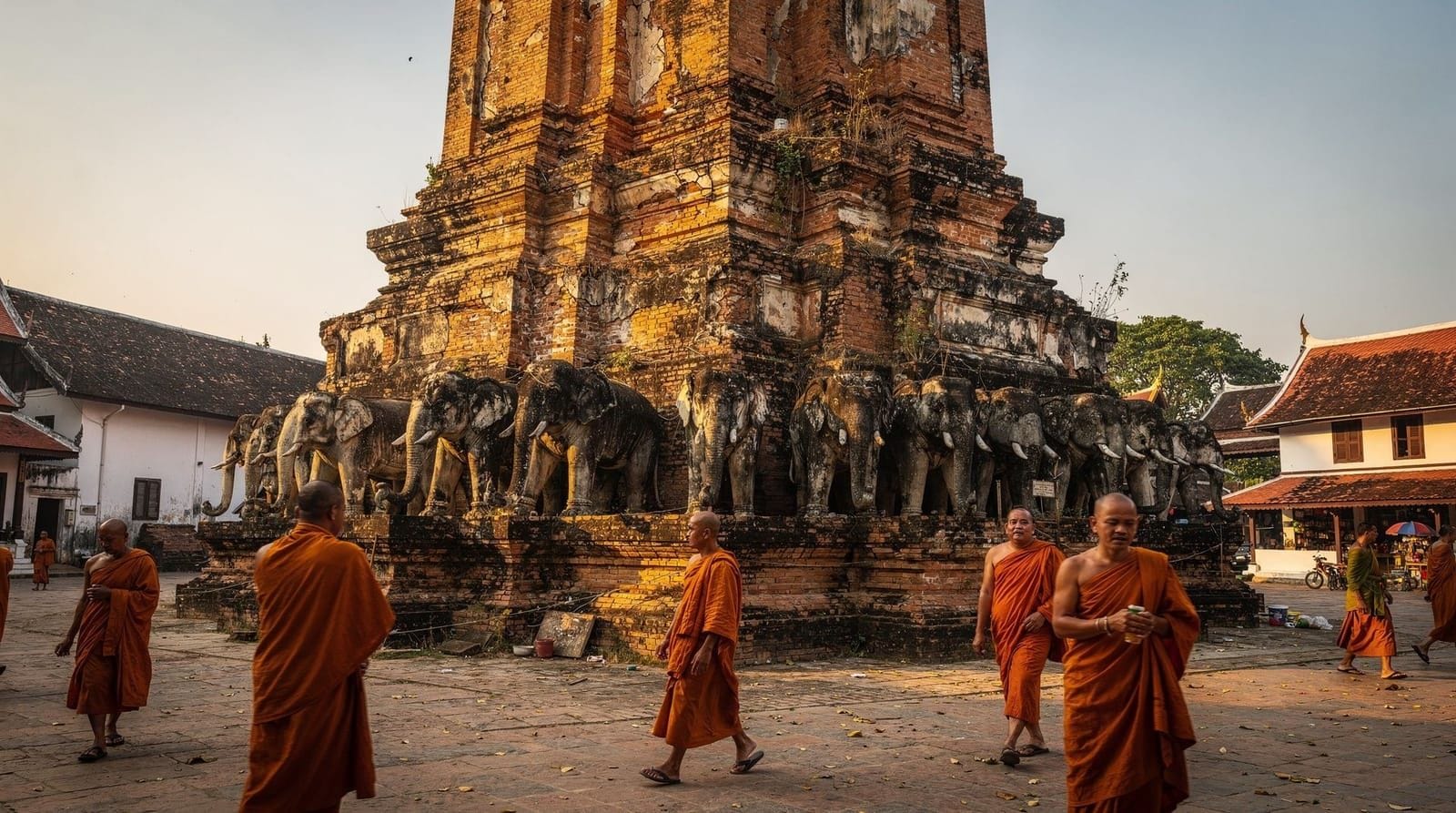
It’s easy to treat Wat Phra Singh as a static sight to photograph and move on from, but it functions as an active monastery with resident monks, daily chanting, and a functioning school for novices. Early morning, before most tourists arrive, is when this is most visible — monks in saffron robes moving between buildings, morning chanting audible from the main viharn, small groups of local devotees making merit with flowers, incense, and small donations. None of this is staged for visitors; it’s the temple’s actual daily rhythm, and arriving early enough to see it adds a dimension that a midday visit, sandwiched between two tour buses, doesn’t offer.
Local devotion here runs deep enough that Thai visitors from other provinces make specific pilgrimages to Wat Phra Singh, particularly around Songkran — it’s worth remembering, when the temple feels crowded, that a meaningful share of that crowd isn’t sightseeing at all but practicing an active religious tradition.
The Songkran connection
Every April during Songkran, the Phra Singh Buddha is removed from the Lai Kham chapel and paraded through the Old City streets in a procession that draws large crowds, giving residents and visitors the chance to pour scented water over the image for good luck in the new year. If your visit happens to fall during Songkran week, expect the temple itself to be significantly busier than normal, and expect water — the festival’s citywide water fights extend right up to the temple gates even though the temple grounds themselves stay dry and respectful.
Restoration and why the murals look the way they do
The Lai Kham murals have been restored more than once since their original 19th-century painting, and conservators have deliberately left visible fading and losses in places rather than repainting over damaged sections — a conservation choice that prioritizes authenticity over a uniformly “fresh” appearance. If a section looks patchy or faint compared to a photo you may have seen online, that’s the mural’s actual current condition, not poor lighting. Fine Arts Department teams periodically survey the chapel’s structural condition given northern Thailand’s humid climate, which is hard on both wood carving and painted plaster; scaffolding or partial cordons inside the chapel aren’t unusual and typically indicate routine conservation work rather than damage from an incident.
Dress code and etiquette
Shoulders and knees must be covered to enter the Lai Kham viharn, and shoes come off at the entrance of any building with a Buddha image inside. This is enforced more strictly here than at some smaller Old City temples, since Wat Phra Singh sees heavier tour traffic and staff are stationed specifically to check. If you arrive in shorts or a sleeveless top, a sarong rental is usually available near the entrance for a small deposit. Photography is generally permitted in the main viharn but restricted or asked to be done without flash inside the Lai Kham chapel — follow posted signage, which varies slightly by season depending on restoration work happening inside.
Making merit, respectfully
If you’d like to participate rather than just observe, small merit-making stalls near the main viharn sell simple offerings — lotus buds, incense, small gold-leaf squares to apply to a Buddha image — usually for a modest fixed price. Applying gold leaf, lighting incense, and a brief bow (wai) toward the Buddha image are all welcome from non-Buddhist visitors as a sign of respect; nobody expects perfect technique, and temple staff are generally patient with visitors who are clearly trying to follow local custom rather than mocking it. What isn’t appropriate: sitting with feet pointed toward a Buddha image, touching statues, or treating the main viharn as a photo backdrop while active prayer or chanting is happening nearby.
Best time to visit and crowd patterns
Tour buses tend to arrive at Wat Phra Singh between 10am and 1pm, coinciding with citywide temple-circuit itineraries that also stop at Wat Chedi Luang and sometimes Doi Suthep in the same day. Arriving right at opening, around 8am, or after 4pm in the late afternoon gets you a noticeably quieter Lai Kham chapel and better light for photos of the gilded woodwork, which reads much more clearly in soft indirect light than under midday sun bouncing off the compound’s white paving.
an evening tour combining Wat Phra Singh and Wat Chedi Luang is worth considering specifically because both temples are illuminated after dark and the crowds thin out dramatically once the daytime tour-bus circuit ends — it’s a genuinely different atmosphere from the same temples at noon.
Accessibility notes
The main compound is mostly flat, paved ground, reasonably manageable for visitors with limited mobility or strollers, though the raised threshold at the entrance to the Lai Kham chapel (a common feature in Thai temple design, meant to keep out spirits as much as debris) requires a small step over rather than through. There’s no ramp at this particular threshold as of the last review; staff are generally willing to assist if asked. Shade is decent across most of the compound thanks to mature trees, which makes it more comfortable at midday than some open-air Old City temples with less tree cover.
Getting there
Wat Phra Singh sits at the western edge of the Old City grid, about 1.1 km from Tha Phae Gate — a flat, shaded 12-15 minute walk through the heart of the Old City that passes several smaller temples along the way. A songthaew from anywhere in the Old City runs about 30 THB ($0.85); Grab rides from outside the moat typically cost 50-70 THB ($1.40-1.95). If you’re walking the Old City temple circuit in one go, this is a natural point to start or finish, since it sits opposite Wat Chedi Luang along the same east-west axis through the city center.
Combining with other Old City temples
Most visitors pair Wat Phra Singh with Wat Chedi Luang in a single outing — the two sit roughly 900 meters apart along Ratchadamnoen Road, the same street that becomes the Sunday Walking Street market each week. Adding Wat Chiang Man, the city’s oldest temple, on the northeast side extends the loop to a comfortable half-day circuit covering the three temples that matter most in the Old City. Anyone with limited time and only one temple to see in Chiang Mai should choose between Wat Phra Singh and Wat Chedi Luang rather than trying to rush both — Wat Phra Singh rewards visitors more interested in art and craftsmanship, while Wat Chedi Luang rewards those drawn to scale and ruin.
Travelers extending beyond the Old City sometimes ask whether Wat Phra Singh is worth prioritizing over temples further afield, like Doi Suthep on the mountain overlooking the city. The honest answer is that they’re not really comparable experiences — Doi Suthep trades the intimacy of a walkable Old City temple for a hilltop setting and sweeping city views, and most itineraries benefit from including both rather than treating them as substitutes for each other.
What’s nearby
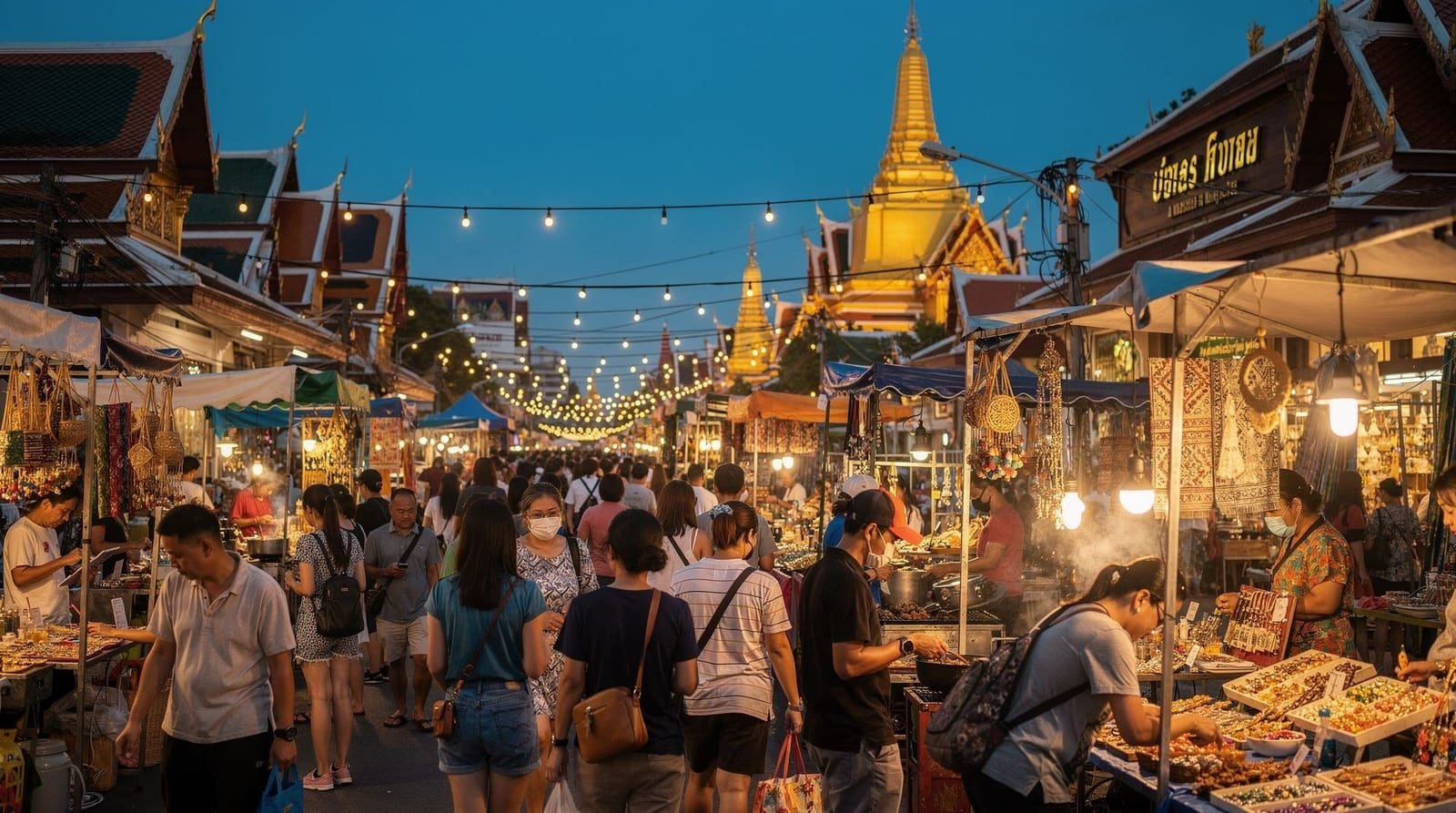
The streets immediately around Wat Phra Singh are some of the more relaxed in the Old City — fewer souvenir stalls than the blocks near Tha Phae Gate, more small family-run noodle shops and local cafés catering to residents as much as visitors. It’s a reasonable spot to plan a coffee or lunch break before or after the temple visit rather than walking back toward the busier east side of the moat. On Sundays, Ratchadamnoen Road right outside the temple’s front gate becomes part of the Sunday Walking Street market route, so a Sunday evening visit means threading through market stalls to reach the temple entrance — manageable, but worth planning around if you specifically want a quiet visit.
Suggested pairing itinerary
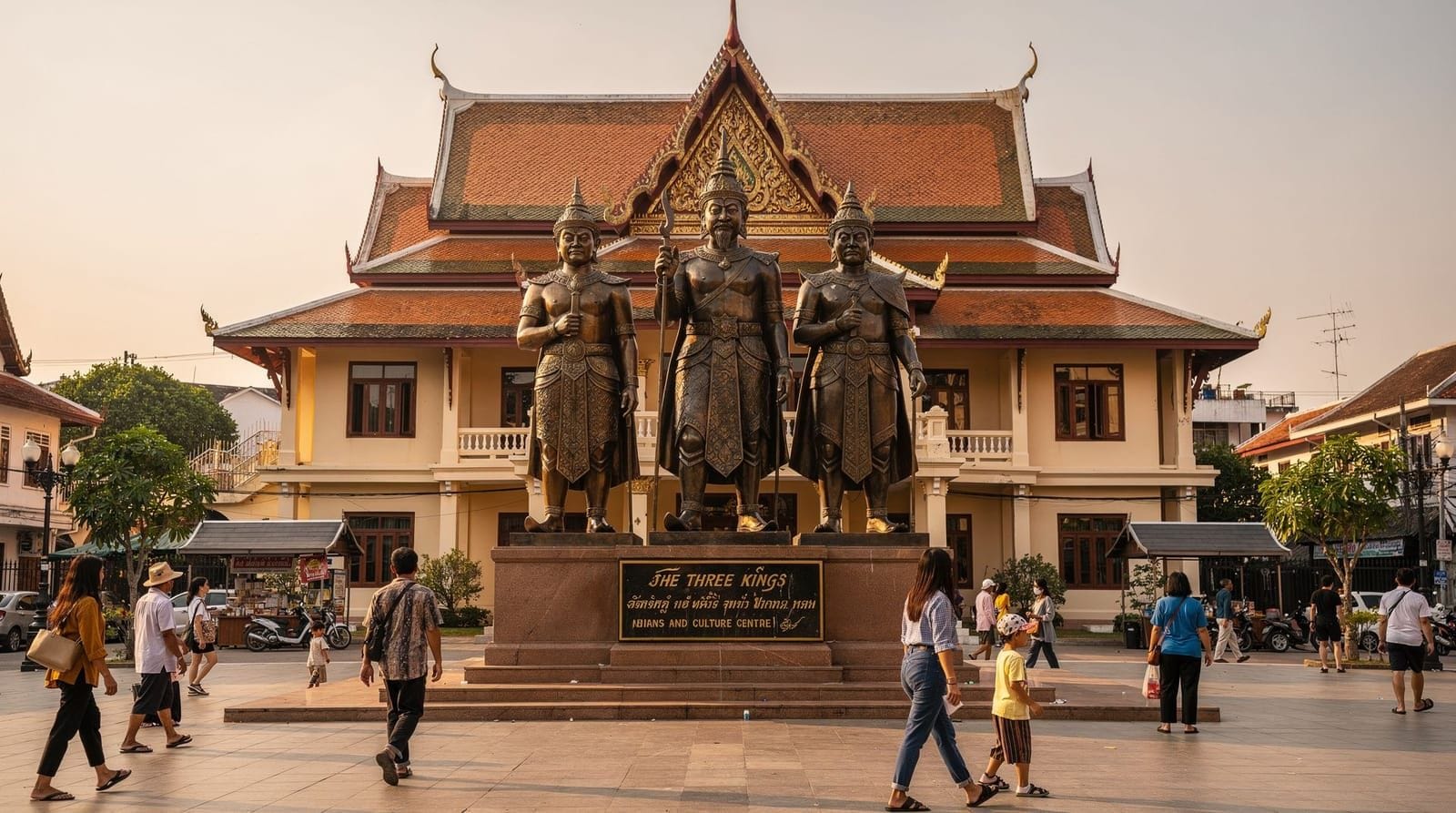
A practical half-day loop: start at Wat Phra Singh at 8am for the quiet Lai Kham chapel, walk east along Ratchadamnoen Road (about 15 minutes) to Wat Chedi Luang for the ruined chedi and city pillar, then continue another 10 minutes to the Three Kings Monument for a shaded break and the Lanna Folklife Museum if time allows. This covers the Old City’s three most historically significant public sites in roughly three hours, finishing before the midday heat peaks and before the tour-bus crowds thicken at each stop.
An honest note on the entry fee and touts
The 40 THB entry fee for the Lai Kham chapel is legitimate and clearly signed at the ticket booth — pay there, not to anyone approaching you outside the gates offering to “help” with tickets or a “special access” tour for a marked-up price. This kind of informal tout occasionally works the temple’s main entrance, particularly during high season; a firm “no thank you” and walking directly to the visible ticket window resolves it immediately.
Frequently asked questions about Wat Phra Singh
How much does it cost to enter Wat Phra Singh?
The main viharn is free. Entering the Lai Kham chapel, where the Phra Singh Buddha and the murals are, costs around 40 THB ($1.10) for foreign visitors.
How long should I spend at Wat Phra Singh?
45-60 minutes is enough to see the main viharn, the Lai Kham chapel, and the chedi behind it without rushing.
What is the Phra Singh Buddha?
A seated bronze Buddha image housed in the Lai Kham chapel, considered one of the most sacred images in Chiang Mai and the centerpiece of the annual Songkran procession.
Is Wat Phra Singh worth visiting if I’ve already seen Wat Chedi Luang?
Yes — they showcase different things. Wat Chedi Luang is about scale and ruin; Wat Phra Singh is about fine woodwork, murals, and devotional art. Seeing both, ideally on the same walk, gives a fuller picture of Lanna temple architecture.
What should I wear to Wat Phra Singh?
Shoulders and knees covered, shoes removed before entering any building with a Buddha image. Sarong rental is usually available near the Lai Kham entrance if needed.
Is photography allowed inside the temple?
Generally yes in the main viharn; flash photography is discouraged or restricted inside the Lai Kham chapel to protect the murals. Follow posted signage, which can vary depending on restoration work.
When is Wat Phra Singh least crowded?
Right at opening around 8am, or after 4pm. Tour buses cluster here between 10am and 1pm as part of citywide temple-circuit itineraries.
How far is Wat Phra Singh from Tha Phae Gate?
About 1.1 km, a flat and shaded 12-15 minute walk through the Old City, or a 30 THB ($0.85) songthaew ride.
Does Wat Phra Singh run a monk chat program like Wat Chedi Luang?
Not in the same established, drop-in format. Wat Chedi Luang’s weekday afternoon monk chat is the more reliable option if that’s specifically what you’re after; Wat Phra Singh’s appeal centers on its art and architecture instead.
Top experiences
Bookable activities with verified prices and instant confirmation on GetYourGuide.