The least crowded temples in Chiang Mai worth seeking out
Chiang Mai: Historic Temples and City Guided Walking Tour
Which Chiang Mai temples see the fewest crowds?
Wat Umong's forest tunnels and grounds, Wat Chiang Man visited outside mid-morning, and a handful of smaller old city wats tucked off the main tourist routes are consistently the quietest options. The trick isn't always visiting a different temple entirely — it's often visiting the famous ones (Wat Phra Singh, Wat Chedi Luang) at the right time of day, since crowd levels there swing dramatically between early morning and late morning.
Chiang Mai has more than 300 temples within the city and surrounding valley, yet a first-time visitor could easily leave believing there are only three or four — Wat Phra Singh, Wat Chedi Luang, and Doi Suthep tend to absorb a disproportionate share of tourist attention, tour buses, and mid-morning foot traffic. That concentration is understandable; those temples earned their reputation. But it also means a short walk in almost any other direction turns up genuinely quiet, historically interesting temples that see a fraction of the visitors, sometimes for no better reason than being slightly off the most-photographed route.
Quick answer: The most reliably quiet options are Wat Umong, whose forest-tunnel layout spreads visitors across wooded grounds rather than one courtyard, and Wat Chiang Man, the city’s oldest temple, visited outside the late-morning tour-bus window. Beyond specific temples, timing matters enormously — arriving at Wat Phra Singh or Wat Chedi Luang right at opening delivers a noticeably calmer experience than the same temple at 11am, without giving up either site’s historical significance.
Timing beats location for the famous temples
Before looking at alternative temples, it’s worth being clear about a simpler lever most visitors underuse: arrival time. Wat Phra Singh and Wat Chedi Luang both open their outdoor grounds early, typically around 6am, well before the bulk of day-tour groups and independent visitors arrive from around 9:30am onward. Arriving in that early window — before breakfast, before the heat builds — routinely delivers a noticeably calmer, quieter version of temples that will feel genuinely crowded just a few hours later. This is the single highest-value adjustment available to any visitor who wants to see the city’s headline temples without giving up on quiet.
The same logic applies in reverse at the end of the day: late afternoon, roughly after 4pm, sees a secondary lull as day-tour groups move on to dinner or shopping, though some temple interiors close their inner halls earlier than the outdoor grounds, so checking specific closing times in advance is worth doing if a late-afternoon visit is the plan.
Wat Umong: the forest temple built for solitude
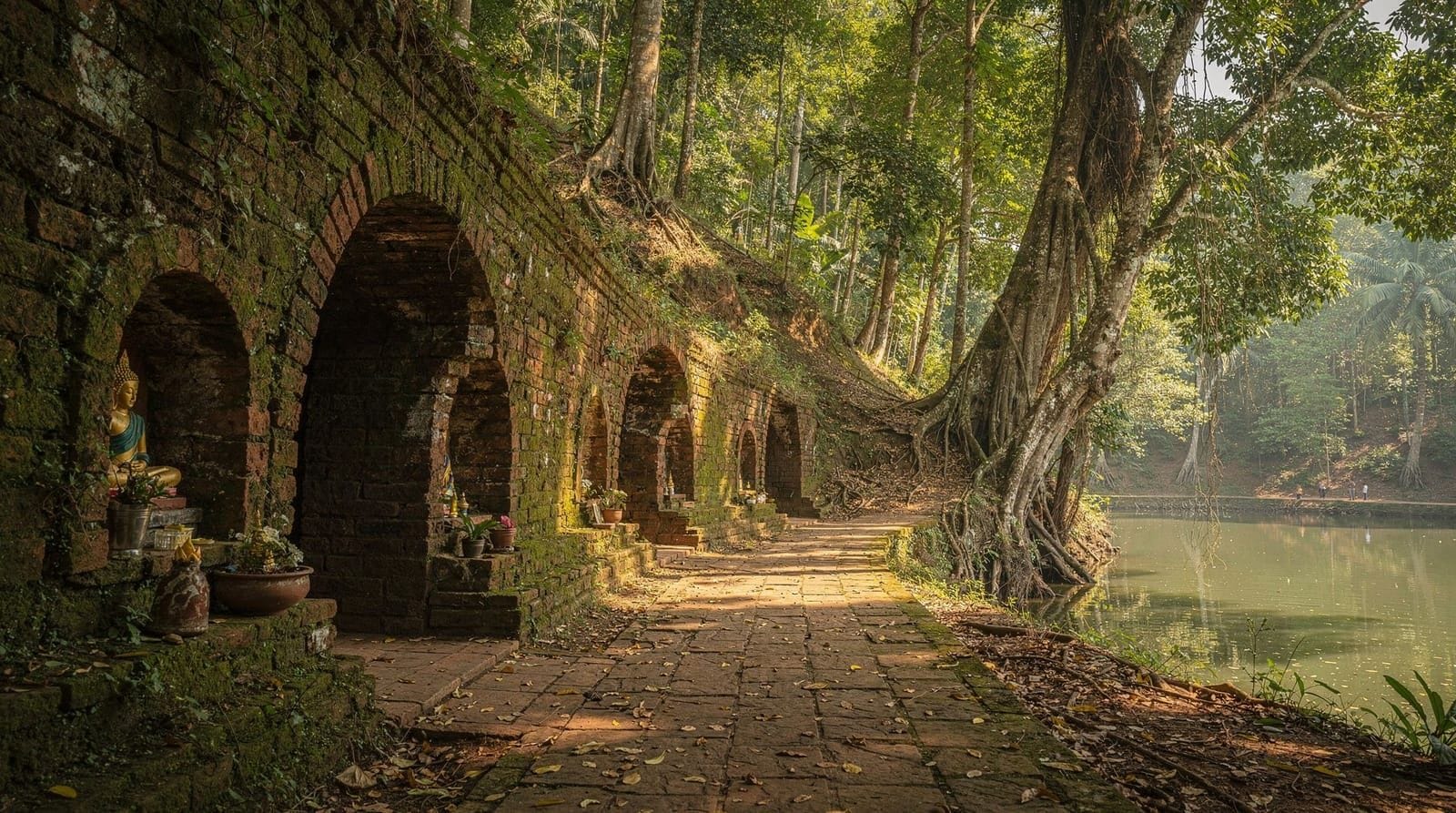
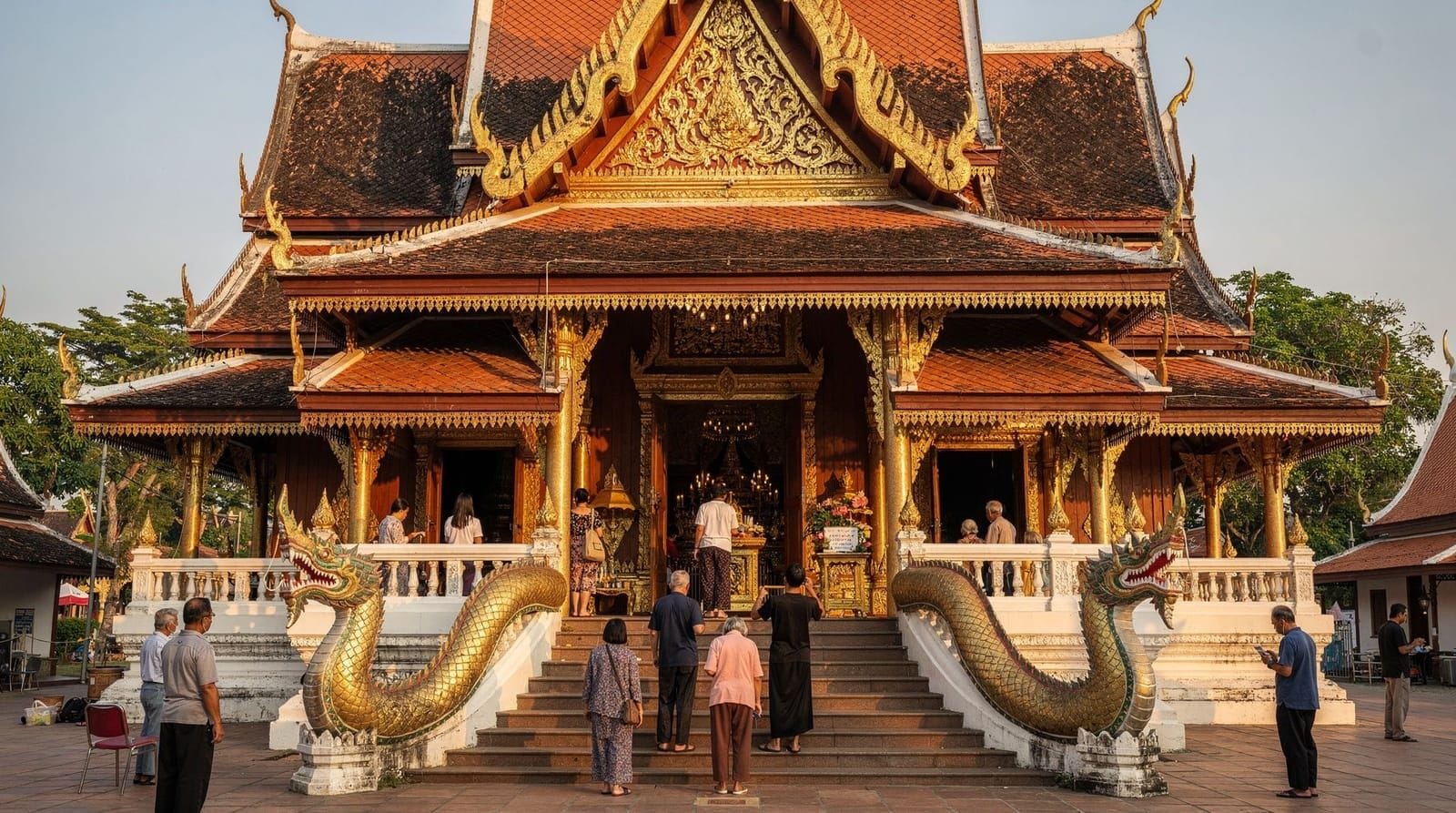
Wat Umong, tucked into wooded grounds near Chiang Mai University to the city’s west, is the strongest single recommendation for visitors specifically seeking quiet. Its defining feature — a series of brick tunnels built into an earthen mound, historically used for meditation — naturally disperses visitors across a wooded, multi-level site rather than funnelling everyone through a single courtyard or hall the way most temples do. Combined with its location outside the old city walls, away from the densest concentration of hotels and tourist foot traffic, Wat Umong rarely feels crowded even during the cool season’s peak visitor months.
Beyond the quiet itself, Wat Umong has a genuinely distinct atmosphere worth its own visit regardless of crowd levels: a small lake with turtles and catfish that visitors feed, walking paths through forest rather than open pavement, and Dhamma teachings written on tree-hung signboards throughout the grounds, part of the temple’s long association with meditation practice. For a deeper look at the site, our dedicated Wat Umong guide covers the tunnels, the meditation tradition, and practical visiting tips in full.
Wat Chiang Man: the oldest temple, overlooked
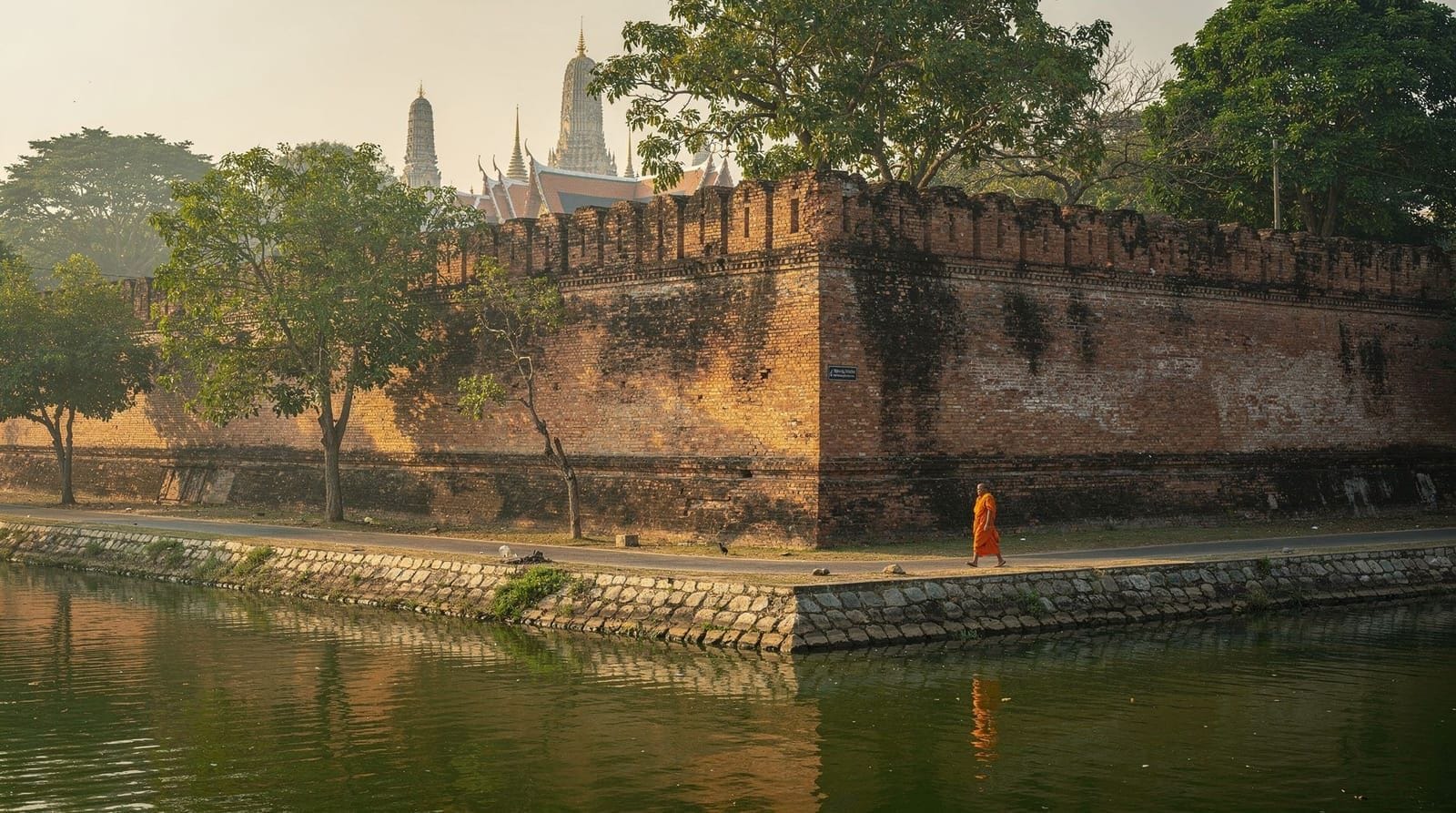
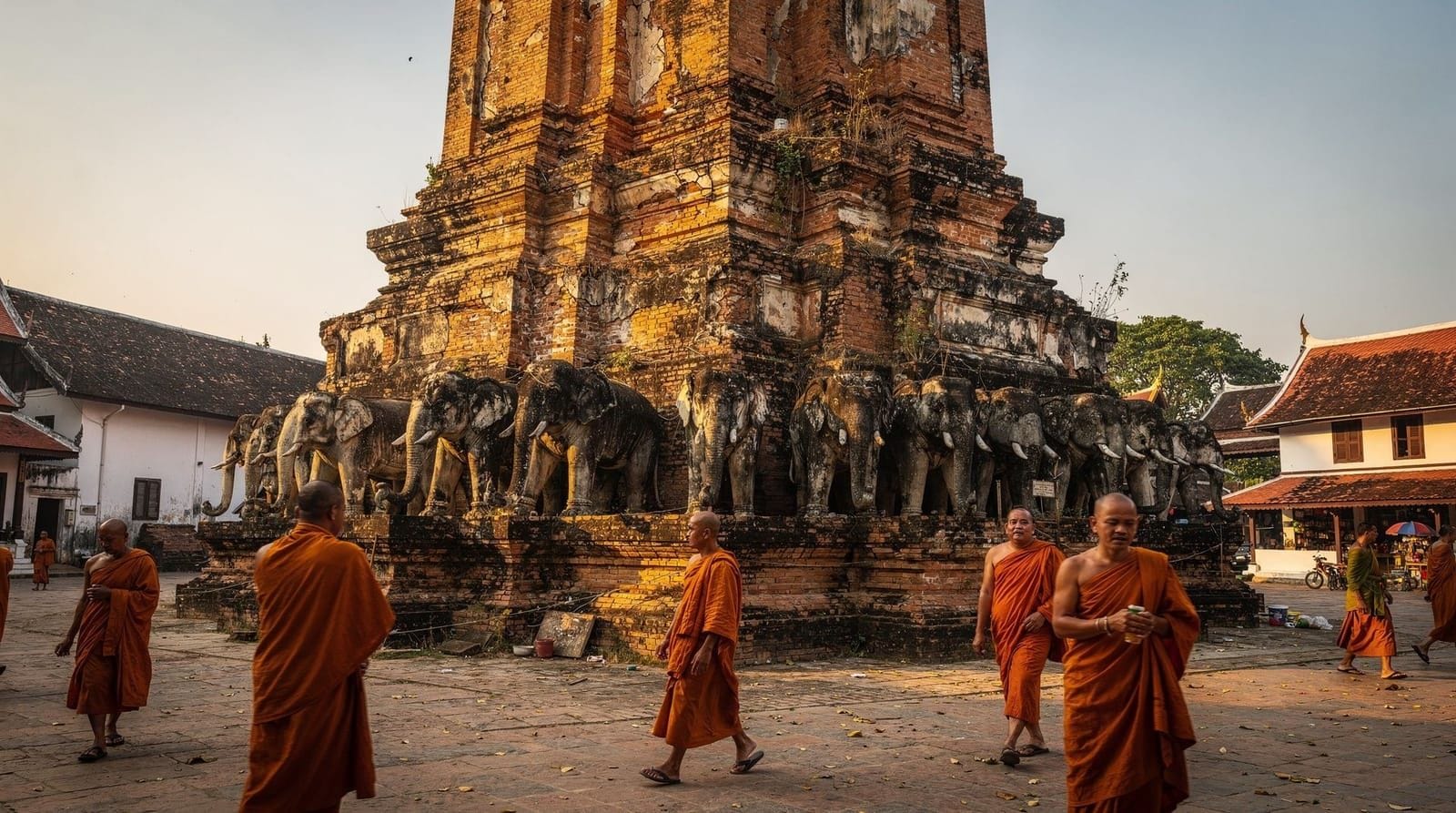
Wat Chiang Man, within the old city walls not far from Tha Phae Gate, holds the distinction of being Chiang Mai’s oldest temple, founded in 1296 by King Mengrai around the same time as the city itself. Despite that historical weight, it sees noticeably fewer visitors than Wat Phra Singh or Wat Chedi Luang, largely because its profile is lower and it doesn’t sit directly on the most heavily trafficked tourist walking routes through the old city.
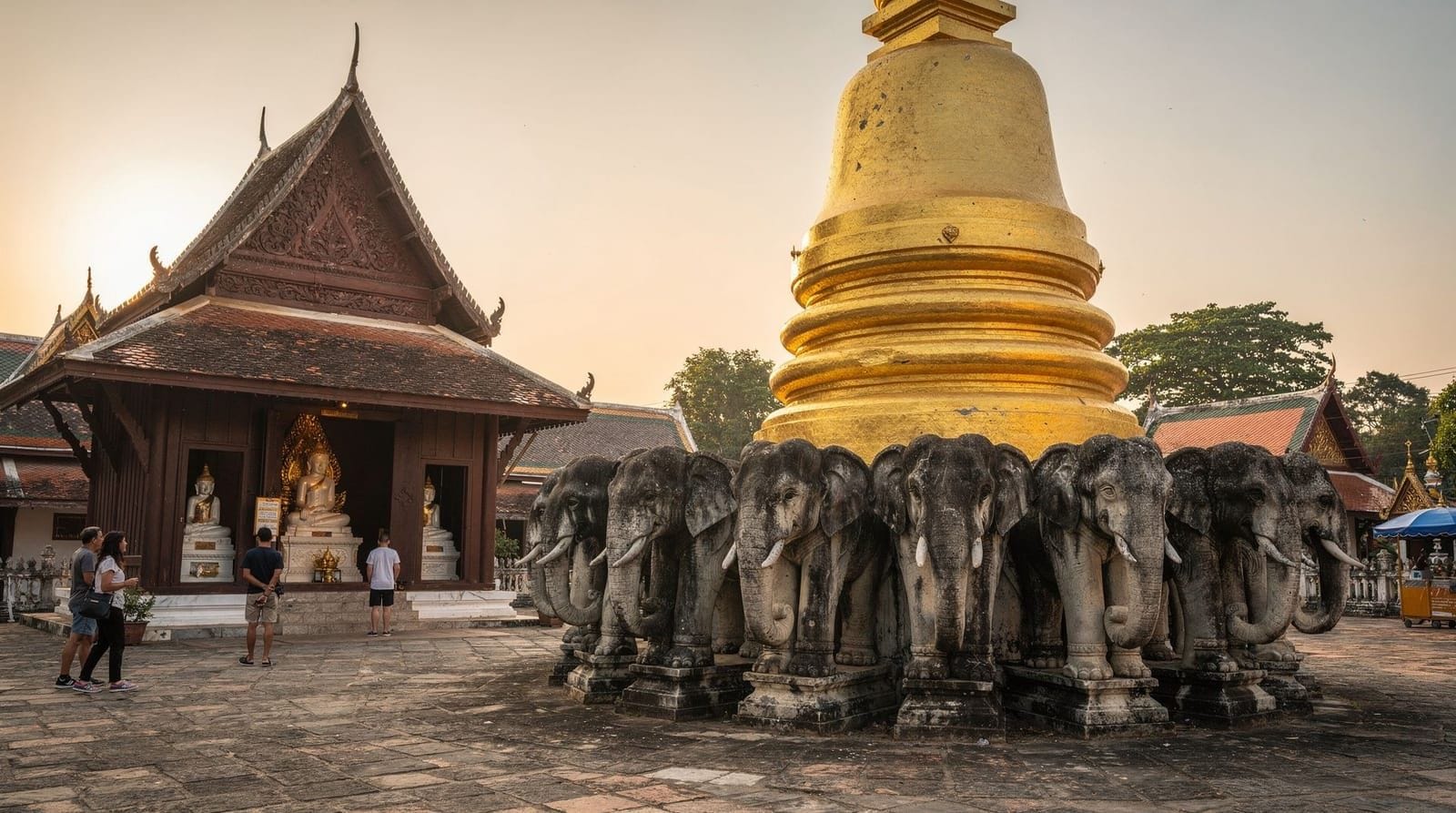
The temple’s chedi, supported by a base ring of stone elephant sculptures, is one of the more distinctive structural details in the old city, and two important Buddha images — a crystal image believed to have rain-making properties and a marble image with its own long provenance story — are kept in the main wihan. Visitors who make the short detour tend to describe it as feeling more like a genuine, quietly functioning neighbourhood temple than a tourist stop, which for many is exactly the point of seeking out a less-visited alternative in the first place.
Smaller old city wats worth a detour
Beyond Wat Chiang Man, the old city holds a scattering of smaller temples that most visitors walk past entirely while heading toward the two or three headline sites. These smaller wats rarely appear on typical must-see lists, don’t attract organised tour groups, and often have only a handful of other visitors — sometimes none — at any given time. They’re not necessarily architecturally spectacular in the way Wat Chedi Luang is, but they offer a different kind of value: an unhurried, quiet space to simply sit, look, and absorb without navigating around other visitors or tour groups.
A self-guided walk through the old city’s temple cluster, timed for an off-peak hour, is one of the easiest ways to find these smaller sites naturally, since many sit only a block or two off the main routes between the famous temples rather than requiring a special trip across town.
Guided options for finding the quieter side of the city
For visitors who’d rather not research quiet alternatives independently, a guide who knows the city’s temple landscape well can route a walk specifically to avoid the busiest hours and busiest sites. A historic temples and city guided walking tour typically threads together a mix of well-known and lesser-visited stops on foot, giving structure to what could otherwise be an aimless wander in search of quiet corners.
Travellers who want full control over pacing and route, rather than following a fixed group itinerary, might consider a private one-day temple tour, which can be built around specifically avoiding the busiest temples during peak hours and prioritising quieter sites instead. For a shorter option that still covers the old city’s temple cluster at a relaxed pace, a three-hour old city and temples walking tour is a reasonable middle ground between a full private day and an entirely self-guided walk.
The night-time alternative
An underused option for avoiding daytime crowds entirely is visiting after dark, when a handful of the old city’s temples remain open and lit but see only a fraction of daytime visitor numbers. An old city Phra Singh and big pagoda night tour visits two of the city’s busiest daytime temples at a time when both are considerably calmer, offering a genuinely different atmosphere — illuminated chedis and quiet courtyards rather than the crowds and heat of a midday visit. This is one of the more effective ways to see even the famous temples without the usual daytime crowd trade-off.
Why avoiding crowds doesn’t mean avoiding significance
There’s a common but mistaken assumption that quiet equals minor, and busy equals important. Chiang Mai doesn’t really work that way. Wat Chiang Man is the city’s oldest temple by a wide margin and still sees a fraction of Wat Chedi Luang’s visitor numbers. Wat Umong’s meditation tunnels represent a genuinely distinct strand of Thai Buddhist practice, not a lesser version of the more famous urban temples. Seeking out quieter temples in Chiang Mai isn’t a compromise on quality or significance — in several cases it means encountering sites with just as much historical or spiritual weight as the famous ones, simply without the crowds that visibility and convenient old-city location bring to a select few.
A practical one-day route for a quieter temple experience
A workable day for a visitor specifically prioritising quiet might start at Wat Phra Singh right at opening, around 6-7am, to see the city’s most celebrated temple before crowds build. From there, a walk through the old city’s back streets toward Wat Chiang Man picks up several smaller wats along the way, none of which require queuing or navigating tour groups. Late morning or early afternoon, a taxi or Grab ride out to Wat Umong offers the most reliably quiet single stop of the day, with its forest tunnels and lakeside grounds giving a strong contrast to the more urban temples visited earlier. This sequence covers historically important sites, an ancient temple, and a genuinely peaceful forest temple, all without spending meaningful time in a crowd at any point in the day.
Seasonal timing for crowd avoidance
Chiang Mai’s cool season, November through February, draws by far the largest number of visitors overall, meaning both famous and lesser-known temples see somewhat higher numbers during these months than during the hot season (March-May) or rainy season (June-October). If your travel dates are flexible and crowd avoidance is a genuine priority, visiting during the shoulder or low season adds a modest additional layer of quiet on top of good timing within each day, though daily arrival timing remains the more powerful lever regardless of season.
Etiquette still applies, crowd or no crowd
Quieter temples are, in most cases, more actively used by local worshippers relative to tourist visitors than the busiest sites, which makes basic temple etiquette — modest dress, shoes off before entering halls, quiet voices near anyone praying — arguably more important here than at the most tourist-oriented stops, not less. A quiet, lightly visited temple is still, in most cases, a genuinely active place of worship for the surrounding community, and treating it with the same care as Doi Suthep or any other famous site is the right approach regardless of how few other visitors happen to be around.
Why Chiang Mai’s crowds concentrate so unevenly
Part of what makes quiet temples so achievable here is understanding why the crowds concentrate the way they do in the first place. Guidebook and search-engine visibility create a feedback loop: a handful of temples appear on every “top things to do in Chiang Mai” list, tour operators build itineraries around those same few names because that’s what visitors search for and expect, and the resulting concentration of tour buses and group visits reinforces the perception that those are the only temples worth seeing. Meanwhile, temples with equally strong historical or architectural claims — Wat Chiang Man’s genuine seniority as the city’s oldest temple being the clearest example — simply never entered that same visibility loop, despite offering a comparable or, in some respects, more historically grounded experience.
This matters practically because it means crowd levels in Chiang Mai are largely a function of visibility and marketing momentum rather than a reliable proxy for quality or significance. A visitor willing to look slightly past the standard list finds no shortage of genuinely worthwhile temples operating well below their deserved profile, simply because they haven’t been swept into the same tour-bus circuit as their more famous neighbours.
What a “crowded” temple actually looks like in Chiang Mai
It’s worth calibrating expectations here, since Chiang Mai’s crowds, even at their worst, rarely reach the scale of major single-site attractions in larger Asian capitals. Even Wat Phra Singh or Wat Chedi Luang at their busiest late-morning peak involve moving around other visitor groups rather than the shoulder-to-shoulder density found at some of the region’s most internationally famous single sites. For visitors coming from a background of much larger tourist attractions elsewhere, “crowded” in a Chiang Mai temple context often still allows for a reasonably comfortable, unhurried visit — it’s simply less quiet than the genuinely subdued alternatives covered above, rather than uncomfortable in absolute terms.
Weekday versus weekend patterns
Beyond time of day and season, day of the week makes a smaller but noticeable difference at several temples, particularly those that also draw a meaningful number of domestic Thai visitors alongside international tourists. Weekends, especially around the Sunday Walking Street and Saturday Walking Street market events in the old city, tend to bring a broader mix of visitors into the surrounding temple area for longer stretches of the day, since many combine a temple stop with market browsing. Weekday visits, particularly Tuesday through Thursday, tend to see a more predictable, generally lighter crowd pattern across the old city’s temples, all else being equal.
Combining a quiet-temple day with other low-key old city stops
A day built around temple quiet pairs naturally with a few other unhurried old city activities rather than needing to stand entirely on its own. A slow coffee stop in Nimmanhaemin after a morning of temple visits, or a wander through the quieter stretches of Tha Phae Gate area outside of market hours, extends the same low-key, unrushed pace of the temple visits into the rest of the day, rather than transitioning abruptly into a busier commercial stretch of the city immediately afterward.
When crowds genuinely don’t matter
It’s worth acknowledging honestly that not every visitor needs to prioritise crowd avoidance, and there’s no obligation to route an entire day around it. Some of Chiang Mai’s most rewarding temple experiences — a first sight of Wat Chedi Luang’s partially ruined central chedi, or the golden intensity of Wat Phra Singh’s main wihan — hold up perfectly well even with a moderate number of other visitors around, and first-time visitors in particular may reasonably prioritise simply seeing the most significant sites over optimising for solitude. Quiet-temple planning is most valuable for repeat visitors, photographers, or anyone who’s already covered the essential sites and is looking for a genuinely different, calmer register of temple experience on a subsequent day or trip.
Photography advantages of quieter temples
Beyond the general appeal of a calmer visit, quieter temples offer a practical advantage for anyone travelling with a camera rather than just a phone: clean compositions without other visitors constantly moving through the frame, and enough unhurried time in front of a single detail — a carved door panel, a mural section, a quiet corner of a courtyard — to actually compose a considered shot rather than grabbing a quick frame between passing tour groups. At Wat Umong in particular, the combination of forest light filtering through trees and the tunnel structures themselves gives photographers genuinely different material than the more conventional gold-and-red palette found at Wat Phra Singh or Wat Chedi Luang, making it worth a visit for photography interest alone, independent of the crowd-avoidance angle.
Getting to the quieter sites
One reason some of these calmer temples remain under-visited is simply that they require a short taxi, Grab, or songthaew ride rather than sitting within easy walking distance of old city guesthouses, unlike Wat Phra Singh or Wat Chedi Luang, both walkable from almost anywhere inside the old city walls. Wat Umong, for instance, sits roughly 4-5km from the old city’s centre, a 10-15 minute ride rather than a walk, which filters out casual visitors who might otherwise stop by on foot between other stops. This small extra friction is, somewhat ironically, part of what keeps these sites quiet in the first place — factoring a short ride into your plans, rather than restricting the day to whatever’s within comfortable walking distance of the old city, opens up meaningfully more of the calmer, less-visited side of Chiang Mai’s temple landscape.
Frequently asked questions about The least crowded temples in Chiang Mai worth seeking out
Is Wat Umong really less crowded than the old city temples?
Can I still see Wat Phra Singh or Wat Chedi Luang without the crowds?
Are quiet temples less interesting or historically significant?
What time of day has the fewest visitors generally?
Is it worth hiring a guide to find quieter temples?
Are quiet temples still functioning places of worship?
Does visiting outside high season help?
Top experiences
Bookable activities with verified prices and instant confirmation on GetYourGuide.