Wat Umong forest temple: the complete guide
Chiang Mai: Doi Suthep & Wat Umong Twilight Tour with Pickup
What makes Wat Umong different from Chiang Mai's other temples?
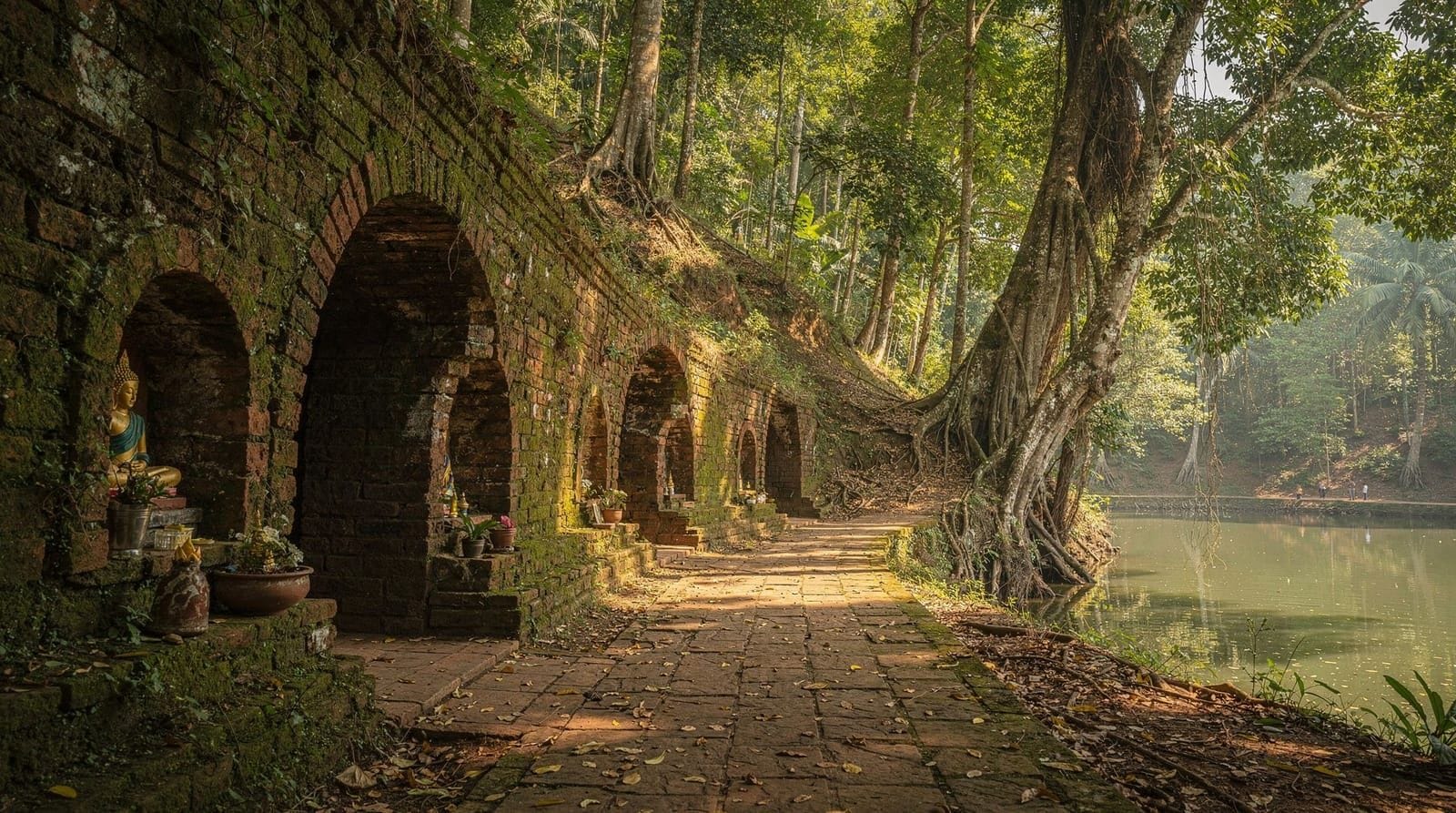
Wat Umong is a roughly 700-year-old forest temple built around brick meditation tunnels that visitors can walk through, above-ground grounds with a lake and resident catfish, and speakers hung from trees playing recorded dharma talks — the so-called talking trees. It sits in forest near Chiang Mai University rather than in the Old City, and stays noticeably quieter than Doi Suthep or the main Old City wats.
Wat Umong is the temple people mean when they say Chiang Mai has a “forest temple” distinct from the Old City’s compact, walled-in wats — a roughly 700-year-old site built into genuine forest near Chiang Mai University, centered on brick meditation tunnels you can walk through and known for the offbeat detail of speakers hung from trees playing recorded dharma talks. It’s a genuinely different kind of temple experience from Wat Phra Singh or Wat Chedi Luang, and this guide covers the tunnels, the grounds, and how to plan a visit around it.
Quick answer: Wat Umong sits in forest near Chiang Mai University, a short Grab or songthaew ride from the Old City or Nimman. Entry is free with donations encouraged. The main draws are the ancient brick meditation tunnels, a lake with resident catfish, and the “talking trees” — tree-hung speakers playing recorded dharma talks. Budget 1.5-2 hours, and go in early morning or late afternoon when the forest canopy keeps the grounds coolest and quietest.
The meditation tunnels
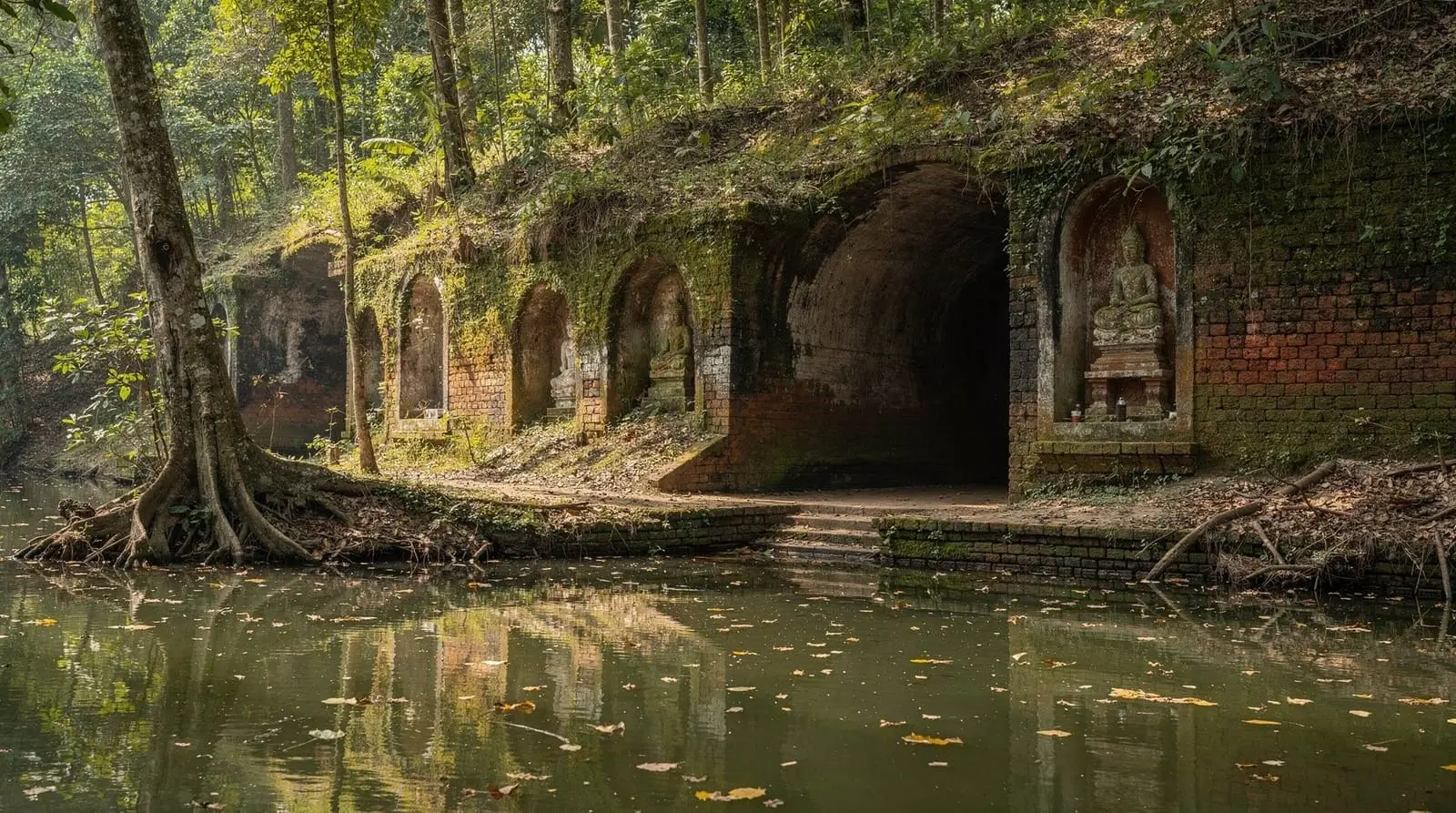
The tunnels are Wat Umong’s defining feature: a network of brick passages built roughly 700 years ago, originally constructed so monks could meditate away from distraction and, according to some accounts, to accommodate a monk whose focus benefited from a maze-like, enclosed environment. Walking through today, the tunnels are cool, dim, and quiet compared to the open forest outside, with small alcoves along the route holding Buddha images that visitors pause at as they move through. The tunnels aren’t extensive enough to feel like a genuine underground exploration — more a short, atmospheric walk of a few minutes — but the contrast between the enclosed brick passages and the open forest above is part of what makes the site memorable.
The talking trees
Above ground, one of Wat Umong’s more distinctive and slightly unusual features is a set of speakers mounted in trees around the temple grounds, playing recorded dharma talks and teachings at a low volume as you walk between the tunnels, the lake, and the chedi. It’s an intentional design choice rather than an incidental oddity — the idea being that reflective teachings should be part of the ambient experience of moving through the grounds, not confined to a single hall or scheduled talk. Some visitors find the effect genuinely contemplative; others find it simply an interesting quirk worth a curious pause rather than a deep engagement with the content itself, especially without fluent Thai. Either reaction is a normal response to a feature that’s more about atmosphere than a lecture you’re expected to sit through.
The lake and catfish
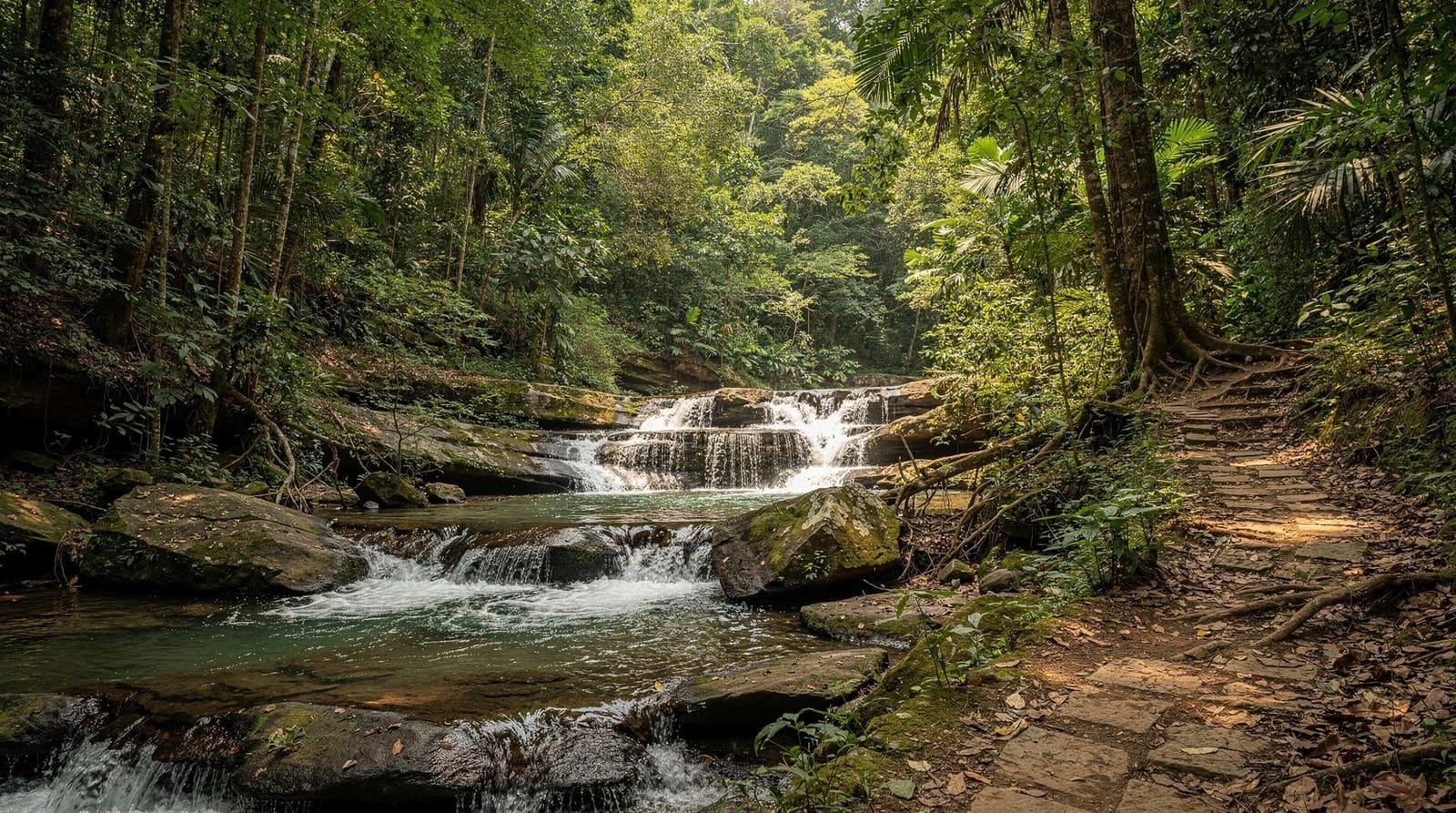
A modest lake sits within the temple grounds, home to a resident population of catfish that visitors often feed, with vendors near the water selling bread or fish food for this purpose. It’s a low-key, unhurried spot to sit for a few minutes after the tunnels, and the water itself, framed by surrounding trees, adds to the general sense that this temple prioritizes a slower, more reflective pace than the more visited sites in the Old City or on Doi Suthep.
The ancient chedi
Beyond the tunnels and lake, Wat Umong’s grounds include an ancient chedi, older and less visually dramatic than the ruined giant at Wat Chedi Luang, but consistent with the temple’s overall character — a structure meant for quiet observation rather than a headline photo stop. The chedi and surrounding statuary, including some Buddha images left in a deliberately weathered, moss-covered state rather than fully restored, reinforce the forest temple’s distinct aesthetic compared to the more polished gilding found at Wat Phra Singh.
Getting there and entry cost
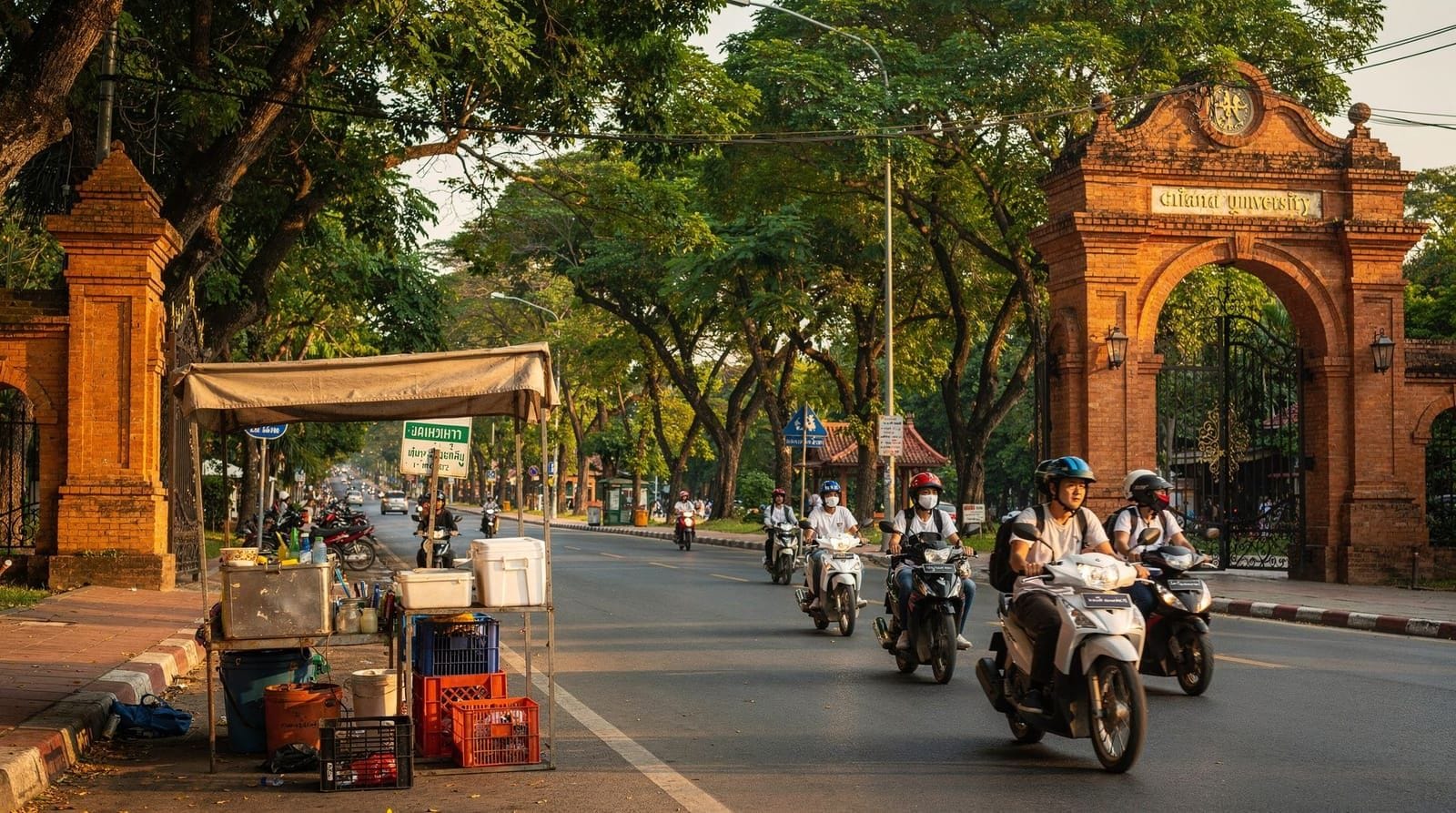
Wat Umong sits near Chiang Mai University, on the opposite side of the city’s core from the Old City, making a Grab (roughly 90-130 THB / $2.50-$3.60 from the Old City) or a songthaew (roughly 40-50 THB) the most practical way to get there for most visitors. If you’re staying in Nimman, the ride is shorter and cheaper given the neighborhood’s proximity to the university area. Entry itself is free, with donations encouraged rather than required, and a small fee may apply for an on-site tram during some seasons, though the grounds are compact enough that most visitors walk the full route on foot without needing it.
Best time to visit
Early morning or late afternoon are the strongest windows, both for cooler temperatures and because the forest canopy that shades most of the grounds keeps things noticeably more comfortable than the exposed courtyards at Old City temples, even at less-than-ideal hours. Unlike Doi Suthep, Wat Umong doesn’t see the same concentrated tour-bus crowding in the late morning, so timing here is more about personal comfort than avoiding other visitors, though weekends do bring somewhat more local foot traffic than weekdays.
Combining Wat Umong with Doi Suthep
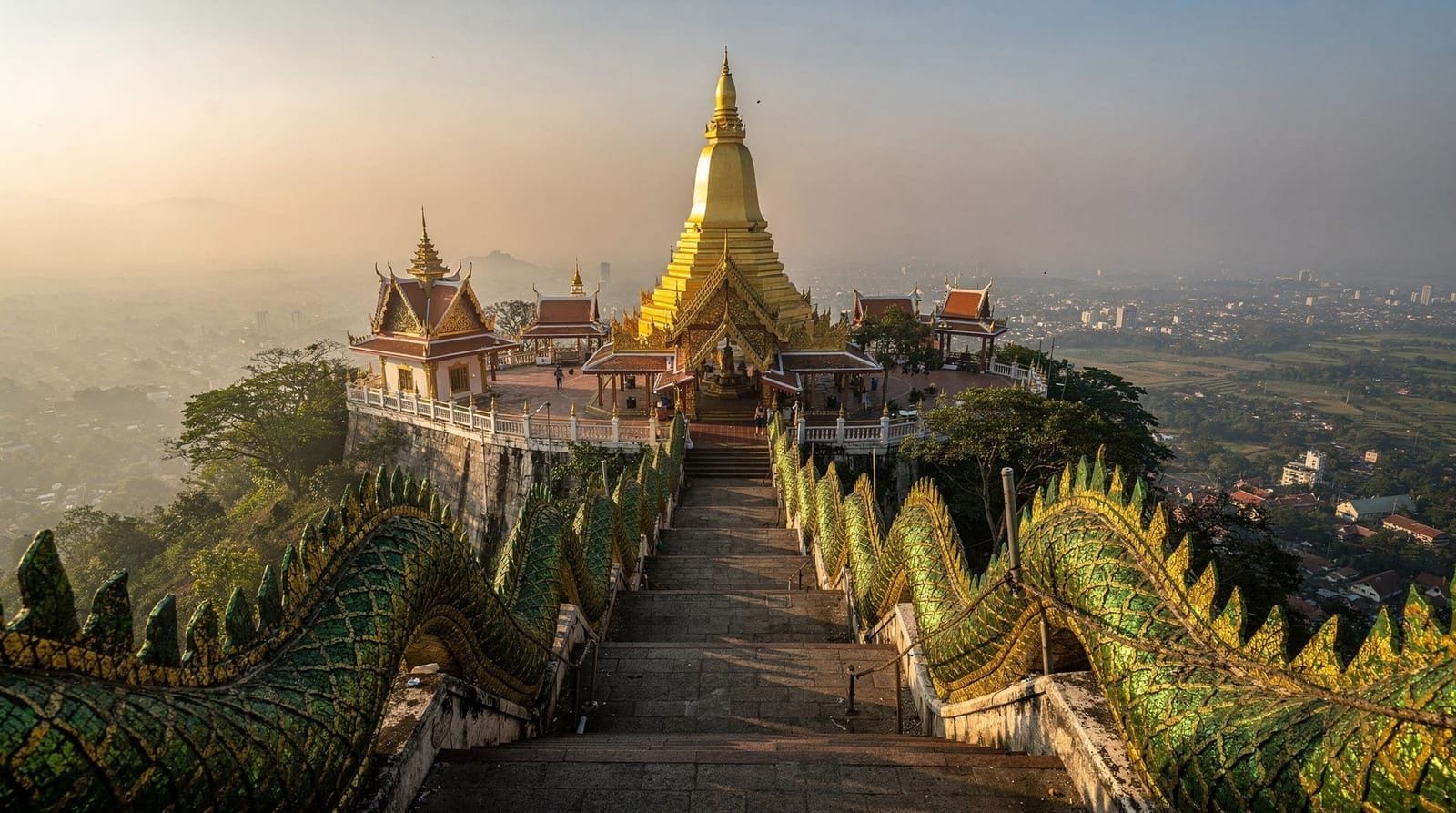
Wat Umong and Doi Suthep sit on the same general side of the city, close enough to the base of the mountain that combining both into a single outing is a common and sensible pairing rather than two separate trips. A Doi Suthep and Wat Umong twilight tour pairs both temples into a single evening outing, taking advantage of Wat Umong’s forest setting after dusk. A Doi Suthep, Wat Umong, and Pha Lat sunrise tour instead builds the day around an early start, adding Wat Pha Lat, the small forest temple partway up the Doi Suthep road, into the same outing. For a later-day version, a sunset point, Wat Pha Lat, Doi Suthep, and Wat Umong tour covers all three sites timed around evening light.
Meditation and retreats
Wat Umong has a long-standing association with meditation instruction, drawing both Thai and foreign visitors specifically interested in Buddhist practice rather than sightseeing alone. The temple’s library and forest setting support a more reflective, study-oriented atmosphere than most other Chiang Mai temples, and visitors with a genuine interest in meditation practice, rather than a passing curiosity, will find more depth here than the tunnels and talking trees alone suggest on a first walkthrough. If sitting meditation is something you want to try during your visit, arriving with realistic expectations — this is a working monastery and meditation center, not a class scheduled around tourist convenience — helps set the right tone.
Dress code and etiquette
The same core rules apply here as at every other Chiang Mai temple: shoulders and knees covered, shoes off before entering any building interior, and feet kept away from pointing at Buddha images while seated. Given Wat Umong’s meditation-focused character, keeping noise down through the grounds is worth extra attention here compared to a livelier Old City temple, since quiet is closer to the actual point of the site rather than an incidental courtesy. Our temple etiquette guide covers the fuller set of expectations that apply across every temple in the region.
How Wat Umong compares to Chiang Mai’s other temples
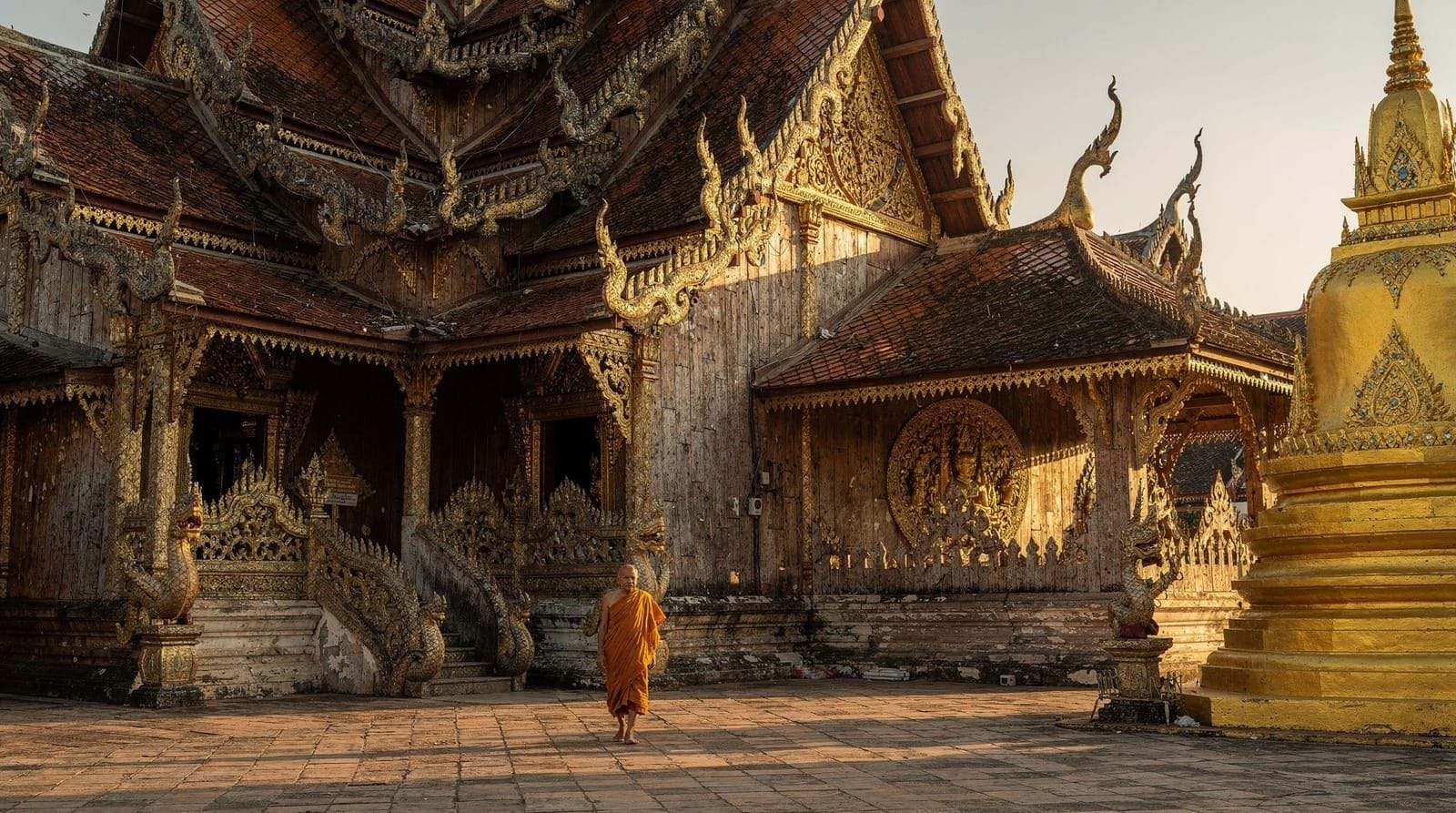
Where Wat Phra Singh and Wat Chedi Luang reward visitors interested in art, architecture, and history, and Doi Suthep rewards those seeking a pilgrimage-and-view experience, Wat Umong is squarely the atmosphere-and-reflection temple on any well-rounded Chiang Mai temple itinerary. It’s less photogenic in the conventional sense — no gilded viharn, no dramatic ruined chedi — but it offers something the others don’t: genuine quiet, forest cover, and a slower pace that suits visitors who found the Old City’s busier temples a little too crowded or hurried. Our best temples in Chiang Mai ranking places it firmly in the essential tier for exactly this reason.
What to bring
Comfortable walking shoes for the forest paths, water (there’s some but not extensive shade-adjacent shopping on-site), and, if you plan to feed the lake’s catfish, small change for fish food sold near the water. Insect repellent is a sensible addition given the forest setting, more relevant here than at the more paved, open Old City temples.
Is Wat Umong worth a dedicated trip?
For travelers with a strong interest in either meditation or a quieter, more offbeat temple experience, yes, unreservedly. For a first-time visitor with only a single temple-focused day and no particular pull toward the forest-and-meditation angle, Wat Umong ranks a notch below Doi Suthep and the core Old City temples in priority, though it remains a genuinely worthwhile add-on if your schedule allows a second half-day or you’re already heading toward the university area for another reason.
A brief history of the site
Wat Umong’s origins are generally dated to the late 13th or 14th century, tied to the era of King Mangrai, the founder of the Lanna kingdom and Chiang Mai itself. The tunnels are believed to have been built to support a specific monk’s meditation practice, giving him an enclosed, distraction-free environment within the temple grounds — a purpose-built solution to a specific spiritual need rather than a general design convention repeated at other temples. The site fell into partial disuse for stretches of its long history before being restored and revived as an active forest monastery and meditation center in the 20th century, which is the version of Wat Umong visitors encounter today: an old structure with a genuinely contemporary meditation practice built around it.
Transport cost and options, itemized
From the Old City, a Grab typically runs 90-130 THB ($2.50-$3.60) one way, taking roughly 15-20 minutes depending on traffic. A songthaew, if one happens to be heading in that direction, runs cheaper at roughly 40-50 THB, though shared songthaews aren’t always as readily available heading specifically toward the university area compared to more heavily trafficked routes like the one to Doi Suthep. From Nimman, the ride is shorter and correspondingly cheaper, often under 60-80 THB by Grab given the neighborhood’s proximity. Renting a bicycle for the day is also a realistic option if you’re staying in or near Nimman, since the terrain between there and Wat Umong is flat and the distance manageable.
Seasonal considerations
The forest setting that keeps Wat Umong cooler than exposed Old City temples also means the grounds can feel genuinely damp and lush during the rainy season (roughly June-October), with muddy patches possible along some of the less-paved sections near the lake and tunnels. Cool season (November-February) offers the most comfortable walking conditions, consistent with the rest of the region. Burning season (March-May) affects Wat Umong less dramatically than Doi Suthep, since there’s no elevated viewpoint here whose appeal depends on visibility, though the general air quality concerns of that season still apply to any outdoor activity in the city.
Photography at Wat Umong
The tunnels themselves are dim, and photography inside them often benefits from a phone or camera with reasonable low-light performance rather than relying on flash, which can feel intrusive in the enclosed, meditative space. Above ground, the lake, the weathered chedi, and the general forest atmosphere all photograph well in the softer light of early morning or late afternoon. As with any temple, avoid photographing monks in meditation or prayer without clear consent — Wat Umong’s meditation-focused character makes this worth extra attention compared to a livelier, more tourist-oriented temple.
Accessibility
The grounds are mostly flat and walkable, an advantage over some hillside or multi-level temples, though the tunnel interiors involve some uneven, older brick flooring that may be a consideration for visitors with mobility limitations. The lake area and open chedi grounds are more straightforwardly accessible than the tunnels themselves. There’s no formal accessibility infrastructure comparable to, say, Doi Suthep’s funicular, so travelers with specific mobility needs may want to inquire on arrival or with a guide in advance about which sections are realistically manageable.
A realistic half-day plan combining Wat Umong with nearby stops
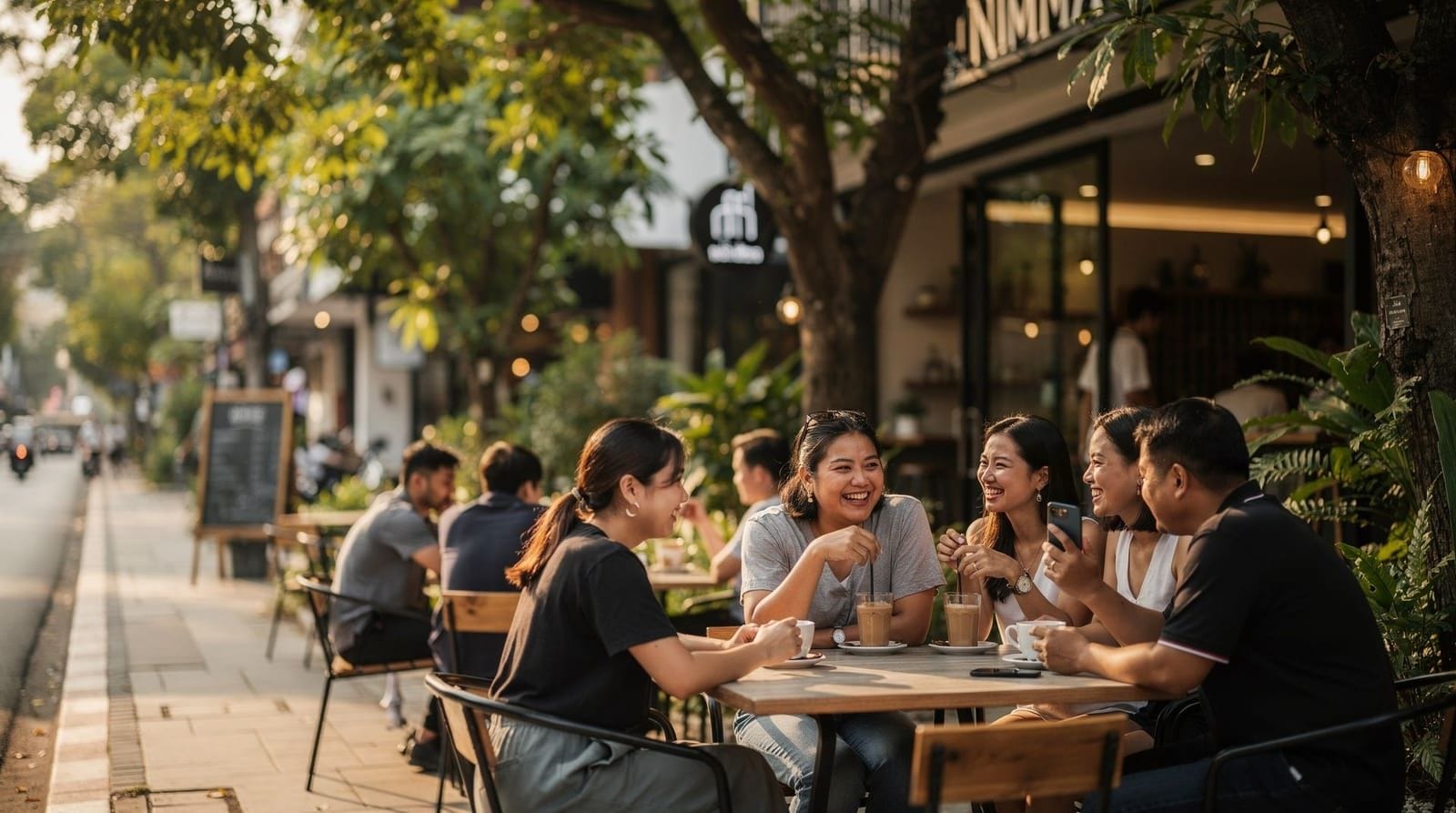
Since Wat Umong sits near Chiang Mai University and Nimman, it pairs naturally with a broader half-day exploring that side of the city — a walk through Nimmanhaemin’s café and design scene before or after the temple visit rounds out the outing without adding significant extra transport time, since both areas sit within a short ride of each other.
What visitors sometimes get wrong about Wat Umong
The most common misconception is expecting a dramatic, extensive underground network on the scale of a natural cave system — the tunnels are a short, atmospheric walk of a few minutes rather than an extended exploration, and visitors arriving with cave-tour expectations sometimes leave a little underwhelmed by the tunnels’ modest scale. The temple’s real value lies less in the tunnels alone and more in the combination of the tunnels, the lake, the talking trees, and the overall unhurried forest atmosphere taken together as a full visit, rather than any single feature carrying the whole experience on its own. Visitors who arrive expecting a quiet, reflective couple of hours rather than a single dramatic sight tend to come away with the more accurate and more satisfying impression of the place.
Nearby food and rest options
The immediate area around Wat Umong is residential and low-key rather than packed with tourist-facing restaurants, though the broader Nimman and Chiang Mai University area a short ride away has a substantial café and dining scene if you want a proper meal before or after the visit. Small vendors near the temple’s lake sell drinks and basic snacks, sufficient for a short break but not a destination meal in themselves — most visitors treat Wat Umong as a self-contained stop and plan food around Nimman or their next destination rather than expecting much on-site.
Who Wat Umong suits best
Reflective travelers, meditation-curious visitors, and anyone who found the Old City’s busier temples a little too crowded for genuine contemplation will get the most out of Wat Umong. Travelers purely chasing the most photogenic or historically monumental sights may find it a quieter, more modest stop by comparison to Doi Suthep’s gold chedi or Wat Chedi Luang’s dramatic ruin — not a lesser temple, simply a different kind of reward, and one that’s easy to underrate if you go in expecting the same visual drama as the bigger-name sites.
Frequently asked questions about visiting Wat Umong
What does Wat Umong mean?
“Umong” refers to the tunnels themselves — the temple’s name essentially translates to “tunnel temple,” directly describing its most distinctive feature.
Is Wat Umong suitable for children?
Yes — the open grounds, lake, and catfish feeding are genuinely engaging for kids, and the tunnels themselves are short and non-strenuous to walk through.
Do I need a guide to visit Wat Umong?
No — the grounds are straightforward to explore independently, though a guide can add context about the tunnels’ history and the temple’s meditation tradition that isn’t posted on-site.
Is Wat Umong crowded?
No — it’s one of the consistently quieter significant temples in the Chiang Mai area, even on weekends, compared to Doi Suthep or the main Old City wats.
What should I wear to visit Wat Umong?
The standard Thai temple dress code: shoulders and knees covered, with shoes removed before entering any building interior.
Can I visit Wat Umong at night?
Standalone night visits aren’t typical given the temple’s daytime opening hours, but several guided tours specifically build an evening or twilight visit around Wat Umong combined with Doi Suthep, timed within the temple’s operating hours.
Top experiences
Bookable activities with verified prices and instant confirmation on GetYourGuide.