Doi Suthep half-day itinerary
Chiang Mai: Doi Suthep, Flower Gardens & Hmong Village
Can Doi Suthep, Bhubing Palace and Doi Pui village all fit in one half day?
Yes, all three sit along the same mountain road within about 15-20 minutes of each other, making them one of the most efficient combinations near Chiang Mai. A realistic half day covers Doi Suthep's temple in the morning, Bhubing Palace's gardens next, and the Doi Pui Hmong village last, wrapping up by early afternoon.
Doi Suthep’s mountain road, just northwest of Chiang Mai’s old city, holds three distinct stops within a short drive of each other — the gold-chedi temple itself, the royal Bhubing Palace gardens a little further up, and the Doi Pui Hmong village near the top. Because all three sit along the same route, they combine into one of the most time-efficient half-day trips near the city, without the long highway drives that longer day trips require.
Quick answer: yes, all three stops fit comfortably into a half day. Visit Doi Suthep first thing in the morning to beat the tour-bus crowds, continue to Bhubing Palace’s gardens, then finish at Doi Pui village — a realistic 4-5 hours total including transport, wrapping up by early afternoon.
Doi Suthep: start here, and start early
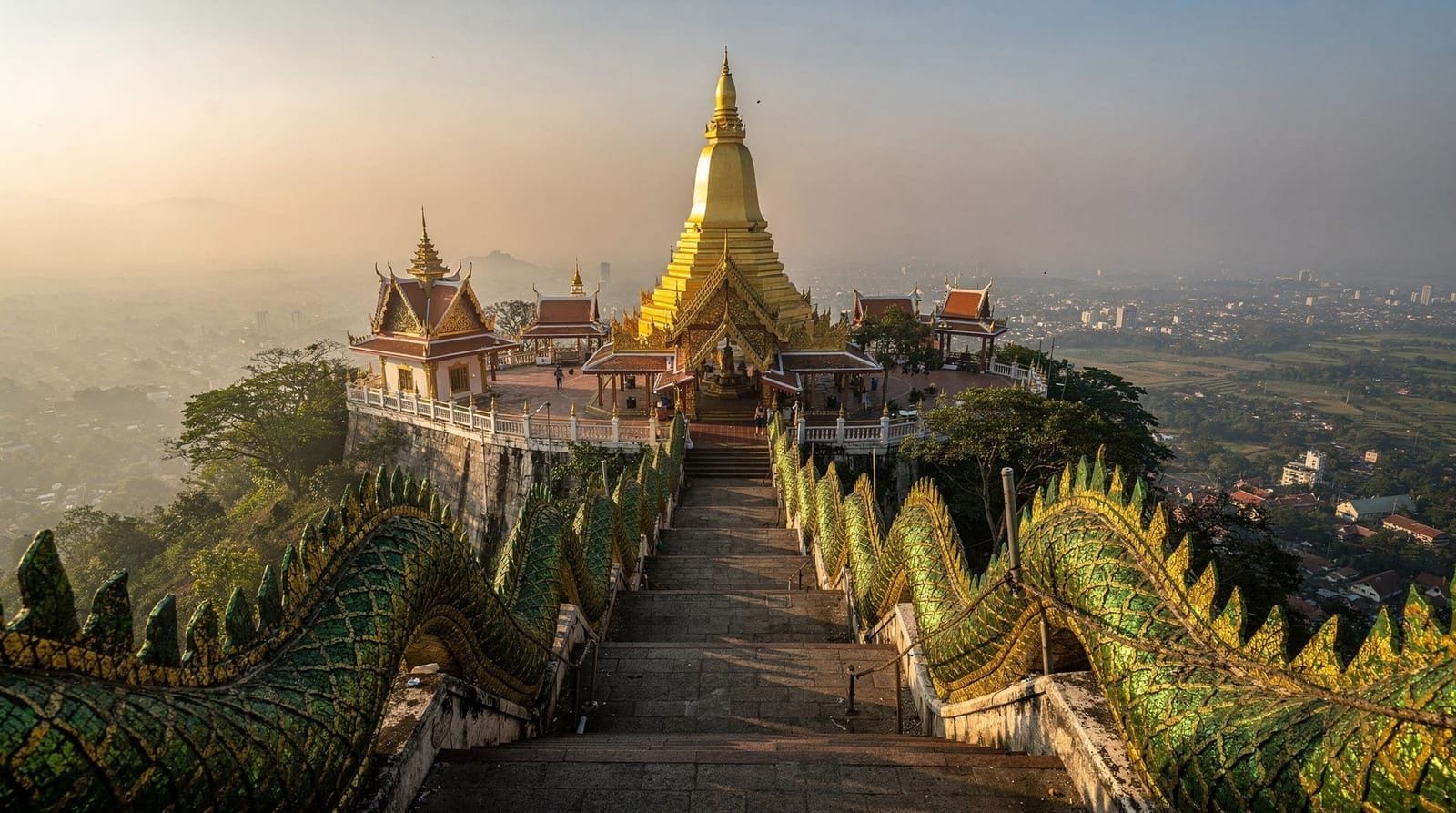
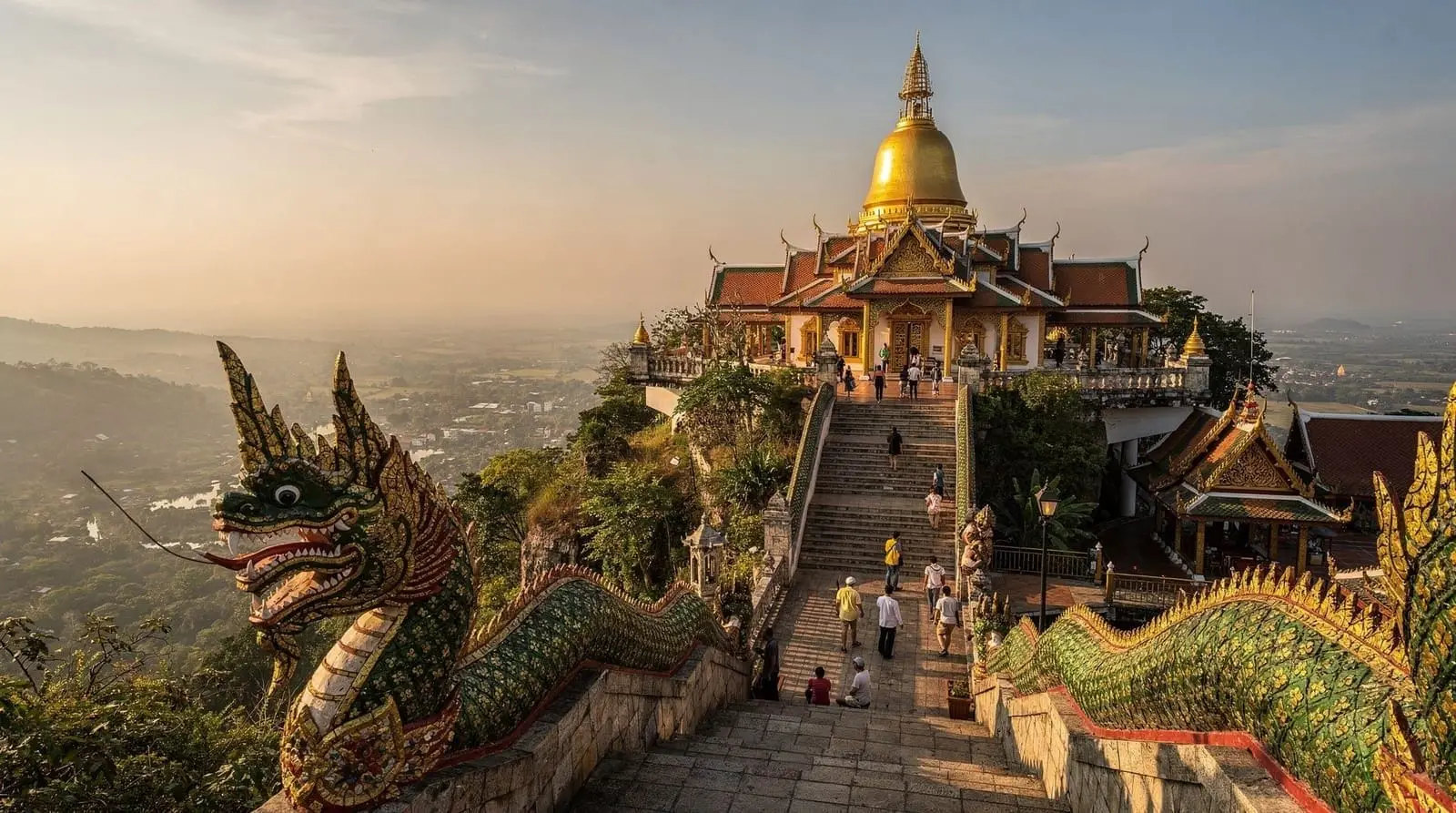
Doi Suthep itself — Wat Phra That Doi Suthep’s gold chedi, reached by the 306-step Naga staircase or a funicular — is the anchor of this half day, and timing matters more here than anywhere else on the route. Arriving between 7 and 9am avoids the worst of the 11am-2pm tour-bus peak, when the temple grounds and staircase both become genuinely crowded. Foreigner entry runs about 30-50 THB, with the funicular an optional small fee for those skipping the stairs. A Doi Suthep temple and Wat Pha Lat hike tour is worth considering if you’d like to add a short forest-trail approach to the temple rather than driving directly up.
Bhubing Palace: royal gardens, strict dress code
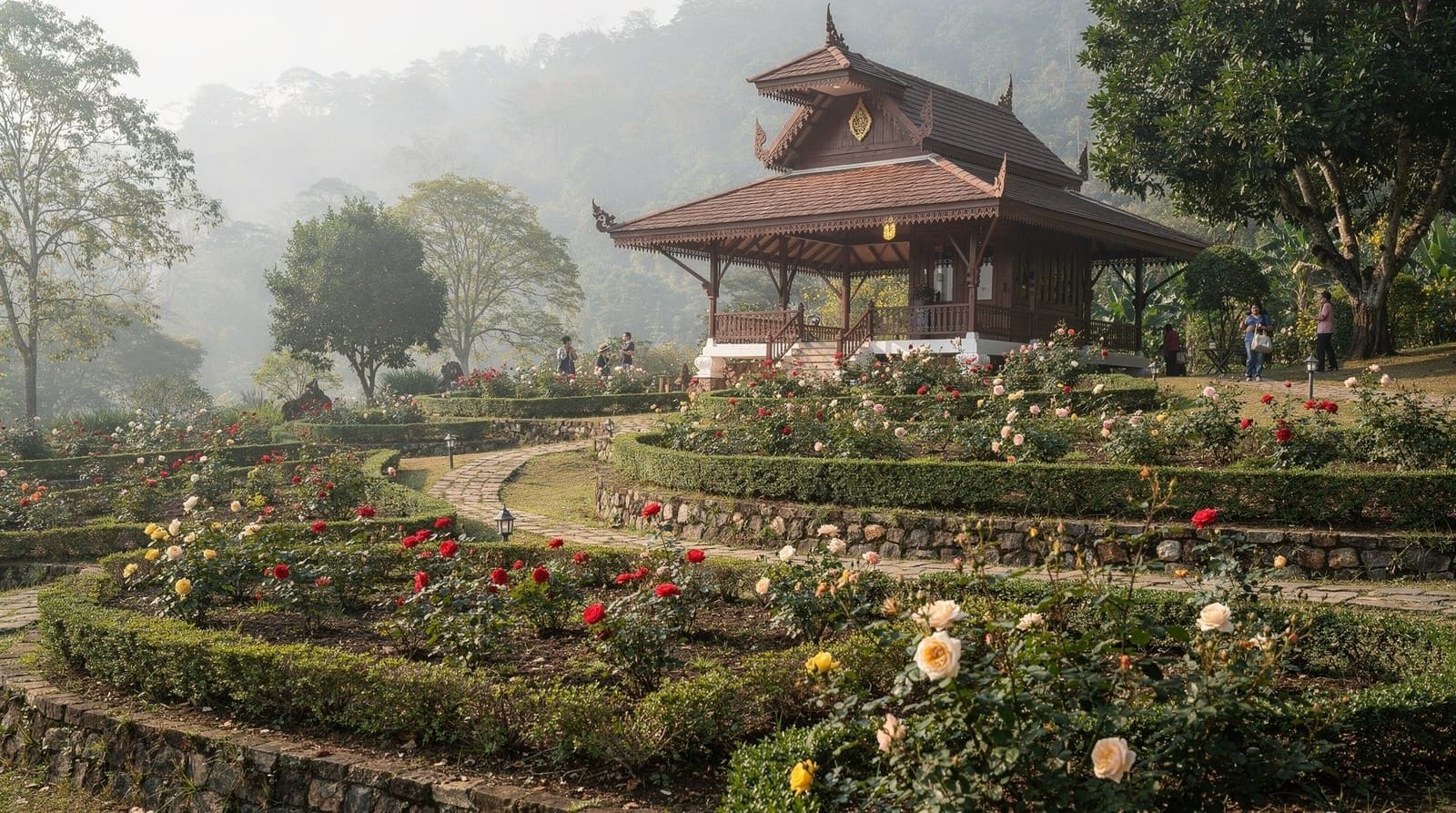
A few kilometers further along the same mountain road, Bhubing Palace is the royal family’s winter residence, with public access limited to its rose and fern gardens rather than the residence buildings themselves. The rose garden peaks December-February, and entry runs around 50 THB. The palace enforces a strict dress code — no shorts, no leggings, no sleeveless tops — more rigorously than most temples in the region, so it’s worth planning your outfit for the whole half day around this stop’s requirements rather than assuming temple-appropriate dress alone will pass. A Doi Suthep, Bhubing Palace and Hmong village tour covers all three stops in the correct sequence as a single booking.
Check ahead of your visit, since the palace closes to the public when the royal family is in residence — a detail worth confirming rather than assuming availability.
Doi Pui Hmong village: the honest picture
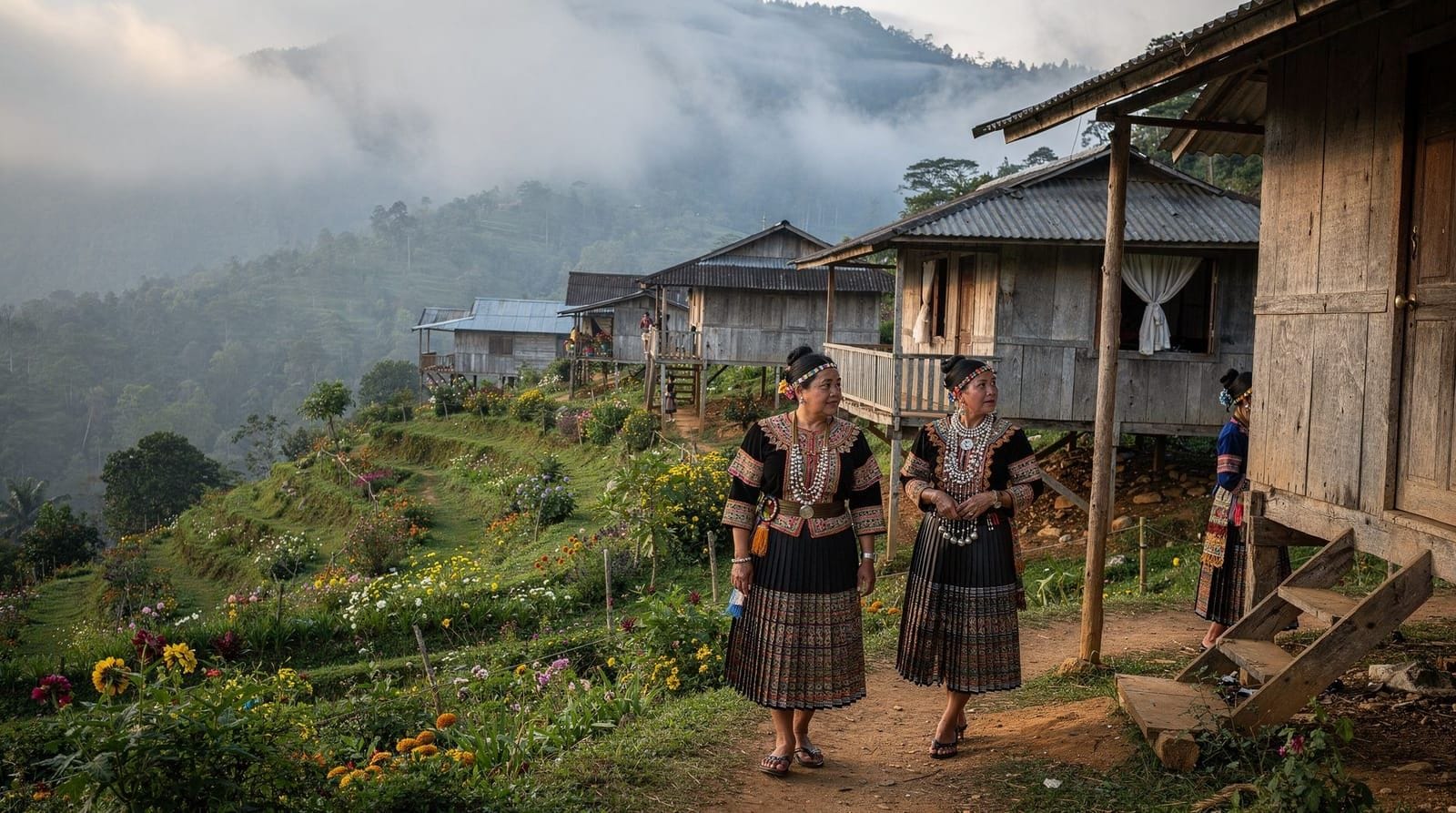
The last stop, Doi Pui Hmong village, sits near the top of the mountain road and combines a hill-tribe market, flower gardens, and a small opium history museum. It’s worth an honest characterization: this is a genuine Hmong community, but the visitor-facing market area is noticeably commercialized, geared toward souvenir sales and photo opportunities rather than an unmediated look at everyday village life. That doesn’t make it not worth visiting, but it’s better approached with realistic expectations than as an authentic cultural immersion. A Doi Suthep and Hmong village half-day tour or the shorter 4-hour Doi Suthep and Hmong hill tribe village tour both cover this stop alongside the temple as a compact combined visit.
A realistic half-day schedule
Putting the three together: depart your accommodation by 7-7:30am, reach Doi Suthep by around 8am for 1.5-2 hours at the temple before the crowds build, continue to Bhubing Palace for roughly an hour among the gardens, then finish at Doi Pui village for another hour, returning to the city by early afternoon. A morning Doi Suthep and Doi Pui Meo village tour with guide follows almost exactly this sequence as a packaged half-day tour, useful if you’d rather not arrange transport between all three stops yourself.
Getting up the mountain
A songthaew (shared red truck) from Chang Phueak Gate or near Chiang Mai University covers Doi Suthep alone for around 50-100 THB round trip, but reliably continuing on to Bhubing Palace and Doi Pui village by songthaew is less consistent — many visitors switch to Grab, a private driver, or simply book a combined tour for the full three-stop route rather than trying to piece together public transport for the extended itinerary. Self-driving by rental scooter or car is also straightforward, given the single, well-marked mountain road with no complicated turns to navigate.
Combining with Wat Umong or Huay Kaew waterfall
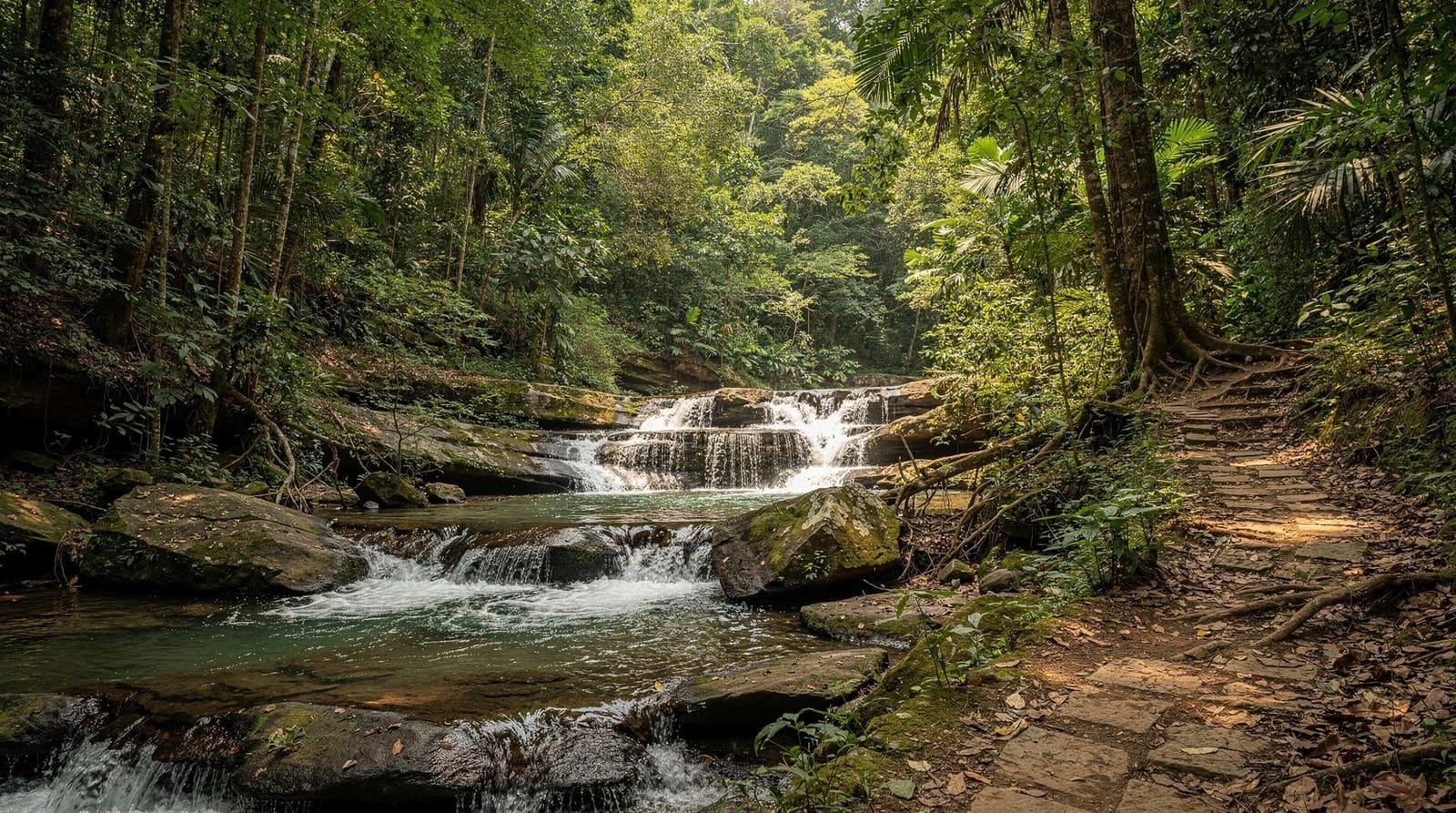
If your half day leaves a little extra time, or if you’d rather substitute one of the three stops above, Wat Umong (a forest tunnel temple) and Huay Kaew waterfall with its Wat Pha Lat trail both sit near the base of the same mountain, offering alternative or additional stops without significantly extending your driving time. These work particularly well as a substitute for Doi Pui village if the more commercialized hill-tribe market isn’t of interest to you.
Best time to visit
November-February for the clearest views and the palace’s rose garden at peak bloom, and — regardless of season — an early morning start (before 9am) or a late-afternoon visit to avoid the 11am-2pm tour-bus peak specifically at Doi Suthep. The February-April burning season can noticeably reduce the city views from the temple grounds, worth factoring in if photography of the valley below matters to your visit.
The legend behind Doi Suthep temple
According to local legend, Wat Phra That Doi Suthep was founded in 1383 after a relic believed to be a piece of the Buddha’s shoulder bone was placed on the back of a white elephant, which was then released to wander freely — the story goes that the elephant climbed the mountain, trumpeted three times, and died on the spot the temple now occupies, taken as a sign of where the relic should be enshrined. Whether taken literally or as a founding myth, the story is deeply embedded in local identity, and the white elephant motif appears throughout Chiang Mai’s civic symbolism as a result. The temple has been expanded and renovated repeatedly over the centuries, with the current gold chedi and much of the visible ornamentation dating from later periods of restoration rather than the 14th-century original structure.
Food options on the mountain
A cluster of small restaurants and food stalls operates near the Doi Suthep temple parking area and along the route up, offering basic Thai dishes and drinks for visitors who want a meal as part of the half day. Given the relatively short overall duration of this itinerary, most visitors either eat before departing or plan a proper lunch back in the city afterward rather than treating the mountain stops as a dining destination, though a quick snack or drink stop between Doi Suthep and Bhubing Palace is a reasonable way to break up the half day if needed.
Budget breakdown for the half day
Total costs for this half day are modest compared to farther day trips: roughly 30-50 THB for Doi Suthep entry, 50 THB for Bhubing Palace, and a small optional donation at Doi Pui village, alongside transport costs of either 50-100 THB for a songthaew (Doi Suthep only) or 500-800 THB ($14-23) for a private driver or Grab covering the full three-stop route. A combined half-day tour package, bundling transport and sometimes entry fees together, typically runs 500-900 THB ($14-26) per person, making this one of the most affordable half-day options near Chiang Mai given the proximity of all three stops to the city center.
Shopping near Doi Suthep
A row of souvenir stalls and small shops lines the approach to Doi Suthep temple, offering a mix of religious items, handicrafts and general tourist souvenirs, generally at prices somewhat higher than equivalent goods found in Chiang Mai’s markets given the captive tourist audience. Doi Pui village’s market has its own selection, leaning more toward hill-tribe textiles, embroidery and handicrafts, along with local produce and snacks — genuinely worth a browse, though as with the village visit itself, it’s worth approaching with the understanding that much of what’s sold here is aimed squarely at the tourist market rather than reflecting everyday village commerce.
Weather variability throughout the year
Doi Suthep’s elevation means weather here consistently differs from the city below, worth planning for regardless of season. During the cool season (November-February), mornings can be genuinely chilly at the summit temple, while the hot season (March-May) still sees noticeably cooler temperatures on the mountain than in the city, providing welcome relief. The rainy season (June-October) brings a higher chance of afternoon showers and mist, which can reduce visibility for the city views that are part of the temple’s appeal, making a morning visit even more advantageous during these months, both for crowds and for weather.
Making the most of your remaining afternoon
Because this itinerary wraps up by early afternoon, it leaves genuine free time later in the day — worth planning for rather than treating as unstructured downtime. Popular options for the rest of the day include exploring Nimmanhaemin’s cafes and design shops, a visit to one of the Old City’s temples you haven’t yet seen, or simply resting before an evening at one of Chiang Mai’s night markets. Because the half-day itinerary itself is relatively low-intensity — no long highway drives, no full-day national park circuit — most visitors don’t find themselves too fatigued to make good use of the afternoon, which is part of what makes this such an efficient use of a single day compared to committing the entire day to a farther, more exhausting excursion.
Getting to Doi Suthep independently in more detail
For travelers who’d rather skip a tour entirely and arrange the whole half day themselves, the process is fairly straightforward for Doi Suthep specifically: red songthaews congregate near Chang Phueak Gate and along the road toward Chiang Mai University, typically departing once enough passengers have gathered rather than on a fixed schedule, and charging a shared fare of roughly 50-100 THB round trip. Continuing on to Bhubing Palace and Doi Pui village independently is less reliable via songthaew, since drivers don’t always continue the full route, so most independent travelers switch to a private Grab booking or negotiate directly with a songthaew driver for the extended round trip at that point, typically for a higher, negotiated fare covering the additional distance and waiting time at each stop.
Who this half day suits best
This itinerary is particularly well suited to first-time visitors wanting an efficient introduction to Chiang Mai’s mountain scenery, temple culture and hill-tribe context without committing a full day or a long highway drive. It also works well for travelers with jet lag or limited energy early in a trip, given the relatively short overall time commitment and the option to return to the city by early afternoon for rest. Travelers who’ve already visited Doi Suthep on a previous trip might prefer to substitute Wat Umong or Huay Kaew waterfall for the temple itself, keeping the overall half-day structure while refreshing the specific stops for a repeat visit to the mountain.
A final scheduling tip
If your trip includes multiple mountain-road day trips (Doi Inthanon, Chiang Rai, or a Pai overnight), scheduling this Doi Suthep half day either at the very start or the very end of your Chiang Mai stay works particularly well, since it’s low-intensity enough to handle comfortably whether you’re still adjusting to the time zone on day one or winding down before departure on your final day. This flexibility, combined with the modest half-day time commitment, is part of why it’s often recommended as an easy first or last activity rather than something that needs to be slotted carefully between more demanding excursions.
One last timing reminder
Every recommendation in this guide circles back to the same core point: an early start at Doi Suthep specifically, ideally before 9am, does more to shape the quality of this half day than any other single decision. Everything else — the exact order of Bhubing Palace and Doi Pui, whether you substitute Wat Umong, how long you linger at each stop — matters less than simply avoiding the 11am-2pm tour-bus peak at the mountain’s most visited site.
Frequently asked questions about the Doi Suthep half-day itinerary
How much time do I need for Doi Suthep, Bhubing Palace and Doi Pui village?
About 4-5 hours total including transport between stops — roughly 2-3 hours at Doi Suthep, 1-1.5 hours at Bhubing Palace, and 1-1.5 hours at Doi Pui village.
What’s the best order to visit these three stops?
Doi Suthep first thing in the morning (7-9am) to avoid tour-bus crowds, followed by Bhubing Palace, then Doi Pui village last, since this follows the natural order up the mountain road without backtracking.
Is there a dress code for any of these stops?
Yes, both Doi Suthep temple and Bhubing Palace enforce dress codes — no shorts, no sleeveless tops, no leggings at the palace, and modest temple dress (covered shoulders and knees) at Doi Suthep.
How do I get up the mountain to these three stops?
A songthaew from Chang Phueak or Chiang Mai University costs around 50-100 THB round trip to Doi Suthep alone, though continuing to Bhubing Palace and Doi Pui typically requires a private car, Grab, or a combined tour since songthaews don’t always run the full route.
Is Doi Pui Hmong village a genuine cultural experience?
It’s a mixed picture — a working hill-tribe market and community exists alongside a more commercialized tourist-facing section, so approach it with realistic expectations about what’s staged for visitors versus everyday village life.
What’s the entry cost for all three stops combined?
Roughly 30-50 THB for Doi Suthep, around 50 THB for Bhubing Palace, and a small donation at Doi Pui village — altogether a modest total compared to farther day trips.
Can I do this half-day itinerary without a car?
It’s easiest with a private driver, Grab, or a combined tour, since public songthaews reliably cover Doi Suthep but become less consistent for the full extended route to Bhubing Palace and Doi Pui.
When is the best time to visit for the clearest views?
November-February for the clearest air and best mountain views; avoid 11am-2pm year-round when tour buses peak at Doi Suthep specifically.
Top experiences
Bookable activities with verified prices and instant confirmation on GetYourGuide.