Wat Phra That Doi Suthep: complete visitor guide
Chiang Mai: Doi Suthep Temple & Wat Pha Lat Hike
How do you visit Wat Phra That Doi Suthep?
Take a red songthaew from Chang Phueak market or near Chiang Mai University (roughly 50-100 THB round trip), a Grab, or a guided tour to the base of the temple, then climb the 306-step Naga staircase or ride the funicular to reach the gold chedi. Entry costs roughly 30-50 THB for foreign visitors. Arrive before 9am or after 4pm to avoid the tour-bus crowds that build between about 11am and 2pm.
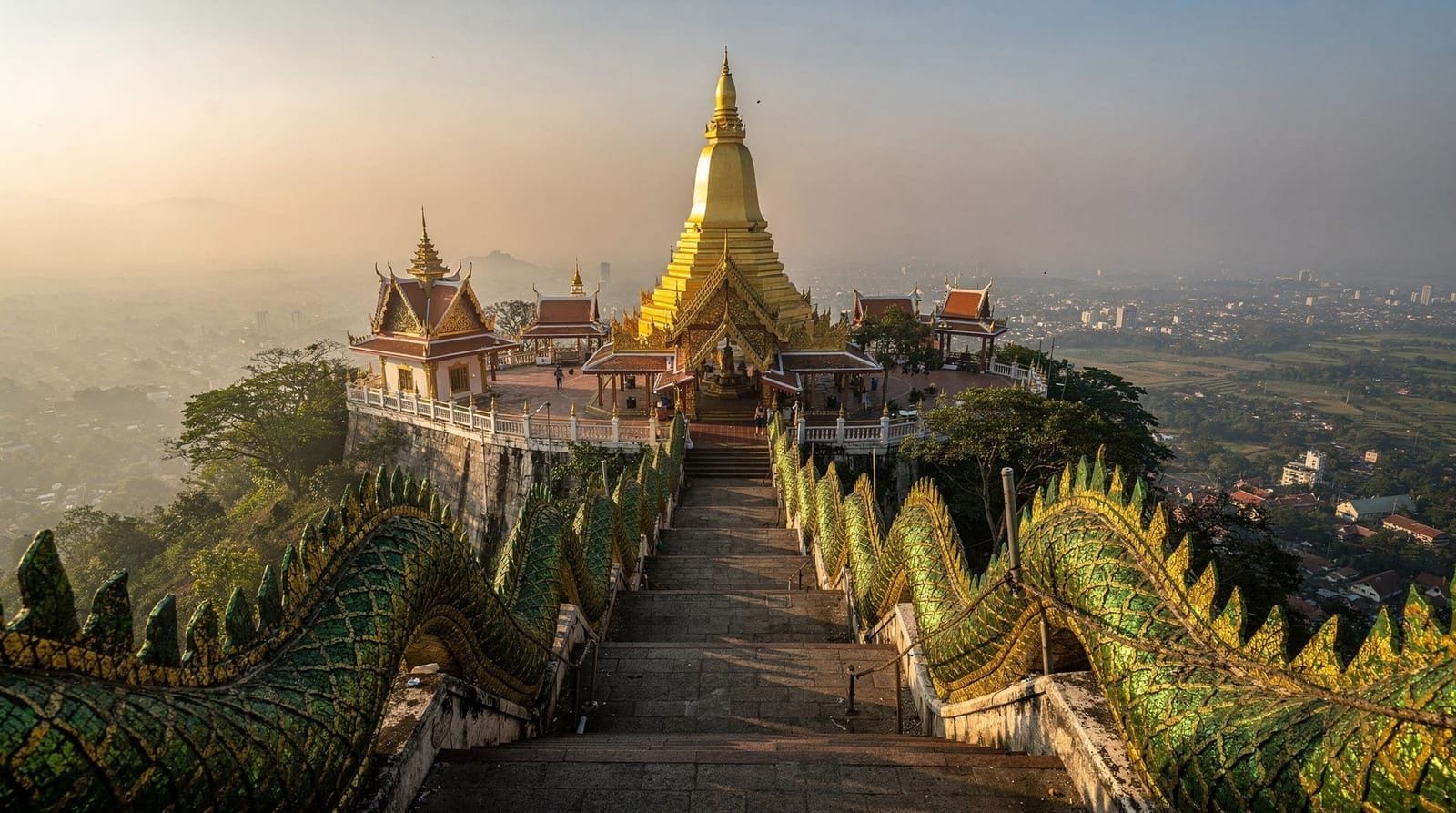
Wat Phra That Doi Suthep is the temple most people mean when they say they’re going to “the mountain temple” in Chiang Mai, and it’s genuinely worth the trip outside the city for nearly every visitor — a working pilgrimage site with a gold chedi at roughly 1,050m elevation, reached by a staircase flanked by mosaic serpents, with views back over the entire Chiang Mai valley on a clear day. This guide covers exactly how to get there, what it costs, the choice between climbing and riding, and the timing decisions that make the difference between a contemplative visit and a crowded one.
Quick answer: take a songthaew, Grab, or guided tour roughly 15km northwest of the city to the temple’s base, climb the 306-step Naga staircase or ride the funicular, pay the 30-50 THB entry fee, and budget 2-3 hours round trip. Go before 9am or after 4pm to avoid the tour-bus peak between roughly 11am and 2pm.
Getting to Doi Suthep
The temple sits on the slopes of Doi Suthep mountain, about 15km northwest of central Chiang Mai. The most common budget option is a red songthaew (shared pickup truck taxi) departing from Chang Phueak market or the area near Chiang Mai University, running roughly 50-100 THB ($1.40-$2.80) round trip per person — songthaews typically wait to fill with other passengers before departing, so there can be some waiting time on both the way up and back down. A private Grab car costs more but leaves on your schedule and drops you directly at the base.
Renting a scooter and driving yourself is possible for confident riders — the road up the mountain is paved and well-maintained but has genuine switchbacks, so it’s not a route for first-time scooter riders in Thailand. For travelers who’d rather not deal with any of the logistics, a private Doi Suthep and city temple tour handles transport and typically adds a guide who can explain the temple’s history and religious significance as you go.
The Naga staircase vs the funicular
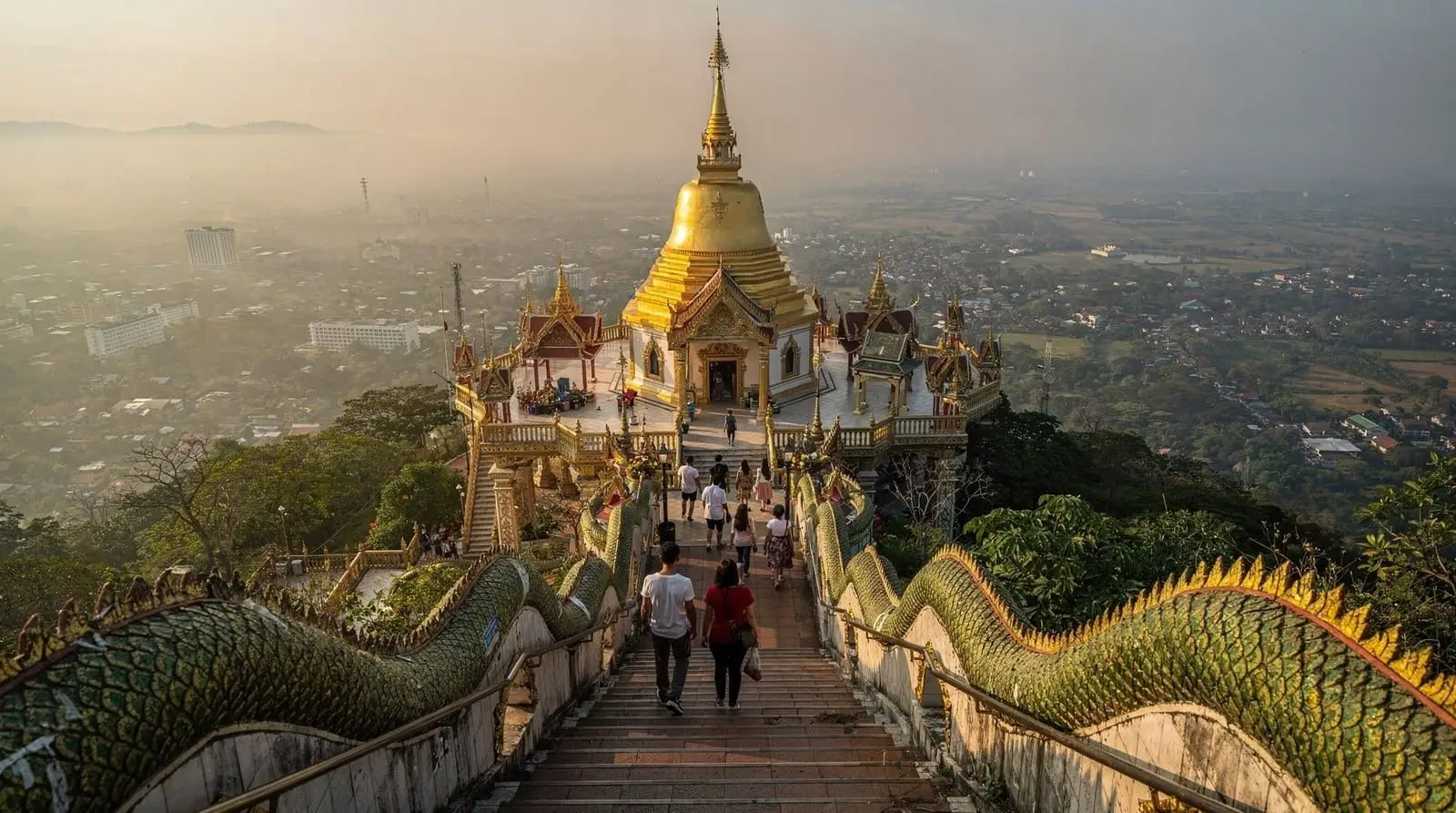
At the base of the temple complex, you’re faced with a choice: climb the 306-step Naga staircase, flanked on both sides by long mosaic serpent (naga) balustrades that are themselves one of the temple’s most photographed features, or take the funicular, a small paid tram that covers the same elevation gain mechanically. The stairs take most visitors 10-15 minutes at an unhurried pace, with shade from the surrounding trees for a good portion of the climb — it’s a genuine set of stairs, not a token few steps, so plan for some real exertion, particularly in the middle of a hot day.
The funicular is the sensible choice for visitors with mobility limitations, young children, or simply no interest in the climb, and its modest fee is worth paying rather than skipping the temple’s upper terrace altogether. There’s no wrong choice here: most Thai visitors climb the stairs as part of the pilgrimage tradition, but plenty of foreign tourists and elderly worshippers take the funicular without it diminishing the visit in any meaningful way.
What’s at the top
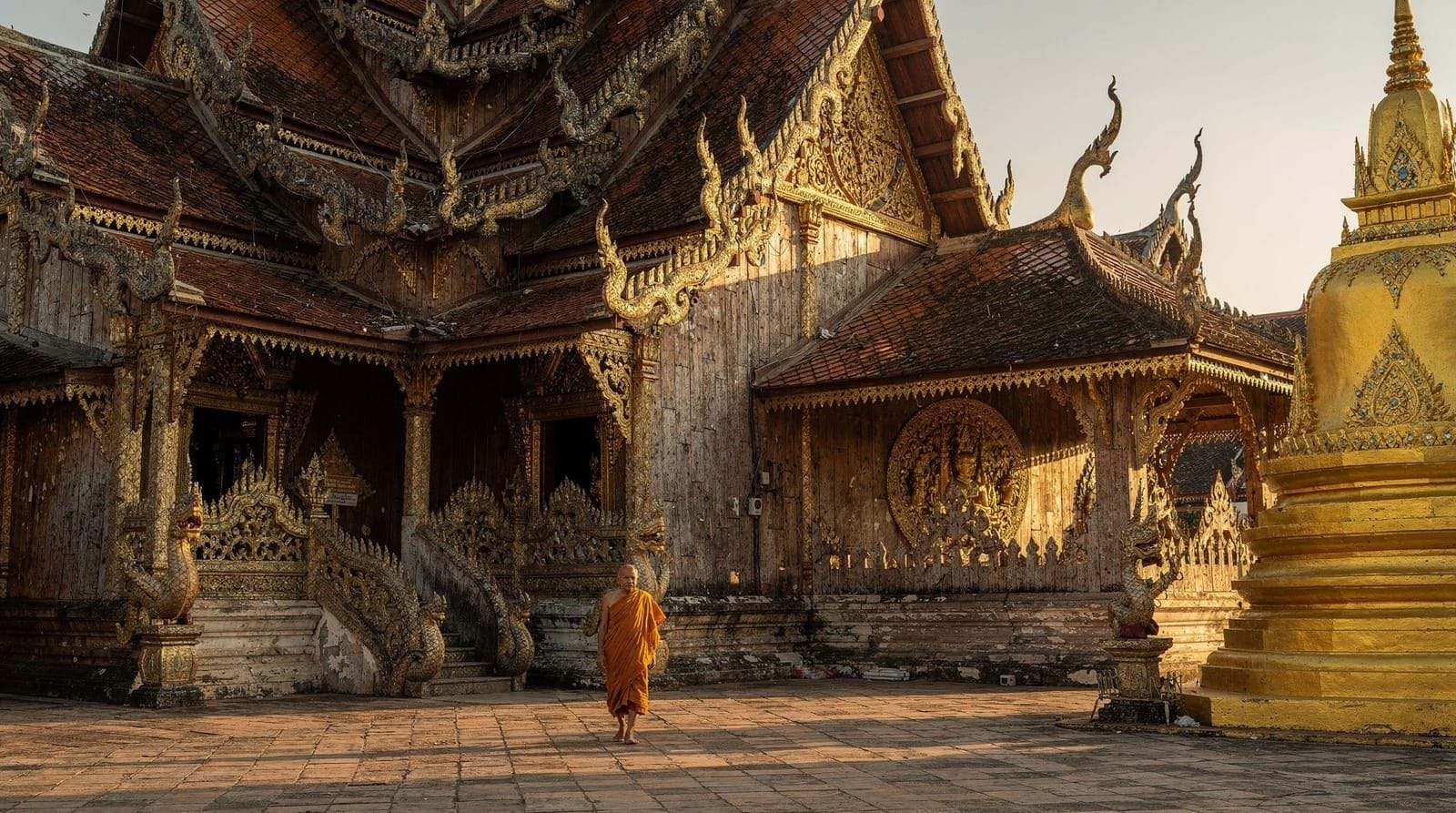
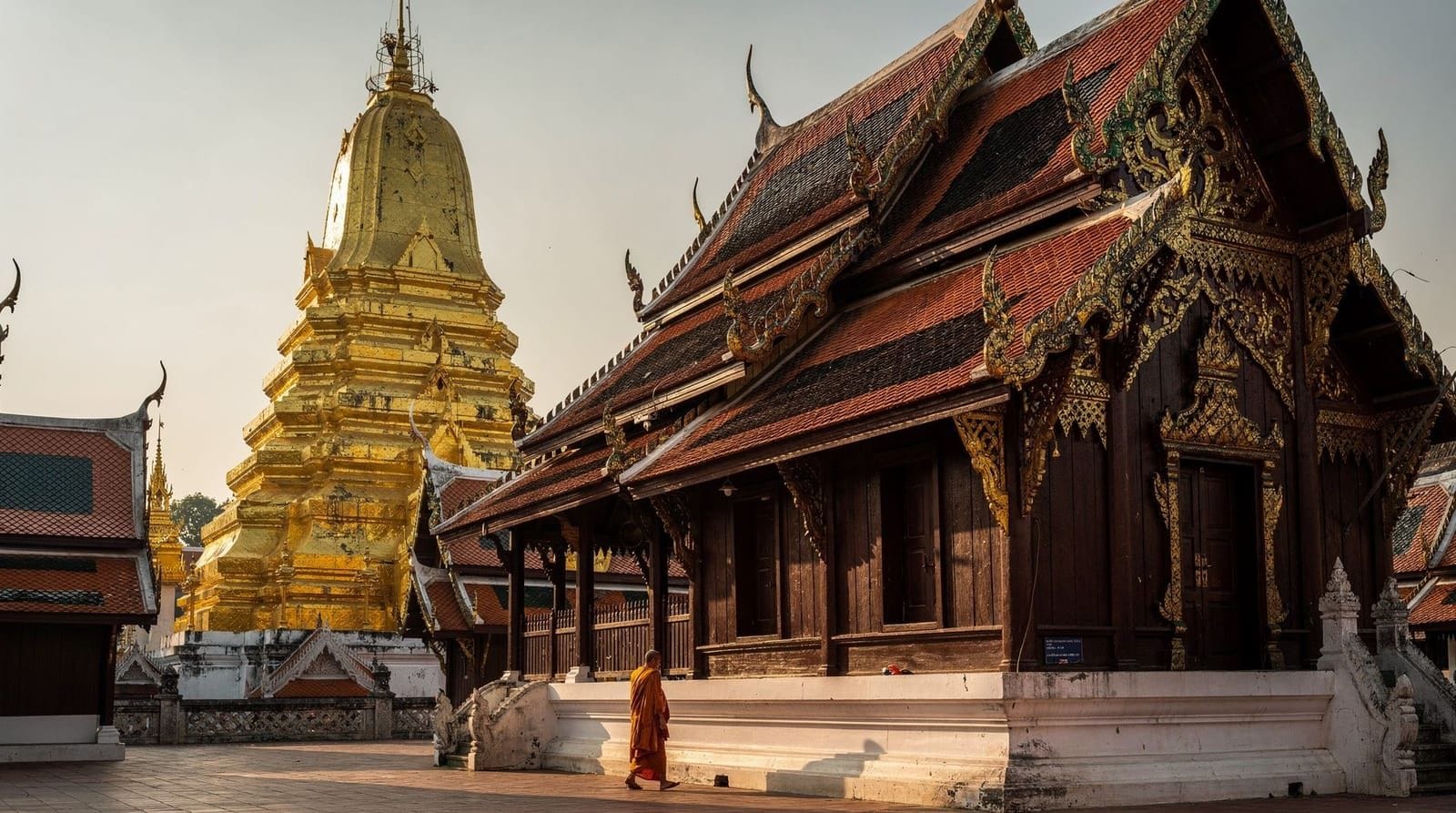
At the summit, the temple’s gold-plated central chedi is the visual and spiritual anchor, said to enshrine a relic of the Buddha and surrounded by a walkway where pilgrims circle clockwise, often carrying flowers, incense, and candles as offerings. Several viharns (assembly halls) surround the chedi, housing Buddha images and providing shaded, quieter spots to sit than the open terrace around the chedi itself. Beyond the immediate temple structures, the terrace on the mountain-facing side of the complex opens onto the reason many visitors make the trip at all: a genuine view over the Chiang Mai valley below, best on clear mornings during the cool season and considerably hazier during the March-May burning season.
Entry cost and what it covers
Foreign visitor entry runs roughly 30-50 THB ($0.85-$1.40), collected at a ticket booth near the base of the staircase or funicular. This covers access to the main temple grounds and the chedi terrace; the funicular, if you choose it over the stairs, is a small separate fee. Thai nationals typically pay a lower or no fee, a common and unremarkable practice at religious sites across the country rather than anything specific to Doi Suthep.
Dress code specifics
Shoulders and knees need to be covered for both men and women before entering the temple grounds proper, and shoes come off before stepping onto the chedi terrace or into any viharn interior — expect to carry your shoes in a bag for parts of the visit, or leave them at designated shoe-storage areas near each entrance. Sarongs are available to rent or borrow at the entrance for visitors who show up in shorts or a sleeveless top, a common enough occurrence that the system runs smoothly, though bringing a light scarf or long pants of your own avoids the small rental fee and the queue at busier times. Our temple etiquette guide covers the fuller set of expectations that apply here and at every other temple in the region.
Timing: why the hour you go matters more than the day
Doi Suthep’s biggest variable isn’t the day of the week so much as the hour. Tour buses from the city concentrate their visits in the late morning through early afternoon, roughly 11am to 2pm, when the staircase, the chedi terrace, and the parking area all feel noticeably fuller. Arriving before 9am gets you a version of the temple that’s markedly calmer — fewer people jostling for the same photo angles, more space to actually sit and observe rather than shuffle through. Late afternoon after 4pm offers a similar reprieve, with the added bonus of softer light for photography, though check that you’re not cutting it too close to closing time.
A spiritual sunrise Doi Suthep tour with alms and meditation builds the visit around this exact insight, timing arrival for the quietest, most contemplative version of the temple available. For an evening alternative, a Doi Suthep and Wat Umong twilight tour pairs the mountain temple with Wat Umong, the forest tunnel temple, into a single after-dusk outing.
Combining Doi Suthep with the rest of the mountain
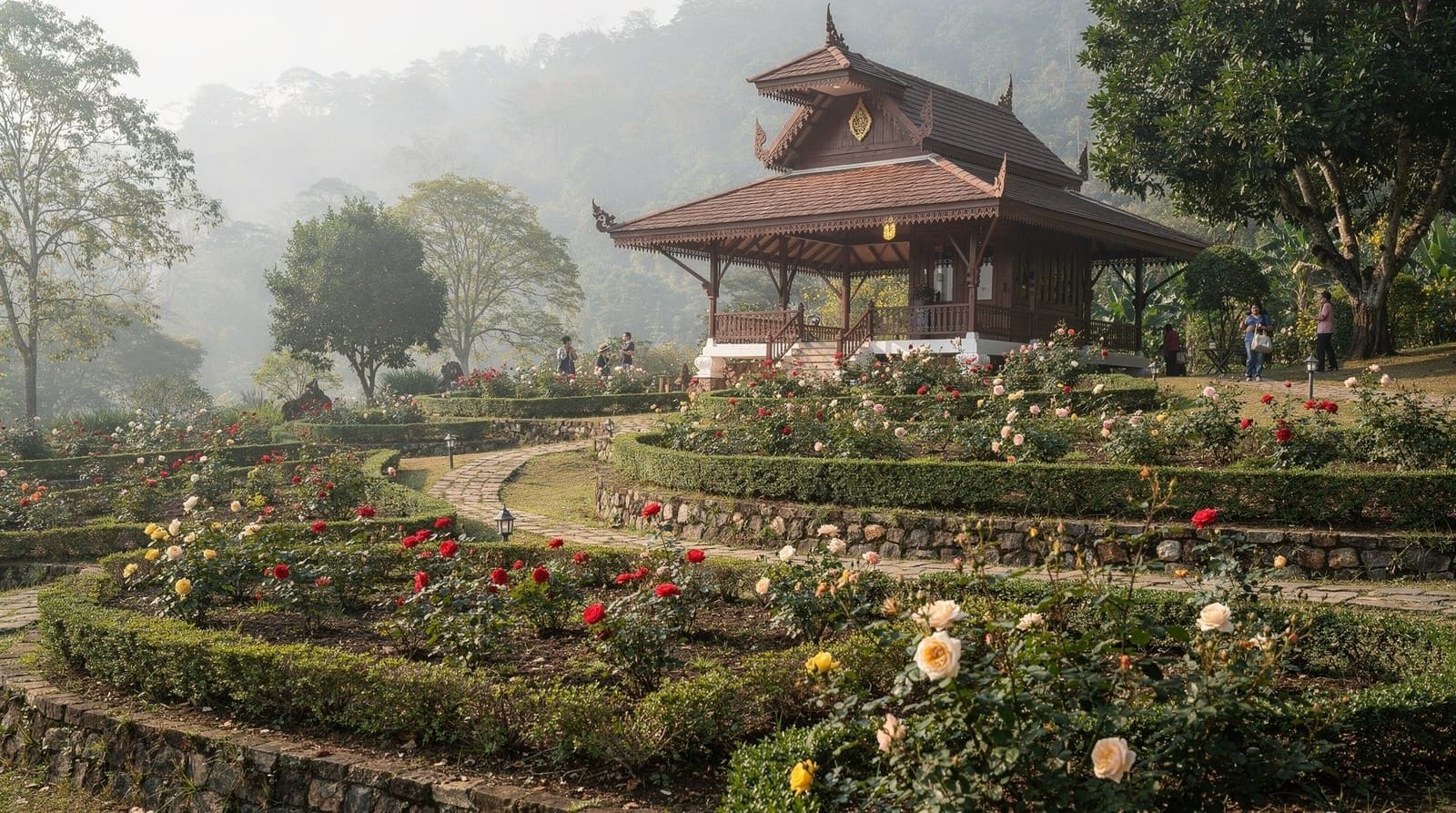
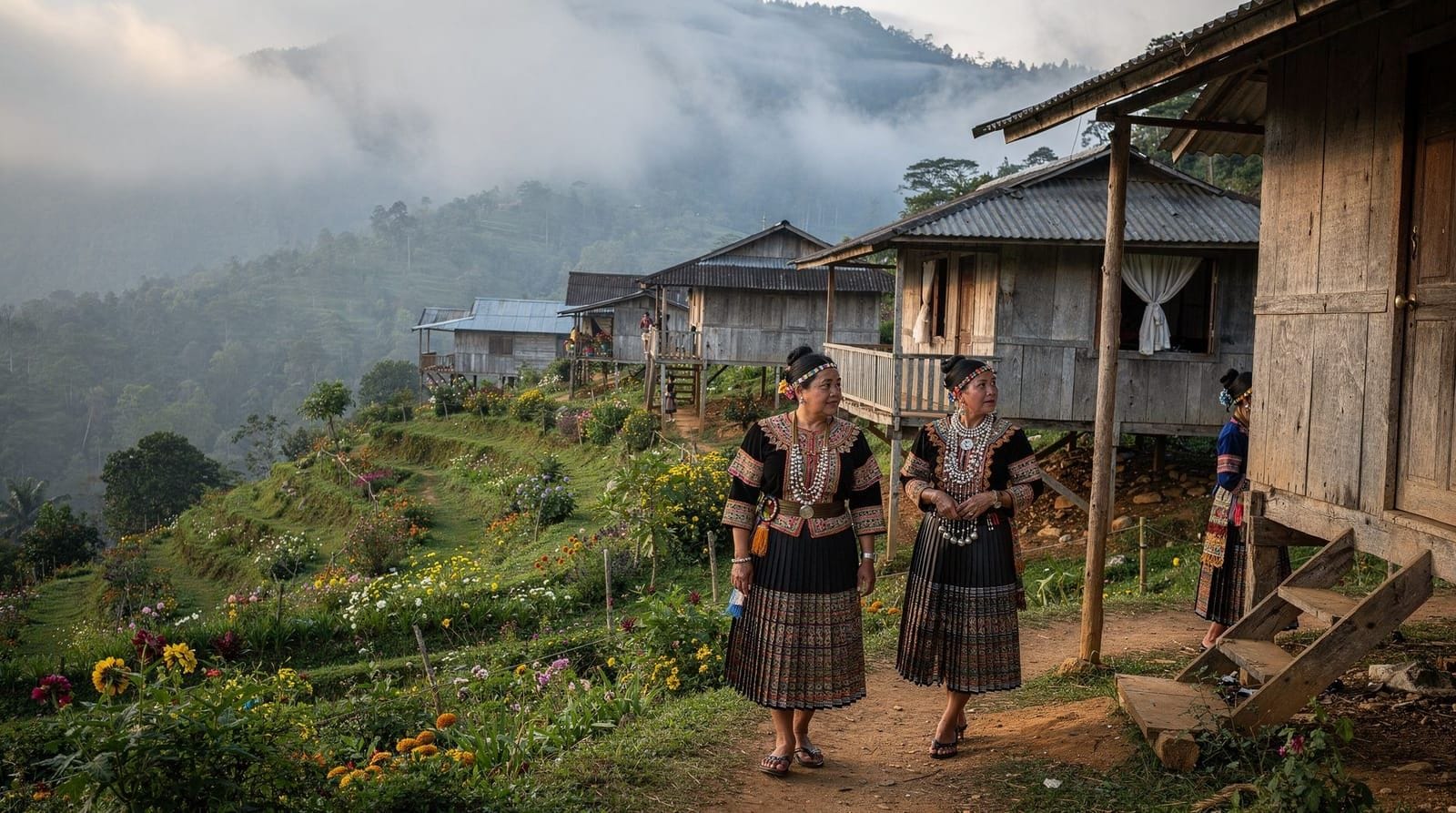
The road up Doi Suthep continues past the temple to Bhubing Palace, the royal family’s winter residence and gardens (open to the public when the family isn’t in residence), and further on to a Hmong hill-tribe village at Doi Pui. Combining any of these with the temple turns a half-day outing into closer to a full day, and is a natural way to make the most of the transport cost and time already spent getting up the mountain. A Doi Suthep, Bhubing Palace, and Hmong village tour bundles all three into a single guided half-day.
Doi Suthep by hiking: the Monk’s Trail alternative
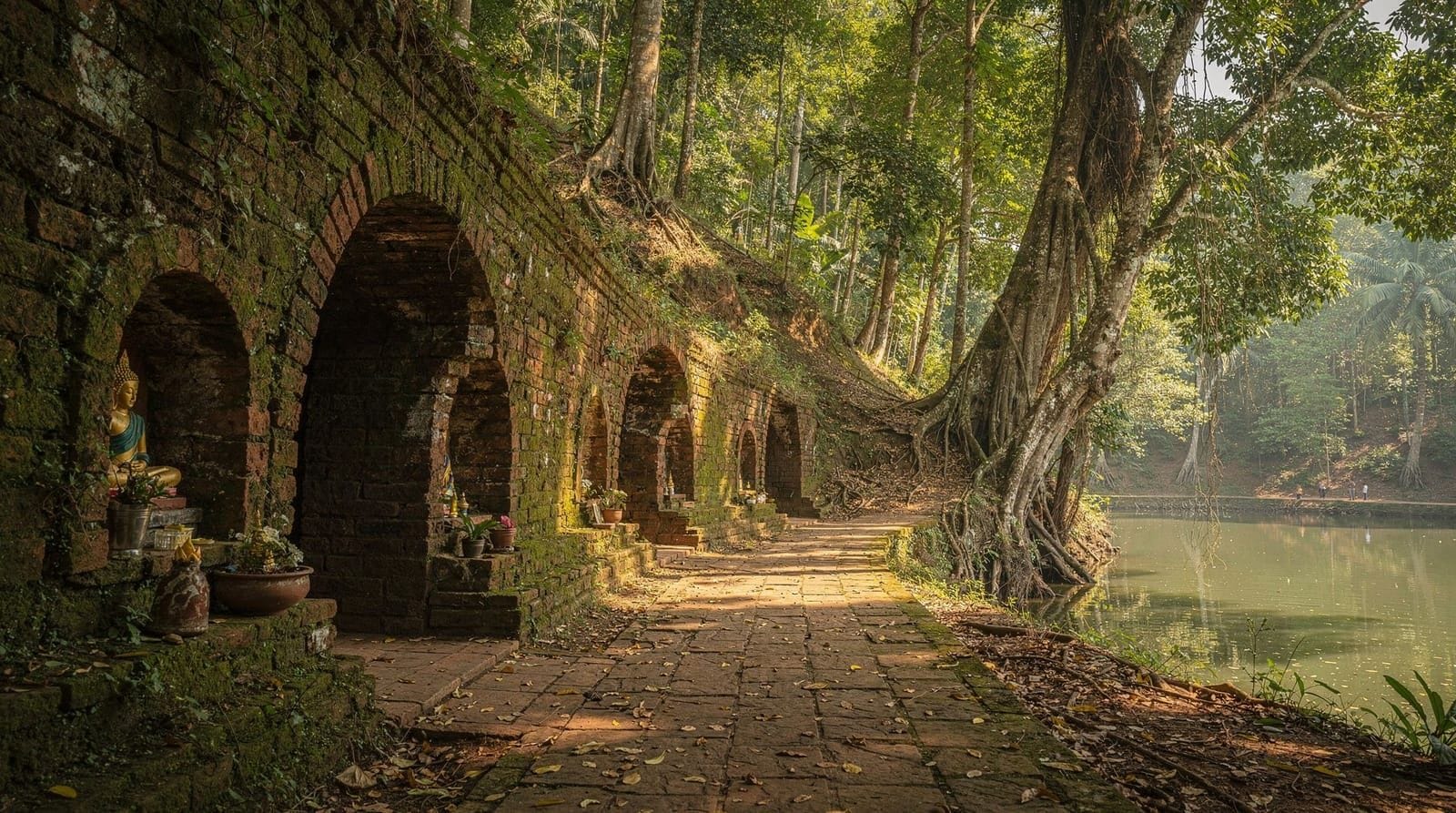
For travelers who’d rather arrive on foot than by vehicle, the Monk’s Trail is an unofficial forest hiking route climbing from Huay Kaew Waterfall through Wat Pha Lat, a small forest temple, and continuing toward Doi Suthep — a genuine hike of 1.5-2.5 hours one way rather than a paved approach. Our Huay Kaew Waterfall and Monk’s Trail guide covers the route in full. A private Monk’s Trail and Doi Suthep hike covers the same route with a guide.
The legend behind the temple’s location
Doi Suthep’s founding is tied to one of northern Thailand’s best-known temple legends: a relic believed to be a piece of the Buddha was loaded onto the back of a white elephant, which was then released to wander freely, the idea being that the elephant would choose the site for the temple itself. According to the story, the elephant climbed the mountain, trumpeted three times, and died on the spot — taken as a sign that this was the intended location, and the temple was built there in the 14th century. Whether you find the story literal history or a founding myth layered onto an already-significant mountain, it’s worth knowing before you visit, since it explains why a temple this important sits on a mountain rather than in the city center where most of Chiang Mai’s other major wats are concentrated.
Weather, haze, and when the views are actually worth it
The view over the Chiang Mai valley from the temple terrace is one of the main reasons visitors make the trip outside the city, but it’s genuinely weather-dependent in a way the temple itself isn’t. November through February, the cool season, typically delivers the clearest skies and the best chance of a genuinely rewarding view. March through May is Chiang Mai’s burning season, when agricultural burning across the region and neighboring countries pushes particulate haze into the valley, and it’s common for the view from Doi Suthep’s terrace to be reduced to a grey haze even on a technically clear, rainless day. The temple itself remains fully worth visiting during burning season for its religious and architectural significance — just adjust your expectations for the view specifically, and consider that a hazy day doesn’t reflect poorly on the temple, only on regional air quality that affects the whole valley.
Self-driving vs. hiring transport
Renting a scooter and riding up independently is popular among confident, experienced riders, and the road itself is well-paved with clear signage. That said, it’s a genuine mountain road with sustained switchbacks and a mix of tour buses, songthaews, and other scooters sharing the same lanes, which makes it a poor choice for anyone without solid scooter experience in Southeast Asian traffic conditions. Songthaews and Grab cars remove this risk entirely and cost little enough that the convenience is generally worth it for most visitors, reserving self-driving for those who are already comfortable on two wheels in Thailand.
What to bring
Sun protection matters more here than at the Old City temples, since a meaningful part of the visit happens on an open, unshaded terrace at altitude. A hat, sunscreen, and water are worth carrying even on a cool-season morning. If you’re not bringing your own shoulder- and knee-covering clothing, budget a little extra time and a small amount of cash for the sarong rental process at the entrance, which can have a short queue during busier hours. A small day bag is useful for carrying your shoes during the parts of the visit where they need to come off, rather than juggling them in your hands.
Photography at the temple
The Naga staircase, the gold chedi, and the valley view are the three most-photographed elements of a Doi Suthep visit, and all three are permitted subjects under normal circumstances. As with any active temple, avoid photographing individual worshippers or monks at prayer without a clear, comfortable invitation to do so, and be mindful of anyone in the frame during quiet, contemplative moments near the chedi itself. Our temple photography guide covers the fuller set of norms that apply here and elsewhere in the region.
Accessibility considerations
The funicular is the practical option for visitors who can’t manage the 306-step staircase, whether due to mobility limitations, an injury, or simply young children who tire quickly on stairs. Once at the top, the main terrace and chedi walkway are relatively level and manageable, though some of the surrounding viharns and side areas involve additional steps. If accessibility is a significant concern, it’s worth checking current on-site conditions or asking a guide in advance, since paved surfaces and step configurations can shift with ongoing maintenance work.
Is Doi Suthep overrated?
It’s a fair question given how consistently every guidebook and blog names Doi Suthep as Chiang Mai’s must-see temple. The honest answer is no, provided you manage the timing — the temple’s religious significance, the naga staircase itself, and the valley views are all genuine, not manufactured for tourism. What earns the “overrated” complaint from some visitors is arriving at 1pm, hitting the temple at its most crowded, and never seeing the version of the site that makes the reputation deserved. Visitors who arrive early or late consistently report a more positive experience than those who go at peak hours, which suggests the temple itself isn’t the problem — the timing usually is.
A realistic half-day plan
Depart the city by 7:30-8am, arrive at the temple base by around 8:15-8:30am, allow 45-60 minutes to see the chedi, viharns, and terrace unhurried, and you’re back down and heading toward lunch by late morning, ahead of the tour-bus peak entirely. If you’re adding Bhubing Palace or the Hmong village, extend this into a fuller half-day rather than trying to compress everything into the same early window.
Total cost breakdown for a solo visitor
Adding it up: roughly 30-50 THB ($0.85-$1.40) for temple entry, roughly 50-100 THB ($1.40-$2.80) for a round-trip shared songthaew, and a small optional fee if you take the funicular instead of the stairs. That puts a fully independent, budget-conscious visit at well under 200 THB ($5.60) total for most travelers, making Doi Suthep one of the better-value half-day outings from Chiang Mai regardless of how tight your budget is. A private Grab round trip or a guided tour costs more, generally in the 500-1,500 THB ($14-$42) range depending on the operator and whether other stops are bundled in, but buys back the waiting time that shared songthaews sometimes involve.
How Doi Suthep compares to visiting other mountain temples in the region
Travelers who’ve already seen the White Temple or Blue Temple near Chiang Rai sometimes wonder whether Doi Suthep will feel repetitive. It doesn’t — those Chiang Rai temples are modern artistic statements built within the last few decades, dramatically different in both age and intent from Doi Suthep’s centuries-old, actively used pilgrimage site. If your itinerary includes both regions, seeing Doi Suthep first, or in either order, doesn’t diminish the other; they’re simply different categories of temple experience, one contemporary and sculptural, the other historic and devotional.
Frequently asked questions about visiting Wat Phra That Doi Suthep
How do I get to Doi Suthep from the Old City?
Songthaew from Chang Phueak market (roughly 50-100 THB round trip) or the area near Chiang Mai University, or a Grab directly from wherever you’re staying. Both take about 30-45 minutes each way depending on traffic.
Is the Naga staircase difficult to climb?
It’s 306 steps with decent shade for much of the route — manageable for most visitors in 10-15 minutes at a relaxed pace, though it is genuine exertion, particularly in midday heat.
Do I need to remove my shoes at Doi Suthep?
Yes, before stepping onto the chedi terrace or entering any viharn. Shoe storage areas are provided near each entrance.
What time does Doi Suthep get most crowded?
Roughly 11am to 2pm, when tour buses from the city concentrate their visits. Before 9am or after 4pm is noticeably quieter.
Can I see the sunrise or sunset from Doi Suthep?
The temple itself has set opening hours that don’t typically accommodate sunrise viewing from inside, though the mountain road and some viewpoints along it offer early or late light without needing to be inside the temple grounds themselves. Check current hours before planning around either.
Is there anywhere to eat near Doi Suthep?
Small food stalls and vendors operate near the temple’s base and parking area, offering basic Thai snacks and drinks, though it’s not a dining destination — most visitors eat before or after the trip rather than at the temple itself.
Top experiences
Bookable activities with verified prices and instant confirmation on GetYourGuide.

Chiang Mai: Doi Suthep Temple & Wat Pha Lat Hike
Chiang Mai: Private Doi Suthep-Chiang Mai City Temple Tour
Chiang Mai: Doi Suthep Temple & Hmong Hill Tribe Culture
Chiang Mai: Doi Suthep, Flower Gardens & Hmong Village
Chiang Mai: Hike on Monk's Trail and Doi Suthep Private Tour