Temple etiquette in Thailand: the complete rules
What are the basic etiquette rules for visiting temples in Thailand?
Cover shoulders and knees, remove shoes before entering any viharn or chedi interior, never point your feet toward a Buddha image, and keep your head lower than any monk's when seated nearby. Women should never touch a monk or hand him anything directly, and photography of worshippers or monks in prayer should only happen with clear, comfortable consent.
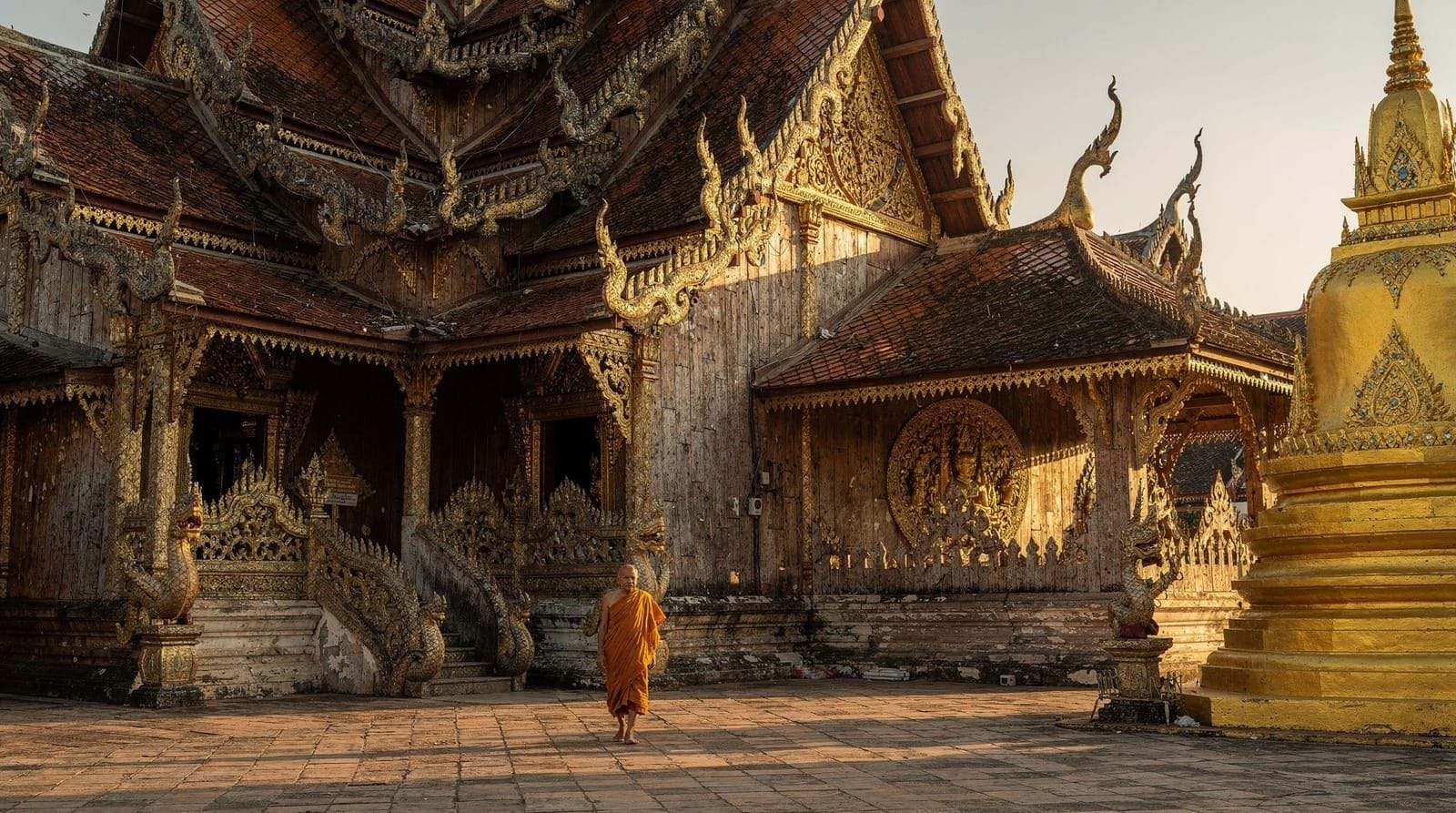
Chiang Mai’s temples are active, functioning religious sites first and tourist attractions second, and getting the etiquette right isn’t about avoiding embarrassment so much as showing basic respect to a living tradition that predates tourism in this region by many centuries. Most of the rules below are consistent across Wat Phra Singh, Wat Chedi Luang, Doi Suthep, and every other temple you’ll visit in Chiang Mai or elsewhere in Thailand, which makes them worth learning once rather than relearning at each stop.
Quick answer: cover shoulders and knees, remove shoes before entering buildings, never point your feet at a Buddha image, keep your head physically lower than a monk’s when nearby, and remember that women should never touch a monk directly. Photography is generally fine for architecture but should stop short of treating worshippers as photo subjects.
Dress code: what “covered” actually means
The standard across nearly every Thai temple is shoulders and knees covered, for both men and women. This rules out sleeveless tops, tank tops, shorts above the knee, and short skirts or dresses. Leggings alone, without a longer top covering the hips, are sometimes turned away at stricter temples, so a longer shirt or a wrap is a safer bet than assuming leggings count as “covered legs.” See-through or very thin fabric that reveals what’s underneath is also generally considered inappropriate regardless of how much skin it technically covers.
If you show up underdressed, most major temples — Doi Suthep and Wat Chedi Luang among them — sell or loan sarongs at the entrance specifically for this situation, so being turned away entirely is rare in practice. That said, the rental process takes time and sometimes a small fee, and arriving already dressed appropriately is simpler and faster than managing it on the spot.
Shoes: when to remove them and when not to
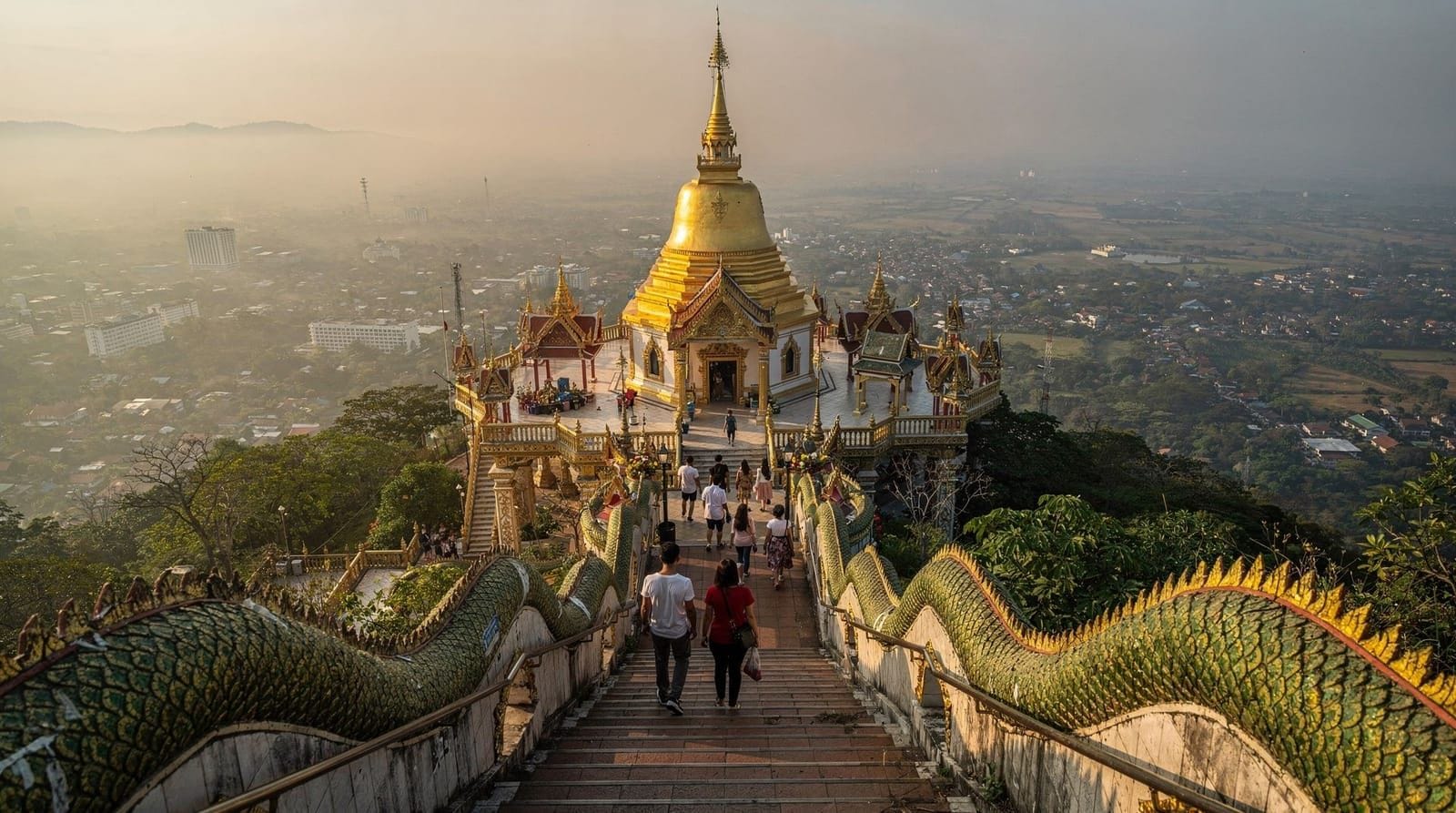
Shoes come off before entering any viharn (the main assembly hall housing a temple’s principal Buddha image), any ubosot (ordination hall), and certain elevated chedi platforms — Doi Suthep’s upper terrace around the gold chedi is a good example of an outdoor-but-shoes-off area. Walking around open outdoor temple grounds, courtyards, and gardens generally doesn’t require removing shoes; it’s specifically the interiors of religious buildings and certain sacred platforms where the rule applies. Most temples have a designated area near each entrance for leaving shoes, sometimes with a small fee for supervised storage at busier sites, though simply leaving them in a visible pile at the door is standard practice at quieter temples.
Feet: the lowest, least respectful part of the body
In Thai culture, feet are considered the physically lowest and symbolically least respectful part of the body, which is why pointing them at a Buddha image, a monk, or even another person is seen as disrespectful. Inside a temple, this means avoiding stretching your legs out toward a Buddha image while seated — the common and comfortable solution is sitting with your legs folded to the side, feet tucked behind you, rather than cross-legged with feet facing forward, or kneeling if the posture is comfortable. This applies whether you’re sitting on the floor inside a viharn or on a mat near an outdoor shrine.
Head: the highest, most respected part of the body
The inverse of the feet rule applies to the head — it’s considered the most respected part of the body, which is part of why touching someone else’s head (including a child’s) is generally avoided in Thai culture, temple or not. Inside a temple specifically, this translates into keeping your head lower than a monk’s whenever practical, particularly if you’re standing while a monk is seated. If you’re photographed with a monk or a Buddha image, positioning yourself so your head doesn’t tower directly above is a small but genuinely noticed courtesy.
Monks and women: the rule that trips up the most visitors
The single most commonly misunderstood rule among foreign visitors is that women must never touch a monk or hand him anything directly — not a handshake, not passing an object hand to hand, nothing. This isn’t a judgment on the woman involved; it’s a discipline the monk himself observes as part of his vows, and it applies universally regardless of the visitor’s intentions or familiarity with the custom. If a woman needs to give a monk something — a donation, a question written down, an offering — the practical solution is placing the item on a cloth, tray, or table for the monk to pick up himself, or having a male companion pass it over instead. Monks are aware this trips up visitors regularly and won’t take offense at an honest mistake, but knowing the rule in advance avoids an awkward moment for both parties.
Monk chat: etiquette inside the program itself
Several Old City temples, Wat Chedi Luang prominent among them, run monk chat programs (see our monk chat guide for specifics) where young monks practicing English sit down with visitors for open conversation. The same touch rule applies throughout — no handshakes, no casual physical contact — and topics are generally open, though it’s considered respectful to let the monk guide how personal or how casual the conversation becomes rather than immediately asking about controversial or highly personal subjects. Sitting with your feet tucked away rather than pointed toward the monk applies here just as it does anywhere else in the temple.
Photography: what’s generally fine and what to avoid
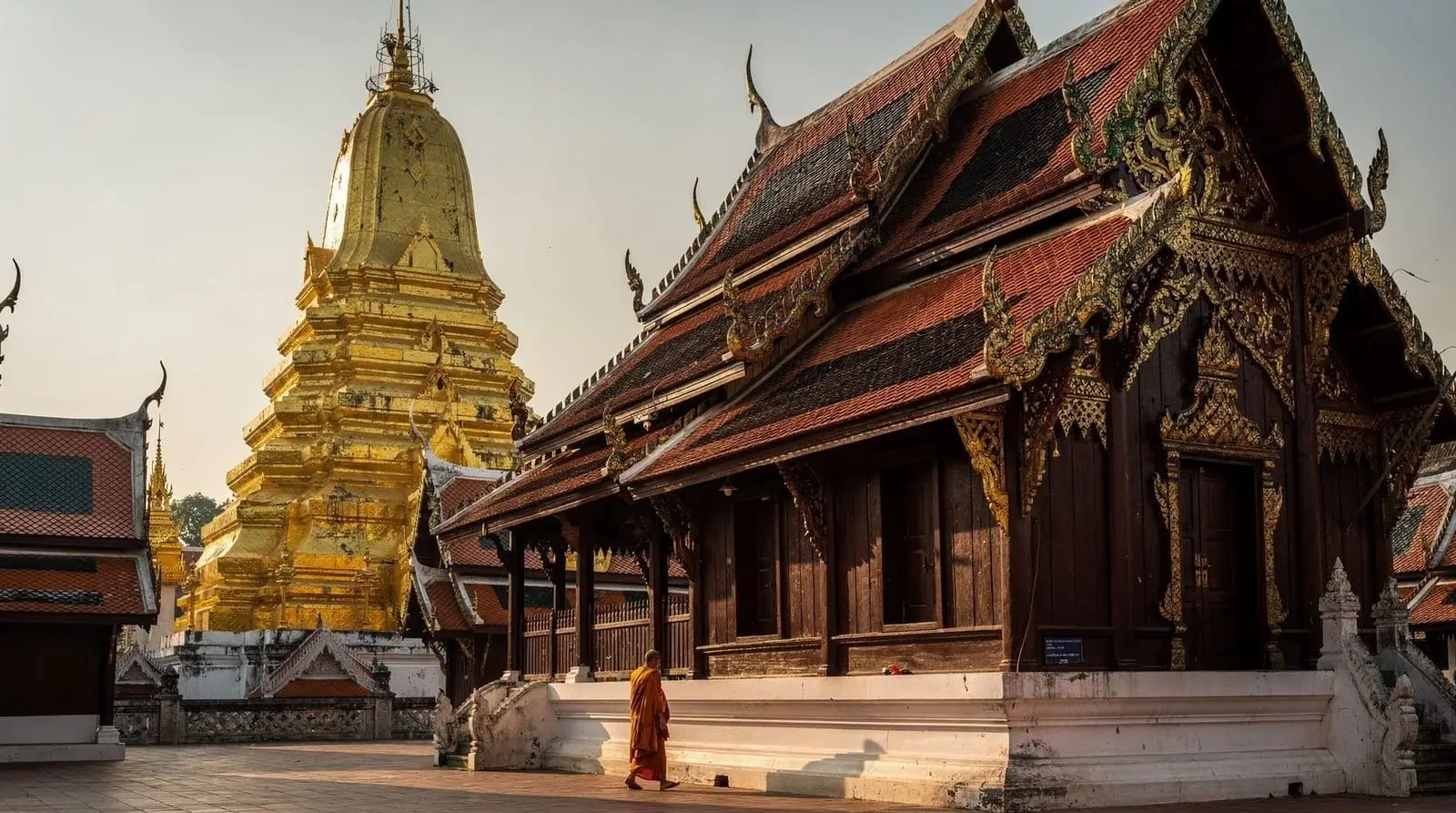
Photographing temple architecture, chedis, viharns, and general grounds is normal and expected at every major Chiang Mai temple — these are, after all, some of the region’s most photogenic structures. The line to watch is treating worshippers or praying monks as photo subjects without their comfortable, clear consent; a monk going about his day is not a photo opportunity in the way a carved chedi is. Some specific interiors or shrines post signs restricting photography entirely, often around particularly sacred images, and these should be respected without exception even if other visitors around you seem to be ignoring them.
Donations: what’s expected and what isn’t
There’s no fixed donation amount expected at any temple, and donation boxes near main shrines and images generally accept whatever a visitor chooses to contribute. At paid-entry temples like Wat Phra Singh or Doi Suthep, the entrance fee itself covers admission, and any further donation at an internal box is optional rather than an additional expected cost. A modest contribution — even 20-100 THB — is appreciated at free-entry temples like Wat Chiang Man or Wat Umong, which rely more heavily on donations for upkeep than the ticketed sites do.
Sitting, standing, and general movement inside a viharn
Beyond the feet and head rules already covered, general movement inside a viharn is fairly relaxed — walking around to view different Buddha images or murals is normal, as is sitting quietly to observe rather than moving through quickly. What’s worth avoiding is stepping over anyone seated on the floor, which repeats the same lowest-to-highest body logic already discussed, and walking directly between a worshipper and the Buddha image they’re facing, which briefly and unnecessarily interrupts their line of devotion.
What happens if you make a mistake
Temple staff and monks in Chiang Mai deal with well-meaning but uninformed foreign visitors constantly, and an honest, quickly corrected mistake — forgetting to remove shoes, accidentally pointing feet the wrong way — is met with a gentle correction rather than lasting offense in the overwhelming majority of cases. The goal of learning this etiquette isn’t achieving perfection on a first visit; it’s showing that you understand these are living religious sites deserving basic respect, which comes through in how you respond to a correction as much as in getting every rule right from the start.
How rules vary slightly between temples
The core rules above are consistent everywhere, but some temples layer on specific additional restrictions — Wat Sri Suphan, the silver temple on Wualai Road, restricts entry to its main ordination hall to men only, a traditional restriction tied to the ordination hall’s specific sacred status rather than a general temple-wide rule. Posted signage at each temple’s entrance is the most reliable source for any site-specific rule beyond the general etiquette that applies across the board, so a quick glance on arrival is worth the few seconds it takes.
Etiquette for children visiting temples
Children are welcome at Chiang Mai’s temples and the core rules apply to them in the same way as adults, though enforcement is naturally more relaxed for young kids who might not fully grasp the dress code or the feet-pointing convention. Dressing children in shoulder- and knee-covering clothing in advance avoids any friction at entry, and a brief explanation of “no touching monks” and “don’t point your feet at the Buddha statues” before entering is usually enough grounding for most kids to behave appropriately for the visit’s duration.
Where these customs come from
Most of the rules above trace back to core ideas in Thai Theravada Buddhism rather than being arbitrary tourist-facing conventions. The head-high, feet-low body hierarchy reflects a broader Buddhist and older regional worldview about spiritual purity being associated with the upper body and impurity with the lower, which is also why stepping over a seated person, or over an object like a book, is generally avoided outside temples too. The rule against women touching monks stems from monastic vows of celibacy that Thai monks undertake, a discipline the monk himself maintains regardless of the visitor’s familiarity with it. Understanding the reasoning behind these customs, rather than treating them as an arbitrary checklist, tends to make them easier to remember and easier to respect consistently across different temples and situations.
Morning alms rounds: a related custom you may encounter
Separate from temple visits themselves, you may encounter monks on their morning alms rounds (tak bat) walking through streets near temples shortly after dawn, collecting food offerings from local residents. If you want to participate respectfully as a visitor, remove your shoes before offering, avoid making eye contact at the moment of giving as a sign of humility, and never touch the monk while placing food into his bowl. This is a genuine daily practice rather than a tourist performance, and photographing it should follow the same consent-based approach as photographing monks inside a temple — candid shots from a respectful distance are more appropriate than approaching closely or asking a monk to pose.
Etiquette differences between paid and free temples
Paid-entry temples like Wat Phra Singh, Wat Chedi Luang, and Doi Suthep tend to have more visitor infrastructure — sarong rental stations, posted signage, staff accustomed to correcting tourists gently — simply because they see higher visitor volumes. Free, donation-based temples like Wat Chiang Man or Wat Umong often have less of this infrastructure, which doesn’t mean the rules are relaxed, only that you’re more likely to be relying on your own preparation rather than an on-site prompt. This is part of why learning the etiquette in advance matters more at the quieter, less touristed temples than at the handful of major sites built around handling large daily visitor numbers.
Common mistakes and how to avoid them
The most frequent mistakes among first-time visitors, in roughly descending order of frequency: forgetting to remove shoes before a viharn interior (easily avoided by watching for a shoe pile at the entrance); sitting with legs stretched toward a Buddha image (fixed by tucking feet to the side); women unconsciously reaching to hand something to a monk (avoidable by pausing and using a table or a male companion instead); and photographing a monk mid-prayer without asking (avoidable by simply waiting until the moment passes or asking first). None of these mistakes are treated as serious offenses when corrected quickly and gracefully, but avoiding them in the first place makes for a smoother visit for you and for the people around you.
Etiquette during festivals and merit-making days
Temples get noticeably busier and more ritually active during Buddhist holy days (wan phra) and major festivals, when local worshippers come to make merit through donations, candle-lighting, and prayer in greater numbers than on an ordinary day. Visiting during these periods is entirely welcome for tourists, but it’s worth being more deliberate about staying out of the way of active worshippers, keeping noise down, and being especially careful with photography given the higher concentration of people in genuine prayer rather than simply visiting as tourists. If your trip coincides with a major festival like Loy Krathong or Songkran, temple etiquette in the standard sense still applies, layered on top of whatever additional festival-specific customs are in play that day.
A short checklist before you go
Cover shoulders and knees. Wear shoes you can slip on and off easily. Bring a small bag for carrying shoes once removed. Keep feet tucked away, not pointed at any Buddha image. Remember women never touch monks directly. Ask before photographing anyone praying. Consider a modest donation, especially at free-entry temples. None of this requires special preparation beyond planning your outfit and allowing a little extra time at each stop — the temples themselves do the rest of the work in making a visit meaningful.
Etiquette when joining a guided temple tour
If you’re visiting temples as part of a guided tour rather than independently, the same core rules apply, but a guide typically flags dress code and behavior expectations before you arrive at each stop, reducing the chance of an on-site correction. It’s still worth dressing appropriately in advance rather than relying entirely on the guide’s reminders, since a guide managing a small group can’t always catch every detail for every visitor before entering a temple building.
Frequently asked questions about temple etiquette in Thailand
Can I wear shorts to a temple if they cover my knees?
Yes — knee-length shorts are generally acceptable as long as they fully cover the knee itself; shorter shorts are the issue, not shorts as a category.
Do men have any specific rules that don’t apply to women?
The dress code and feet/head rules apply equally to men and women. The one asymmetric rule is the reverse of the monk-touching restriction: a male visitor can hand something directly to a monk, where a female visitor cannot.
Is it okay to bring a stroller or wheelchair into temple grounds?
Outdoor temple grounds generally accommodate strollers and wheelchairs without issue; specific viharn or chedi interiors may have steps or raised thresholds that limit access, varying temple to temple.
Do I need to be Buddhist to enter a temple respectfully?
No — Chiang Mai’s major temples welcome visitors of any or no religious background. Respecting the dress code and behavioral norms covered here is what matters, not your personal beliefs.
What if I forget and accidentally wear shoes into a viharn?
A quiet, prompt correction from temple staff or a fellow visitor is the likely outcome, and removing your shoes as soon as you notice resolves it without lasting issue.
Is chewing gum or eating inside temple grounds acceptable?
Eating and drinking inside viharns or ubosots is generally avoided out of respect for the sacred space; outdoor grounds are more relaxed, though it’s still considerate to step away from active shrines before eating a snack.