Songkran in Chiang Mai: the water festival guide
When is Songkran in Chiang Mai and what should I expect?
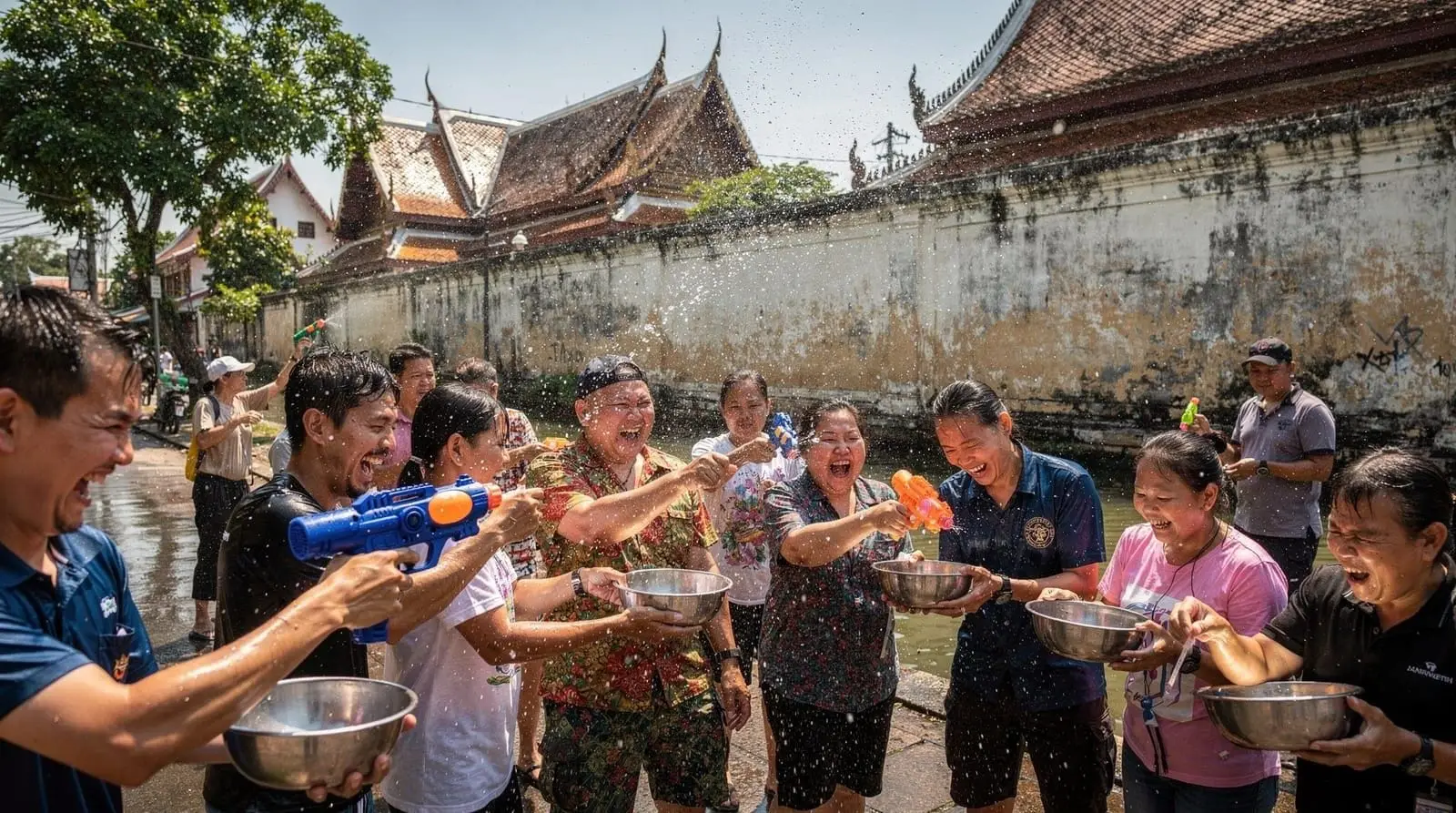
Songkran, the Thai New Year water festival, runs April 13-15 every year on fixed Gregorian dates, though Chiang Mai's celebrations often extend a few extra days on either side. The Old City moat is the epicenter, with people scooping water from it (or using it as a refill point) to soak passersby continuously from morning until evening across the main days, so expect to get completely soaked if you go anywhere near the moat during daylight hours.
Songkran is the one Chiang Mai festival where the marketing photo and the on-the-ground reality match almost exactly: it really is a city-wide, days-long water fight, and the Old City moat really is the epicenter of it. Unlike Yi Peng and Loy Krathong, which move on the lunar calendar and require checking a new date each year, Songkran is fixed to the Gregorian calendar, April 13-15, every single year, which makes it one of the easier festivals to plan a trip around with certainty.
What’s less obvious from a distance is how the two halves of Songkran (the solemn, family-oriented Buddhist New Year rituals, and the chaotic public water fighting) coexist in the same week, often within a few hundred meters of each other, and how differently those two halves feel depending on where in the city you are standing.
What Songkran actually is, beyond the water fights
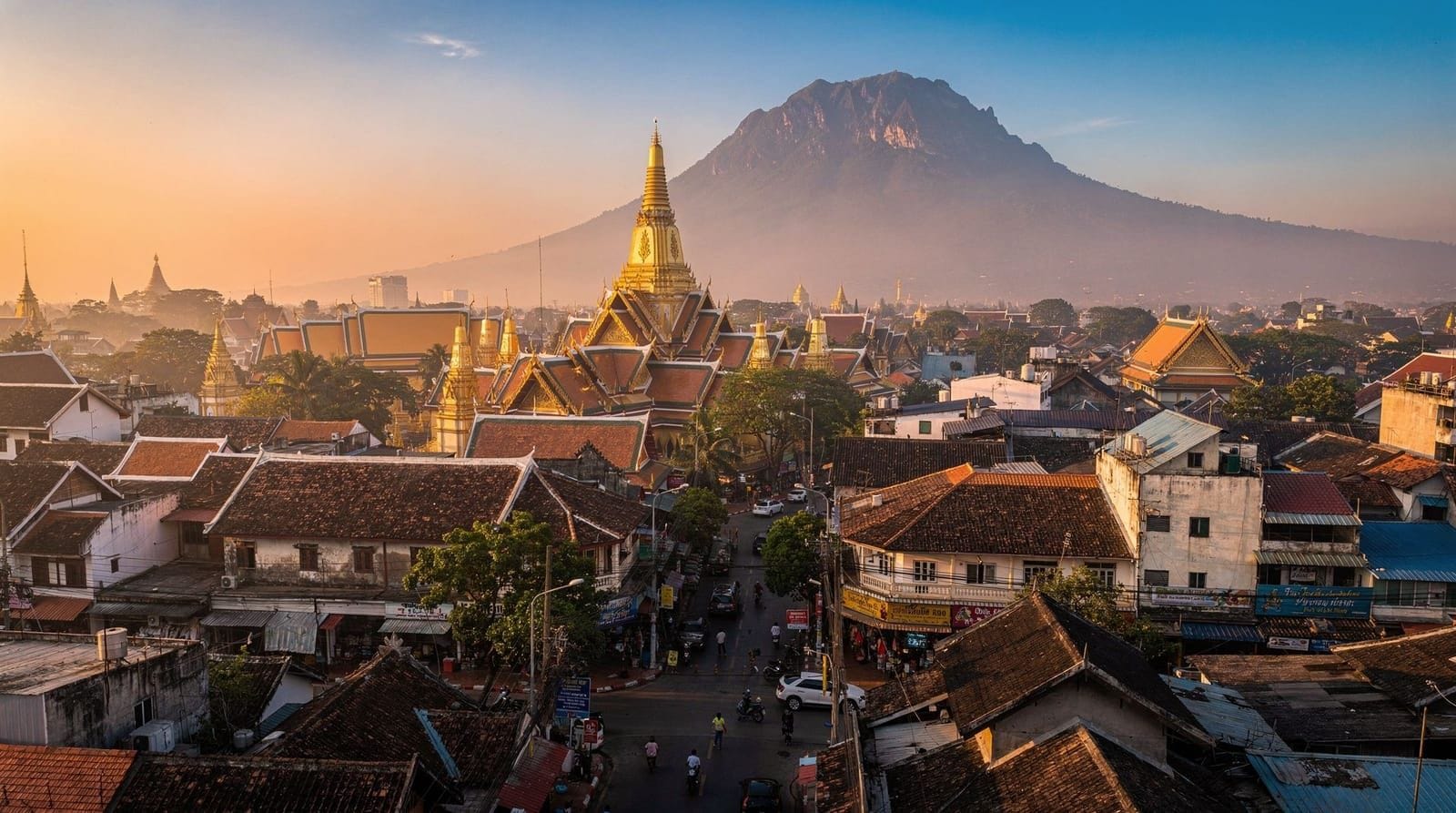
Songkran marks the traditional Thai New Year, and its origins are rooted in water as a symbol of cleansing and renewal rather than pure recreation. The traditional core of the festival includes visiting temples to pour water over Buddha images, gently pouring scented water over the hands of elders and parents as a gesture of respect and blessing (a practice called rod nam dam hua), and cleaning homes and making merit to start the year fresh. These quieter rituals happen throughout Chiang Mai’s temples and households across the festival period, largely separate from the public water-fighting spectacle, and are worth seeking out if you want to understand the holiday beyond its tourist-facing reputation.
The public water fighting that dominates most visitors’ experience grew out of this cleansing symbolism, scaled up over decades into the citywide event it is today, especially concentrated in the Old City and along the moat, where the water itself is readily available.
Why the Old City moat is the epicenter
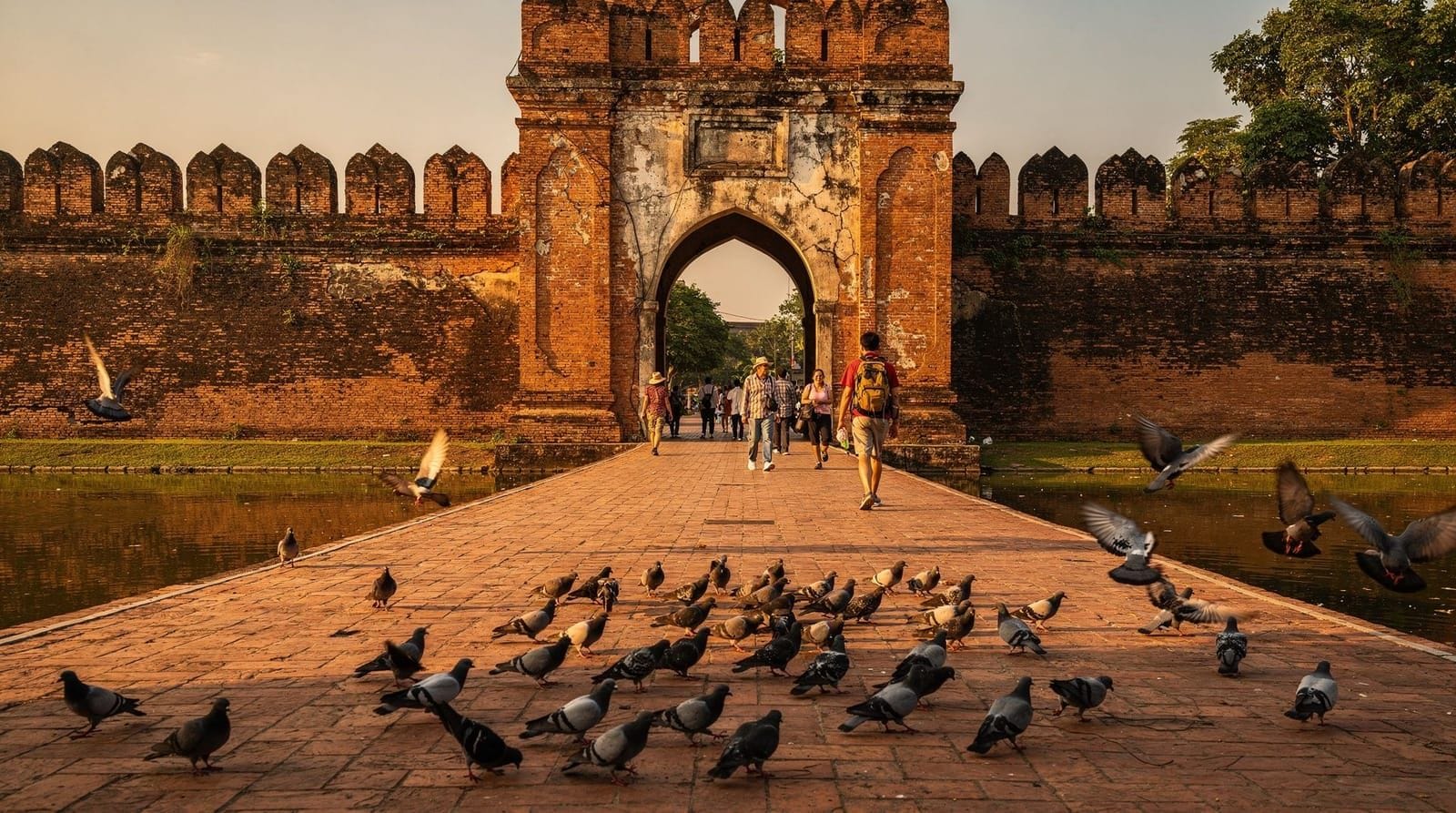
The moat surrounding Chiang Mai’s Old City is the practical and symbolic center of the water fighting for a simple reason: it’s a continuous, easily accessible source of water running the entire perimeter of the walled quarter, and pickup trucks, street vendors, and individuals line its edges refilling buckets and water guns throughout the day. Combined with the moat road’s role as a natural gathering and thoroughfare route, this creates a dense, sustained water-fight zone that runs for days rather than hours. Tha Phae Gate, on the moat’s eastern side, is typically the single busiest point, drawing the largest crowds and the highest concentration of pickup trucks mounted with water tanks and speakers.
Expect the water fighting along the moat to run roughly from mid-morning until early evening on the main days, easing off (though rarely stopping entirely) after dark, when the focus shifts to street food, music, and a more relaxed atmosphere.
How intense it gets, neighborhood by neighborhood
Water-fight intensity varies noticeably depending on where in the city you are, and it’s worth knowing the gradient before you pick where to base yourself or where to head out each day:
- The moat and Tha Phae Gate are the most intense zone in the city, with the highest density of pickup trucks, water stations, and crowds, running from roughly mid-morning to early evening on the main days.
- Nimmanhaemin runs its own substantial water-fighting scene along its main road and soi, popular with a younger, more nightlife-oriented crowd, and stays energetic well into the evening with bars and music adding to the atmosphere.
- The Night Bazaar and riverside area sees moderate water fighting during the day but calms down for its usual evening market and food-stall activity, making it a reasonable place to dry off and eat once you’ve had enough soaking elsewhere.
- Residential neighborhoods further from the Old City, including much of Santitham and outer sois, see lighter, more localized water fighting, mostly neighbors and families rather than the citywide public event, and represent your best option for staying relatively dry while still being in the city.
A realistic day plan if you’re diving in
A workable sequence for someone who wants the full experience without burning out by midday: start with a quieter temple visit early, before roughly 9am, since water fighting hasn’t ramped up yet and some visitors want to see the more solemn Buddha-image-washing rituals at temples like Wat Phra Singh before the streets turn into a free-for-all. From mid-morning, head to the moat or Tha Phae Gate for the main event, budgeting for a full soaking and treating anything you’re carrying as expendable or waterproofed. Take a substantial break during the hottest stretch of the day, roughly noon to 3pm, to eat, hydrate, and dry off somewhat, since sun exposure combined with constant wetting is a genuine heat-related risk over a full day. Resume in the late afternoon if you have energy left, when the crowd thins slightly compared to the late-morning peak, before the water fighting eases off after dark in favor of food stalls and music.
The exact dates, and Chiang Mai’s extended celebration
Songkran’s official dates are April 13-15, fixed every year. Chiang Mai, however, is known for running one of the longest and most intense Songkran celebrations in the country, with water fighting frequently starting a day or two before the 13th and continuing for a few days after the 15th in practice, even though the official public holiday only covers the core three days. If your trip dates are flexible, arriving a day early and staying a day or two past the 15th gives you a slightly calmer version of the same festival, still wet, but with noticeably thinner crowds than the peak middle days.
The temple rituals, in more depth
If you want to see the quieter, older side of Songkran rather than just the water fight, the key ritual to look for is rod nam phra, pouring scented water (often mixed with jasmine or a small amount of perfume) over Buddha images at a temple, followed by rod nam dam hua, where younger family members pour water gently over the hands of elders and parents to ask for blessings and forgiveness for the past year. Temples across the Old City, including Wat Phra Singh and Wat Chedi Luang, hold these ceremonies in the mornings during the festival period, and it’s entirely acceptable for visitors to observe respectfully, dressed modestly (shoulders and knees covered, as at any temple visit), even if you’re not participating directly. This side of Songkran is calm, unhurried, and a genuine window into the holiday’s actual meaning, a useful counterbalance if all you’ve otherwise seen is the pickup-truck water cannons along the moat.
What to pack for Songkran
A short, practical list beyond the phone pouch and closed shoes already mentioned: a change of completely dry clothes left at your accommodation (or in a dry bag if you’re moving between locations during the day) for once you’re done; sunscreen, since sun exposure compounds with the water exposure over a full day outdoors; a hat or cap, which also doubles as a small deterrent against direct water-gun shots to the face; and a lightweight dry bag, even a cheap one, for anything electronic you’re determined to carry rather than leave behind. Sunglasses are worth wearing too, both for sun protection and as a mild buffer against a direct water hit to the eyes at close range, which does happen given how enthusiastically some participants aim.
Practical tips for getting properly soaked (on purpose)
If you’re going in to participate rather than avoid it, a few practical habits make the day considerably more comfortable:
- Waterproof everything you’re carrying. A dedicated waterproof phone pouch, sold cheaply all over the city in the days before the festival, is worth buying rather than relying on your phone’s own water resistance rating, since prolonged soaking and pressure from crowds is a different stress test than an accidental splash.
- Wear clothes and shoes you don’t mind getting soaked and slightly grimy. Street water during Songkran isn’t pristine, and closed shoes with decent grip help on wet pavement more than sandals do, despite sandals being the more common tourist choice.
- Bring cash in a sealed bag, not your main wallet, for food and drinks along the way.
- Pace yourself on timing. The moat area is at its most intense from late morning through mid-afternoon; arriving very early or timing a break during the hottest, busiest hours (roughly 12-3pm) can make the day more sustainable if you’re out for multiple hours.
How to avoid it, if that’s what you want
If you’re visiting Chiang Mai during Songkran week for other reasons and genuinely want to stay dry, the honest answer is that it’s difficult but not impossible. Staying in accommodation well outside the Old City and moat perimeter, traveling only in enclosed vehicles with windows up, and avoiding the moat road, Tha Phae Gate, and Nimmanhaemin (which runs its own smaller-scale but still substantial water-fighting scene) during daylight hours on the main days is the closest you’ll get to staying dry. Even then, expect occasional soakings at intersections and from passing pickup trucks; total avoidance within city limits during the peak days isn’t realistic. If staying completely dry matters more than experiencing the festival, timing your Chiang Mai visit for a different week entirely is the more reliable solution.
Road safety: the part worth taking seriously
It’s worth being direct about something that gets less attention than the fun, soaked-clothes photos: Songkran week coincides with Thailand’s highest annual road accident and fatality rates, a combination of high holiday travel volume, alcohol consumption, and wet, slippery road surfaces. If you’re considering renting a scooter during your visit, Songkran week is specifically the worst week to do so as an inexperienced or first-time rider in Thailand; our motorbike rental guide covers the general licensing and insurance realities, and during this particular week the honest recommendation is to lean on walking and Grab rather than self-driving if you have any doubt about your riding experience on wet roads in heavy holiday traffic.
Accommodation and getting around during the week
Chiang Mai’s hotel prices rise noticeably during Songkran week, though generally less dramatically than during Yi Peng, since Songkran is a fixed, well-known date that hotels and travelers alike plan around consistently every year rather than a shifting lunar date that catches people off guard. Booking a month or two ahead is a reasonable buffer for most budgets and neighborhoods, though the most popular Old City guesthouses closest to the moat can still sell out earlier. Getting around the city by songthaew or Grab during the main days is genuinely slower than usual, since roads around the moat see heavy pedestrian and vehicle water-fight traffic; budgeting extra time for any transfers, especially to or from the airport, is worth doing if your flight falls within the core festival days.
Is Songkran worth planning a trip around?
If a full-immersion, days-long water fight sounds like a good time, Songkran in Chiang Mai delivers exactly that, arguably more intensely and for longer than almost anywhere else in the country given the moat’s role as a continuous water source. If you’d rather experience Chiang Mai’s temples, markets, and quieter cultural side without a soaking, this is genuinely one of the worst weeks to visit for that purpose, and timing a trip for the cool season between November and February or scheduling around Yi Peng instead makes more sense if calm sightseeing is the priority. Our honest take on whether Chiang Mai is overrated touches on how much a visit’s success depends on matching your expectations to the specific week you’re in town, and Songkran is one of the clearest examples of that principle in action.
A final practical note on documents and electronics
Beyond the waterproof phone pouch already mentioned, it’s worth deciding in advance what you’re carrying versus leaving behind entirely. Passports, spare cash beyond the day’s budget, and any electronics you’re not prepared to risk are best left secured at your accommodation rather than carried into the moat area, since even a well-sealed dry bag can fail under sustained soaking and crowd pressure over several hours. Treating Songkran day as a “carry only what you can afford to lose or thoroughly waterproof” outing removes most of the anxiety around gear and lets you actually enjoy the water fight rather than spending it worrying about your belongings.
Frequently asked questions about Songkran in Chiang Mai
What are the exact Songkran dates?
Songkran is officially April 13-15 every year, fixed to the Gregorian calendar (unlike Yi Peng and Loy Krathong, which move on the lunar calendar). Chiang Mai’s celebrations often start a day or two early and continue a few days after the official dates, so the effective water-fighting window in the city can run closer to five or six days around the core three.
Is the water fighting really unavoidable?
Within a few blocks of the Old City moat, yes, effectively. Anyone visibly out and about, on foot, on a scooter, or in an open-air songthaew, during daylight hours on the main days is fair game. If you genuinely want to avoid it, staying well outside the moat area and traveling only in enclosed vehicles like a closed car or Grab with windows up is the only realistic way to stay dry, and even that isn’t guaranteed near intersections.
What should I do with my phone and valuables?
Use a waterproof pouch or dry bag for your phone, and leave anything genuinely irreplaceable, passports, non-waterproof electronics, cash you don’t want soaked, at your accommodation rather than carrying it into the moat area. Many shops sell inexpensive waterproof phone pouches specifically for the festival in the days beforehand.
Is Songkran safe, given all the road traffic and water?
The core water fighting itself is good-natured and rarely dangerous, but Songkran week does coincide with Thailand’s highest annual road accident rates, driven by a mix of holiday travel volume, alcohol consumption, and wet roads. If you’re renting a scooter, this is a specifically bad week to be a first-time or inexperienced rider, and sober, cautious driving (or simply walking and using Grab) is worth prioritizing over convenience during this particular week.
Can I stay dry if I just want to sightsee?
Not realistically within the moat and Old City core. If sightseeing without getting soaked matters more to you than the festival experience, plan Old City temple visits for early morning (before around 9am, when water fighting typically ramps up) or consider timing a Chiang Mai visit outside the Songkran week entirely and catching a smaller, calmer regional Songkran elsewhere instead.
Do locals actually enjoy this, or is it mainly for tourists?
It’s a genuine, deeply rooted Thai New Year tradition, not a tourism invention, and Chiang Mai locals participate enthusiastically, often organizing family gatherings, temple visits to pour water on Buddha images and elders’ hands as a blessing ritual, and neighborhood water stations well beyond the tourist-heavy moat stretch. The moat area’s scale has grown with tourism, but the underlying practice of water as a symbol of cleansing and renewal for the new year is authentically Thai and celebrated nationwide, not staged for visitors.