Chiang Mai flower festival: the February parade guide
When is the Chiang Mai Flower Festival and what happens at it?
The Chiang Mai Flower Festival runs for three days in mid-February (the 2026 edition runs February 13-15), centered on Suan Buak Haad park at the southwest corner of the Old City moat. The signature event is a Saturday-morning parade of flower-covered floats through the Old City, alongside a flower-and-plant fair, cultural performances, and a beauty pageant, all free to attend except for a few paid seating areas along the parade route.
Chiang Mai’s Flower Festival is a smaller, gentler event than Yi Peng or Songkran, and that’s exactly its appeal: a genuinely pretty, free, low-stress mid-February weekend built around Northern Thailand’s cut-flower and horticulture industry, with a parade that’s over well before lunch and a park that stays pleasant to wander through for the rest of the day. If you’re already planning a February trip, it’s worth building your itinerary around, but it’s not, on its own, worth restructuring travel dates the way the lantern festival often is.
The 2026 edition marks the 49th running of the festival, which has been held annually since the 1970s, reflecting the Chiang Mai valley’s genuine agricultural role as a major flower-growing region thanks to its cooler highland climate compared to most of Thailand.
The 2026 dates and what happens each day
The festival runs Friday, February 13 through Sunday, February 15, 2026. The centerpiece is the Saturday morning parade, starting around 8am, featuring elaborately flower-covered floats moving through the streets of the Old City toward Suan Buak Haad park at the moat’s southwest corner. Beyond the parade, the park itself opens 9am to midnight across all three days, hosting a flower and plant fair with vendors from around Northern Thailand, cultural and dance performances, a Miss Chiang Mai Flower Festival beauty pageant, and food stalls.
Why Chiang Mai has a flower festival at all
The festival’s existence isn’t arbitrary marketing; it reflects a genuine local industry. Chiang Mai’s higher elevation and cooler nighttime temperatures compared to most of Thailand make the surrounding valley and hillsides well suited to growing temperate flowers, chrysanthemums, roses, and dahlias among them, that don’t thrive in the tropical lowlands further south. Since the 1970s, the festival has served partly as a showcase for this regional horticulture industry and partly as a civic celebration timed to the cool season’s most reliably pleasant weather, when both flowers and visitors are at their best. Nearly five decades of continuous annual editions have made it a genuine fixture of the Chiang Mai calendar rather than a recent tourism add-on, even though it draws a smaller crowd, and far less international press coverage, than the city’s lantern festival.
Getting to Suan Buak Haad
The park sits at the moat’s southwest corner, an easy 10-15 minute walk from most Old City guesthouses and a short songthaew or Grab ride (typically 30-60 THB, about 1-1.70 USD) from further out. Given the parade route runs through Old City streets, expect some temporary road closures and rerouted traffic on the Saturday morning itself, so building in extra time if you’re traveling by vehicle rather than on foot is worth doing, particularly if your accommodation is on the opposite side of the moat from the parade’s path.
The parade: what to expect and where to stand
The floats are built by local growers, community groups, and sometimes commercial sponsors, decorated entirely in fresh flowers, a labor-intensive undertaking given how quickly cut flowers wilt, meaning much of the floral decoration is assembled in the very early morning hours before the parade starts. The route typically moves from near Nawarat Bridge through the Old City toward Suan Buak Haad, with marching bands, traditional dance troupes, and occasionally elephants or other animal participants alongside the floats themselves.
Arriving 30-45 minutes before the announced start gives you a decent curbside vantage point without paying for seating; the streets closer to Suan Buak Haad tend to be slightly less densely packed than the route’s starting section, since a portion of the crowd disperses into the park itself once the parade passes rather than following it the whole way. A few paid grandstand-style viewing areas exist along the route for a more comfortable, elevated view, worth considering if you’re visiting with older relatives or want to avoid standing in a crowd for an extended period.
What’s actually in the park beyond the parade
Suan Buak Haad park itself is worth an hour or two independent of the parade schedule. Expect elaborate flower-bed displays and topiary arranged for the festival, stalls selling potted plants, cut flowers, and garden ornaments from growers across the region, food vendors serving Northern Thai specialties, and evening performances on a stage set up for the occasion. It’s a noticeably more relaxed, less commercially aggressive atmosphere than Chiang Mai’s night markets, closer to a community garden fair than a tourist shopping event, and worth visiting with that expectation rather than as a shopping destination.
Local gardening clubs, agricultural cooperatives from the surrounding province, and several university horticulture departments typically staff their own stalls or small exhibition plots, which gives the fair a slightly more educational, community-showcase character than a purely commercial event, closer in spirit to a county fair than a retail market. If you’re interested in Northern Thai agriculture beyond the ornamental flowers themselves, some stalls also sell seasonal produce, herbal products, and small-batch local food items alongside the plants, worth browsing even if flowers specifically aren’t your main interest.
What’s worth buying at the plant fair
If you’re tempted to shop the horticulture stalls, cut flowers and small potted plants are the most practical purchases for a traveler, cheap (often well under 100 THB, under 3 USD, for a decent bunch or small pot) and genuinely good value compared to what similar quality would cost elsewhere. Larger plants, orchids in particular, are a beautiful but impractical souvenir for anyone flying home shortly after, given customs restrictions most countries place on importing live plants and soil; treat these as something to admire and photograph rather than purchase unless you have a genuinely workable way to transport and legally import them. Garden ornaments, dried flower arrangements, and locally made pots travel considerably better if you want a tangible souvenir from the fair.
A quick photography note
The floats themselves photograph best in the earlier part of the parade route, before flowers have wilted further in the heat and before the crowd has thinned the arrangement’s density with jostling. Morning light along the route tends to be soft and flattering for the first hour or so after the 8am start, another reason to arrive on the earlier side rather than catching the tail end of the procession. Suan Buak Haad’s static flower displays, unlike the parade, stay photogenic throughout the day and are considerably easier to shoot without a moving crowd in the frame.
The beauty pageant, briefly
Miss Chiang Mai Flower Festival is a long-running local beauty pageant held alongside the festival, with contestants in elaborate floral-themed dress. It’s a genuine local tradition with real civic pride attached, similar in spirit to the Nang Noppamas pageant that accompanies Loy Krathong elsewhere in Thailand, and, like that pageant, it has drawn some of the same modern conversation in Thai media about how appearance-based contests sit within otherwise community-oriented cultural festivals. Most visitors treat it as a peripheral curiosity rather than a reason to attend, and it’s easy to skip entirely if it doesn’t interest you without missing anything essential to the festival’s floral centerpiece.
Weather to expect during the festival
Mid-February in Chiang Mai typically sits within the cool season’s tail end, with daytime highs around 30-33°C (86-91°F) and overnight lows dropping to a genuinely comfortable 15-18°C (59-64°F), among the more pleasant stretches of the year for being outdoors for an extended parade and park visit. Rain is unlikely at this time of year, since February falls squarely within the dry season, so the main weather consideration is sun exposure during the mid-morning parade rather than any risk of it being rained out. A hat and sunscreen are more relevant preparation than a rain jacket.
Accommodation during Flower Festival weekend
Unlike Yi Peng or Songkran, the Flower Festival doesn’t meaningfully disrupt Chiang Mai’s normal hotel pricing or availability, since it’s a smaller, single-city event without the nationwide travel surge those bigger festivals generate. Booking a couple of weeks ahead is generally sufficient for reasonable Old City or Nimman options, though it’s still worth checking specifically if your dates overlap with the parade weekend, since a modest uptick in domestic weekend visitors is normal for any well-known Saturday event in the city.
Why February matters for more than just flowers
February in Chiang Mai sits at an interesting seasonal inflection point: still within the pleasant, dry cool season for its first couple of weeks, but also the start of what locals call burning season, when agricultural burning across the region (and in neighboring countries) begins pushing particulate air pollution up, sometimes to levels that noticeably affect visibility and air quality by late February and into March and April. Early-to-mid February, when the Flower Festival runs, is often still relatively clear, but it’s worth checking current air quality readings rather than assuming the whole month is equally pleasant. Our Chiang Mai burning season guide covers exactly when conditions typically worsen and what it means for visibility, outdoor activity, and health-sensitive travelers.
Pairing the festival with the rest of the city
Since the parade wraps up by late morning and the park stays low-key rather than demanding a full day, it’s easy to combine Flower Festival weekend with the Old City temple circuit, a short trip to the Royal Park Rajapruek botanical grounds if flowers are genuinely your thing and you want a second, larger-scale garden experience, or the Queen Sirikit Botanic Garden further out toward Mae Rim. None of these require festival-specific planning beyond checking they’re open on your travel dates, since none of them run on the festival’s own three-day schedule.
A sample festival-weekend itinerary
If you want a concrete plan rather than showing up and improvising, a reasonable Flower Festival weekend looks like this: Friday evening, wander Suan Buak Haad’s opening displays and grab dinner from the food stalls, a low-key introduction before the main event. Saturday morning, arrive at your chosen parade-route spot by 7:15-7:30am to secure a curbside view before the 8am start, watch the floats pass (the full procession typically takes 60-90 minutes to clear a given point), then head into the park itself for the plant fair and a late-morning coffee once the crowd from the parade route has dispersed. Saturday afternoon and evening, and all of Sunday, are unhurried, an opportunity to revisit the park for the evening cultural performances, explore the nearby Old City temples, or use the extra time for something entirely unrelated to the festival, like a half-day trip to Royal Park Rajapruek if the floral theme has put you in the mood for a bigger botanical outing.
Is it worth planning a trip around?
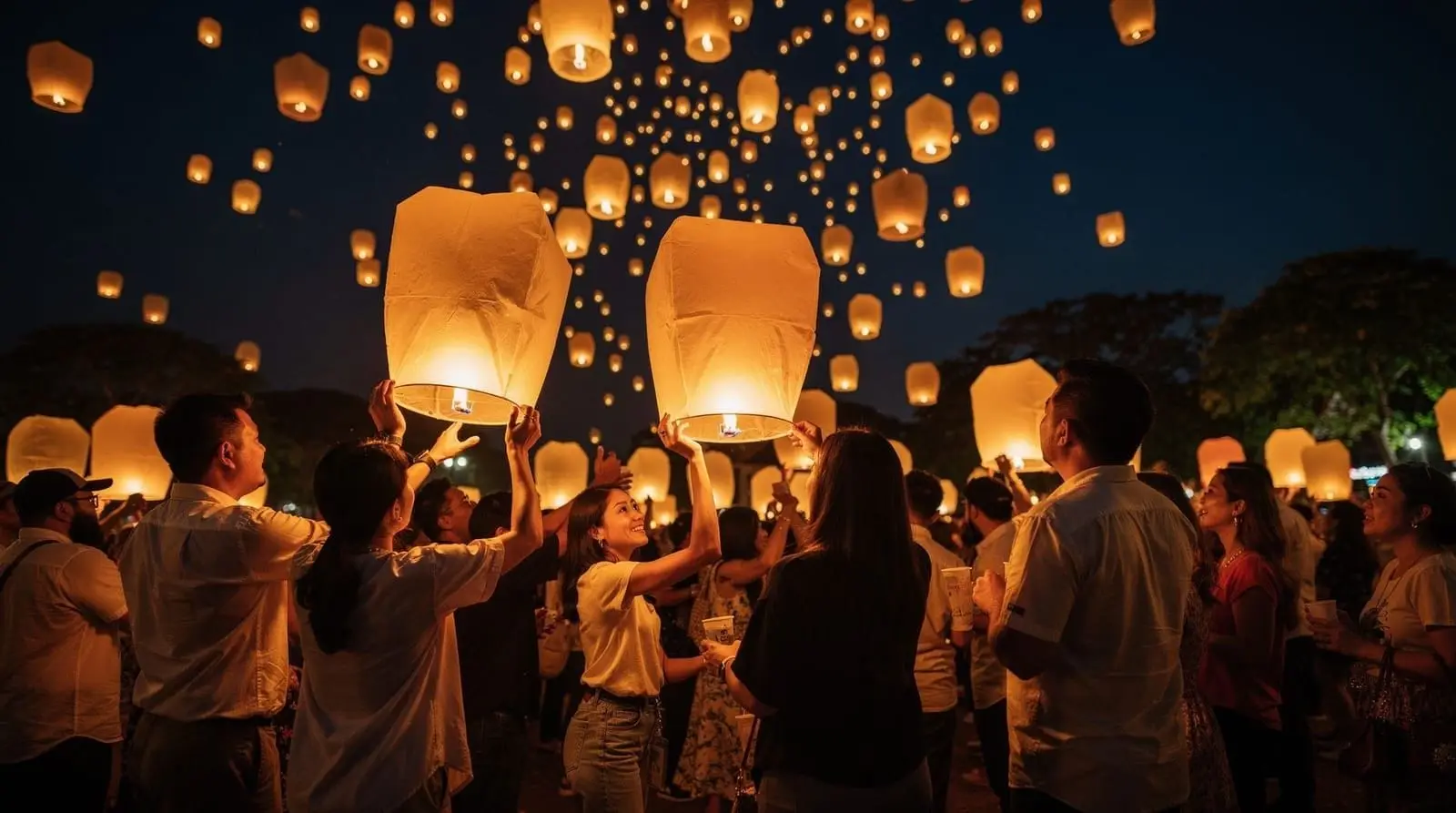
Compare it honestly to Chiang Mai’s other headline festivals: Yi Peng’s lantern release is a singular, hard-to-replicate spectacle worth restructuring travel dates around, and Songkran is an immersive, days-long experience that defines an entire week in the city. The Flower Festival is neither. It’s a pleasant, photogenic, free half-day event best enjoyed as a bonus if your February travel dates happen to align with it, rather than a primary reason to choose those dates in the first place. If you’re deciding when to visit Chiang Mai more broadly, weigh the Flower Festival as a nice-to-have alongside the cool, dry weather that generally makes February a good month to visit anyway, not as the deciding factor on its own.
How it compares to Chiang Mai’s other festivals
Set alongside Yi Peng’s ticketed spectacle and Songkran’s citywide immersion, the Flower Festival occupies a genuinely different register: smaller in scale, entirely free, shorter in duration, and rooted in an agricultural trade fair rather than a religious or cultural rite. That makes it lower-stakes to plan around, there’s no equivalent of sold-out tickets or a lunar date to track down, but it also means expectations should be calibrated accordingly. Visitors arriving expecting Yi Peng-level spectacle from a community flower parade are sometimes mildly underwhelmed; visitors who understand it as a pleasant, photogenic half-day civic event tend to enjoy it exactly as intended.
A final planning note
If your travel dates are flexible and the Flower Festival isn’t the sole reason for your trip, it’s worth checking the confirmed dates against the rest of your itinerary rather than building your whole schedule around a single Saturday morning parade. Treat it as a welcome bonus that slots naturally into a broader February Chiang Mai visit, alongside temples, markets, and whichever day trips you’ve already planned, rather than the anchor event your entire trip depends on.
Frequently asked questions about the Chiang Mai Flower Festival
What are the exact 2026 Flower Festival dates?
The 49th Chiang Mai Flower Festival runs Friday February 13 through Sunday February 15, 2026, with the main parade taking place Saturday, February 14 starting around 8am. Suan Buak Haad park itself is open 9am to midnight across all three days for the flower fair and evening performances.
Is the Flower Festival free to attend?
Yes, walking the parade route and browsing Suan Buak Haad park’s flower and plant displays is free. Some vantage points along the parade route offer paid grandstand-style seating for a better view of the floats, but standing along the route itself, which is how most attendees watch, costs nothing.
Where’s the best place to watch the parade?
The parade typically starts near the Nawarat Bridge area and moves through the Old City toward Suan Buak Haad park, so any point along that route offers a view, with the area directly outside Suan Buak Haad and the streets nearest the park tending to be both a good vantage point and less densely packed than the route’s starting section. Arriving 30-45 minutes before the announced 8am start secures a decent curbside spot without needing a paid seat.
Does February have anything else worth knowing about weather-wise?
February sits right at the start of Northern Thailand’s burning season, when agricultural burning and forest fires push particulate pollution levels up, sometimes significantly, across the region. Early February can still have relatively clear air, but conditions tend to worsen as the month progresses; our burning season guide covers this in detail and is worth reading if air quality affects your travel decisions.
Is the festival only about flowers, or is there more to it?
The floral parade and displays are the headline, but the festival also includes a Miss Chiang Mai Flower Festival beauty pageant, cultural and dance performances, a plant and garden-product fair with vendors from around the region, and food stalls throughout Suan Buak Haad park across all three days.
Is it worth visiting Chiang Mai specifically for this festival?
It’s a pleasant, low-key, and free event that adds genuine value to a Chiang Mai trip already planned for mid-February, and the floral parade is a nice, distinctly Northern Thai spectacle you won’t find elsewhere in the country at this scale. It’s not, on its own, a strong enough draw to justify restructuring a trip around it the way Yi Peng’s lantern release might be, since the parade itself runs under two hours and the festival’s charm is more ambient than dramatic.