Chiang Mai burning season: an honest guide
Chiang Mai: Asia Scenic Thai Cooking School
What is Chiang Mai's burning season?
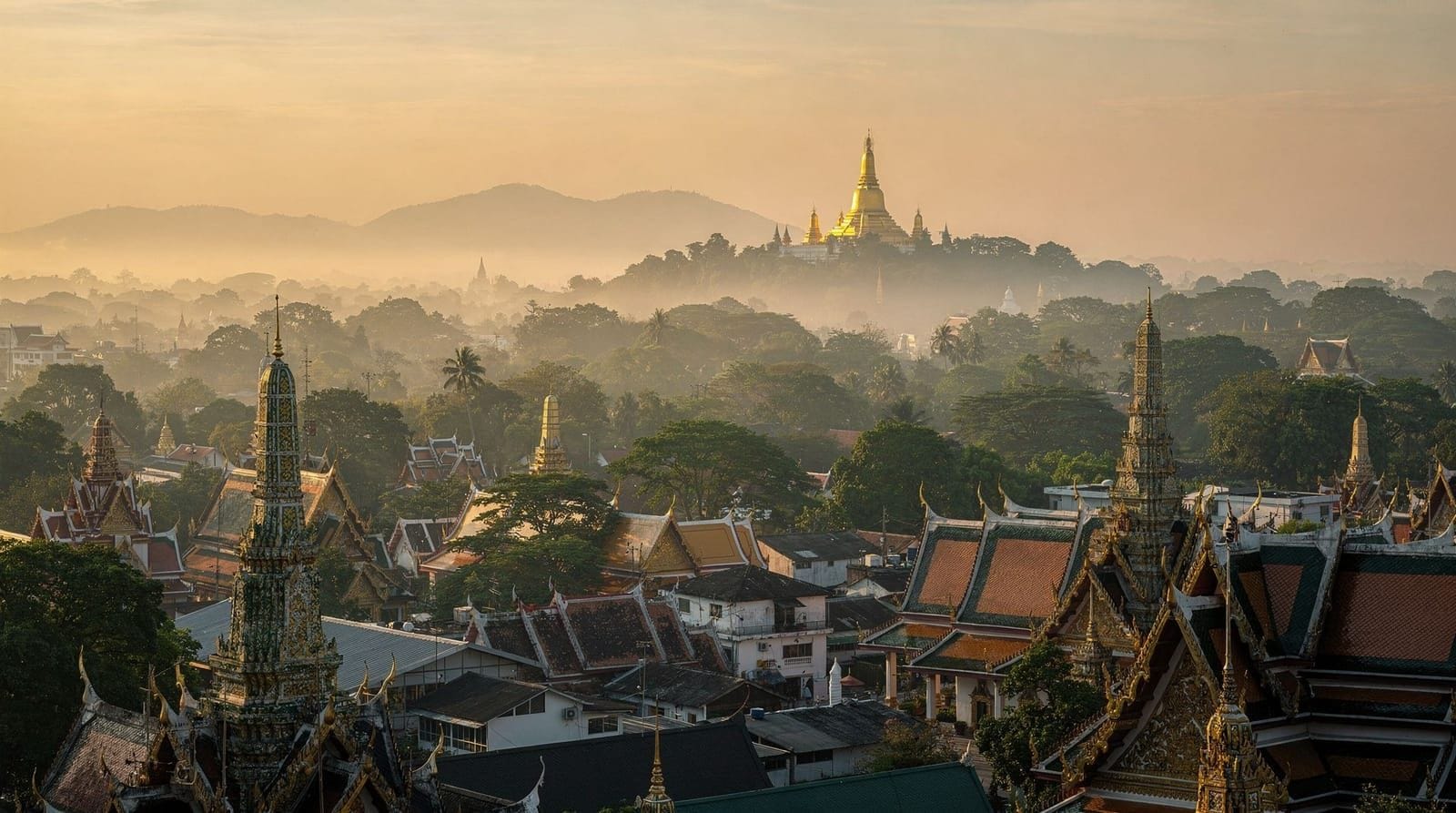
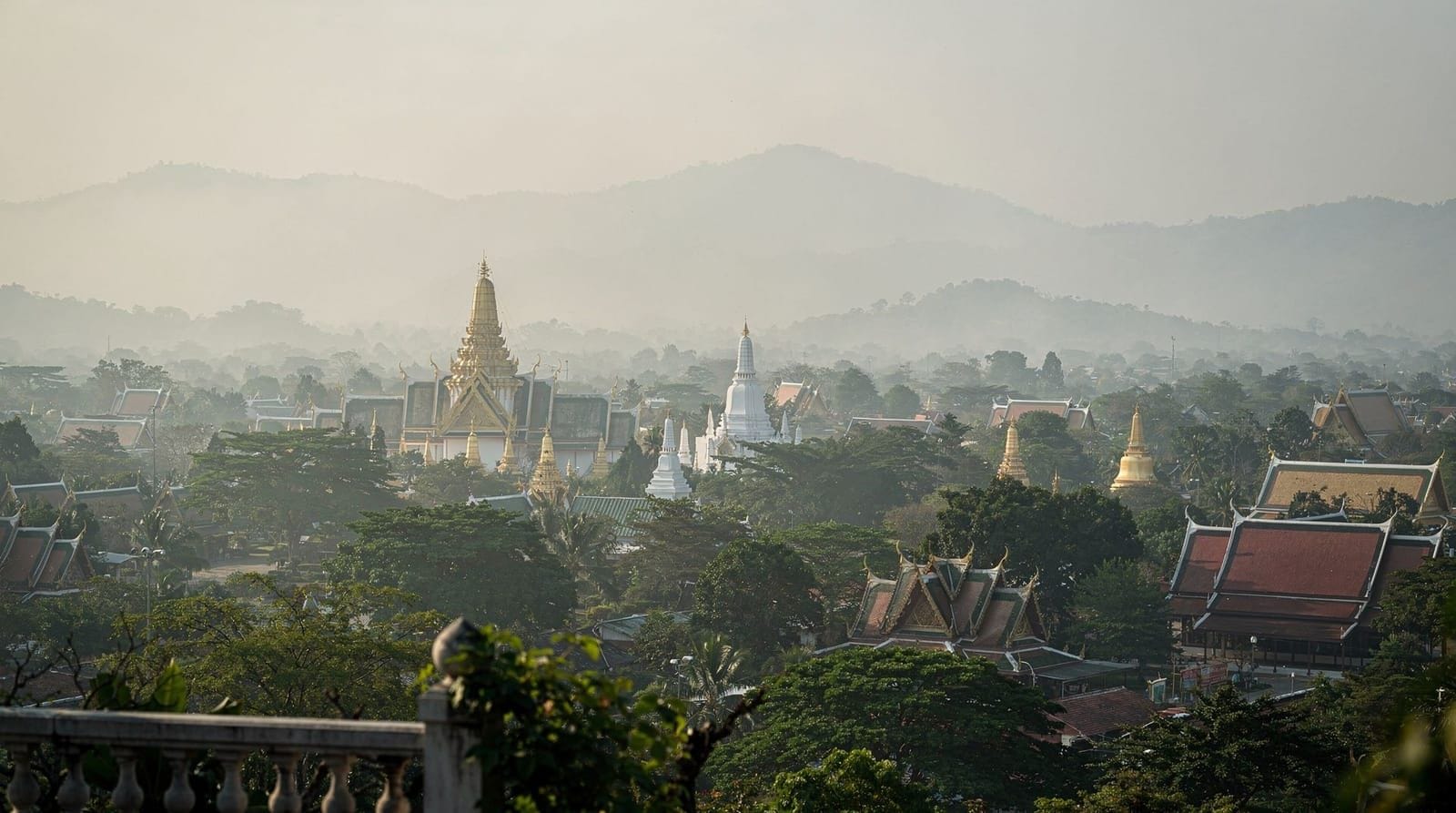
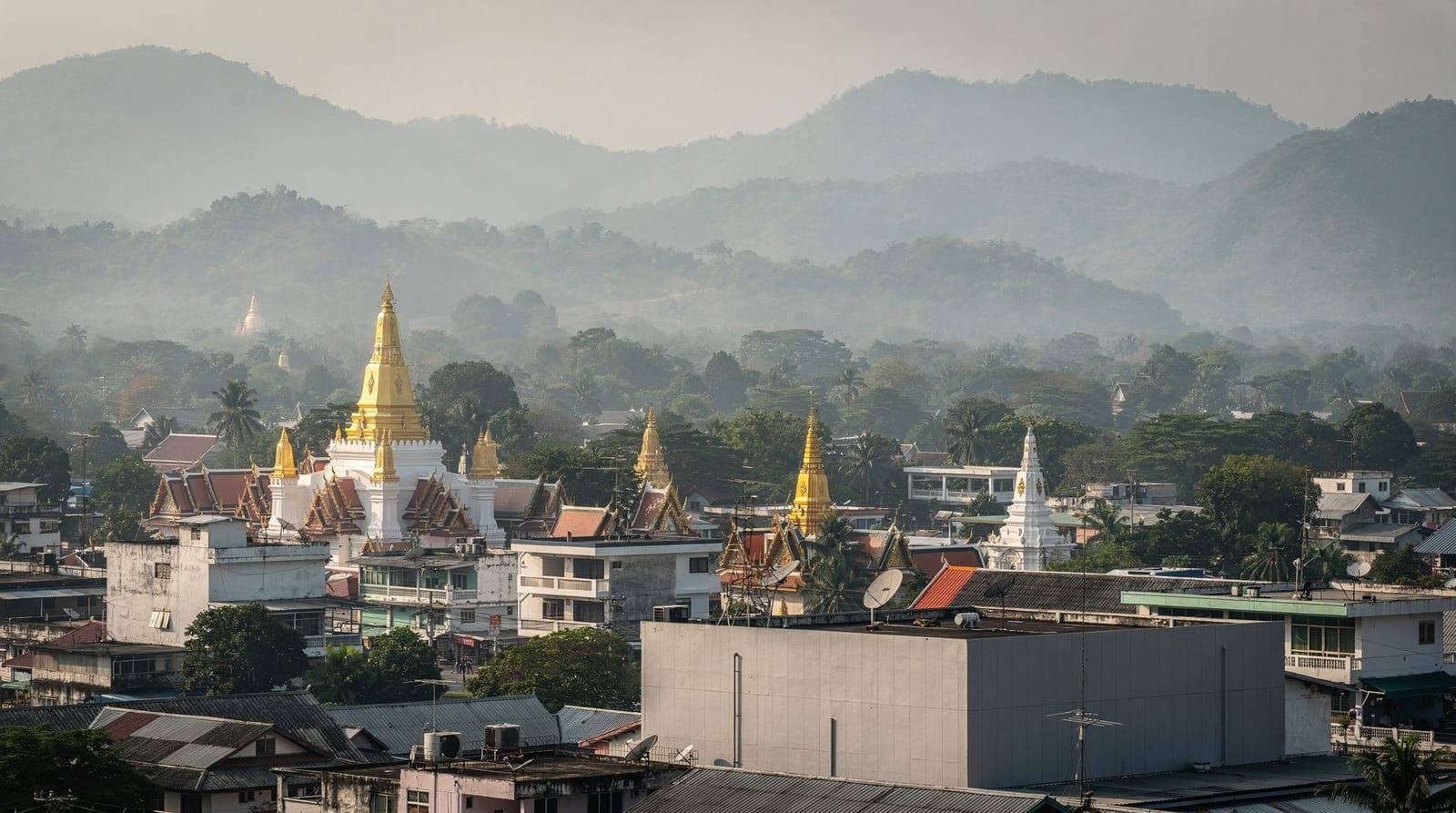
Roughly mid-February through April, agricultural burning across northern Thailand and parts of Myanmar and Laos fills the Chiang Mai valley with smoke haze, pushing PM2.5 air quality readings into unhealthy or occasionally hazardous territory on the worst days, most commonly in March. It's a genuine seasonal health consideration, not exaggeration, and worth checking before booking travel in this window.
Every travel guide to Chiang Mai should mention this plainly, and most don’t: for roughly ten weeks a year, the city’s air quality drops to levels that genuinely affect how the trip feels, and in some cases whether it should be taken at all. This is not a minor seasonal quirk on the level of “it rains sometimes.” Burning season is a real, measurable public-health event that the region deals with annually, and it deserves the same honest treatment as any other planning factor, rather than being buried in a single vague sentence about “hazy conditions possible.”
The short version: from roughly mid-February through April, agricultural burning across northern Thailand and neighboring parts of Myanmar and Laos fills the mountain-ringed Chiang Mai valley with smoke that has nowhere to disperse. On the worst days, several times most years, the resulting PM2.5 readings put Chiang Mai among the most polluted cities in the world by that specific measure. This guide explains why it happens, how bad it actually gets, which weeks carry the most risk, and what a traveler can reasonably do about it, without either minimizing the problem or catastrophizing a season that plenty of people still visit and enjoy.
Why Chiang Mai burns every year
Burning season is driven by a genuinely old agricultural practice: farmers across northern Thailand, and in adjacent highland areas of Myanmar and Laos, clear crop residue and forest undergrowth by fire ahead of the planting season, since it’s cheaper and faster than mechanical clearing or the region’s alternative disposal methods. This happens across a wide geographic area, not just immediately around Chiang Mai, which is part of why the problem is so persistent and hard to fully regulate even with government burning bans in place during the worst weeks.
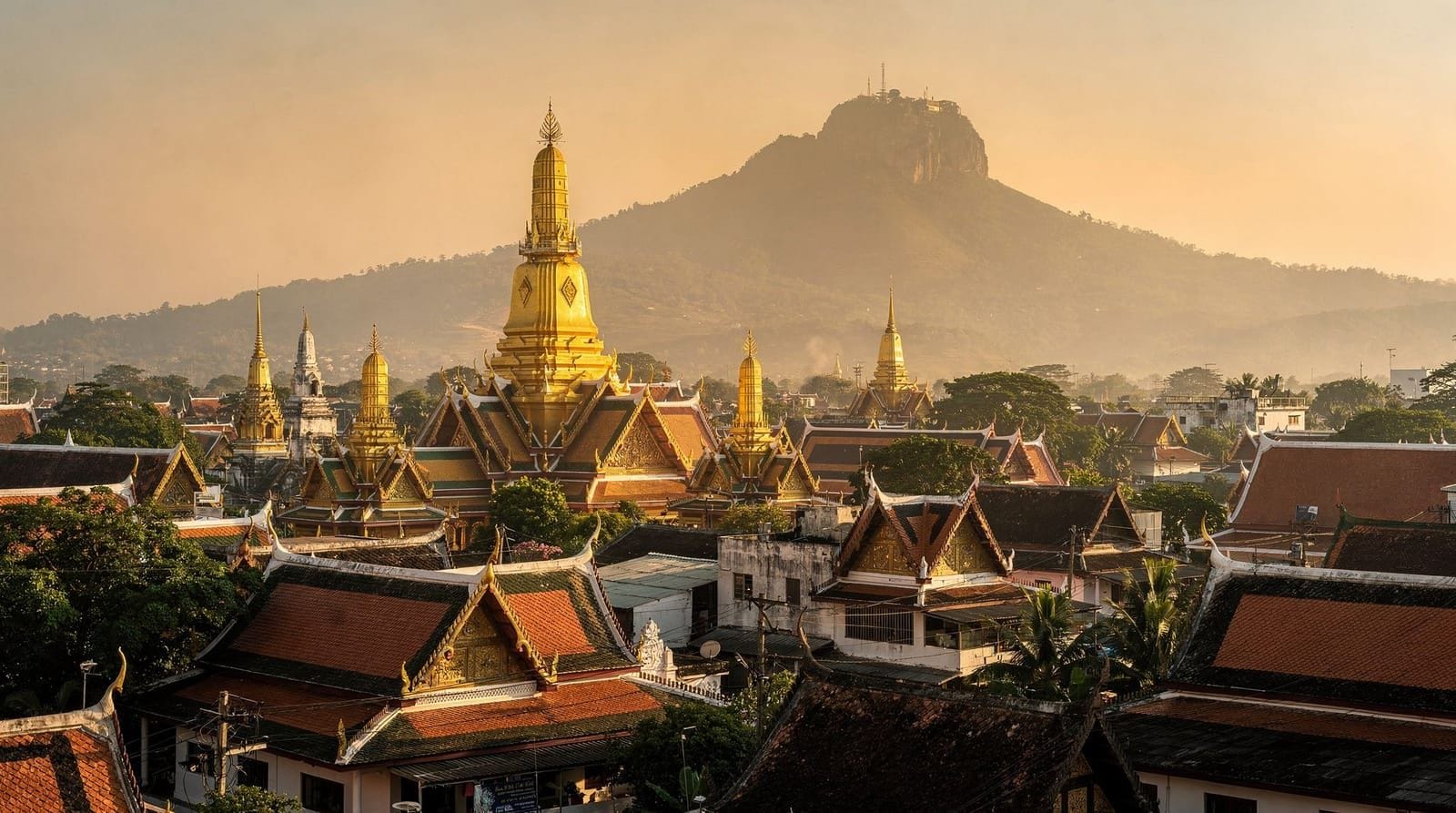
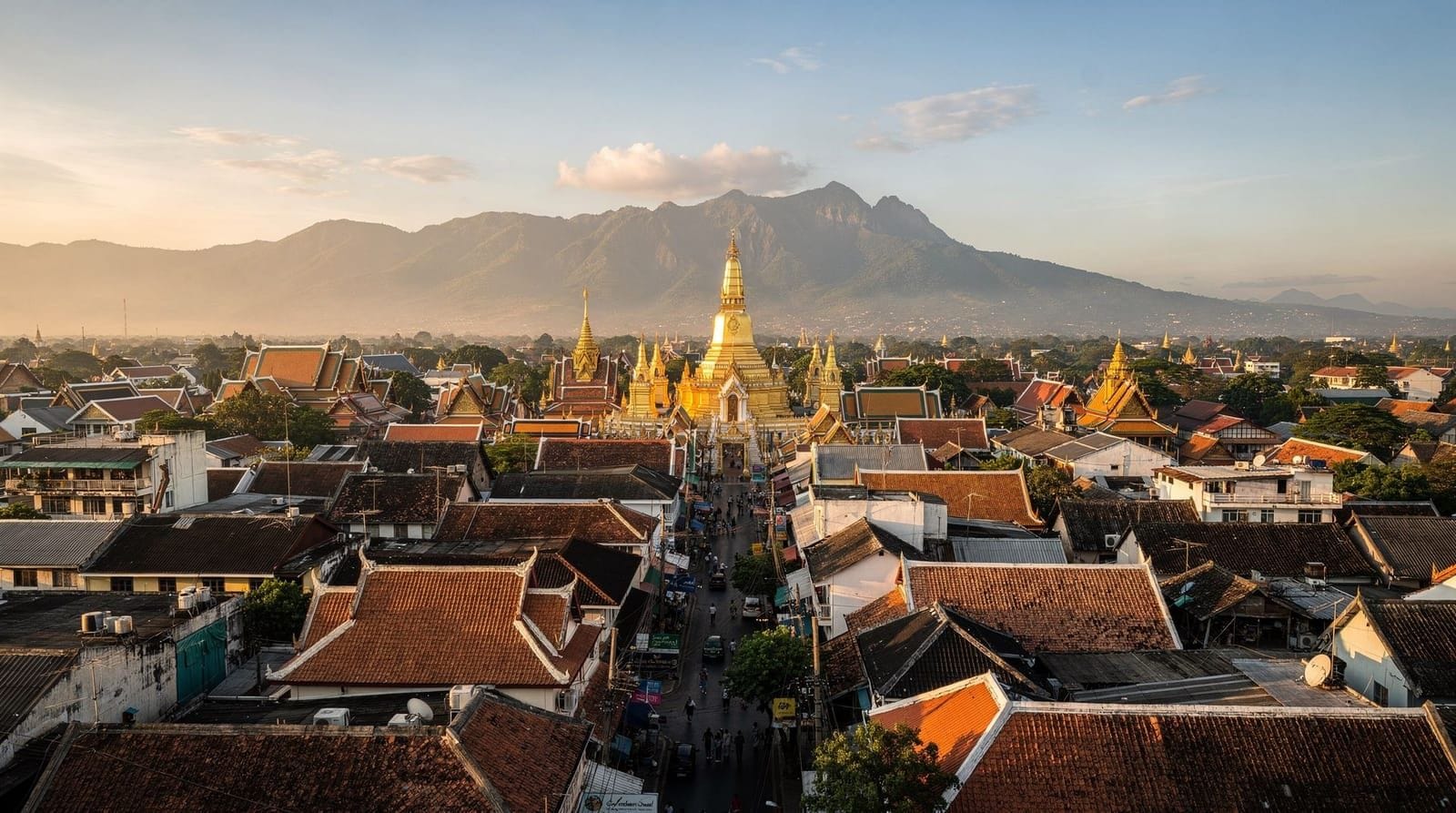
The geography makes it worse than the same amount of burning would be almost anywhere else. Chiang Mai sits in a valley ringed by mountains, including Doi Suthep to the west, and that terrain traps smoke rather than letting prevailing winds carry it away, the same basin effect that produces temperature inversions and smog buildup in mountain-ringed cities worldwide. Add in seasonal weather patterns, typically dry, still air through this stretch, before the rains arrive in May and June to physically wash the particulate matter out of the atmosphere, and the result is a predictable annual buildup that peaks around March most years.
How bad the air quality actually gets
On the worst days of a bad burning season, and there is real year-to-year variation in severity, Chiang Mai’s PM2.5 readings have measured well above 300-400 on the US Air Quality Index scale, a level categorized as “hazardous,” the top of the standard scale, at which health authorities recommend everyone avoid prolonged outdoor exertion. For comparison, the WHO’s guideline for healthy annual average PM2.5 exposure sits at a small fraction of even a single “unhealthy” day’s reading during peak burning season, which gives a sense of the scale of the gap between Chiang Mai’s air on its worst days and what’s considered genuinely safe.
Crucially, it is not uniformly bad across the whole ten-week window. Air quality fluctuates meaningfully day to day depending on wind, recent rainfall, and the intensity of nearby burning on a given day, so a trip that lands entirely within “moderate” or even “good” readings during this period is entirely possible, just not guaranteed. Checking a real-time air-quality index like AirVisual or IQAir in the days immediately before and during a trip is far more useful than relying on a seasonal average, since the difference between a genuinely fine day and a genuinely bad one can be substantial.
Which weeks carry the most risk
Late February typically marks the first noticeable haze of the season, though air quality at this point is often still moderate rather than severe. March is reliably the worst month in most years, the point at which burning activity peaks across the region and readings most often cross into unhealthy or hazardous territory for sustained stretches. April remains risky through its first half, easing somewhat as pre-monsoon rains begin to arrive, though this is also when Songkran, the mid-April water festival, draws a specific wave of visitors willing to accept the air-quality trade-off for the event itself. By late April and into May, the first substantial rains typically begin clearing the air meaningfully, and by the start of rainy season in June the problem has generally resolved for the year. Full month-by-month detail on temperature and rainfall alongside this pattern is in our weather by month guide.
Who should be most cautious
Anyone with asthma, COPD, or another chronic respiratory condition has the clearest medical reason to reconsider travel during peak burning season, or at minimum to consult a doctor and travel with appropriate medication and a well-fitted mask. Young children, older travelers, and pregnant travelers are also more vulnerable to fine particulate exposure than a healthy adult, and the same caution applies. For a generally healthy adult without underlying conditions, a short trip during even a bad burning-season stretch is unlikely to cause lasting harm, though it may mean less comfortable outdoor time, hazier views from viewpoints, and mild throat or eye irritation on the worst days, comparable to how a bad wildfire-smoke day is generally described in North American or Australian contexts.
Practical ways to manage a trip during this window
A few concrete habits make a real difference for anyone traveling through Chiang Mai during burning season, whether by choice or necessity of scheduling. Checking a real-time air-quality app each morning and treating the reading as seriously as a weather forecast is the single most useful habit, since it lets you shift outdoor-heavy plans, a Doi Inthanon hike, a day at the Sticky Waterfalls, to a better day within the same trip rather than pushing through on a hazardous one. Packing a properly fitted N95 or KN95 mask from home is more reliable than sourcing one locally under time pressure, since demand spikes during bad weeks and quality varies considerably among what’s available in convenience stores. Favoring air-conditioned, filtered indoor spaces on the worst days, museums, cooking classes, spas, shopping centers, over outdoor sightseeing is a sensible way to keep a trip enjoyable without meaningfully increasing exposure. Staying hydrated and avoiding strenuous outdoor exercise on genuinely bad-AQI days reduces the amount of polluted air actually drawn into the lungs, since exertion increases breathing rate and depth.
Consider an indoor cooking class as a satisfying way to fill a bad-air-quality day without giving up on the trip’s momentum, since most classes run in covered, often air-conditioned kitchens.
What locals do differently during these months
Long-term residents and expats who’ve lived through multiple burning seasons tend to develop a fairly consistent set of habits worth borrowing. Many keep a home or office air purifier running continuously through February-April rather than only on visibly bad days, since indoor PM2.5 levels can still climb meaningfully even when a space looks and smells clean. Quite a few plan their own travel around this window deliberately, using it as the season to visit southern Thailand, take a trip home, or otherwise be elsewhere, which is itself a useful signal for visitors weighing how seriously to take the issue. Local gyms and yoga studios often see a seasonal uptick in indoor class attendance as outdoor running and cycling routes lose their appeal, and several cafés and coworking spaces market their air filtration systems specifically during these months, evidence of how normalized adapting to the season has become for people who live there year-round rather than passing through.
Alternatives worth considering
Travelers with fully flexible dates have a straightforward option: shift the trip to cool season (roughly November through mid-February, before the haze typically builds) or into rainy season (June through October, when regular rain keeps the air clean), both of which sidestep the issue entirely while offering their own distinct character. For anyone locked into March or April dates for other reasons, a hybrid approach works reasonably well: build in flexibility to swap outdoor-heavy days for indoor ones based on the daily air-quality reading, and treat viewpoints and long hikes as a bonus rather than the centerpiece if the week turns out to be a bad one. It’s also worth noting that this specific issue is a northern and highland Southeast Asian phenomenon; destinations elsewhere in Thailand, including Phuket and the southern islands, are not affected by the same agricultural burning pattern.
How Chiang Mai’s air quality scale actually reads
Air quality indices can feel abstract without a reference point, so it’s worth translating the numbers into what they actually mean for a day of travel. A reading in the 0-50 range (good) is comparable to a clear day almost anywhere in the world, no precautions needed. 51-100 (moderate) is still fine for most people, though unusually sensitive individuals might notice mild irritation. 101-150 (unhealthy for sensitive groups) is where people with asthma or other respiratory conditions should start limiting prolonged outdoor exertion, while healthy adults can generally continue as normal. 151-200 (unhealthy) is the point at which most people may start to notice throat irritation, watery eyes, or a mild cough after extended time outside, and it’s a sensible threshold at which to start favoring indoor plans. Above 200, and especially past 300 into the “hazardous” band that Chiang Mai’s worst March days have reached in several recent years, health authorities recommend everyone limit outdoor exposure regardless of underlying health status. Knowing which band a given day’s reading falls into turns an abstract number into an actual decision about whether to hike Doi Inthanon or spend the afternoon in a spa instead.
Regional context: it’s not unique to Chiang Mai city
Burning season affects a wide swath of northern Thailand and the neighboring highlands, not just the city of Chiang Mai itself, which matters for anyone planning day trips or a wider northern Thailand itinerary during this window. Chiang Rai, Pai, Mae Hong Son, and the Golden Triangle region all sit within the same general airshed and typically experience comparable or, in some specific weeks, worse readings than Chiang Mai city, since several of these areas sit even closer to the most intensively burned agricultural land. This means that shifting a day trip from Chiang Mai city to one of these destinations during peak burning season is unlikely to meaningfully improve air quality, and in some cases could be a step in the wrong direction. It’s a useful piece of context for anyone assuming a short drive out of the city will escape the problem; in practice, the whole northern Thailand region tends to move through the season together, easing and worsening in roughly the same rhythm from week to week.
Thai authorities, along with counterparts in Myanmar and Laos, have run various coordinated burning-ban and enforcement programs over the years aimed at reducing the worst of the seasonal spikes, with mixed and inconsistent year-to-year results depending on enforcement capacity, weather, and economic pressure on subsistence farmers to use the cheapest available land-clearing method. This is worth understanding not as an excuse but as context: the problem is a genuine regional environmental and public-health challenge that local communities live with and actively work to reduce each year, not a fact the tourism industry is hiding or downplaying out of self-interest, even if individual hotel and tour marketing understandably tends to gloss over it in favor of the destination’s stronger months.
The bottom line
Burning season is real, it is measurable, and it meaningfully changes what a Chiang Mai trip feels like during its worst weeks, particularly through March. It is not, however, a reason to avoid the region entirely or to assume every day within the window will be unbearable, since day-to-day variation is significant and plenty of travelers pass through this period with only mild, manageable inconvenience. Going in informed, checking real air-quality data rather than relying on assumptions, and building some flexibility into the itinerary is the most honest advice available, and considerably more useful than either ignoring the issue or overstating it into a reason to skip the region altogether.
Frequently asked questions about Chiang Mai’s burning season
When exactly is burning season in Chiang Mai?
It typically runs from mid-February through April, with March usually the worst month for air quality. The exact severity and timing shift year to year depending on rainfall, wind patterns, and enforcement of regional burning bans, so there’s no fixed start and end date, only a reliable pattern of risk across those roughly ten weeks.
What causes the smoke?
Farmers across northern Thailand and neighboring parts of Myanmar and Laos burn crop residue and forest undergrowth ahead of the planting season, a traditional low-cost land-clearing method. Chiang Mai sits in a mountain-ringed valley, which traps the resulting smoke rather than letting it disperse, concentrating pollution levels well above what the same amount of burning would produce in flatter terrain.
How bad does the air quality actually get?
On the worst days, PM2.5 readings in Chiang Mai have measured among the highest of any city in the world, sometimes exceeding 300-400 on the US AQI scale, categorized as hazardous. Good days within the same season can still read moderate to unhealthy for sensitive groups, so it genuinely varies day to day rather than being uniformly bad for ten straight weeks.
Should I cancel a trip during burning season?
Not automatically, but check a real-time air-quality app (AirVisual and IQAir are commonly used) in the days before departure and have flexibility if possible. Travelers with asthma, other respiratory conditions, young children, or pregnancy have the strongest reasons to reconsider or shift dates; otherwise it’s a personal risk-tolerance decision rather than a hard rule.
Does a face mask actually help?
A properly fitted N95 or KN95 mask filters most of the fine particulate matter (PM2.5) responsible for the health risk, and is genuinely more effective than the surgical or cloth masks often sold to tourists locally. Packing a few from home is more reliable than assuming good options will be easy to find on arrival.
Are there parts of the region less affected by the haze?
Some. Higher elevations and spots right after rainfall tend to see temporarily clearer air, and coastal or southern Thailand destinations like Phuket or Krabi are unaffected by this specific phenomenon, since the burning is a northern and highland issue. Within Chiang Mai itself, indoor spaces with air conditioning and filtration offer the most reliable relief on the worst days.
Is Songkran affected by burning season?
Yes, since Songkran falls in mid-April, squarely inside the tail end of burning season. Many travelers still come specifically for the water festival and accept the air-quality trade-off; it’s worth going in with that expectation rather than being surprised, and the rain that sometimes accompanies Songkran can offer a few days of genuinely better air.