Chiang Mai packing list: what to bring by season and activity
What should I pack for Chiang Mai?
Light, breathable clothing year-round, at least one outfit that covers shoulders and knees for temples, closed shoes that slip on and off easily, and a light layer for cool-season evenings (November-February). Add a light rain jacket for rainy season (June-October) and a mask for burning-season haze (roughly February-April) if you're sensitive to air quality.
Packing for Chiang Mai is more forgiving than most tropical destinations, since laundry services are cheap and widely available, and almost anything forgotten can be bought quickly and inexpensively once you’re here. What actually matters is packing for the right season and the right mix of activities — a cool-season temple-and-café trip needs a different kit than a rainy-season trekking-and-waterfall trip, even though both are technically “Chiang Mai in general.”
This guide breaks the packing list down by Chiang Mai’s three real seasons, then by activity, so you can build a list that matches your actual dates and plans rather than a generic tropical-destination checklist that misses the specific things that matter here — temple dress code, burning-season air quality, and the gap between city-center and higher-altitude temperatures.
On luggage itself: a soft-sided bag or backpack handles Chiang Mai’s mix of smooth city pavement, uneven Old City sidewalks and the occasional dirt-road guesthouse entrance better than a hard-shell case with wheels, particularly if any part of the trip involves a songthaew, a scooter taxi, or stairs at a budget guesthouse without a lift. Packing cubes make the laundry-and-repack cycle discussed below considerably easier to manage across a multi-stop Northern Thailand trip, separating clean and worn items without needing to fully unpack at every stop.
Pack for one of three real seasons
Chiang Mai’s calendar splits into three distinct windows, and what belongs in your bag shifts meaningfully between them. Cool season (November through February) brings the most comfortable daytime temperatures for walking and sightseeing, typically mid-20s to low-30s Celsius (mid-70s to high-80s Fahrenheit), but genuinely cool evenings, sometimes dropping into the high teens Celsius (low-to-mid 60s Fahrenheit) — pack at least one light layer, a packable fleece or long-sleeve top, for evenings and for higher-altitude day trips to Doi Inthanon or Doi Suthep, where it runs noticeably cooler than the city center. Hot and burning season (roughly February through April) brings rising heat and, more importantly, agricultural burning that produces smoke haze thick enough to affect air quality for weeks at a time — pack the lightest, most breathable fabrics you own, sun protection, and, if you have any respiratory sensitivity, a well-fitted N95 or KN95-style mask, which is genuinely useful here in a way it wouldn’t be in most other seasons or destinations. Rainy season (June through October) brings short, usually predictable afternoon downpours rather than all-day rain — a compact travel umbrella or a light rain jacket, and shoes that dry quickly or that you don’t mind getting wet, matter more here than heavy waterproof gear.
The non-negotiables, regardless of season
A handful of items belong in every Chiang Mai packing list no matter when you’re travelling. At least one full outfit that covers shoulders and knees is essential for temple visits — a lightweight long-sleeve top or a scarf to drape over shoulders, paired with trousers, a long skirt or a knee-length dress, satisfies the dress code enforced at every active temple in the city, including Wat Phra Singh and Wat Chedi Luang. Closed-back sandals or slip-on shoes are more practical than lace-up sneakers, since footwear comes off before entering temple buildings, sometimes several times in a single morning of temple-hopping. Reef-safe, broad-spectrum sunscreen matters year-round given Chiang Mai’s latitude, and a reusable water bottle is worth packing given the heat and the number of refill stations at cafés and hotels. A universal power adapter (Thailand mostly uses type A/C/O sockets at 220V) and a portable phone charger round out the basics most visitors forget until they’re already unpacking at the hotel.
Hydration and sun protection deserve slightly more attention than most temperate-climate visitors instinctively give them. Chiang Mai sits at a low enough latitude that midday sun is genuinely intense even in cool season, and a full day of walking between temples, markets and cafés adds up to more sun exposure and fluid loss than it feels like in the moment. A wide-brimmed hat or cap, sunglasses with real UV protection, and simply carrying water rather than relying on buying a bottle whenever you happen to pass a shop all reduce the risk of the mild heat exhaustion that catches out a fair number of first-time visitors on their first full day, before they’ve adjusted to the pace the climate actually calls for.
What to pack for temple visits specifically
Beyond the shoulders-and-knees basics, a few temple-specific items are worth having on hand. A light scarf or sarong doubles as an easy shoulder-cover if your outfit doesn’t already meet the dress code, and folds small enough to carry in a daypack for the rest of the day. Hand sanitizer or wet wipes are useful given how often shoes come off and go back on across a temple-hopping day. And a small bag or pouch specifically for your shoes while they’re off at the temple entrance saves the minor hassle of carrying them loose or losing track of which pair is yours among a row of others at a popular site.
Packing for the elephant sanctuary
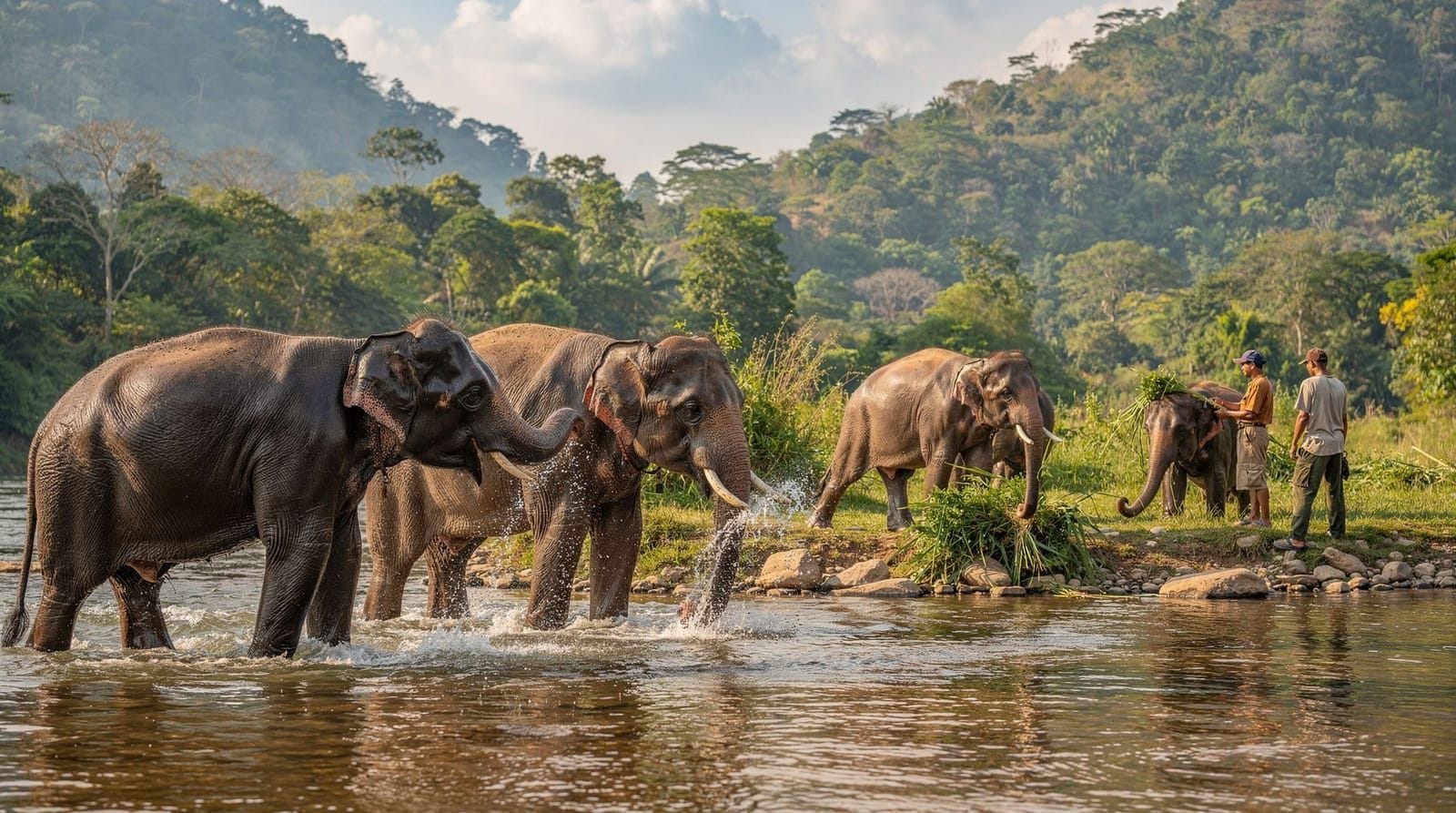
An ethical elephant sanctuary visit is one of the most physically involved activities on a typical Chiang Mai itinerary, and it calls for its own packing considerations. Bring clothes you genuinely don’t mind getting muddy, wet or stained — most sanctuaries involve feeding, walking alongside the elephants through mud or shallow water, and often a river wash or mud bath as part of the program. Closed shoes with reasonable grip work better than sandals, which can slip off in mud or slide on wet riverbank stone. Pack a dry bag or a plastic bag for wet clothes and any electronics you’re bringing along, plus a full change of clothes to put on afterward — many sanctuaries provide a simple shirt or sarong for the muddy part of the visit, but check this when booking rather than assuming. Reef-safe sunscreen matters here too, since sanctuary visits run mostly outdoors across a half or full day. Our dedicated guide on what to wear and bring to an elephant sanctuary goes into more detail on this specific visit if it’s a priority on your itinerary.
Packing for trekking and hill-tribe visits
Multi-day treks and serious hiking call for meaningfully different gear than standard city sightseeing. Proper closed hiking shoes with real tread, rather than sneakers or sandals, handle uneven jungle and mountain trails far better and reduce injury risk on wet or loose ground. A rain layer is worth packing regardless of season, since higher elevations and jungle canopy both generate their own weather independent of the city’s forecast. A headlamp or small flashlight helps with early starts, unlit trail sections, or basic overnight accommodation on multi-day treks that may not have reliable lighting. Insect repellent, ideally DEET or picaridin-based, matters considerably more on treks and rural day trips than it does in the city center. A dry bag for electronics and a change of socks — genuinely one of the most underrated trekking packing items — round out the trek-specific list.
Digital and connectivity items worth packing
A short list of tech-adjacent items is worth including regardless of your specific activities. An unlocked phone, ready to take a local SIM or already carrying an eSIM installed before departure, is the single most useful connectivity item — our SIM card and internet guide covers exactly how to set this up before or on arrival. A portable power bank matters given how much a day of photos, maps and messaging drains a phone battery, particularly on longer day trips away from convenient charging points. And a card that works reliably for international withdrawals, alongside some cash reserve, covers the money side — our money, ATMs and currency guide breaks down what to expect from ATMs and card acceptance in more detail.
What genuinely doesn’t need packing
A few common over-packing habits are worth skipping specifically for Chiang Mai. Heavy waterproof hiking boots are overkill unless a serious multi-day trek is actually on the itinerary — standard closed shoes handle everything from temples to day trips to markets without issue. A full suitcase of formal clothing is unnecessary, since Chiang Mai’s dress culture, even at nicer restaurants, runs considerably more casual than most Western equivalents, with the specific exception of temple visits. And large quantities of toiletries or over-the-counter medication are rarely worth the suitcase space, given how well-stocked Chiang Mai’s pharmacies, convenience stores and malls are — almost anything forgotten can be replaced quickly and cheaply once you’ve landed.
Packing for a cooking class
A Chiang Mai cooking class involves standing over hot woks and pans for several hours, often in a semi-outdoor kitchen setup, which makes the packing considerations slightly different from a typical sightseeing day. Wear closed shoes rather than sandals for basic kitchen safety around hot oil and knives, and choose clothing you don’t mind smelling like lemongrass, garlic and chili by the end of the day — most schools provide an apron, but sleeves and trouser legs still pick up cooking smells that linger through an afternoon of sightseeing afterward if you don’t have a change of shirt. A hair tie for anyone with longer hair and a small notebook or your phone for jotting down ingredient substitutions are both minor but genuinely useful additions, since the take-home recipe booklet most schools provide doesn’t always cover every substitution discussed during the class itself.
Packing for families with children
Travelling with kids shifts the packing list slightly toward comfort and contingency rather than pure minimalism. A wider-brimmed sun hat and extra sunscreen matter more for children than adults given more sensitive skin, and a compact first-aid kit with basics — plasters, antiseptic wipes, any regular medication, oral rehydration sachets — is worth having on hand given how easily an active day in the heat can lead to a scraped knee or mild dehydration. Snacks that travel well cover the gap between meals when a child’s hunger doesn’t line up with the day’s schedule, and a portable fan or cooling towel helps on the hottest days, particularly for temple visits where shade is limited. If an ethical elephant sanctuary visit with children is on the itinerary, pack an extra full change of clothes beyond what an adult would need, since kids tend to get muddier and wetter than adults during the feeding and washing parts of the program.
Laundry: pack less than you think
Chiang Mai has widely available, inexpensive laundry service — most guesthouses and hotels offer same-day or next-day laundry at a low per-kilogram rate, and independent laundry shops around the Old City and Nimmanhaemin undercut hotel rates further. This makes over-packing clothing one of the more pointless habits for a Chiang Mai trip specifically: five to seven days of clothing is genuinely enough for a stay of any length beyond about a week, since a laundry drop-off midway through even a two or three week trip costs very little and takes the pressure off packing for the full duration. A small bag of travel-size detergent sheets or pods is a reasonable backup for washing small items in a hotel sink, but rarely necessary given how accessible proper laundry service is throughout the city.
Carry-on versus checked luggage for onward domestic flights
If your Chiang Mai trip includes a connecting domestic flight — to Bangkok, Phuket, or elsewhere in Thailand — it’s worth packing with that leg in mind from the start rather than repacking at the airport. Domestic budget carriers commonly enforce stricter carry-on weight limits than international long-haul carriers, so a bag that comfortably passed international carry-on screening can occasionally trigger an extra fee domestically if you’re not aware of the tighter allowance. Keeping valuables, medication, a change of clothes and any electronics in your carry-on regardless of what else is checked protects against the modest but real chance of delayed checked luggage on a multi-leg Southeast Asia itinerary, and costs nothing to plan for in advance.
Packing for markets and shopping
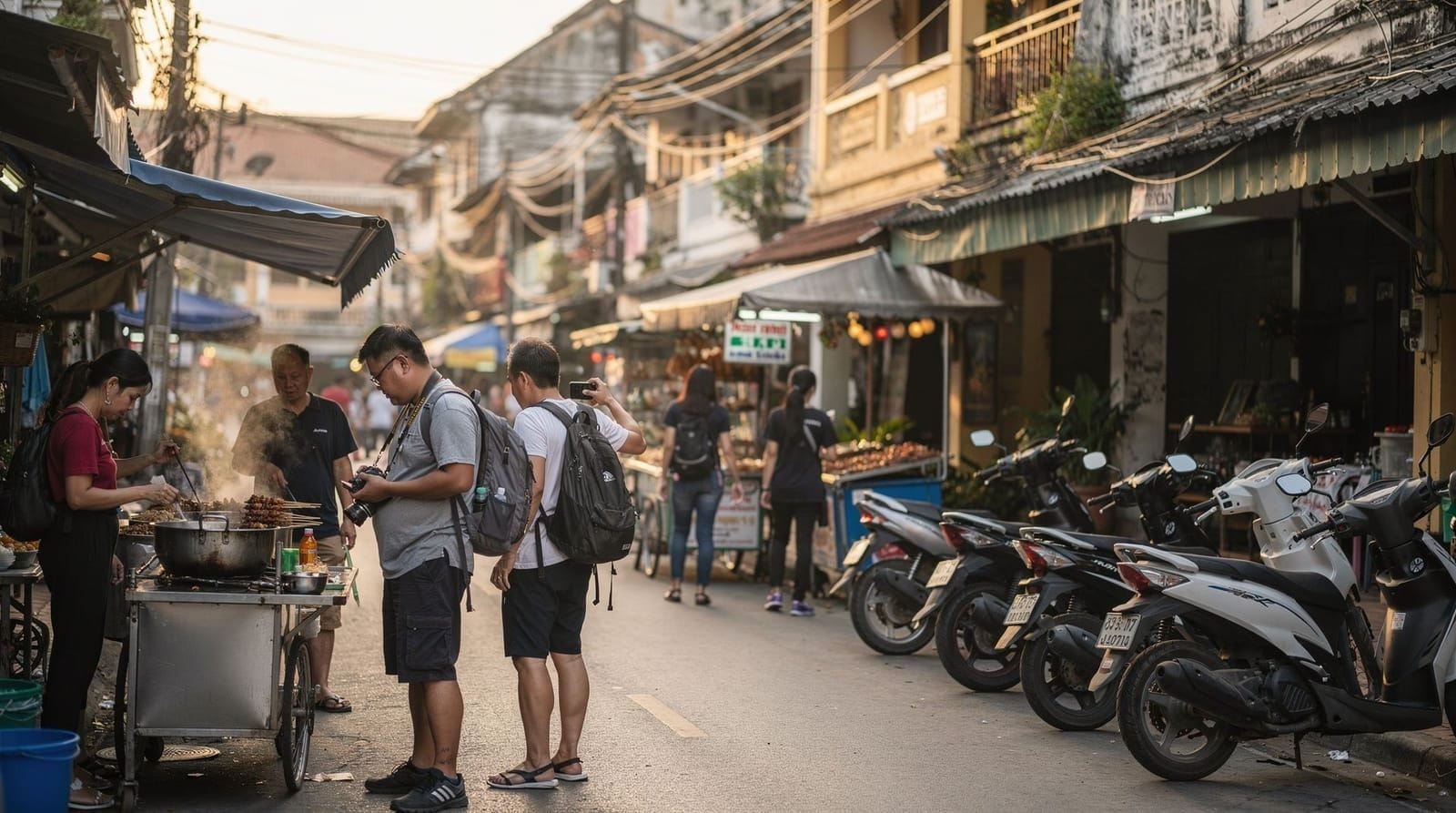
Chiang Mai’s night markets and craft villages reward a specific, small set of packing choices. A crossbody bag or a bag with a secure zip closure, worn in front rather than slung over one shoulder in dense crowds, is the practical standard for market evenings — pickpocketing isn’t a major issue by international standards, but crowded markets are still the highest-risk setting for it. Carrying smaller denomination baht notes rather than only large ones speeds up small stall purchases considerably, since many vendors struggle to break a large note for a small item; our money and currency guide covers this in more detail. A foldable tote bag takes up almost no space packed in but earns its place quickly once you start buying textiles, crafts or the inevitable extra bag of dried mango, and saves buying a flimsy plastic bag from every stall.
Photography and electronics
Chiang Mai’s temples, markets and mountain scenery reward having a proper camera along, though a modern smartphone genuinely covers most of what most visitors need. If you’re bringing a dedicated camera, a lightweight option with a versatile zoom handles everything from temple detail shots to landscape views at Doi Inthanon without needing multiple lenses. A polarizing filter cuts glare on gilded temple surfaces and improves sky contrast noticeably on the clearer cool-season days. Extra memory cards and at least one spare battery matter more here than in destinations with easy same-day camera-gear replacement, since Chiang Mai’s camera shops, while decent, don’t stock every battery type. A padded insert or dedicated camera bag protects gear on bumpier songthaew and scooter rides better than a standard daypack alone.
Sample checklist by trip length
For a short 3-4 day trip, the essentials reduce to: temple-appropriate outfit, comfortable walking shoes, one light layer, sunscreen, a reusable water bottle, phone with an eSIM or plan to buy a local SIM on arrival, and a card that works internationally. For a typical 5-7 day trip, add: a second temple-appropriate outfit (laundry handles the rest), mosquito repellent for any rural day trip, a small first-aid kit, and clothes specifically earmarked for an elephant sanctuary visit if that’s on the itinerary. For a longer 10+ day trip that includes trekking or a multi-day loop through Pai or Chiang Rai, add proper hiking shoes, a headlamp, a dry bag, and a slightly larger tolerance for repacking mid-trip around a laundry stop, since a single packing list rarely survives contact with two weeks of varied activities unchanged.
Building your own list around your actual dates
The right packing list ultimately depends on your specific travel window and planned activities more than any generic checklist can capture — a cool-season trip built around temples and cafés needs a genuinely different kit than a rainy-season trip built around trekking and waterfalls. Our full trip-planning guide covers how packing fits into the broader planning picture alongside budget, visa and connectivity considerations, and our honest safety guide covers a few additional practical items — sun protection, hydration, and basic first-aid — worth having on hand regardless of season.