What to wear and bring to an elephant sanctuary
Chiang Mai: Small Group Ethical Elephant Sanctuary Tour
Duration: Half day
What should you wear to an elephant sanctuary near Chiang Mai?
Wear old, quick-drying clothes you don't mind staining with mud, banana, and river water, plus closed-toe water shoes or old sneakers rather than flip-flops. Bring reef-safe sunscreen, insect repellent, a dry bag or waterproof phone pouch, a change of clothes for the ride home, and small-denomination cash for tips and drinks.
The single most common mistake first-time visitors make isn’t about elephant welfare at all - it’s showing up in the wrong clothes. A morning that should be spent watching rescued elephants feed and wander freely turns into a stressful scramble when someone realizes their only sneakers are the ones they’re wearing, or their phone has no protection from a sudden splash. Packing right is a small thing, but it changes how relaxed you are for the three or four hours that actually matter.
Quick answer: Wear old, quick-drying clothes you don’t mind staining with mud, banana, and river water, plus closed-toe water shoes or old sneakers rather than flip-flops. Bring reef-safe sunscreen, insect repellent, a dry bag or waterproof phone pouch, a change of clothes for the ride home, and small-denomination cash for tips and drinks. None of this needs to be bought specially for the trip - most of it is already in a typical Southeast Asia packing list.
Clothing: assume it will get stained
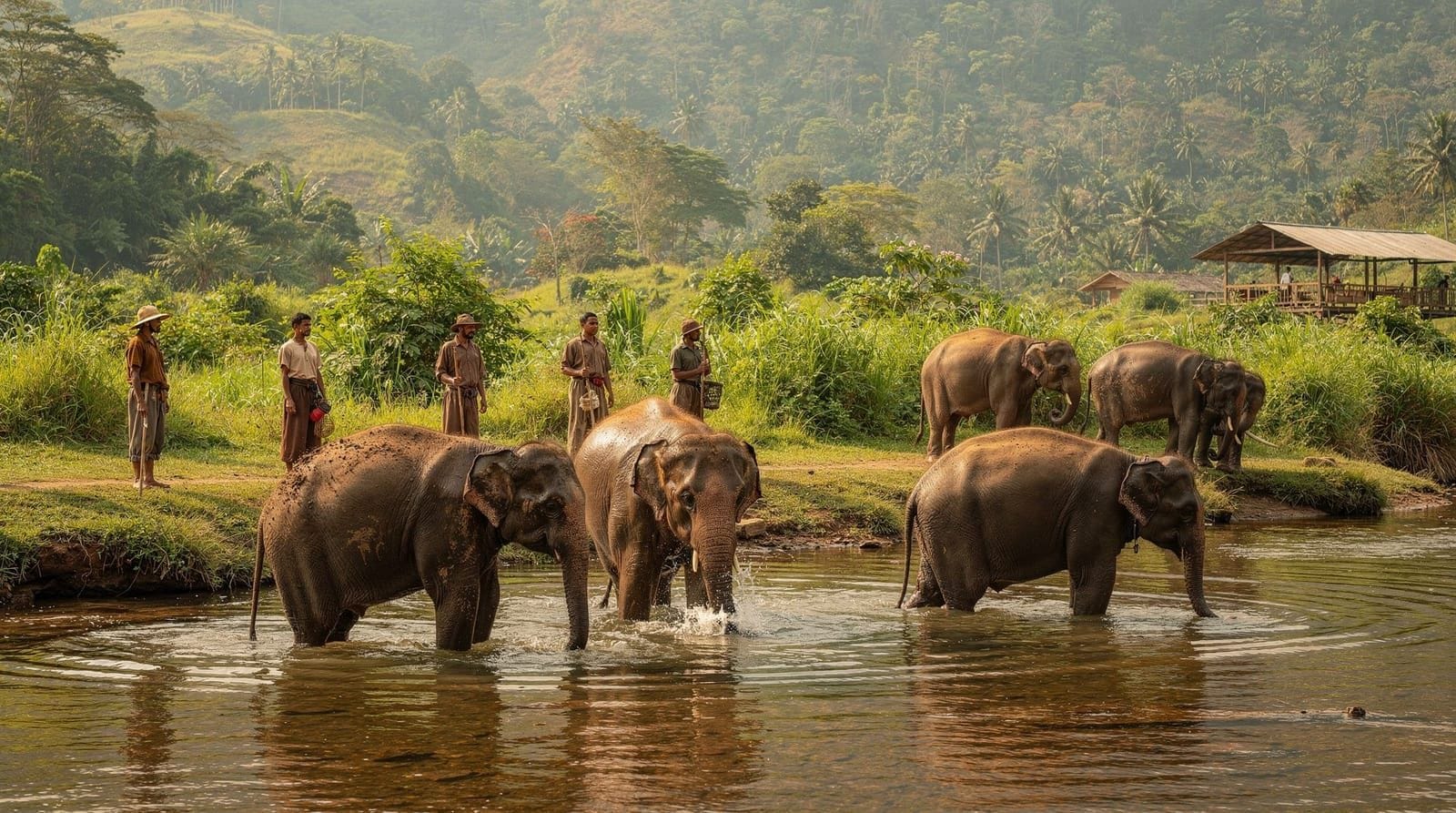
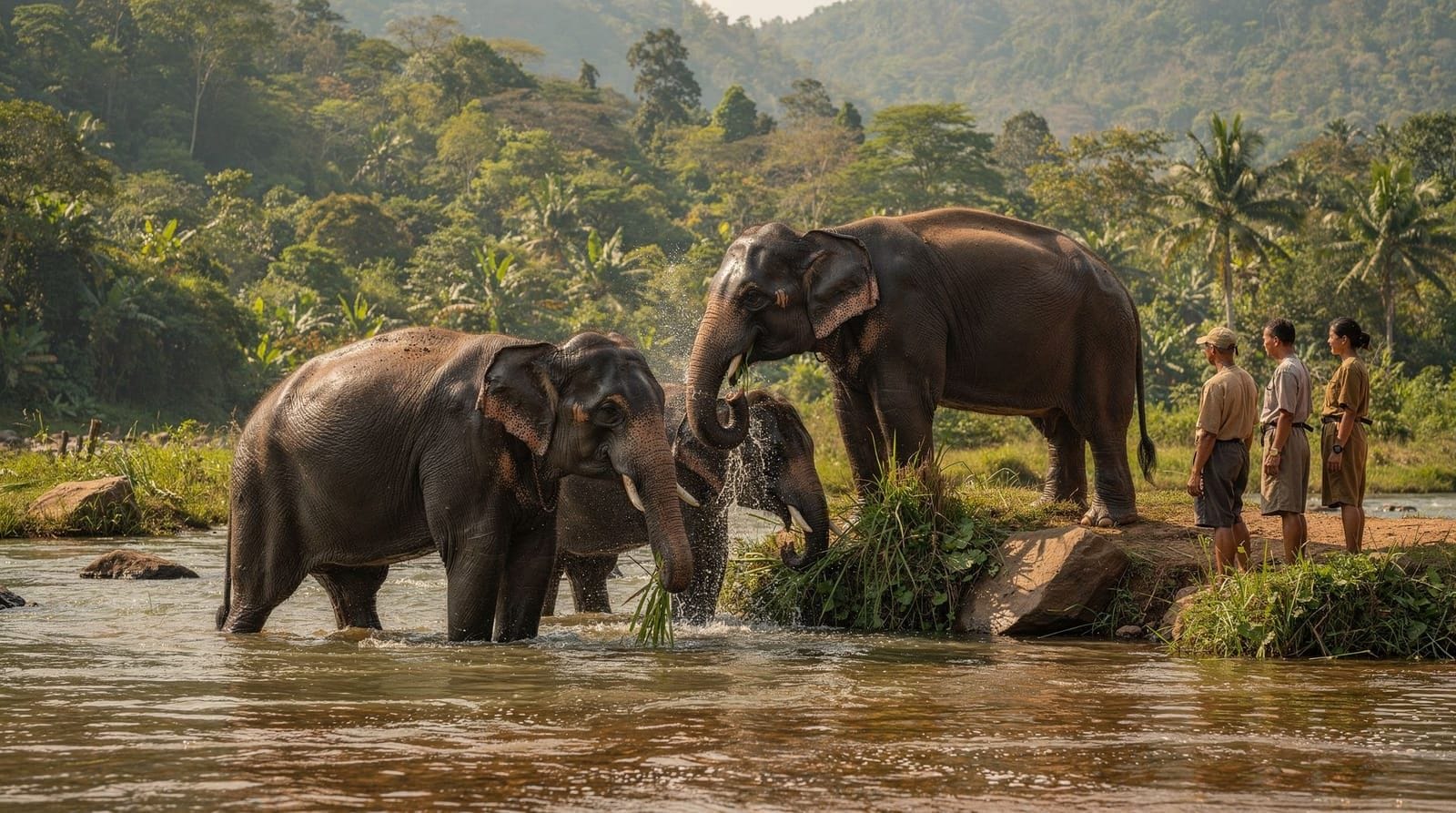
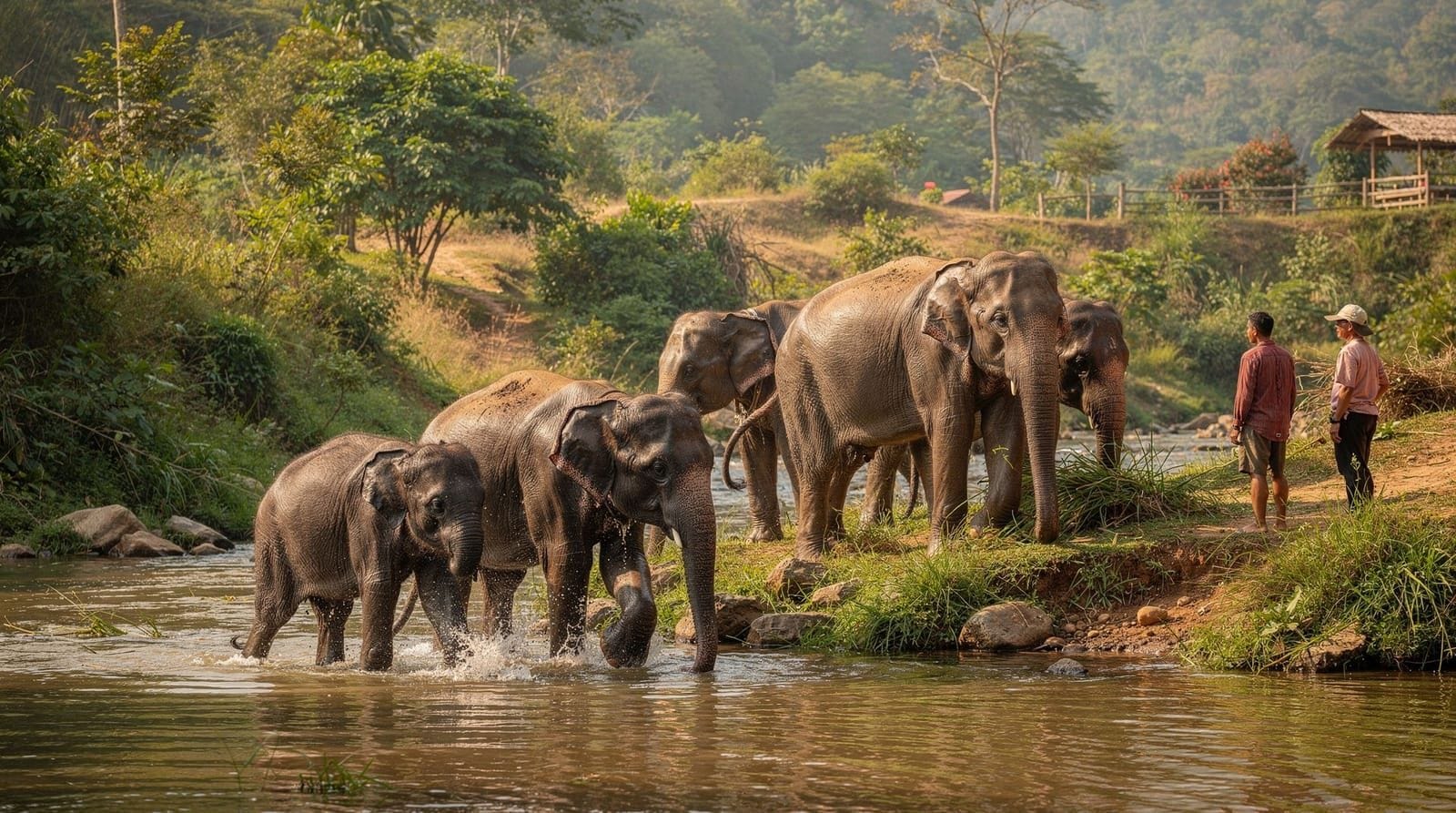
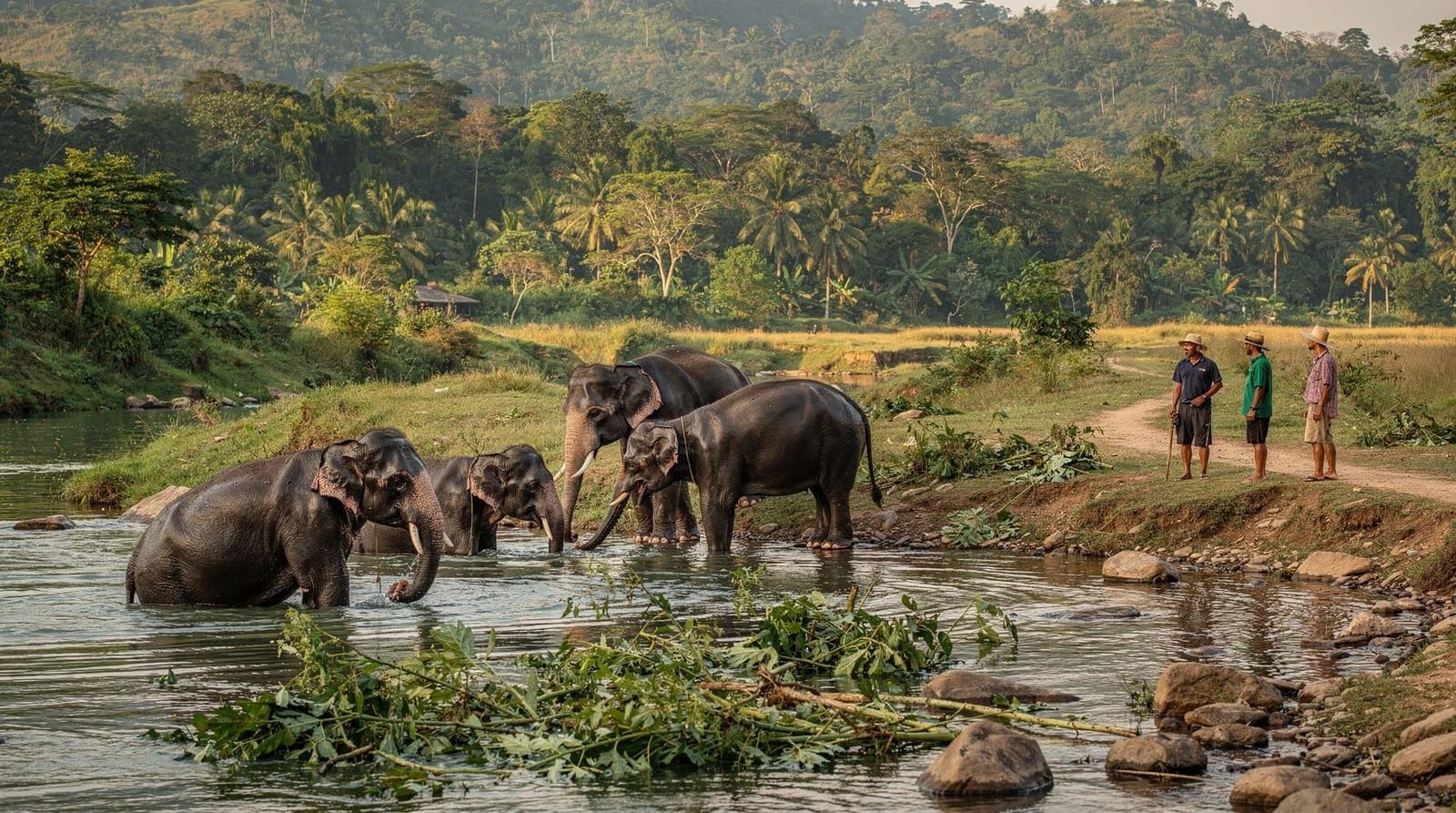
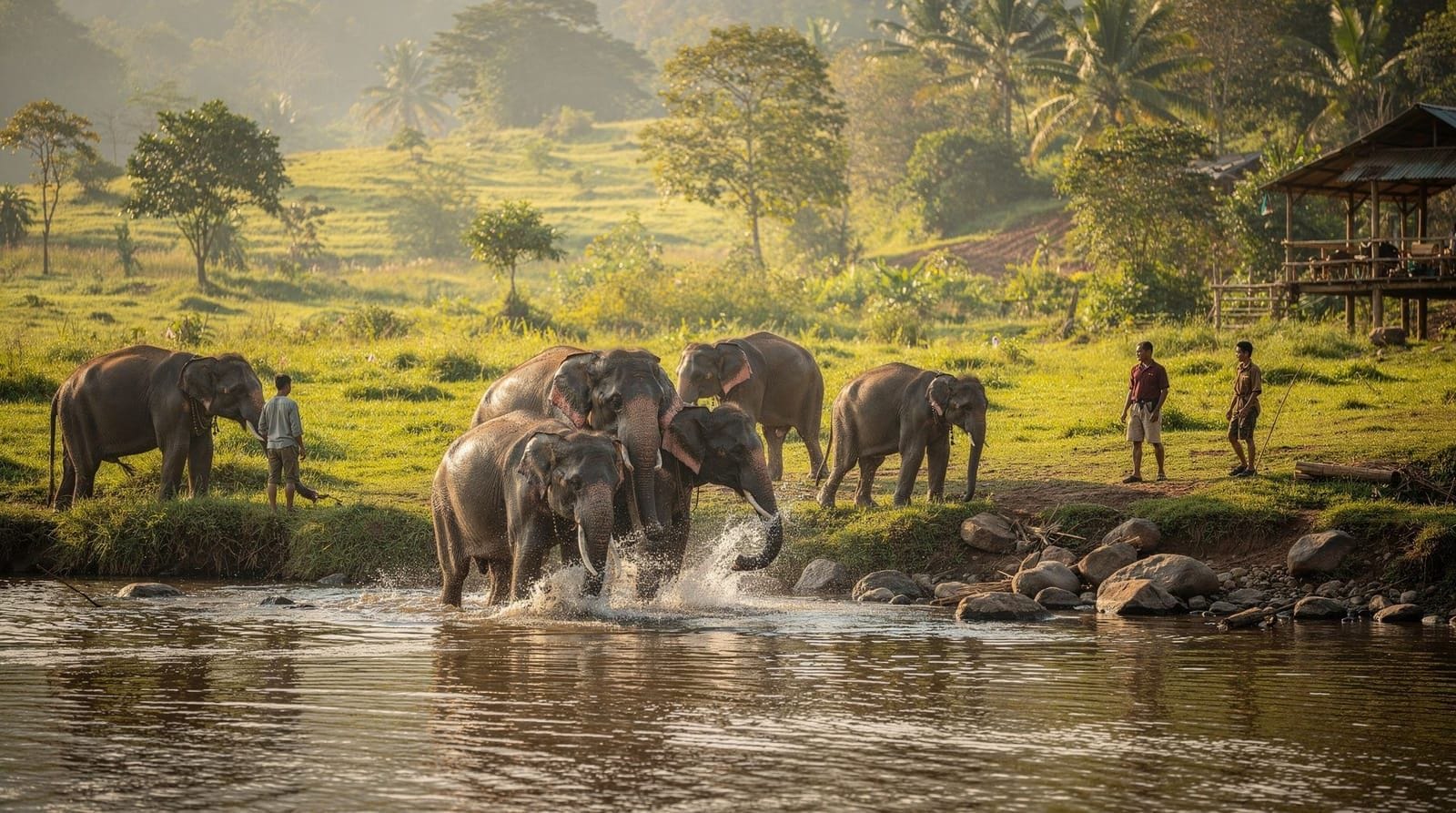
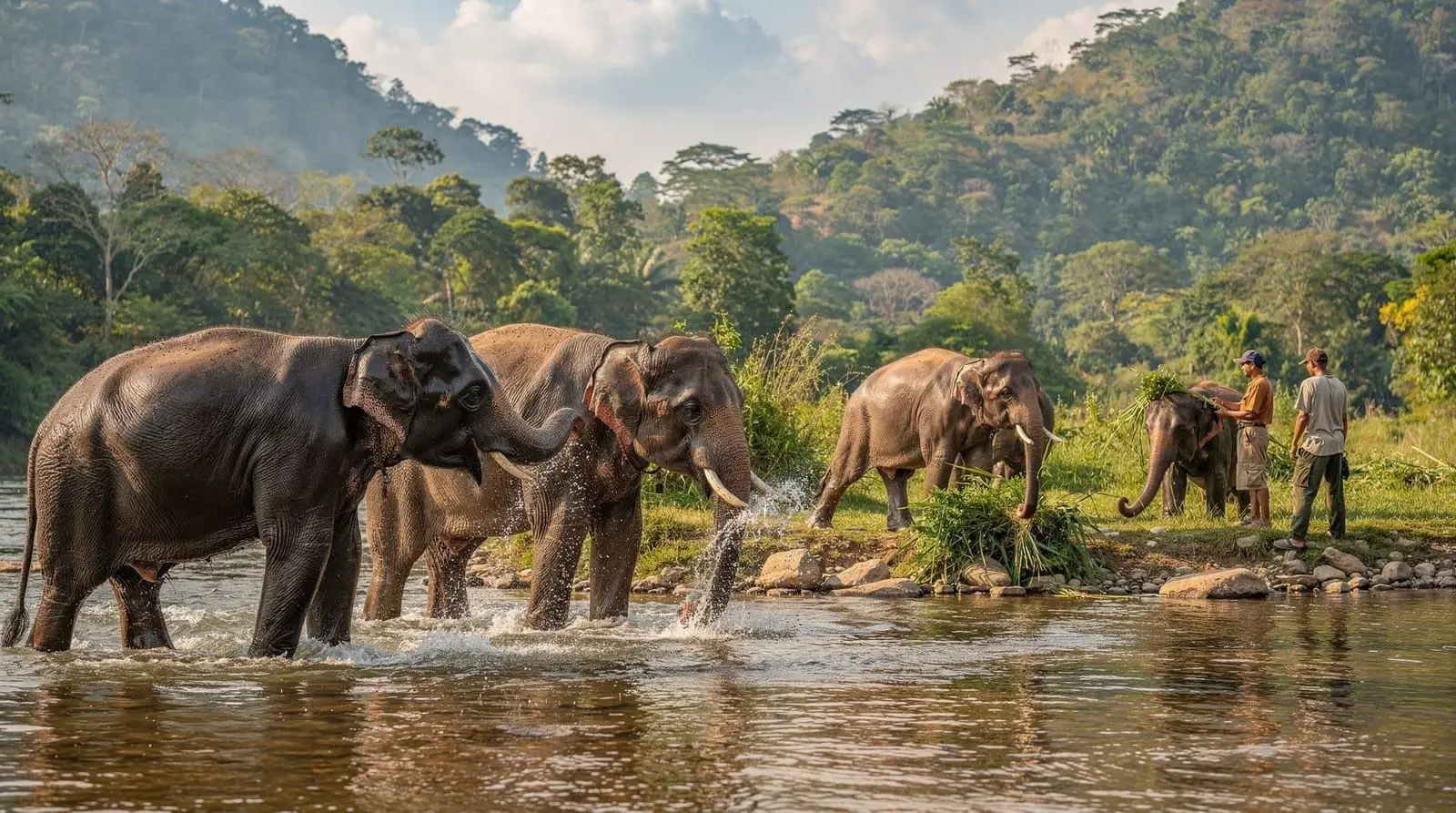
Sanctuaries near Chiang Mai typically build a visit around three activities: walking with elephants through forest or field, feeding them fruit and sugar cane by hand, and - at operators that include it - a mud or river bathing session. All three involve some combination of mud, banana pulp, dust, and water making contact with your clothes.
The practical approach is to wear something you’ve already decided you don’t mind ruining. Quick-drying synthetic fabrics (the kind sold as “trekking” or “travel” shirts) work better than cotton, which stays wet and heavy for hours once soaked. Loose-fitting shorts or leggings that end above the ankle are more practical than jeans, which get heavy and chafe when wet. A long-sleeve, lightweight layer is worth packing even in hot season, both for sun protection during the walking portion and because it takes the edge off overly enthusiastic biting insects near the river.
Leave good clothes, anything white, and anything you’re precious about at the hotel. Most operators supply a sarong or wrap to protect against the worst of it during bathing, but sleeves, socks, and the hems of shorts are usually exposed regardless.
Footwear: closed-toe, not flip-flops
Flip-flops and slides are the default footwear for most of a Chiang Mai trip, and the wrong choice for a sanctuary visit. Riverbeds are uneven and often silty, mud pits pull at loose sandals, and there’s a real chance of losing a flip-flop in ankle-deep mud with an audience of elephants nearby. Closed-toe water shoes, an old pair of trainers you’re happy to write off, or rubber sandals with a secured heel strap are the standard advice.
Whatever you bring, expect it to be wet and muddy by the end of the visit. Packing a plastic bag or a dedicated dry bag for the return trip keeps the rest of your daypack, and the inside of the tour vehicle, clean.
Sun and insect protection
Most sanctuary programs run in open pasture and riverside forest with patchy shade, and a half-day visit easily covers two to four hours of direct sun exposure between 9am and 2pm, which is peak UV in northern Thailand. A broad-spectrum sunscreen, ideally a reef-safe (non-oxybenzone, non-octinoxate) formulation, protects both your skin and the river ecosystem the elephants and local communities also depend on. A wide-brim hat and sunglasses cover what sunscreen misses on a walking tour.
Insect repellent matters more near the river and forest edge than in central Chiang Mai. Mosquitoes are a year-round presence in the Mae Rim and Mae Taeng valleys, and a DEET or picaridin-based repellent applied before the walking portion cuts down on bites significantly. If you’re visiting between May and October (rainy season), repellent becomes closer to essential than optional.
Swimwear, if bathing is included
Some ethical sanctuaries include an elephant bathing or mud-bath component as part of the standard program; others treat it as optional or skip it in favor of observation-only feeding and walking. Check your specific booking’s description before assuming either way. If bathing is included, wearing swimwear under your outer clothes (rather than changing on site, which usually isn’t private) is the simplest approach. A rash guard or swim shirt doubles as sun protection during the walking segment.
It’s worth being honest about one nuance here: a crowded, high-turnover bathing session with dozens of visitors funneled through in a single hour is a different experience - and a different level of stress on the animals - than a smaller, unhurried group taking turns at the riverbank. If minimizing elephant stress matters to you as much as the experience itself, ask in advance how many visitors bathe alongside how many elephants, and consider a program from our small-group ethical sanctuary tour that caps group size explicitly.
Cash, valuables, and what to leave behind
Card payment infrastructure doesn’t reach most rural sanctuary sites, so bring 500-1,000 THB (roughly USD 14-28) in small bills for tips to mahouts and guides, bottled water or snacks at the visitor center, and any souvenirs sold on site. There are no ATMs at the sanctuaries themselves.
Leave your passport, jewelry, and anything irreplaceable at the hotel - a locked bag in the vehicle or a hotel safe is the standard advice most tour operators give in pre-departure messages. If you’re bringing a phone or camera into the feeding or bathing area, a waterproof pouch or dry bag is worth the few dollars it costs; splashes from trunks and buckets are common and unpredictable, and elephants are curious about bags left unattended on the ground.
Protecting cameras and phones near water and mud
If photography matters to you, plan around the fact that most of the interesting moments - close feeding, a trunk reaching toward you, mud flying - happen exactly where water and dust are most likely to reach your gear. A simple waterproof phone pouch with a lanyard covers most casual photography needs. For a dedicated camera, a rain cover or dry bag, plus a lens cloth for the inevitable dust, are worth the extra weight in a daypack.
Some visitors choose to leave phones with a bag-minder or in the vehicle during the bathing portion specifically and just watch. It’s a reasonable trade-off: fewer photos, less risk, and arguably more attention paid to the actual animals in front of you rather than a screen.
What a typical half-day program actually involves
Understanding the flow of a visit makes packing easier, since you can match gear to activity rather than guessing. A standard half-day ethical elephant sanctuary program from central Chiang Mai runs roughly like this: hotel pickup, a 45-90 minute drive to the Mae Rim or Mae Taeng valley, an introduction and safety briefing, a fruit-preparation and feeding session, a walk alongside elephants through pasture or forest, an optional mud or river bathing segment, and a simple Thai lunch before the drive back. None of it involves riding, performance tricks, or bullhooks at a genuinely ethical operator - if any of those appear in the itinerary description, treat it as a red flag regardless of how the listing brands itself.
Full-day versions, like the Elephant Dream Project program, extend the same structure with more unhurried time per activity rather than adding new ones. For a side-by-side on which length suits your trip, see our guide on half-day versus full-day sanctuary visits.
A quick pre-departure checklist
- Old, quick-drying shirt and shorts or leggings you don’t mind staining
- Closed-toe water shoes or old trainers (not flip-flops)
- Swimwear underneath, if your program includes bathing
- Reef-safe sunscreen and a hat
- Insect repellent, especially May-October
- A dry bag or waterproof phone pouch
- 500-1,000 THB in small bills
- A plastic bag for wet, muddy clothes on the way home
- A full change of clothes left in the vehicle or at reception
If you’re traveling with children, a few of these items change slightly - smaller sizes aside, kids tend to get muddier and need a spare full outfit more reliably than adults do. Our guide to visiting an elephant sanctuary with kids covers those specifics along with age-appropriateness and safety considerations.
Choosing where this all applies
This packing advice holds regardless of which specific sanctuary you book, but the program length and activities do vary between operators. If you haven’t chosen a sanctuary yet, our comparison of Elephant Nature Park versus other ethical sanctuaries and our broader best ethical elephant sanctuaries in Chiang Mai, compared both break down price, group size, and distance from the city so you can match the packing list above to the actual itinerary you’ll be following. And if you’re still deciding whether an elephant encounter belongs on your itinerary at all, our explainer on why riding elephants should be avoided lays out the welfare case in full.
Whatever you book, the ethical elephant sanctuary destination page in this guide covers the broader selection criteria - no riding, no bullhook, small groups, verifiable rescue stories - that should guide the choice regardless of what you pack. Our broader ethical elephant sanctuary guide and the elephant sanctuaries category hub round out the planning picture if you’re still deciding between programs.
If your itinerary pairs the sanctuary with a waterfall stop, our elephant sanctuary and waterfall combo tours guide covers the logistics and what extra gear that adds to this list. And if elephants are one of several outdoor activities on your Chiang Mai itinerary, our Chiang Mai packing list and Chiang Mai trekking guide cover the rest of what belongs in your bag, from Doi Inthanon hikes to Mae Sa Valley day trips.
Frequently asked questions about what to wear and bring to an elephant sanctuary
Can I wear my normal clothes to an elephant sanctuary?
You can, but you probably shouldn’t. Feeding and bathing sessions involve mashed banana, sugar cane pulp, mud, and river water, and stains from all four are common on shirts and shorts. Most operators supply a sarong to protect your outer layer, but sleeves, socks, and shoes are still exposed.
Do I need special shoes for an elephant sanctuary visit?
Closed-toe shoes you’re willing to get wet and muddy work best - think old trainers, water shoes, or rubber sandals with a heel strap. Flip-flops fall off in mud and riverbeds and offer no protection if an elephant steps near your foot.
Should I bring my phone or camera into the bathing area?
Only in a waterproof case or dry bag, and only if you’re comfortable with the small risk of a splash, drop, or curious trunk. Many visitors leave phones with a bag-minder on the riverbank and just watch during the bathing portion.
Is sunscreen from home okay, or do I need reef-safe sunscreen?
Reef-safe (non-oxybenzone) sunscreen is the better choice, since bathing sessions put sunscreen-coated skin directly into the same river systems other sanctuaries and communities depend on. It’s sold at pharmacies throughout Chiang Mai’s Old City and Nimmanhaemin if you forget to pack it.
How much cash should I bring to an elephant sanctuary?
500-1,000 THB (roughly USD 14-28) covers tips for guides and mahouts, bottled water or snacks at the visitor center, and any souvenirs. Card payment is rarely available once you’re at the sanctuary itself, and ATMs are not on site.
Will I get muddy even if I skip the mud bath?
Some splashing and mud transfer is close to unavoidable if you’re within a few meters of elephants during feeding or walking, since they kick up dust and mud constantly. Sanctuaries that offer an optional bathing session usually let you opt out of the deepest mud pit and just observe instead.
What should I leave at the hotel?
Jewelry, your passport, anything you’d be upset to lose in a river, and clothing you actually care about. A hotel safe or locked bag in the vehicle is the standard advice most operators give in their pre-departure instructions.
Do sanctuaries provide a change of clothes afterward?
Most don’t provide a full change of clothes, though many hand out a sarong or wrap during the bathing portion. Bring your own dry outfit and a plastic bag for wet, muddy items for the ride back into town.
Top experiences
Bookable activities with verified prices and instant confirmation on GetYourGuide.