Why you should avoid elephant riding in Chiang Mai
Chiang Mai: Small Group Ethical Elephant Sanctuary Tour
Duration: Half day
Why should travelers avoid elephant riding in Chiang Mai?
Elephant spines are not built to bear sustained weight from above, unlike horses, and riding, especially with a wooden or metal seat (a howdah), causes documented spinal and joint damage over months and years of repeated use. The training methods used to make elephants compliant enough to ride, historically the phajaan or crushing ritual, rely on pain and confinement. No credible animal welfare organization considers elephant riding compatible with ethical care, regardless of how an individual camp markets the experience.
Every year, a share of Chiang Mai visitors still book a riding camp without realizing what the activity actually involves for the animal, often because the camp’s own marketing describes it in soft, tourist-friendly language that never mentions training methods or physical effects. This guide lays out the specific, documented reasons riding and performance-based elephant tourism cause harm, stated plainly rather than left implicit.
The direct answer, if you want it before the detail: elephant spines are not built to bear sustained weight from above, unlike horses, and riding, especially with a wooden or metal seat known as a howdah, causes documented spinal and joint damage over months and years of repeated use. The training methods historically used to make elephants reliably compliant enough to carry riders, the phajaan or crushing ritual, rely on pain, confinement, and fear. No credible animal welfare organization considers elephant riding compatible with ethical care, regardless of how an individual camp markets the experience, and the same underlying training typically supports elephant shows as well.
The physical reality: why elephant spines can’t safely carry riders
Horses evolved to carry weight on their backs; their spines curve downward in the middle, forming a natural saddle-like structure that distributes a rider’s weight along strong vertebrae built for exactly that load. Elephants did not evolve this way. Their spines are structured with vertebrae that point upward and are covered by comparatively little muscle and padding across the back, meaning a rider’s weight, plus a saddle’s weight, presses directly against bone rather than being distributed the way it is on a horse.
Veterinary researchers studying working and tourism elephants across Thailand and neighboring countries have documented chronic effects from this mismatch: spinal deformation and misalignment, skin lesions and calluses at pressure points, and secondary joint problems in the legs from carrying additional sustained weight for hours at a time, day after day, often for years. None of this requires cruelty in the moment to occur; it’s a structural consequence of asking an animal’s body to do something it isn’t built for, repeated often enough.
Bareback riding is not a meaningful alternative
Some operators market “bareback” or “no saddle” riding as a gentler, more ethical-sounding option, framing the wooden or metal howdah as the real problem rather than riding itself. This is worth treating skeptically. Removing the saddle does reduce some specific pressure points, but it does not remove the fundamental issue: a rider’s sustained weight still bears down on a spine not built to carry it, still concentrated more directly onto the animal’s back and shoulders without a saddle’s minimal weight distribution. Bareback riding is riding with different marketing, not a genuine welfare improvement, and should not be treated as an ethical compromise between riding and not riding.
Phajaan: the training method behind rideable elephants
Phajaan, sometimes translated as “the crush” or “the separation,” describes a traditional training process used historically, and in some places still, to make young elephants reliably obedient to a mahout under a bullhook. The process typically involves separating a young elephant from its mother, confining it in a restrictive cage or set of ropes, and using sustained pain, sleep deprivation, and fear over a period of days to break its resistance to human direction. The result is an animal that will submit to riding, respond to bullhook signals, and tolerate close human contact under coercion rather than choice.
This matters directly for the riding question because an elephant does not naturally accept a rider on its back, a saddle strapped on, or a mahout’s hook-based commands without some version of this training having occurred at some point in its life, whether at the camp currently operating it or an earlier one it was purchased or transferred from. Riding tourism and phajaan are not separate issues; the first depends on the second having happened. This is also why our ethical sanctuary selection guide treats “no bullhook, ever” as a non-negotiable checklist item rather than a preference.
Shows and tricks rely on the same coercion
Painting, football, dancing, and other trained performances staged for a paying audience are sometimes offered by camps that have dropped riding specifically, positioning themselves as a step up from a straightforward riding operation. The underlying training and enforcement, however, typically relies on the same bullhook-based compliance system that supports riding, since an elephant does not spontaneously learn to hold a paintbrush or kick a ball on command without direction reinforced through the threat or use of pain. A camp offering shows without riding has usually only removed one visible practice while keeping the coercive infrastructure that supports both.
Compare the small-group ethical sanctuary tour against any riding-camp listing you’re considering, since the absence of rides, saddles, and trick performances in the itinerary description is the clearest practical signal of a genuinely different model.
Why “sanctuary” branding can still mean riding
Thailand has no licensing standard that restricts who can call an elephant operation a sanctuary, which means the word carries no enforced meaning. A number of camps that continue to offer riding, bareback riding, or shows have added “sanctuary” to their name and marketing without changing their actual operations, correctly betting that most travelers won’t check further than the homepage. Recognizing this gap is the single most useful skill for avoiding an inadvertent booking at a riding camp.
Specific things worth checking before you book, beyond the operator’s self-description: recent reviews mentioning the words “ride” or “riding” in any context, photos anywhere on the operator’s own site or social media showing a person on an elephant’s back or neck (even a few years old), and itinerary language vague enough to hide what’s actually scheduled (“elephant experience” rather than a described sequence of feeding, walking, and observation). Our full breakdown of Elephant Nature Park versus riding camps walks through several of these marketing patterns in more detail with real listing language.
What genuine alternatives actually look like
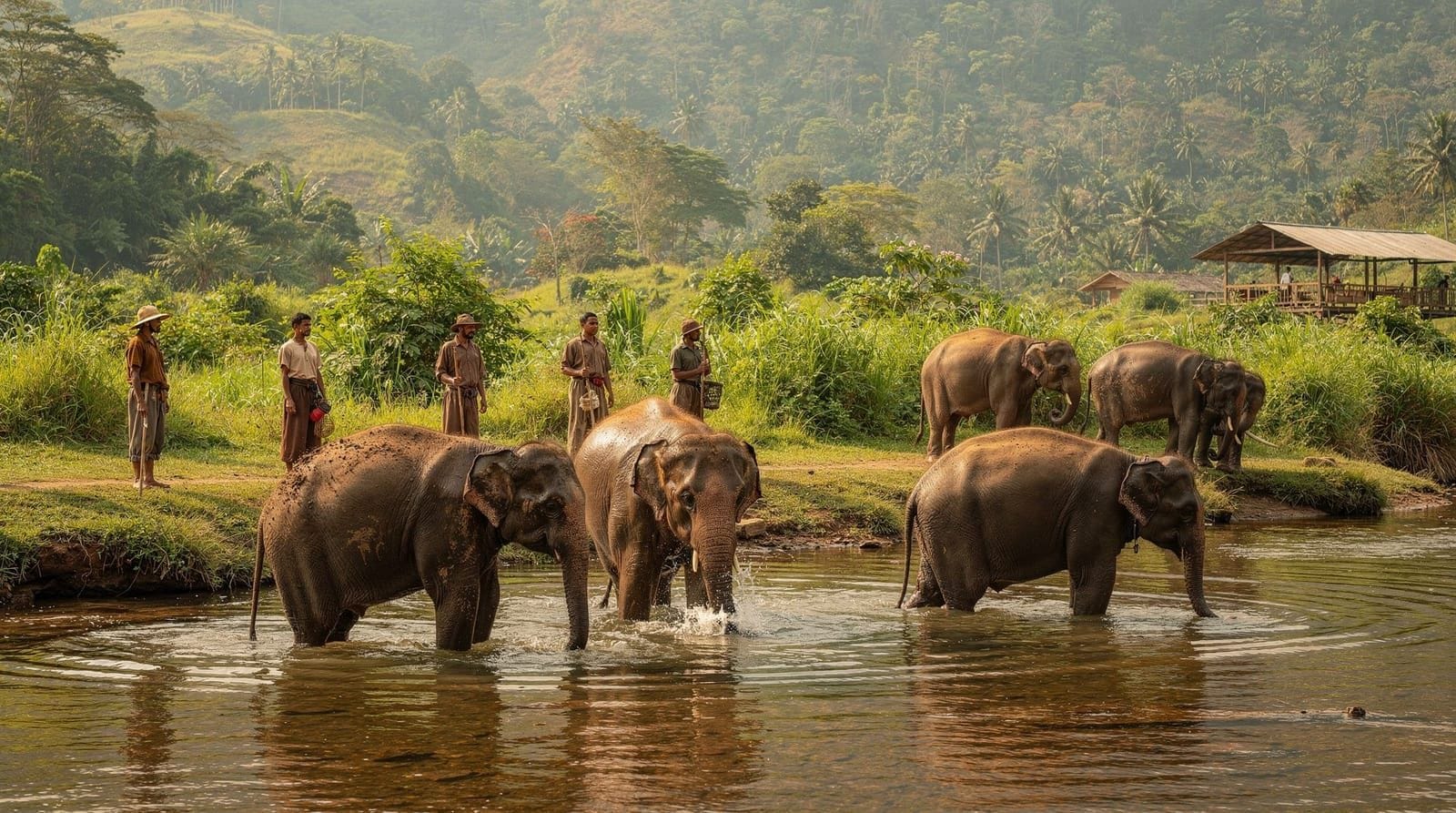
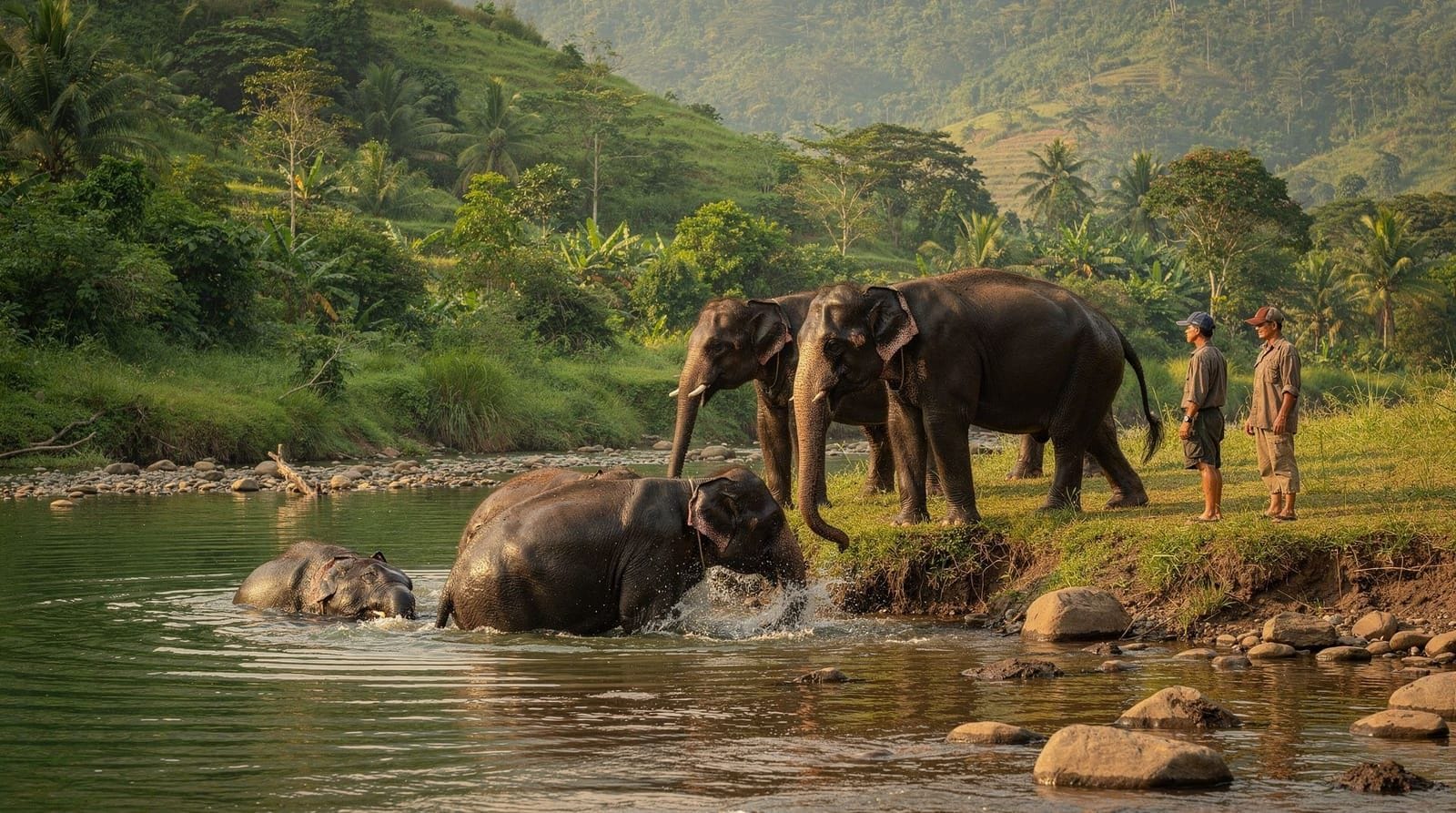
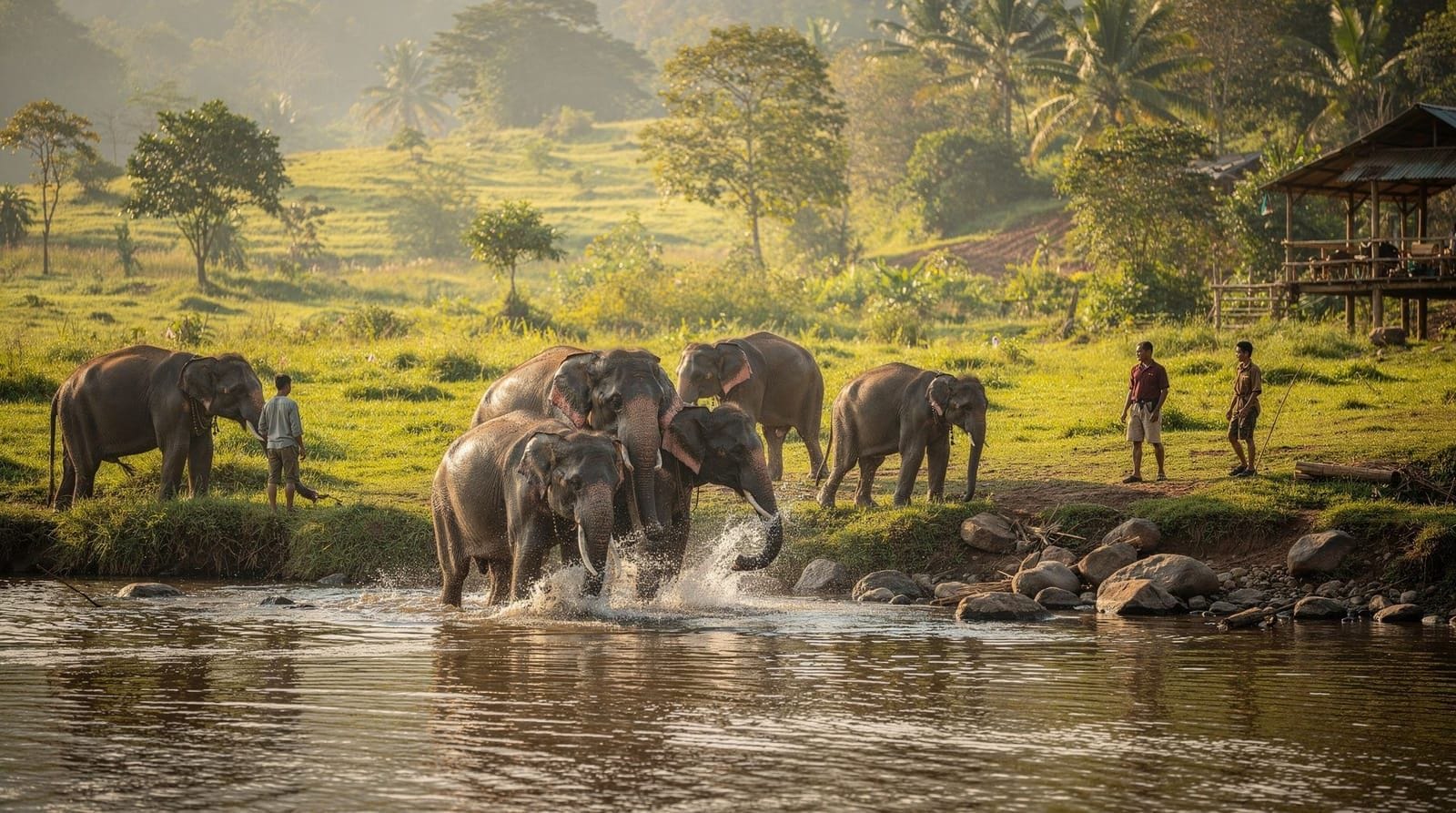
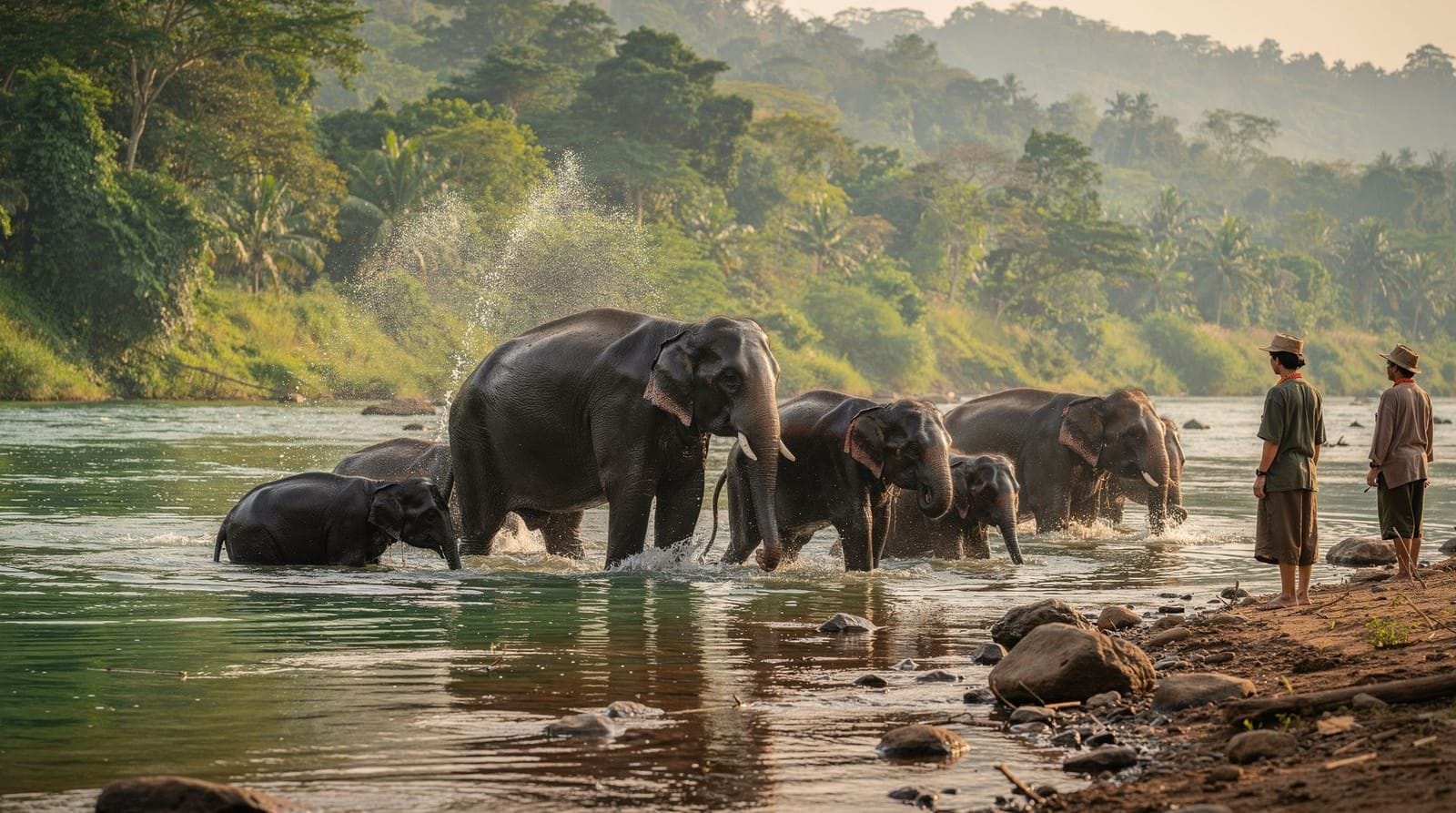
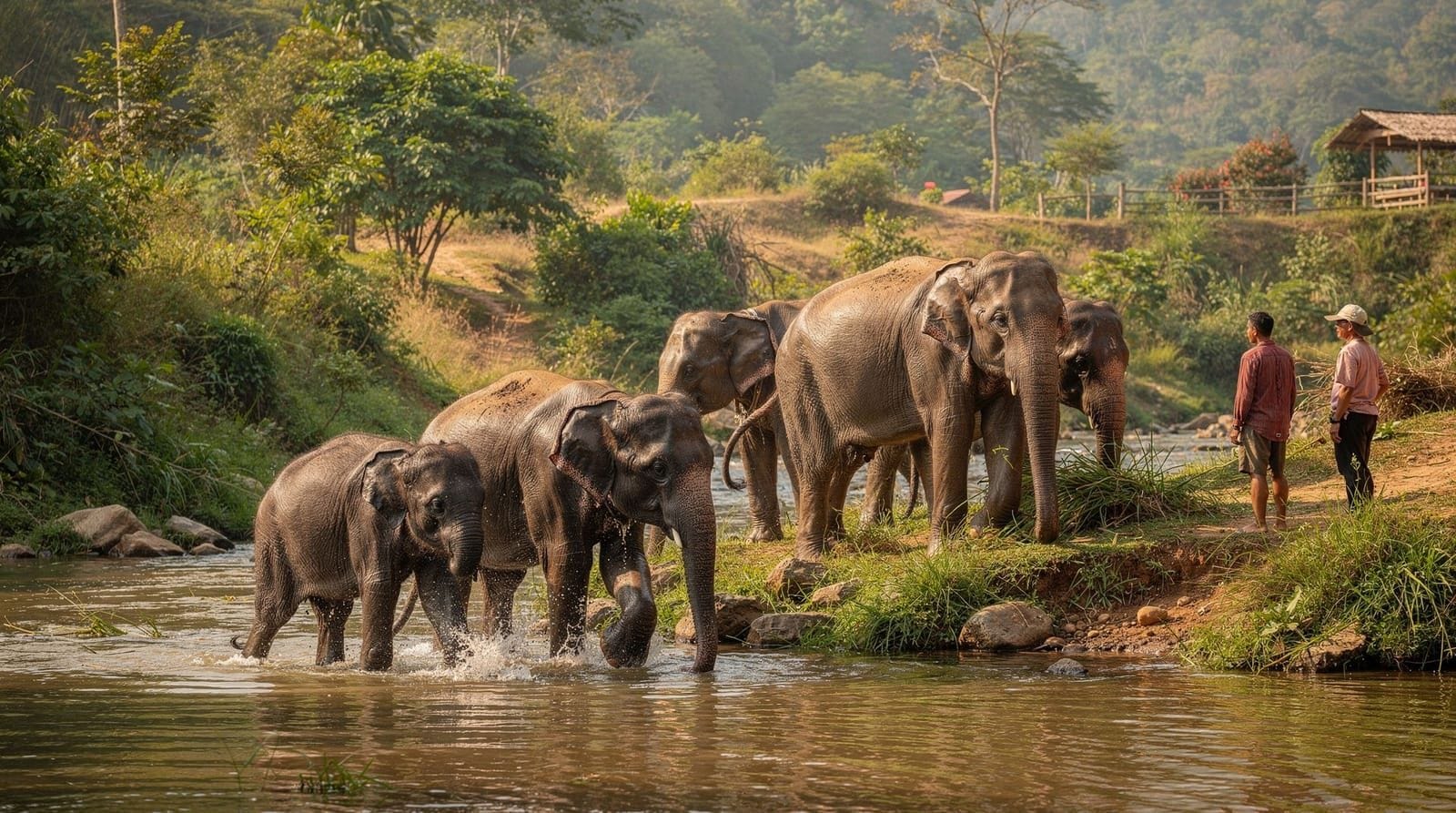
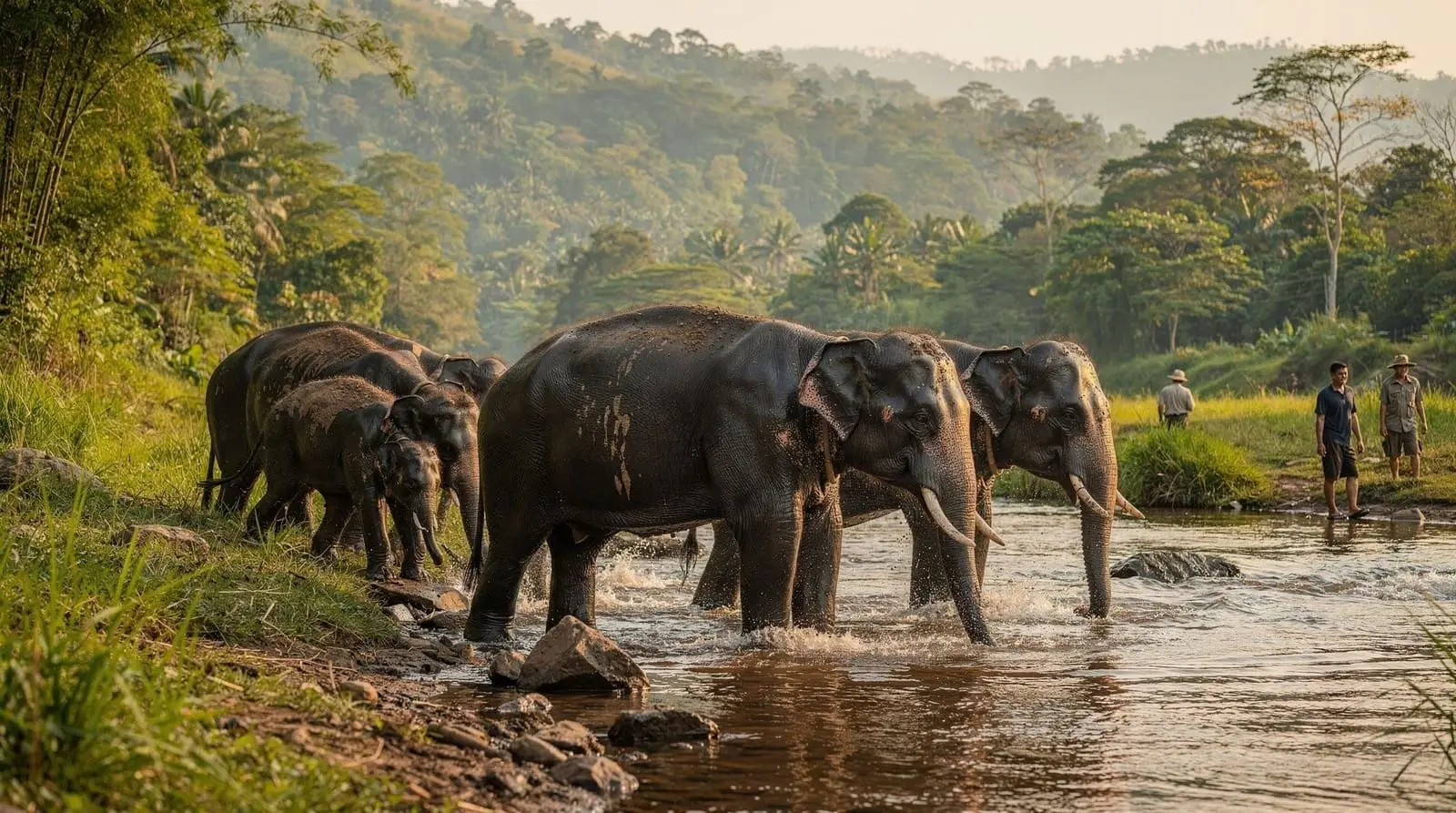
None of this means avoiding elephants altogether is the only ethical option. Genuine rescue and retirement sanctuaries around Mae Rim and further out toward Mae Taeng and Chiang Dao offer extended, close contact through feeding, walking alongside a herd in open pasture or forest, and supervised, small-group bathing, without riding, bullhooks, or performance of any kind. These programs run roughly 1,200-1,800 THB (about 33-50 USD) for a half day and 2,000-2,800 THB (about 56-78 USD) for a full day, comparable in price to riding camps, which is itself a useful signal that avoiding riding doesn’t require a large budget increase.
Check the ethical elephant feeding and shower program for a listing built specifically around supervised, small-scale interaction rather than a riding-camp model.
Look at the Elephant Dream Project half-day sanctuary tour as a comparable no-riding option if you’d rather see a second operator’s specific itinerary before deciding.
Elephants retired from riding and logging work
The animals at genuine rescue sanctuaries didn’t appear from nowhere; a substantial share are elephants retired from Thailand’s logging industry (banned in 1989, which displaced a large population of working elephants and their mahouts), from riding and trekking camps that closed or changed models, or from street begging in cities, a practice that itself involves years of walking on hard pavement and exposure to traffic and crowds. Many arrive at sanctuaries with visible injuries: foot problems from standing on concrete or pavement for years, spinal issues from riding work, or behavioral signs consistent with past trauma. Their presence at these programs is itself part of the honest case against riding tourism: these are not hypothetical harms but documented outcomes visible in the animals currently living out retirement in the Mae Rim and Mae Taeng valleys.
See the Living Green elephant sanctuary tour for another rescue-focused program if you want to compare a third operator’s approach before booking.
What welfare researchers and organizations actually say
This isn’t a fringe opinion confined to a handful of activist groups. Elephant veterinary researchers, wildlife biologists, and long-established welfare organizations working across Thailand, Cambodia, and Sri Lanka have converged on the same basic conclusions over roughly the past two decades: riding causes measurable, cumulative physical harm, the training methods that make riding possible rely on pain-based compliance, and captive elephants used for riding tourism show behavioral indicators consistent with chronic stress, including repetitive swaying or rocking motions when not actively working. None of this depends on any single camp being particularly cruel; it’s a structural finding about what sustained riding tourism does to elephants generally, documented across many different operators and countries.
This body of research is also why the travel industry itself has shifted meaningfully over the past ten years. A number of major international tour operators and booking platforms have stopped selling elephant riding experiences entirely, citing exactly this welfare evidence, and it’s part of why the “no riding” search term has become common enough that camps have an incentive to claim it whether or not they’ve actually changed their operations, the branding gap covered above.
The economics behind why riding camps still exist
If the welfare case is this well established, it’s fair to ask why riding camps haven’t disappeared already. Part of the answer is straightforwardly economic: a riding camp requires less land, fewer staff per elephant, and less investment in enrichment activities than a genuine observation-and-feeding sanctuary, since the entire model is built around processing tourists through a fixed circuit rather than letting elephants move freely through pasture or forest. Riding and shows also photograph in a way that’s historically been easy to market, a rider on an elephant’s back is an instantly recognizable image, even though that same recognizability is exactly what’s driving the recent shift away from it.
The other part of the answer is that demand hasn’t fully caught up with the research. A meaningful share of travelers, particularly those booking last-minute or through generic tour desks rather than researching individual operators, still end up at a riding camp simply because it was the option offered to them, not because they specifically sought it out. That gap between what a slightly more informed traveler would choose and what a hurried or uninformed one ends up booking is a large part of why riding camps remain viable even as awareness grows.
What to do if you’re already at a camp and unsure
If you find yourself at a booked activity and realize partway through that riding, a bullhook, or a performance is involved, you’re not obligated to participate. Declining to ride, asking not to be seated for a photo, or simply stepping back from a trick performance costs you nothing and doesn’t require confrontation with staff. It’s a reasonable, low-friction way to opt out in the moment if research beforehand wasn’t possible, though checking the itinerary and recent reviews before booking, as covered throughout this guide, remains the more reliable way to avoid the situation entirely.
What to do if you already booked a riding camp before researching
It happens, especially to travelers booking last-minute through a hotel desk or generic tour package without knowing what to look for. If you realize before your visit that riding, a bullhook, or a performance is on the itinerary, most operators will allow cancellation or rebooking with reasonable notice, and it’s worth asking directly rather than assuming you’re locked in. If you’re already on site, you’re not obligated to ride or participate in a show simply because it’s scheduled; declining is a low-friction way to opt out in the moment, even if researching beforehand remains the more reliable approach.
Talking to travel companions who don’t know the research yet
A common real-world situation is traveling with friends or family who’ve picked a riding camp because it looked fun in a search result, without having seen any of the welfare research above. Rather than framing it as a moral confrontation, the physical facts, spinal structure, phajaan training, and documented injury patterns, tend to be persuasive on their own once someone hears them, since most people booking a riding camp simply haven’t encountered this information rather than having weighed it and decided riding is acceptable anyway. Sharing a specific, concrete alternative listing rather than just raising an objection is usually the more effective way to shift a group’s plan before a booking is made.
Making an informed choice
If you’ve already booked or are considering a camp and aren’t sure which category it falls into, the questions worth asking directly are simple: does any elephant carry a rider, with or without a saddle, at any point in the day; is a bullhook used, or even present, on site; and does any elephant perform a trained trick, like painting or a sport, for the group. A “no” to all three, backed by recent reviews rather than just the operator’s own copy, is the practical bar for an ethical booking. Our side-by-side comparison of Chiang Mai’s top-rated ethical sanctuaries and half-day versus full-day breakdown both assume this bar as a starting point, since it’s the baseline every listing on this site is checked against before being recommended.
Frequently asked questions about elephant riding in Chiang Mai
Does elephant riding actually hurt elephants?
Yes. An elephant’s spine has bony protrusions that point upward, unlike a horse’s, and are not structurally suited to bear sustained weight from a rider or saddle. Repeated riding, particularly with a rigid howdah seat, is linked to chronic spinal deformation, back lesions, and joint damage documented by elephant veterinary researchers over years of camp use.
Is bareback riding better than riding with a saddle?
Not meaningfully. Removing the wooden or metal saddle reduces some pressure points but does not remove the core problem, which is a rider’s sustained weight bearing down on a spine not built for it. Bareback riding is frequently marketed as a gentler alternative; treat that framing as marketing, not as a genuine welfare distinction.
What is phajaan and why does it matter for riding?
Phajaan, or the crushing ritual, is a traditional method of breaking a young elephant’s will through days of confinement, restraint, and pain so it will reliably submit to a rider and commands. Any elephant trained to ride and to tolerate a mahout’s direction under a bullhook has, historically, gone through some version of this process, which is why riding and phajaan are treated as inseparable issues by welfare researchers.
Do elephant shows use the same training as riding camps?
Yes, typically the same bullhook-based compliance training underlies both riding and performance tricks like painting, football, or dancing. A camp that stages shows without riding still relies on the same coercive foundation, which is why shows are as much a red flag as riding itself.
How can I tell if a “sanctuary” still allows riding?
Check recent reviews for the words “ride” or “riding” specifically, look for photos showing a rider on an elephant’s back or neck anywhere in the operator’s marketing, and ask directly before booking. Vague itinerary language like “elephant experience” without a description of feeding, walking, and observation as separate activities is also worth treating as a caution sign.
Are there ethical alternatives that still let me get close to elephants?
Yes. Feeding, walking alongside a herd, and supervised, small-group bathing at genuine rescue and retirement operations around Mae Rim and Mae Taeng offer close, extended contact without riding or performance. These programs typically run 1,200-2,800 THB (about 33-78 USD) for a half or full day.
What happens to elephants retired from riding camps?
Retired logging, riding, and street-begging elephants are the core population at genuine rescue sanctuaries around Chiang Mai. Many arrive with visible injuries, foot problems from years standing on hard surfaces, or behavioral signs of past trauma, and spend years, sometimes the rest of their lives, in slower rehabilitation and observation-based programs rather than further tourist-facing work.
Top experiences
Bookable activities with verified prices and instant confirmation on GetYourGuide.