Ethical sanctuaries vs riding camps: the real comparison
Chiang Mai: Small Group Ethical Elephant Sanctuary Tour
Duration: Half day
What's the real difference between an ethical sanctuary and a riding camp?
A riding camp offers elephant rides, often with a saddle or howdah, and typically uses bullhook-based training (rooted in the phajaan breaking process) to keep elephants compliant; shows or tricks are common too. An ethical sanctuary never offers riding or performances, uses no bullhook, and centers the visit on feeding, walking alongside, and observing elephants retired from logging, riding, or begging work. Both may cost a similar amount, but the underlying welfare standard is entirely different.
Nearly every traveler researching elephant encounters near Chiang Mai runs into the same two categories of operator, often described in nearly identical marketing language: the traditional riding camp and the ethical, no-riding sanctuary. The words on the website can look confusingly similar, “elephant experience,” “close encounter,” “unforgettable,” but what actually happens on the ground, and what it means for the animals involved, differs enormously between the two models. This guide compares them directly and honestly, since the choice genuinely matters and the marketing alone rarely makes it obvious which is which.
The short version: a riding camp offers elephant rides, sometimes with a saddle (a howdah) and sometimes marketed as gentler “bareback riding,” and has historically relied on bullhook-based training rooted in a breaking process called phajaan to make elephants reliably compliant. An ethical sanctuary never offers riding, uses no bullhook, and builds the visit around feeding, walking alongside, and observing elephants that have typically been retired from logging, riding, or street-begging work. Both categories can look similar in price and marketing copy; the difference lives entirely in the itinerary and the animal welfare standard behind it.
What actually happens at a riding camp
A traditional riding camp’s core offering is, unsurprisingly, elephant riding, typically a short trek through jungle or open terrain carrying one or two guests, either in a wooden or metal howdah strapped to the animal’s back or, in camps marketing a “gentler” alternative, bareback. Many riding camps also include a bathing session, often in a river, and some still offer performances, elephants painting pictures, playing an instrument, or performing tricks on cue for a paying audience, though the more overtly circus-like versions of this have become less common as public awareness of the associated welfare issues has grown.
The training that historically underlies a riding camp’s ability to offer these activities reliably is the real crux of the welfare problem. Riding and performing require an elephant to reliably submit to close, sustained human control in situations it would not choose on its own, and the traditional method for establishing that submission, phajaan, sometimes translated as “the crush,” involves confining a young elephant and breaking its will through pain, fear, and sleep deprivation. A bullhook, a metal hook mounted on a handle, remains the tool most commonly used to maintain that compliance day to day at riding-focused operations, through pain-based direction rather than positive reinforcement.
What actually happens at an ethical sanctuary
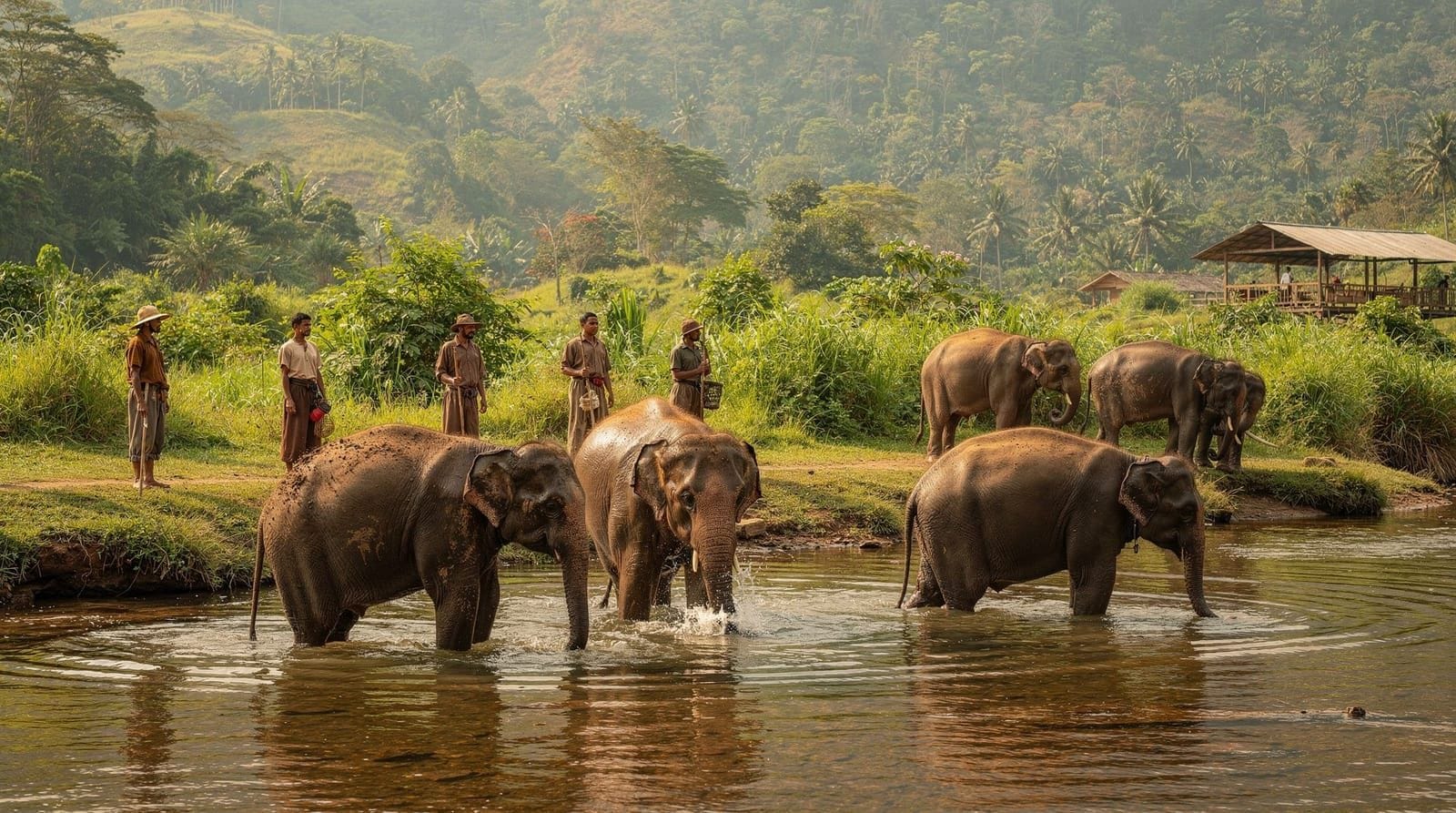
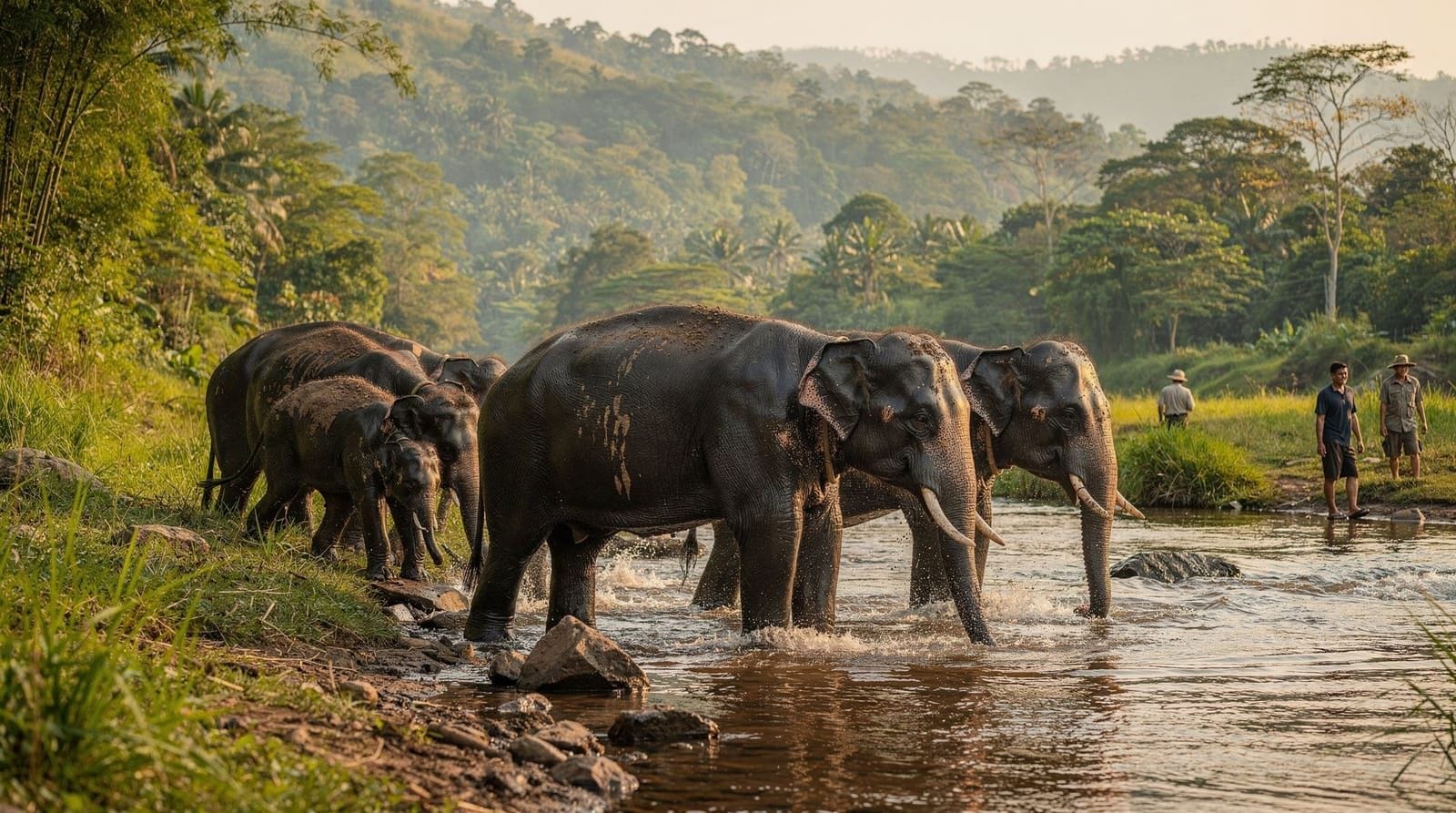
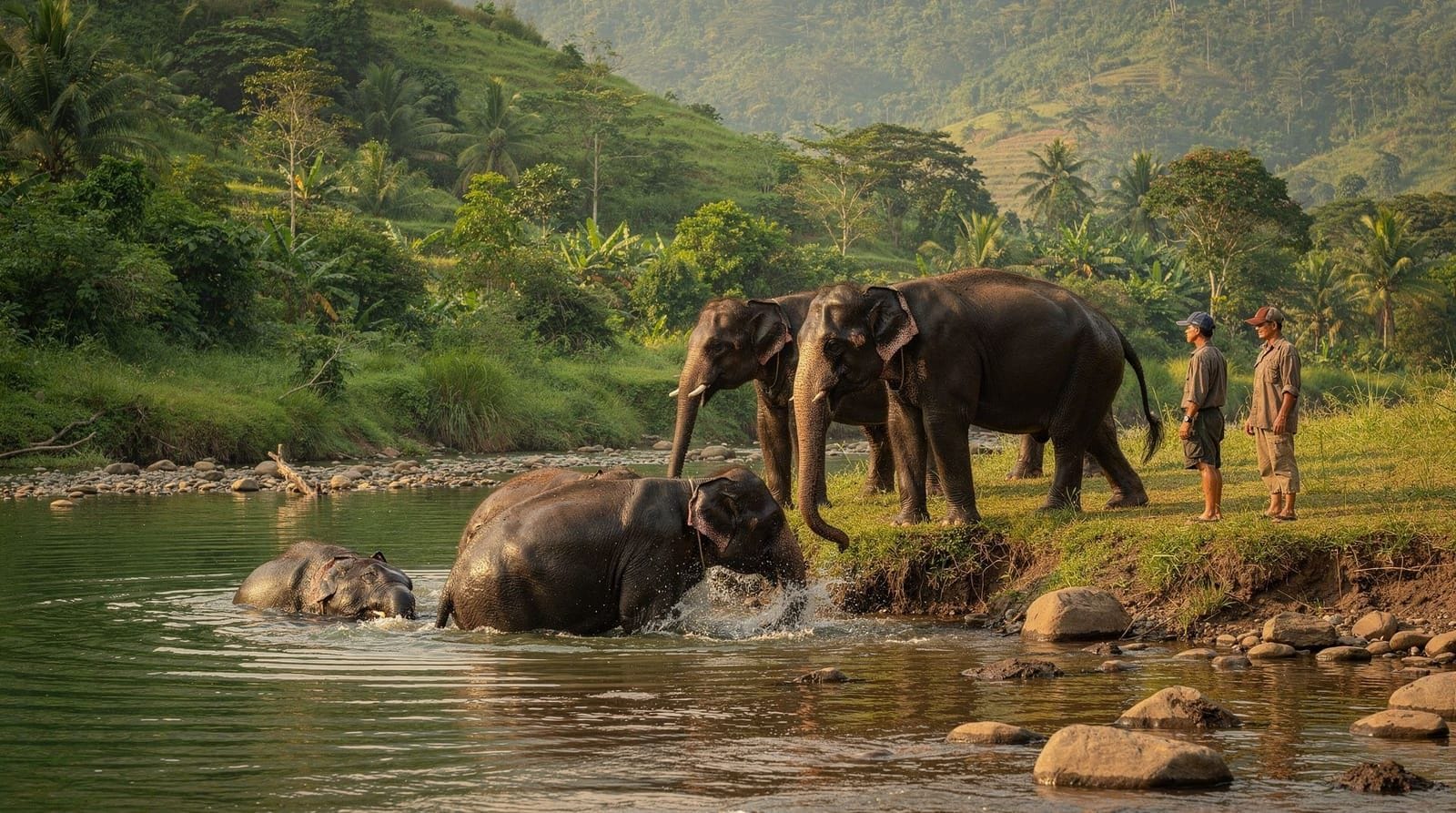
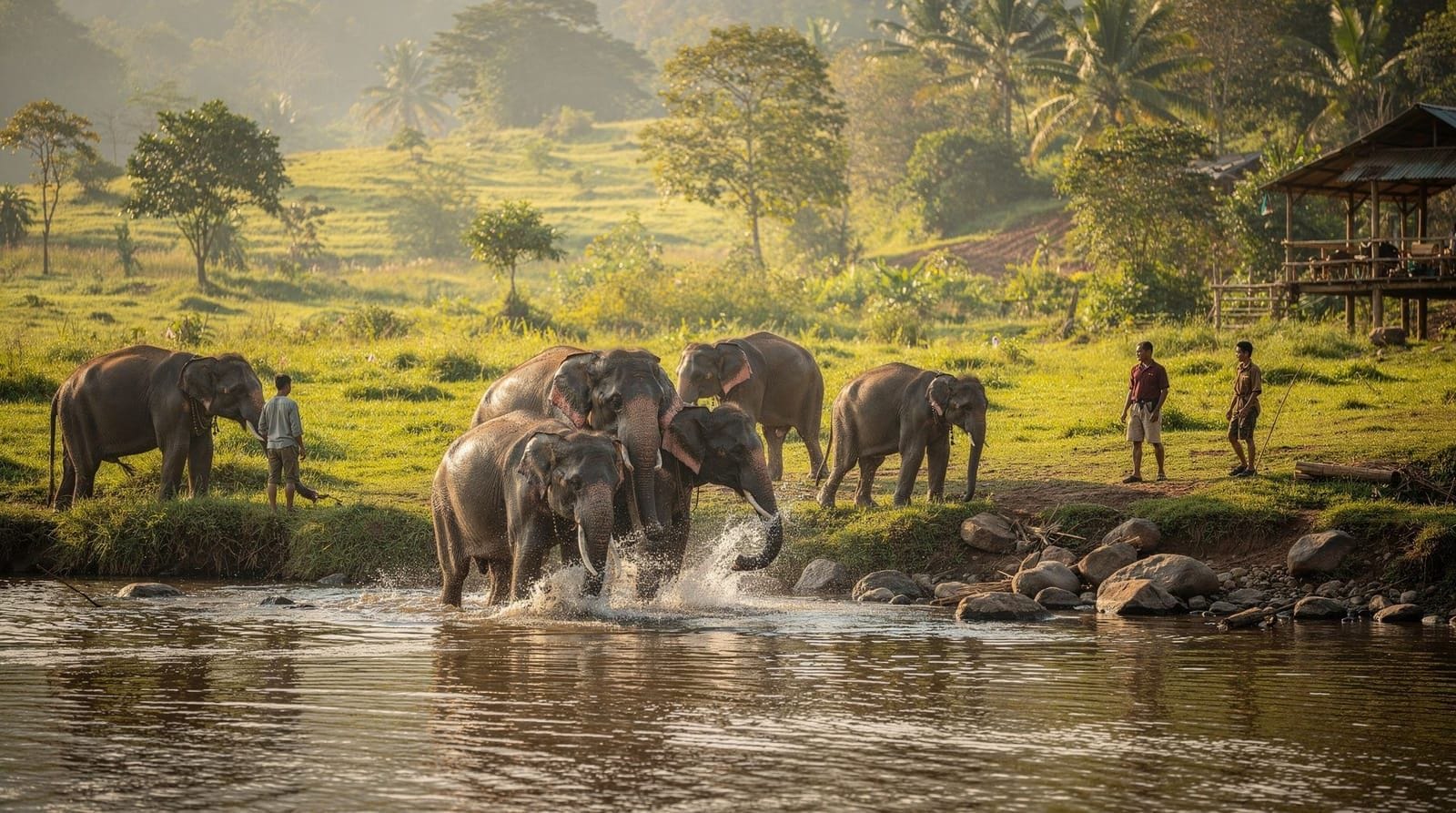
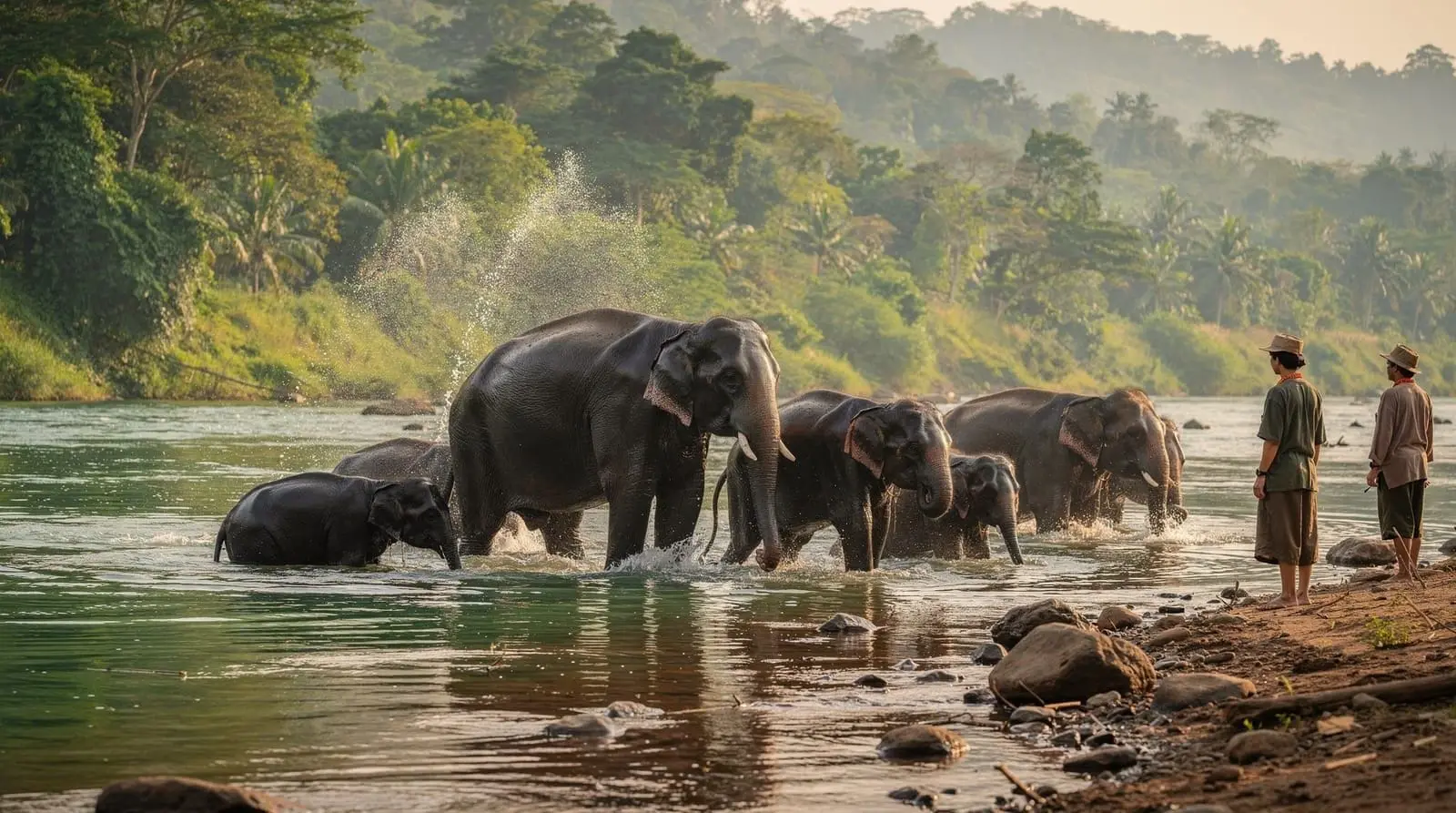
A genuinely ethical sanctuary’s itinerary looks structurally different from the outset. No riding is offered under any framing, bareback included, and no bullhook is used or kept on site. The core activities are hand-feeding fruit and sugar cane, walking alongside elephants through open pasture or forest as they graze and interact naturally, and observing behavior at a respectful distance, often followed by a supervised, smaller-group mud bath or river bathing session as an optional element rather than the headline activity. Good programs can describe, specifically, where each elephant came from, usually retirement from logging, a former riding camp, or the street-begging trade, and how long it has lived at the property since.
Check the small-group ethical elephant sanctuary tour for a program built specifically around this no-riding, no-performance, capped-group-size model.
The welfare case, plainly stated
The welfare argument against riding isn’t a matter of taste or a modern sensibility retroactively applied to an old tradition; it’s grounded in well-documented physical harm. An elephant’s spine is not well adapted to carrying sustained weight on its back, particularly the concentrated point-load of a rigid wooden or metal howdah, and years of daily riding work produce measurable spinal damage, joint problems, and pressure sores documented across retired working elephants throughout the region. Bareback riding reduces some of this load but doesn’t eliminate the underlying stress on the animal’s back, and it doesn’t address the training methods used to make riding possible in the first place. The bullhook itself causes direct physical pain when used to enforce compliance, and its continued presence at an operation is one of the clearest, most checkable signs that riding-style training and control remain part of daily practice there.
Why the marketing gap exists
There is no legal or licensing standard in Thailand restricting who can call their operation a “sanctuary,” which means a camp that still offers riding can use exactly the same reassuring vocabulary, “ethical,” “rescue,” “sanctuary,” as a genuine no-riding operation. This creates real, ongoing confusion for travelers trying to book responsibly, since the words on a listing simply aren’t a reliable signal on their own. Some riding camps have also softened their language over the past decade in response to growing traveler awareness, replacing “riding” with terms like “trekking” or emphasizing “bareback” as if it represented a meaningfully different, gentler category of activity, when the underlying welfare concerns largely persist regardless of the specific phrasing used.
How to tell them apart before booking
A handful of concrete checks cut through the marketing confusion more reliably than the listing’s own self-description. Read the itinerary line by line: a genuine sanctuary spells out feeding, walking, and observation as distinct, described activities, while a riding camp’s listing usually names “riding” or “trekking” somewhere in the description even when softened. Check recent reviews specifically for the words “ride,” “riding,” or “show,” since these tend to surface even when a listing’s headline copy avoids them directly. Look at photos carefully for a visible bullhook or a howdah, both clear indicators regardless of accompanying text. Ask directly, by message or in reviews, whether elephants perform any trained behavior for an audience or whether riding is offered in any form, including bareback, before booking anything. Our full guide to choosing an ethical sanctuary covers this checklist in more depth, and our Chiang Mai scams guide covers the broader pattern of tourist-facing misdirection beyond just elephant tourism specifically.
See the Elephant Dream Project full-day sanctuary tour for an example of a program built around retired elephants with a documented rescue history rather than a riding-camp background.
Pricing: not a reliable signal either way
A common misconception holds that ethical sanctuaries must cost meaningfully more than riding camps, given the association between higher prices and higher standards elsewhere in travel. In practice, pricing between the two categories is often broadly similar, roughly 1,200-2,800 THB (about 33-78 USD at 36 THB/USD) for a half or full day at either type of operation, since both involve comparable overhead: land, staff, elephant feed, and hotel transfer. This means price is a poor standalone signal of ethics; an unusually cheap listing at either type of operation is worth extra scrutiny for cut corners, but a higher price doesn’t guarantee a genuinely ethical program any more than a lower one guarantees a riding camp.
The honest complications: group bathing and “conversion” claims
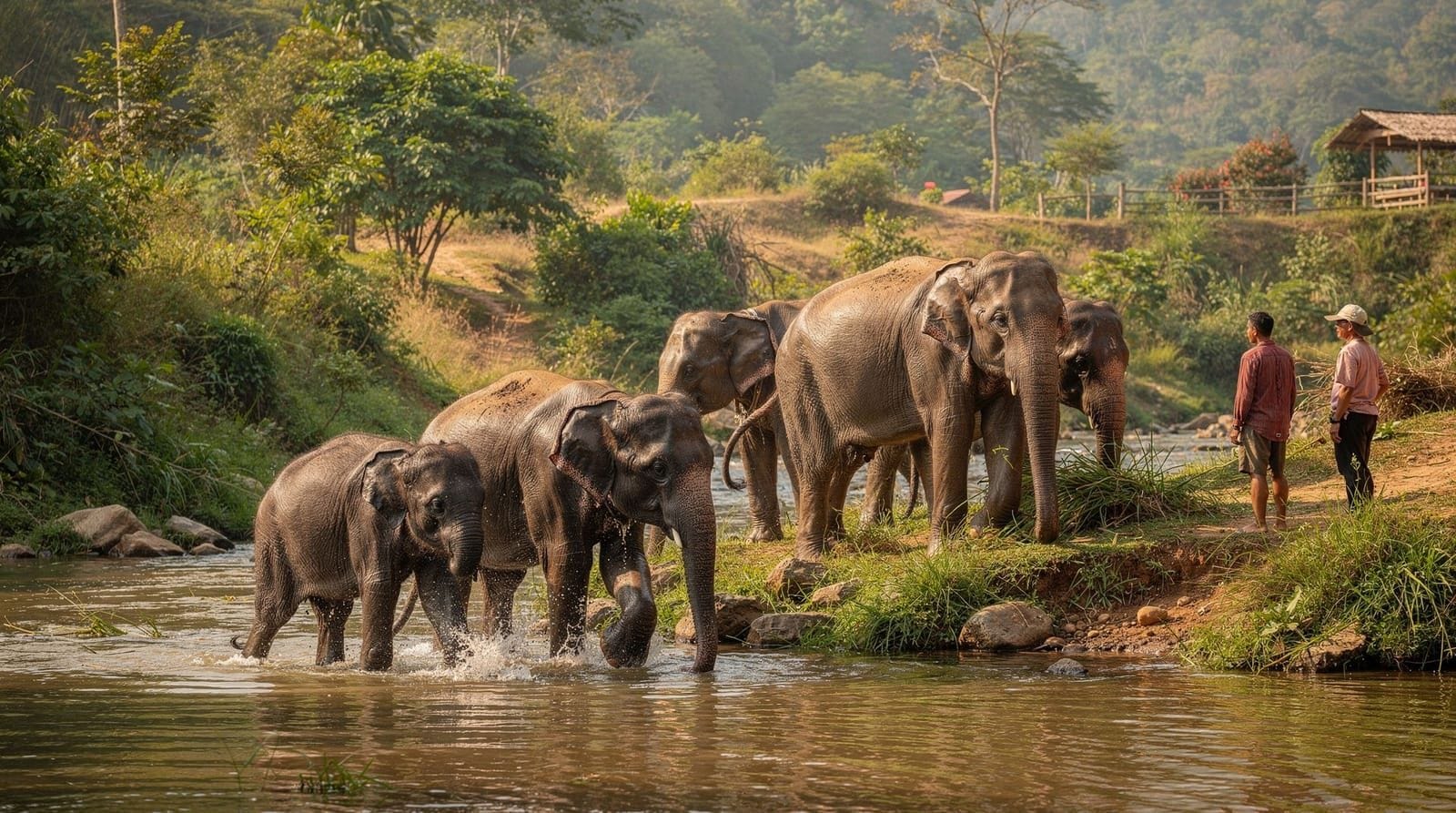
It’s worth being direct about a genuine grey area even within the ethical-sanctuary category: large group bathing sessions, where many tourists crowd into a river with one or two elephants for a photo opportunity, draw real, ongoing criticism from welfare researchers even at otherwise well-run, no-riding operations, since the crowding itself can stress an animal in ways not so different from other forms of forced interaction. A more defensible ethical program limits bathing to smaller groups and shorter durations and lets elephants opt out into a mud wallow instead, and it’s a fair, specific question to ask any operator directly regardless of how they otherwise present themselves.
A related complication involves camps that claim to have “converted” from riding to a no-riding model. Some of these conversions are genuine and thorough, removing bullhooks entirely and retraining staff around a feeding-and-observation approach. Others are more cosmetic, removing riding from the marketing while keeping the same underlying infrastructure and staff practices in place. Recent, detailed reviews mentioning specific staff behavior and animal condition are a more reliable check on a claimed conversion than the operator’s own before-and-after marketing copy.
A day in the life, compared
Walking through a typical day at each type of operation makes the contrast concrete rather than abstract. At a riding camp, elephants are typically brought to a loading platform each morning, fitted with a howdah or prepared for bareback riding, and spend several hours carrying tourists on repeated short treks, with breaks between groups rather than genuine rest. A bathing session, often with tourists actively scrubbing and splashing the animal in large groups, frequently follows, and some camps schedule a performance segment, painting, tricks, or a show, before the animals are returned to overnight housing, sometimes on a short chain.
At an ethical sanctuary, a typical day starts with feeding, tourists hand-offering fruit while a mahout narrates the elephant’s individual history, followed by a walk through open pasture or forest where the elephant grazes, dust-bathes, and socializes largely on its own terms while visitors observe and occasionally interact at the animal’s initiation rather than on a fixed schedule. A shorter, smaller-group bathing or mud-wallow session may follow, and the animal spends the remainder of the day in open space with other elephants rather than tethered near a loading platform awaiting the next group. The difference in how much of the day is spent under direct behavioral control, versus how much is spent in a more natural, self-directed state, is really the whole comparison in miniature.
Common rationalizations, addressed directly
A few justifications for riding tend to recur in traveler discussions and are worth addressing plainly. “The elephant looks calm, so it must be fine” doesn’t hold up well: habituation to a stressful routine looks like calm compliance from the outside but doesn’t reflect genuine comfort, and elephants have limited practical ability to signal or act on distress in a controlled tourist setting regardless of how they feel. “It supports the local economy either way” is true in a narrow sense but sidesteps the actual question, since ethical sanctuaries employ mahouts and local staff just as riding camps do, meaning the economic argument doesn’t meaningfully favor one model over the other. “I only rode once, it’s not a big deal” misses that individual bookings in aggregate are exactly what sustains demand for the riding model at all; a single visitor’s choice is a small signal, but it’s the same small signal repeated across hundreds of thousands of annual visitors that determines which model Chiang Mai’s elephant tourism industry keeps investing in.
If you’ve already booked a riding camp
Travelers who’ve already booked a riding-camp experience, whether unknowingly or before fully understanding the welfare issues, have a few reasonable options worth considering rather than simply feeling stuck. Contacting the operator to ask whether a non-riding, observation-only alternative exists within the same booking is worth trying, since some camps do offer this as an add-on or substitute option even if it isn’t the default. Where cancellation is possible without a meaningful financial penalty, switching to a verified ethical sanctuary is the more direct fix. Where neither option is realistic, opting out of the riding or bathing portion specifically while still attending, and declining to purchase souvenir photos of the riding activity, at least reduces direct participation in the specific practices most in question, even if it doesn’t fully resolve the underlying booking.
Which to choose, and why it matters beyond the single visit
For any traveler weighing the two categories, the choice isn’t really close on animal welfare grounds: a genuine ethical sanctuary offers a documented, verifiable alternative to a model built on demonstrated physical harm and coercive training, and it’s increasingly the model most reputable Chiang Mai operators are shifting toward in response to traveler demand. Choosing an ethical sanctuary over a riding camp isn’t only about that single day’s experience either; it’s part of a broader market signal that has genuinely shifted the regional tourism industry over the past decade, with a meaningful number of former riding camps closing, converting, or losing business to the no-riding model as travelers have grown more aware of the distinction covered in this guide. Our dedicated guide on why elephant riding causes harm and side-by-side sanctuary comparison both go further into the specifics for anyone finalizing a booking.
Families traveling with children have an additional reason to favor the ethical model specifically: it teaches, by direct example rather than lecture, that respect for an animal doesn’t require dominating or riding it, a lesson that tends to land more effectively through a genuinely good sanctuary visit than through any amount of explanation alone. Our family-focused elephant sanctuary guide covers age suitability and pacing for exactly this kind of visit, and pairs naturally with the broader case made throughout this comparison for choosing observation and feeding over riding and performance, regardless of which specific operator ultimately gets the booking.
Frequently asked questions about ethical sanctuaries vs riding camps
Is elephant riding ever acceptable?
No credible animal welfare organization considers elephant riding acceptable today, given the well-documented spinal and joint damage caused by carrying weight, whether saddled or bareback, and the harsh training methods historically required to make an elephant reliably compliant enough to be ridden by strangers.
Do riding camps still exist around Chiang Mai?
Yes, though their number has declined as ethical, no-riding sanctuaries have grown more popular with international travelers over the past decade. Riding camps still operate and market themselves actively, sometimes using softened language like “trekking” or “bareback riding” that can obscure what’s actually on offer.
How can I tell a riding camp apart from a genuine sanctuary before booking?
Read the itinerary line by line rather than the headline description, check recent reviews specifically for the words “ride,” “riding,” or “show,” and look for evidence of a bullhook or performance tricks in photos. A genuine sanctuary’s listing will spell out feeding, walking, and observation as the core activities rather than a vague “elephant experience.”
Why do riding camps cost about the same as ethical sanctuaries?
Both involve broadly similar overhead, land, staff, elephant care, and transport, so price alone is rarely a reliable way to distinguish an ethical operator from a riding camp. The itinerary description and specific activities on offer are far more telling than the price point.
What happened to elephants historically used for riding once camps convert to a no-riding model?
Reputable converting camps typically retire the animals from riding-related work entirely, shifting to a feeding-and-observation model with no bullhook and no performances. The credibility of any specific claimed conversion is worth checking through recent, detailed reviews rather than taking marketing copy at face value.
Is watching an elephant show different from riding one?
It’s a different activity but a related welfare problem. Performances, painting, football, dancing, still require the same kind of forceful training history that riding does, since elephants don’t perform tricks for an audience voluntarily. An operator offering shows is not meaningfully more ethical than one offering rides.
Top experiences
Bookable activities with verified prices and instant confirmation on GetYourGuide.