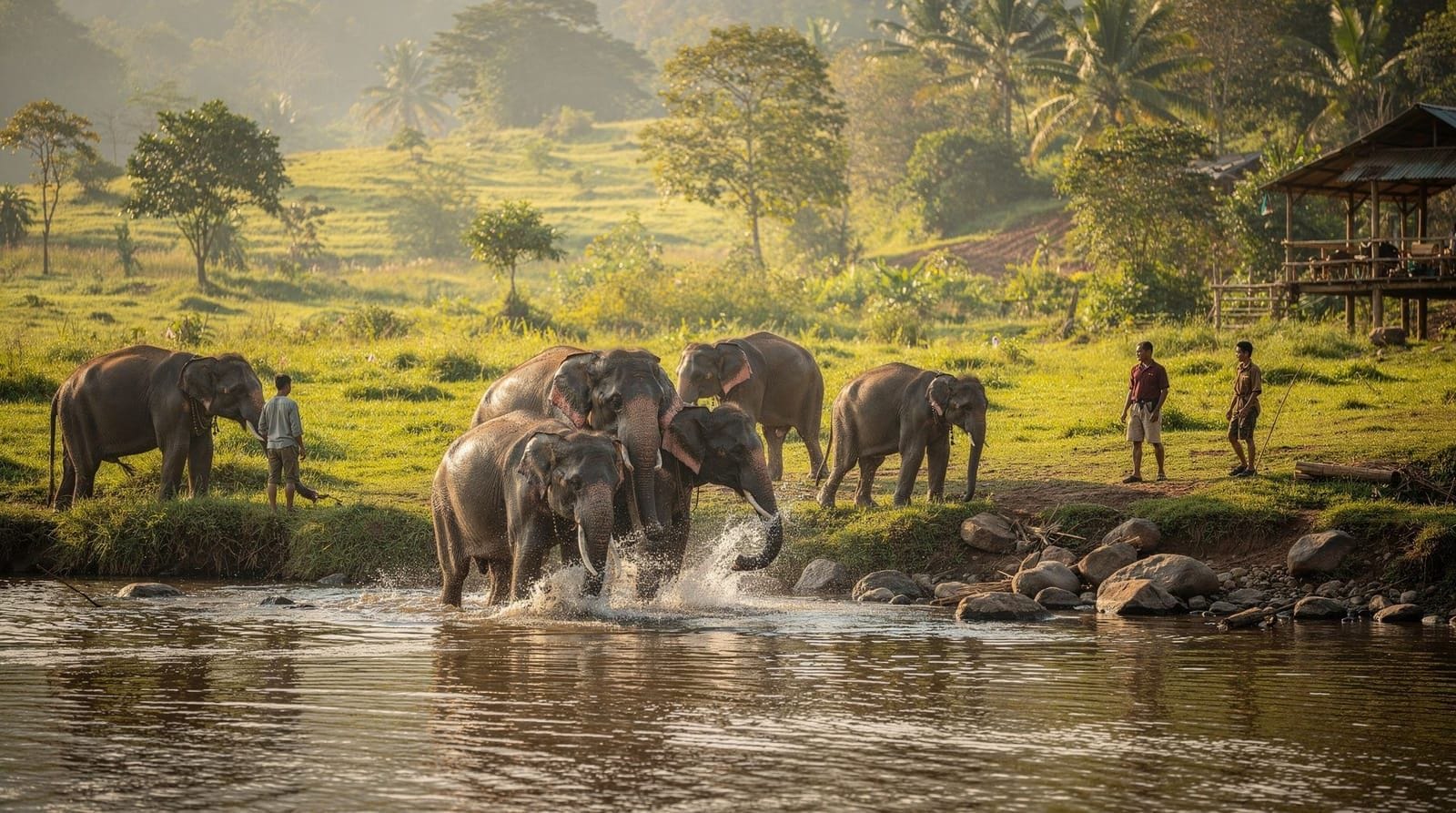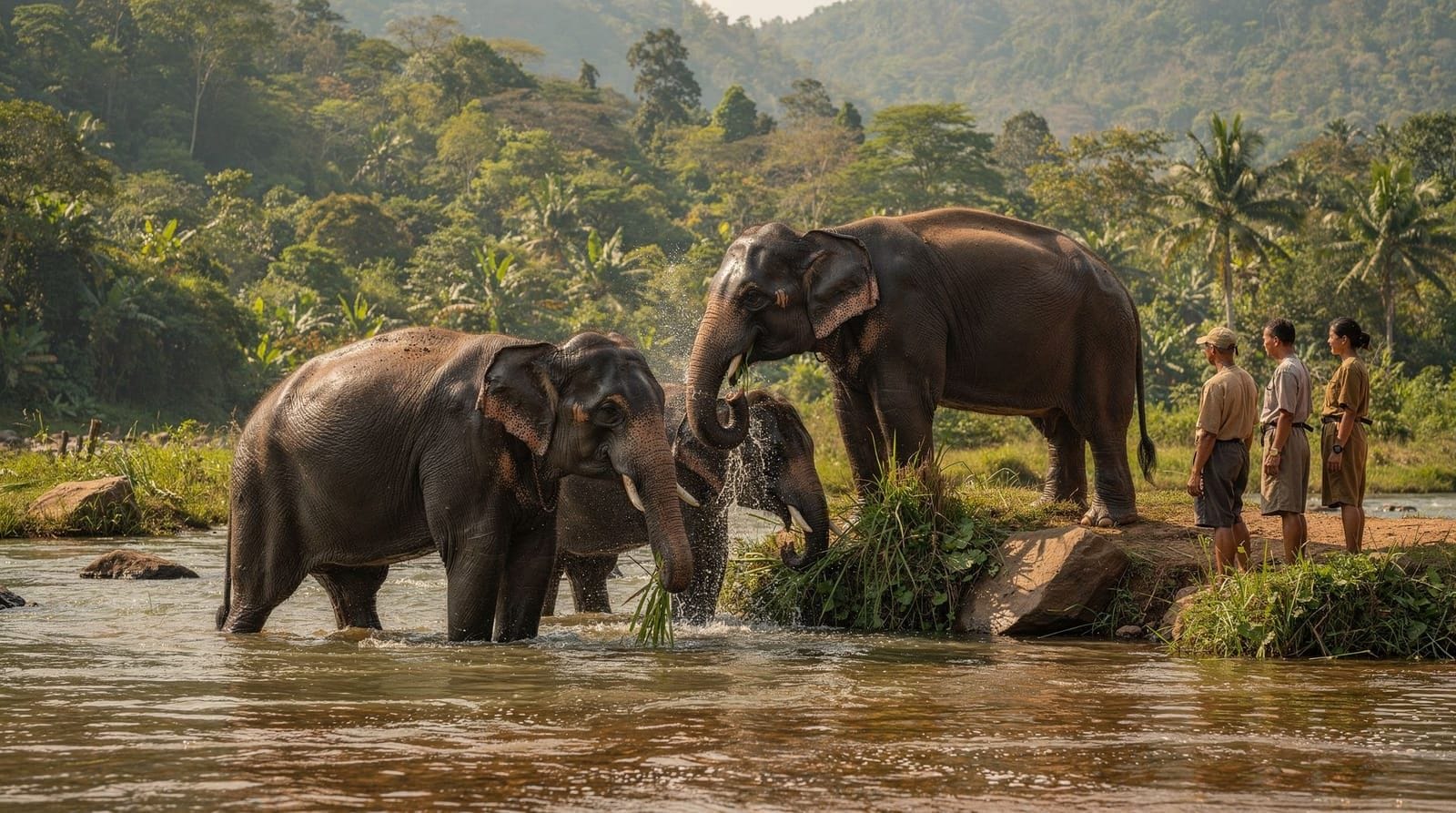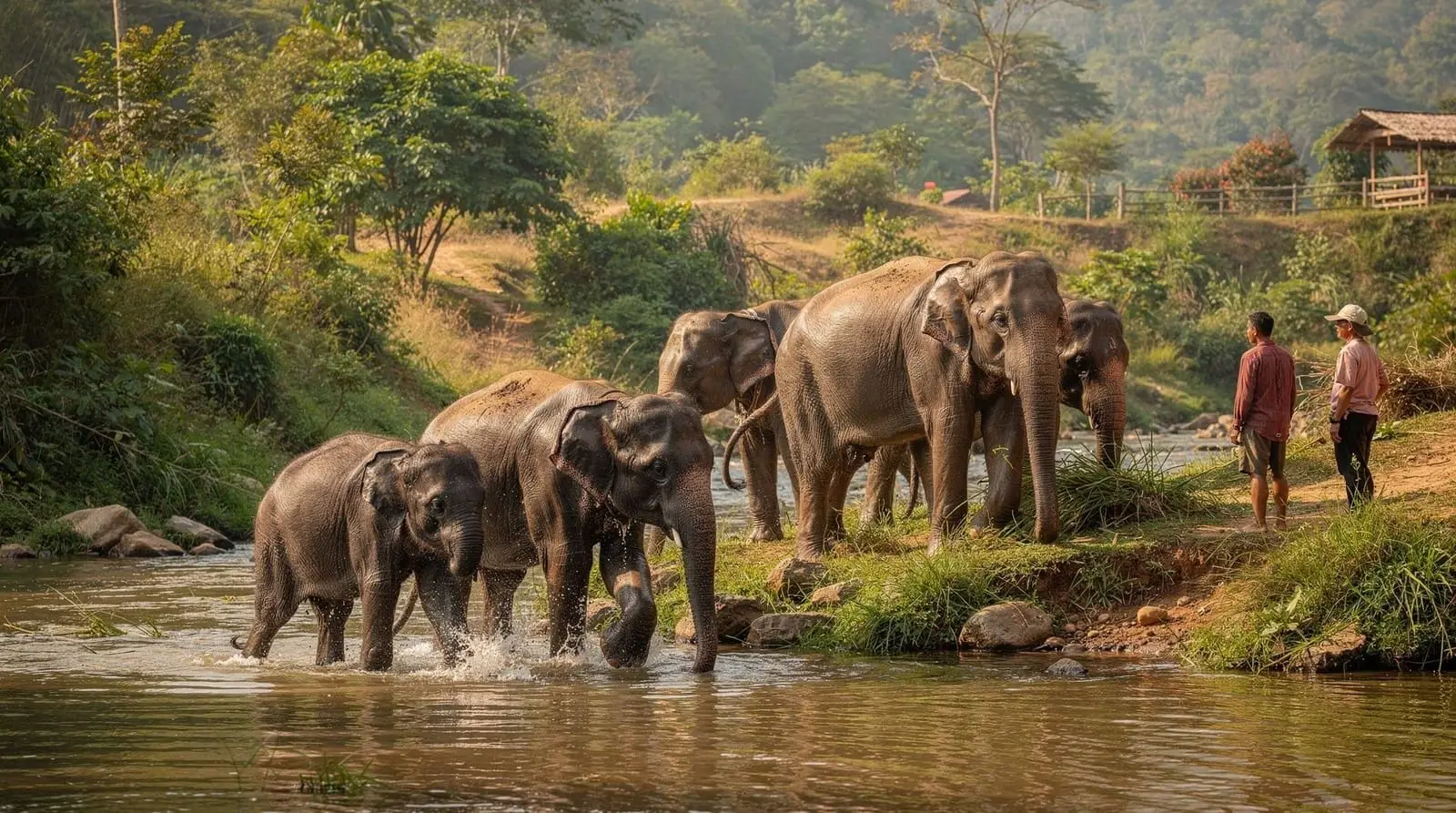
Elephant Nature Park vs other ethical sanctuaries
Chiang Mai: Small Group Ethical Elephant Sanctuary Tour
Duration: Half day
Is Elephant Nature Park better than other ethical elephant sanctuaries near Chiang Mai?
Elephant Nature Park is the largest and most established ethical operation, with roughly 3,000 acres, dozens of resident elephants, and a strong public track record, but it costs more, books out weeks or months ahead, and runs larger daily visitor numbers than smaller Mae Rim and Mae Taeng sanctuaries. Smaller, well-vetted sanctuaries offer comparable no-riding, no-bullhook ethics at lower prices, shorter lead times, and often smaller groups - the trade-off is scale and brand recognition, not necessarily welfare quality.
Ask any Chiang Mai travel forum which elephant sanctuary to book, and one name dominates the replies within minutes: Elephant Nature Park. It deserves its reputation, but it’s also become something of a default answer that crowds out a real, practical comparison - because for a lot of travelers, the smaller sanctuaries scattered through the Mae Rim and Mae Taeng valleys are the better fit on price, timing, or group size, without any compromise on ethics.
Quick answer: Elephant Nature Park is the largest and most established ethical operation, with roughly 3,000 acres, dozens of resident elephants, and a strong public track record, but it costs more, books out weeks or months ahead, and runs larger daily visitor numbers than smaller Mae Rim and Mae Taeng sanctuaries. Smaller, well-vetted sanctuaries offer comparable no-riding, no-bullhook ethics at lower prices, shorter lead times, and often smaller groups - the trade-off is scale and brand recognition, not necessarily welfare quality.
What Elephant Nature Park actually is
Elephant Nature Park was founded by Sangduen “Lek” Chailert, a Thai conservationist whose Save Elephant Foundation has grown into one of the most internationally recognized ethical elephant rescue operations in Southeast Asia. The park sits in the Mae Taeng valley, roughly 60-90 minutes from central Chiang Mai depending on traffic, and covers an estimated 3,000 acres of pasture and forest that is home to dozens of rescued elephants, many with visible injuries or disabilities from their previous lives in logging, riding, or street-begging.
The core model is observation, feeding, and (in some programs) supervised bathing at a respectful distance - no riding, no bullhook, no performance tricks, ever. What sets it apart operationally from most smaller sanctuaries is scale: a larger resident elephant population, an on-site veterinary team, a wider range of rescue and rehabilitation stories staff can point to individually, and a longer institutional track record that’s been independently covered by international media for over a decade. For travelers who want maximum certainty about an operator’s history before committing, that track record carries real weight.
What “other ethical sanctuaries” means
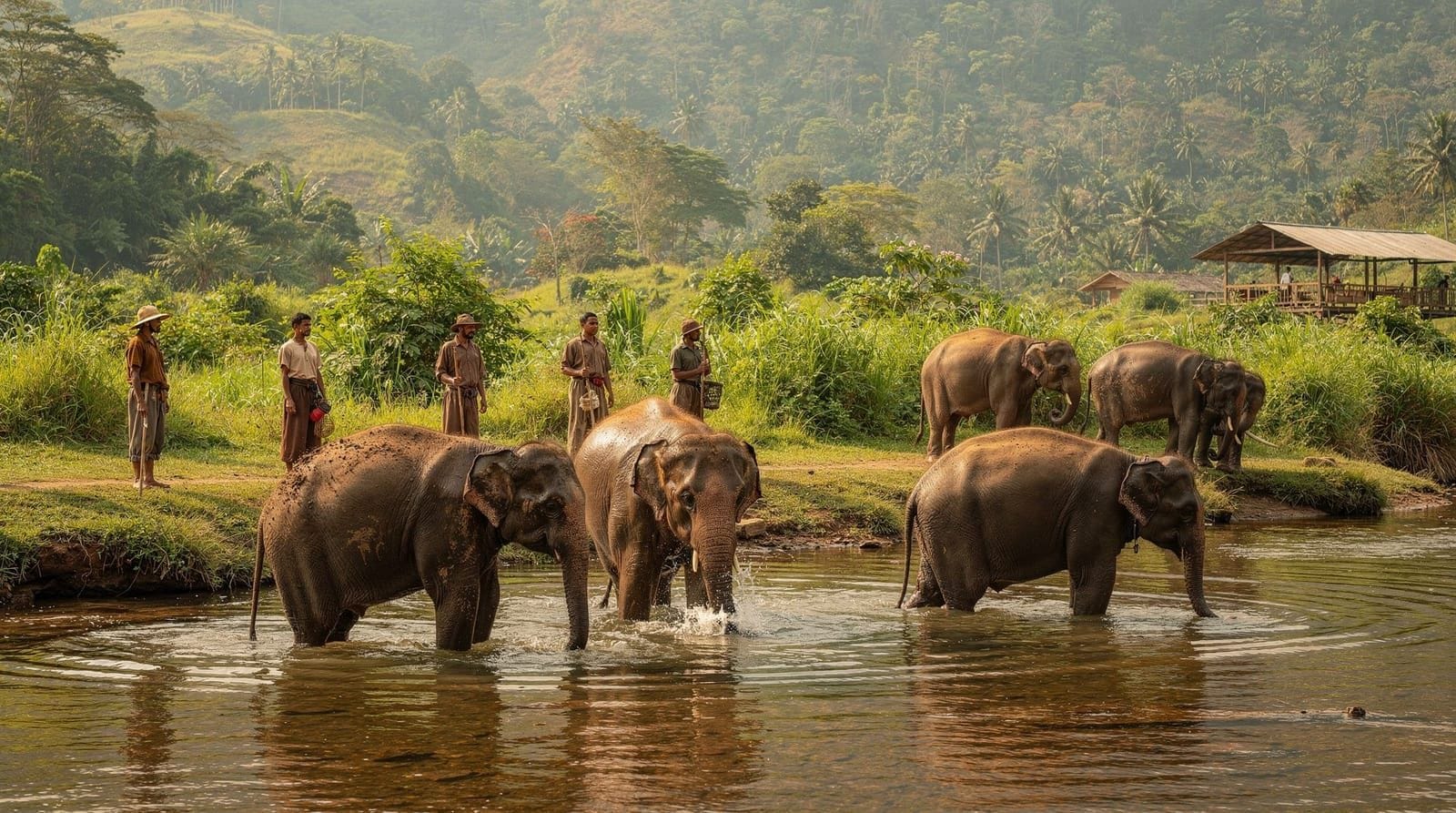
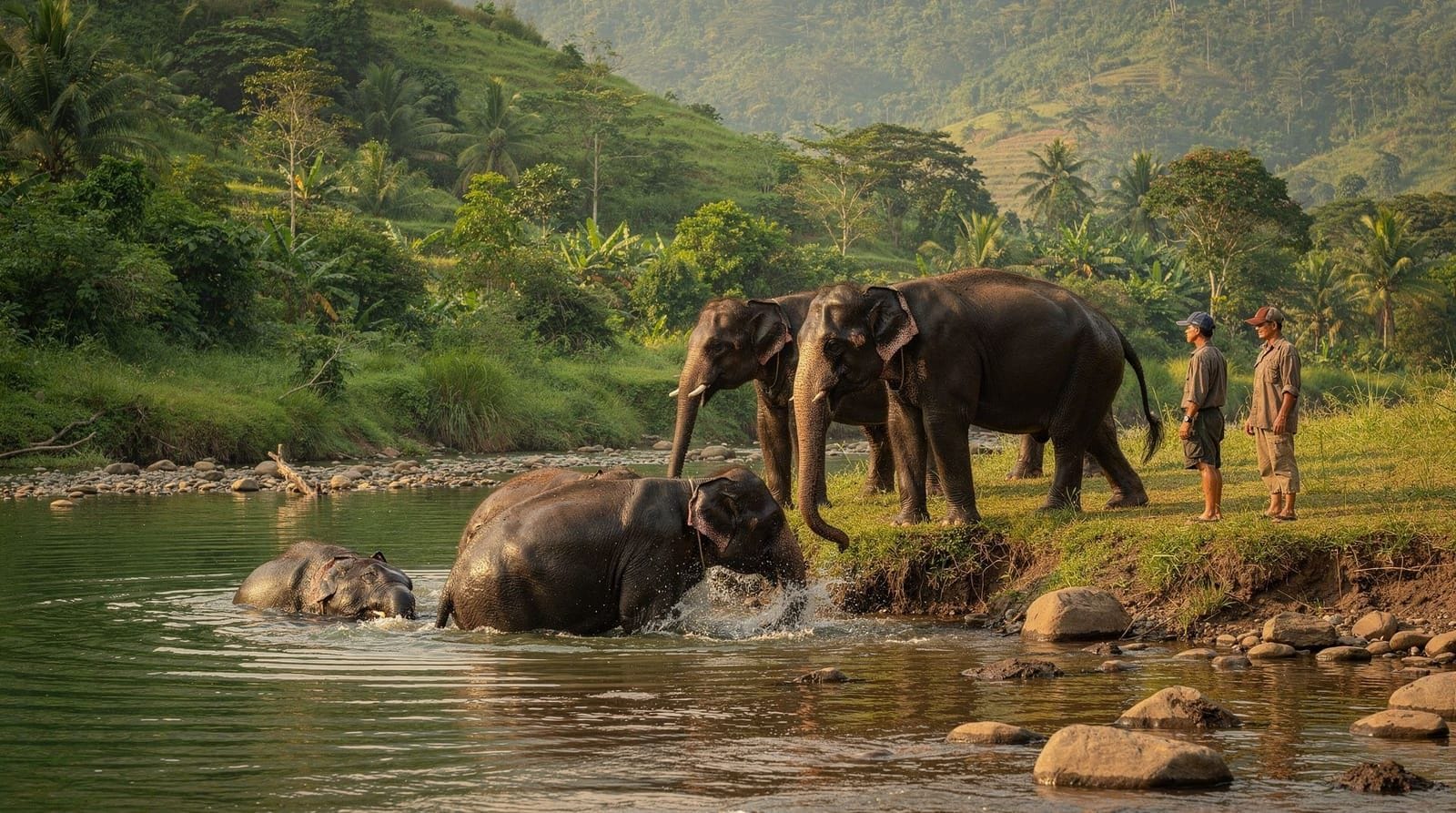
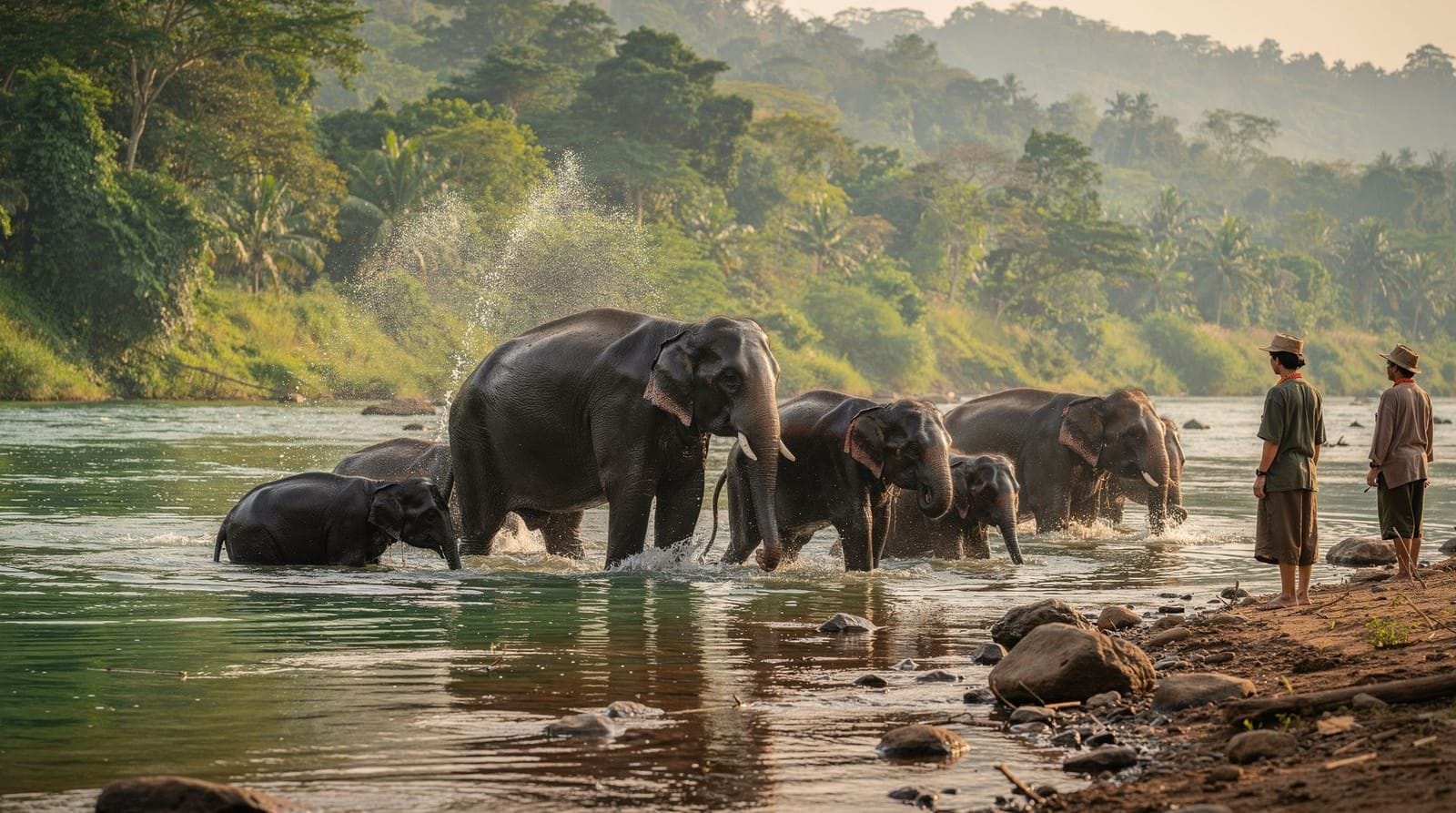
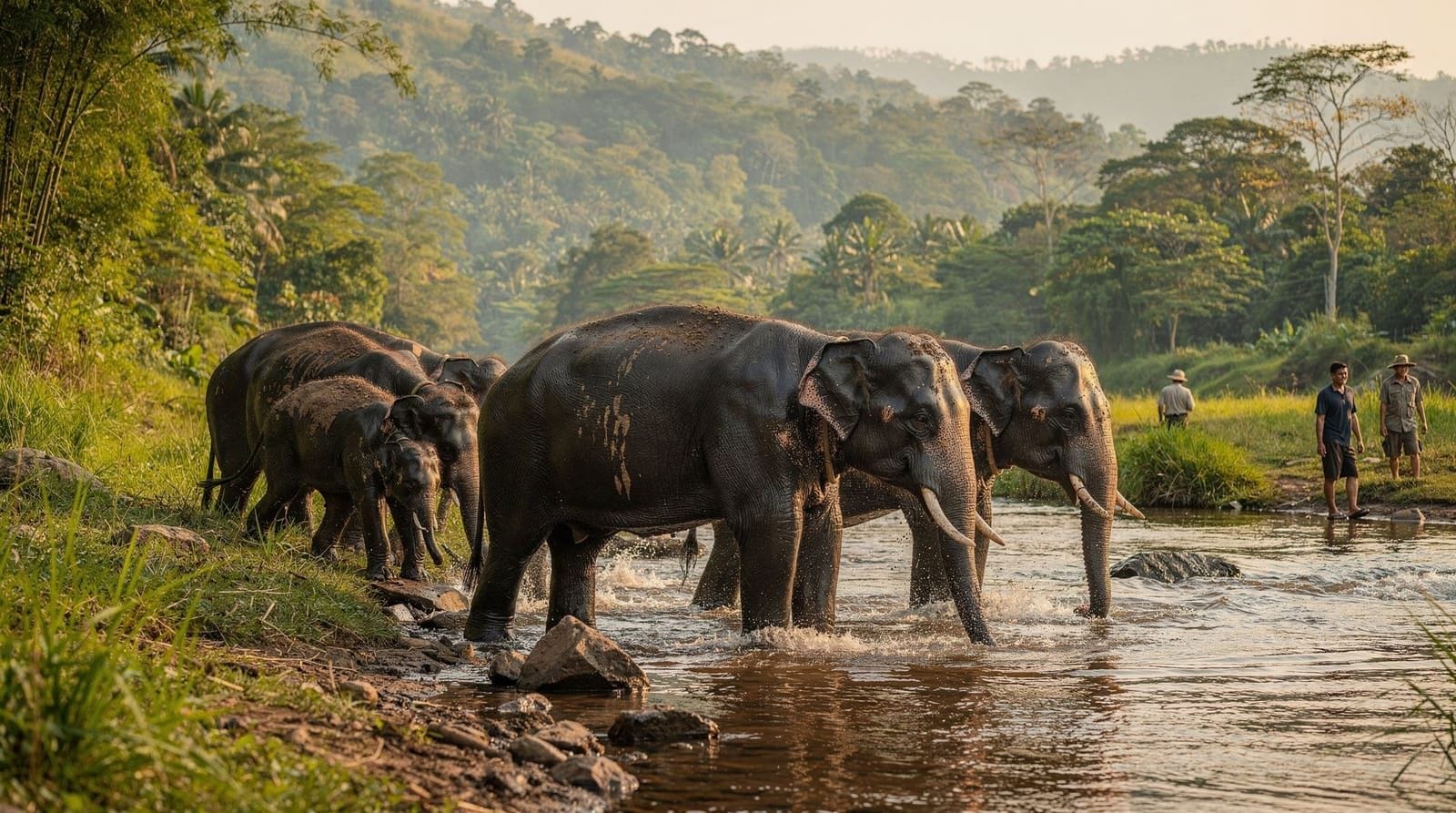
The broader field isn’t a single alternative - it’s a scattered group of smaller operations, mostly in the Mae Rim and Mae Taeng valleys, each hosting anywhere from a handful to a few dozen elephants on land ranging from tens to a few hundred acres. Some are independent family-run rescue operations; others are satellite or partner programs connected to larger welfare networks. What the legitimate ones share with Elephant Nature Park is the non-negotiable core: no riding, no bullhook, no forced performance, and elephants that can be observed behaving close to naturally.
What varies between them is exactly what you’d expect from smaller scale: fewer elephants to meet in a single visit, sometimes a shorter or less detailed rescue backstory for each animal, and less name recognition outside travel-forum circles. None of that is automatically a welfare downgrade - it just means you’re doing more of the vetting yourself using the same selection criteria rather than relying on a famous name to do it for you.
Price comparison
Elephant Nature Park’s day-visit and overnight programs typically sit at the higher end of the market, reflecting its scale, infrastructure, and brand position. Smaller sanctuaries running comparable no-riding, feeding-and-walking half-day programs generally price lower - in the broad range of 1,200-2,000 THB per person (roughly USD 33-56) for a half day, and 2,000-3,000 THB (roughly USD 56-83) for a full day, though exact pricing varies by operator and season and should always be checked on the current listing.
Programs like the small-group ethical sanctuary tour or the elephant care program at a retirement park sit in that smaller-operator price band while still meeting the same no-riding, no-bullhook standard. The honest framing: you’re not paying more at Elephant Nature Park for better ethics, you’re paying more for scale, infrastructure, and a recognizable name.
Booking lead time: the practical dealbreaker for many travelers
This is where the comparison matters most for anyone planning a trip on short notice. Elephant Nature Park’s popularity means its day programs routinely book out weeks to several months ahead for desirable dates, especially in the November-February high season and around major holidays. Travelers who decide on a whim mid-trip, or who are booking within a week or two of arrival, frequently find it fully booked.
Smaller sanctuaries are typically far more flexible - many can be booked just a few days ahead, sometimes even the same week, since their total visitor capacity per day is naturally lower and turnover in availability is faster. If your itinerary is loosely planned or you’re deciding on elephant tourism only after you’ve already landed in Chiang Mai, this alone often settles the choice in favor of a smaller operator, regardless of budget.
Group size and how close-up the experience feels
Elephant Nature Park hosts a larger absolute number of daily visitors given its scale and popularity, though it organizes them into smaller sub-groups with dedicated guides for the actual feeding and walking activities rather than one giant crowd. Even so, the overall on-site population on a given day is meaningfully larger than at a boutique sanctuary capping total visitors in the dozens.
Smaller sanctuaries, almost by definition, offer a more intimate feel - fewer total visitors on site, often more individual guide attention, and a greater chance of extended, unhurried time with a specific elephant rather than a scheduled rotation through a larger group. It’s worth being candid about the nuance here: a bigger operation with more elephants doesn’t inherently mean more crowding around any single animal, but it does usually mean a busier overall site atmosphere.
Distance from central Chiang Mai
Elephant Nature Park’s Mae Taeng valley location puts it at roughly 60-90 minutes from the Old City and Tha Phae Gate area, depending on traffic and the exact pickup point. The closest Mae Rim sanctuaries run somewhat shorter, around 45-60 minutes, which matters more for half-day programs where transfer time eats into total available hours. It’s a modest difference in absolute terms - 15-30 minutes each way - but it can be the deciding factor for a full-day itinerary that also needs to fit in another stop, or for families managing a young child’s patience for car time.
What the premium at Elephant Nature Park actually buys
Stripped of marketing language, the honest summary is: scale, infrastructure, and certainty. You get a larger resident elephant population to observe, an on-site veterinary operation, over a decade of independently reported track record, and closer to guaranteed brand-level trust without doing your own vetting. What you pay for that is a higher price, a much longer booking lead time, and a busier overall site.
Smaller sanctuaries ask you to do a bit more homework - checking for the same no-riding, no-bullhook, verifiable-rescue-story criteria yourself rather than trusting a famous name - in exchange for a lower price, shorter lead time, and often a more intimate group experience. Programs like the Living Green elephant sanctuary tour or the ethical elephant encounter feeding program are representative of that smaller-scale tier, worth checking against the same ethical checklist before booking.
So which should you actually book?
If you’re planning weeks or months ahead, have flexible dates, and want the most established name with the deepest institutional track record, Elephant Nature Park is a sound choice worth its premium and its booking effort. If you’re deciding closer to your trip, traveling on a tighter budget, or simply prefer a smaller-scale, less crowded visit, a well-vetted smaller sanctuary in Mae Rim or Mae Taeng meets the same core ethical standard without the lead-time pressure.
For a fuller side-by-side across several specific smaller operators rather than the general category, see our best ethical elephant sanctuaries in Chiang Mai, compared. If you’re still deciding between any ethical sanctuary model and the riding-camp alternative some tourists still encounter, our Elephant Nature Park versus riding camps guide and our broader why riding elephants should be avoided explainer lay out the welfare case in full. And for logistics once you’ve picked a program, our guides on what to wear and bring and half-day versus full-day visits cover the practical planning either option requires.
Whichever you choose, both fall well within the same ethical elephant sanctuary category as this site defines it - no riding, no bullhook, no forced performance - which is the baseline that should rule out any operator, famous or not, that fails to meet it. Our broader ethical elephant sanctuary guide and the elephant sanctuaries category hub round out the planning picture.
Families weighing this choice should also read our visiting an elephant sanctuary with kids guide, and anyone considering pairing either option with a waterfall stop can check our elephant sanctuary and waterfall combo tours guide before booking. Both Elephant Nature Park and the smaller Mae Rim sanctuaries sit within easy reach of Mae Sa Valley if you want to extend the day with another nature stop.
Frequently asked questions about Elephant Nature Park versus other sanctuaries
Why is Elephant Nature Park more expensive than other sanctuaries?
Its day-visit and overnight programs typically run higher than comparable half-day trips at smaller operators, reflecting its larger land holding, larger resident elephant population, on-site veterinary and rescue infrastructure, and its position as the most internationally recognized ethical sanctuary brand in Thailand.
How far ahead do I need to book Elephant Nature Park?
Weeks to several months ahead for popular dates, especially November through February peak season and around Thai and Western holidays. Smaller sanctuaries in Mae Rim and Mae Taeng can often be booked just days ahead, sometimes even the same week.
Is Elephant Nature Park too far from central Chiang Mai?
It’s roughly 60-90 minutes from the Old City depending on traffic and exact program, somewhat farther than the closest Mae Rim sanctuaries at around 45-60 minutes. The difference is a modest addition to a half or full day, not a major detour.
Are smaller sanctuaries near Chiang Mai actually ethical, or just cheaper?
Price and ethics don’t automatically track together - several smaller operators in the Mae Rim and Mae Taeng valleys run genuine no-riding, no-bullhook, rescue-focused programs at a lower price point than Elephant Nature Park simply because they have less land, fewer elephants, and lower overhead, not because they cut corners on welfare.
What is Elephant Nature Park’s group size like compared to smaller operators?
Elephant Nature Park hosts a larger total number of daily visitors given its scale, though it organizes them into smaller sub-groups for actual activities; some boutique Mae Rim sanctuaries cap total daily visitors in the dozens rather than low hundreds, which can mean more individual guide attention.
Who founded Elephant Nature Park?
Elephant Nature Park was founded by Sangduen “Lek” Chailert, a Thai conservationist whose Save Elephant Foundation has become one of the most publicly recognized ethical elephant rescue organizations in Southeast Asia.
Can I do a shorter half-day visit at Elephant Nature Park, or is it always a full day?
Elephant Nature Park is best known for full-day and multi-day programs; visitors wanting a shorter half-day format, or a same-week booking, are generally better served by one of the smaller Mae Rim or Mae Taeng sanctuaries covered in this guide.
Does paying more at Elephant Nature Park guarantee a better elephant welfare outcome?
Not automatically - both Elephant Nature Park and several smaller sanctuaries meet the same core ethical bar (no riding, no bullhook, no forced performance, verifiable rescue stories). The premium buys scale, infrastructure, and brand certainty rather than a categorically different welfare standard.
Top experiences
Bookable activities with verified prices and instant confirmation on GetYourGuide.