Best Chiang Mai tours: how to choose
Chiang Mai: Half-Day Private City Tour by Tuk Tuk
Duration: Half day
What's the best way to book a tour in Chiang Mai?
For temples, hill-tribe treks, and day trips outside the city, a booked tour with hotel pickup beats DIY logistics for most first-time visitors - a half-day city tour by tuk-tuk runs roughly 900-1,500 THB (about USD 25-42) per person in a small group, and a private full-day tour runs 2,500-4,000 THB (about USD 70-110) for up to 3-4 people. Book through a platform showing recent reviews and a clear cancellation policy rather than a street tout or unsolicited hotel-lobby offer.
Chiang Mai is one of the easier Thai cities to see without a booked tour - the Old City is walkable, songthaews and Grab cover the rest - but that doesn’t mean tours are a waste of money here. The temples, hill-tribe villages, and mountain viewpoints that make the region worth visiting are spread across a wide area with limited public transport, and a good guide adds context (why a chedi was left ruined, what a monk chat actually involves, which viewpoint on Doi Suthep locals actually use) that’s easy to miss on your own. The question isn’t really tour-or-no-tour; it’s which tours are worth the money and which ones you can skip.
Quick answer: for temples, hill-tribe treks, and day trips outside the city, a booked tour with hotel pickup beats DIY logistics for most first-time visitors - a half-day city tour by tuk-tuk runs roughly 900-1,500 THB (about USD 25-42) per person in a small group, and a private full-day tour runs 2,500-4,000 THB (about USD 70-110) for up to 3-4 people. Book through a platform showing recent reviews and a clear cancellation policy rather than a street tout or unsolicited hotel-lobby offer.
Where Chiang Mai tours actually add value
The clearest case for a tour is anything requiring transport you don’t have and don’t want to arrange piecemeal: day trips to Doi Inthanon or Chiang Rai, multi-stop circuits through the Mae Rim and Mae Sa valley, and anything involving a hill-tribe village or trekking route where a guide’s local knowledge and relationships matter for access and safety. A tuk-tuk or bike city tour is a softer case - genuinely useful for orientation on day one, less essential once you’ve found your footing - and this guide focuses mostly on that softer category, since the day-trip and trekking tours are covered in their own dedicated guides.
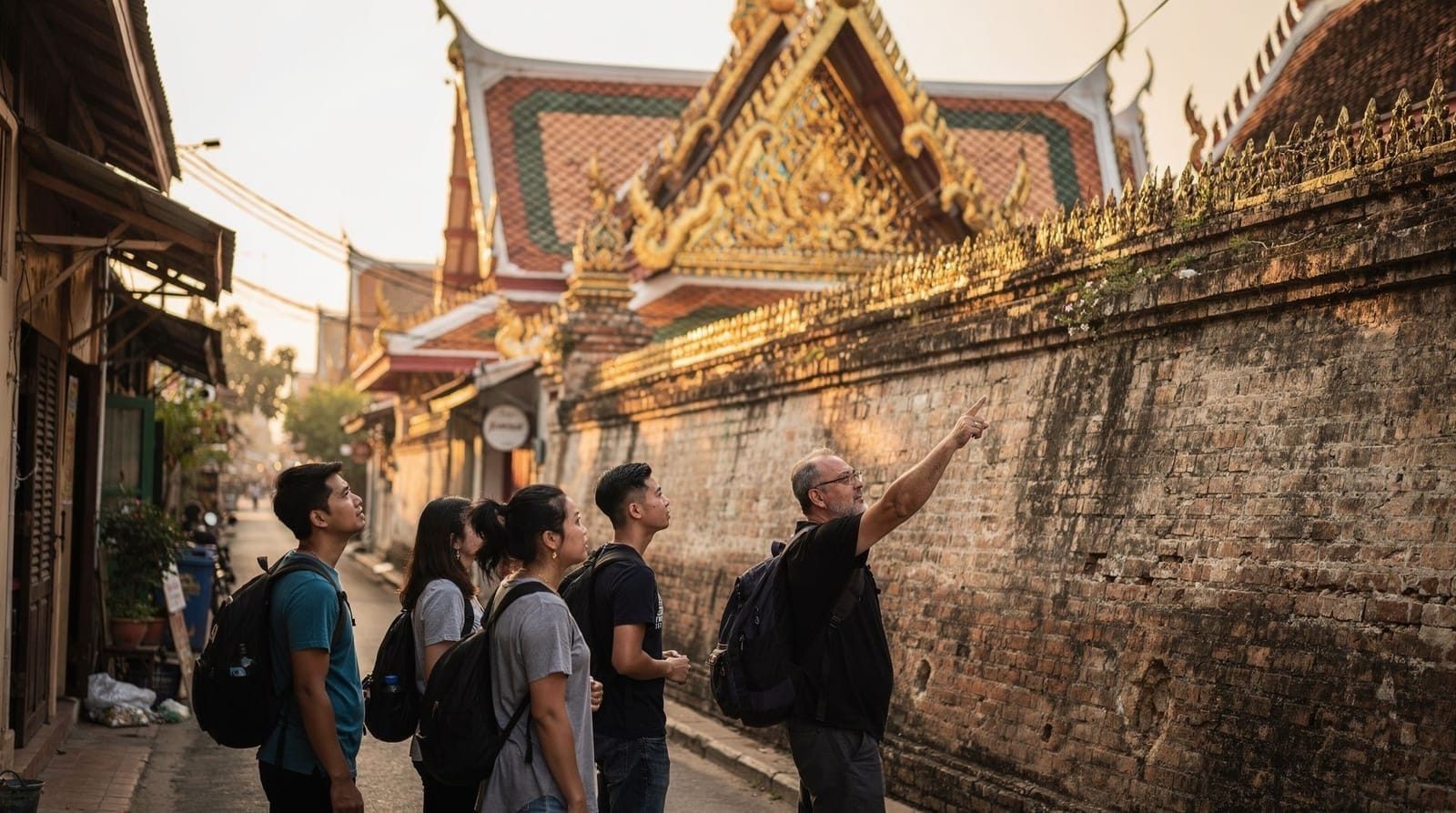
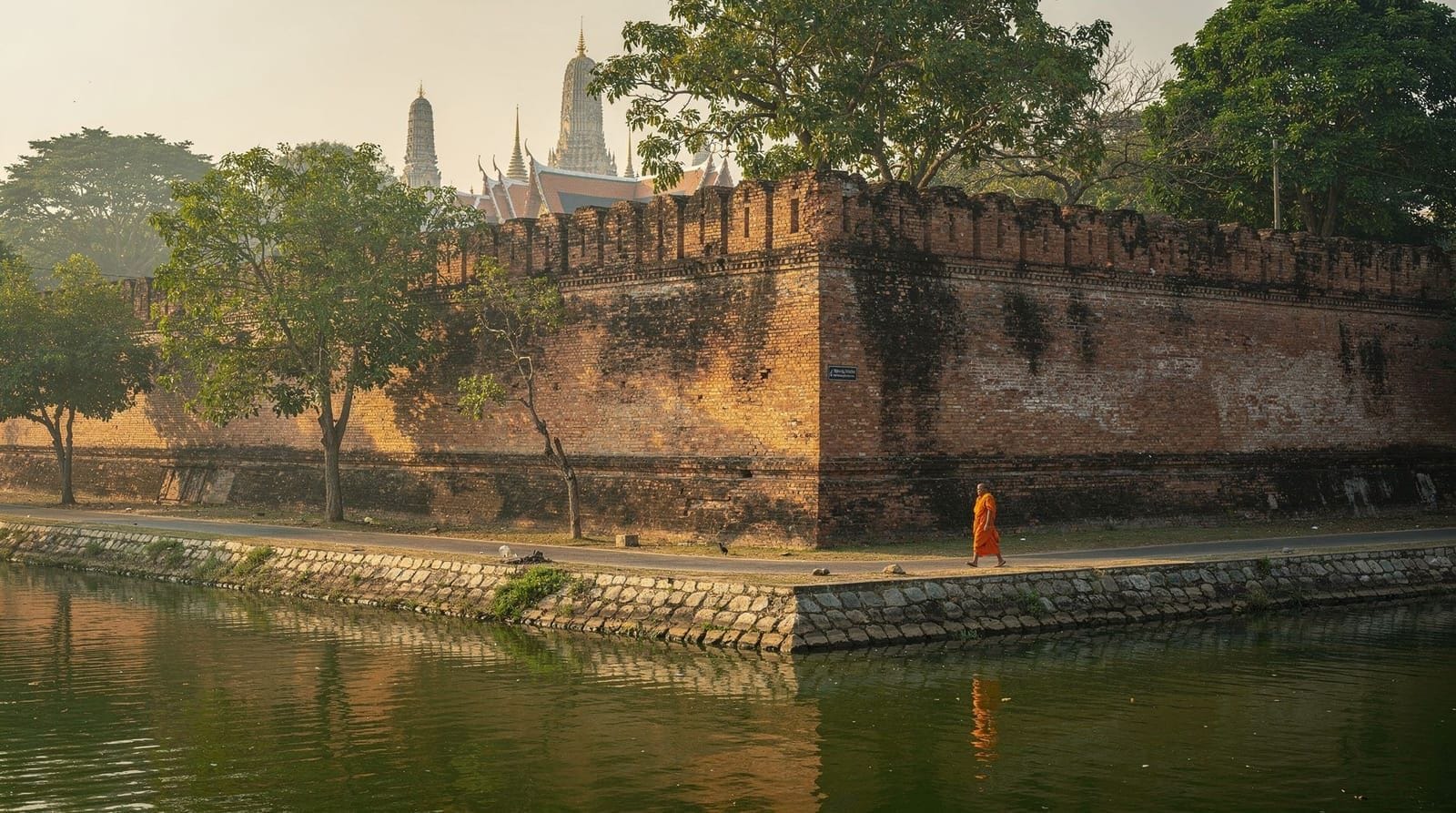
Inside the Old City itself, a guided tour buys you sequencing and context more than access: Wat Phra Singh, Wat Chedi Luang, and Wat Chiang Man are all open to independent visitors, and a good driver or guide will simply route you between them more efficiently than you’d manage cold, while filling in the history of the moat, the city gates, and why some temples charge admission and others don’t.
Private versus group: the core trade-off
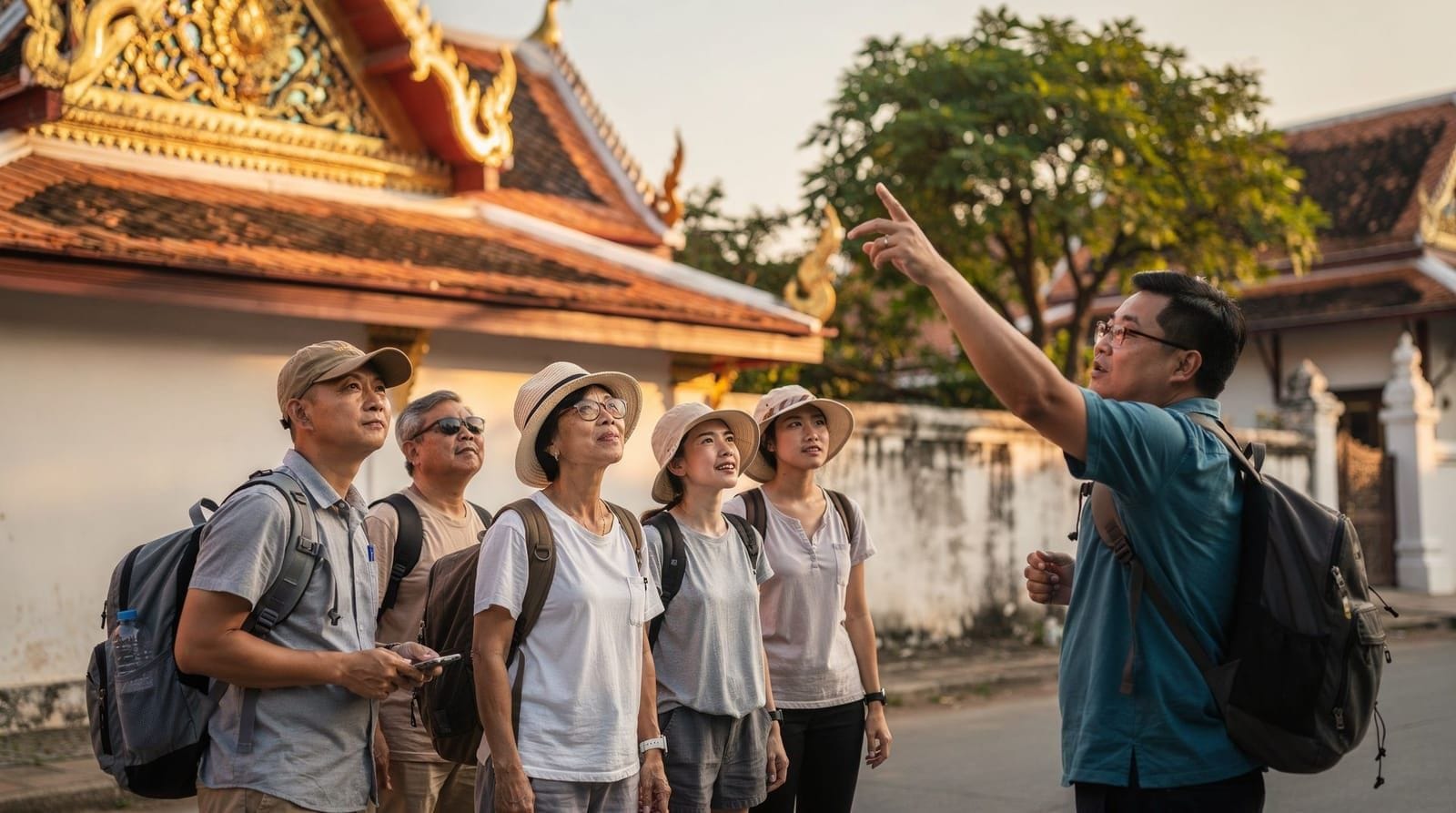
A private tour (usually a car, tuk-tuk, or scooter with just your own group) costs more per person but moves at your pace, skips or extends any stop freely, and avoids the group-tour experience of waiting on the slowest member of a van full of strangers. A group tour splits the vehicle and guide cost across more people, which brings the per-person price down substantially, at the cost of a fixed itinerary and schedule. Neither is objectively better - it depends on party size (private tours make more financial sense once you’re three or four people splitting the cost) and how much you value flexibility over savings. Our private versus group tours guide works through the actual numbers.
Half-day versus full-day
Chiang Mai’s central sights are compact enough that a half-day tour genuinely covers the highlights - three or four temples, a market stop, maybe a viewpoint - without feeling rushed, which makes it the right call if you’re combining sightseeing with a cooking class or spa visit the same day. A full-day tour makes sense when the itinerary reaches further out, combining the city with Doi Suthep, a craft village, or a countryside loop, since the extra driving time needs a longer window to pay off. Our half-day versus full-day guide breaks down which itinerary pattern suits which type of trip.
Tuk-tuk, bike, or scooter: choosing your vehicle
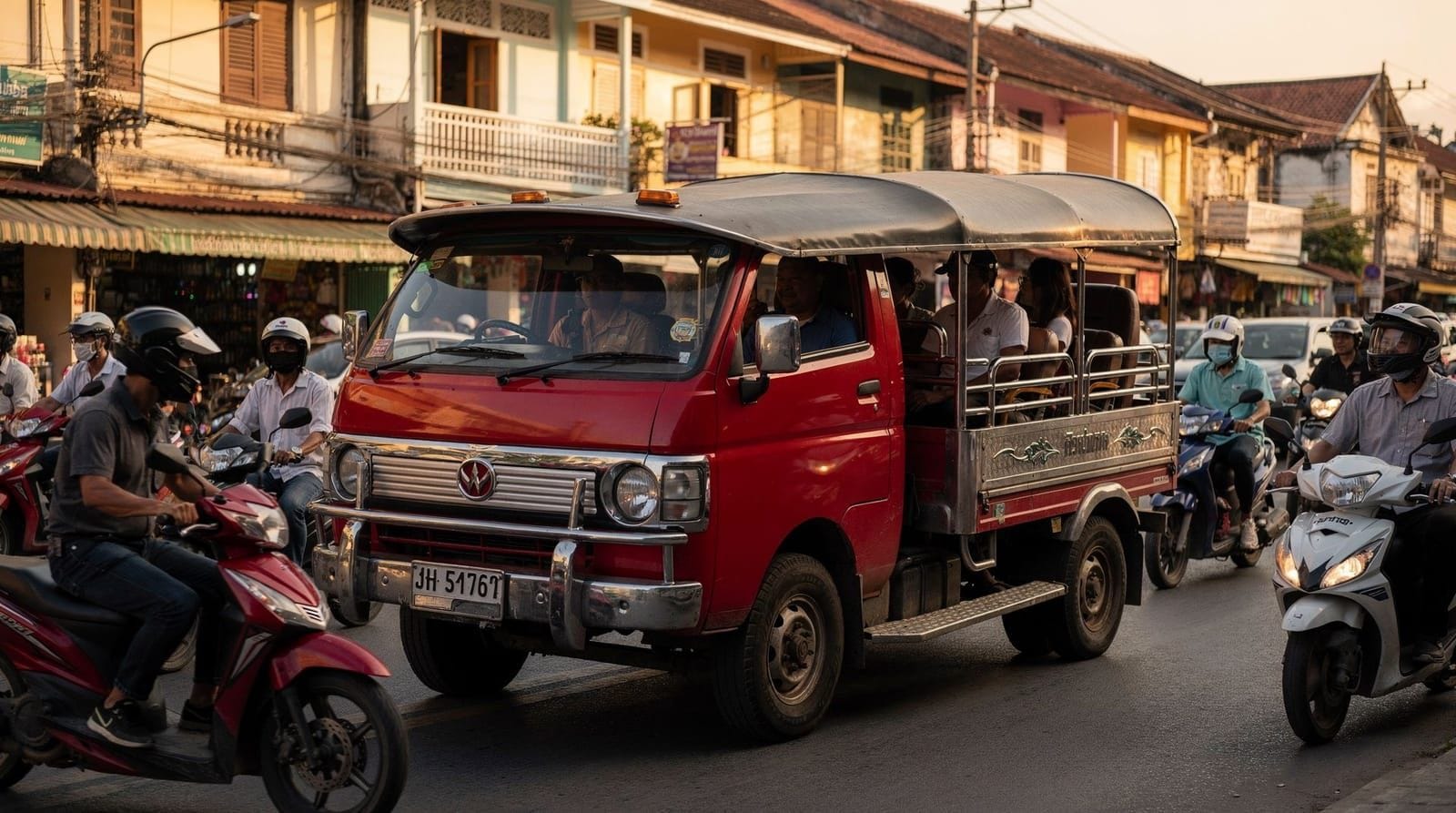
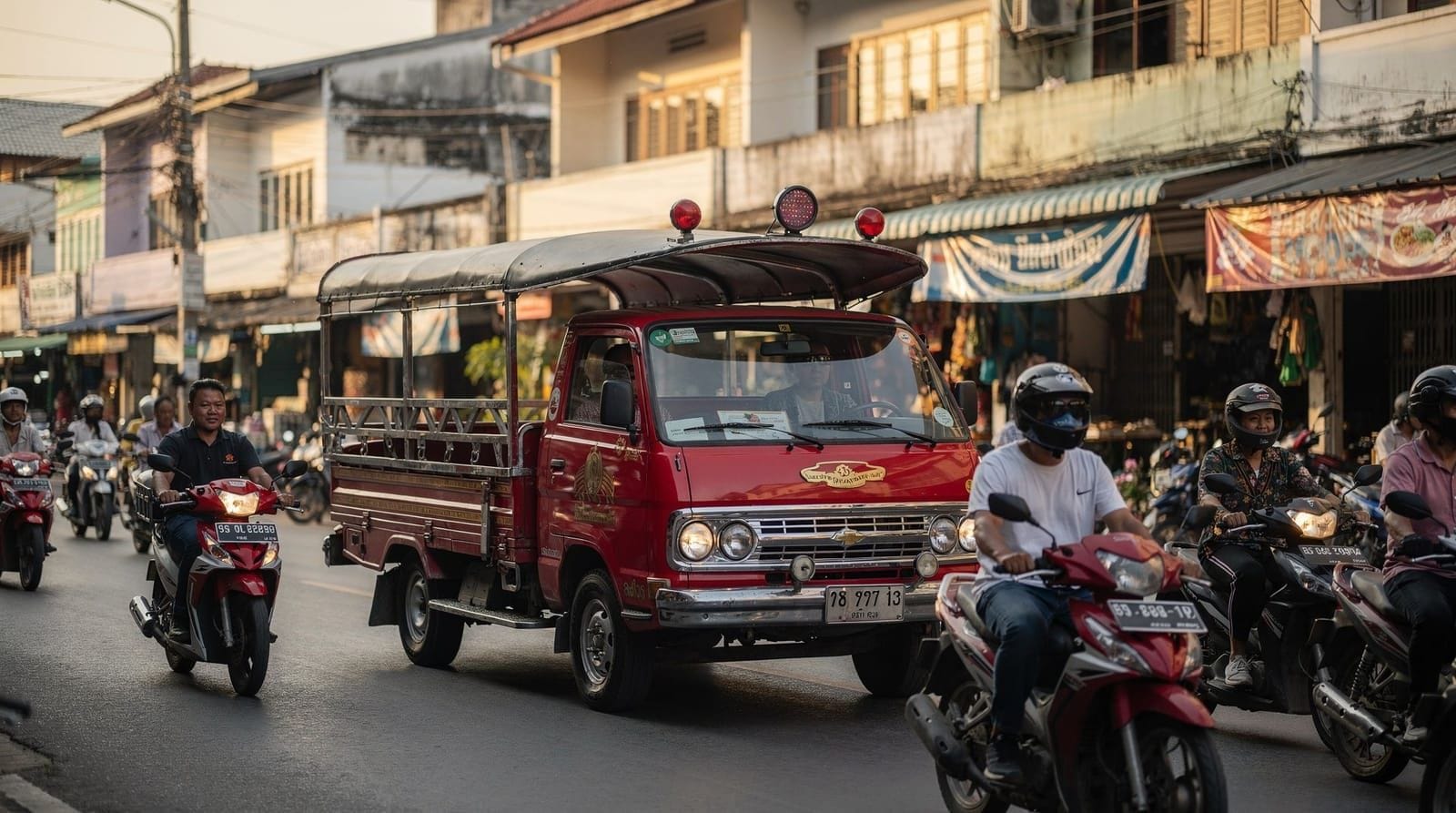
The classic three-wheeled tuk-tuk remains the most recognizable way to see Chiang Mai’s Old City, and a half-day private tuk-tuk tour covers the temple circuit at a relaxed pace with open-air views the whole way, which most visitors find more memorable than an air-conditioned van for a half-day loop. Bicycle and e-bike tours, like a countryside bike tour, trade the effortless tuk-tuk ride for slower-paced, more active sightseeing that works well for the flatter countryside routes around rice paddies and smaller villages, though they’re a poor match for the hottest hours of the day (roughly 11am-3pm, March through May especially). Scooter and motorbike tours suit visitors already comfortable riding in Southeast Asian traffic; renting one solo without experience is a genuinely common source of tourist injury here, covered in more depth in our first-time visitor guide.
What a typical city tour covers
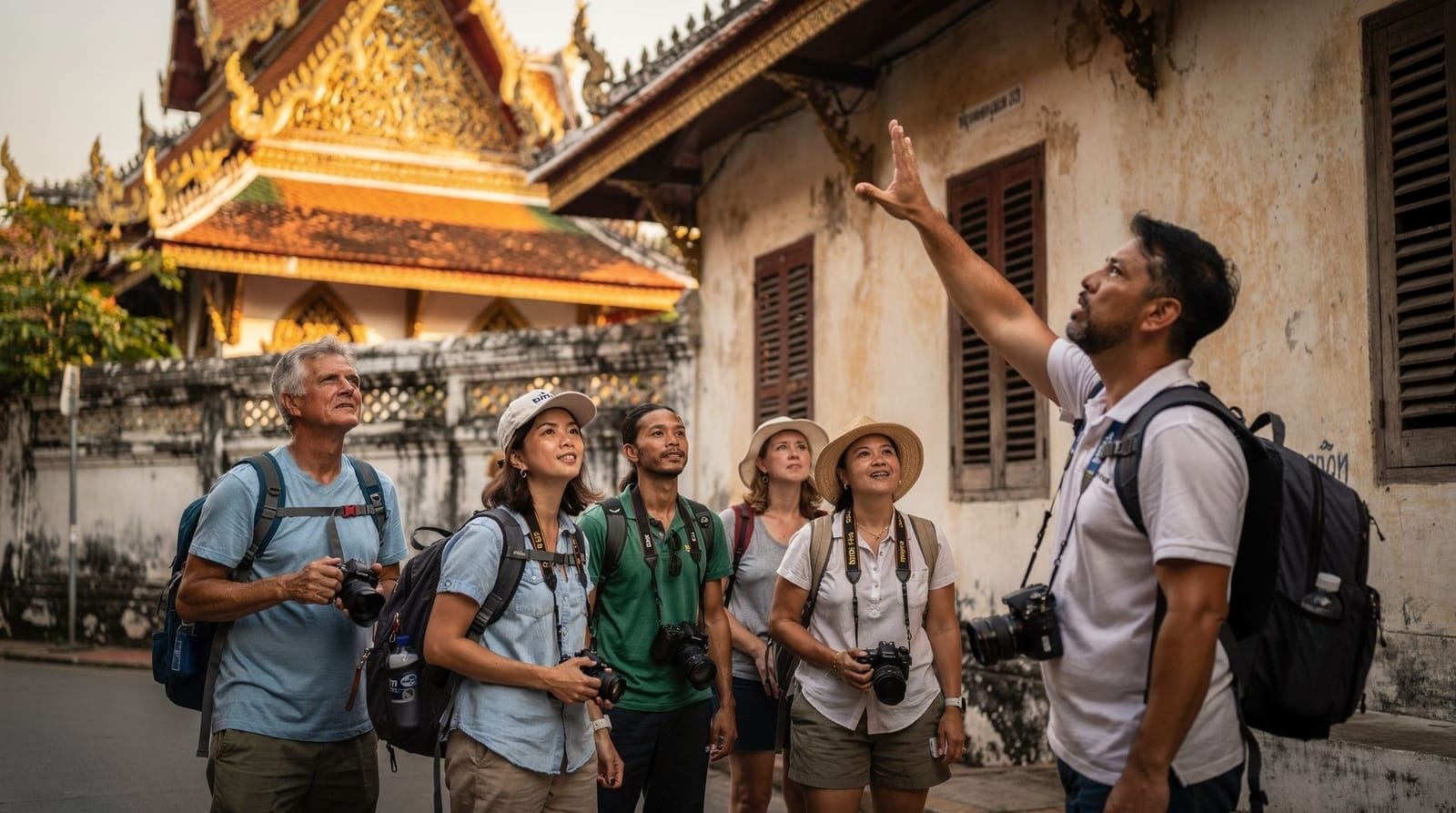
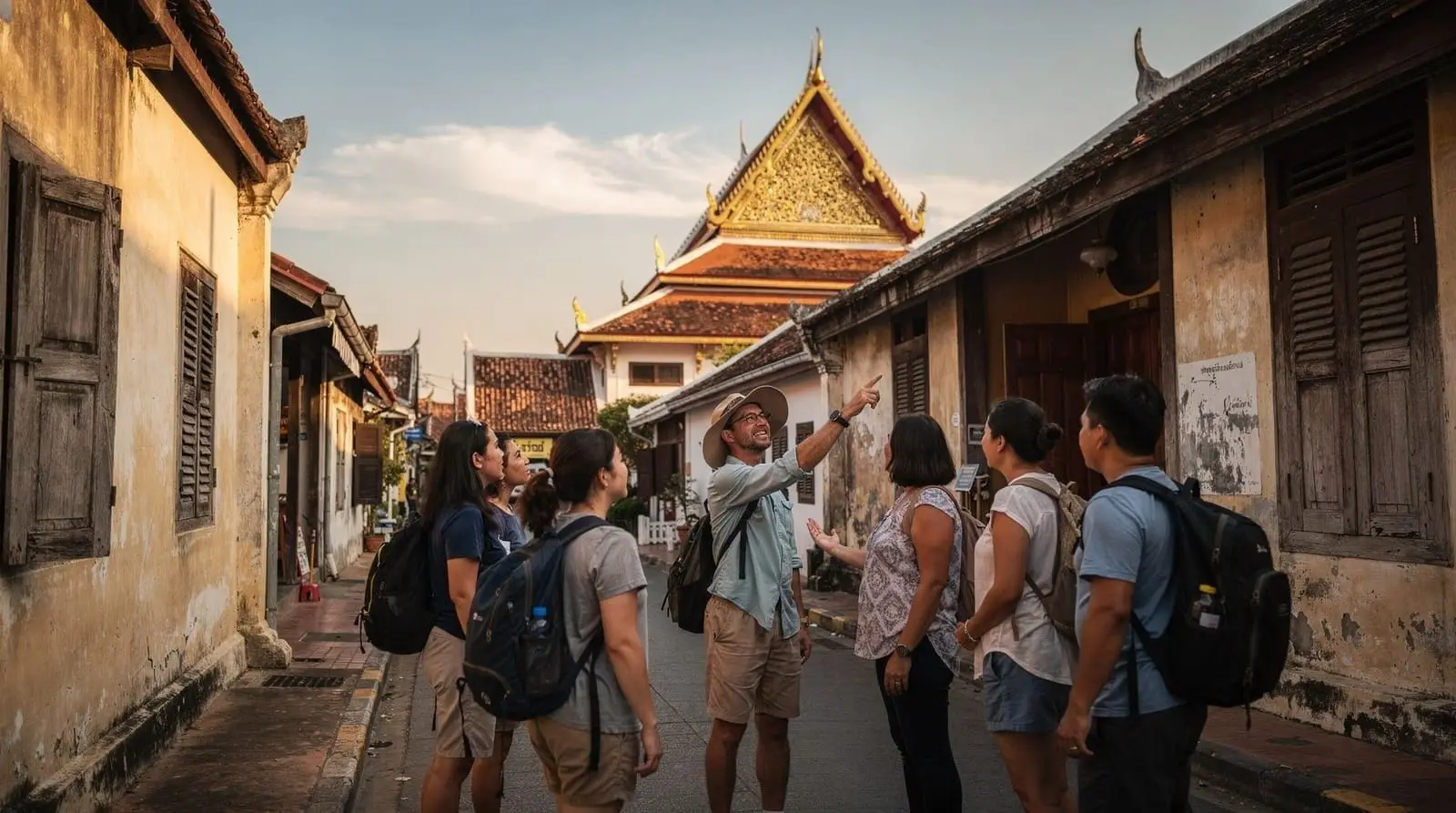
Most half-day city tours follow a similar shape: pickup from your hotel, a loop through two or three of the major Old City temples, a stop at a viewpoint or market, and drop-off back at your hotel within three to four hours. A representative tuk-tuk city tour or a private Old City exploration by tuk-tuk typically includes Wat Phra Singh and Wat Chedi Luang as anchor stops, sometimes adding Wat Chiang Man or a market walk-through depending on timing and day of the week. Our dedicated city tour guide goes through exactly what’s typically included and what to ask about before booking.
Does Chiang Mai have a hop-on-hop-off bus?
Unlike Bangkok or many European cities, Chiang Mai doesn’t run a dedicated hop-on-hop-off tourist bus network, largely because the compact Old City and cheap songthaews and Grab rides make the format less necessary here. The closest equivalents are flexible tuk-tuk or samlor charters that function similarly - stop wherever you like, for as long as you like - without a fixed multi-stop route or ticket. Our hop-on-hop-off Chiang Mai guide covers the actual alternatives in more detail.
Full-day and countryside tours
For a longer day that reaches beyond the Old City, a private full-day city tour typically adds Doi Suthep, a craft village stop in San Kamphaeng, or a loop out toward Mae Rim, depending on the operator. Tours combining a hill-tribe village visit with city sights, sometimes packaged as a long-neck-village-and-silver-temple itinerary, raise their own ethical questions worth thinking through beforehand - our hill-tribe village visits guide, if it covers your specific itinerary, is worth a read before booking.
Tuk-tuk sightseeing specifically
If a tuk-tuk ride is one of the specific experiences you want from your Chiang Mai trip rather than just transport, our best tuk-tuk tours guide ranks the standout options by route and price, including night-time versions that catch the Old City’s temples lit up after dark.
Booking practicalities and red flags
Book through a platform showing recent, specific reviews (not just a star rating) and a clear, itemized description of what’s included - entrance fees, lunch, water, hotel pickup zone. A vague listing (“full day sightseeing, many temples”) is a weaker signal than one naming the specific stops and duration at each. Be specifically wary of unusually cheap city tours, since the most common way an operator recovers margin on a rock-bottom price is an unadvertised stop at a gem shop, silk factory, or leather goods store paying the driver a commission - not illegal, but a genuine waste of your limited time in the city if you’re not interested in shopping. A clear, specific itinerary with named stops in the listing description is the best defense against this pattern.
Confirm your hotel falls within the tour’s standard pickup zone (usually the Old City, Nimmanhaemin, and the riverside near Ping Riverside) before booking, since properties further out toward the airport or the outer ring road sometimes carry a small surcharge or require meeting at a fixed point instead of a door pickup. Our Old City versus Nimman guide helps if you’re still deciding where to stay, and our first-time in Chiang Mai guide covers the wider practicalities of a first visit, including cash handling and typical Grab and songthaew fares, which matter for any transport you arrange outside a booked tour.
Temple etiquette on a guided tour
Every active temple on a typical city tour enforces the same basic dress code - shoulders and knees covered, shoes off before entering a viharn or ubosot, quiet volume throughout - and a good guide will mention this before arrival rather than leaving you to find out at the entrance. Bring a light scarf or wrap even in hot-season heat, since sleeveless tops and shorts above the knee are the most common reasons visitors get turned away or asked to rent a cover-up on-site. Photography is generally allowed in temple courtyards and most interiors, though flash photography of Buddha images and photographing monks without permission are both worth avoiding regardless of what a guide does or doesn’t flag - our temple photography rules guide covers this in more detail if photography is a priority for your visit.
Tours for families and older travelers
Most half-day city tours are comfortable for a wide range of ages and mobility levels, since temple courtyards are flat, paved, and shaded, and a tuk-tuk or van involves less physical exertion than a walking-only tour. The main consideration for families is pacing - young children’s attention spans rarely stretch past two or three temple stops before restlessness sets in, so a shorter, more selective itinerary (Wat Phra Singh and one other stop, rather than four temples in a row) tends to work better than the full standard route. Our dedicated Chiang Mai with kids guide covers family-specific tour and itinerary planning in more depth, including which activities suit young children best.
What “small group” actually means
Listings describing a tour as “small group” in Chiang Mai typically mean somewhere between four and twelve people sharing a van or a convoy of tuk-tuks, rather than the two-to-four-person scale the phrase sometimes implies elsewhere. It’s worth checking the specific maximum group size in the listing rather than assuming from the phrase alone, since a twelve-person “small group” temple tour moves noticeably slower - more time waiting at each stop, less one-on-one time with the guide - than a six-person version at a similar price. If keeping the group tight matters to you, filter by the stated maximum rather than the marketing label, or pay the premium for a private booking instead.
Guide language and quality
Nearly all tours booked through an international platform run in English by default, with a meaningful subset offering Mandarin, French, German, or Spanish guides on request or as a separate listing - worth checking if English isn’t your first language and you’d prefer deeper commentary rather than a translated summary. Guide quality varies more than transport quality does: a driver-guide handling a tuk-tuk tour may offer lighter historical commentary than a dedicated walking guide on a temple-focused tour, which is a reasonable trade-off if sightseeing pace matters more to you than depth of explanation, and the reverse if it doesn’t. Reviews mentioning the guide by name or describing the quality of commentary specifically are a better signal here than a generic star rating.
Combining a tour with independent time
A common and sensible pattern for a first Chiang Mai visit is to book a half-day tour for orientation - the layout of the Old City, the story behind the moat and gates, which temples matter most - and then return independently to whichever spot made the strongest impression, at a slower pace and without a group schedule. Guides are generally happy to point out which temples are quieter in the early morning or late afternoon if you mention you’d like to come back, and that kind of local tip is one of the more durable benefits of a guided first pass even for travelers who prefer independent exploration for the rest of their trip. Our Old City versus Nimman guide and least-crowded temples guide both help plan that independent return visit.
Seasonal timing and weather
Chiang Mai’s cool season, roughly November through February, is the most comfortable stretch for any tour involving significant time outdoors - temple courtyards, open-air tuk-tuks, bike routes - and is also, unsurprisingly, the busiest and most fully booked. The hot season, March through May, makes early-morning or late-afternoon tour slots noticeably more comfortable than midday ones, and overlaps with the region’s burning season (typically February through April), when smoke haze can reduce visibility at viewpoint stops and make extended outdoor time less pleasant for anyone sensitive to air quality; our rainy day activities guide and seasonal guides cover the trade-offs of each window in more depth. The rainy season, June through October, brings mostly short afternoon downpours rather than all-day washouts, and most tours simply pause or reroute briefly rather than cancelling outright - worth confirming a specific operator’s rain policy if you’re booking an open-air tuk-tuk or bike tour during these months.
Tipping guides and drivers
Tipping isn’t strictly mandatory in Thailand the way it is in some countries, but it’s increasingly customary for tour guides and drivers, particularly on private or small-group tours where the same person spends several hours with you. A rough working guide is 100-200 THB (about USD 3-6) per person for a half-day tour and 200-400 THB for a full day, adjusted upward for a driver-guide who’s gone out of their way - more detailed commentary, an extra unplanned stop, patience with a group that’s running behind schedule. It’s not expected on top of an already-tipped meal or drink included in the tour price, and cash in small denominations is the practical way to handle it.
When to skip the tour entirely
Not every part of Chiang Mai needs a booked tour. Walking the Old City temple circuit yourself, using a map and the opening-hours notes in our individual temple guides, is entirely manageable and saves the cost of a guide for travelers who prefer self-directed pacing - our one-day Chiang Mai itinerary guide lays out a realistic self-guided route. Night markets, the Sunday Walking Street, and casual café-hopping around Nimmanhaemin are also better done independently, since a guide adds little to browsing at your own pace. Save the tour budget for the places where local knowledge or transport logistics genuinely matter - the mountain day trips, the hill-tribe treks, and the elephant sanctuaries where choosing the right operator has real ethical stakes.
Putting together a first-visit plan
For a first trip, a reasonable pattern is one booked half-day or full-day tour early in the stay for orientation, followed by independent days built around whichever neighborhood or activity made the strongest impression - more temple time in the Old City, a slower café-hopping day in Nimmanhaemin, or an early return to a viewpoint the guide mentioned but didn’t have time to stop at properly. Trying to book a tour for every day of a multi-day stay tends to backfire, both financially and in terms of pace, since Chiang Mai rewards a bit of unstructured wandering as much as it rewards guided sightseeing. Treat the tours in this guide as the scaffolding for your trip rather than the entire structure, and leave room to follow up on what actually catches your interest once you’re here.
Frequently asked questions about Best Chiang Mai tours: how to choose
Should I book tours before arriving in Chiang Mai or once I'm there?
Is GetYourGuide or Viator better for Chiang Mai tours?
Are local street-side tour agencies cheaper than booking online?
How far in advance should I book a Chiang Mai day trip?
Do Chiang Mai tours include hotel pickup?
What tours should I skip in Chiang Mai?
Can I negotiate the price of a tour in Chiang Mai?
Top experiences
Bookable activities with verified prices and instant confirmation on GetYourGuide.