Chiang Mai with kids: the family trip guide
Chiang Mai: Grand Canyon Water Park Ticket & Optional Pickup
Is Chiang Mai a good destination for families with young kids?
Yes - Chiang Mai is one of the more family-friendly cities in Thailand, with a walkable Old City, ethical elephant sanctuaries that welcome children, easy swimmable waterfalls, and a slower pace than Bangkok. The main adjustments for families are shorter daily itineraries than an adults-only trip, more downtime around midday heat, and choosing accommodation with a pool for afternoon breaks.
Chiang Mai works better for families than its reputation as a backpacker and digital-nomad hub might suggest. The pace is slower than Bangkok, the Old City is genuinely walkable, ethical elephant sanctuaries give kids a hands-on wildlife experience with a real conservation story behind it, and the surrounding valleys offer swimmable waterfalls and gentle nature that don’t demand a lot of physical toughness from younger travelers. The trip does need different planning than an adults-only version, mostly around pace and heat management, and that’s what this guide covers.
Quick answer: yes - Chiang Mai is one of the more family-friendly cities in Thailand, with a walkable Old City, ethical elephant sanctuaries that welcome children, easy swimmable waterfalls, and a slower pace than Bangkok. The main adjustments for families are shorter daily itineraries than an adults-only trip, more downtime around midday heat, and choosing accommodation with a pool for afternoon breaks.
Why Chiang Mai works better than Bangkok for young families
Bangkok’s scale, traffic, and heat-trapping urban density make it a harder base for a family with young children than Chiang Mai’s smaller, greener, and more walkable footprint. The Old City’s moated grid means many of the trip’s core sights sit within a manageable radius, reducing the amount of time spent in transit compared to Bangkok’s more spread-out attractions. Chiang Mai’s slower pace also extends to its food scene and markets, which feel less overwhelming for a first-time child visitor than Bangkok’s larger, more intense night markets and street food districts. None of this means Bangkok is off-limits for families - many itineraries combine both cities - but Chiang Mai is the easier of the two to build a genuinely relaxed family week around.
Muay Thai and other evening family activities
For families with older kids interested in something more active than a market stroll, a beginner Muay Thai class or watching a fight night at one of Chiang Mai’s stadiums can be a memorable evening activity, though the sport’s physical intensity and the sometimes rowdy stadium atmosphere suit older children and teenagers better than very young kids. Quieter evening options - a family-friendly restaurant with an outdoor patio, an early night market visit before the busiest crowds arrive, or simply an early night after an active day - are equally valid choices, and alternating high-energy evenings with quieter ones tends to keep the whole family’s stamina up across a multi-day stay.
Ethical elephant encounters: the trip’s centerpiece for most families
For most families, an ethical elephant sanctuary visit is the single activity worth building the rest of the itinerary around. A half-day elephant sanctuary visit with lunch and transfer or an ethical half-day sanctuary and waterfall combination gives kids feeding and observation time with rescued elephants, with no riding and no bullhook - the two clearest markers of an operator actually treating the animals well rather than exploiting them for entertainment. Explaining before the trip that elephants don’t give rides at good sanctuaries (because riding damages their spines) turns a potential disappointment into a genuine teaching moment about animal welfare, and most children respond well to a concrete, simple version of that explanation. Our dedicated elephant sanctuary with kids guide covers age minimums, safety briefings, and half-day-versus-full-day pacing in far more depth than fits here.
Waterfalls: the easiest low-stakes family outing
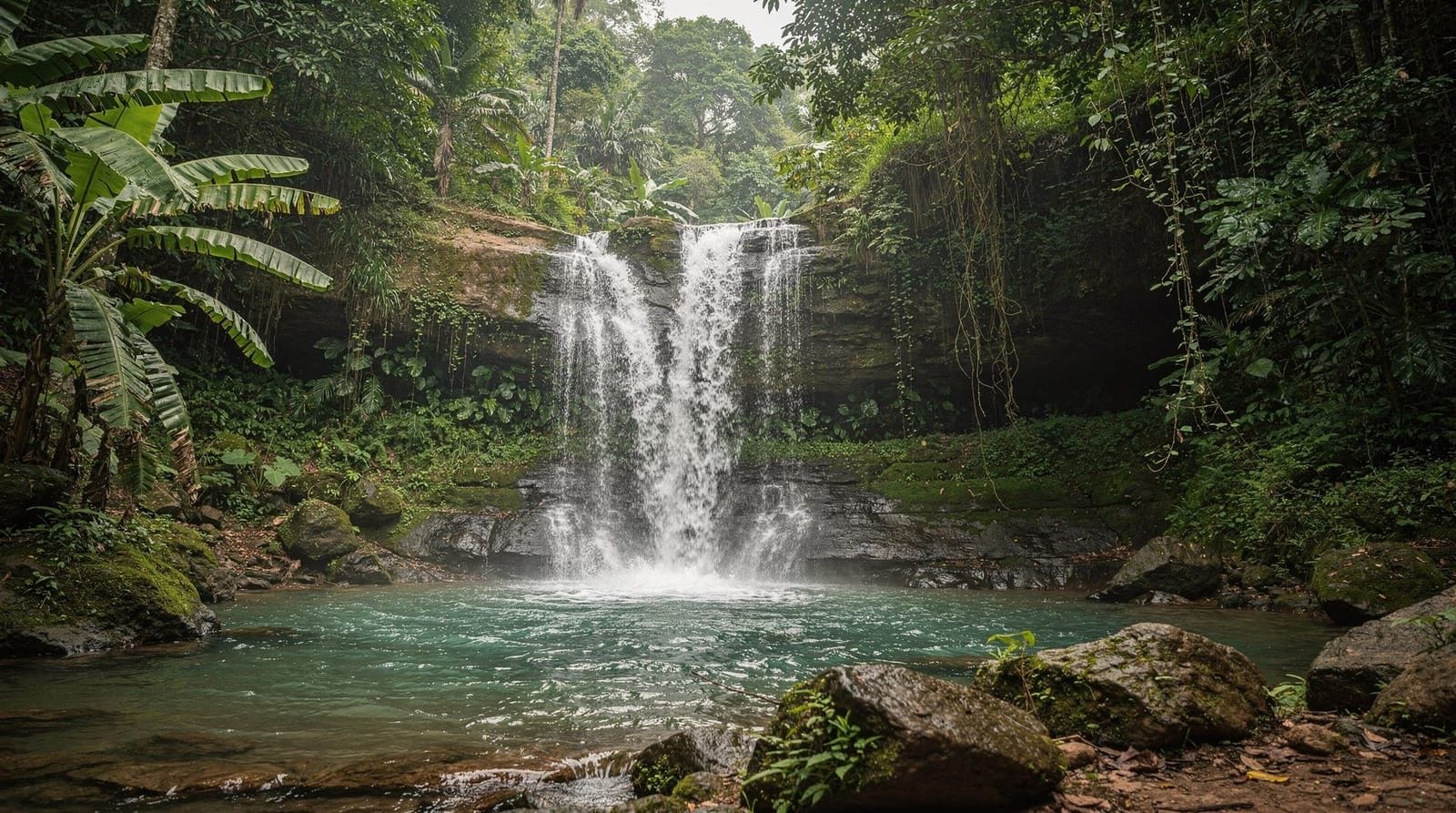
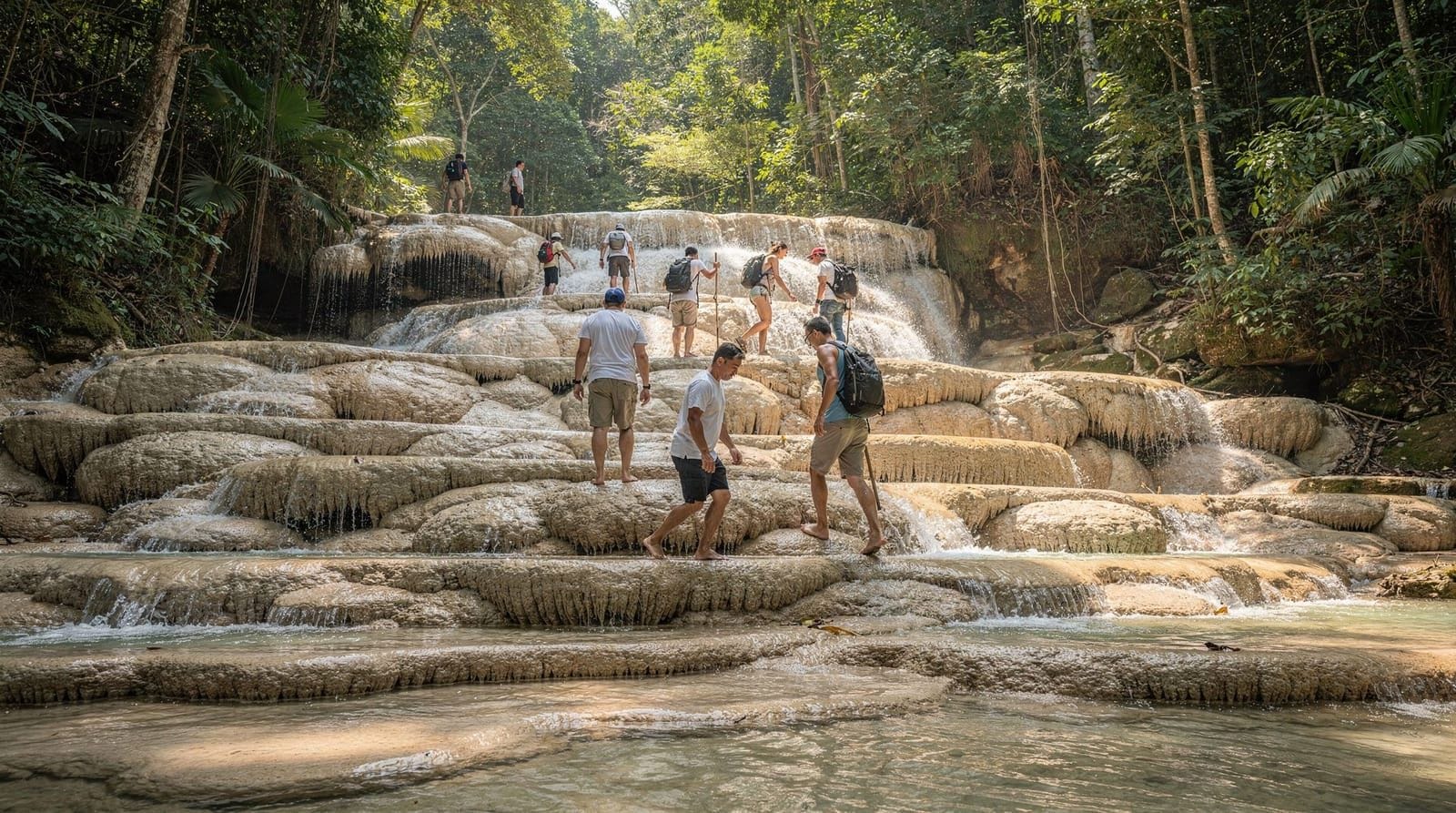
The Sticky Waterfalls at Bua Thong, named for the mineral-rich limestone that lets visitors climb the tiered rock face with genuine grip underfoot, are one of the most reliably kid-friendly outings near Chiang Mai - shallow, climbable, and far less intimidating than a typical waterfall hike. Huay Kaew Waterfall, closer to the city on the lower slopes of Doi Suthep, offers an easier, shorter option for a half-day outing without committing to a full excursion. Our dedicated Sticky Waterfalls guide covers footwear, timing, and practical tips for visiting with children specifically.
The zoo and night safari
Chiang Mai Zoo, near Chiang Mai University, and its adjoining Night Safari section are a straightforward, air-conditioned-adjacent option for a day when the heat or a tired group makes anything more active feel like too much. It’s a conventional zoo experience - enclosures, feeding times, a panda exhibit that’s been a long-running highlight for visiting families - rather than an ethical wildlife encounter on the level of a sanctuary visit, and it’s worth setting that expectation clearly if animal ethics are a priority for your family. Our dedicated zoo and night safari guide covers ticket types, timing, and what the night safari section specifically involves.
Grand Canyon water park and other splash-around options
For a genuinely different kind of day, the Grand Canyon Water Park in Hang Dong - a flooded former quarry with cliff-jumping platforms, floating decks, and swimming areas - gives older kids and teenagers a proper active water day, though the deeper sections and jump platforms are better suited to confident swimmers than very young children. Our destination guide to Grand Canyon Hang Dong covers depth, safety, and age-appropriateness in more detail before you commit a day to it.
Cooking classes for kids
A number of Chiang Mai’s cooking schools run kid-friendly or family versions of their standard class, with simpler dishes, shorter duration, and more hands-on stirring and shaping than precision knife work. Mango sticky rice and simple stir-fries tend to be the most reliably enjoyable dishes for younger cooks, and most schools are happy to adjust a class informally for a family group even without a dedicated kids’ program advertised. Our Chiang Mai cooking class guide covers what to look for when booking with children in mind.
Night markets in the evening
Chiang Mai’s night markets - the Night Bazaar, the Sunday Walking Street, and Anusarn - work well as an evening family activity, combining easy street food, browsing, and enough visual stimulation to hold kids’ interest without requiring much walking stamina. They get crowded, though, which is worth planning around with a stroller (better swapped for a baby carrier in the densest sections) and a clear meeting point if children are old enough to wander a few steps ahead. Our best night markets for food guide covers which stalls and dishes tend to be the easiest sells for younger palates.
Day trips that work - and ones that don’t
Doi Inthanon, Thailand’s highest point, works well as a family day trip thanks to its cooler mountain air, boardwalk trails suited to shorter legs, and waterfalls along the route - our Doi Inthanon guide covers which sections of the park suit young children best. Longer day trips involving several hours of driving each way - a rushed single-day version of Chiang Rai or Mae Hong Son - test young children’s patience more than they reward it, and are generally better suited either to a slower multi-day version of the trip or skipped entirely with very young kids in the group. Our dedicated family-friendly day trips guide covers this trade-off destination by destination.
Where to stay with kids
Accommodation with a pool matters more for families than almost any other single factor, since a midday swim break is one of the most reliable ways to reset a tired, overheated child in the hours between morning and evening activities. Serviced apartments and larger family rooms, common in and around Nimmanhaemin and the riverside, also give more space and a kitchenette for snacks and bottle prep than a standard hotel room. Our dedicated family accommodation guide covers specific areas and property types suited to different family sizes and budgets.
Eating with kids
Chiang Mai’s food scene skews spicy by regional habit, but nearly every restaurant catering to visitors can adjust heat level or offer a plainer dish on request, and Western-style and fusion cafés are common enough in Nimmanhaemin and the Old City to fall back on for a picky-eater day. Our dedicated kid-friendly restaurants guide covers specific dining picks by neighborhood and cuisine.
Transport with young kids: car seats and safety
Standard car seats are not a given with Chiang Mai taxis, tuk-tuks, or Grab rides, and enforcement of child car-seat laws is inconsistent compared to many Western countries. Families traveling with infants or toddlers who want a proper car seat should request one specifically when booking a private tour or airport transfer, ideally a few days ahead, since not every operator stocks one by default and availability can be limited during peak season. For shorter city hops, many families traveling with a toddler simply hold the child rather than relying on a seat, which is standard local practice though a genuine trade-off worth being aware of if car-seat use is a firm requirement for your family.
Multi-generational trips
Chiang Mai also works reasonably well for multi-generational travel - grandparents alongside parents and kids - since the pace can flex around whichever generation needs it most: a private tour with flexible stops accommodates both a toddler’s nap schedule and a grandparent’s need for more frequent rest breaks better than a fixed group tour trying to serve everyone’s needs on one schedule. Accommodation with more than one bedroom or a connecting-room setup, common in serviced apartments around Nimmanhaemin and the riverside, tends to work better for multi-generational groups than a standard single hotel room.
Practical logistics: heat, health, and downtime
Plan outdoor activities for the morning or late afternoon and build in a midday break, whether that’s a pool, an air-conditioned café, or a rest at the hotel - this single adjustment does more for a family trip’s overall mood than almost anything else on this list, particularly during the hot season (March-May). Sun protection (hats, high-SPF sunscreen, a change of dry clothes after any water activity) and regular hydration matter more with kids than adults, since children dehydrate and overheat faster. Chiang Mai has several well-regarded private hospitals with pediatric services and English-speaking staff, including Bangkok Hospital Chiang Mai, worth noting in case of a minor illness or injury during the trip, alongside standard travel insurance covering the whole family.
Traveling with infants and toddlers
Chiang Mai is a manageable destination for infants and toddlers, though the trip looks different from a version planned around older kids. A baby carrier does more work than a stroller across most of the itinerary - temple courtyards, markets, and any waterfall or nature stop all involve uneven ground, steps, or crowds that a stroller struggles with - though a lightweight, compact stroller is still useful for flat stretches like malls or wide Old City streets. Nap schedules are worth building the day around rather than fighting; many families find that a car or van transfer to a further destination doubles as nap time, which is one more reason a private tour with flexible timing (covered in our private versus group tours guide) tends to suit young children better than a fixed-schedule group booking.
Traveling with teenagers
Teenagers generally have an easier time adapting to Chiang Mai’s pace than younger children, and the region has enough active options - ziplining, whitewater rafting, the Grand Canyon water park, Muay Thai training classes - to keep an older kid engaged beyond the classic family activities. Giving teenagers some input into the itinerary, or a bit of independent time in Nimmanhaemin’s café scene with a sibling or parent nearby, tends to keep the trip feeling less like a program built entirely around younger siblings.
Packing essentials for a family trip
Beyond the usual travel basics, a few Chiang Mai-specific items are worth prioritizing: a light scarf or cover-up per person for temple visits (shoulders and knees covered is required at every active temple), a reliable high-SPF sunscreen and insect repellent, a portable fan or cooling towel for the hot season, and a printed or offline copy of your accommodation address in Thai, since not every driver reads English script fluently. Rehydration sachets are a useful just-in-case item for any child prone to heat-related fatigue or minor stomach upset from a change in diet.
Health, safety, and everyday awareness
Chiang Mai is a genuinely low-crime destination for families, and the more realistic day-to-day risks are heat-related fatigue, minor stomach upset from unfamiliar food or water, and traffic awareness at busier road crossings outside the Old City’s quieter streets. Stick to bottled or filtered water, wash hands before street food, and keep a basic child-appropriate first-aid kit (fever reducer, rehydration salts, plasters) with you rather than assuming it’ll be easy to find on short notice. Bangkok Hospital Chiang Mai and Chiang Mai Ram Hospital both have pediatric services and English-speaking staff and are the standard recommendation for a private hospital visit if needed.
Timing your trip around school holidays
Thailand’s own cool season (November-February) overlaps with peak international travel demand, including many Western school holiday windows, which means the best-weather months are also the most crowded and priciest for accommodation and popular activities like elephant sanctuaries. Families able to travel during shoulder periods - October or early November, or February before the hot season fully sets in - often find a more comfortable balance of good weather and lighter crowds than the peak December-January window.
A realistic sample family itinerary
A workable five-day family framework: day one for arrival and an easy Old City walk with an early finish; day two for the elephant sanctuary half-day, with the afternoon reserved for pool time; day three for Sticky Waterfalls or the zoo, whichever suits your group’s energy level; day four for a cooking class in the morning and a night market evening; day five for Doi Inthanon or a slower morning before departure. This pacing leaves real downtime between activities rather than treating every day as a full-day tour, which is the single most common mistake families make planning a first Chiang Mai trip.
For a longer stay of seven to ten days, the same framework simply repeats with more slack built in - an extra rest day after the elephant sanctuary, a second waterfall or a slower Doi Inthanon visit, and more unstructured time around the pool or in Nimmanhaemin’s cafés. Resist the urge to fill every day with a new named activity; the trips that go best with young kids in tow tend to be the ones with fewer, well-chosen highlights and generous breathing room between them, not the ones that pack in the most.
Frequently asked questions about Chiang Mai with kids: the family trip
What age is Chiang Mai suitable for?
How many days should a family spend in Chiang Mai?
Is it hot for kids in Chiang Mai?
Can I bring a stroller to Chiang Mai?
Are there pediatric doctors or hospitals in Chiang Mai for a family emergency?
What should families skip in Chiang Mai?
Do restaurants in Chiang Mai have high chairs and kids' menus?
Top experiences
Bookable activities with verified prices and instant confirmation on GetYourGuide.