Best kid-friendly restaurants in Chiang Mai
Where should I eat with kids in Chiang Mai?
Nimmanhaemin and the Old City both have a good spread of family-friendly cafés and Western-fusion restaurants with high chairs and milder menu options, while mall food courts (Central Festival, MAYA) are a reliable fallback with familiar international chains alongside Thai food stalls when a picky eater needs a sure thing. Most restaurants catering to visitors can adjust spice level or offer a plainer dish on request even without a dedicated kids' menu.
Eating out with kids in Chiang Mai is easier than many first-time visitors expect, provided you know which neighborhoods and restaurant types tend to have the amenities and mild options families rely on. This guide covers where to look, what to order, and how to handle the spice-level question that trips up most visiting families at least once.
Quick answer: Nimmanhaemin and the Old City both have a good spread of family-friendly cafés and Western-fusion restaurants with high chairs and milder menu options, while mall food courts (Central Festival, MAYA) are a reliable fallback with familiar international chains alongside Thai food stalls when a picky eater needs a sure thing. Most restaurants catering to visitors can adjust spice level or offer a plainer dish on request even without a dedicated kids’ menu.
Why Chiang Mai is an easier food city for families than it first appears
Visiting families sometimes arrive expecting Thai food to be a harder sell for kids than it usually turns out to be in practice. Chiang Mai’s food scene is broad enough - from mild noodle soups to familiar international chains at every mall - that even a genuinely picky eater rarely goes hungry for long once you know where to look and how to ask for a milder version of a dish. The northern Thai (Lanna) cuisine specific to Chiang Mai also tends to be somewhat less fiery on average than the central and southern Thai dishes more commonly associated with Thai food internationally, which works in families’ favor without any extra effort required.
The spice-level conversation
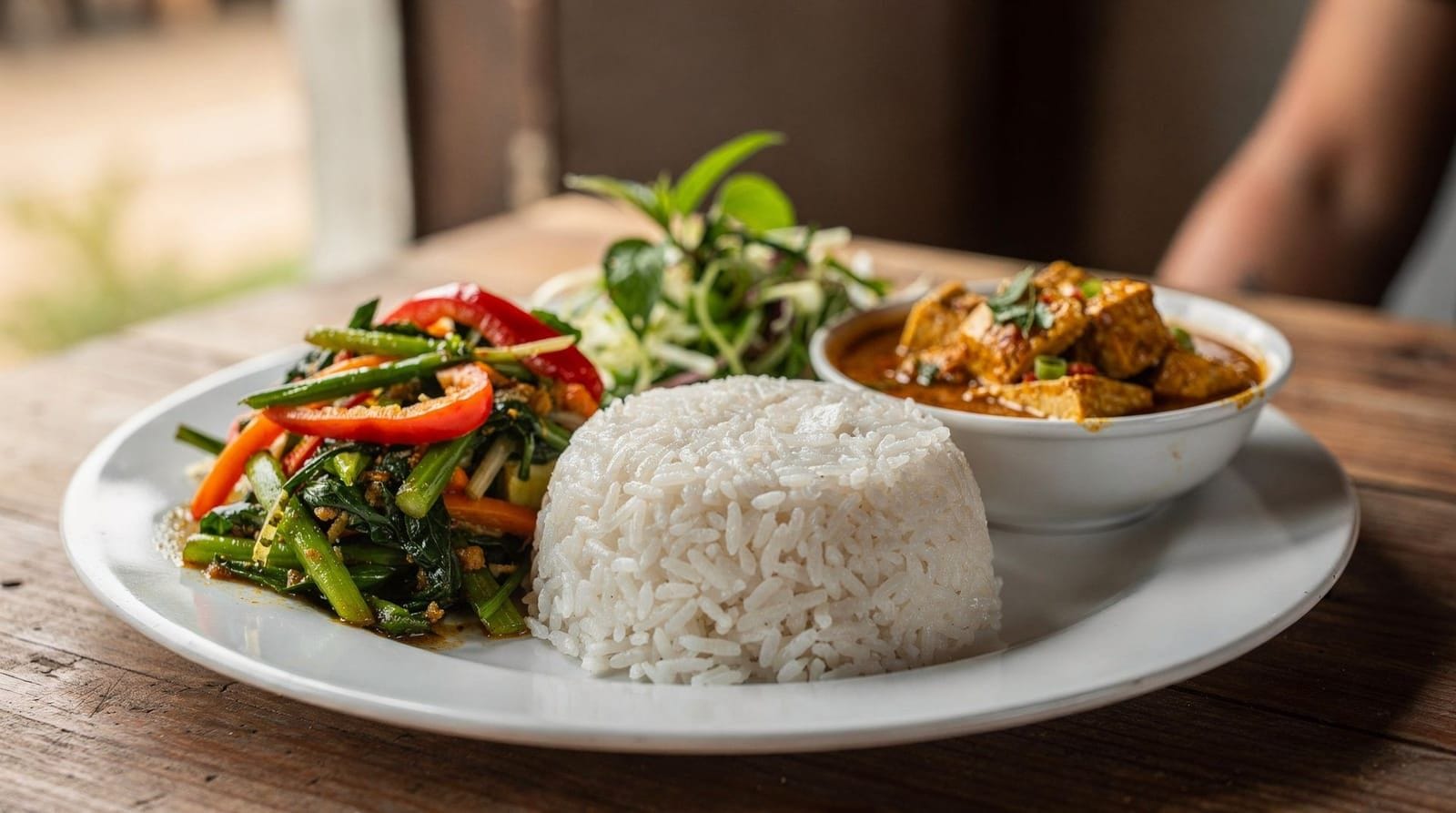
The single most useful phrase for dining with kids in Chiang Mai is simply asking for a dish mai phet (not spicy) or phet noi (a little spicy), which is widely understood even at restaurants with limited English. Traditional Thai cooking builds heat into the dish from the start rather than serving chili on the side, so a request needs to be made before the dish is cooked rather than adjusted after the fact - most restaurants catering to visitors are well practiced at this given how often the request comes up, and it’s a completely normal, unremarkable thing to ask for. Plain rice, fried rice (khao pad), spring rolls, and pad see ew are dependable low-spice starting points if you’re unsure what a kitchen can adjust on the fly.
Nimmanhaemin: the café and Western-fusion district
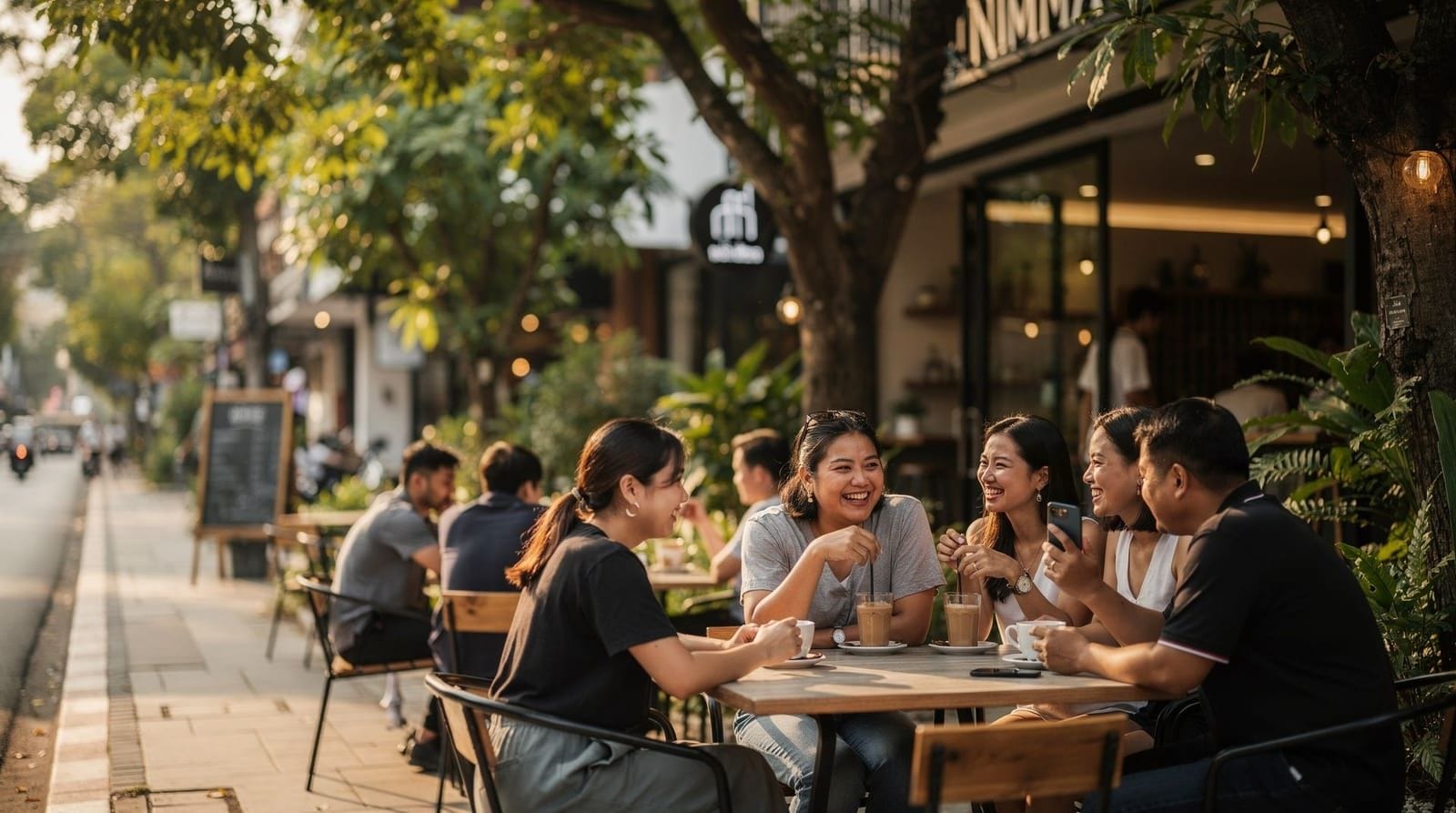
Nimmanhaemin’s dense concentration of cafés and Western-leaning restaurants, a byproduct of the neighborhood’s large expat and digital-nomad population, makes it the easiest area in the city to find familiar comfort food alongside good coffee for parents. Breakfast-focused cafés with all-day menus, pizza and pasta spots, and burger joints are all common here, and many have a relaxed, casual seating style that suits a family with kids better than a more formal restaurant setup. The trade-off is that Nimman’s popular spots can have a wait during peak weekend brunch hours, so an off-peak visit or a short wait with a restless child is worth planning around.
The Old City: temple-adjacent, casual options
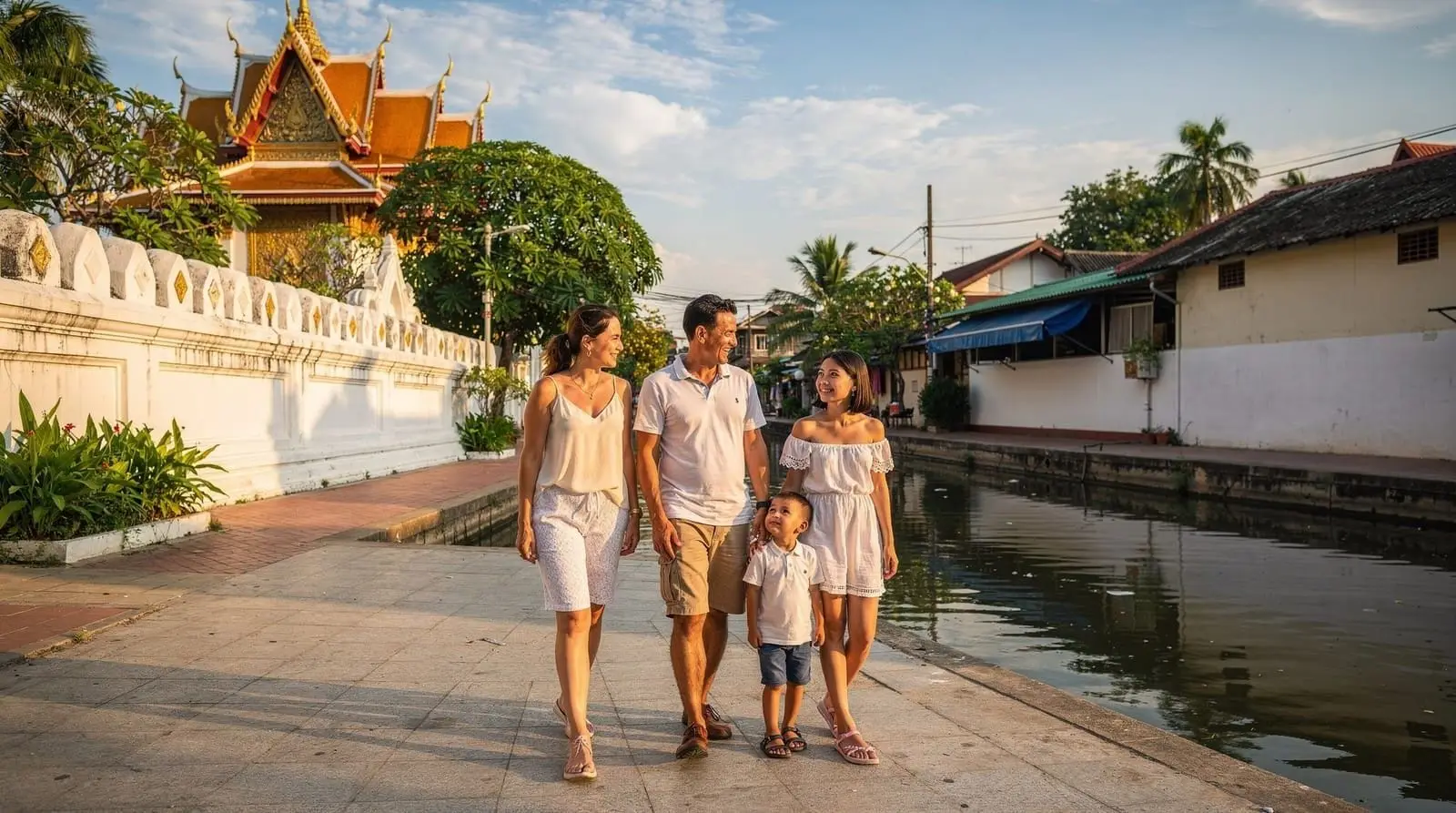
Inside the Old City, casual restaurants and cafés cluster around the main guesthouse streets and near Tha Phae Gate, offering a similar mix of Thai and Western options in a more traditional, low-key setting than Nimman’s trendier café scene. This is a convenient area to eat if your sightseeing day is centered on the temple circuit, since options are close at hand between stops rather than requiring a separate trip out to another neighborhood.
Mall food courts: the reliable fallback
Central Festival Chiang Mai and MAYA Lifestyle Shopping Center both have large food court sections combining familiar international fast-food and casual dining chains with a range of Thai food stalls, all under air conditioning - a genuinely useful combination on a hot day or when a tired, hungry child needs a fast, low-risk meal rather than a leisurely sit-down experience. Food courts are also one of the more budget-friendly options in the city, and the format (point at what you want, pay, sit down) removes any language-barrier stress that a more traditional restaurant menu might introduce.
Khao soi and other northern specialties for adventurous young eaters
For families willing to try Chiang Mai’s signature dish with kids, khao soi - a turmeric-yellow, coconut-based curry noodle soup topped with crispy fried noodles, usually served with chicken - tends to work better than a typical red or green curry, since the coconut milk base is milder than most curry pastes. Our khao soi guide covers where to find good versions across the city, several of which serve a genuinely mild version well suited to a curious but cautious young palate.
Vegetarian and allergy considerations
Thai cuisine’s heavy reliance on fish sauce and shrimp paste as base seasonings means a “no meat” request doesn’t automatically make a dish vegetarian or vegan without a specific, additional request to omit those ingredients too - worth being explicit about if your family has a vegetarian child or a shellfish allergy specifically, since it’s a more involved substitution than in many Western cuisines. Our vegetarian and vegan restaurants guide covers dedicated plant-based options across the city that sidestep this issue entirely.
Street food and night markets with kids
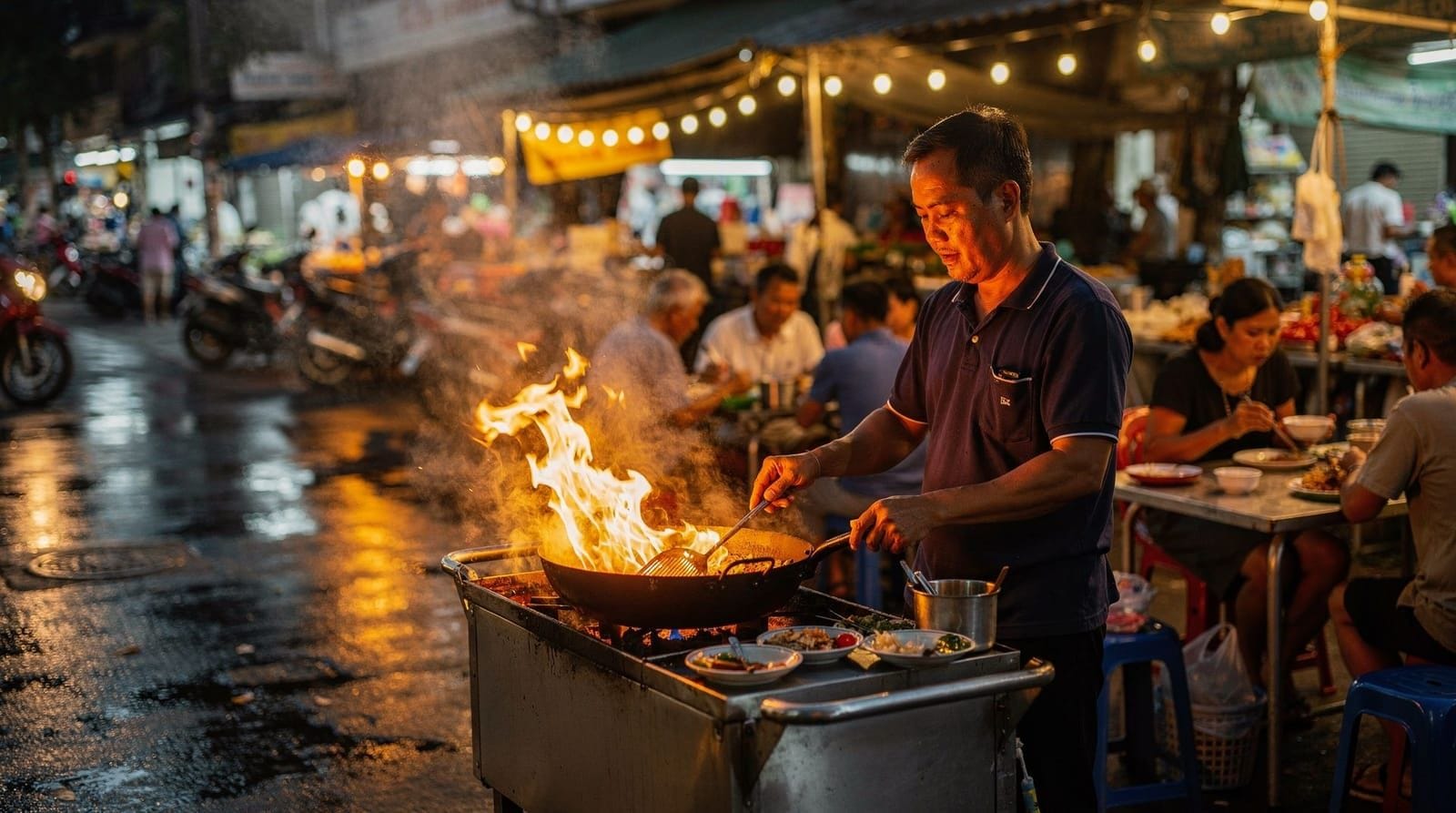
Chiang Mai’s street food stalls and night markets, covered in depth in our street food guide, are a fun, casual way to sample a wide range of dishes with kids, letting each family member pick something different from neighboring stalls rather than committing to one restaurant’s menu. The trade-off is fewer high chairs and less formal seating - most night market dining happens at shared communal tables or standing - which suits older kids better than infants or toddlers needing more structured seating. Hygiene at busy, high-turnover stalls is generally good, since high volume means ingredients don’t sit around long, but it’s sensible to choose stalls with a visible queue of local customers over empty ones.
Portion sizes and sharing
Thai restaurant portions are often designed for sharing across several dishes rather than one plate per person, which works naturally well for a family meal - ordering two or three mild dishes plus rice for the table, rather than one dish per child, tends to give a picky eater more options to try without committing to a single choice they might not like. This also tends to be more economical than an individual-ordering approach, particularly at restaurants pricing dishes for communal Thai-style dining.
Cooking classes as a family dining activity
A kid-friendly cooking class doubles as both an activity and a meal, since most classes end with the group eating everything they’ve cooked - a useful two-for-one for families trying to balance sightseeing time with meal planning. Several Chiang Mai schools informally adapt their standard class for families with younger children, simplifying knife-heavy steps and leaning into simpler stir-fries and mango sticky rice rather than the full standard dish list. Our Chiang Mai cooking class guide covers what to ask about when booking with kids specifically in mind.
A few practical dining tips for families
Eating earlier than a typical adult dinner schedule - many families with young kids find 6-7pm works better than a later 8-9pm Thai dinner hour - avoids the more crowded, louder later seating at popular restaurants. Bringing a few familiar snacks from home or a local supermarket as backup covers the occasional day when nothing on a menu appeals to a tired or fussy child. And asking about a kids’ menu specifically, even where none is advertised, sometimes turns up a simplified off-menu option many restaurants are happy to prepare for a young diner without listing it formally.
Riverside dining for a change of scene
The riverside area near Ping Riverside and Wat Ket has a growing cluster of restaurants with outdoor seating overlooking the Ping River, offering a calmer, more open-air dining setting than the denser Old City or Nimman streets - a genuine advantage for families with young kids who benefit from more room to move between courses without disturbing other diners. Evening riverside dining also tends to run cooler than inland spots during the hot season, making it a comfortable option for a family dinner even in the warmer months.
Breakfast options for an early-rising family
Families traveling with young children often find themselves up and hungry earlier than typical Thai restaurant opening hours, which is where Nimmanhaemin’s café-heavy scene becomes particularly useful - many cafés open by 7-7:30am and serve a mix of Western breakfast staples (eggs, pancakes, toast) alongside Thai breakfast options, giving picky younger eaters a reliable start to the day. Hotel breakfast buffets, common at mid-range and upscale properties, are also a dependable option for a family that wants to avoid navigating an unfamiliar menu first thing in the morning.
Dessert and snack stops kids tend to love
Mango sticky rice - sweet glutinous rice with fresh mango and a coconut cream drizzle - is one of the most reliably popular desserts with kids trying Thai food for the first time, available at restaurants, night markets, and dedicated dessert stalls throughout the city. Our best mango sticky rice guide covers where to find particularly good versions. Ice cream and shaved-ice dessert shops are also common in Nimmanhaemin specifically, useful as a reward stop after a hot afternoon of sightseeing.
Supermarkets and self-catering for families
For families staying in accommodation with a kitchenette, particularly serviced apartments common around Nimmanhaemin and the riverside, Rimping Supermarket (with several branches around the city) and the larger Central Festival hypermarket both stock a wide range of familiar international grocery brands alongside local produce, useful for stocking snacks, breakfast items, or backup meals for a picky eater without relying on restaurants for every meal. This can meaningfully reduce mealtime stress on a longer family stay, particularly with very young children or specific dietary needs.
Timing meals around a family sightseeing schedule
Chiang Mai’s heat makes meal timing a genuinely useful planning tool rather than just a matter of taste - scheduling lunch to coincide with the hottest midday hours (roughly 11am-2pm) gives a family a natural, air-conditioned break during the part of the day least suited to outdoor sightseeing anyway. Many families find that structuring the day around morning sightseeing, a leisurely air-conditioned lunch, afternoon pool or rest time, and evening activities (a market, dinner out) works better than trying to push through a full day of continuous activity with only short meal breaks. This rhythm also naturally limits how many consecutive hours young kids spend in the heat, which does more for everyone’s mood than any single restaurant choice.
Restaurant etiquette worth knowing with kids
Thai dining culture is generally relaxed and family-friendly, and children are welcomed rather than tolerated at the overwhelming majority of restaurants, including many that might read as more upscale to a Western visitor. That said, a moderate volume level is appreciated the same way it would be in most cultures, and removing shoes is expected at a small number of traditional low-seating restaurants, which is worth checking for before committing to a floor-seating table with young kids who might find that seating style uncomfortable for a full meal.
Handling allergies and dietary restrictions
Common allergens in Thai cooking - peanuts, shellfish (via fish sauce and shrimp paste), and gluten via soy sauce - appear frequently enough across the cuisine that it’s worth being specific and repeated about any allergy rather than assuming a single mention covers every dish ordered across a meal. Writing down the allergy in Thai on a phone (translation apps handle this reliably) and showing it to kitchen staff directly, rather than relying on a server to relay it accurately, adds a useful extra layer of safety for a family with a significant allergy. International chain restaurants at malls, familiar with allergen labeling conventions from their home markets, are sometimes a more predictable option for a family managing a serious allergy than a local restaurant without formal allergen documentation.
What to do when nothing on the menu works
Even with all this planning, there will likely be at least one meal on a longer trip where a tired or fussy child simply won’t eat what’s available. Keeping a small stash of familiar snack bars, crackers, or a favorite treat from home covers this gap without derailing the rest of the day, and it’s a normal, low-stakes contingency rather than a sign of poor planning - even experienced family travelers build this kind of backup into every trip. Supermarkets like Rimping stock a reasonable range of imported snack brands if you run out mid-trip and need to restock.
Budget expectations for family dining
A casual meal at a local restaurant or food stall runs roughly 60-150 THB (about USD 1.70-4) per dish, meaning a family of four eating several shared dishes plus drinks can expect to spend somewhere around 500-900 THB (about USD 14-25) for a full casual meal. Nimmanhaemin’s more upscale cafés and Western-fusion restaurants run higher, typically 150-350 THB per dish, while mall food courts sit closer to the lower end of the local-restaurant range. This makes Chiang Mai a genuinely affordable place to eat out as a family compared to many Western destinations, even when leaning toward the pricier, more familiar options.
Choosing a base neighborhood with dining in mind
If convenient family dining is a real priority alongside your accommodation choice, Nimmanhaemin’s café density gives the most variety within a short walk of most hotels in the area, while the Old City offers a more traditional, lower-key set of options closer to the main temple sights. Our family accommodation guide covers this neighborhood trade-off alongside pool access and room configuration, and our Chiang Mai with kids guide ties dining into the broader family trip-planning picture.
Ultimately, the families who report the smoothest dining experiences in Chiang Mai are the ones who stay flexible about where they eat rather than researching a single must-try restaurant per meal - the city’s density of decent, family-tolerant options in the main visitor neighborhoods means a reasonable meal is rarely more than a short walk or ride away, even without advance planning for every single sitting.