Northern Thai food: sai oua, nam prik ong, gaeng hang lay and more explained
Chiang Mai: Food Tour by Songtheaw Truck with 15+ Tastings
What makes northern Thai food different from the Thai food most people know?
Northern (Lanna) cooking uses sticky rice rather than steamed jasmine rice as its everyday staple, favors herb-packed grilled and simmered dishes over the pounded fresh curry pastes of central Thailand, and shows clear Burmese and Shan influence in dishes like khao soi and gaeng hang lay, reflecting the region's history as a separate kingdom bordering Myanmar rather than part of central Thailand's culinary tradition.
Why northern Thai food is its own cuisine, not a regional variation
This guide works through the essential dishes in roughly the order most visitors encounter them, then goes a level deeper into the ingredients, regional variations and etiquette that separate a surface-level understanding of northern Thai food from a genuinely informed one — useful whether you’re planning a single meal or a full week of eating your way through the region’s specialties.
Visitors arriving in Chiang Mai with an idea of “Thai food” built around pad thai, green curry and tom yum from restaurants elsewhere in the world are usually surprised by how different the everyday local cooking actually is. Northern Thailand — historically the separate Lanna kingdom, only formally incorporated into modern Thailand in the early 20th century — developed its cuisine in close contact with Burma (Myanmar), Yunnan (China) and the Shan states, resulting in dishes with genuinely distinct techniques and flavor profiles from central and southern Thai cooking. Sticky rice rather than steamed jasmine rice is the everyday staple, curries lean toward slow-cooked and spice-blended rather than pounded-fresh-paste, and the food is built around sharing several small dishes rather than one dish per person.
This guide walks through the dishes you’ll encounter constantly in Chiang Mai’s markets and restaurants, what makes each one distinct, and where to find more detail if a specific dish interests you further.
Khao soi: the signature dish
Given how frequently it’s asked about, khao soi deserves a fuller explanation here even beyond the dedicated shortlist linked below, since understanding the dish properly changes how you order and eat it.
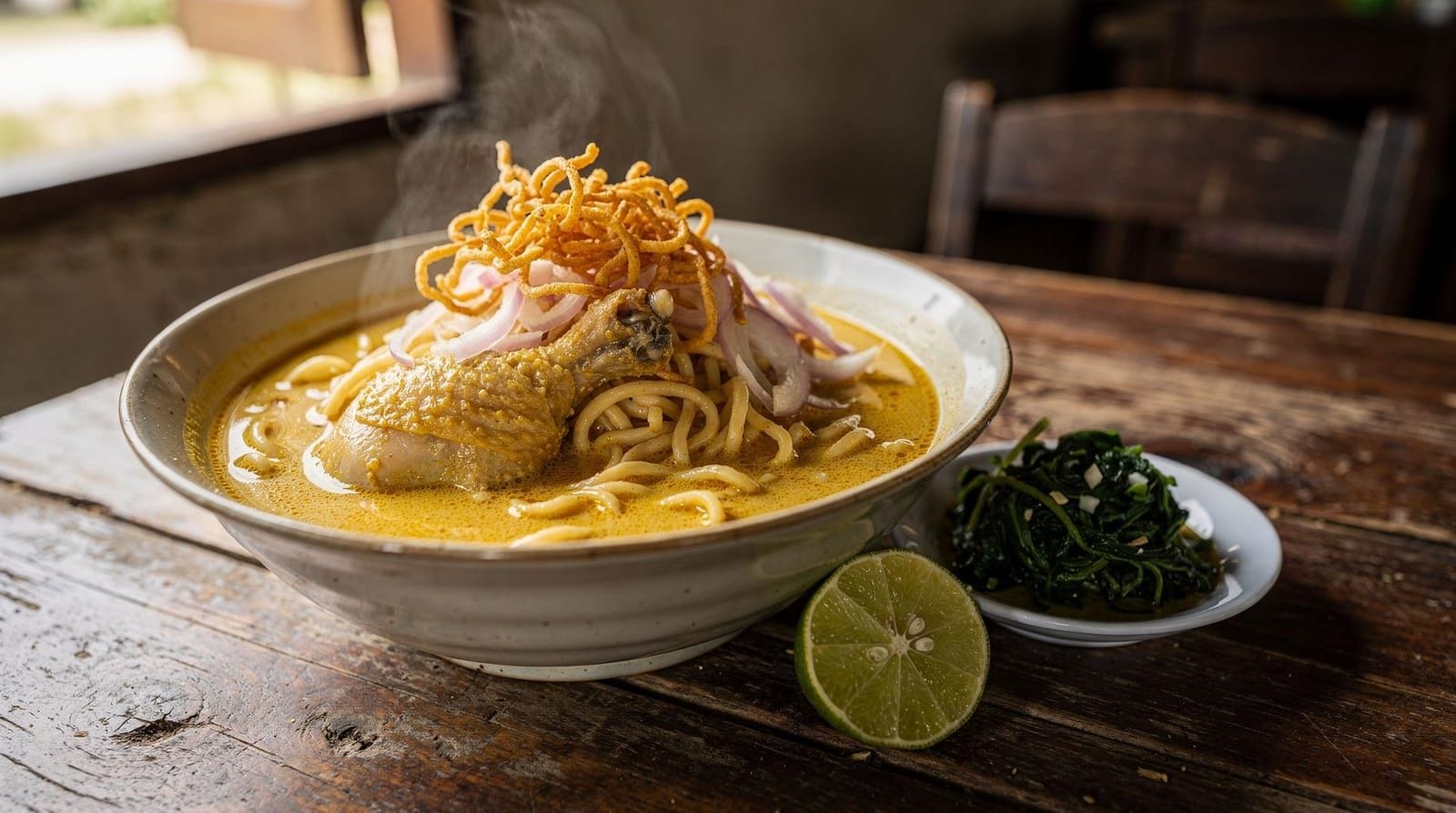
Khao soi — egg noodles in a rich coconut curry broth, topped with crispy fried noodles and served with pickled mustard greens, shallots, lime and chili paste — is the dish most associated with the region, and the one visitors most often ask about first. Its Burmese-influenced name and technique reflect Chiang Mai’s history as a trading hub rather than an isolated Thai city. For a full dedicated guide to where to eat it, see khao soi where to eat in Chiang Mai.
Food tour by songthaew truck with 15+ tastingsSai oua: the herb-packed sausage
Sai oua is a coiled sausage stuffed with a paste of lemongrass, galangal, kaffir lime leaf, turmeric, shallots and chili, then grilled over charcoal until the casing crisps. It’s aromatic rather than fatty, and the herb blend varies noticeably between vendors — some lean more citrusy from extra kaffir lime, others spicier. It’s sold by weight at virtually every market in the city, including Warorot Market, and travels well as a snack.
Nam prik ong and nam prik num: two very different chili dips
These two dips are easy to confuse by name but taste quite different:
- Nam prik ong is built from tomato and minced pork, simmered into a mildly sweet, rich dip rather than an intensely spicy one.
- Nam prik num is made by roasting green chilies, shallots and garlic directly over fire, then pounding them into a smoky, considerably spicier paste with no meat involved.
Both are eaten the same way: scooped with sticky rice, alongside crispy pork rind (kaep moo) and a plate of raw or blanched vegetables — cucumber, cabbage, long beans and eggplant are common. This eating style, building a plate from several shared components rather than one main dish, is a genuinely different approach to a Thai meal than the single-plate curry-and-rice format more familiar from central Thai restaurants abroad.
Gaeng hang lay: the Burmese-style curry
Gaeng hang lay is a slow-simmered pork belly curry, flavored with ginger, tamarind and a distinctive dry curry powder blend rather than a fresh-pounded wet paste — a technique and flavor profile that traces directly to Burmese cooking. It’s richer, less spicy and more warmly spiced (closer to a South Asian-influenced curry) than the fresh, sharp, chili-forward curries most associated with Thai food generally, and it’s a useful dish for understanding just how much the north’s food diverges from the rest of the country.
Taste of Chiang Mai: Michelin Guide and street food tourKhanom jeen: fresh noodles, many toppings
Khanom jeen are fresh, thin, fermented rice noodles, served cold or room-temperature with a choice of toppings — various curries, or specifically in the north, nam ngiao, a tomato-and-pork-blood based broth with a distinctive tang. It’s a dish built around the topping choice as much as the noodle itself, and it’s widely available at markets including Warorot, usually priced at the lower end of the city’s food spectrum.
Sticky rice: the everyday staple
Khao niaw (sticky rice) is the default rice of northern Thailand, eaten by hand from a small woven bamboo basket alongside grilled meats, dips and vegetables rather than served as a bed under a curry. It’s steamed rather than boiled, giving it its distinctive chewy, slightly translucent texture, and it’s genuinely central to how a northern Thai meal is structured — many of the dishes above are designed to be eaten with it rather than with steamed rice.
Guided local food and markets walking tourLarb: a dish that means something different in the north
Few dishes illustrate Thailand’s regional food diversity as clearly as this one, since the same name covers genuinely different preparations depending on where in the country you order it.
Larb (sometimes spelled laap) is a useful example of how a dish name can mean genuinely different things across Thailand’s regions. The central and Isaan (northeastern) versions most familiar internationally are a bright, herb-and-lime-forward minced meat salad, served room temperature. The northern Thai version, sometimes called larb kua, is meaningfully different: the meat (often pork, sometimes including offal) is cooked with a distinct northern spice blend that can include a small amount of animal blood for color and depth, and dried or toasted spices give it a warmer, earthier profile than the sharp, citrus-forward central version. Trying both, ideally in the same trip if your itinerary includes other Thai regions, is a genuinely interesting way to understand how much regional variation exists within what looks like a single dish name.
Khanom: northern Thai sweets beyond mango sticky rice
The region’s dessert tradition is broader and more varied than its most internationally famous export might suggest.
Northern Thailand’s dessert tradition extends well beyond the internationally famous mango sticky rice, discussed in full in our mango sticky rice guide. Khanom tom are small, chewy coconut-and-rice-flour balls rolled in fresh grated coconut, popular as a simple market snack. Khao lam is sticky rice, coconut milk and sometimes black beans cooked inside a length of bamboo over an open flame, giving it a subtle smoky character and an unusual, distinctive presentation as it’s served split open from the bamboo tube. Khanom krok, small coconut pancakes cooked in a specialized dimpled pan until crisp on the outside and custardy within, are found at markets throughout the north, not unique to Chiang Mai but a reliable, inexpensive treat wherever they’re sold, including at Sunday Walking Street.
Herbs and ingredients that define the region’s flavor profile
Zooming in on individual ingredients, rather than whole dishes, explains a lot about why northern Thai food tastes distinct even when a dish superficially resembles something from elsewhere in the country.
Beyond individual dishes, it’s worth understanding a handful of specific ingredients that recur throughout northern Thai cooking and largely explain its distinct character. Kaffir lime leaf and its zest appear constantly, in sai oua, in curry pastes, and as a garnish, contributing a sharp, citrusy aromatic note distinct from the more common lime juice used elsewhere. Dill (pak chee lao) shows up in some northern soups and stews, an unusual inclusion by broader Thai culinary standards and a legacy of the region’s connections to Shan and Yunnanese cooking traditions. Turmeric appears more prominently in northern curry blends than in many central Thai dishes, contributing both color and a distinct earthy bitterness that balances the richer, fattier cuts of meat traditionally used. Fermented soybean (thua nao), used in some hill-tribe and northern Thai dishes as a savory base, is a genuinely distinctive regional ingredient with no real central Thai equivalent, reflecting closer culinary ties to Burmese and Yunnanese fermented soy traditions than to the fish-sauce-based umami more typical of central and southern Thai cooking.
How these dishes reflect the region’s hill-tribe influence
It’s worth noting that “northern Thai food” as covered in this guide primarily describes lowland Lanna cuisine — the cooking of the ethnic Thai population historically centered in and around Chiang Mai — which is a distinct tradition from the food of the region’s hill-tribe communities (Karen, Hmong, Akha, Lisu and others), who have their own separate culinary traditions shaped by different histories, altitudes and agricultural practices. Some crossover exists, particularly around shared ingredients like sticky rice and certain preserved and fermented foods, but it’s inaccurate to treat hill-tribe cooking as simply a variant of Lanna cuisine. Visitors interested specifically in hill-tribe food traditions, as opposed to the Lanna dishes covered in this guide, are better served by a guided village visit or trek that includes a meal, where the distinction can be properly explained by a local guide rather than assumed.
Where to try these dishes without ordering blind
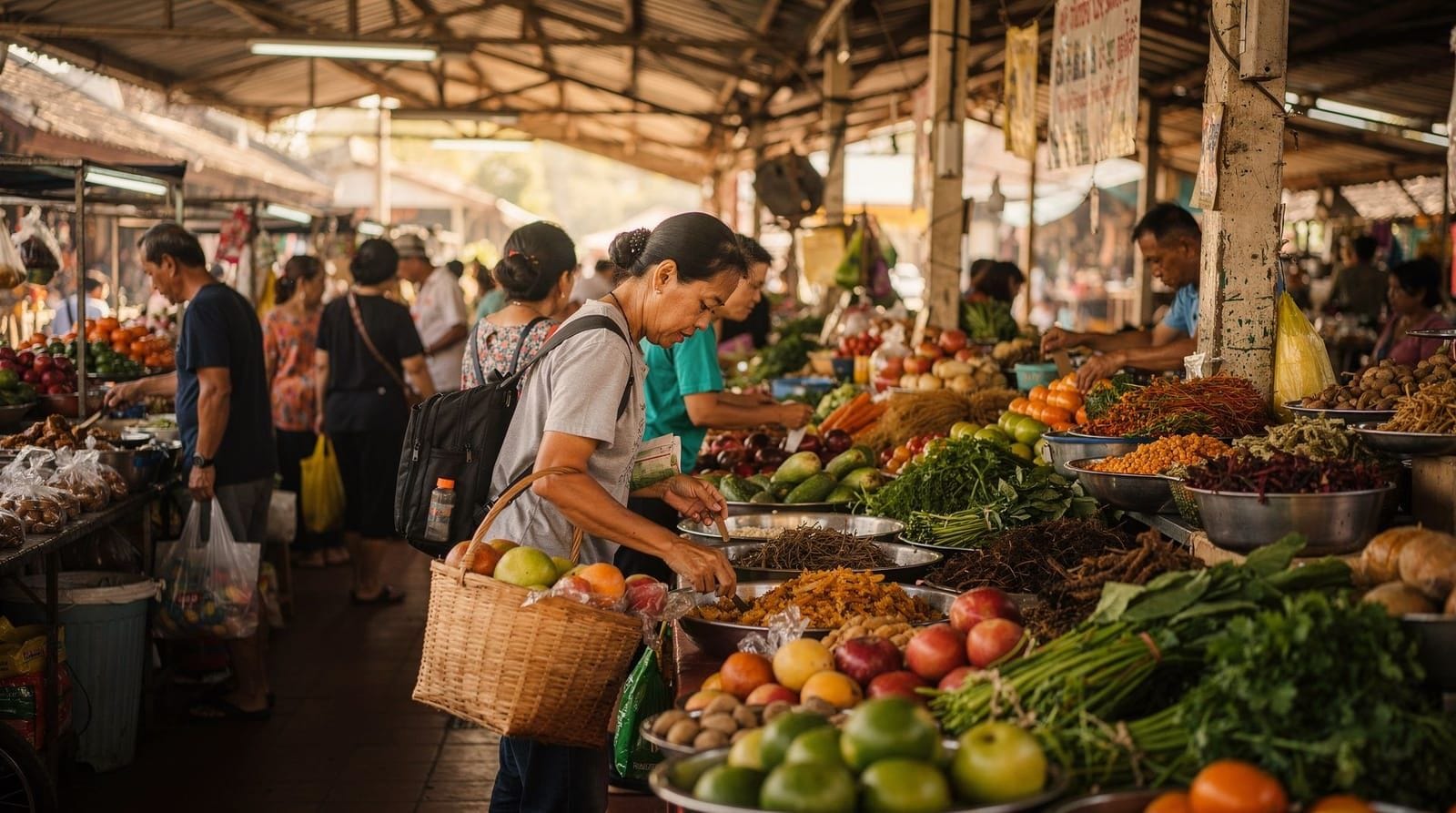
Markets are the most efficient way to sample several of these dishes in one visit — see the Chiang Mai street food guide and the Warorot Market food guide for specific stall recommendations. If you’d rather have a guide explain and order these dishes for you, a guided food tour or a Lanna-focused cooking class are both reasonable options — see the is a Chiang Mai food tour worth it guide for that comparison.
Where these dishes show up across the wider region
Northern Thai cuisine isn’t confined to Chiang Mai city — it’s the dominant food culture across the wider northern region, and dishes covered in this guide reappear, sometimes with local variations, at destinations throughout the north. Chiang Rai, a few hours north, shares essentially the same core dishes with some regional variation in spice blends. Lampang, a smaller city known for its horse-carriage history, has its own respected takes on several of these dishes, worth trying if a day trip there is on your itinerary. Pai and Mae Hong Son, both further west and closer to the Myanmar border, show even more pronounced Shan and Burmese influence in their versions of dishes like khao soi and gaeng hang lay, reflecting their geographic proximity to those culinary traditions. If your trip includes any of these destinations, trying the local version of a dish you’ve already had in Chiang Mai is a genuinely worthwhile comparison rather than assuming the city version is definitive.
A practical tasting order for first-timers
If you’re trying several of these dishes for the first time and want a sensible order to approach them in, starting with khao soi is the obvious entry point given its familiarity and relatively approachable flavor profile. From there, sai oua makes a good second dish, since its herb-forward profile is distinct but not challenging. Nam prik ong, being mild and rich, is a reasonable third step before working up to the more intensely flavored nam prik num, and gaeng hang lay is worth trying once you have a baseline understanding of how northern curries differ from the pastes used in central Thai cooking. This isn’t a strict rule, but it’s a reasonable way to build context dish by dish rather than trying everything at once and struggling to distinguish one new flavor from another.
Pairing these dishes with the right drink
Northern Thai food is traditionally paired with simple, unobtrusive drinks rather than anything designed to compete with the food’s flavors. Plain water or weak Chinese-style tea are the most traditional accompaniments at an everyday meal, and lager-style Thai beers (Singha, Chang, Leo) are the common choice for a more social evening meal, chosen partly because their light, clean profile doesn’t clash with the rich, herb-forward flavors of dishes like sai oua or gaeng hang lay. Fresh fruit shakes and juices, widely available at markets, are a popular non-alcoholic alternative, particularly useful for cooling down after a spicier dish like nam prik num. Coffee, discussed in our coffee culture guide, is generally treated as a separate occasion from a meal rather than paired directly with northern Thai dishes, more common as a standalone café visit than as a meal accompaniment.
Frequently asked questions about northern Thai food
Is northern Thai food available outside Chiang Mai?
It’s found throughout the broader northern region — Chiang Rai, Lampang and other northern provinces share largely the same food culture — but it’s less common in central and southern Thailand or in Thai restaurants abroad, which tend to represent central Thai cuisine by default.
What’s the best single dish for someone who doesn’t like spicy food?
Khao soi and gaeng hang lay are both comparatively mild as served, with heat added at the table rather than built into the base — a safer starting point than nam prik num, which is intentionally spicy by design.
Are these dishes typically eaten for breakfast, lunch or dinner?
Most are eaten throughout the day without strict meal-time association — khao soi and khanom jeen are common at any time, though some old-school shops sell out by early afternoon and effectively become breakfast-and-lunch-only dishes by default.
Can I learn to make these dishes myself?
Yes — several Chiang Mai cooking classes specifically teach northern Lanna dishes rather than generic central Thai recipes; look for classes that name khao soi, sai oua or nam prik specifically in their curriculum.
Is northern Thai food generally more or less expensive than food in Bangkok?
Broadly comparable to slightly cheaper for equivalent street food, though Chiang Mai’s dedicated northern Thai dishes are harder to find outside the region, making them more of a destination-specific experience than a price comparison.
Do vegetarian versions of these dishes exist?
Some — tofu-based versions of khao soi appear at dedicated vegetarian stalls, and nam prik num can be made without concern since it’s already meat-free; nam prik ong and sai oua are both traditionally meat-based and less commonly adapted. See the vegetarian and vegan restaurants guide for specifics.
Is northern Thai food halal-friendly?
Not by default, since pork appears constantly across the region’s signature dishes, but a dedicated halal cluster exists around Ban Ho and Chang Klan Road, including a well-known halal khao soi option — see the halal food guide for details.
Are these dishes typically served with any particular etiquette I should know?
Not formally — sharing several dishes family-style, eating sticky rice by hand, and helping yourself to shared condiments and dips are all standard practice without strict rules, making northern Thai meals fairly relaxed and forgiving for visitors still learning the cuisine.
Top experiences
Bookable activities with verified prices and instant confirmation on GetYourGuide.