Lampang
The only Thai town with working horse carriages — Wat Phra That Lampang Luang's walled Lanna temple, ceramics, and teak houses, 1.5 hours from Chiang Mai.
From Chiang Mai: Lamphun and Lampang Temples Tour
Duration: Full day
Quick facts
- Distance / time
- ~100km / ~1.5 hours SE of Chiang Mai by car, minivan, bus, or train
- Signature sight
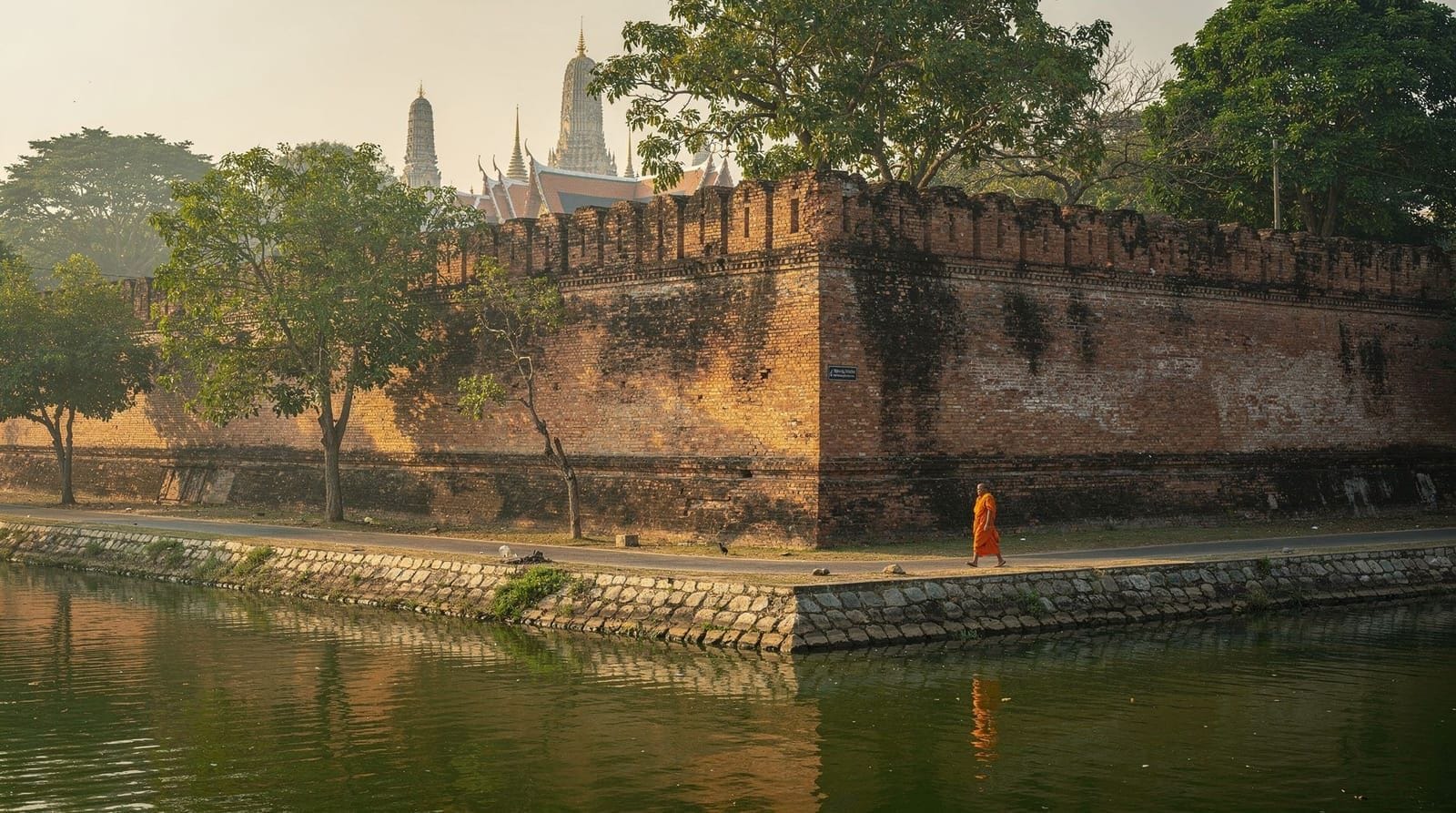
- Wat Phra That Lampang Luang, a walled Lanna temple complex roughly 20km southwest of town
- Local trademark
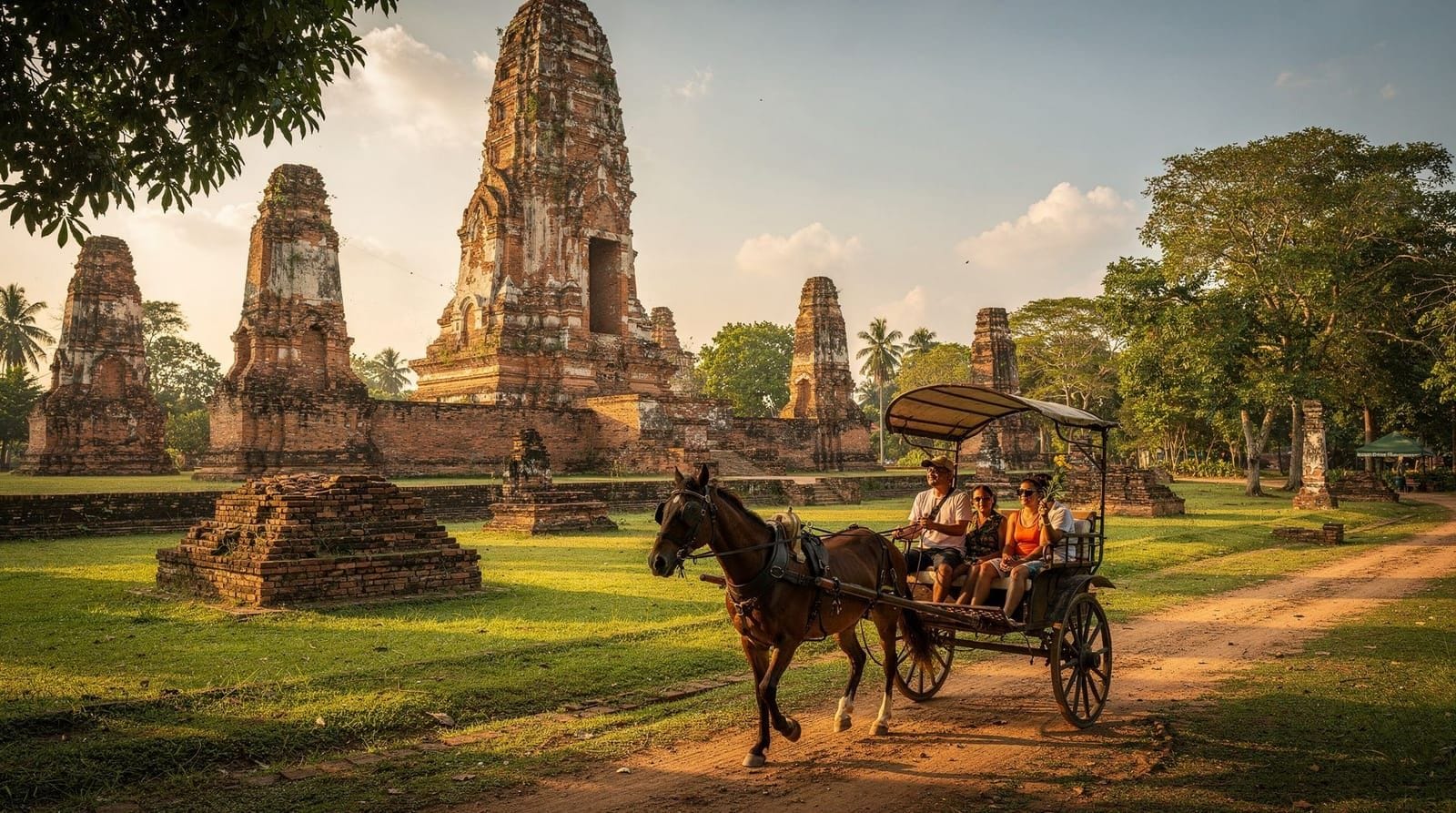
- Horse-drawn carriages (rot ma) — the only Thai town where they still operate as everyday transport
- Time needed
- Full day trip from Chiang Mai, or 1 night to see the old town and outlying temples unhurried
- Best time
- November-February for cool, comfortable sightseeing; dry season generally best for the carriage rides
Lampang sits about 100km southeast of Chiang Mai, roughly 1.5 hours by road, and has built a genuinely distinct identity out of two things: it’s the only town in Thailand where horse-drawn carriages still work as everyday transport rather than a tourist novelty revived for show, and it holds Wat Phra That Lampang Luang, widely regarded as one of the finest surviving examples of walled Lanna temple architecture anywhere in the north. It draws a fraction of the visitor numbers Chiang Mai does, which is a large part of its appeal for travelers who’ve already done the busier temple circuit closer to the city.
Quick answer: Lampang is a former teak-trading town about 1.5 hours southeast of Chiang Mai, known for its horse-drawn carriages, the walled Lanna temple complex of Wat Phra That Lampang Luang roughly 20km outside town, ceramics production (the “chicken bowl” pattern originated here), and a cluster of old teak houses in the town center. It works well as a full-day trip from Chiang Mai or as an overnight stop for travelers wanting a quieter, less touristed alternative to the city’s own temple circuit.
The horse carriages
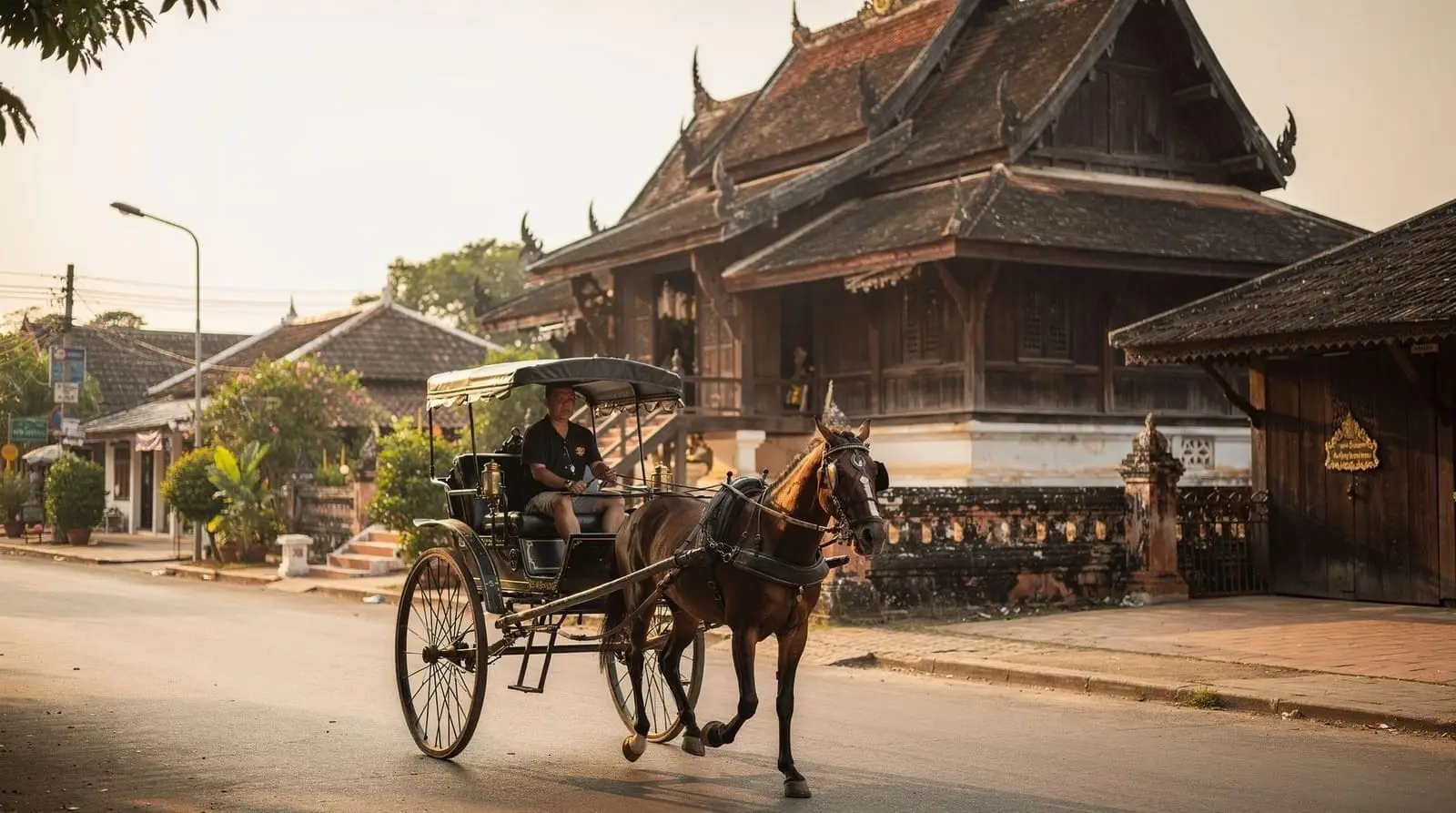
Lampang’s horse-drawn carriages, known locally as rot ma, are a genuine working transport tradition rather than a staged photo-op revival — the town has operated them continuously since the early 20th century, when they served as the primary local transport before motor vehicles became widespread, and Lampang is the only place in Thailand where the practice survived into the present day as anything more than a museum curiosity. Carriages can be hired by the trip or by the hour from stands near the old town and railway station, typically following set routes past the main temples and old teak buildings, with prices negotiated up front and displayed at official stands to reduce overcharging.
Riding one is as much about supporting a specific piece of local heritage as it is a practical way to get around — walking or a car covers the same ground, but the carriage ride is the more distinctly Lampang experience, and it’s worth confirming the route and price at a marked stand rather than an informal roadside offer.
Wat Phra That Lampang Luang
About 20km southwest of Lampang town, Wat Phra That Lampang Luang is frequently cited by scholars of Thai architecture as one of the best-preserved and most architecturally significant Lanna-style temple complexes still standing, distinguished by its imposing walled compound, a monumental teak viharn (assembly hall) with layered roof tiers, and a golden chedi believed to enshrine relics of the Buddha. The complex sits on a raised earthen mound, itself considered significant to the site’s spiritual history, and is entered via a steep staircase flanked by naga balustrades similar in spirit to Doi Suthep’s, though on a different architectural scale and setting.
Inside the main viharn, visitors can see a well-known “upside-down” image — light passing through a small hole in one wall projects an inverted image of the golden chedi outside onto the interior surface, a camera-obscura effect that draws its own steady stream of visitors specifically to see it demonstrated. The temple also holds the Phra Kaew Don Tao, a jade Buddha image with its own strong local devotional following, historically linked to the same disputed provenance stories associated with Thailand’s most famous Emerald Buddha in Bangkok.
Wat Chalermprakiat and hilltop chedis
A cluster of hilltop chedis and viewpoint temples in the Lampang area, generally referred to collectively around Wat Chalermprakiat, offer a quieter counterpart to the more famous Lampang Luang complex, with elevated views over the surrounding countryside and considerably fewer visitors. These make a reasonable secondary stop for travelers with a full day rather than a rushed half-day, particularly if temple architecture and quiet viewpoints interest you more than crowd-free photography of a single headline site.
Ceramics: the chicken bowl and beyond
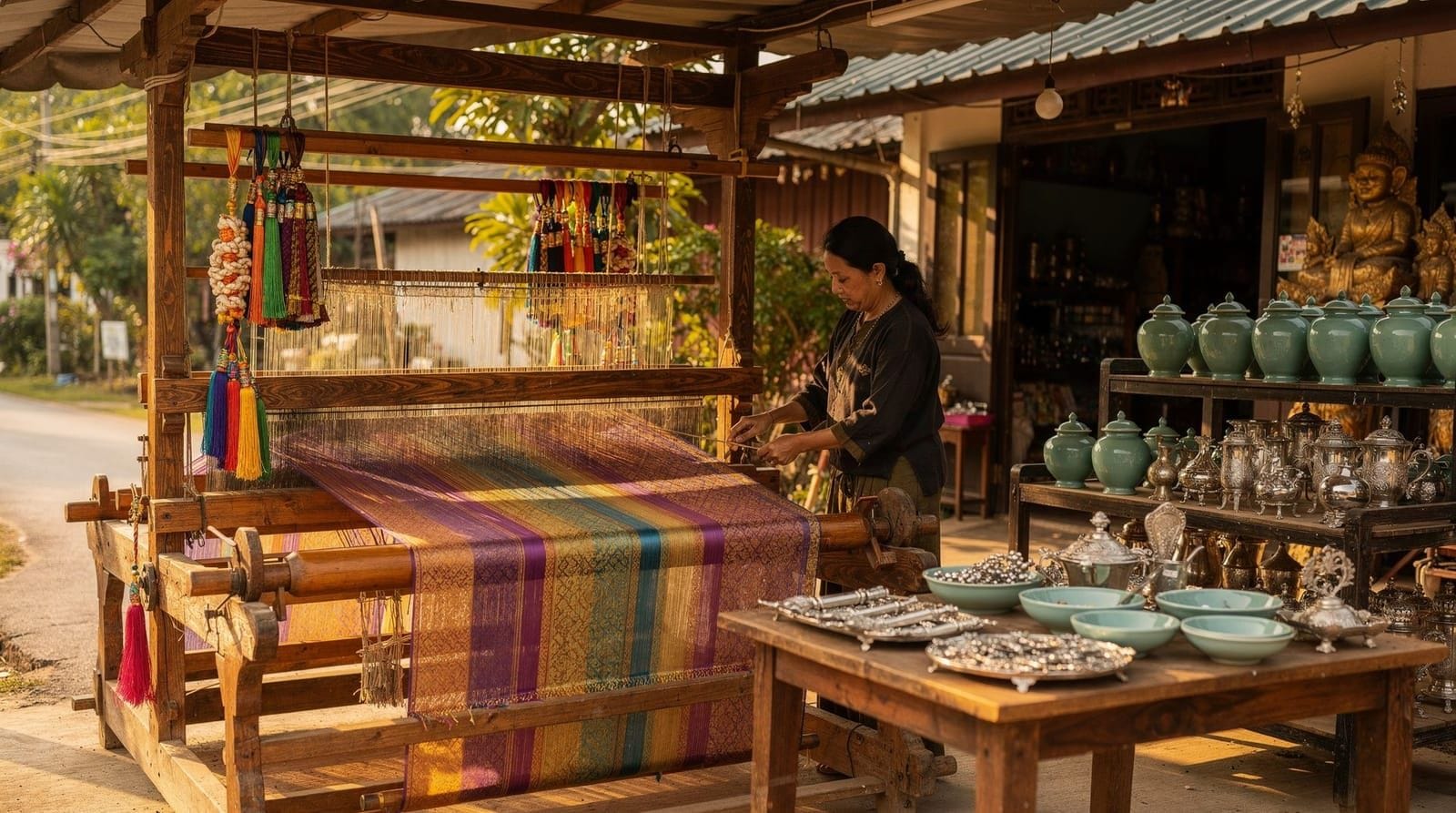
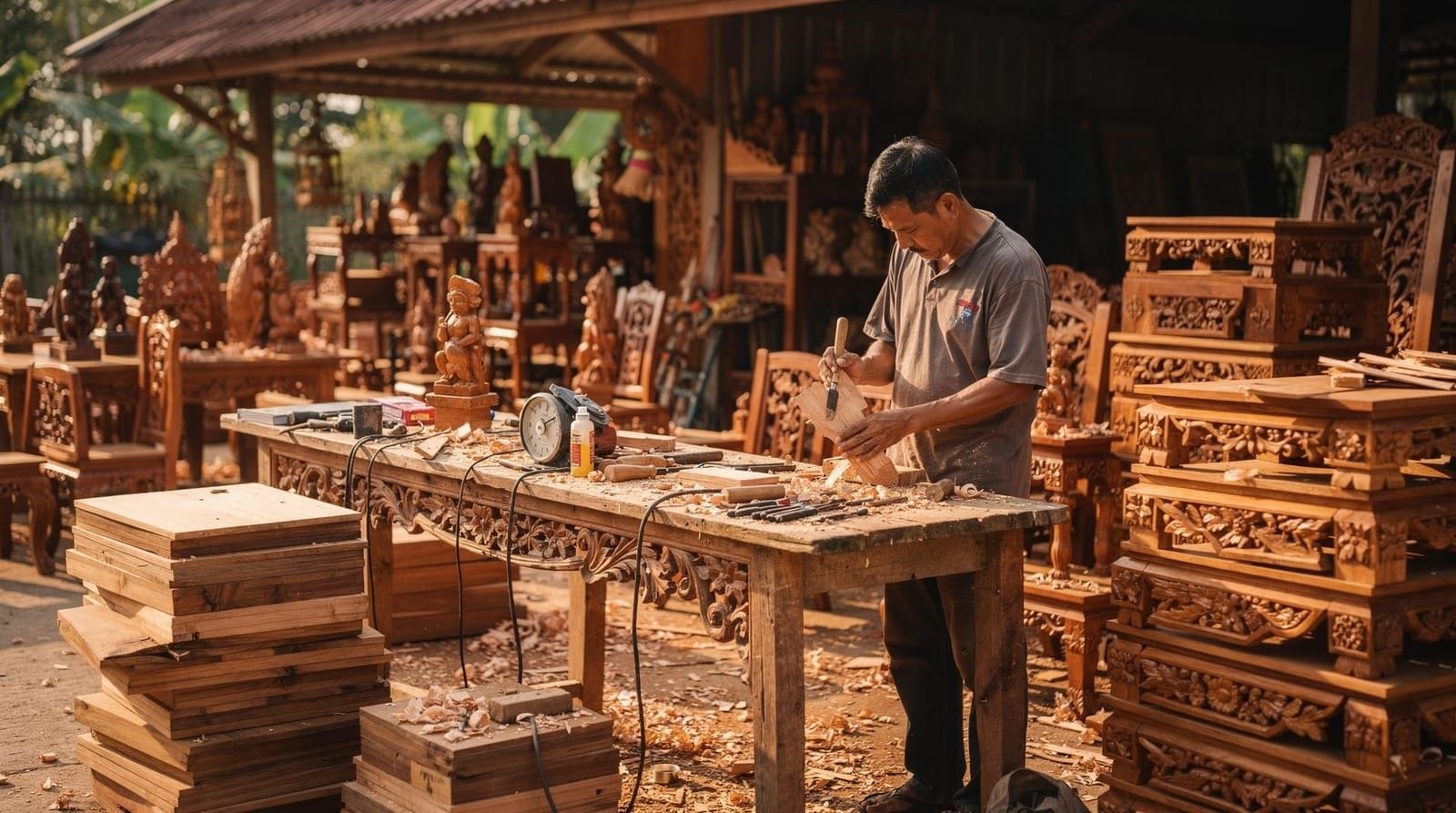
Lampang is closely associated with Thai ceramics production, most famously the “chicken bowl” (thuay kai) — a simple white bowl decorated with a rooster, peony, and banana leaf motif, originally produced by Chinese immigrant potters who settled in the area in the early-to-mid 20th century. The pattern has since become a recognizable symbol of everyday Thai tableware nationwide, and Lampang remains a center of its production alongside a broader ceramics industry making everything from tourist souvenirs to higher-end tableware. Several factories and showrooms around town offer both retail shopping and, at some locations, a look at the production process itself, making this a practical stop for travelers wanting a tangible, useful souvenir rather than a purely decorative one.
Old teak houses and the trading-era town
Lampang’s town center retains a notable concentration of old teak buildings dating to its era as a major teak-logging and trading hub in the late 19th and early 20th centuries, when the town’s position on the Wang River made it a natural transport and processing point for timber destined for both Thai and, at the time, colonial Burmese markets. Several of these buildings, along streets near the river and old town core, remain in use as private homes, small businesses, or occasionally as guesthouses, and a walk through this part of town — easily combined with a stretch of the horse-carriage route — gives a tangible sense of the wealth that teak trading once brought to the area, distinct from the primarily religious history told by the temples themselves.
Mae Moh
East of Lampang town, Mae Moh is home to one of Thailand’s largest lignite coal mines and an associated power station, a less conventionally scenic stop but one that’s occasionally included in broader regional itineraries for travelers interested in Thailand’s energy infrastructure and the area’s more complicated environmental history, including past air-quality disputes associated with the plant. This is a niche interest stop rather than a mainstream sightseeing destination, and most visitors to Lampang skip it in favor of the temple and old-town sights described above.
Getting there and around
Lampang is reachable from Chiang Mai by minivan, bus, private car, or train, with the drive taking roughly 1.5 hours via Highway 11. The town also sits on a rail line connecting Chiang Mai to Bangkok, making Lampang a workable stop for travelers arriving or departing by train who want to break the journey rather than heading straight through. Within town, walking covers the old center comfortably, horse carriages cover a wider loop past temples and old buildings, and a car or driver is the practical way to reach Wat Phra That Lampang Luang and other outlying sights.
A guided Lamphun and Lampang temples tour from Chiang Mai combines Lampang with neighboring Lamphun’s own historic temples in a single day, useful if you want the wider regional temple context rather than Lampang alone. For a more focused look at lesser-visited sites, the hidden temples of Lampang province tour goes beyond the headline stops, while the best-of-Lampang private and all-inclusive tour is a flexible option for travelers who’d rather set their own pace with a private guide and driver than join a fixed-itinerary group tour.
Combining Lampang with other stops
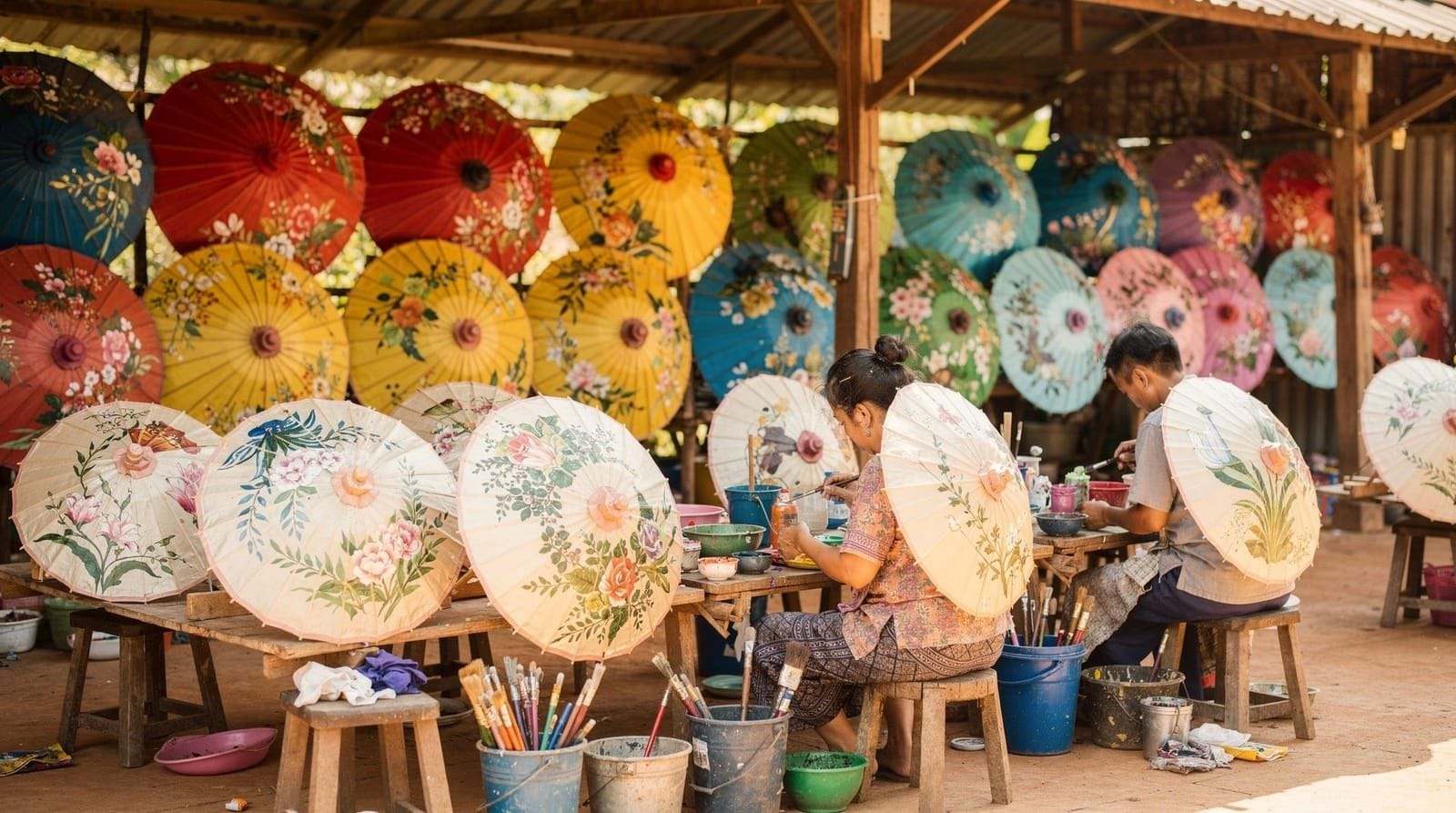
Lampang pairs naturally with a broader northern Thailand loop or with neighboring Lamphun, a smaller historic town with its own significant temples. Travelers coming from or heading toward Chiang Dao or continuing further into Doi Inthanon territory can reasonably treat Lampang as a stop on a wider northern circuit rather than a dedicated single-purpose day trip, given its position southeast of Chiang Mai along established regional routes. For travelers who prefer to stay closer to the city, Chiang Mai’s own San Kamphaeng crafts road and Bo Sang umbrella village offer a comparable, closer-to-home crafts-and-culture experience, though without Lampang’s horse carriages or Wat Phra That Lampang Luang’s architectural significance.
A brief history of Lampang
Lampang’s history stretches back to the Hariphunchai and later Lanna kingdoms, with the town serving as a secondary center of power and religion in the region for centuries before its more recent identity as a teak-trading hub took shape. Wat Phra That Lampang Luang’s origins are typically dated to the Hariphunchai period, with the current structures largely the product of later Lanna-era construction and subsequent restoration, making the complex a genuine layer-cake of regional history rather than a single-era monument. The teak boom of the late 19th and early 20th centuries, driven substantially by British and other foreign timber companies operating out of neighboring Burma, brought a wave of wealth and construction to the town, visible today in the surviving teak houses and in some of the more elaborate temple woodwork commissioned during that period. The horse carriages likely trace to this same era, introduced as a practical transport solution for a growing trading town before automobiles became widespread, and surviving here specifically because Lampang’s more modest post-teak-boom growth never fully displaced them the way it did in busier cities.
Suggested day-trip itinerary
A workable full-day plan from Chiang Mai: depart early to reach Lampang by mid-morning, start with a horse-carriage loop through the old town and past the teak-house district while temperatures are still comfortable, then continue by car to Wat Phra That Lampang Luang for the late morning and lunch nearby. Spend the early afternoon at a ceramics showroom or two if shopping interests you, or at the Wat Chalermprakiat hilltop chedis if you’d rather have a quieter viewpoint stop, before heading back to Chiang Mai in the later afternoon. Travelers with only a half day should prioritize Wat Phra That Lampang Luang over the town-center stops, given its architectural significance relative to the shorter, more replaceable carriage-and-shopping portion of the day.
Practical notes
Lampang’s old town and temple sights are comfortably covered on foot or by carriage, with a car or driver needed only for Wat Phra That Lampang Luang and other outlying stops. Modest dress applies at all temple sites, as elsewhere in the region. Ceramics purchases are often heavy and fragile, so factor in how you’ll transport them if buying in quantity — some shops offer shipping for larger orders, worth asking about if you’re tempted by more than a single souvenir piece.
Accessibility notes
The old town’s flat streets and the horse-carriage routes are manageable for most mobility levels, and carriages themselves offer a seated alternative to walking for visitors who’d rather not cover the old town on foot. Wat Phra That Lampang Luang, however, involves a staircase climb to enter the main walled compound similar in principle to Doi Suthep’s Naga staircase, though shorter, and there’s no funicular alternative here — visitors with significant mobility limitations should factor this in, since much of the complex’s interior (the viharn, the chedi base, and the upside-down image effect) sits beyond that entrance climb.
Food in Lampang
Lampang’s food scene leans toward straightforward northern Thai cooking, with a handful of long-running local restaurants near the old town serving khao soi, sai ua (northern Thai sausage), and other regional staples at prices generally lower than equivalent dishes in central Chiang Mai. The morning market near the old town is a reasonable spot for an early breakfast before setting out on a horse-carriage loop, and small cafés have grown up around the teak-house district in recent years catering to the modest but steady flow of weekend Thai visitors and the smaller number of international travelers who make the detour from Chiang Mai.
Lampang versus Chiang Mai’s Old City temples
Travelers weighing whether Lampang duplicates or complements Chiang Mai’s Old City temple circuit should note the difference in scale and character rather than treating them as interchangeable stops. The Old City’s temples — Wat Phra Singh, Wat Chedi Luang, Wat Chiang Man — are walkable from each other within a compact moated quarter and reflect central Lanna urban temple design; Wat Phra That Lampang Luang is a single, larger walled complex set apart from any town center, widely cited by architectural historians as a purer or better-preserved example of the regional style specifically because it developed away from a dense, continuously rebuilt urban core. Visiting both, if time allows, gives a genuinely fuller picture of Lanna temple architecture than either alone.
Frequently asked questions about Lampang
How far is Lampang from Chiang Mai?
About 100km, roughly 1.5 hours by car, minivan, bus, or train via Highway 11.
Why is Lampang known for horse carriages?
It’s the only town in Thailand where horse-drawn carriages have continuously operated as working transport since the early 20th century, rather than being revived later purely for tourism.
What is Wat Phra That Lampang Luang?
A walled Lanna-style temple complex about 20km southwest of Lampang town, widely regarded as one of the best-preserved examples of the style, with a notable teak viharn, golden chedi, and a camera-obscura “upside-down image” effect inside the main hall.
Is Lampang worth visiting if I’ve already seen Chiang Mai’s temples?
Yes — Wat Phra That Lampang Luang in particular is considered architecturally significant enough to stand apart from, rather than duplicate, Chiang Mai’s Old City temple circuit, and the town’s carriage culture and ceramics industry add a different angle beyond temples alone.
What is the “chicken bowl” associated with Lampang?
A simple white ceramic bowl with a rooster, peony, and banana-leaf design, originally produced by Chinese immigrant potters in Lampang and now a widely recognized style of everyday Thai tableware nationwide.
Can I visit Lampang by train?
Yes, Lampang sits on the Chiang Mai-Bangkok rail line, making it a workable stop to break a longer train journey rather than only a road day trip.
How much time do I need in Lampang?
A full day trip covers the horse carriages, old town, and Wat Phra That Lampang Luang; an overnight allows a more relaxed pace and time for ceramics shopping or the hilltop chedis around Wat Chalermprakiat.
Is Lampang crowded with tourists?
No — it receives considerably fewer visitors than Chiang Mai or Chiang Rai, which is much of its appeal for travelers seeking a quieter alternative to the busier temple circuits.
Top experiences
Bookable activities with verified prices and instant confirmation on GetYourGuide.