Lanna culture explained: what makes northern Thailand distinct
What is Lanna culture, and how is it different from central Thai culture?
Lanna refers to the historical northern Thai kingdom centered on Chiang Mai, founded in 1296 and independent for centuries before being absorbed into Siam. Its culture differs from central Thailand in dialect (Kham Mueang), cuisine (milder curries, sticky rice as the staple grain), temple architecture (multi-tiered wooden roofs and naga staircases), traditional dress, and distinct festival traditions like Yi Peng, all of which remain visibly alive in Chiang Mai today rather than existing only in museums.
Visitors arriving in Chiang Mai from Bangkok often notice, without quite being able to name it, that something about the place feels different from the rest of Thailand - the food tastes different, the temples are shaped differently, and locals sometimes speak to each other in a dialect that doesn’t quite match the Thai learned from a phrasebook. That difference has a name: Lanna, the historical kingdom that once ruled much of northern Thailand, and whose distinct culture is still very much alive rather than confined to museum displays.
Quick answer: Lanna refers to the historical northern Thai kingdom centered on Chiang Mai, founded in 1296 and independent for centuries before gradual absorption into what became modern Thailand. Its culture differs from central Thailand in dialect (Kham Mueang), cuisine (milder curries, sticky rice as the everyday staple), temple architecture (multi-tiered wooden roofs, naga staircases), traditional dress, and distinct festival traditions like Yi Peng - all visibly present in Chiang Mai’s daily life today, not just its history books.
A brief history of the Lanna kingdom
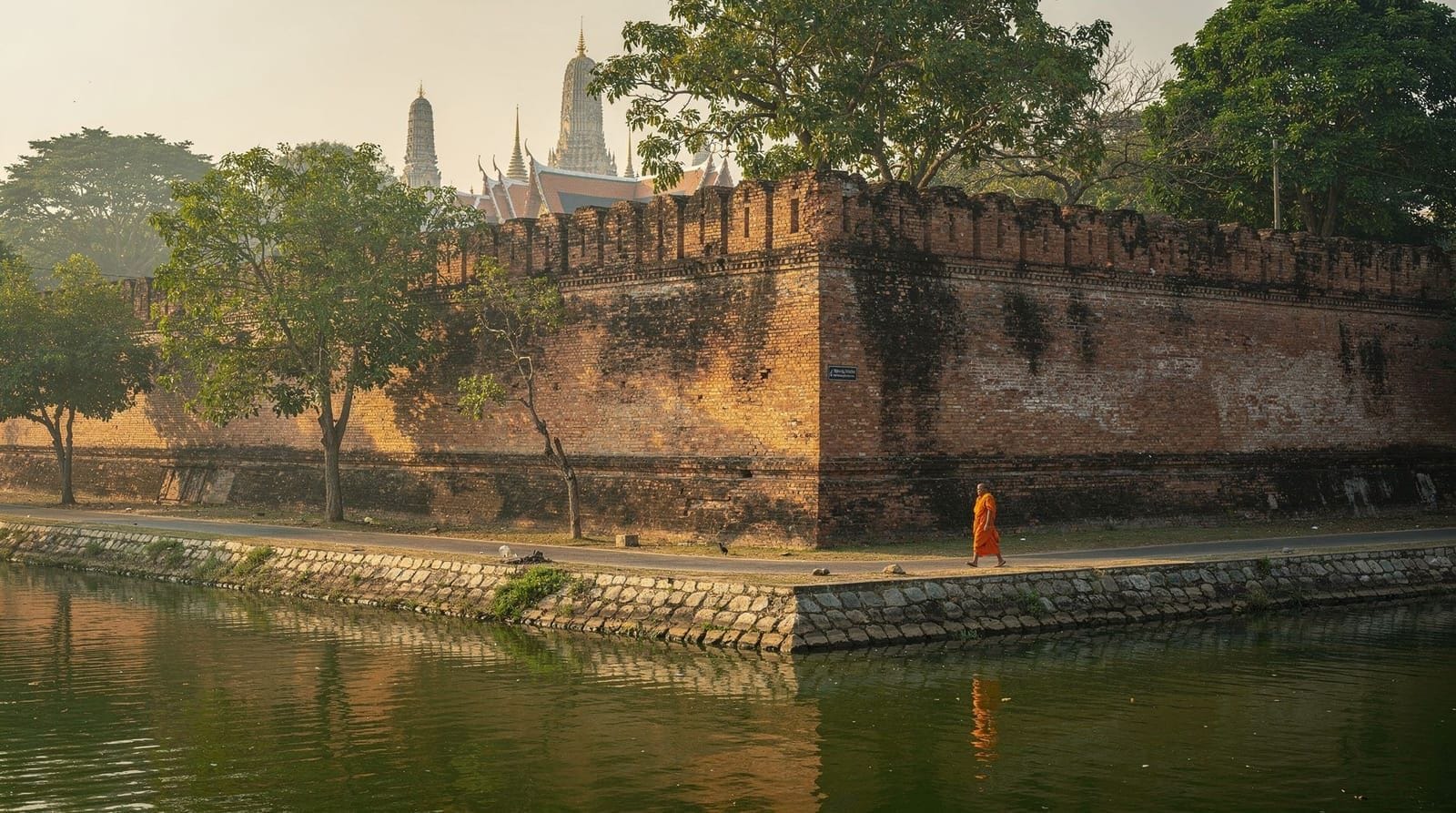
Lanna - commonly translated as “the land of a million rice fields” - was founded by King Mangrai, who established Chiang Mai as his capital in 1296 after earlier bases at Chiang Rai and the short-lived Wiang Kum Kam, whose excavated ruins still sit southeast of the modern city (covered in more depth in our Wiang Kum Kam guide). Lanna grew into a powerful, culturally distinct kingdom over the following centuries, developing its own script, artistic style, and political identity separate from the Thai kingdoms further south and from neighboring Burmese and Lao polities.
The kingdom’s independence didn’t last uninterrupted - Lanna fell under Burmese control for a lengthy period starting in the 16th century, before eventually being reincorporated into Siam (the precursor to modern Thailand) over the 18th and 19th centuries, formally absorbed as a Siamese tributary state and later a fully integrated part of the Thai kingdom by the early 20th century. That long, distinct political history is part of why northern Thai identity retained - and still retains - a genuinely separate cultural character rather than simply being a regional variation on a single national Thai culture.
Kham Mueang: the northern Thai dialect
One of the clearest living markers of Lanna identity is language. Kham Mueang, also called Northern Thai or Tai Yuan, is a distinct dialect from Central Thai (the standard, national language taught in schools and used in media), with its own vocabulary, tones and, historically, its own script. Walking through Chiang Mai’s markets or older neighborhoods, you’ll still hear Kham Mueang spoken between locals, even though virtually everyone also speaks Central Thai fluently for formal contexts, education and communication with visitors from other parts of the country.
The historical Lanna script (tua mueang) - visually quite different from the Central Thai alphabet, with rounder, more curvilinear letterforms - is no longer in everyday written use, but it survives on temple murals, in Buddhist manuscripts, on some decorative signage aimed at cultural tourism, and in ongoing preservation and museum projects. Seeing it on a temple wall or a shop sign in the old city is a small, visible reminder that the region’s writing tradition, like its spoken language, developed independently from the rest of Thailand.
Temple architecture: how Lanna wat differ from central Thai temples
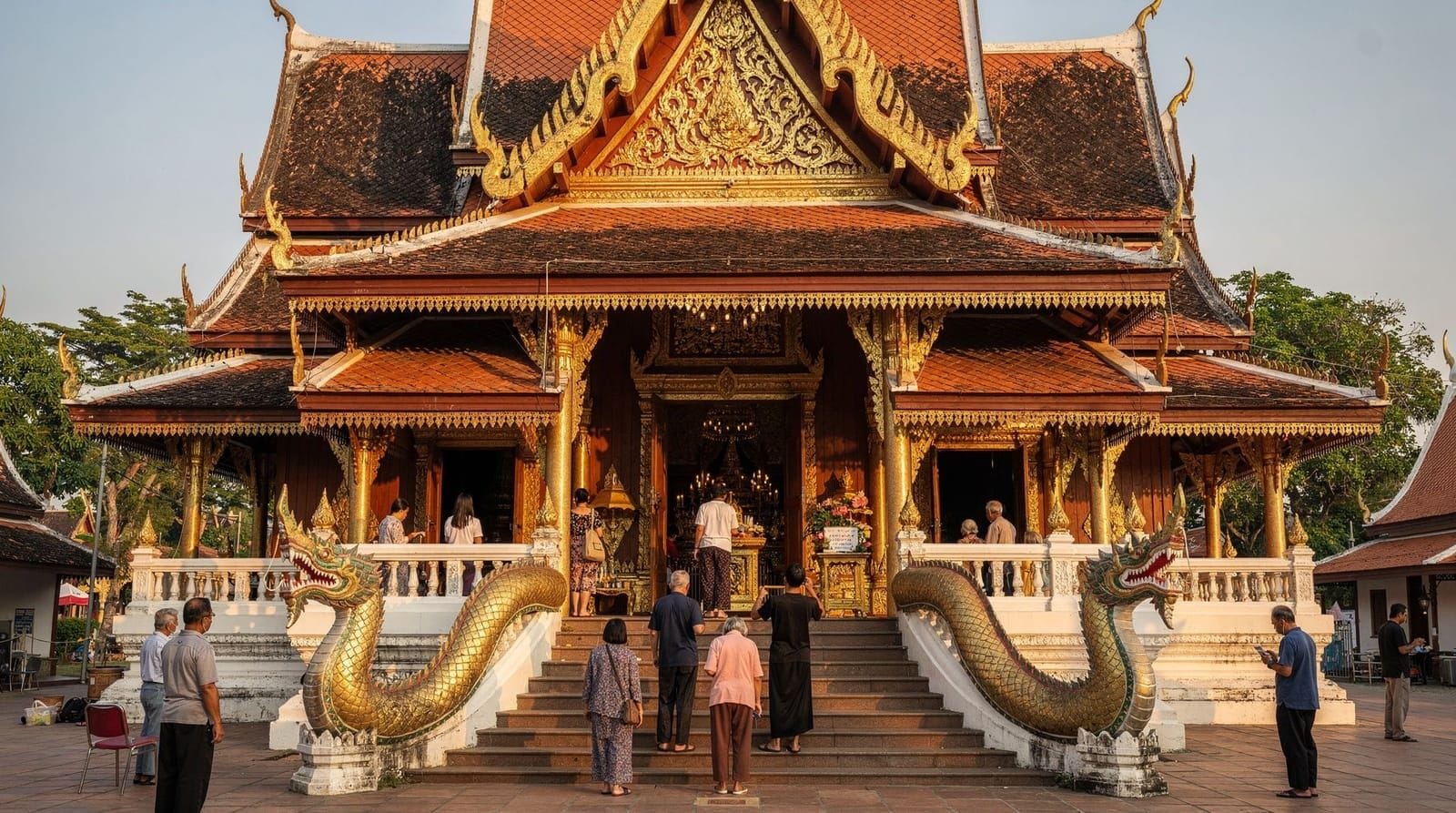
Chiang Mai’s temples display a genuinely distinct architectural style from the more famous central Thai temples of Bangkok and Ayutthaya. Lanna wat typically feature multi-tiered, steeply pitched wooden roofs with layered eaves, often more restrained in gold ornamentation than the elaborate, brightly tiled central Thai style, favoring dark wood, teak carving and more muted color palettes punctuated by gold accents rather than wall-to-wall gilding. Naga (serpent) staircases - a design element shared more broadly across Southeast Asian Buddhist architecture but especially prominent at northern temples like Doi Suthep - flank entrance stairways with elaborate carved serpent forms.
The woodcarving visible in Lanna temple architecture, particularly in chapel interiors like Wat Phra Singh’s Lai Kham chapel, draws on exactly the same craftsmanship tradition still practiced commercially at Baan Tawai woodcarving village today - a direct thread connecting the region’s sacred architecture to its living handicraft economy, covered in full in our Chiang Mai crafts guide.
Food: how northern Thai cuisine differs from the center
Northern Thai food is one of the most immediately noticeable expressions of Lanna identity for visitors, and it differs from central Thai cuisine in several specific ways. Sticky rice (khao niaw), eaten by hand and used to scoop up other dishes, is the everyday staple grain in the north, in contrast to the jasmine rice more typical of central Thai meals. Flavor profiles generally lean milder and less overtly sweet than central Thai cooking, with a distinct set of signature dishes: khao soi (a curried egg-noodle soup, arguably the region’s most famous export dish), sai oua (a herb-packed grilled sausage), nam prik ong (a tomato-and-pork chili dip), and a range of northern-style curries and salads built around local herbs and vegetables not always used further south.
This distinct culinary identity reflects both the region’s cooler climate and different agricultural base - historically closer to Burmese, Shan and Lao culinary influences than to the more centrally Thai or Chinese-influenced flavors of Bangkok - and remains one of the most accessible ways for a visitor to directly experience Lanna culture, simply by eating.
Traditional dress and its living presence
Traditional Lanna clothing - woven cotton or silk sarongs (often in indigo or other natural dye colors), sabai wraps for women, and specific styles of shirt and trouser for men - is no longer standard everyday wear, but it remains genuinely visible in Chiang Mai rather than confined to museum mannequins. Cultural shows, khantoke dinners (a traditional seated meal served on a low pedestal tray, paired with classical dance performance), and festival participation all commonly involve traditional dress, and several tour operators offer the chance to wear it yourself for a cultural photo experience or temple visit, distinct from simply viewing it in a display case.
Ordination ceremonies and Lanna Buddhist practice
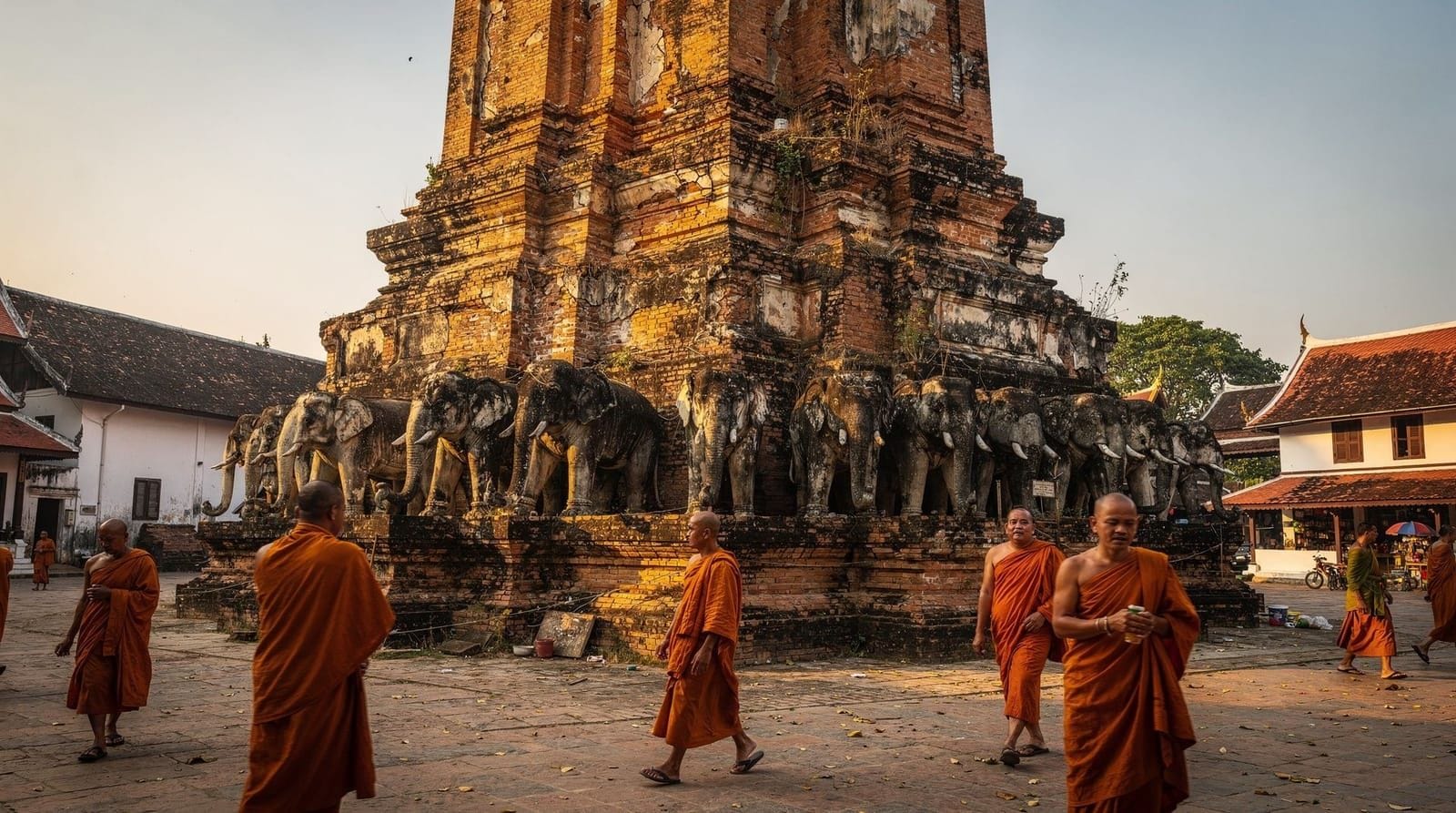
Buddhism across Thailand shares a common core, but Lanna Buddhist practice carries its own regional customs layered on top of that shared foundation. Poy Sang Long, an elaborate novice-ordination ceremony most closely associated with Shan communities in the north, involves boys dressed in elaborate, colorful traditional costume and carried on the shoulders of relatives in a procession before their temporary ordination as novice monks - a striking, visually distinct tradition compared to the simpler ordination customs seen elsewhere in the country. Monk chat programs at temples like Wat Suan Dok and Wat Chedi Luang, where visitors can hold open conversations with young monks studying English, are a more everyday, accessible way to engage with the region’s living Buddhist culture, distinct from a formal ceremony but drawing on the same monastic tradition.
Temple murals across the region, often painted in a distinct northern style with muted, earthy color palettes, frequently depict local Lanna legends and Jataka tales (stories of the Buddha’s previous lives) alongside more universally recognized Buddhist iconography, giving Chiang Mai’s temples a genuinely regional visual character even within a shared national religion.
Lanna craft as an expression of cultural identity
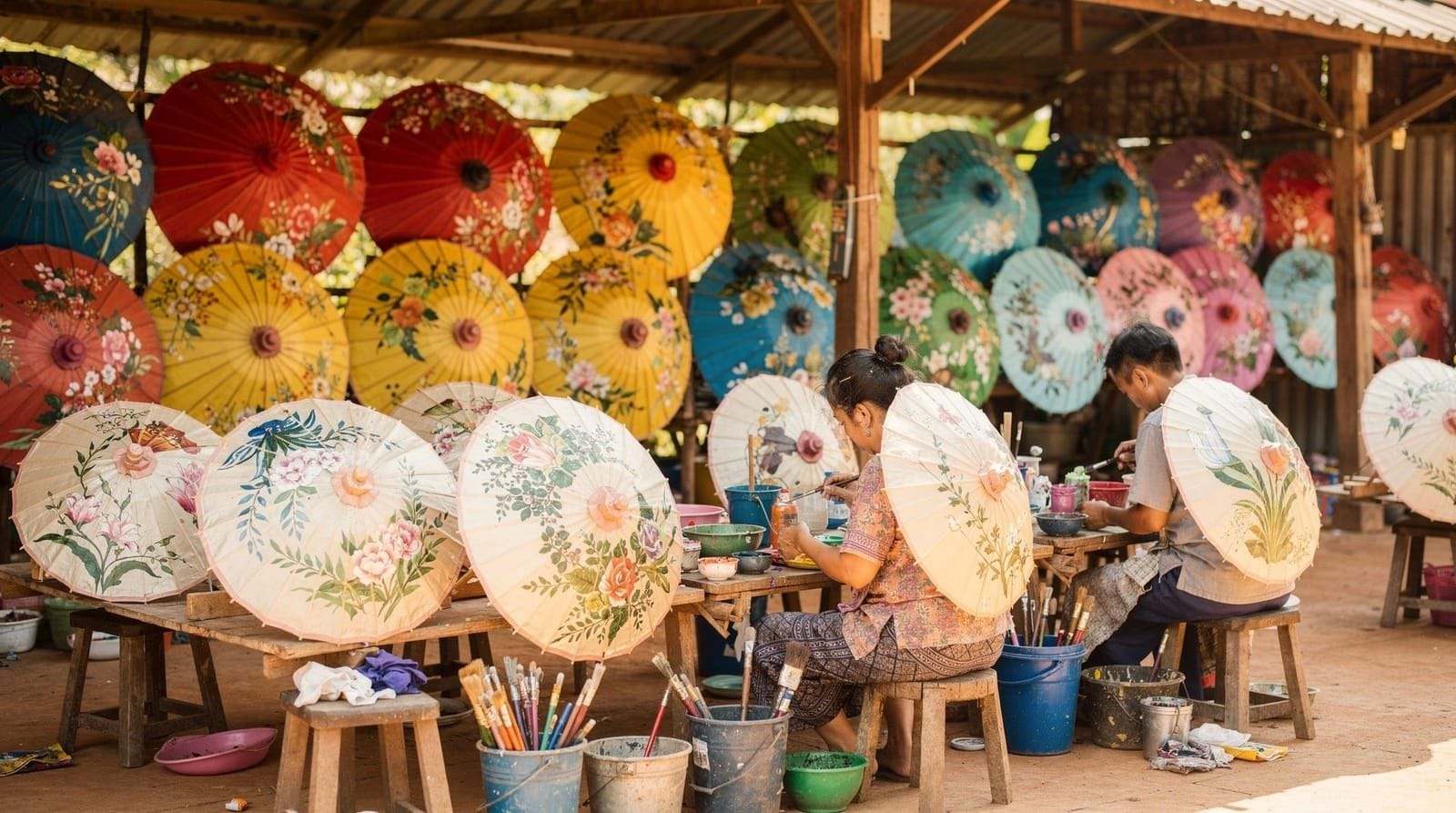
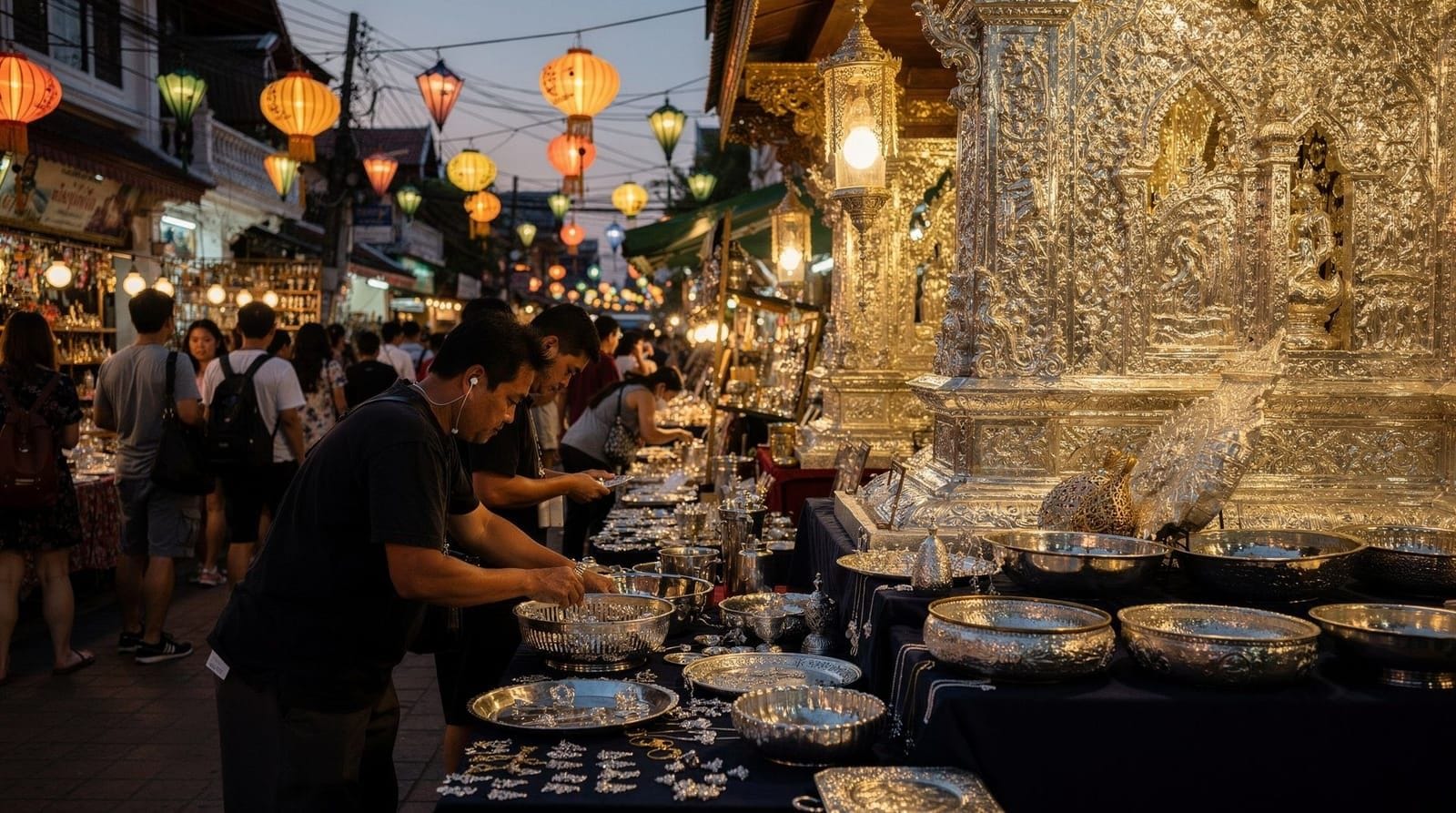
The craft traditions covered in depth in our Chiang Mai crafts guide aren’t incidental to Lanna identity - they’re one of its clearest ongoing expressions. Wualai’s silversmithing quarter, now best known for its Saturday market, grew out of a specific historical community of craftsmen who settled south of the old city walls and passed repoussé techniques down through families over generations, a lineage distinct from silverworking traditions elsewhere in Thailand. Bo Sang’s sa-paper umbrella painting tradition is generally traced to techniques brought from Shan State and adapted specifically to local materials, another example of Lanna’s position at a cultural crossroads between central Thailand, Burma, and Laos rather than a culture that developed in isolation.
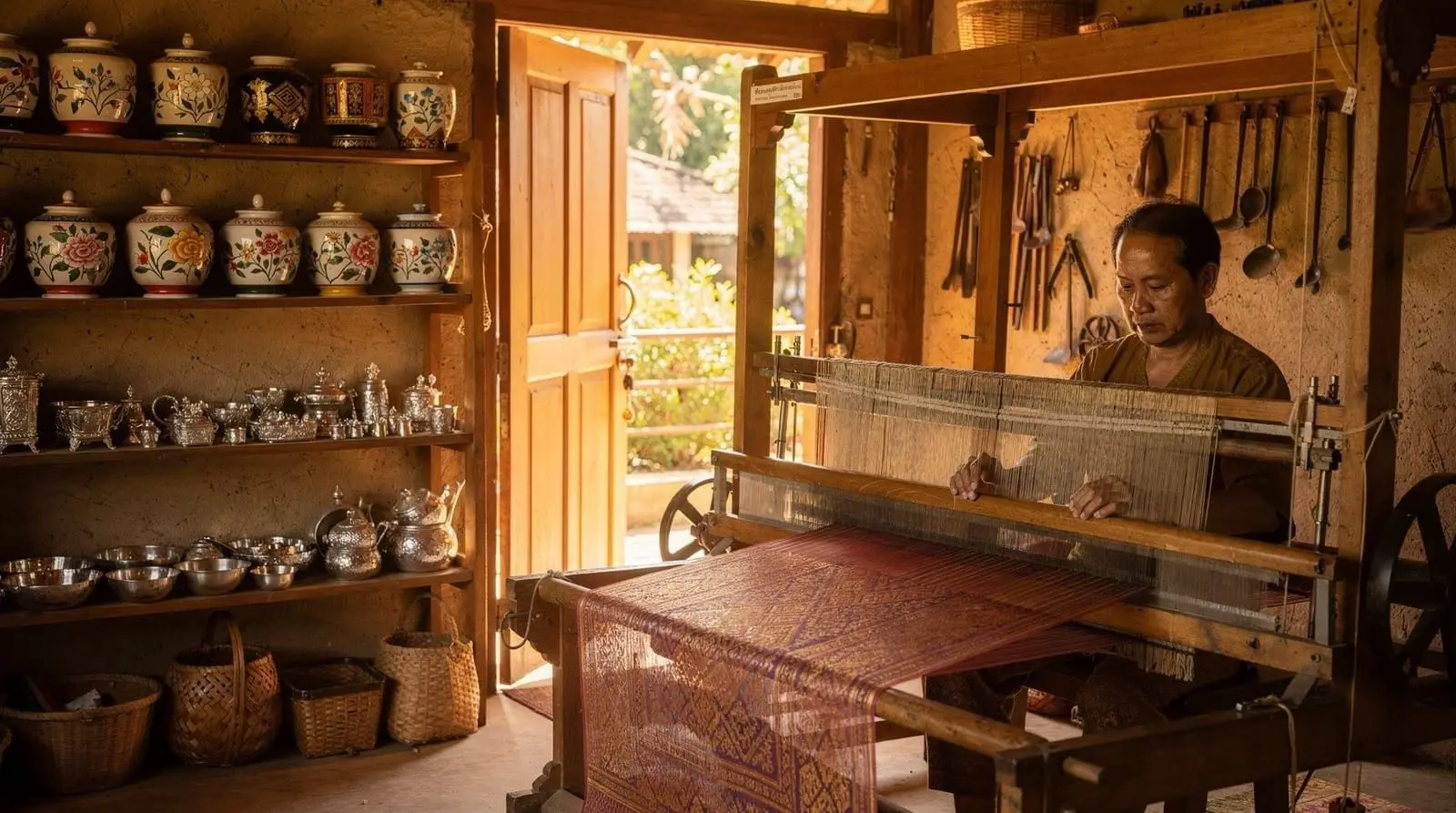
Even the region’s silk weaving, covered in our Thai silk weaving guide, carries its own regional weaving patterns and dye traditions distinct from Thailand’s more internationally famous northeastern silk-producing regions, reflecting local materials, climate and aesthetic preference rather than a single uniform national silk tradition.
Yi Peng and the north’s distinct festival calendar
Northern Thailand’s festival calendar includes traditions with roots specifically in Lanna culture rather than shared uniformly across the whole country. Yi Peng, the sky-lantern release festival, is the most visually famous of these, its glowing paper lanterns released skyward in a display that’s become one of Chiang Mai’s most internationally recognized images. Yi Peng often coincides with Loy Krathong, the more nationally widespread festival of floating decorated baskets on water, but the two have distinct origins and symbolism even when celebrated in the same period - Loy Krathong’s floating-basket tradition is broadly Thai, while Yi Peng’s sky-lantern release is specifically tied to northern and Lanna custom.
Beyond Yi Peng, the region’s craft villages hold their own festival traditions layered into the same broader cultural calendar - Bo Sang’s dedicated Umbrella Festival each January being a clear example of a craft-specific celebration rather than a purely religious or seasonal one.
Lanna versus other Thai regional identities
Thailand as a whole holds several distinct regional cultures under one national identity, and it’s worth briefly placing Lanna alongside the others rather than treating “Thai culture” as a single monolithic thing. Isaan, the northeastern region, has its own dialect (closely related to Lao), its own distinct cuisine built around sticky rice, grilled meats and fermented fish sauces, and its own well-known silk-weaving tradition centered on towns like Chonnabot - genuinely different in specifics from Lanna’s silk heritage even though both regions share sticky rice as a staple grain. Southern Thailand carries its own Malay and maritime influences reflected in food and language. Central Thailand - Bangkok and the surrounding plains - represents the “standard” national culture most visitors encounter first, built around jasmine rice, the more elaborately gilded temple style, and the Central Thai dialect taught as the national standard.
Lanna’s specific character - the multi-tiered wooden temple roofs, Kham Mueang dialect, milder curries, and its historical position as an independent kingdom for centuries - sets it apart from all three of these other regional identities, even while sharing an overarching sense of Thai nationality with the rest of the country.
Where to see Lanna culture explained in one place
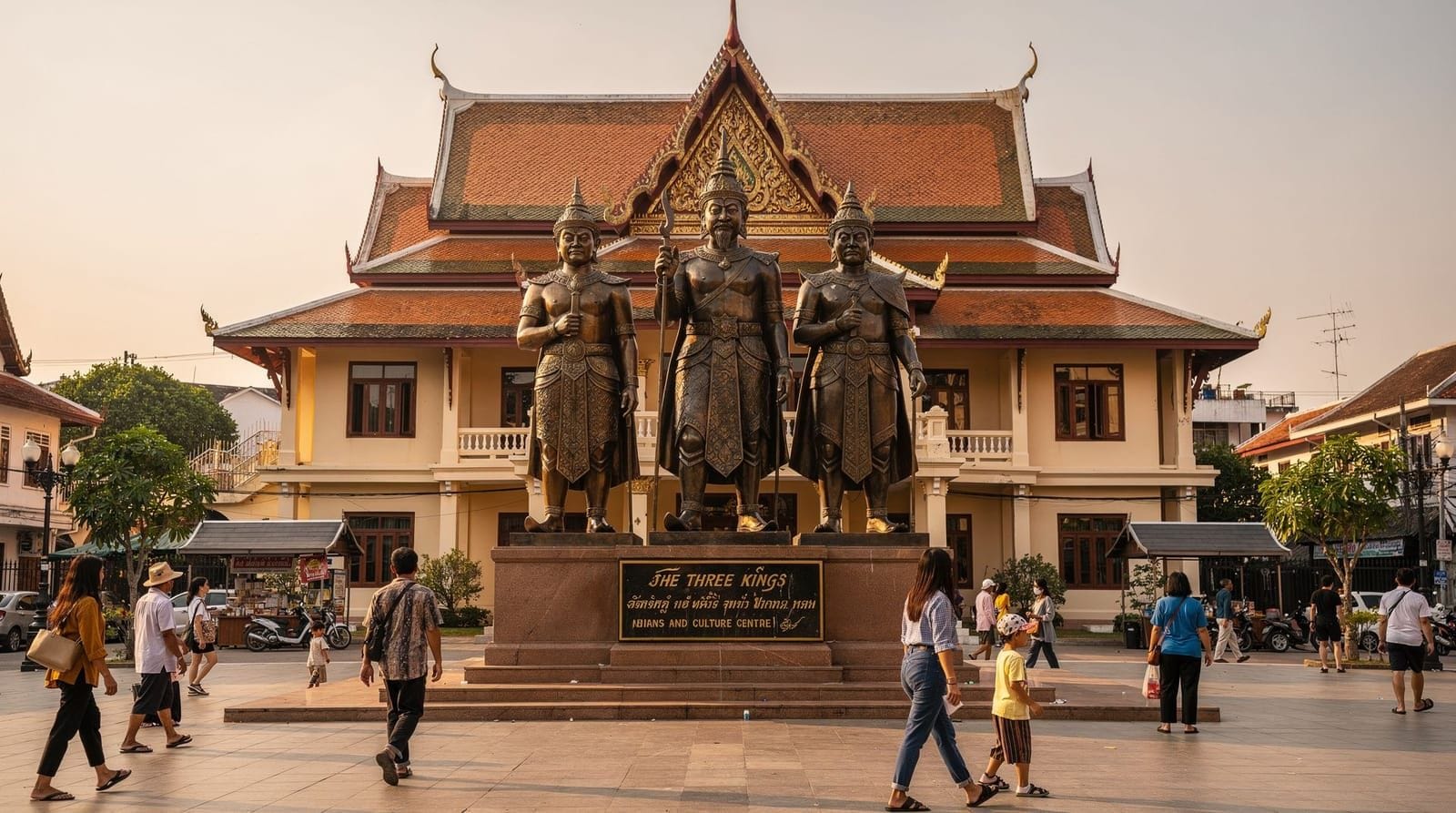
The Lanna Folklife Museum, part of the Three Kings Monument complex in the old city, is the most direct single stop for visitors wanting the historical and anthropological framing behind everything covered in this guide - traditional dress, tools, house models, and craft displays presented together in an accessible, compact format. It works well either as an introduction before visiting the region’s living craft villages, or as a way to contextualize what you’ve already seen after a day spent at Bo Sang, the San Kamphaeng crafts road, or Wualai’s silversmith quarter.
Lanna craft as living culture, not museum pieces
It’s worth stating directly what makes Chiang Mai’s version of this history distinctive: Lanna culture here isn’t purely a historical subject taught in a museum, but a set of living practices - a spoken dialect, a distinct cuisine eaten daily, temple architecture still actively maintained and worshipped in, and craft traditions like umbrella painting, silk weaving, silverwork and woodcarving still practiced commercially by working artisans. Our Chiang Mai crafts guide covers those craft traditions specifically in depth, and our Thai silk weaving guide goes deeper into one craft tradition’s connection to this broader regional identity.
Frequently asked questions about Lanna culture
When was the Lanna kingdom founded?
King Mangrai founded Chiang Mai as the Lanna capital in 1296, after earlier establishing Chiang Rai and the short-lived Wiang Kum Kam as previous bases.
Is Lanna still a distinct political entity today?
No - Lanna was gradually absorbed into Siam (the precursor to modern Thailand) between the 18th and early 20th centuries and is no longer a separate political entity, though its cultural identity remains distinct and widely recognized within Thailand.
What’s the easiest way for a visitor to experience Lanna culture directly?
Eating northern Thai food - khao soi, sai oua, sticky rice - is the most accessible entry point, alongside visiting a temple built in the distinct Lanna architectural style and, if timing allows, a craft village or the Lanna Folklife Museum.
Do people in Chiang Mai identify as “Lanna” or as “Thai”?
Both, generally without contradiction - most people in the region identify as Thai nationally while also maintaining a strong sense of northern or Lanna regional identity, expressed through dialect, food and local custom.
Is the Lanna script related to Thai script?
They’re related but visually and historically distinct writing systems, both ultimately descended from older Southeast Asian scripts, but developed separately enough that a fluent reader of modern Central Thai generally cannot read Lanna script without separate study.
How does Lanna architecture compare to temples in Bangkok?
Lanna temples generally favor multi-tiered wooden roofs, restrained gold ornamentation and dark wood carving, while Bangkok’s central Thai temples tend toward more elaborate gilding and colorful tiled ornamentation - different regional styles within the same broader Thai Buddhist architectural tradition.
Where does khao soi fit into Lanna food culture?
Khao soi, a curried egg-noodle soup, is one of the most internationally recognized dishes specifically associated with northern Thai and Lanna cuisine, distinct from the curries and noodle dishes more typical of central or southern Thailand.
What is Poy Sang Long?
An elaborate novice-ordination ceremony, most closely associated with Shan communities in northern Thailand, in which boys are dressed in colorful traditional costume and carried in procession before their temporary ordination as novice monks - a visually striking regional tradition distinct from simpler ordination customs found elsewhere in the country.
Does Lanna culture have its own New Year celebration?
The north observes Songkran, Thailand’s water festival and traditional new year, alongside the rest of the country, but with regional customs and timing nuances that reflect the area’s own calendar traditions layered on top of the shared national holiday.
How does Lanna identity relate to neighboring Shan and Lao culture?
Lanna sits at a historical crossroads between central Thailand, Shan State in Burma, and Laos, and several of its traditions - including Bo Sang’s umbrella-painting technique and the Poy Sang Long ordination ceremony - show clear cross-border cultural influence rather than developing in complete isolation from its neighbors.
Can visitors genuinely experience Lanna culture, or is it mostly performed for tourists?
Both exist side by side - some experiences, like a khantoke dinner with dance performance, are explicitly staged for visitors, while others, like the dialect spoken in markets, the food eaten daily, and the craft workshops still producing goods for genuine commercial use, are simply the region’s ongoing, unperformed daily culture that visitors happen to be able to observe.