Loy Krathong vs Yi Peng: what's actually different
Chiang Mai Moonlight Sky Lantern Loy Krathong Festival
Is Loy Krathong the same thing as Yi Peng?
No. Loy Krathong is a nationwide Thai festival where people float decorated banana-leaf offerings on water to honor the goddess of water. Yi Peng is a Northern Thai (Lanna) tradition specific to Chiang Mai and the old Lanna region, where sky lanterns are released to let go of misfortune. They fall on the same lunar full-moon night, so in Chiang Mai they're celebrated together and marketed under both names almost interchangeably.
Ask ten travel blogs what the difference is between Loy Krathong and Yi Peng and you’ll get ten slightly different, often contradictory answers, usually because the writer experienced both on the same night in Chiang Mai and never separated them out. That’s a forgivable mix-up: in Chiang Mai specifically, the two traditions really do run together, on the same evening, often at overlapping locations. But they’re not the same festival, they don’t have the same origin, and understanding the actual distinction changes how you plan your evening.
The short version: Loy Krathong is about water, is celebrated nationwide, and involves floating a decorated offering. Yi Peng is about the sky, is a regional Northern Thai practice, and involves releasing a paper lantern. Chiang Mai is one of the only places in Thailand where you get both, together, which is exactly why it’s become the country’s signature festival destination for this time of year.
Loy Krathong: the nationwide water festival
Loy Krathong (“to float a basket”) is celebrated across Thailand, not just in the North. On the night of the full moon in the 12th lunar month, people build or buy a krathong, traditionally a small raft made from a slice of banana tree trunk decorated with folded banana leaves, flowers, incense sticks, and a candle, and set it afloat on a river, canal, pond, or even a hotel pool. The act carries layered meaning: paying respect to the goddess of water (Phra Mae Khongkha), asking forgiveness for polluting waterways over the year, and symbolically releasing bad luck and negative thoughts as the krathong drifts away, candle still lit.
This is genuinely a nationwide practice. Bangkok, Ayutthaya, Sukhothai (where the festival is often described as having originated in its modern form), and virtually every Thai city with a river or canal marks Loy Krathong in some form. In Chiang Mai, the Ping River and the Old City moat both fill with floating krathongs and candlelit crowds on the peak nights, and vendors sell simple pre-made krathongs riverside for a small fee, typically under 50 THB.
Check the moonlight sky lantern and Loy Krathong festival experience for a package that combines krathong floating with a lantern release in one evening.
Yi Peng: the Lanna sky-lantern tradition
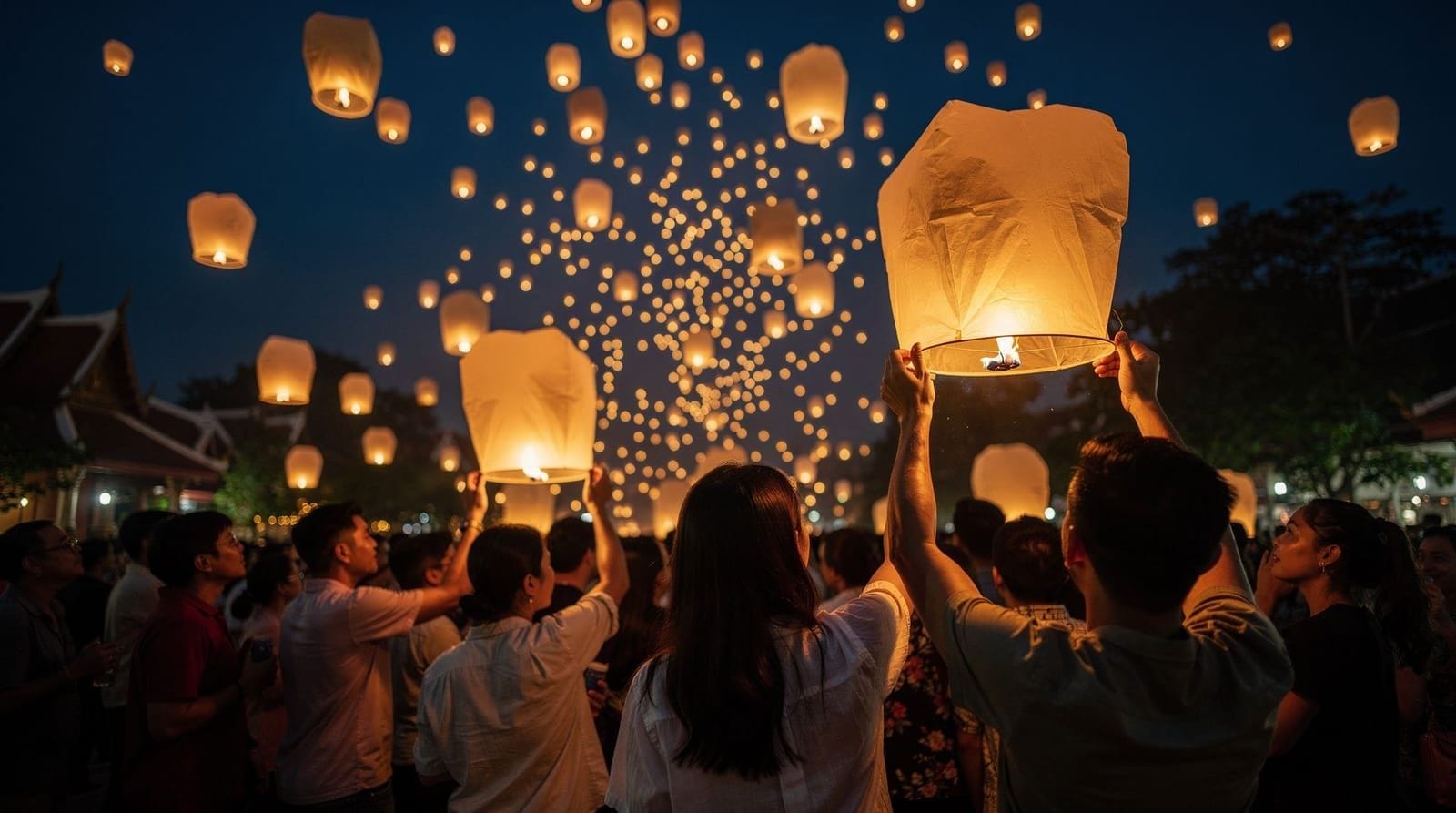
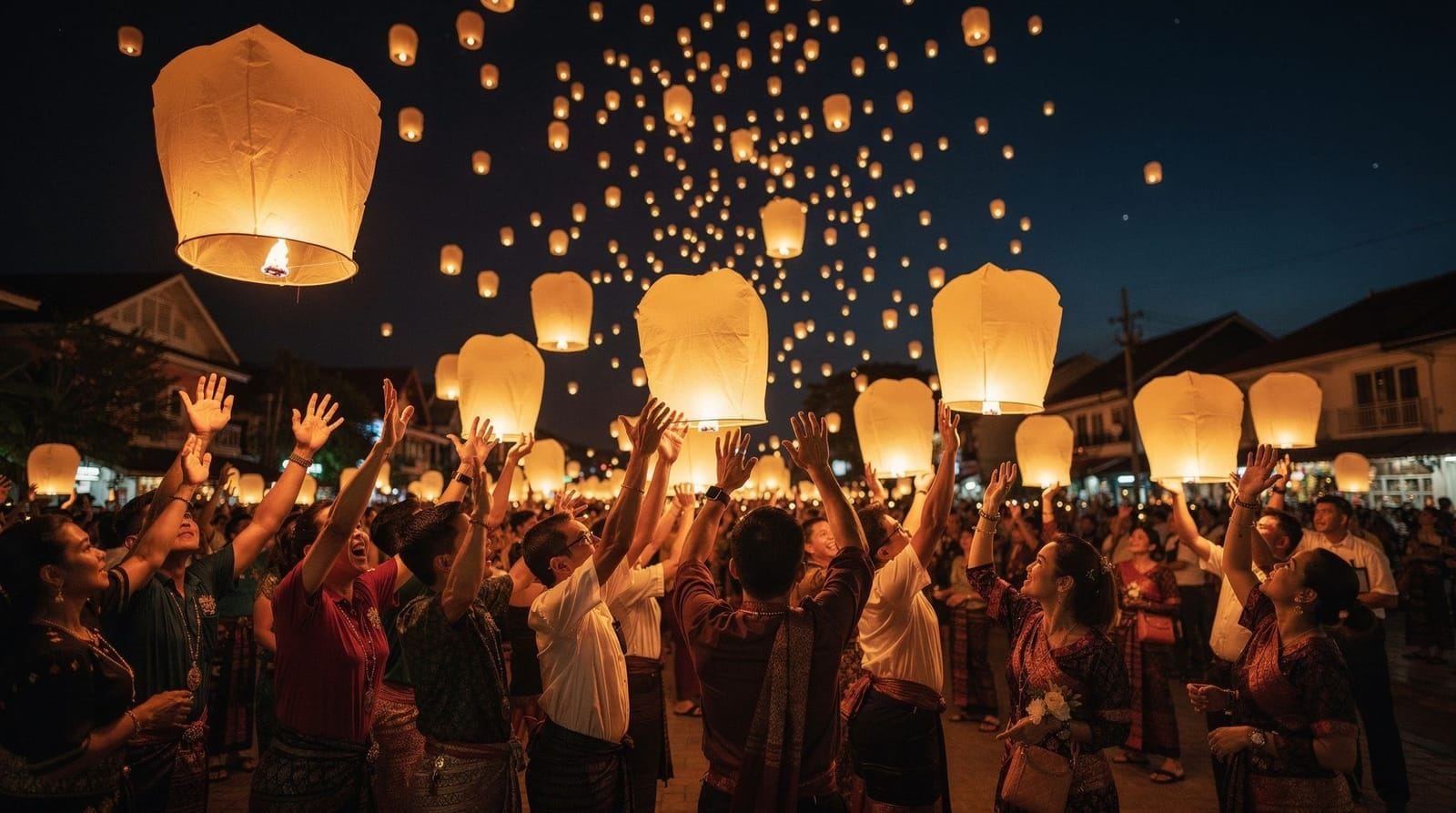
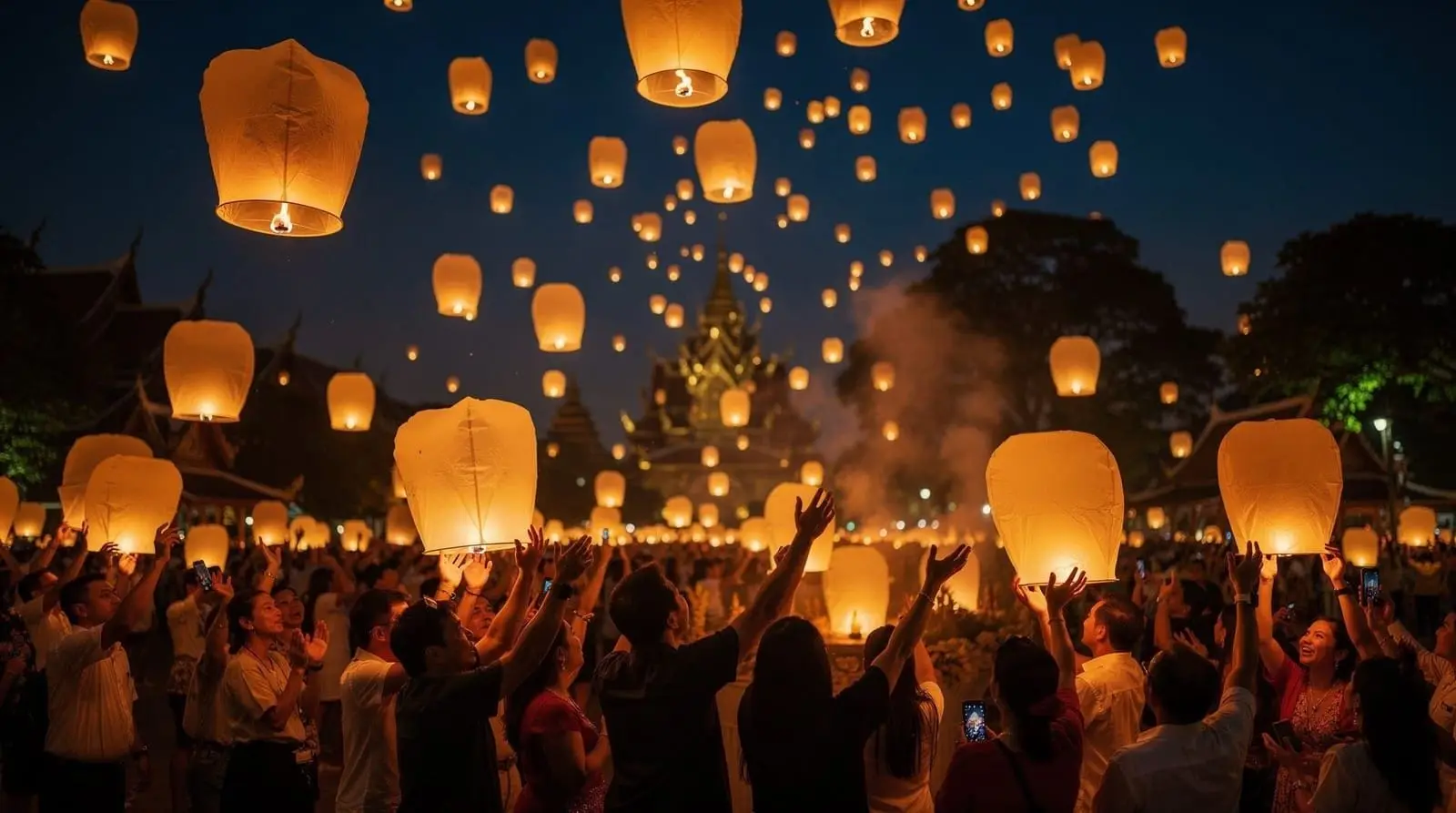
Yi Peng is a different, older regional tradition tied specifically to Lanna culture, the historic kingdom that covered what’s now Northern Thailand, with Chiang Mai as its former capital. “Yi Peng” refers to the full-moon day of the second month in the old Lanna lunar calendar (which counts months differently from the central Thai calendar most of the country uses, which is part of why the naming itself confuses outsiders). The core practice is releasing a khom loi, a hot-air paper lantern, which rises on the heat from a small flame at its base. In Lanna Buddhist belief, releasing a khom loi represents letting go of misfortune and troubles from the past year, sending them upward and away.
Historically, Yi Peng was a temple-centered and neighborhood-centered practice: candlelit lantern decorations (khom fai, a different, stationary type of lantern) strung along streets and temple grounds, individual sky-lantern releases by families and small groups, and processions, rather than one single mass event. The large-scale, ticketed synchronized release most visitors now associate with “Yi Peng” is a comparatively recent, professionally organized addition layered on top of the older, more diffuse tradition. Our full Yi Peng lantern festival guide covers exactly how that ticketed event works, what it costs, and how it compares to the free public version of the same tradition.
See the official CAD Yi Peng sky lantern festival for the best-known version of this ticketed mass-release format.
Where each tradition is thought to come from
Loy Krathong’s popular origin story, taught widely in Thai schools, credits Nang Noppamas, a consort in the Sukhothai royal court in the 13th or 14th century, with crafting the first ornate krathong in the shape of a lotus flower to be floated before the king. Historians generally treat this as a folk legend layered onto an older, more diffuse practice of water-based offerings found across mainland Southeast Asia rather than a precise historical record, but it’s the story most commonly told, and Sukhothai still markets itself as the festival’s spiritual home with its own large-scale historical park celebration.
Yi Peng’s roots run through Lanna Buddhist and animist practice in the historic kingdom centered on Chiang Mai, which existed as an independent political entity for several centuries before being absorbed into what’s now Thailand. The tradition of releasing khom loi and hanging khom fai lantern decorations around temples reflects merit-making and letting-go practices specific to Northern Thai Buddhism, distinct from the central Thai court culture that shaped Loy Krathong’s popular legend. This is part of why the two traditions, despite sharing a calendar date, come from genuinely different cultural lineages rather than being regional variations on one single festival.
Practical differences you’ll notice on the ground
A few concrete differences are worth knowing before your festival-week evening:
- Cost. Floating a krathong costs next to nothing, typically under 50 THB (about 1.50 USD) for a simple pre-made one from a riverside vendor. A ticketed Yi Peng mass lantern release runs from roughly 4,900 THB upward (about 136 USD and up); see our Yi Peng dates and tickets guide for the full tier breakdown.
- Commitment. Krathong floating takes a few minutes at any riverbank or moat edge, no booking required. A ticketed lantern release is a multi-hour scheduled program with a shuttle pickup time, dinner, and a fixed release moment.
- Where it happens. Krathong floating happens anywhere there’s water, moat, river, canal, even hotel pools, across the whole city and the whole country. Sky lantern releases, especially the mass ticketed kind, happen at specific designated open-air venues, often outside the city center, chosen partly for aviation safety reasons.
- Who’s doing it. Krathong floating is genuinely practiced by Thai families across the country as a matter of course, tourists or not. The ticketed mass lantern release is a majority-tourist and domestic-visitor commercial product, even though the underlying tradition it’s built on is authentically local.
- Environmental footprint. A biodegradable krathong left to drift and eventually be collected or dissolve is a relatively contained environmental question. A released sky lantern travels further, can come down on farmland or in waterways well outside the city, and interacts directly with aviation safety, covered in more depth in our sky lantern safety and environmental impact guide.
A shared night, two different feelings
There’s also a difference in the mood of each activity worth mentioning, since it affects which one might appeal to you more on the night. Krathong floating tends to be quiet, reflective, and low-key: you kneel at a riverbank, set a small candlelit offering into the water, and watch it drift off among dozens of others, often without speaking much. It’s an activity that works well solo, as a couple, or with young children, and doesn’t require advance planning beyond showing up at the right time and place.
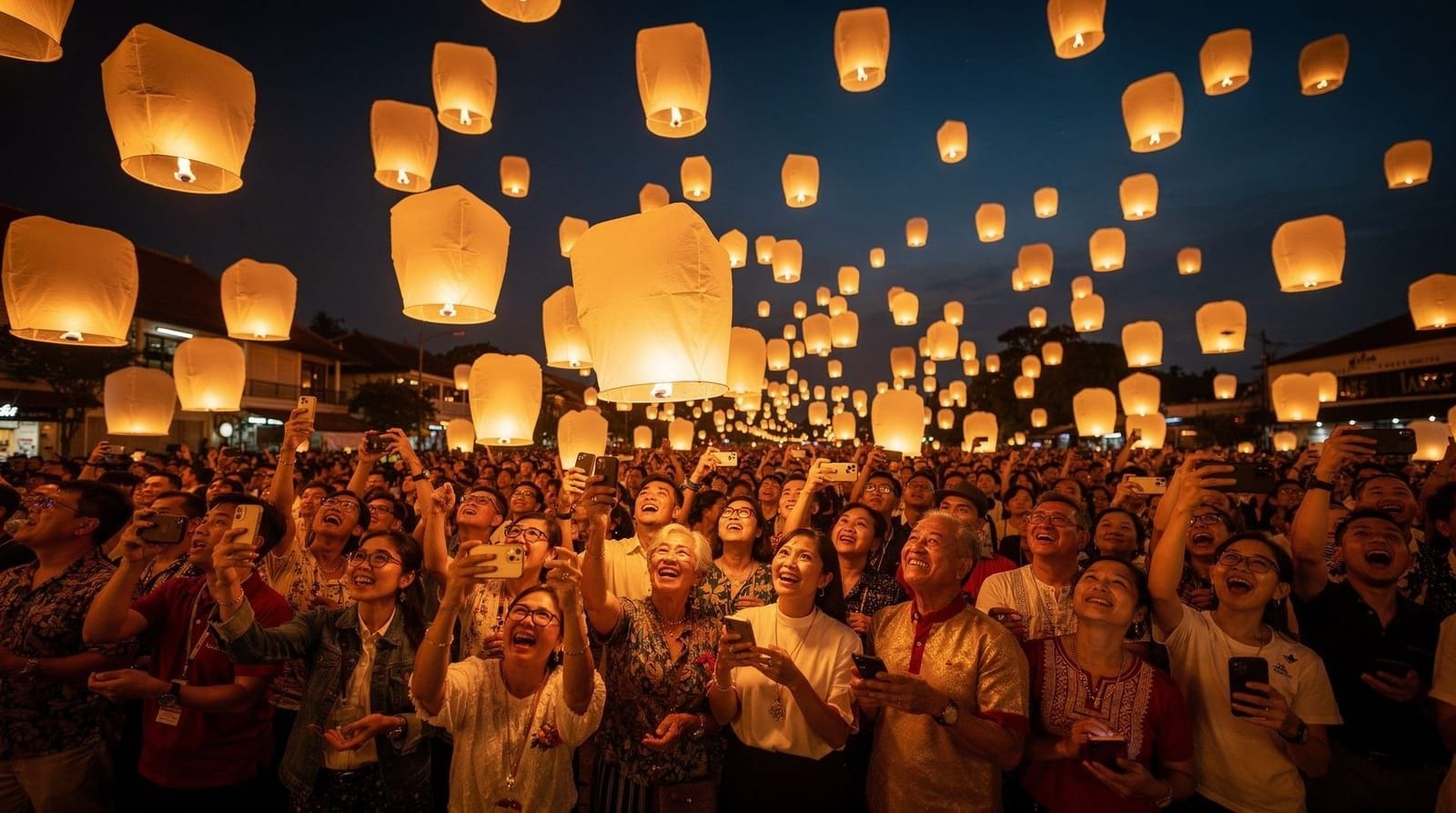
A ticketed mass lantern release is, by contrast, a produced event: assigned seating, a dinner service, an emcee-led cultural program, and a countdown before the coordinated release moment, followed immediately by a wave of phone cameras going up around you. It’s a genuinely striking visual, but it’s also a different kind of evening entirely from riverside krathong floating, closer to a scheduled show than a spontaneous cultural moment. Neither is more “authentic” than the other exactly, they’re just different registers of the same underlying festival week, and it’s worth choosing based on which mood you’re actually looking for rather than assuming one is the “real” version and the other isn’t.
Why the two get blended together in Chiang Mai
Because both fall on the same lunar full-moon night and Chiang Mai is one of the few cities where both are practiced side by side, the two traditions have effectively merged into a single tourism-facing “festival week” in the public imagination, and in a lot of marketing copy. You’ll see “Loy Krathong / Yi Peng Festival” written as one hyphenated event on hotel calendars and tour listings, which isn’t wrong exactly, just imprecise about what’s actually two separate practices sharing a calendar date and, in Chiang Mai’s case, largely the same physical spaces along the river and moat.
This matters practically in one specific way: if you’ve read that “Loy Krathong” happens in, say, Bangkok or Ayutthaya on the same date, that’s accurate, but you shouldn’t expect the sky-lantern release there, since that part is specifically Northern Thai. Chiang Mai (and to a lesser extent nearby Lanna cities like Lampang and Chiang Rai) is genuinely the place to see both together.
What this means for planning your evening
In practice, most visitors don’t need to choose one tradition over the other, since both are accessible on the same night in the same general area of the city:
- Float a krathong along the Ping riverside near Wat Ket or the Old City moat, a low-cost, unticketed activity that takes only a few minutes.
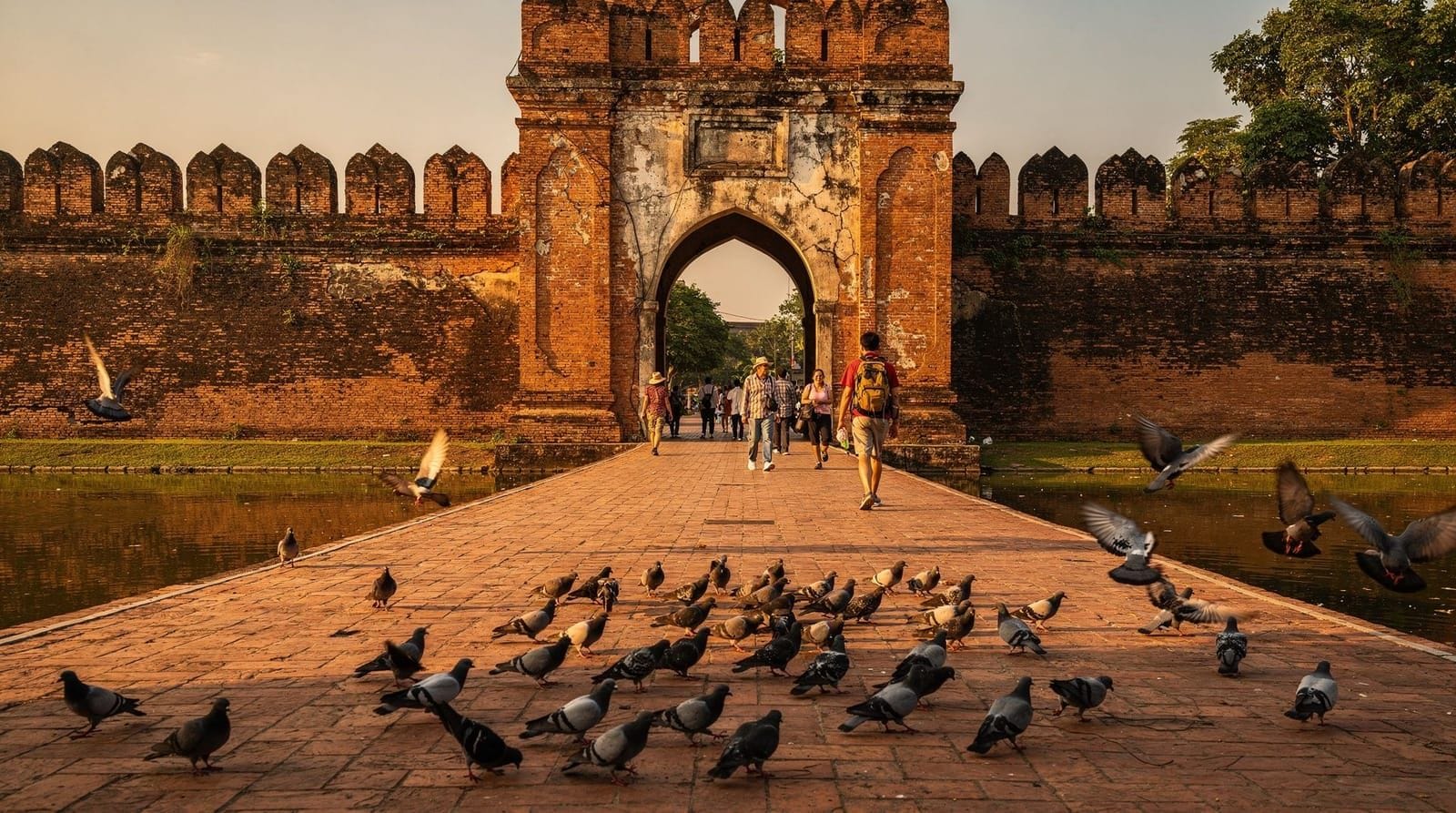
- Watch or join small private lantern releases around Tha Phae Gate and the moat, free and informal.
- Book the ticketed mass lantern release if the coordinated hundreds-at-once release moment specifically matters to you; see our Yi Peng guide for ticket tiers and pricing.
- Visit the Old City temple circuit during festival week for the candlelit decorations (khom fai) that predate the sky-lantern release entirely and are worth seeing on their own.
Look at the Yeepeng Lanna lantern festival package if you specifically want an event framed around the Lanna cultural tradition rather than a generic “lantern festival” label.
A sample evening that covers both
If you want a concrete plan rather than an abstract choice, a workable festival-night sequence looks something like this: arrive at the Old City moat or the Ping riverside in the early evening, buy a simple krathong from a vendor for under 50 THB, and float it while the light is still fading, a five-minute activity that needs no advance booking. From there, walk the lit-up Old City temple circuit, Wat Phra Singh and Wat Chedi Luang both decorate for the occasion, before either heading to your ticketed lantern-release venue if you’ve booked one, or staying central near Tha Phae Gate to watch the informal private releases that continue along the moat well into the night. This sequencing means you experience the water-offering side of the festival, the temple-decoration side, and the sky-lantern side all in one evening, in roughly that order, without the ticketed and unticketed halves competing for the same time slot.
One honest note on the modern pageant side
It’s worth flagging something the folk-legend framing sometimes glosses over: many Thai cities, Chiang Mai included, pair Loy Krathong with a Nang Noppamas beauty pageant, where contestants dress in traditional Thai costume and compete in a contest named for the same royal-court figure credited with the festival’s founding legend. It’s a long-running, popular local tradition in its own right, but it’s also drawn increasing criticism in recent years, including from some Thai commentators, over how well an explicitly appearance-based contest sits alongside a festival whose core meaning is about humility, gratitude, and letting go rather than aesthetic judgment. It’s not something most visitors need to engage with directly, but it’s a genuine part of the modern festival landscape worth knowing about if you encounter a pageant stage while you’re out exploring krathong spots.
Choosing based on what you actually value
If you’re still deciding how to weight your evening between the two traditions, it helps to ask yourself directly which experience you’re actually chasing: a quiet, reflective moment at a riverbank costs little and asks little of your schedule, while the specific, camera-ready spectacle of a coordinated mass lantern release requires a ticket, a schedule commitment, and a real budget line. Neither answer is more “correct” than the other, and most visitors, once they understand the distinction covered throughout this guide, end up choosing a version of both rather than picking one exclusively.
The honest bottom line
If a travel site, tour listing, or hotel calendar uses “Loy Krathong” and “Yi Peng” as if they were synonyms, that’s an understandable simplification given how thoroughly the two overlap in Chiang Mai specifically, but it’s worth knowing the actual distinction before you book: one is a water offering practiced nationwide, the other is a sky-lantern release specific to Lanna culture, and only in the North, and especially in Chiang Mai, do you get to experience both as part of the same evening.
Frequently asked questions about Loy Krathong and Yi Peng
Which festival do the sky lanterns belong to?
Sky lanterns (khom loi) belong to Yi Peng, the Northern Thai Lanna tradition. Loy Krathong’s core practice is floating a krathong, a decorated offering, on water rather than releasing anything into the air. In Chiang Mai the two traditions run on the same night, which is why sky lanterns get associated with Loy Krathong in general Thailand-wide marketing even though they’re technically a separate, regional practice.
Is Loy Krathong celebrated outside Chiang Mai too?
Yes, Loy Krathong is celebrated across Thailand, including in cities without any sky-lantern tradition at all. Krathong-floating happens on rivers, canals, and even hotel pools nationwide on the same full-moon night. Yi Peng, by contrast, is specifically a Northern Thai and Lanna cultural practice, which is why the sky-lantern imagery is so strongly tied to Chiang Mai specifically rather than to Thailand generally.
Do both festivals fall on exactly the same date?
In Chiang Mai, yes, both center on the full moon of the 12th lunar month and typically run across the same 2-3 day window, with 2026’s main dates falling November 24-25. Elsewhere in Thailand where Yi Peng isn’t practiced, only Loy Krathong is marked, still on the same lunar full-moon date.
Which one should I prioritize if I can only do one?
If you’re only in Chiang Mai for the festival and want the visually distinctive experience unique to this region, prioritize Yi Peng’s lantern release, whether ticketed or via a free public spot. Krathong floating is lower-commitment (a few minutes at a riverbank) and easy to fit in alongside almost any itinerary, so in practice most visitors end up doing a version of both on the same evening without much extra planning.
Why do travel sites use the names interchangeably?
Mostly because the marketing built around Chiang Mai’s festival week benefits from combining the two into one over generalized “lantern festival” pitch, and because most first-time visitors encounter both traditions on the same night without a local guide explaining which practice is which. It’s a genuine simplification rather than an outright inaccuracy, since both do happen together in Chiang Mai, but it obscures that they’re separate traditions with separate meanings and separate regional origins.
Does Bangkok celebrate Yi Peng too?
Loy Krathong is celebrated in Bangkok and every other Thai city and town on the same lunar date, but the sky-lantern release specific to Yi Peng is a Northern Thai Lanna tradition, so it isn’t part of the standard Loy Krathong celebration outside the North. This is one of the clearest ways to tell the two traditions apart: krathong-floating alone happens everywhere, sky lanterns specifically mean you’re in Lanna territory.
Top experiences
Bookable activities with verified prices and instant confirmation on GetYourGuide.